
A 3000 watt power station isn’t just about the number on the box—it’s about the specific appliances you can finally run off-grid. Once you hit this threshold, you’re powering full-size refrigerators, sump pumps, well pumps, and even small central AC units without breaking a sweat. The real challenge isn’t finding the wattage; it’s finding a unit that delivers it cleanly, silently, and with a battery chemistry that lasts a decade.
I’m Min — the co-founder and writer behind Gadgets Feed. I’ve spent countless hours dissecting inverter topologies, LiFePO4 cycle life ratings, and real-world surge testing reports to separate the homes you can truly depend on from the marketing fluff.
Whether you’re prepping for hurricane season, upgrading your RV’s electrical system, or building an off-grid workshop, choosing the right 3000 watt power station requires understanding battery chemistry, surge capacity, and charging flexibility—not just the peak output figure.
How To Choose The Best 3000 Watt Power Station
Three thousand watts is the sweet spot where portable power stations cross over from gadget backup to genuine home appliance support. The best units in this class share a few common traits: they use LiFePO4 cells for 4,000+ cycles, they support solar input above 1,000W, and they offer expandable capacity so you aren’t limited by a fixed pack. Here’s what to look for.
Battery Chemistry and Cycle Life
All the top-tier options in this list use Lithium Iron Phosphate (LiFePO4) chemistry, which typically delivers 3,500 to 4,000 cycles before dropping to 70% capacity. That translates to roughly 10 years of daily use, whereas older NMC-based stations would degrade in half that time. Always check the rated cycles—budget stations skimp on this spec.
Surge Capacity for Motor-Driven Loads
Refrigerators, air conditioners, and power tools draw 2-5x their rated wattage during startup. A station with a 3000W continuous output might claim a 6000W surge, but the duration of that surge matters. Look for units that can sustain the peak for at least 30 milliseconds—enough to cycle a compressor without tripping the inverter.
Solar Input and Recharge Speed
The faster you can refill the battery, the more useful the station becomes during extended outages. Premium models now accept 2,000W to 3,200W of solar input, letting you recharge a 3kWh pack in under two hours in full sun. Mid-range units typically cap out around 1,000W, which means longer recharge windows.
Quick Comparison
On smaller screens, swipe sideways to see the full table.
| Model | Category | Best For | Key Spec | Amazon |
|---|---|---|---|---|
| Jackery HomePower 3000 | Mid-Range | Compact home backup | 3072Wh LFP, 3600W output | Amazon |
| Anker SOLIX F3000 | Premium | Generator pass-through charging | 3072Wh, 3600W output, 6000W recharge | Amazon |
| BLUETTI Apex 300 | Premium | 120/240V split-phase | 2765Wh, 3840W AC, 7680W surge | Amazon |
| EF ECOFLOW DELTA Pro | Mid-Range | Versatile multi-device power | 3600Wh, 3600W AC, X-Boost to 4500W | Amazon |
| BLUETTI Elite 400 | Mid-Range | High capacity in compact form | 3840Wh, 2600W AC, 3900W surge | Amazon |
| PECRON E3800 LFP | Mid-Range | Expandable to 53.76kWh | 3840Wh, 4200W AC output | Amazon |
| Jackery Explorer 2000 Plus | Mid-Range | Expandable LFP system | 2042Wh, 3000W AC, expandable to 24kWh | Amazon |
| ABOK Ark3600 | Mid-Range | 15-port versatility | 3840Wh, 3600W rated, 4500W peak | Amazon |
| AFERIY P310 | Mid-Range | Fast 1.5H AC recharge | 3840Wh, 3600W, UPS <10ms | Amazon |
| Anker SOLIX F3800 Plus | Premium | Massive output and expansion | 3840Wh, 6000W AC, expandable to 53kWh | Amazon |
| EF ECOFLOW DELTA Pro 3 | Premium | Whole-home 120/240V backup | 4096Wh, 4000W AC, 6000W surge | Amazon |
| OSCAL PowerMax 6000 | Premium | Bundled solar panels included | 3600Wh, 6000W AC, 9000W surge | Amazon |
| EGO Power+ PST3040 | Budget | EGO battery ecosystem users | 2000W continuous, 3000W peak, no battery | Amazon |
In‑Depth Reviews
1. Jackery HomePower 3000
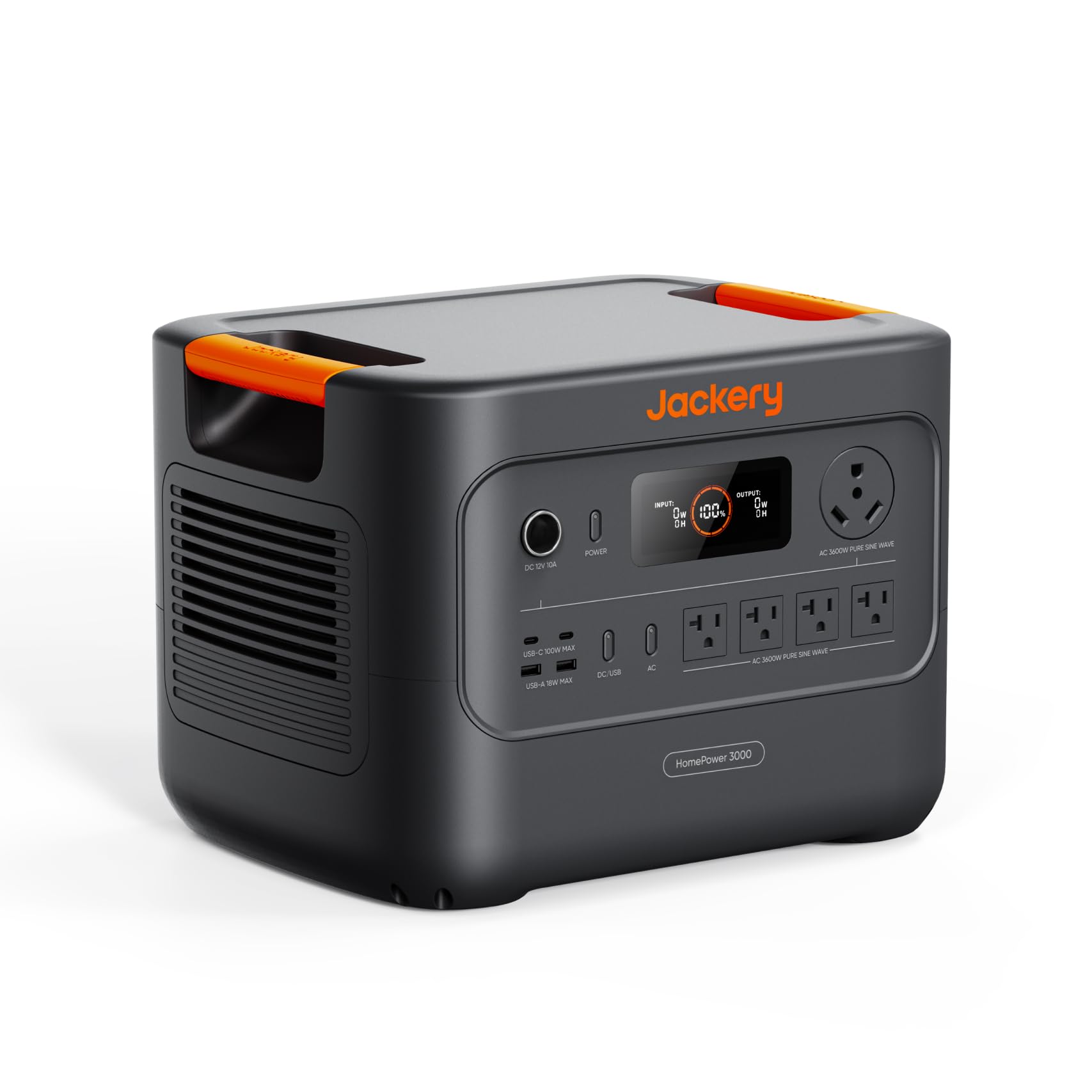
The Jackery HomePower 3000 is the world’s first 3kWh portable power station using CTB (Cell-to-Body) technology, making it 47% smaller and 43% lighter than comparable 3kWh models. At 59.5 pounds, it’s significantly easier to move than the competition, yet it delivers a full 3600W continuous output with a 7200W surge rating—enough to handle an RV air conditioner or a household refrigerator for 1-2 days.
What sets this unit apart is the ≤20ms UPS capability and the built-in TT-30 RV port for direct plug-and-play power. The ChargeShield 2.0 system uses AI algorithms to optimize charging speed while extending the 4,000-cycle LiFePO4 battery’s lifespan. Dual 100W USB-C PD ports provide fast charging for modern laptops and drones, and the hybrid AC+DC recharge fills the pack in just 1.7 hours.
The downsides are real but manageable: the cooling fan hits around 60 dB under heavy load, which is noticeable in a quiet room, and Jackery does not honor the warranty for units not purchased directly from them—so be careful with your buying channel. Still, for the combination of portability, output, and capacity, this is the most balanced 3000W station on the market today.
Why it’s great
- 47% smaller and 43% lighter than competing 3kWh stations, making it genuinely portable at 59.5 lbs.
- 3600W continuous output with 7200W surge and ≤20ms UPS for sensitive electronics.
- Hybrid AC+DC recharge fully charges the 3072Wh pack in only 1.7 hours.
Good to know
- Fan noise is noticeable around 60 dB under sustained heavy loads like an RV AC unit.
- Jackery’s warranty only applies to direct purchases—Amazon buyers may not be covered.
2. Anker SOLIX F3000
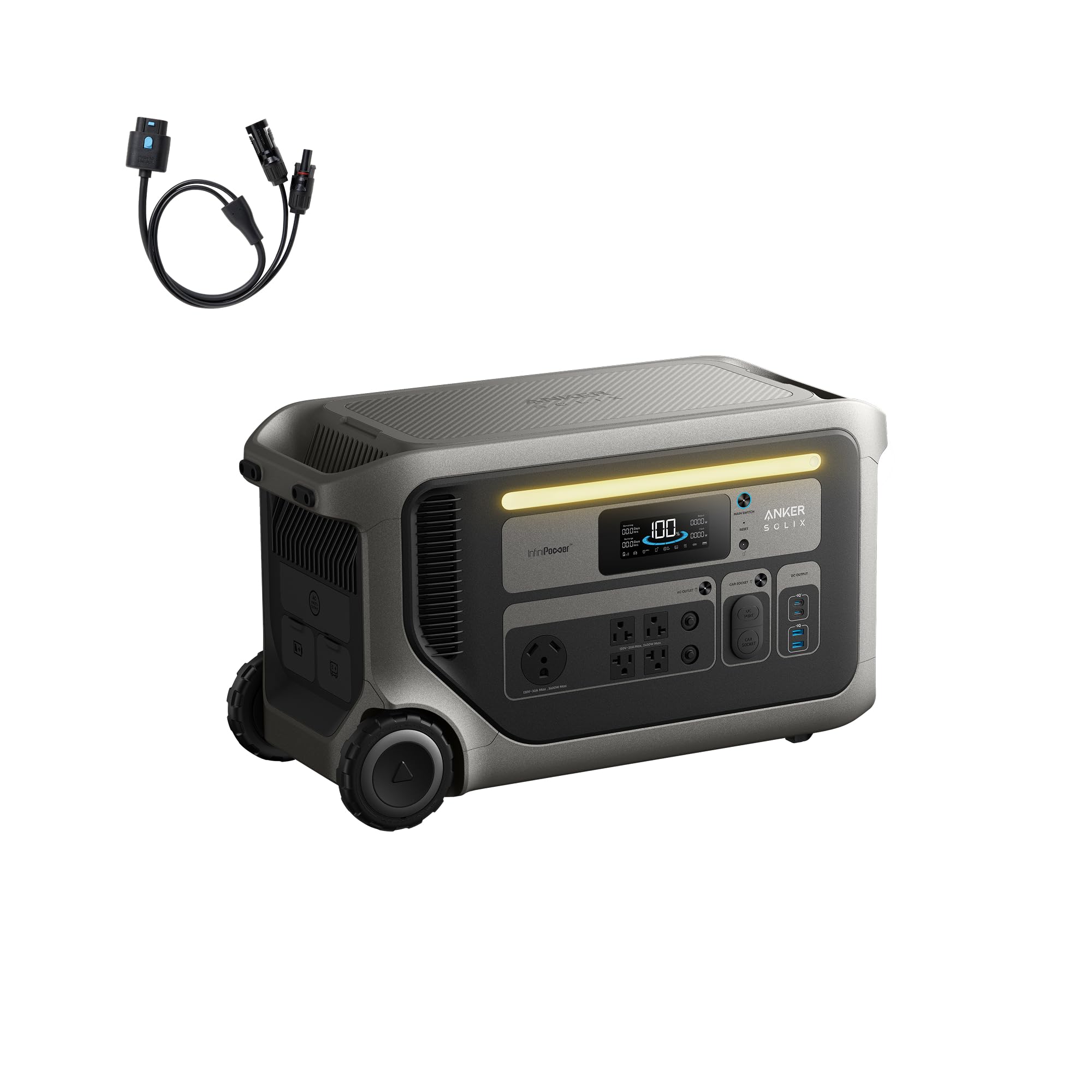
The Anker SOLIX F3000 is engineered for users who want the fastest possible recharge during an outage. Its headline feature is a 6,000W combined input when pairing a gas generator with solar—meaning you can refill the 3,072Wh battery in under an hour. The unit’s ultra-low idle power consumption achieves 125 hours of AC standby time, so you aren’t wasting energy when no load is connected.
One of the smartest design choices here is the full pass-through charging capability: while recharging from a 120V generator at 3,600W, the unit can still power AC loads at full wattage. This effectively turns the F3000 into a UPS for your whole home. The dual solar input ports accept up to 2,400W total, and the unit rolls smoothly on integrated wheels despite its 91.5-pound weight.
The main trade-off is a slightly smaller starting capacity than some competitors—3,072Wh versus 3,840Wh—so you’ll want the expansion batteries for whole-home backup. Also, some users report that the USB ports have a minimum 1W draw that cannot be disabled, though this is minor. For fast recharge and generator integration, this is the standout pick.
Why it’s great
- Industry-leading 6,000W combined recharge input for under-one-hour full refills.
- Full pass-through charging at 3,600W: run and recharge appliances simultaneously without interruption.
- Ultra-low idle consumption provides 125 hours of standby time, preserving stored energy.
Good to know
- Base capacity is 3,072Wh—expansion batteries are needed for whole-home backup scenarios.
- USB ports have a minimum 1W idle draw that cannot be turned off via the app; use 12V ports for smaller loads.
3. BLUETTI Apex 300
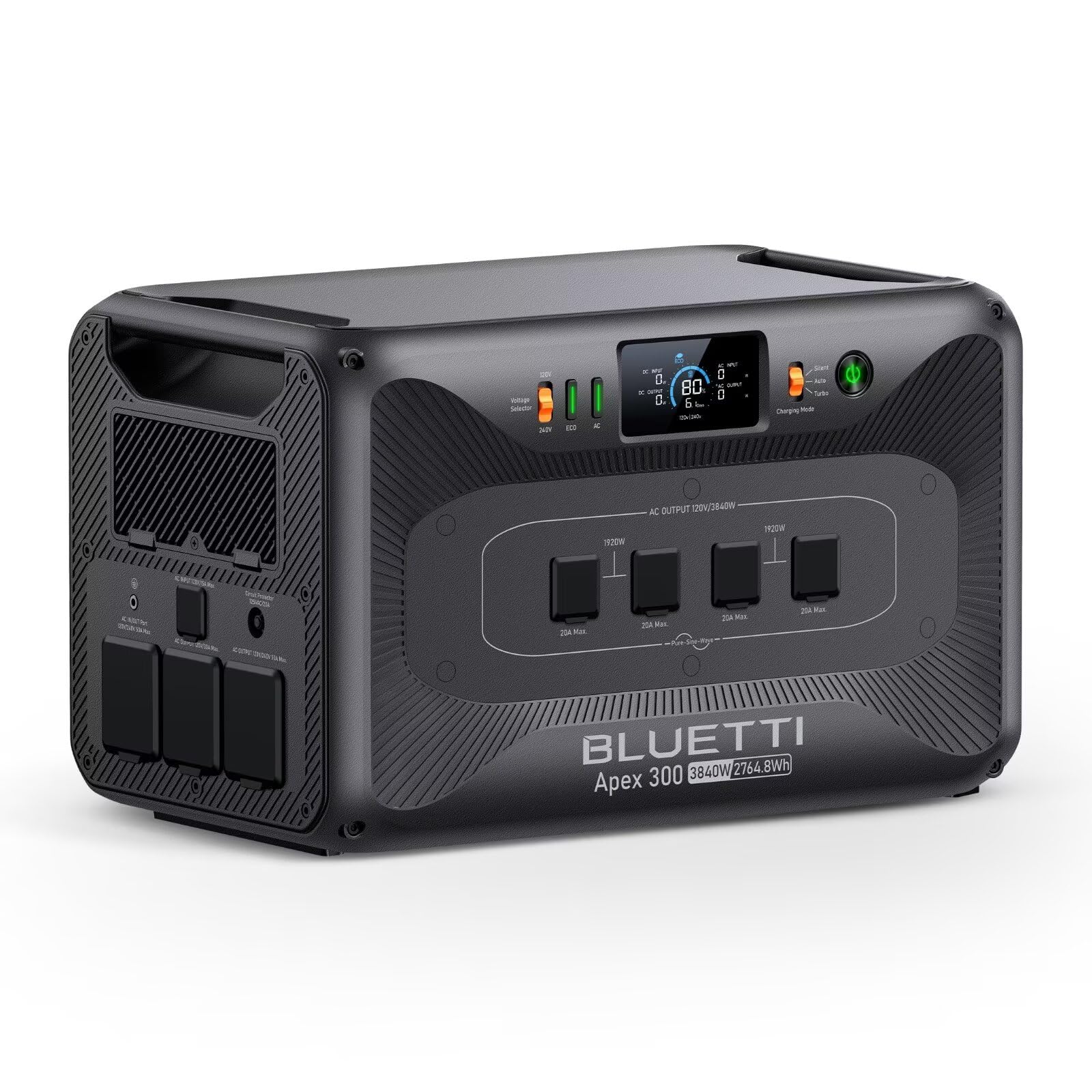
The BLUETTI Apex 300 is built for serious home backup with a unique trick up its sleeve: simultaneous 120V and 240V output from a single unit. That means you can run your 120V fridge and TV while also powering a 240V well pump or central air conditioner through a transfer switch. With 3,840W continuous AC output and a 7,680W surge, it handles motor startup surges on larger appliances without strain.
Modularity is a core strength here. The base unit packs 2,765Wh, but you can add B300K or B500K expansion batteries as needed. The BLUETOPUS AI-BMS system manages charging across the bank and supports up to 6,000+ cycles. The unit operates at a whisper-quiet 22 dB under light load and uses a <10ms UPS to keep servers and medical devices running seamlessly during grid flickers.
The main limitation is that the solar input voltage range has a gap between 60V and 150V, which can make certain large solar array configurations incompatible without creative cabling. The unit also lacks DC ports to keep costs down, so you’ll need an adapter for 12V loads. For raw split-phase capability and expansion headroom, it’s a phenomenal value.
Why it’s great
- Simultaneous 120V and 240V output from a single unit, enabling split-phase home backup without wiring two stations.
- 7,680W surge handles larger motor loads like well pumps and central AC compressors.
- ≤10ms UPS with 22 dB silent operation under light load—great for home use overnight.
Good to know
- Solar input voltage gap between 60-150V may complicate some panel configurations.
- No built-in DC ports; 12V loads require an external adapter.
4. EF ECOFLOW DELTA Pro
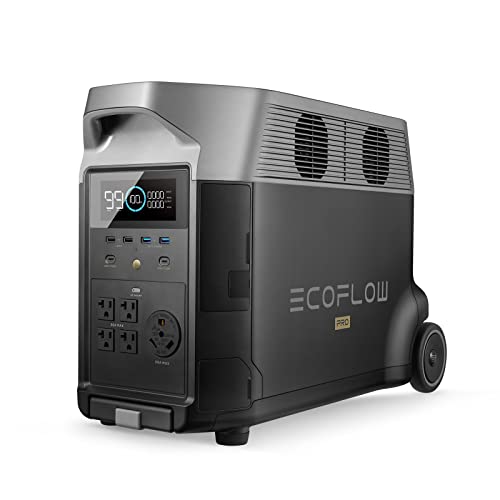
The original EF ECOFLOW DELTA Pro set the standard for modular 3000W stations, and it remains a strong contender thanks to its 3,600Wh base capacity and X-Boost technology that pushes output to 4,500W for non-resistive loads. The five 120V AC outlets let you spread power across multiple appliances without dongles or splitters, and the X-Stream fast charging refills the pack in 2.7 hours from a standard wall outlet.
EcoFlow’s app ecosystem is the most mature in the category, offering robust Wi-Fi and Bluetooth control with detailed energy consumption graphs. The unit can pair with up to two extra batteries for 25kWh total capacity, and the solar conversion efficiency hits 23%—among the best in its class. Users report running home oxygen concentrators for over 10 hours on a single charge, and the pass-through mode auto-switches during outages without manual intervention.
At 99 pounds, the DELTA Pro is heavy and lacks an integrated wheeled cart, so rolling it is awkward compared to newer models with built-in caster wheels. The base version does not include a 240V outlet; you need two units and a combiner box for split-phase 240V. Still, for sheer ecosystem maturity and real-world reliability, it remains a solid choice.
Why it’s great
- X-Boost technology pushes continuous output to 4,500W for heavy-duty tools and appliances.
- Five 120V AC outlets provide flexible load distribution without adapters.
- Best-in-class app ecosystem with detailed energy tracking and remote control via Wi-Fi and Bluetooth.
Good to know
- At 99 lbs without integrated wheels, moving it around is cumbersome compared to newer wheeled models.
- 240V split-phase requires a second unit and a combiner box—not available from a single station.
5. BLUETTI Elite 400
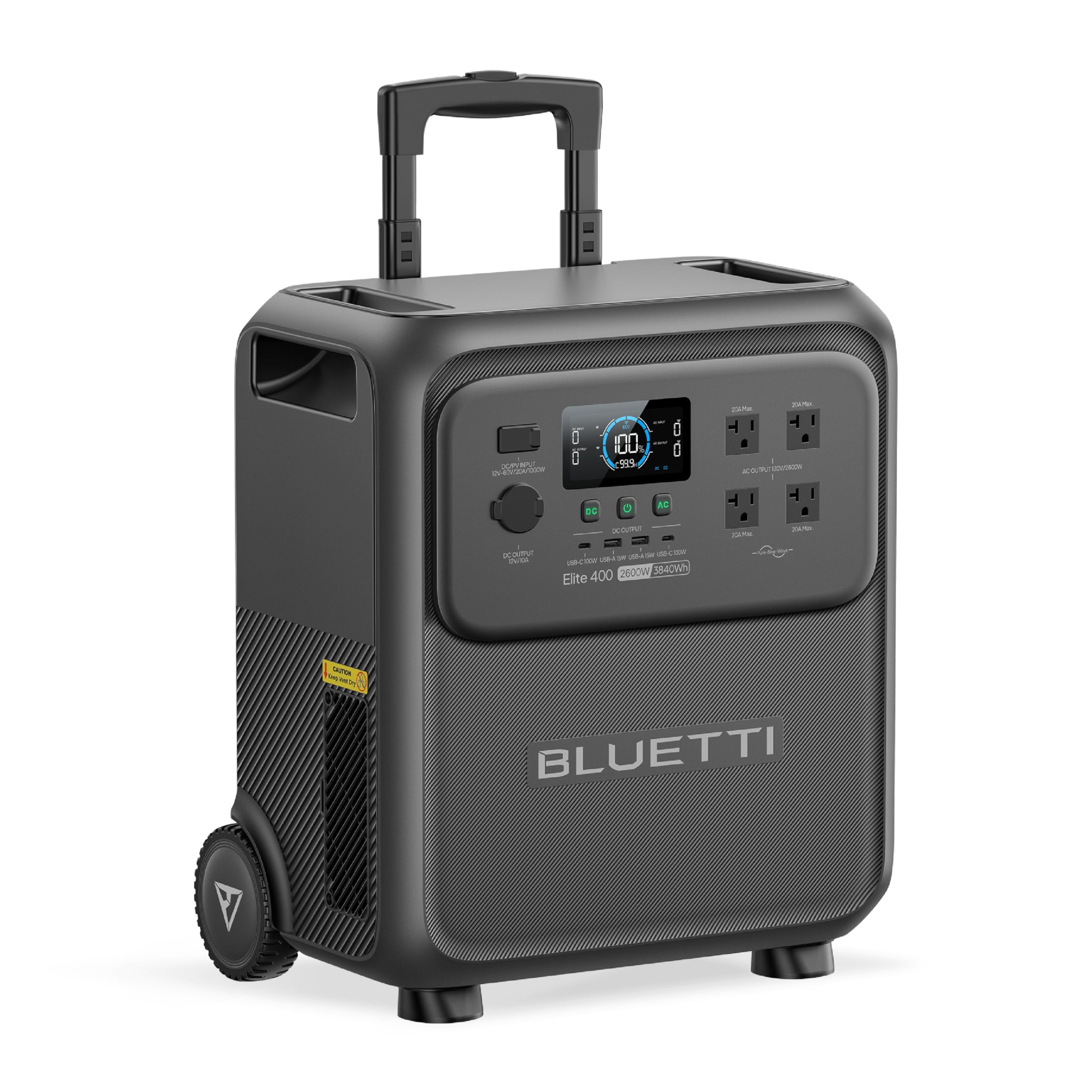
The BLUETTI Elite 400 packs 3,840Wh of LiFePO4 capacity into a unit that features an easy-roll trolley system—making it one of the most portable large-capacity stations on the market. Despite its 86-pound weight, the integrated handle and wheels allow one person to move it across a yard or into a basement without straining. The 2,600W continuous output with a 3,900W surge is sufficient for a 15k BTU air conditioner or a small shop welder based on real user reports.
Charging speed is a standout: AC + solar input hits 2,800W, pushing the battery to 80% in just 70 minutes. The ≤15ms UPS backup keeps sensitive electronics like Starlink terminals and server equipment running seamlessly through flickers. Users have reported running a full-size fridge for three days straight on a single charge, with the unit still holding a healthy reserve.
The main downside is that the 2,600W continuous output is lower than many 3000W-class competitors, which may be a dealbreaker if you need to run two high-draw appliances simultaneously. Additionally, the Elite 400 is not expandable with external battery packs—what you see is what you get. For stationary home backup where 2,600W is sufficient, the runtime-per-dollar ratio is excellent.
Why it’s great
- 3,840Wh capacity provides extended runtime for a refrigerator—up to three days based on real-world load tests.
- Integrated trolley system and wheels make the 86-lb unit easy to move by one person.
- Fast AC + solar charging achieves 80% in just 70 minutes.
Good to know
- Continuous output is limited to 2,600W—lower than the typical 3,000W+ from other stations in this class.
- No expansion battery support; capacity is fixed at 3,840Wh.
6. PECRON E3800 LFP
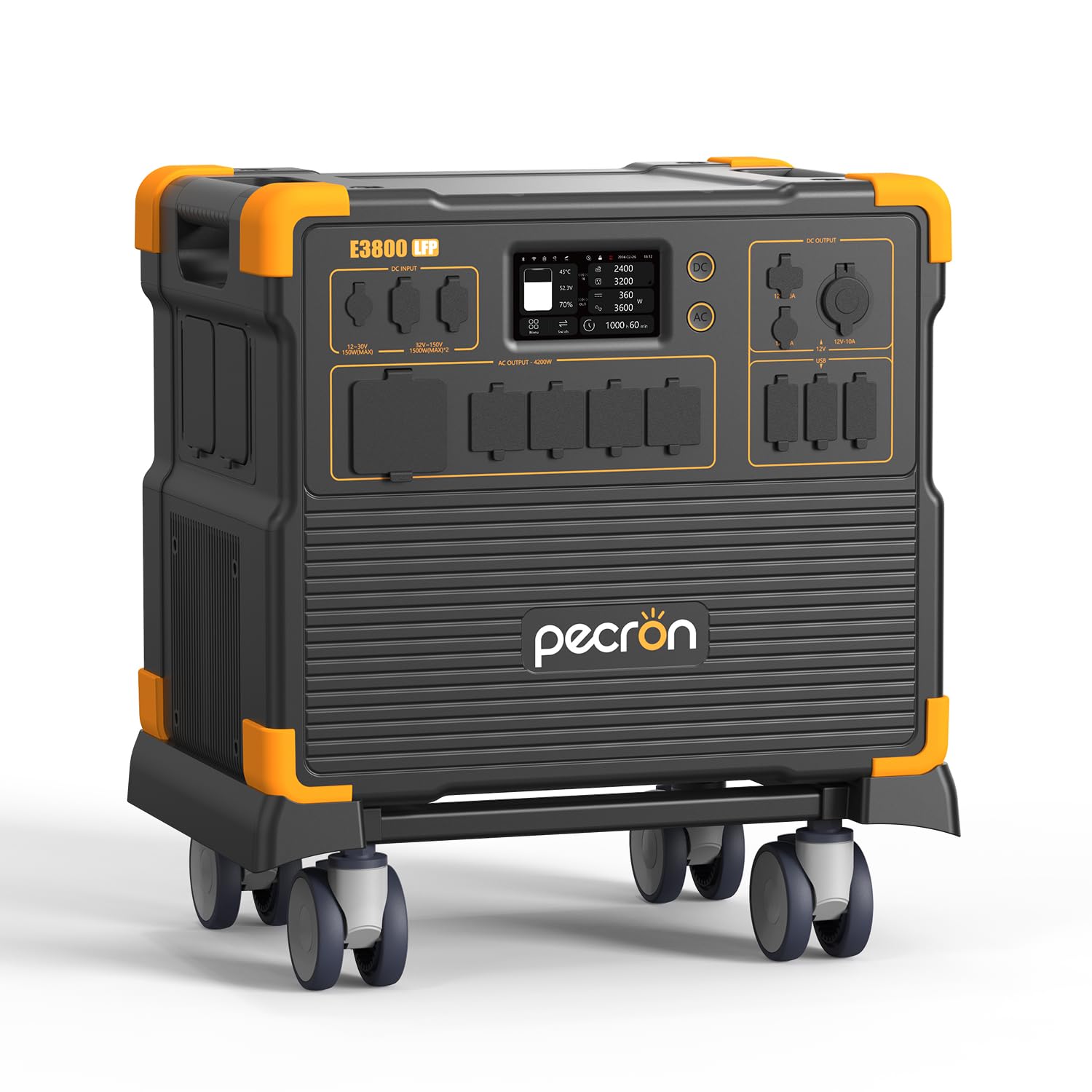
The PECRON E3800 LFP stands out for its insane scalability: the base unit comes with 3,840Wh and can be expanded up to 53.76kWh via additional battery packs. That’s enough capacity to run an entire off-grid home for days. The AC output is rated at 4,200W continuous with 14 output ports, including a TT-30 RV outlet and 4 dedicated 20A AC ports for heavy-load distribution.
Charging flexibility is exceptional. The unit accepts up to 3,200W AC input via a 30A cable for a 1.4-hour full recharge, or up to 3,000W solar input from series/parallel panel arrays. The 8-20ms UPS function switches seamlessly during outages, and the LCD touchscreen displays battery level, voltage, temperature, and remaining runtime clearly. Users confirm it handles a 1,500W heater for over two hours and manages a 1/2 HP sump pump’s startup surge without tripping.
The main challenge is weight: at 87.3 pounds, you’ll want to use the included wheeled cart for any movement beyond flat surfaces. The BMS calibration sometimes needs a full discharge cycle before readings stabilize, and the wall AC outlet limits draw—you need to use the generator input for full 3,200W charging. For those building a massive off-grid storage system, this is an unbeatable starting point.
Why it’s great
- Expandable from 3.84kWh up to a massive 53.76kWh—perfect for whole-home off-grid setups.
- 4200W AC continuous output with 14 ports including TT-30 RV outlet and 4x20A AC ports for load balancing.
- Fast AC charging at 3200W (1.4 hrs) and 3000W solar input for rapid off-grid refilling.
Good to know
- Weighs 87.3 lbs; the included wheeled cart is necessary for moving across rougher terrain.
- Full 3200W AC charging requires the 30A cable—standard 15A wall outlets cap at 1800W.
7. Jackery Explorer 2000 Plus

The Jackery Explorer 2000 Plus is Jackery’s first LiFePO4-based expandable system, offering a 2,042.8Wh base capacity that can scale to 12kWh with up to five expansion batteries, or 24kWh by linking two stations in parallel for 6,000W total output. It’s the perfect entry point for those who want the safety and longevity of LFP chemistry without jumping straight into a massive 3kWh+ station.
The 3,000W pure sine wave inverter includes a 30A RV outlet, making it a natural fit for camper vans and small RVs. The whisper-quiet operation at 30 dB means you can place it inside a sleeping area without disturbance. The ChargeShield Fast Charging Technology boosts battery lifespan by 50%, and the smart app control via Wi-Fi or Bluetooth gives you full remote visibility into charge levels and consumption patterns.
The main trade-off is the smaller base capacity compared to the 3kWh+ stations on this list—2,042Wh means you’ll need at least one expansion battery for extended home backup. The parallel linking cable is also bulky, and the external battery pack lacks its own outputs, so it can’t be used standalone. For RV owners or those starting a modular system, this is a great foundation.
Why it’s great
- LiFePO4 chemistry delivers 4,000 cycles to 70% capacity with a 5-year warranty for long-term value.
- Expandable up to 12kWh with five external packs or 24kWh with two stations linked.
- 30 dB whisper-quiet operation makes it suitable for indoor RV and bedroom use.
Good to know
- Base capacity is 2,042Wh; expansion batteries are necessary for whole-home backup duty.
- Expansion battery pack lacks independent AC outlets—it cannot be used as a standalone unit.
8. ABOK Ark3600
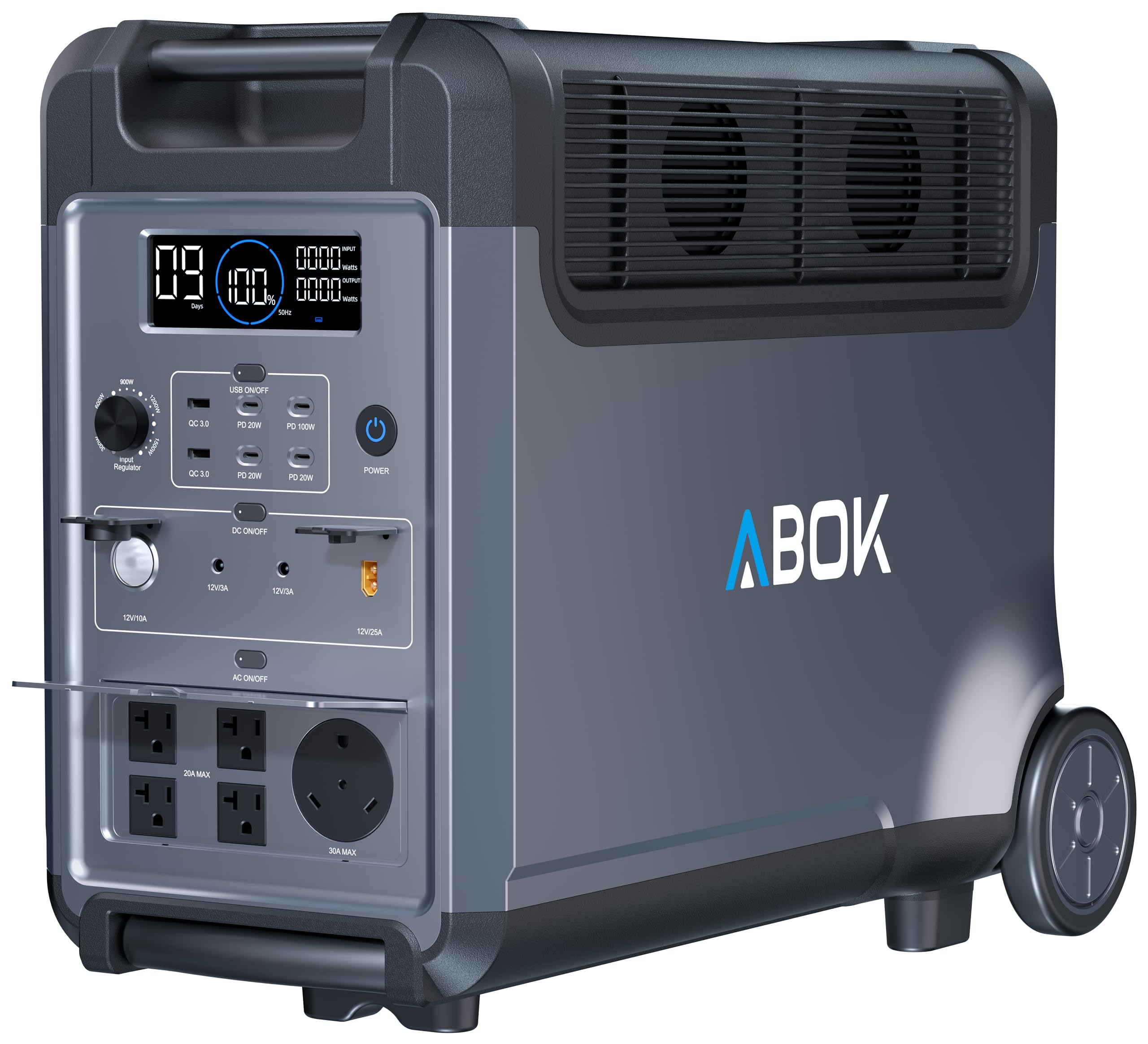
The ABOK Ark3600 crams 15 different output ports into a single unit, making it the most versatile connectivity hub in the 3000W class. You get a 30A AC outlet for RV hookups, 4x20A AC outlets for heavy kitchen appliances, USB-C PD 100W for laptops, USB-A QC3.0 for phones, DC5521 ports for small electronics, and an XT60 port for 12V loads. It’s essentially a distribution panel on wheels.
The 3,840Wh LiFePO4 battery is rated for 4,000 cycles and can be expanded to 11,520Wh via extra battery packs. Charging is flexible: combined AC+PV input hits 3,500W, refilling the pack in just 1.29 hours. The unit features a telescoping handle and durable wheels for easy transport, plus Bluetooth app monitoring. Users report it runs a wet vac, heat gun, and SDS-Max rotary hammer simultaneously for a full workday, dropping only to 22% charge.
Quality control has been mixed—some units arrive with display issues or charging problems, and the 92-pound weight makes returns expensive if you get a defective unit. The customer support team seems responsive based on user feedback, but the defect rate is higher than the more established brands. For those who need maximum port variety in a single box, the Ark3600 is hard to beat on feature density.
Why it’s great
- 15 output ports including 30A RV outlet, USB-C PD 100W, and XT60 for maximum device compatibility.
- Fast AC+PV charging fills the 3840Wh pack in just 1.29 hours with combined input.
- 4,000-cycle LiFePO4 battery with expansion capability up to 11,520Wh for long-term value.
Good to know
- Some users report display or charging defects—QC consistency is not as strong as top-tier brands.
- At 92 lbs, returns due to defects can be expensive due to heavy-item shipping costs.
9. AFERIY P310

The AFERIY P310 offers one of the fastest AC recharge speeds in its price class—just 1.5 hours from empty to full using its 2,200W AC input. The 3,840Wh LiFePO4 battery is expandable to 11,520Wh, and the unit outputs a steady 3,600W continuous with a 7,200W peak for motor startup surges. The <10ms UPS transfer time keeps sensitive electronics running seamlessly during power blips.
Smart app control gives you remote monitoring and scheduling—you can set charging windows to align with off-peak electricity rates or solar production peaks. The 15 output ports follow the same layout as the ABOK Ark3600, with a 30A RV outlet, dual USB-C PD, and DC outputs. Users praise the unit’s build quality and the 7-year support period, noting that the adjustable charging-speed levels let you balance noise and speed based on your situation.
The biggest concern is reliability: a few users received units with blank display segments that required troubleshooting. While customer support was responsive in replacing defective units, it’s a hassle. Also, the unit is heavy at 80.5 pounds and lacks the rugged wheel design of some competitors, so moving it over grass or gravel is a challenge. For fast charging and good expandability, it’s a strong mid-range option.
Why it’s great
- Fast 1.5-hour full AC recharge gets you back online quickly during short outage windows.
- 3600W continuous output with 7200W peak handles motor startup surges on pumps and compressors.
- 7-year support period with UL listing provides peace of mind beyond the typical 5-year warranty.
Good to know
- Occasional display segment blanking issues—support is responsive but the defect rate is concerning.
- At 80.5 lbs without a robust wheel system, moving the unit on uneven surfaces is difficult.
10. Anker SOLIX F3800 Plus

The Anker SOLIX F3800 Plus is a monster: 6,000W continuous AC output from a single unit, expandable to 53kWh with up to 12 extra batteries, and 3,200W solar input for rapid off-grid refilling. This station was designed for people who need to run an entire house—including dryers, EV chargers, and central HVAC—without breaking a sweat. Two units can be paired for 12,000W max output, which is enough to power almost any home appliance simultaneously.
The dual-voltage capability (120V/240V) comes standard, and the NEMA L14-30 and NEMA TT-30P ports allow direct connection to an RV or EV’s power inlet. Anker’s InfiniPower technology with EV-class LFP cells targets a 10+ year lifespan with a 5-year warranty. The smart app lets you remotely monitor and control power flow, and the system can automatically prioritize solar or off-peak charging to minimize your electricity bill.
The main trade-offs are weight and noise: at 135.6 pounds, it’s the heaviest station on this list, and the fans spin up noticeably under heavy load. Some units arrived with cosmetic damage like broken wheels, though Anker’s customer support resolved those cases quickly. This station is overkill for weekend camping trips but ideal for permanent home backup installations where portability isn’t the primary concern.
Why it’s great
- 6000W continuous AC output from a single unit with 3200W solar input—unmatched raw power in its class.
- Expandable up to 53kWh with dual-voltage 120/240V for whole-home backup including dryers and EV charging.
- NEMA L14-30 and TT-30P ports allow direct plug-in to RV and EV power inlets without adapters.
Good to know
- Weighs 135.6 lbs with noticeable fan noise under heavy load—not meant for frequent relocation.
- Some units arrive with minor cosmetic damage like broken wheels; support is responsive but frustrating.
11. EF ECOFLOW DELTA Pro 3

The EF ECOFLOW DELTA Pro 3 is the most technologically advanced 3000W-class power station on the market. It features a 4,096Wh LiFePO4 battery with IP65-rated CTC (Cell-to-Chassis) pack technology, providing dust and water resistance that no other station in this list can match. The inverter delivers 4,000W continuous (6,000W with X-Boost) and supports true 120V/240V split-phase output from a single unit, powering anything from a 3-ton central AC to a 1 HP water pump.
Charging versatility is unmatched: you can refill via AC at 1,800W, solar at 2,600W, EV charging stations, or a gas generator—with combined input up to 7,000W for the fastest possible recharge. The X-Quiet technology keeps operation at a whisper-quiet 30 dB, and the ≤10ms UPS protects sensitive electronics. The unit can expand to 48kWh with extra batteries, and three units can be linked for 12,000W output—enough to power a small home’s entire electrical load.
The biggest frustration is the app dependency: many core functions like charge rate adjustment require the smartphone app, and the app requires an internet connection to sign in—meaning no offline emergency control. The unit also lacks a 12V DC port, which is disappointing for camping use. For those who want the most advanced home backup system with proper weather sealing and split-phase support, this is the cream of the crop.
Why it’s great
- IP65-rated CTC battery pack provides dust and water resistance—unique in the portable power station category.
- True 120V/240V split-phase output from a single unit supports whole-home backup including central AC.
- Ultra-quiet 30 dB operation with multi-source charging up to 7,000W combined input.
Good to know
- Many settings require the smartphone app with internet sign-in—limited offline emergency control.
- No 12V DC port; all accessories must run through USB-C or AC adapters.
12. OSCAL PowerMax 6000
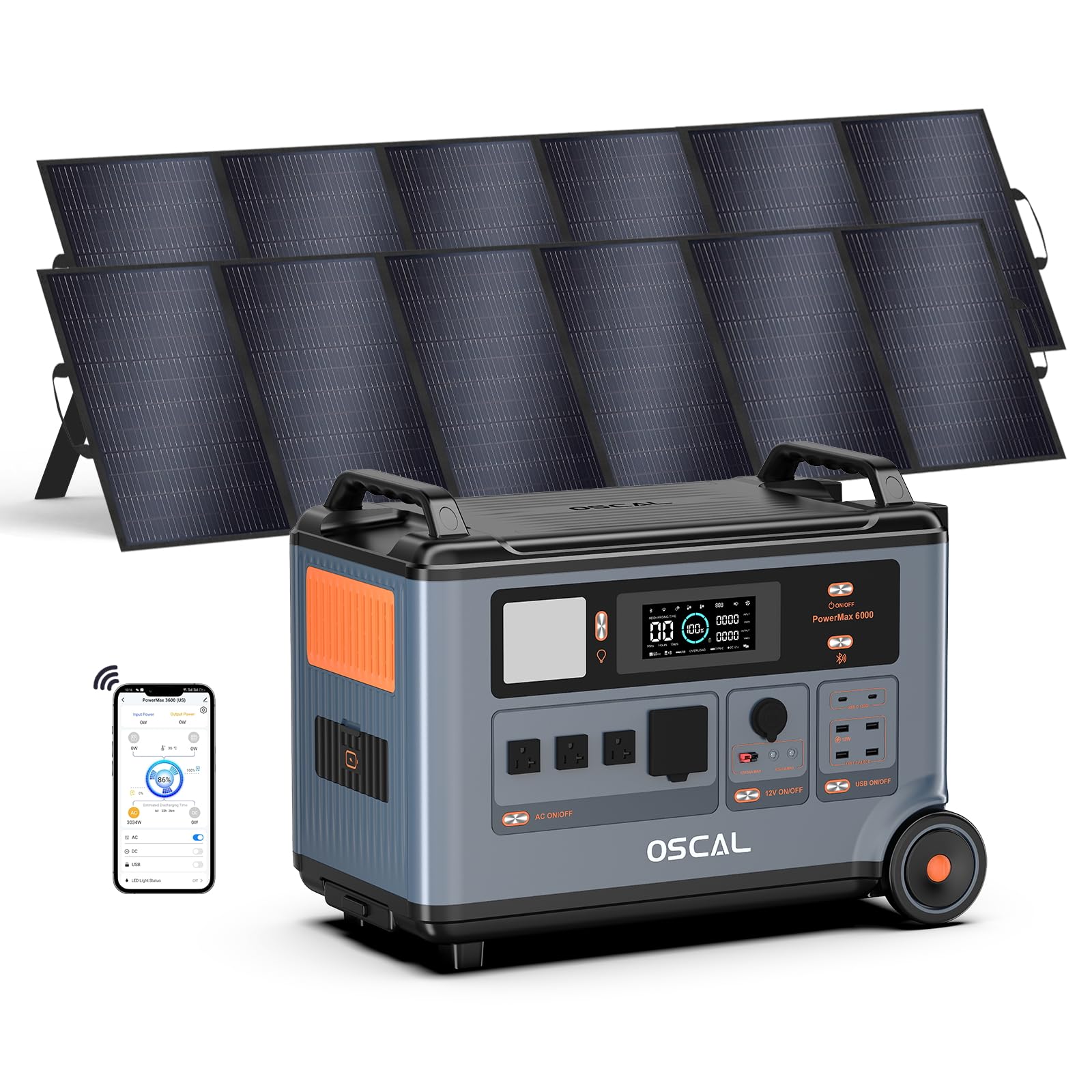
The OSCAL PowerMax 6000 offers the best value bundle in the premium 3000W segment by including two 500W solar panels with the station. The 3,600Wh LiFePO4 battery pairs with a 6,000W inverter (9,000W peak) and supports 120V/240V dual-voltage output. The DC/AC bi-directional inverter can charge from AC at 2,200W—fully refilling the battery in just 1.96 hours—while solar input hits 2,400W for off-grid independence.
The 5-8ms EPS switchover is among the fastest in the category, ideal for keeping network equipment and medical devices online during outages. The ‘Smart Life’ app provides remote monitoring and control, and the 3,500-cycle battery life targets a 25-year service life. The 14 output ports include 4 AC outlets, USB-C, and automotive-style DC ports for broad device compatibility.
The major limitation is motor startup handling: the unit’s BMS struggles with larger inductive loads like air compressors with motors over 3/4 HP, shutting down and requiring a hard reset. Customer support is via email tickets only, which can be slow during critical moments. For resistive loads like space heaters and cooking appliances, the PowerMax 6000 is excellent—but plan to keep high-surge motor loads on a separate circuit.
Why it’s great
- Comes with two 500W solar panels, providing a complete off-grid charging solution out of the box.
- 6000W continuous AC output with 9000W peak handles most household resistive loads easily.
- 5-8ms EPS switchover is among the fastest for sensitive electronics protection.
Good to know
- BMS struggles with startup surges from motors larger than 3/4 HP—may require a hard reset on shutdown.
- Customer support is email-only with potential delays during emergencies.
13. EGO Power+ PST3040

The EGO Power+ PST3040 is a unique entry—it’s a battery-powered inverter generator that runs on EGO’s 56V ARC Lithium batteries, which you likely already own if you’re in the EGO lawn tool ecosystem. The station delivers 2,000W continuous power with a 3,000W peak, and it includes four USB ports and three 120V AC outlets with pure sine wave output for sensitive electronics.
The key advantage is the lack of a built-in battery: you use your existing EGO batteries, meaning no battery degradation over time (your batteries can be swapped and used in other tools). The LCD display shows remaining runtime based on the actual battery capacity connected. Users report running a refrigerator for about 12 hours with four 10Ah EGO batteries, and the unit is weather-resistant for outdoor use and runs silently compared to gas generators.
The downsides are significant for this list. The PST3040 is not a true 3000W continuous station—it peaks at 3,000W but only delivers 2,000W continuous, putting it below the output threshold of all other stations here. It cannot charge batteries while powering devices, and the batteries drain over time if left plugged in without use. The solar charging option requires an expensive adapter and only accepts 180W input, making off-grid recharge slow. This is a niche product best suited for EGO ecosystem owners, not general 3000W power station buyers.
Why it’s great
- Leverages existing EGO 56V batteries—no expensive built-in battery pack to degrade over time.
- Pure sine wave output is safe for sensitive electronics like CPAP machines and laptops.
- Weather-resistant construction allows outdoor use during rain or humid conditions.
Good to know
- Continuous output is only 2,000W—not a true 3000W continuous power station despite the peak rating.
- Cannot charge batteries while powering devices, and batteries drain over time when plugged in.
- Solar charging requires a adapter and only accepts 180W—slow and expensive for off-grid use.
FAQ
Can I run my whole house on a 3000 watt power station?
How long does it take to recharge a 3000 watt power station?
What is the difference between X-Boost and a standard surge rating?
Final Thoughts: The Verdict
For most users, the 3000 watt power station winner is the Jackery HomePower 3000 because its CTB technology delivers a genuinely portable 59.5-pound footprint with 3,072Wh of LiFePO4 capacity and full 3,600W output. If you want the fastest recharge speed and generator pass-through capability, grab the Anker SOLIX F3000. And for whole-home 120V/240V backup with split-phase output and massive expansion headroom, nothing beats the EF ECOFLOW DELTA Pro 3.