
Most portable power stations below the 3kWh mark leave you stranded running a mini-fridge for half a day. A true 3000 watt solar generator is the threshold where backup power becomes whole-home capable—running refrigerators, sump pumps, CPAP machines, and power tools simultaneously without tripping breakers. The line between a glorified phone charger and a legitimate off-grid power supply starts right here.
I’m Min — the co-founder and writer behind Gadgets Feed. I’ve spent hundreds of hours dissecting inverter topologies, LiFePO₄ cycle life ratings, real-world MPPT efficiency curves, and pass-through charging logic to separate marketing claims from actual performance in the 3000W-class solar generator arena.
This guide breaks down the quiet, fume-free freedom of owning the best 3000 watt solar generator for home backup, RV independence, and emergency preparedness with zero compromises on runtime or power quality.
How To Choose The Best 3000 Watt Solar Generator
Every 3000W-class station can push a microwave and a fridge simultaneously. The differences that matter are battery chemistry, expansion pathways, solar input voltage tolerance, and UPS transfer speed. Prioritize these four factors before comparing brand names or outlet counts.
Battery Chemistry and Cycle Life
LiFePO₄ (LFP) cells are the only chemistry serious buyers consider in this tier. LFP delivers 3000 to 6000 cycles to 70% capacity retention—roughly 8 to 16 years of daily use. Avoid NMC or lithium-ion packs in the 3000W category; they degrade faster and pose higher thermal runaway risk under sustained high loads.
Expandability and Voltage Configurations
Some units support daisy-chaining extra battery packs to push past 10kWh. Others allow dual-unit parallel operation for 240V split-phase output or double the amperage at 120V. If a whole-house transfer switch or EV charging is in your future, prioritize a model that can scale and output 240V natively.
Solar Input Specifications
The maximum open-circuit voltage (Voc) limit and amp rating define how many panels you can wire in series or parallel. Higher voltage input (120V to 165V) reduces line losses and lets you use thinner gauge wire on long runs. A low 60V limit forces panel arrays into parallel configurations that require heavier cables.
Quick Comparison
On smaller screens, swipe sideways to see the full table.
| Model | Category | Best For | Key Spec | Amazon |
|---|---|---|---|---|
| PECRON F3000LFP | Mid-Range | Best Overall Value | 3072Wh / 3600W Inverter | Amazon |
| Jackery Explorer 2000 Plus | Mid-Range | Scalable RV System | 2042Wh / Expandable to 24kWh | Amazon |
| EcoFlow DELTA 3 Max | Mid-Range | Fastest AC Recharge | 2048Wh / 0-80% in 1.13 Hr | Amazon |
| AFERIY 3840Wh | Mid-Range | Highest Capacity Under .1k | 3840Wh / Expandable to 11.5kWh | Amazon |
| DJI Power 2000 | Premium | Ultra-Quiet Drone Rig | 2048Wh / 0-80% in 55 Min | Amazon |
| ABOK Ark3600 | Premium | Heavy-Duty Workshop Power | 3840Wh / 3600W Continuous | Amazon |
| Anker SOLIX F3000 | Premium | Generator Pass-Through Charging | 3072Wh / 3600W Pass-Through | Amazon |
| VTOMAN FlashSpeed Pro 3600 | Premium | 2-Hour Full Recharge | 3096Wh / 3600W Output | Amazon |
| BLUETTI Apex 300 | Premium | 120V/240V Split-Phase System | 2765Wh / 3840W AC Output | Amazon |
| EcoFlow DELTA Pro | Premium | Highest Expandability Ceiling | 3600Wh / Expandable to 25kWh | Amazon |
| Jackery HomePower 3000 | Premium | Lightest 3kWh Unit at 59.5 lbs | 3072Wh / 7200W Surge | Amazon |
| Anker SOLIX F3800 | Premium | Whole-Home 240V Backup | 3840Wh / 6000W AC Output | Amazon |
| Westinghouse WGen14500TFc | Budget-Fuel | High-Runtime Fuel Generator | 14500W Running / Tri-Fuel | Amazon |
In‑Depth Reviews
1. PECRON Portable Power Station F3000LFP
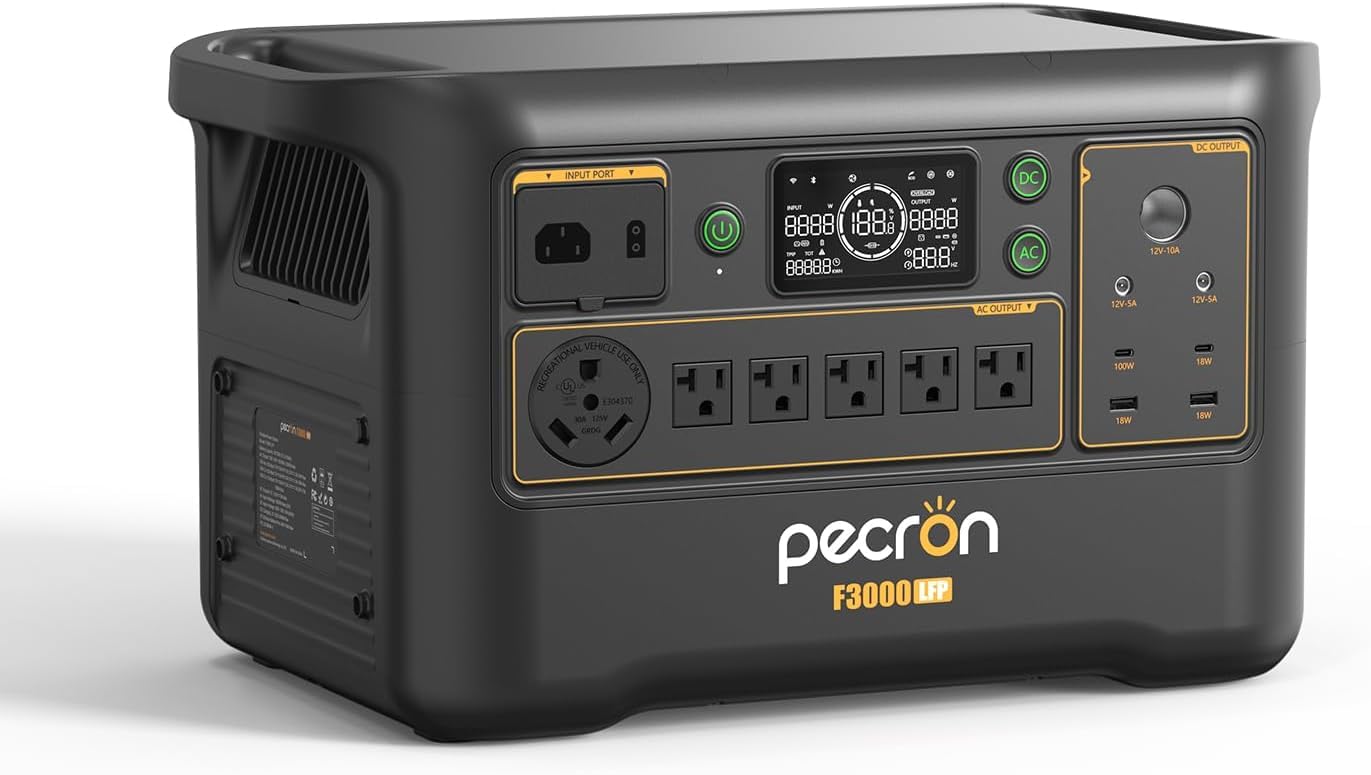
The PECRON F3000LFP delivers 3072Wh of LFP capacity paired with a 3600W pure sine wave inverter—enough to run a refrigerator, microwave, and sump pump simultaneously without breaker trips. The 1800W AC input charges the full battery in approximately two hours, which is significantly faster than many competitors that top out at 1200W input in this price tier.
What sets this unit apart is the expandability pathway to 10752Wh via an external battery pack, plus 1600W solar input tolerance up to 120V. The UPS switch completes in 8-20ms, enough to keep desktop computers and medical devices online during grid dropouts. Thirteen ports including two USB-C with 100W PD make it versatile for modern device charging without dongles.
Real users confirm the unit handles heavy loads like air conditioners and power tools, though the fan is audible during high-rate charging. The idle draw sits at 30W when left on, but drops to zero in standby. For buyers who want a 3000W-class station with LFP safety and a sub- entry point, the build quality and charge speed justify the investment.
Why it’s great
- 3072Wh capacity at class-leading cost per watt-hour
- 1800W AC input charges fully in under two hours
- Expandable to over 10kWh with extra battery pack
Good to know
- Fan noise is noticeable during high-rate charging
- Unit weighs 63 pounds without integrated wheels
2. Jackery Explorer 2000 Plus

The Jackery Explorer 2000 Plus delivers 2042Wh of LiFePO₄ capacity with a 3000W continuous inverter (6000W surge) and a whisper-quiet 30 dB operating noise floor. Jackery’s first LFP station supports up to five expansion battery packs for a total of 12kWh, and two units can be paralleled to reach 24kWh with 6000W output for whole-house scenarios.
Charge time is a strong point: six SolarSaga 200W panels or a standard wall outlet can fully replenish the battery in roughly two hours. The integrated retractable handle and wheels make the 61.5-pound chassis manageable despite the weight. Bluetooth and Wi-Fi app control let you monitor consumption, set charge limits, and toggle AC outlets remotely.
Users regularly report running RV air conditioners in triple-digit heat and heavy power tools like rotary hammers for hours without performance drop. The 30-amp RV outlet is a welcome addition for camper hookups. The battery pack cable protrudes about 18 inches, which takes up some interior space, but the expansive ecosystem and 5-year warranty make this a long-term investment that grows with your needs.
Why it’s great
- Expandable from 2kWh to 24kWh with parallel support
- Ultra-quiet 30 dB operation for indoor and nighttime use
- Integrated retractable handle and wheels for mobility
Good to know
- Expansion battery cable sticks out significantly from the unit
- No standalone use for battery packs without the main station
3. EF ECOFLOW DELTA 3 Max
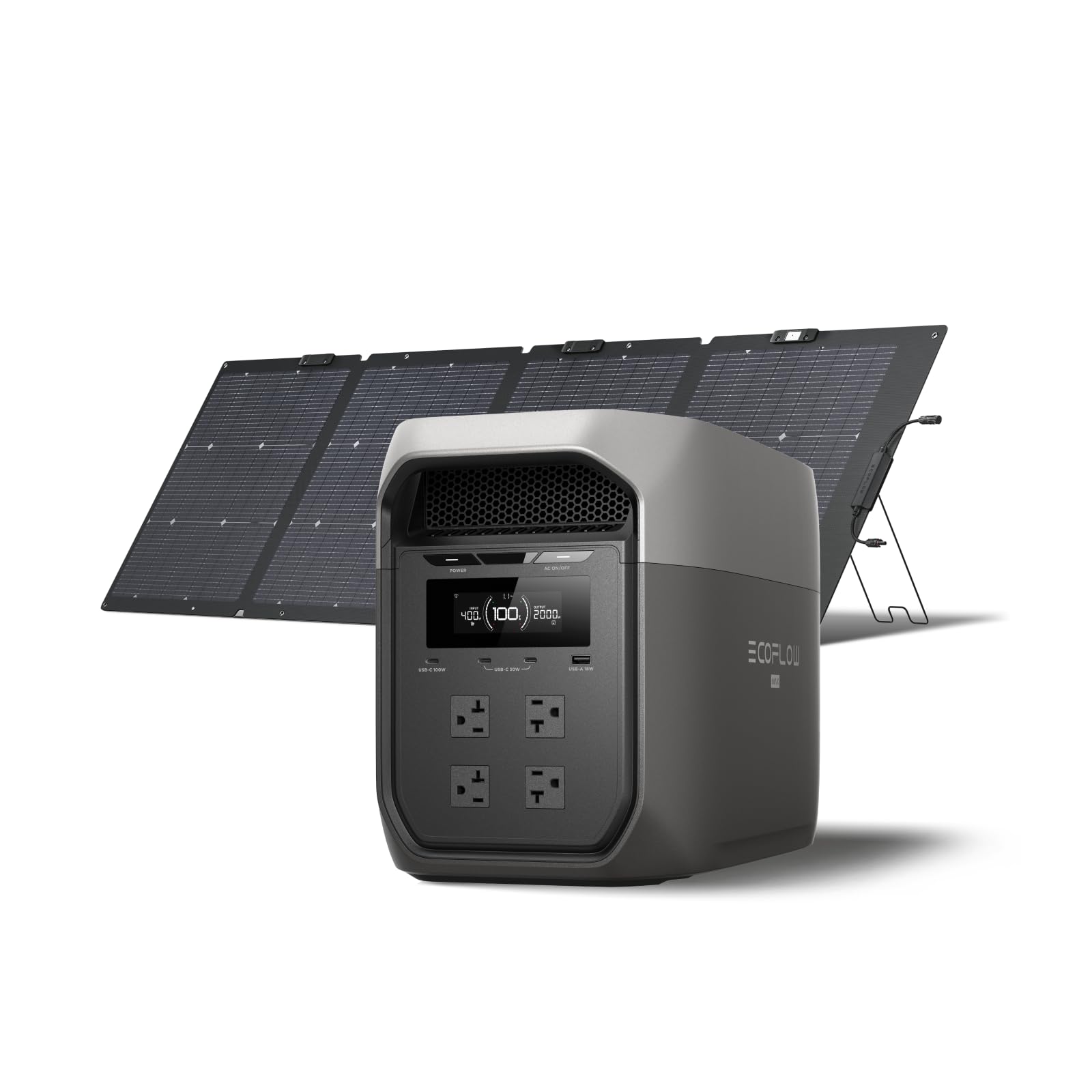
The EcoFlow DELTA 3 Max packs 2048Wh of LiFePO₄ storage with a 2400W continuous inverter that hits 3400W via X-Boost mode—enough to handle 99% of household appliances including refrigerators, microwaves, and power tools. The headline feature is the 1800W AC input that charges from zero to 80% in just 1.13 hours using EcoFlow’s X-Stream technology, with full charge in under 90 minutes.
The 10ms UPS transfer protects sensitive electronics like medical devices and desktop computers without interruption. Solar input reaches 1000W max, and the included 220W bifacial panel can harvest extra energy from reflective surfaces, boosting effective yield by up to 20% in optimal conditions. The unit is lighter than the Delta 2 Max despite the larger capacity, with a durable aluminum frame ready for daily carry.
Users confirm it runs a freezer, microwave, and air fryer simultaneously without strain, and the ultra-quiet fans allow for undisturbed sleep in RVs. The Delta 3 Max does not support expansion batteries in the base configuration (the Delta 3 Max+ does), so if expandability is a dealbreaker, check the model variant. This is the best pick for buyers who prioritize recharge speed above all else.
Why it’s great
- Fastest AC recharge in its class at 0-80% in 68 minutes
- 3400W X-Boost handles heavy appliances
- Lighter and more compact than predecessor Delta 2 Max
Good to know
- Base model lacks battery expansion ports (Delta 3 Max+ required)
- Inverter rated at 2400W continuous; X-Boost is not pure sine wave above 2400W
4. AFERIY 3840Wh Portable Power Station

The AFERIY P310 delivers a massive 3840Wh LFP battery—one of the highest base capacities in the mid-range tier—with a 3600W continuous inverter (7200W peak) and an expandability path to 11.5kWh using external packs. The UPS switch completes in under 10ms, making it seamless for home office backup and medical equipment.
AC charging hits full capacity in roughly 1.5 hours thanks to high amp input, and solar input up to 2000W lets you replenish rapidly from panels. The 80-pound unit includes a pull handle and rugged wheels for transport, and the 15-port layout includes a 30A AC outlet plus three USB-C ports (one at 100W PD). Smart app control lets you schedule charging, monitor real-time usage, and set discharge limits.
Users report the unit powers entire RV setups except air conditioning for extended periods, and the customer support team responds quickly with replacement parts. The screen had some early display glitches that were resolved through firmware updates. For buyers needing the most raw capacity under without sacrificing LFP safety or charge speed, this station is a compelling contender.
Why it’s great
- 3840Wh base capacity at an aggressive price per watt-hour
- Fast 1.5-hour AC recharge time
- App-based energy management with scheduling
Good to know
- Unit weighs 80 pounds; requires floor dolly for long moves
- Some early units had screen display glitches
5. DJI Power 2000
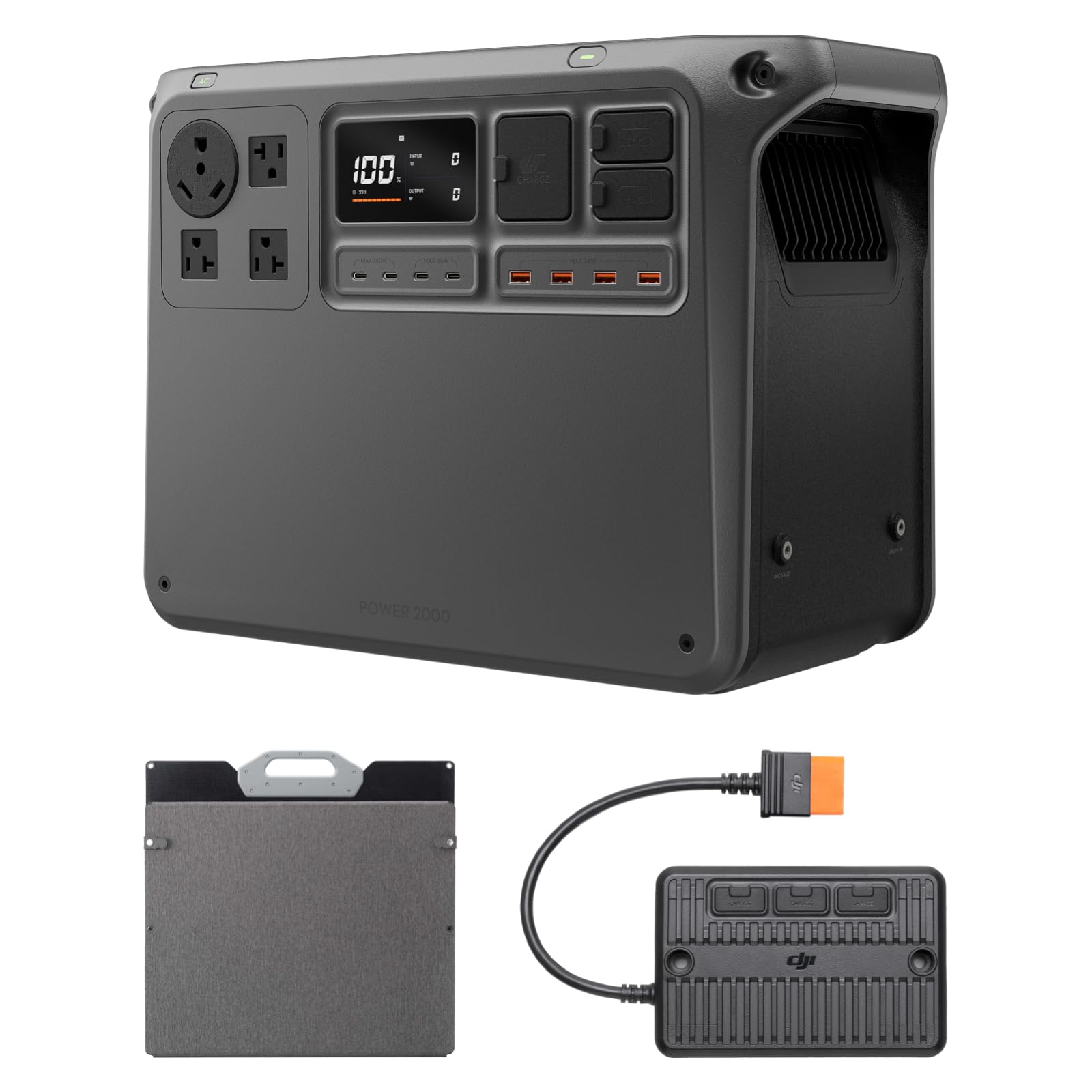
The DJI Power 2000 brings drone-industry engineering into the 3000W solar generator space with a 2048Wh LFP battery, 3000W continuous output (4000W peak), and a blazing 55-minute recharge to 80% via 1800W AC input. The inverter runs at under 30 dB, making it one of the quietest units at this power level—ideal for camping trips and nighttime RV use.
The 10ms UPS transfer protects sensitive electronics, and the 26 internal temperature sensors paired with a flame-retardant housing and sub-nano coating make it rugged for outdoor conditions. The unit includes four AC outlets, four USB-C ports (two at 140W PD), four USB-A ports, and proprietary SDC ports for direct DJI drone battery charging without extra adapters. Solar input maxes out at 1800W, and the foldable 200W panel with MPPT adapter is included in the bundle.
Users confirm the station runs camper appliances for an estimated 40 hours on a full load and powers entire drone businesses on location without grid access. The lack of built-in wheels on a 48-pound chassis is a minor ergonomic complaint, and the reliance on the DJI app for full control may bother users who prefer physical buttons. For drone pilots and noise-sensitive campers, this is a refined, purpose-built solution.
Why it’s great
- 55-minute 0-80% recharge is the fastest in its class
- Super-quiet 30 dB operation for indoor and RV use
- SDC ports enable direct DJI drone battery charging
Good to know
- No built-in wheels; awkward to move at 48 pounds
- Full control requires DJI app (no local screen-only operation)
6. ABOK Ark3600
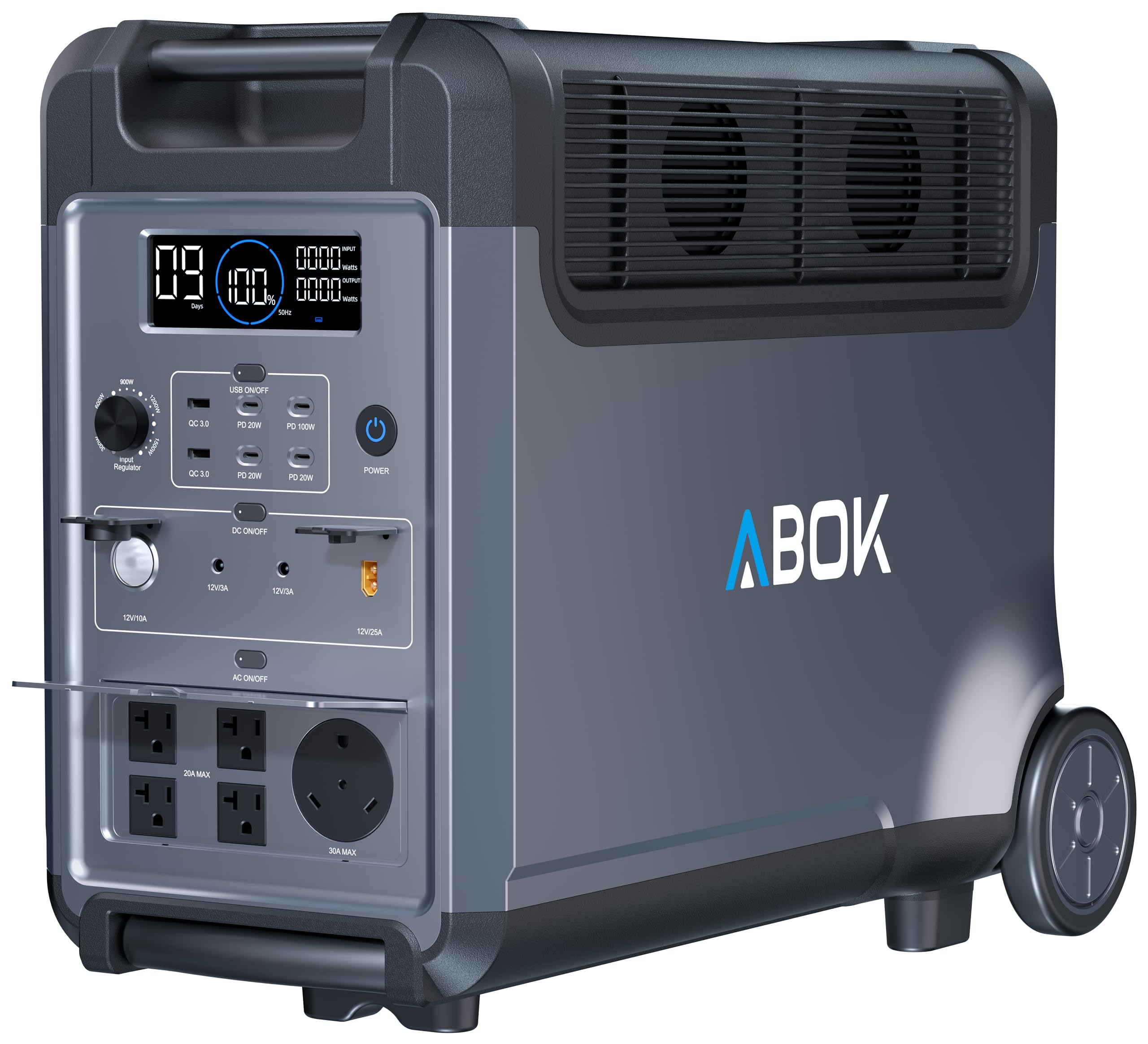
The ABOK Ark3600 commands 3840Wh of LFP storage with a 3600W rated inverter (4500W peak) and a 30A dedicated RV outlet on the front panel. The base capacity expands to 11520Wh with extra battery packs, and the AC input at 1500W combined with 2000W solar input brings full charge in about 1.3 hours using simultaneous AC+solar hybrid mode.
The 92-pound unit features a telescoping handle and durable wheels for rolling across job sites or campsites. Fifteen output ports include a dedicated 30A NEMA TT-30R, four 20A AC outlets, three USB-C (one at 100W PD), and an XT60 port for auxiliary devices. Bluetooth app control lets you monitor power flow, set charge limits, and toggle output ports remotely.
Users confirm the unit runs power tools like wetvacs, heat guns, and SDS-Max drills simultaneously without voltage sag. The fan runs intermittently under sustained high load, but the noise profile is acceptable for garage use. The unit must be charged above 32°F ambient, which limits cold-weather solar harvesting in northern climates without pre-warming. For job-site power and heavy workshop tools, the Ark3600 delivers where smaller units sag.
Why it’s great
- 3840Wh base capacity with 30A RV outlet
- Hybrid AC+solar charging reaches full in 1.3 hours
- Telescoping handle and wheels simplify transport
Good to know
- Weighs 92 pounds; requires wheeled transport for long distances
- Charging blocked below 32°F without pre-warming
7. Anker SOLIX F3000
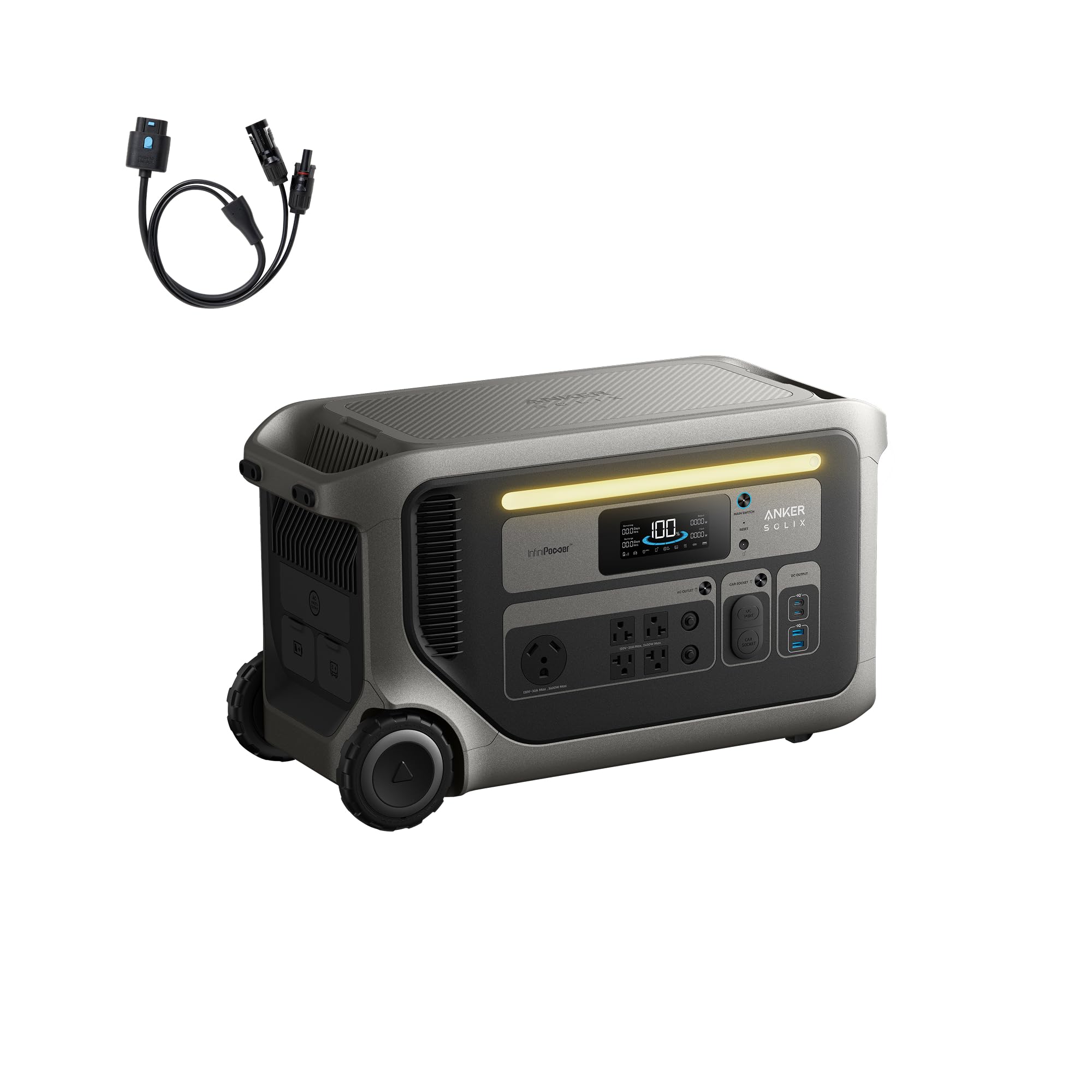
The Anker SOLIX F3000 steps into the 3000W arena with 3072Wh of LFP capacity, a 3600W inverter, and a unique 6000W pass-through charging capability that lets you simultaneously recharge from a gas generator at full 3600W while running your appliances at 3600W. This eliminates the charge-while-disconnected dance that plagues most stations during extended outages.
The unit achieves 125 hours of AC idle standby time—meaning it holds charge for nearly a week without phantom drain—and can run a 190W fridge for 42 hours on a single charge. The 2400W solar input is among the highest in this class, with dual 165V/60V ports for flexible panel wiring. Two units can be paralleled for 240V split-phase output to power well pumps and large appliances.
Users love the ultra-low idle consumption and the ability to run an RV air conditioner for over four hours quietly. The 91.5-pound chassis includes wheels and a handle, but moving it up stairs is a two-person job. The app is required for some settings like charge rate limits and power saving modes. For those pairing solar with a gas generator for hurricane-season security, the F3000’s pass-through architecture is unmatched.
Why it’s great
- 3600W pass-through charging works simultaneously with full output
- Ultra-low idle consumption (125 hours standby)
- 240V split-phase output with dual-unit parallel setup
Good to know
- Pass-through requires compatible generator with 3600W output
- App mandatory for advanced configuration options
8. VTOMAN FlashSpeed Pro 3600
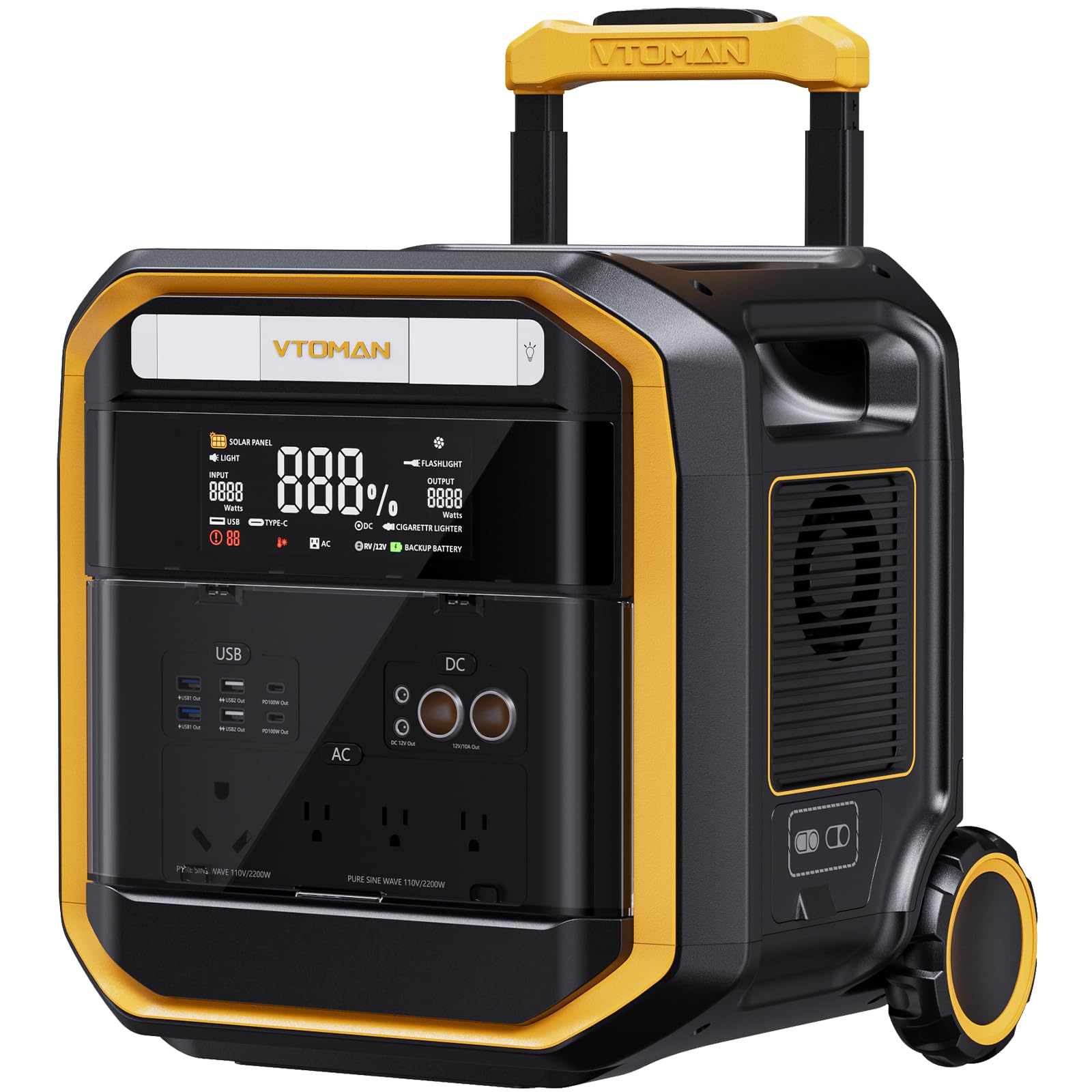
The VTOMAN FlashSpeed Pro 3600 delivers 3096Wh of LFP capacity with a 3600W continuous inverter (6000W surge) and the ability to recharge from zero to full in two hours via standard AC wall power. The LiFePO₄ battery is rated for 3000 cycles to 80% capacity retention and 6000 cycles at 50%, making it one of the most durable chemistries in this price band.
The unit includes 14 output ports: four AC outlets (one at 3600W), four USB-A (two with QC3.0), dual USB-C PD100W, two DC5521, and two car outlets. The UPS transfer is rated under 20ms, adequate for most home electronics. The 83.8-pound chassis includes a pull-up handle and large wheels for easy movement across flat surfaces. Solar input maxes at 800W—a modest figure compared to other units at this level.
Users report the unit passes through power seamlessly and charges from zero to full in one hour when tested with a high-amp wall circuit. For buyers who value a full recharge in under two hours and a robust LFP cycle life, this unit delivers consistent, reliable results.
Why it’s great
- Full 0-100% AC recharge in just two hours
- 6000+ cycle life at 50% depth of discharge
- Integrated handle and wheels for easy mobility
Good to know
- Solar input limited to 800W—lower than peers
- DC auto-shutdown may cut power to efficient 12V fridges
9. BLUETTI Apex 300
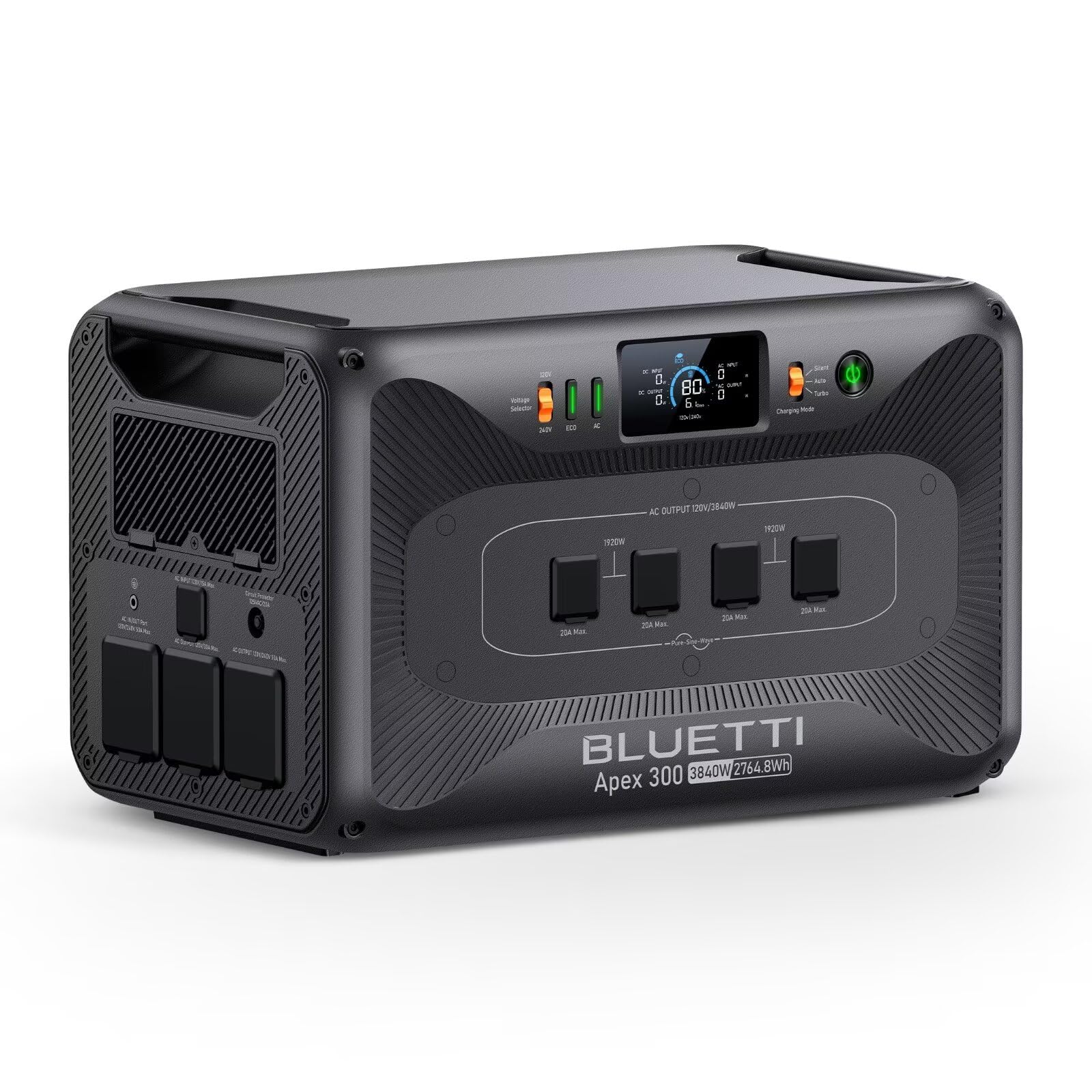
The BLUETTI Apex 300 redefines the 3000W category by offering native 120V/240V split-phase output from a single unit—a feature typically reserved for + dual-inverter setups. The 2765Wh LFP battery feeds a 3840W inverter (7680W surge) that can power both 120V and 240V loads simultaneously, enabling well pumps, dryers, and EV chargers without parallel kits.
The Apex 300 supports expansion via B300K or B500K batteries and integrates with BLUETTI’s Hub D1 for RV 12V loads and the Charger 1/Charger 2 for high-speed alternator charging while driving. The 0ms UPS switch is instantaneous—zero gap on the oscilloscope—making it the fastest transfer in this roundup. The unit operates at just 22 dB in low-load mode, quieter than a library.
Users confirm the unit works seamlessly with 50-amp transfer switches and runs household loads without interruption during grid failures. The 60Voc PV input limit is restrictive for higher-voltage solar arrays, requiring a workaround using another station’s 120V output. The 66-pound weight is manageable for a single person, and the Apex 300’s modular ecosystem makes it a future-proof backbone for home energy independence.
Why it’s great
- Native 120V/240V split-phase from a single unit
- True 0ms UPS transfer for zero-gap protection
- Ultra-quiet 22 dB operation at low load
Good to know
- 60Voc solar input limit restricts high-voltage panel arrays
- No DC ports included to keep cost down
10. EF ECOFLOW DELTA Pro
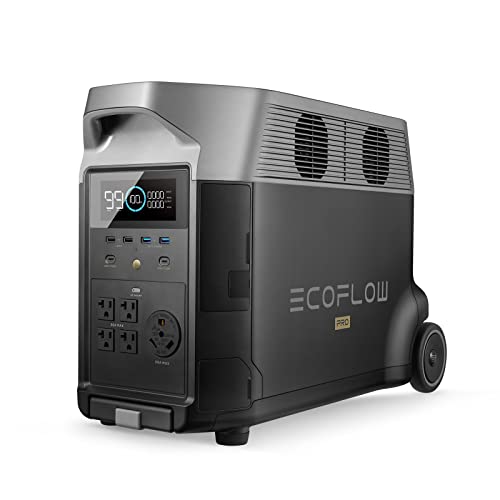
The EcoFlow DELTA Pro brings 3600Wh of LFP capacity and 3600W AC output (4500W with X-Boost) with a clear expansion path to 25kWh using extra batteries and the Smart Generator. Two units parallel for 7200W output or 240V split-phase. The X-Stream charging system hits full charge in 2.7 hours from a standard 120V outlet or 1.8 hours from 240V, with 23% efficient solar conversion from up to four 400W panels.
The unit’s 15 output ports include five 120V AC outlets, two USB-C 100W PD ports, and an Anderson port for high-current 12V loads. Charging flexibility is unmatched: wall outlet, EV station, solar array, car outlet, or the Smart Generator. The EcoFlow app via Wi-Fi or Bluetooth provides granular control over charge/discharge schedules, output limits, and energy tracking.
Users running mobile businesses like heat-press vendors and food trucks confirm the DELTA Pro delivers clean, stable power for hours without voltage drop. The 99-pound weight is borderline immobile for a single person—it needs a cart or dolly for any distance. The fan is whisper-quiet compared to gas generators but does run under sustained high load. For the highest expansion ceiling and proven reliability across thousands of users, the DELTA Pro remains the system to beat.
Why it’s great
- Expandable from 3.6kWh to 25kWh capacity
- Dual-unit parallel for 240V / 7200W output
- Five charging methods including EV station input
Good to know
- 99 pounds requires a dolly or cart for transport
- AC recharge at 120V takes nearly 3 hours
11. Jackery HomePower 3000
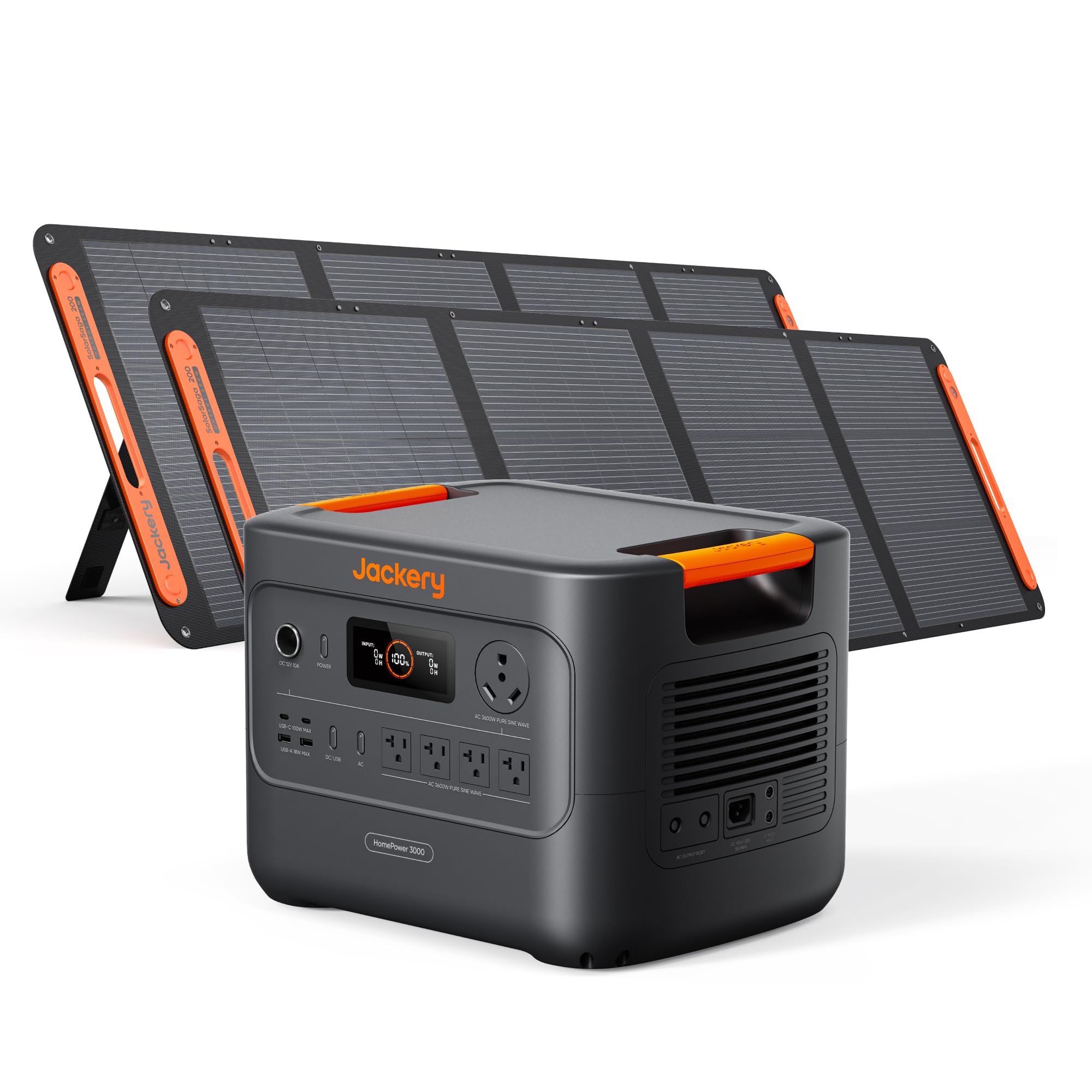
The Jackery HomePower 3000 uses proprietary CTB (Cell-to-Body) technology to pack 3072Wh of LFP capacity into a 59.5-pound chassis—47% smaller and 43% lighter than comparable 3kWh stations. The 3600W inverter (7200W surge) runs household essentials for up to 15 hours, and the ≤20ms UPS keeps security cameras and medical devices online during grid transitions.
The unit includes dual 100W USB-C PD ports for fast laptop charging, a TT-30 RV port for direct camper hookup, and enough AC outlets to power a fridge, fan, router, and lights simultaneously. Hybrid AC+DC charging hits full capacity in 1.7 hours, and two 200W SolarSaga panels can reach 80% charge in about nine hours of sun. The ChargeShield 2.0 AI algorithm extends battery life to 4000 cycles at 70% retention.
Users confirm the unit runs an RV off-grid at hunting camp, saving generator fuel during low-sun periods. The lightweight build means one person can load it into a truck bed without assistance—unlike the 80-100 pound competitors. The lack of built-in wheels is an odd omission given the portability focus, but a separate wheel kit solves the issue. For those who prioritize weight savings above all else, this is the lightest 3kWh LFP station on the market.
Why it’s great
- 59.5 pounds—lightest 3kWh LFP station available
- 47% smaller footprint than comparable capacity units
- 4000-cycle battery with AI-powered ChargeShield 2.0
Good to know
- No integrated wheels (separate wheel kit required)
- Not expandable with additional battery packs
12. Anker SOLIX F3800

The Anker SOLIX F3800 is the heavy hitter of the 3000W class: 3840Wh LFP battery, 6000W AC output with native 120V/240V dual voltage, and the ability to expand to 26.9kWh with up to six battery packs. The NEMA 14-50 port enables direct EV charging at up to 6000W and direct RV hookup without adapters—no grounding hacks required.
The inverter handles everything from a clothes dryer to a well pump, and two units can be paralleled for 12,000W max output—enough to power most homes excluding central air. The 2400W solar input recharges the unit in under two hours in full sun, and the 5-year warranty with 10-year lifespan is backed by Anker’s InfiniPower technology including EV-class LFP cells, smart temperature management, and impact-resistant housing.
Users confirm the F3800 integrates cleanly with 10-circuit manual transfer switches and powers critical loads during multi-day outages. The 132-pound weight is the heaviest in this roundup and requires two people or a heavy-duty dolly for positioning. The 240V output is disabled when 120V AC charging is active, requiring a workaround with DC power supplies. For whole-home backup and EV charging flexibility, the F3800 is the most capable single-unit 3000W-class station money can buy.
Why it’s great
- 6000W AC output with native 120V/240V split-phase
- NEMA 14-50 port for direct EV and RV plug-in
- Expandable to 26.9kWh for multi-day whole-home power
Good to know
- 132-pound weight requires two people or a dolly
- 240V output disabled during 120V AC charging
13. Westinghouse WGen14500TFc
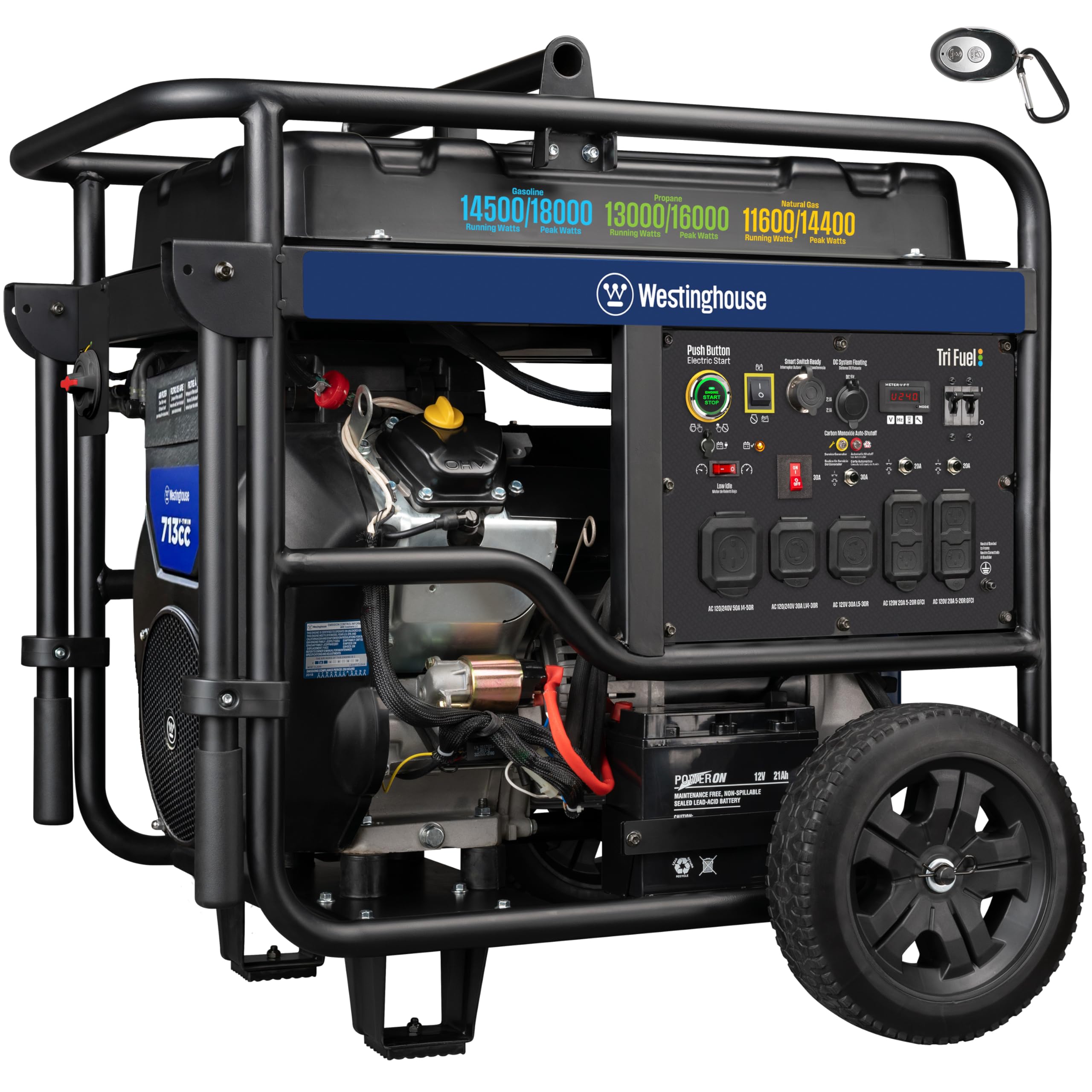
The Westinghouse WGen14500TFc is not a solar generator—it is a tri-fuel portable generator that produces 14,500 running watts on gasoline (18,000 peak), 13,000W on propane, and 11,600W on natural gas. For buyers who need massive continuous power for extended grid-down situations, this unit delivers nearly five times the sustained output of the largest solar stations in this guide.
The 713cc V-Twin OHV engine runs up to 16 hours at 25% load on a 10.5-gallon gas tank. Total harmonic distortion is under 5%—clean enough for sensitive electronics like computers and TVs. The remote electric start and push-button ignition make startup effortless, and the CO sensor auto-shuts the engine if carbon monoxide accumulates in enclosed spaces. The unit includes a 50A 14-50R outlet, a 30A L14-30R, a 30A L5-30R, and two GFCI duplex outlets with rubber covers.
Users running the WGen14500TFc on natural gas report stable 11kW loads with clean frequency, though at 74 dBA it is loud enough to require ear protection and neighbor consideration. The 348-pound weight is stationary with wheel kit assistance. This is the budget-friendly fuel option for those who need raw power now without the upfront battery investment, but it trades silent operation for unlimited runtime.
Why it’s great
- Tri-fuel capability (gas, propane, natural gas) for fuel flexibility
- 14,500W running power—massive over solar stations
- Under 5% THD safe for sensitive electronics
Good to know
- Loud 74 dBA operation requires ear protection
- 348 pounds is immobile without a wheel kit
FAQ
How many solar panels do I need to charge a 3000W solar generator in one day?
Can a 3000W solar generator run a central air conditioner?
What is the difference between LiFePO₄ and NMC batteries in a portable power station?
Final Thoughts: The Verdict
For most users, the best 3000 watt solar generator winner is the PECRON F3000LFP because it delivers the highest capacity-per-dollar ratio in a proven LFP platform with fast AC charging and expandability—making it the smartest entry point for home backup and RV use. If you need a modular ecosystem that scales from 2kWh to 24kWh with proven off-grid reliability, grab the Jackery Explorer 2000 Plus. And for whole-home 240V backup with native split-phase output and 6000W continuous power, nothing beats the Anker SOLIX F3800.