
Our readers keep the lights on and my morning glass full of iced black tea. As an Amazon Associate, I earn from qualifying purchases.
Specs are compiled from manufacturer listings and verified buyer reviews and can change over time — please confirm the key details on the product page before buying.
If you are fighting feedback, mud, or shrill highs in a PA system, a home stereo, or a studio, a 31-band EQ is the surgical tool that fixes it. Unlike a simple tone knob, these give you one slider for every one-third of an octave across the whole hearing range, so you can cut the exact frequency that howls or boost the one that is missing.
I’m Min — the founder and writer behind Gadgets Feed. This guide is built by comparing the manufacturers’ published specifications and the patterns across verified customer reviews, so you get each pick’s real strengths and trade-offs instead of marketing spin.
Choosing a 31 band eq that actually cleans up your sound means looking past the slider count and focusing on three things: how many channels you need, if you want analog or digital, and how quiet the unit is when idle.
Our Picks at a Glance

How To Choose The Best 31 Band EQ
The best equalizer for you depends on where the music flows. A guitarist shaping a high-gain amp, a bassist cutting fret noise, a DJ running a KTV booth, and a home listener fixing a boomy room all need different jacks, features, and channel layouts.
First, decide: one channel or two?
A dual-channel (stereo) unit lets you adjust the left and right audio paths independently, which is essential for a home stereo or a PA. A single-channel EQ is a specialized tool — guitarists and bassists drop it into an effects loop to shape one signal, and it is cheaper for that one job.
Then, pick your signal path: analog or digital
Analog EQs like the ART and dbx models use constant-Q circuitry, which keeps the filter width steady as you boost, giving predictable, transparent tone shaping. Digital units add extras like 10 presets, Bluetooth, and spectrum displays, but that convenience is a trade-off — audio purists often note a noisier or less transparent signal path.
Finally, check the connections you already own
Balanced XLR and 1/4-inch TRS jacks are the pro-audio standard and reject hum over long cable runs. If your amp only has RCA inputs, you will need adapters or a model that offers them natively. The wrong connector choice is the most common reason a great EQ sits unused.
Quick Comparison
| Model | Best For | Channels | Boost/Cut Range | Key Hook | Amazon |
|---|---|---|---|---|---|
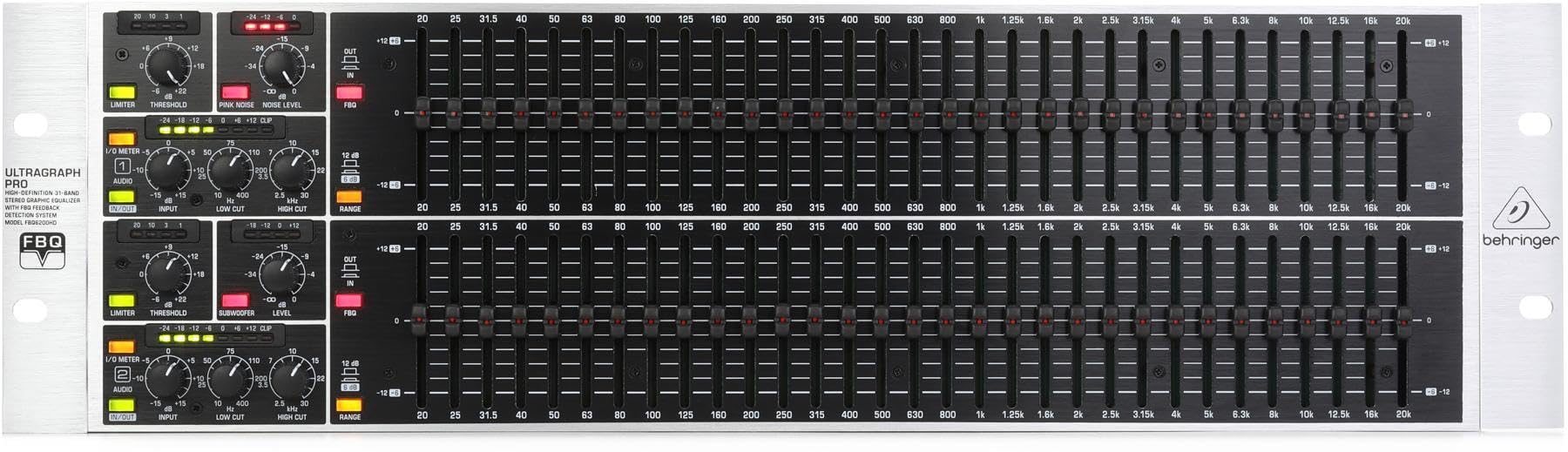
| Behringer FBQ6200HD★ Best Overall | Live PA & feedback hunting | 2 (Stereo) | ±12 dB | FBQ Feedback Detection | Amazon |
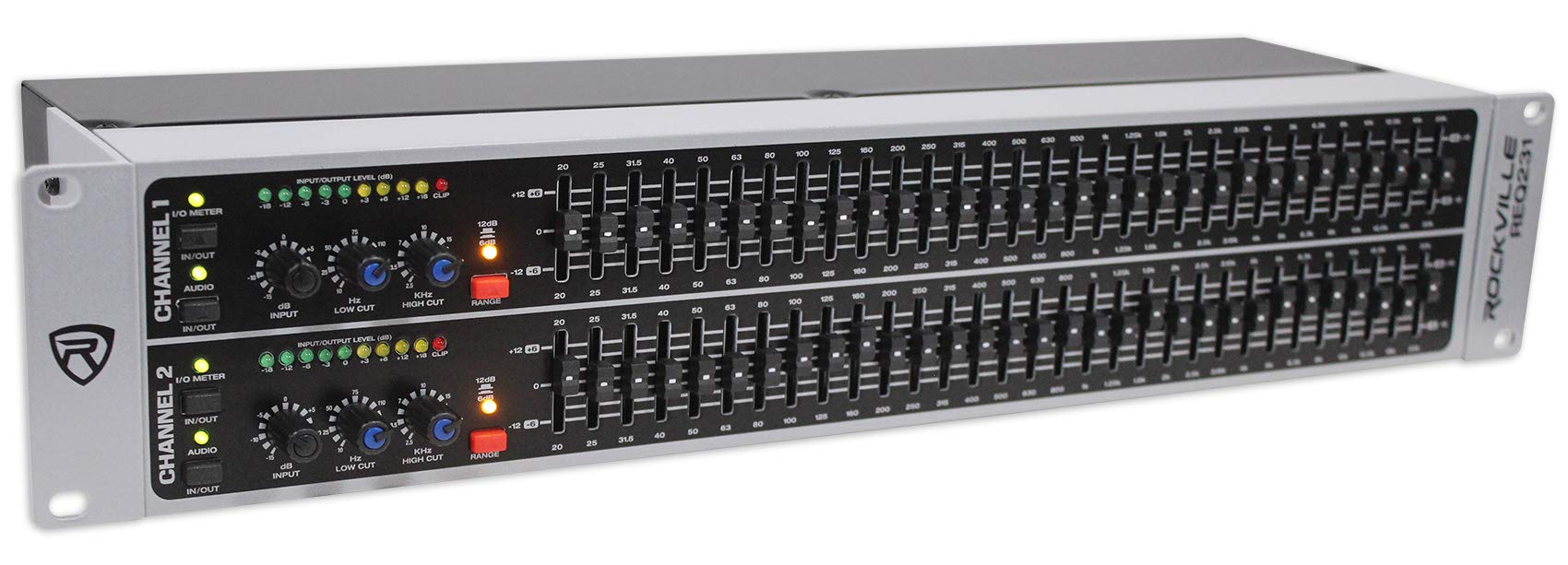
| Rockville REQ231Best Value | Home studios on a budget | 2 (Stereo) | ±6 / ±12 dB | Dedicated Subwoofer Out | Amazon |
| ART EQ355Hi-Fi Choice | Transparent hi-fi & studio | 2 (Stereo) | ±6 / ±12 dB | All-Steel Chassis, Low Noise | Amazon |
| dbx 231s | Silent, pro-grade stereo rigs | 2 (Stereo) | ±6 / ±12 dB | Dead-Quiet Signal Path | Amazon |
| Behringer FBQ3102HD | PA with subwoofer management | 2 (Stereo) | ±12 dB | Mono Sub Output + Crossover | Amazon |
| ART 351 | Single-channel FX loops | 1 (Mono) | — | Classic Analog Signal Chain | Amazon |
| MICNAUX 2U-31BAND | Digital features & PC tuning | 2 (Stereo) | — | PC Software + 10 Presets | Amazon |
| Generic 1U-31BAND | Spectrum display & Bluetooth | 2 (Stereo) | — | Bluetooth 5.2 Streaming | Amazon |
| dbx 131s | Single-channel guitar/bass | 1 (Mono) | ±6 / ±12 dB | Effects-Loop Tone Shaping | Amazon |
In‑Depth Reviews
1. Behringer ULTRAGRAPH PRO FBQ6200HD
Our pick — over 4★ from 350+ verified ratings; the strongest balance of quality and price.
The feedback-killing workhorse that shows you exactly which frequency is screaming.
For live sound, the FBQ Feedback Detection system is the standout reason to choose this — it instantly reveals which critical frequencies are ringing, so you can cut them before they become an ear-splitting howl. A pink-noise generator (a test signal that plays all frequencies at equal energy) helps you adapt your system to any room’s acoustics, walking you through the setup like a sound tech.
Dedicated limiters with gain-reduction meters on each channel protect your speakers from overload, which is the safety net you want when a vocalist grabs the mic unexpectedly. It is a dual-channel unit at 19.02 x 5.43 x 5.24 inches and weighs 2.3 kg, so give it proper rack space. Buyers report it sounds great with PA systems and loudspeakers, and the sound quality is the thing they praise most.
Reliability draws mixed feedback — the red slider lights have been known to fail on some units, and there is honest chatter about a bit of noise in the signal. As owners mention: “for the price I really can’t complain,” especially when a cleaner pro unit can run five to ten times the price.
What sells it
- FBQ feedback detection pinpoints problem frequencies instantly
- Pink-noise generator aids room tuning
- Channel limiters guard speakers from overload
Know before you buy
- Some units develop failing red slider lights
- Background hiss is noticeable to critical ears
Reach for this if: you run live PA or loudspeakers and need a visual tool to hunt feedback fast.
Look elsewhere if: you demand a dead-silent signal path for critical studio monitoring.
2. Rockville REQ231 Dual 31-Band
A stereo EQ plus a bonus subwoofer output, built for the budget home studio.
What wins people over here is the sheer value — a dual-channel 31-band EQ with a dedicated subwoofer output at an entry-level price. Each channel gives you 31 bands of 1/3-octave filters spanning 20 Hz to 20 kHz, and you can select a 6 dB or 12 dB cut or boost range to suit your taste. The constant-Q filters keep their shape as you boost, so tone shaping stays predictable.
You get a signal-to-noise ratio above 93 dB (meaning very little hiss) and distortion of just 0.005% (so your audio stays clean). Owners in home recording setups report it runs silent, with accurate meters and a unity-gain spot (the point where output equals input) that is right on. The subwoofer output is a real bonus — one owner runs only the lower 6 bands into his sub and hears a clear difference.
It is honest to note this is a home-studio tool, not a tour bus warrior — flimsy sliders and a bit of signal noise show up in feedback, and a handful of units arrive defective or humming. The balance of 56 quality mentions breaks mixed rather than glowing, so treat any unit as a solid beginner buy rather than a lifetime piece.
The strong points
- 31 bands per channel with selectable ±6 or ±12 dB range
- Dedicated subwoofer output for bass control
- Reported silent operation in home studios
Watch for
- Flimsy knobs and sliders feel delicate
- Occasional defective units or hum arrive
- Not built for road use
Best for: home recordists who want stereo control plus a sub out without spending big.
Not for: touring musicians needing rugged, road-proof hardware.
3. ART EQ355 Dual Channel 31-Band
A transparent, no-noise analog shaper that audiophiles trust for fixing room problems.
Sound quality leads the praise here — owners describe it as transparent, clean, and completely free of hum or hiss, with one expert using it to fix a harsh 2-5 kHz brightness in a high-end Lyngdorf system. The all-steel chassis and 20mm center-detent sliders give it a serious, professional build that feels far above its tier, and it needs 2U of rack space to house that rugged frame.
Constant-Q circuitry keeps filter widths steady across the boost range, while selectable 6 dB or 12 dB boost/cut and variable input level controls give you precision tuning. Balanced XLR, 1/4-inch, and RCA input/output connections mean it slots into nearly any rig, from portable PA systems to dual stereo setups where owners run Crisp dialog and deep music separation. A ground-lift switch helps kill the hum that plagues less shielded gear.
Be honest about the downsides: the knobs feel delicate and need gentle handling, a unit can arrive with a bent front plate from poor packaging, and some customers note a persistent ground hum even with the lift (a switch that reduces hum) engaged. It lacks the LED sliders and analyzer of flashier digital units, but buyers here value sound quality over gimmicks.
Why it wins: this is the analog purist’s pick — clean, transparent tone shaping in a tank-like steel box, with the connectivity to match any studio or stage setup.
The honest trade-off: treat the adjustment knobs gently and check packaging on arrival for damage in transit.
4. dbx 231s Dual Channel 31-Band

The studio-grade stereo EQ that sounds dead quiet even between songs.
What wins owners over is the silence — the 231s sits absolutely quiet on pause, killing the hum and buzz that plague cheaper EQs, and one owner calls it “the best eq i have used to date.” It gives you dual 31-band 1/3-octave constant-Q bands (each band affects a narrow, fixed frequency range) with switchable 6 or 12 dB boost/cut, plus a front-panel bypass for instant A/B comparison of your changes.
The 4-segment LED ladders monitor output levels so you can see your signal at a glance, and the 12 dB input gain range gives you room to match hot or weak sources. It is a dual-channel unit at 7.9 pounds in a stainless steel chassis, and it accepts both ¼” TRS and female XLR inputs with pin 2 hot — the standard pro wiring. Reviewers point out it brings out a lot of sound with very low noise and helps correct room response in real listening spaces.
There are two things to know. First, it is XLR and TRS only — no RCA jacks, so home users need adapters. Second, build quality pulls mixed feedback, with some describing the assembly as sloppy even though the unit performs perfectly. One owner noted the absence of a power button on the rear — a small ergonomic gripe, not a functional one.
Where it shines
- Reported dead-quiet signal, no hum on pause
- Steel chassis with weighted, solid sliders
- LED output meters for level monitoring
What to expect
- XLR/TRS only — RCA requires adapters
- Assembly quality gets mixed marks
Choose this for: a near-silent analog stereo EQ that fixes room response without coloring the sound.
Pass if: you need native RCA connections or prefer the preset convenience of a digital unit.
5. Behringer ULTRAGRAPH PRO FBQ3102HD
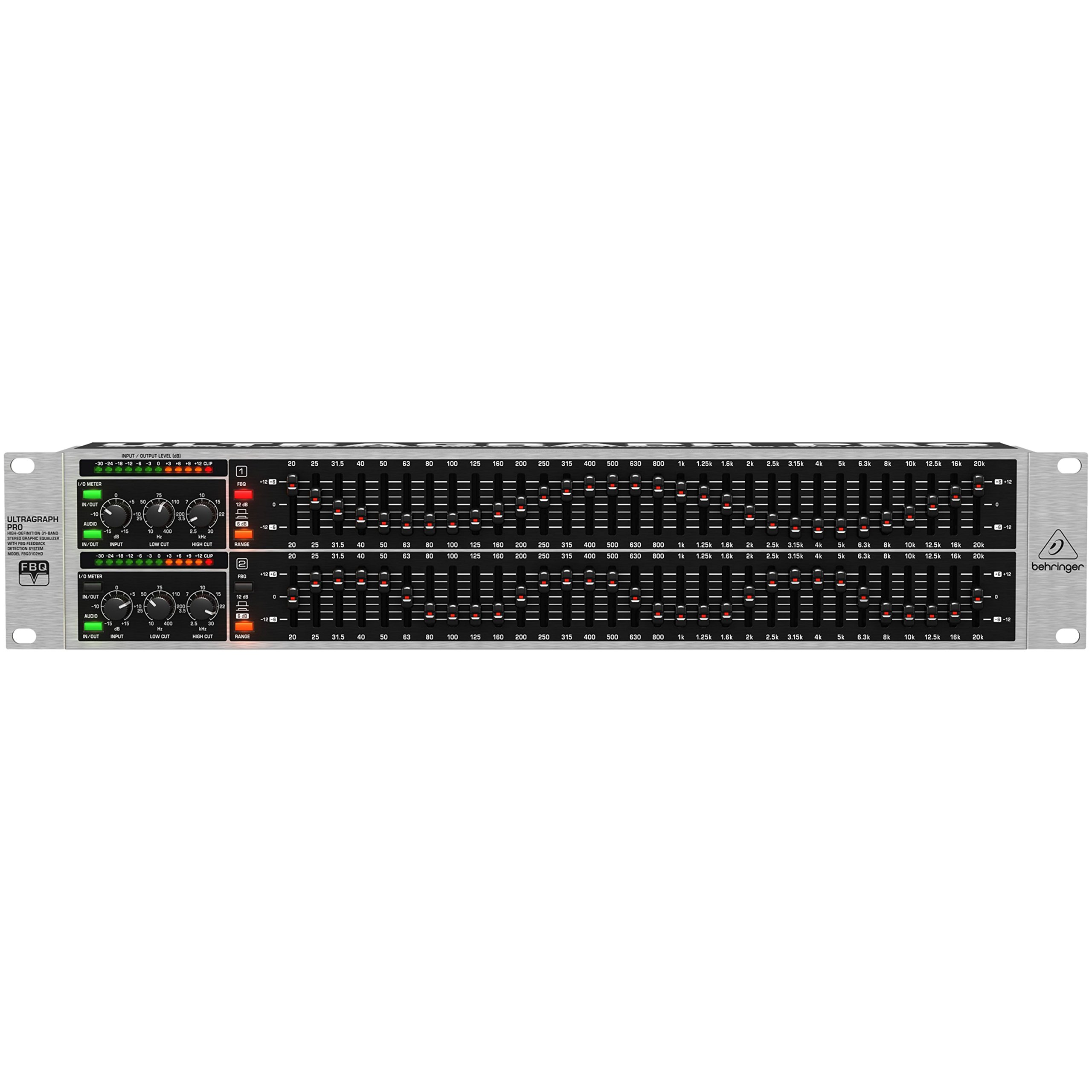
A stereo EQ with a dedicated sub out that also scrubs rumble and hiss per channel.
The FBQ3102HD stands apart with a dedicated mono subwoofer output and an adjustable crossover frequency, so you can feed bass to a sub while the main speakers handle mids and highs. Each channel also gets sweepable high and low-cut filters to remove unwanted frequencies — floor rumble, hiss, and everything in between — before they hit your amp.
The FBQ Feedback Detection system (a feature that lights up the frequencies causing howling) also works as an audio analyzer for setup. At 2 kg and 19.02 x 5.91 x 3.5 inches, it fits a standard rack slot, and owners using it between a computer and a stereo report it fixes a tinny sound that software EQ could not, delivering the bass and mids they wanted for natural playback.
It draws just 150 milliamps, so it sips power, and owners note it works cleanly without needing to be powered on each time. One owner saw a slight hum develop on one channel of a prior unit, and the manual is thin — you may be hunting online for setup guidance — but for the price it is a well-rounded utility player for PA and home rigs.
The edge: add a sub to a stereo system without a separate crossover box, while the FBQ system keeps feedback in check.
The caveat: documentation is sparse and a channel hum is possible over time — an occasional, not universal, complaint.
6. ART 351 EQ 31-Band 1/3 Octave
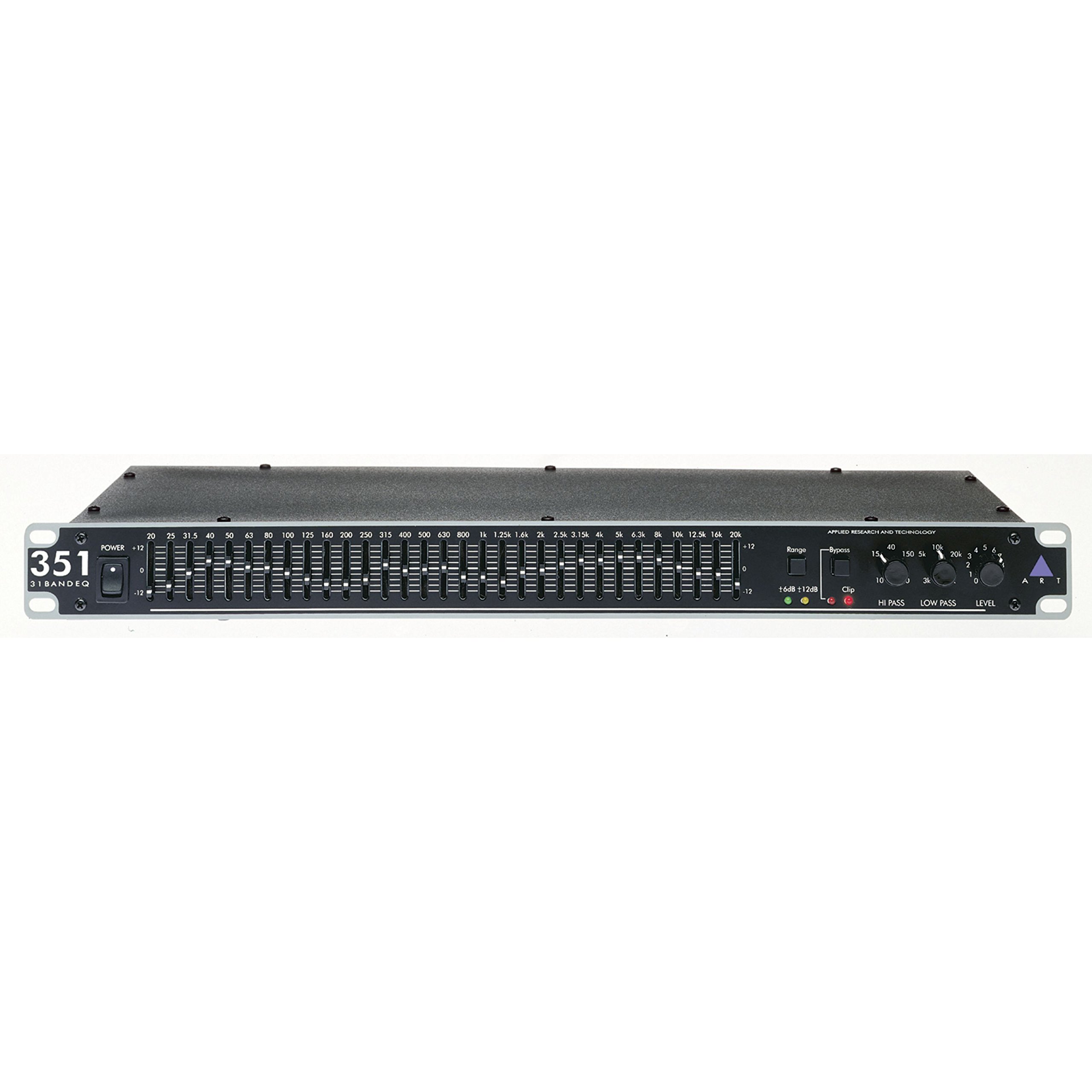
A single-channel analog workhorse that guitarists and sound techs trust for precision.
Quality is the thing everyone raves about here — this is a professional 31-band 1/3-octave graphic EQ that extends up to 20 kHz, ideal for vocals and acoustic instruments in an analog signal chain. The constant-Q circuitry keeps filters precise, and low/high-pass filters plus a ground-lift switch let you clean up troublesome wiring. It is a single-channel unit, so it is built for one signal path, and owners find it effective in everything from a tube amp’s FX loop to taming volume in a church with poor acoustics.
At 6.55 pounds and 21.3 x 10.4 x 3.5 inches, it is heavy for its size — that weight reflects the analog build quality. Functionality earns strong marks too, with owners noting 31 bands can cover about a major third each, offering far finer tuning than a 15-band unit. One owner bought the single-channel 31-band specifically instead of a dual 15-band for that finer control.
The honest limits: you cannot use the XLR and 1/4-inch outs at the same time, some XLR outputs hum, and it is single-channel by design — if you need stereo, owners advise buying the stereo version from the start. Noise level draws mixed feedback, generally acceptable at the price.
Why it works
- Full-spectrum 31-band control to 20 kHz
- Constant-Q filters keep tuning predictable
- Ground-lift switch fights wiring hum
Keep in mind
- Single channel only — not for stereo rigs
- XLR and 1/4-out cannot run simultaneously
- Heavy for its size
Grab it for: one signal path — a guitar FX loop, a single mic channel, or a tube amp that needs tonal surgery.
skip it if: you plan to EQ a stereo mix, where the dual-channel version is the smarter buy.
7. MICNAUX 2U-31BAND Dual Channel

A digital dual-channel EQ with PC software for precise left-right tuning.
What sets this apart is PC-based fine-tuning — you get a dedicated 31-band equalizer for the left and right channels and can tweak frequencies across the full spectrum using the included software. Ten built-in presets cover different performance types from vocal presentations to musical tracks, and a bypass function lets you A/B compare processed and raw signals instantly.
Advanced DSP noise reduction gives you precision control between -3dB and -9dB to strip ambient noise while keeping your main signal rich. It connects via balanced XLR, TRS, and stereo L/R ports, plus 3.5mm audio and 5-Pin XLR, so it pairs with microphones, instruments, mixers, and home audio gear. At 17.32 x 2.95 x 3.94 inches, it is far more compact than the Behringer’s 19.02-inch frame.
Owners running it into a tube amp with JBLs report amazing sound quality, and digital operation is clean. The catch is physical: it is advertised as a 2U rack unit but does not fit a standard rack — only one mount hole lines up per end, and it is oversized for the spec, so treat it as a desktop unit rather than a rack install. One owner also hit an electric hum on the second XLR channel.
The appeal: deep digital control with PC software and presets — ideal if you want to craft and save curves, not just slide faders.
The reality check: rack mounting is a headache and a second-channel hum is possible, so verify your setup before committing.
8. Generic 1U-31BAND with Bluetooth
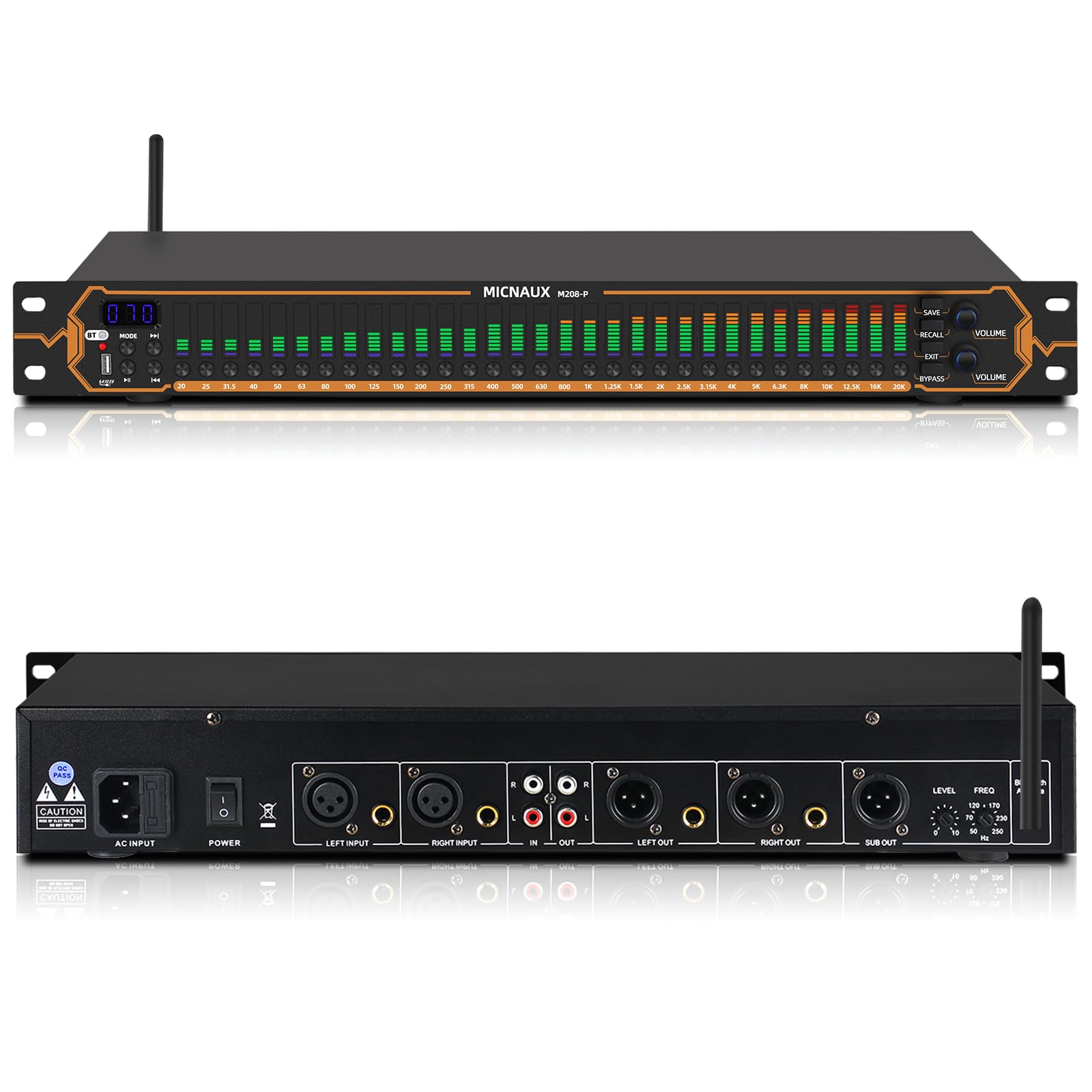
A digital EQ with Bluetooth streaming and a colorful spectrum display for the home rig.
The party piece here is Bluetooth 5.2 — stream music wirelessly to the EQ with a stable signal from the rear antenna, then shape it with a 31-band DSP equalizer backed by a 4-color LED spectrum display. Each band gets real-time frequency monitoring, and the soft, non-glare glow is ideal for low-light listening rooms. Ten custom presets with intelligent noise reduction let you save and recall sound modes instantly.
A dedicated subwoofer output with an adjustable frequency range from 50Hz to 250Hz tailors the bass for home theater or DJ setups, and a BYPASS switch lets you flip between raw and processed sound for quick debugging. The 1U rack-mount design (19 x 5.7 x 2.71 inches) integrates into standard setups, and it accepts XLR balanced and 1/4″ TRS connections alongside the wireless input.
Be clear-eyed: several owners describe the display as the star, with the EQ function itself drawing mixed reports — one rig works as a light show with high-end audio gear, and a unit developed a single-channel output after the return period. Positive reports call it well-built with a true 20Hz-20kHz real-time spectrum display, but the manual is sparse and assumes you know audio mixing, so it favors tinkerers over plug-and-play users.
Fun factor
- Bluetooth 5.2 wireless streaming built in
- Adjustable sub output from 50Hz to 250Hz
- 10 memory presets with noise reduction
Reality check
- Some units only work as a display, not an EQ
- Sparse manual assumes mixing knowledge
- A unit failed to one channel after return period
Consider it if: you want a visual spectrum centerpiece with wireless streaming and a sub out for a home theater.
Think twice if: you need reliable dual-channel EQ performance — the display outshines the function on some units.
9. dbx 131s Single Channel 31-Band

The single-channel tone sculptor that guitarists and bassists swear by in an FX loop.
For players, this is the magic box — a single 31-band 1/3-octave constant-Q EQ that slots into an amp’s effects loop and reshapes any high-gain channel into the sound you hear on recordings. As owners put it: “it’s not your amp; it’s your EQ.” Bassists love it for trimming annoying frequencies, and it works just as well for keyboardists who want surgical control over one signal.
The noise floor is genuinely clean, with no issue reported across the board, and it carries switchable boost/cut ranges of 6 or 12 dB plus a 12 dB input gain range. A 12 dB per octave low-cut filter sits 3 dB down at 50Hz to strip rumble, and the front-panel bypass lets you A/B instantly. At just 4.8 pounds and 19 x 6 x 1.75 inches, it is a 1U rack unit that fits neatly in a compact space, wired with ¼” TRS and female XLR inputs (pin 2 hot).
It is single-channel by design, which is the point — when the need requires only one channel, like a single microphone, you are not paying for a second path you will not use.
The verdict: the definitive single-channel EQ for effects loops — clean, quiet, and packed with the range to find any classic rock, metal, or fusion tone.
Who it skips: anyone planning stereo processing; buy a dual-channel from the start instead of adding a second mono unit later.
Understanding the Specs
Constant-Q Filtering & Band Width
Constant-Q circuitry keeps each of the 31 filters the same width regardless of how much you boost or cut it. A cheaper “proportional-Q” design spreads the filter wider as you boost, which can make the sound muddy or phasey. For precision tone shaping, constant-Q is the spec that separates pro-grade EQs from toys — it is what makes surgical cuts feel surgical.
Boost/Cut Range & Signal-to-Noise
The boost/cut range, stated as ±6 dB or ±12 dB, sets how much you can amplify or attenuate each band — 12 dB gives more aggressive shaping, 6 dB offers finer, gentler control. Signal-to-noise ratio, measured in dB, tells you how much hiss the unit adds to your signal. A higher number like 93 dB means a quieter path; lower numbers mean you will hear background noise during pauses.
FAQ
What does a 31-band EQ do that a simple bass and treble knob cannot?
Single channel or dual channel: which do I actually need?
Will a 31-band EQ fit my standard rack?
How do I connect an EQ to an amp with only RCA inputs?
Is a digital EQ with presets better than an analog one?
How does feedback detection help in live sound?
Do I need a pink-noise generator in my EQ?
Why does my EQ hum, and what is a ground-lift switch for?
Can I use a 31-band EQ in a guitar amp effects loop?
What should I check before buying a budget 31-band EQ?
Final Thoughts: The Verdict
The 31 band eq winner for most buyers is the Behringer FBQ6200HD because its feedback detection and pink-noise generator solve the two hardest problems in live sound setup. If you want a dead-silent analog path for a home studio or hi-fi system, grab the ART EQ355, whose transparent tone shaping wins over audiophiles. And for a single-channel effects-loop tone sculptor, the dbx 131s is the one players reach for.
How We Picked
We do not accept paid placement. Every pick is matched to a real buyer and a real use-case; we do not hands-on test units.
Sources & Methodology
Specifications: manufacturer listings and product documentation. Review insights: verified customer reviews, as of August 2026. Pricing: not shown on this page (it changes often); check the current price via the retailer link.
As an Amazon Associate, Gadgets Feed earns from qualifying purchases. This does not affect which products we feature.