
Our readers keep the lights on and my morning glass full of iced black tea. As an Amazon Associate, I earn from qualifying purchases.
Specs are compiled from manufacturer listings and verified buyer reviews and can change over time — please confirm the key details on the product page before buying.
Dragging a 63-pound lead-acid battery out of your boat every weekend gets old fast. The real question is whether you stick with the heavy standard or switch to a lithium battery that gives you every amp-hour you pay for without the back strain. This guide lays out the specs and real buyer patterns so you know which Group 31 battery fits your boat, RV, solar setup, or trolling motor.
I’m Min — the founder and writer behind Gadgets Feed. This guide is built by comparing the manufacturers’ published specifications and the patterns across verified customer reviews, so you get each pick’s real strengths and trade-offs instead of marketing spin.
You will find eight of the most popular models in this roundup, each one a true Group 31 size, so you can confidently choose the best 31 series battery for your off-grid adventures, marine trips, or backup power system.
Quick Picks
- Redodo 12V 100Ah LiFePO4 Battery — Best Overall
- Power Queen 12V 100Ah LiFePO4 Battery, Group 31 — Top Performer
- Dyness 12V 100Ah LiFePO4 Battery BCI Group 31 — Premium Pick
- HQST 12V 100Ah LiFePO4 Battery with LED Display — Great Value
- Litime 12V 100Ah Lithium Battery — Best Display
- WEIZE 12V 100Ah Deep Cycle Battery — Budget Champ
- DUNFUME 12V 100Ah LiFePO4 Lithium Battery — Light Pick
- Interstate Batteries Marine/RV 12V 100Ah 825CCA — Dual Purpose
How To Choose The Best 31 Series Battery
Choosing the right Group 31 battery means looking past the sticker price and understanding what the specs actually mean for how you will use it. Here are the three factors that separate a battery that frustrates you from one that powers your gear for years.
Lithium vs. AGM vs. Flooded: Pick Your Chemistry
The biggest decision you will make is between lithium iron phosphate (LiFePO4) and a sealed lead-acid battery (AGM or flooded). Lithium batteries are dramatically lighter, give you nearly 100% usable capacity, and last for thousands of cycles, but they cost more upfront. AGM batteries are less expensive and work fine as a dual-purpose starting and deep-cycle battery, but they are heavy and only give you about 50% usable capacity before the voltage drops too low. For a 31 series battery used in solar or RV setups where you cycle it every day, lithium almost always wins in the long run.
Usable Capacity and the BMS (Battery Management System)
A 100Ah battery is not always a 100Ah battery. With lead-acid, you should only draw it down to about 50% to avoid damaging it, so you only get about 50Ah of real power. Lithium gives you close to 100% of its rated capacity. The BMS is the small computer inside a lithium battery that prevents overcharging, over-discharging, overheating, and short circuits. A good 100A BMS means the battery can handle the high draws from a trolling motor or an inverter without cutting out.
Weight, Size, and Low-Temperature Protection
A Group 31 battery has a standard footprint — about 13 inches (33 cm) long — but the weight varies wildly. A lead-acid 31 series battery weighs 60 to 65 pounds, while a lithium version can weigh as little as 22 pounds, a huge difference when you are installing it in a tight compartment. If you plan to charge the battery in freezing weather, you absolutely need a low-temperature cutoff feature: charging a lithium battery below 32°F (0°C) can permanently damage it. Many premium lithium models include this automatically.
Quick Comparison
| Model | Best For | Weight | Chemistry | BMS Protection | Amazon |
|---|---|---|---|---|---|
| Redodo 12V 100Ah | Cold-weather marine & trolling | 22.2 lbs | LiFePO4 | 100A (low-temp cut off) | $239.99$258.99Amazon |
| Power Queen 12V 100Ah | All-day trolling & solar off-grid | 24 lbs | LiFePO4 | 100A | $259.99Amazon |
| Dyness 12V 100Ah | Rugged outdoor & marine | 25.3 lbs | LiFePO4 | 100A (low-temp & IP65) | $173.99Amazon |
| HQST 12V 100Ah | Budget-friendly lithium upgrade | 22 lbs | LiFePO4 | 100A (low-temp cut off) | $179.99Amazon |
| Litime 12V 100Ah | Feature-rich home backup & RV | 24.25 lbs | LiFePO4 | 100A (20+ layers) | $309.99Amazon |
| WEIZE 12V 100Ah | Entry-level deep cycle lead-acid | 63 lbs | Lead Acid (SLA) | No BMS | $159.99Amazon |
| DUNFUME 12V 100Ah | Budget-entry lithium for campers | 21.6 lbs | LiFePO4 | 100A | $160.66Amazon |
| Interstate 31M-AGM-A | Dual-purpose starting & deep cycle | 64.5 lbs | Pure Lead AGM | No BMS | $289.95Amazon |
In‑Depth Reviews
1. Redodo 12V 100Ah LiFePO4 Battery with Low-Temp Protection
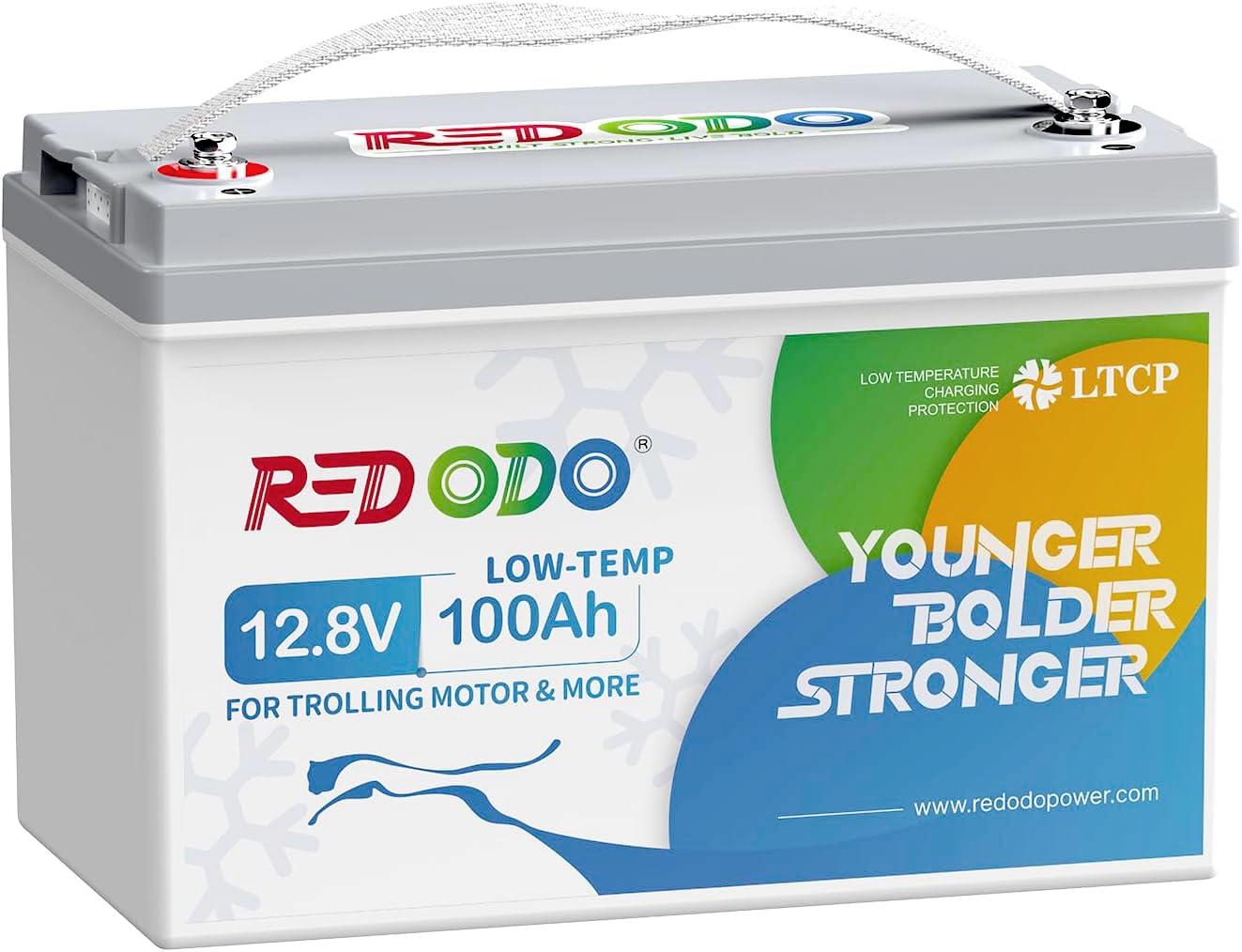
The cold-weather champ that does not flinch at freezing temps while weighing a third of its lead-acid rival.
This Redodo is the 31 series battery to reach for if you run a trolling motor or fish finder in areas where winter temperatures dip below freezing. It stops charging automatically below 32°F (0°C) and halts discharging at -4°F (-20°C), so you do not permanently damage the cells if the weather turns. At just 22.2 lbs, it is about 1/3 the weight of a lead-acid AGM battery, which one reviewer noted saved 116 lbs compared to two Group 31 Odysseys on a boat, improving fuel economy and adding 4 mph to top speed.
The upgraded 100A BMS (Battery Management System) delivers 300A for 5 seconds and 500A for 1 second, which is plenty for starting a 30-120lbs thrust trolling motor or running electronics like fish finders and GPS. It uses Grade A cells that last over 4000 deep cycles at 100% depth of discharge, and Redodo backs it with a 5-year warranty plus 24/7 technical support. Unlike the heavier Interstate below, this one is all about deep cycling, not cranking, so skip it if you need a starter battery.
Winter Warrior Specs
- Auto shutoff charging below 32°F prevents damage
- Weighs only 22.2 lbs — easy to carry and install
- Upgraded BMS handles heavy 500A surges for one second
One Real Catch
- One buyer mentioned one of two batteries losing voltage faster under no load
- Not designed as a starting/cranking battery
Best suited for: Anglers and off-grid campers who camp in cold climates and need a reliable deep-cycle lithium battery.
Not the right pick if: You need a dual-purpose battery that also starts an engine — consider the Interstate instead.
2. Power Queen 12V 100Ah LiFePO4 Battery, Group 31
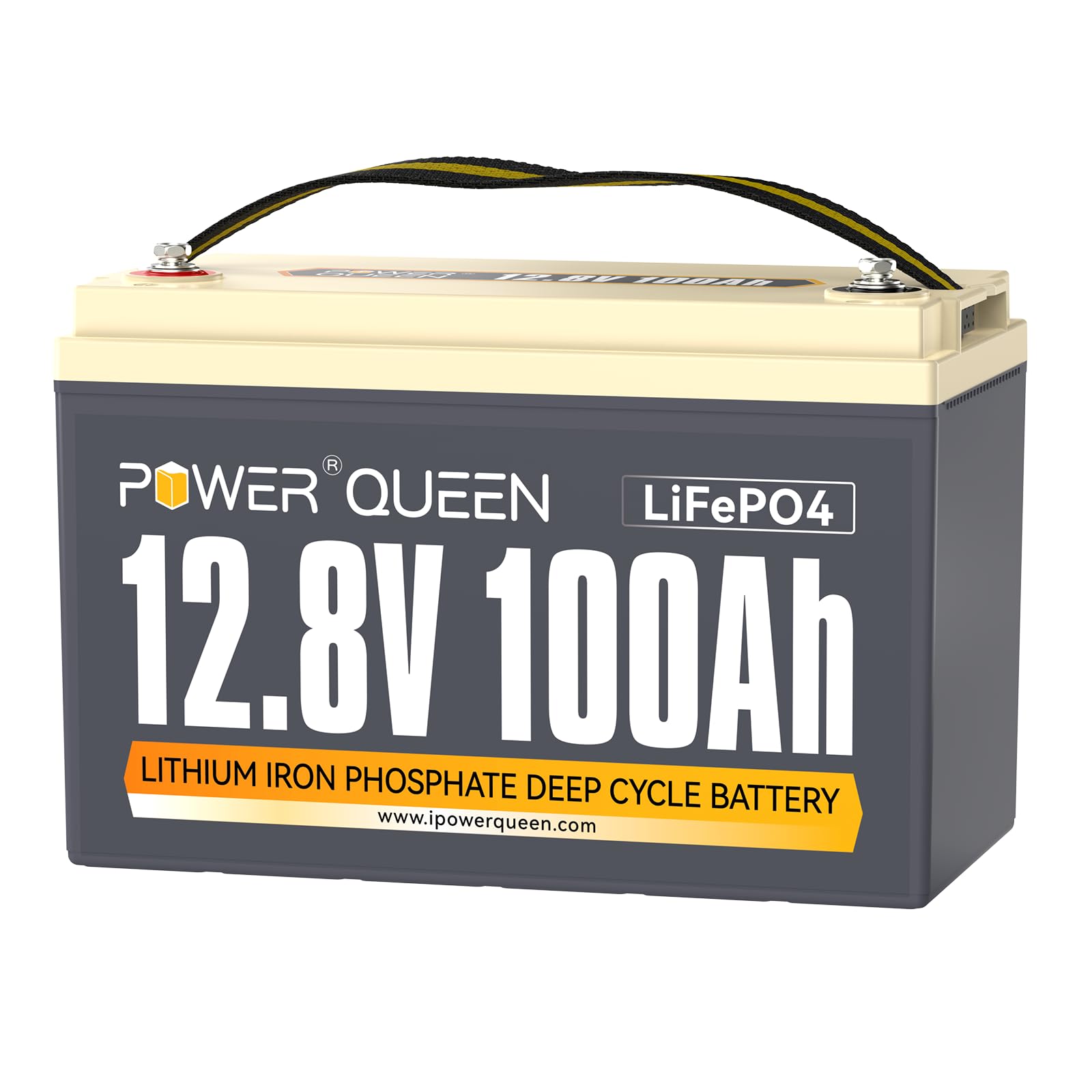
The marathon runner that keeps a trolling motor humming from sunrise to sunset.
One owner reported this Power Queen powered a 100Ah Class 31 trolling motor for 6-plus miles on a lake and another ran a full day (6am to 6pm) on 70% speed with a Livescope and two Garmin graphs, voltage only dropping from 13.2V to 13.0V. At just 24 lbs, it is roughly 1/3 the weight of a traditional lead-acid battery of the same Group 31 size, so you can pick it up with one hand. It uses Grade-A LiFePO4 cells and a 100A BMS to protect against overcharging and short circuits.
Power Queen rates it for up to 15,000 cycles at 60% depth of discharge., and it supports series and parallel connections up to 4S4P for a maximum 51.2V 400Ah system. The only hardware worry is the 6mm bolt connection, which some reviewers suggest reinforcing with an adapter kit for heavy vibration.
Why It Shines
- Proven to run trolling motor and electronics all day on one charge
- Light at 24 lbs and easy to lift even with arthritis, per buyers
- Up to 4S4P parallel/series expansion for larger systems
What To Watch
- Small 6mm bolt connection may need an adapter for rugged use
- No low-temperature cutoff, so not ideal for freezing charging
Ideal for: RV owners and boaters who need a rock-solid deep-cycle battery that lasts a full day of heavy electronics use.
Better to skip if: You plan to charge the battery below 32°F — get the Redodo instead.
3. Dyness 12V 100Ah LiFePO4 Battery BCI Group 31
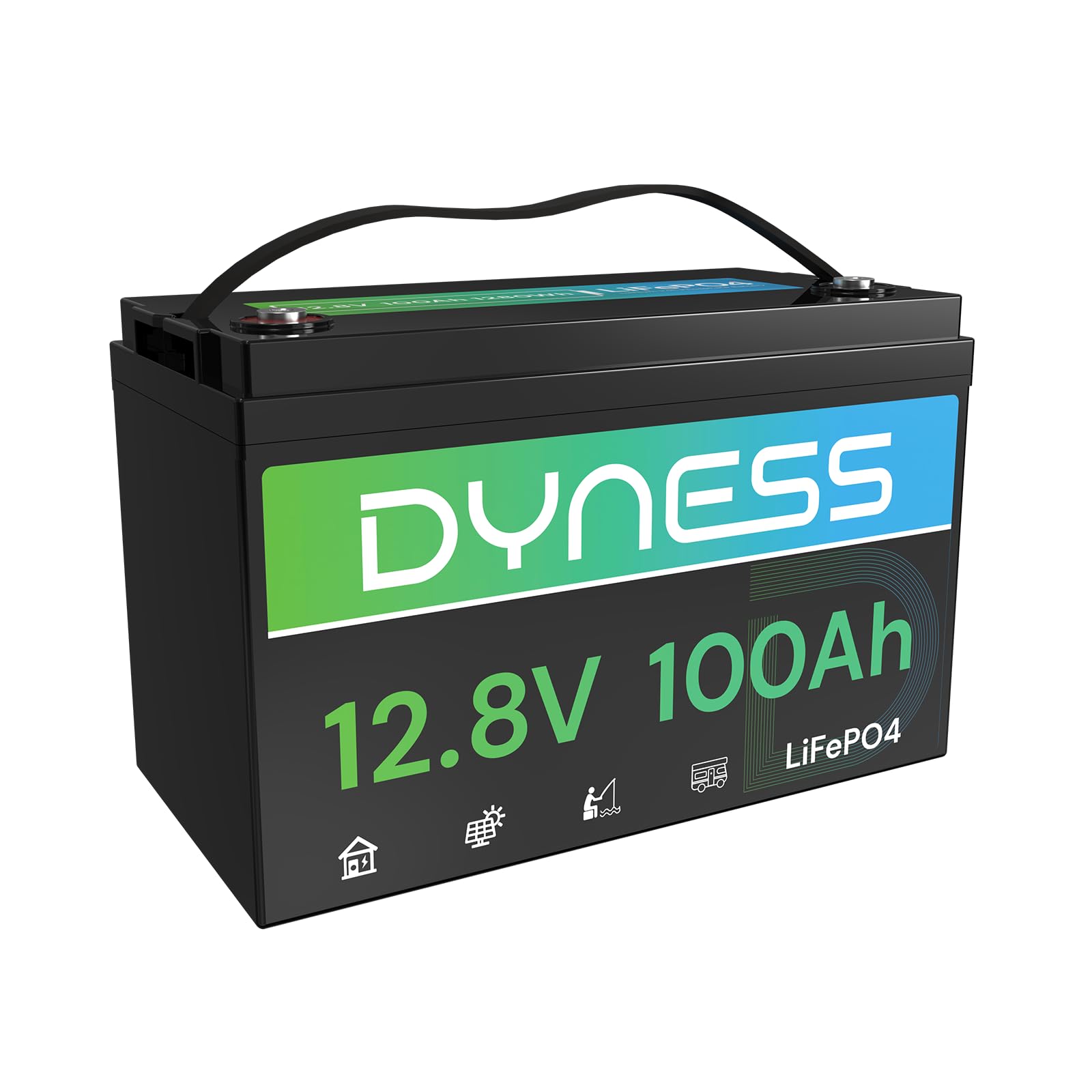
The rugged off-grid partner that shrugs off rain and salt spray better than most.
The Dyness stands apart from other lithium options in this list because it is the only one with an IP65 waterproof rating (protected against dust and low-pressure water jets) and salt-spray resistance, meaning you can mount it in a camper or marine compartment where humidity and splashes are a real risk. It weighs 25.3 lbs, which is a 2.5x weight gap lighter than the 63-pound WEIZE lead-acid battery, making it far easier to lift into an RV battery box. It also includes low-temperature charging protection that disconnects charging below 32°F.
Buyers consistently describe the build quality as excellent, with heavy-duty double-layer packaging and a clear English manual. The smart 100A BMS covers overcharging, over-discharging, and short circuits, and the battery can be expanded up to 4P4S for a massive 20.48kWh system. Unlike the Interstate, which is a sealed lead-acid dual-purpose battery, this Dyness is strictly a deep-cycle power source, so do not use it to start an engine.
Standout Features
- IP65-rated waterproof and salt-spray resistant for harsh environments
- Low-temperature charging cutoff protects cells in cold weather
- At 25.3 lbs, it is 2.4x lighter than the WEIZE lead-acid battery
What To Note
- Pricier than many other 100Ah lithium batteries
- Not designed for starting or high-cranking applications
Reach for this if: You install the battery in a boat, marine engine room, or outdoor compartment exposed to rain and spray.
Look elsewhere if: You need a combination starter and deep-cycle battery — see the Interstate.
4. HQST 12V 100Ah LiFePO4 Battery with LED Display

The featherweight with a built-in fuel gauge so you stop guessing how much power is left.
The HQST weighs only 22 lbs, making it one of the lightest 31 series battery picks here — one customer observed it weighs 44 lbs less than their acid battery and that they could pick it up with their pinky. It has a built-in LED display that shows real-time power capacity, voltage, and charging/discharging current, so you always see what is happening without needing an external monitor. It includes low and high-temperature cutoffs and a 100A BMS with over 20 layers of protection.
This battery delivers 100% usable capacity, unlike traditional SLA (Sealed Lead-Acid) batteries that only offer about 50%, and it supports a maximum charging current of 50A. It is backed by a 10-year warranty and uses UL-tested cells. That said, one user highlighted theirs did not last a full summer on a boat with a light 3.8AH draw, so reliability seems to vary by unit. The built-in meter is a big plus over the DUNFUME, which lacks a display.
Biggest Strengths
- Only 22 lbs — remarkably light for a Group 31 battery
- Integrated LED display shows real-time capacity and voltage
- 10-year warranty and UL-tested cells offer confidence
A Known Risk
- Some buyers report early failure after only one season of use
- Charger compatibility issues can arise with older setups
Grab it for: Budget-conscious buyers who want a lightweight lithium battery with a handy display and a long warranty.
Maybe skip if: You need an absolutely bulletproof reputation — the Redodo or Power Queen have more consistent long-term track records.
5. Litime 12V 100Ah Lithium Battery, Group 31 LiFePO4
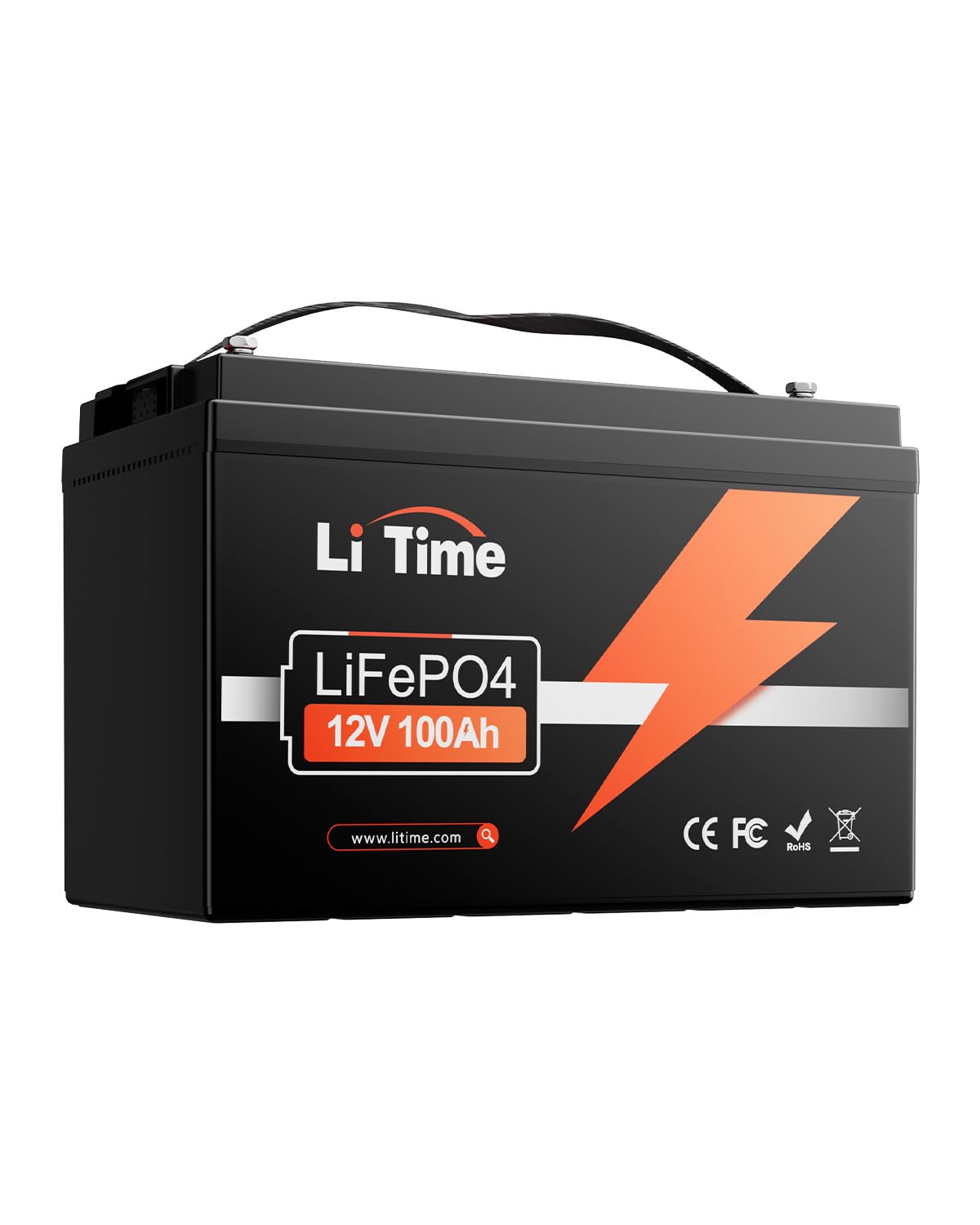
The tech-forward battery with Bluetooth that lets you check the charge from your phone.
The Litime goes a step further than the HQST by adding a Bluetooth app that shows you the charge and discharge rates directly on your phone, which one buyer called actually worth the download. At 24.25 lbs, it is about 1/3 the weight of the 64.5-pound Interstate lead-acid battery, and it uses A+ grade automotive cells rated for 4000+ cycles at 100% DOD (Depth of Discharge). It also comes with UL and FCC certifications, which is a rarity among budget-tier lithium batteries.
This battery includes a 100A BMS with over 20 safeguards and can be expanded up to 4P4S for a 20.48kWh system. The app has been reported as occasionally glitchy during charging and requiring a reconnect, but most users find the monitoring feature genuinely useful. Note that converting from lead-acid may require upgrading your RV charger to avoid overwhelming the new battery.
Key Reasons To Buy
- Bluetooth app gives live readouts of charge and discharge rates
- UL and FCC certified for safety and compliance
- Automotive-grade A+ cells for stable long-term performance
Important Note
- Bluetooth app can be finicky and may need reconnecting
- May require a charger upgrade when replacing lead-acid in an RV
Perfect for: Tech-savvy RV owners and home backup users who want to monitor their battery health from a phone app.
Not great if: You prefer a simple plug-and-play setup with no app fuss — the Power Queen is more straightforward.
6. WEIZE 12V 100Ah Deep Cycle Battery, Group Size 31

The old-school workhorse that costs less but asks you to lift 63 pounds for the privilege.
If you are on a tight budget and do not mind the weight, the WEIZE is a solid entry-level SLA (Sealed Lead-Acid) battery. It delivers 100Ah capacity in a standard Group 31 size and is maintenance-free and spill-proof, so you can mount it in a camper or marine compartment without worrying about acid leaks. It fits replacement applications for UB121000 and Renogy 100 Amp Hour batteries, and it works well for wheelchairs, scrubbers, and trolling motors.
The catch is the weight. At 63 pounds (59.98 lbs item weight), this battery is 2.5x heavier than a lithium equivalent like the Dyness, which weighs 25.3 lbs. It also only offers about 50% usable capacity, so you get effectively 50Ah before you risk damaging the battery. Unlike every lithium battery in this guide, it has no BMS, so you need an external charge controller to prevent over-discharge. It is the most affordable entry point, but the trade-off in weight and usable power is significant.
What You Get
- A true 100Ah sealed lead-acid battery at a budget-friendly price
- Maintenance-free and spill-proof for safe mounting
- Compatible with many existing 31 series battery trays
The Heavy Truth
- At 63 lbs, it is almost 3x heavier than a typical lithium battery
- Only about 50% usable capacity before damage occurs
- No built-in BMS requires external charge control
Best for: Occasional use where weight is not an issue and budget is the primary concern.
Better options exist if: You plan to regularly cycle the battery or you need to move it often — the extra 40 lbs is not worth the savings.
7. DUNFUME 12V 100Ah LiFePO4 Lithium Battery Built-in 100A BMS
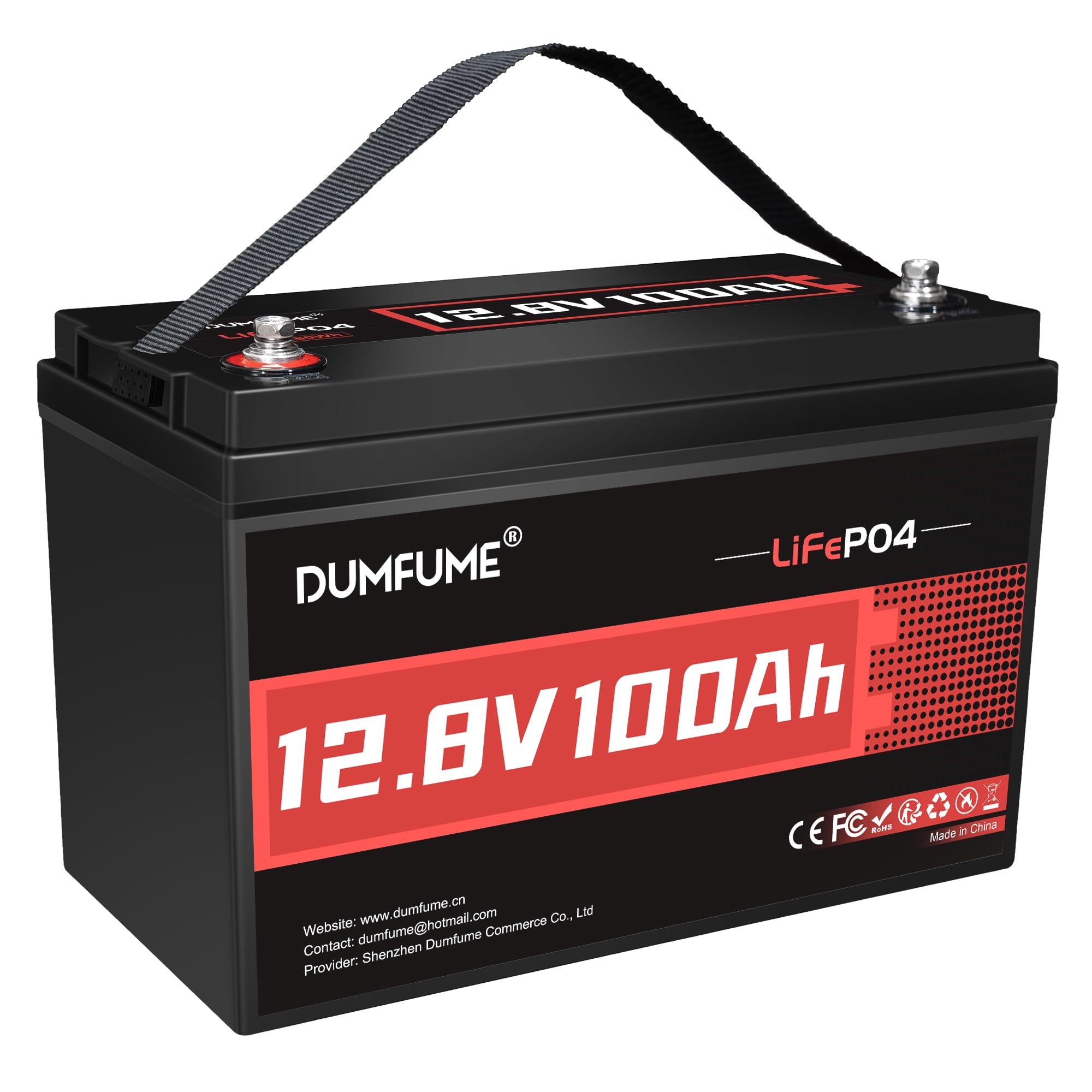
The stubbornly light entry into lithium that promises a 25% size reduction for tight compartments.
The DUNFUME is marketed as having a 25% size reduction and weighing only 21.6 lbs, making it one of the lightest 100Ah 31 series battery options available. It offers 1280Wh of energy capacity with a built-in 100A BMS and Grade A cells rated for up to 4000 cycles at 100% DOD. The ABS casing is dustproof and weather-resistant, making it suitable for indoor and outdoor installations. One buyer found it was able to run an 8000 BTU inverter window air conditioner at a 35% load, calling it good value for the price.
The catch is durability. One shopper added the battery died after a year in a campervan, failing to supply useful power overnight with only a 3.5 amp draw from a refrigerator, and the BMS appeared to enter low-voltage cutoff permanently. The manufacturer offers a 5-year warranty, but the mixed reliability pattern is worth noting. Unlike the Dyness, which has IP65 protection, the DUNFUME is weather-resistant but not waterproof, so it is less suited for exposed marine installations.
What Stands Out
- At 21.6 lbs, it is the lightest lithium battery on this list
- Smaller case design fits tighter installation spaces
- Integrated 100A BMS with multi-layer protection
Worrying Pattern
- One reviewer noted the battery died completely after 1 year of use
- Not waterproof, so less suitable for marine or wet environments
- Voltage and current may deviate by 1-5% per manufacturer note
Worth a shot for: Budget-first buyers who want a very light lithium battery for a camper or solar system and accept some risk.
Probably skip if: You depend on the battery for critical power needs — the Power Queen or Redodo have stronger long-term reliability.
8. Interstate Batteries Marine/RV 12V 100Ah 825CCA Pure Lead AGM (Group Size 31M)

The 70-year veteran that doubles as a starter battery and a deep-cycle workhorse.
This Interstate is the only dual-purpose battery in the lineup, meaning it can crank a marine engine with 825 cold-cranking amps (CCA — the number of amps at 0°F for 30 seconds to start an engine) and also power your trolling motor and accessories while the engine is off. It is a pure lead AGM battery, which Interstate claims lasts 2x longer than conventional alloy AGM batteries and 3x longer than a flooded battery. At 64.5 lbs, it is heavy, but it is built with thick plates that keep discharging power through many recharge cycles without early degradation.
Owners mention it cranks boats strongly after extended mooring and handles RV dual-battery backup setups with a 3/4 HP sump pump and inverter. Unlike the lithium batteries above, this one requires no BMS and works with standard marine chargers. The trade-off is that it provides only about 50Ah of usable capacity compared to the full 100Ah you get from a lithium battery, and it weighs more than double the lightest pick here, the DUNFUME. For a 31 series battery that needs to do both starting and deep cycling, this is the most trusted name.
Why It Wins
- Dual-purpose design cranks engines and powers accessories
- Pure lead AGM supposedly lasts 2-3x longer than conventional lead-acid, per the brand
- Proven reliability: Interstate has 70 years in the battery business
Where It Loses
- At 64.5 lbs, it is the heaviest battery on this list
- Only about 50% usable capacity for deep-cycle use
- No low-temperature protection or BMS
Best pick for: Boaters who need one battery to start the engine and run accessories without a separate house battery.
pass on it if: You only need deep-cycle power for solar or off-grid — a lithium battery gives you double the usable capacity at half the weight.
Understanding the Specs
Usable Capacity vs. Stated Capacity
This is the single most misunderstood spec. A 100Ah lead-acid battery (like the WEIZE or Interstate) should only be discharged to about 50%, giving you only 50Ah of usable power before you risk damaging it. A 100Ah lithium battery (like the Redodo or Power Queen) gives you nearly 100% of its rated capacity — the full 100Ah. So a 100Ah lithium battery effectively gives you double the usable runtime of a 100Ah lead-acid battery of the same size.
BMS: Battery Management System
A BMS is a small circuit board inside every lithium battery that monitors voltage, temperature, and current. It automatically shuts down the battery if it detects overcharging, over-discharging, short circuits, or overheating. A 100A BMS means the battery can safely deliver 100 amps continuously. Lead-acid batteries like the WEIZE and Interstate do not have a BMS, so they rely on external charge controllers and your own vigilance to avoid damage.
Cold Cranking Amps (CCA) vs. Deep Cycle
CCA measures how many amps a battery can deliver for 30 seconds at 0°F to start an engine. The Interstate is rated at 825 CCA, making it a strong starter battery. Lithium batteries are not typically rated in CCA because they are designed for deep cycling — drawing power steadily over a long period, not a short burst. If you need a starting battery, you want high CCA; if you need a house battery for lights, fridge, or a trolling motor, you want deep-cycle capacity and a high-amp BMS.
Low-Temperature Cutoff
Charging a lithium iron phosphate (LiFePO4) battery below 32°F (0°C) can cause permanent damage by plating lithium metal inside the cells. Batteries like the Redodo, Dyness, and HQST include a low-temperature cutoff that automatically stops charging until the battery warms up. If you live in a climate with freezing winters, this feature is not optional — it saves the battery from an early death.
FAQ
Can I use a 31 series lithium battery as a starting battery for my boat or truck?
How much lighter is a lithium 31 series battery compared to a lead-acid one?
Will a 100Ah lithium battery run my RV refrigerator overnight?
Can I connect multiple 31 series lithium batteries in parallel or series?
What does low-temperature cutoff mean and why do I need it?
How many cycles does a 31 series lithium battery last?
Can I charge a lithium 31 series battery with my existing RV or marine charger?
Is a 31 series battery the same as a Group 31 battery?
Do I need a battery management system for a lead-acid battery?
Which brand of 31 series battery has the longest lifespan?
Final Thoughts: The Verdict
For most people, the best 31 series battery is the Redodo 12V 100Ah because it combines cold-weather protection, a sturdy 100A BMS that can handle heavy surges, and a weight of just 22.2 lbs — making it the most versatile pick for trolling motors, RVs, and off-grid solar. If you want the longest proven track record and all-day trolling performance, grab the Power Queen 12V 100Ah. And for a dual-purpose battery that starts your boat and runs your gear, the standout is the Interstate 31M-AGM-A.
How We Picked
We do not accept paid placement. Every pick is matched to a real buyer and a real use-case; we do not hands-on test units.
Sources & Methodology
Specifications: manufacturer listings and product documentation. Review insights: verified customer reviews, as of July 2026. Pricing: not shown on this page (it changes often); check the current price via the retailer link.
As an Amazon Associate, Gadgets Feed earns from qualifying purchases. This does not affect which products we feature.
Related Guides
Product prices and availability are accurate as of the date/time indicated and are subject to change. Any price and availability information displayed on Amazon at the time of purchase will apply to the purchase of this product. As an Amazon Associate I earn from qualifying purchases.
CERTAIN CONTENT THAT APPEARS ON THIS SITE COMES FROM AMAZON. THIS CONTENT IS PROVIDED "AS IS" AND IS SUBJECT TO CHANGE OR REMOVAL AT ANY TIME.
Amazon and the Amazon logo are trademarks of Amazon.com, Inc. or its affiliates.