
Our readers keep the lights on and my morning glass full of iced black tea. As an Amazon Associate, I earn from qualifying purchases.
Specs are compiled from manufacturer listings and verified buyer reviews and can change over time — please confirm the key details on the product page before buying.
Moving to a 32-channel digital mixer means you get enough inputs for a full band or complex installs, but you also need a workflow that does not slow you down during a live show. The real difference between these mixers depends on routing speed, preamp quality on every channel, and whether the built-in recording can capture every track at once without a separate computer.
I’m Min — the founder and writer behind Gadgets Feed. This guide is built by comparing the manufacturers’ published specifications and the patterns across verified customer reviews, so you get each pick’s real strengths and trade-offs instead of marketing spin.
Whether you run a house of worship, a mobile rig, or a recording studio, finding the right 32 channel digital mixer means looking past the channel count at the preamp quality, latency (the delay between input and output), and the expandability that will serve you for years.
Quick Picks
- PreSonus StudioLive Series III 24R Digital Rack Mixer — Best Overall
- Behringer 32 A-B Box (X32PRODUCER), Black — Workhorse Faders
- BEHRINGER X32 PRODUCER-TP — Touring Grade
- Mackie DL32S 32-Channel Digital Rack Mixer — Ultra Portable
- PreSonus StudioLive Series III 32SC Digital Console Mixer — AVB Ecosystem
- PreSonus StudioLive Series III 32SX Digital Console Mixer — DAW Control Center
- PreSonus StudioLive Series III 32S Digital Console Mixer — Flagship Console
- Soundcraft Si Expression 3 Digital 32-Channel Live Audio Mixer Console — Install Grade
How To Choose The Best 32 Channel Digital Mixer
Buying a 32-channel mixer means you have outgrown smaller boards, and the choice is no longer about just counting inputs. Your real decision is about workflow — how fast you can set up, how you control monitors, and whether you can record every channel at once. Here are the key specs that separate a console you will love from one you will fight.
Latency and Round-Trip Performance
When you run in-ear monitors or track live to a DAW, every millisecond of delay matters. Look for published round-trip latency figures — numbers under 8ms are comfortable for most performers. Mixers with dedicated DSP handle this better than those relying entirely on a tablet’s processor.
Preamps and Channel Count
A 32-channel mixer does not always mean 32 XLR mic inputs. Some units combine physical mic preamps with digital channels from USB or stage boxes. Check how many of those 32 channels are recallable mic preamps — that is the number that determines your actual wired input count for microphones and instruments.
Recording Interface Capability
If you want to multitrack record a show, you need a mixer that acts as a USB audio interface. Look at the send-and-return channel count — 32×32 or better means you can capture every input individually on a laptop. Some mixers also record directly to an SD card, which is a reliable backup during live performances.
Fader Layout and Physical Controls
A 32-channel mixer with only 17 faders means you will be banking through layers to access channels 17-32. More faders reduce that scrolling, and motorized faders let you recall entire scenes instantly — your saved mix moves the faders to the right positions when you load the scene.
Quick Comparison
On smaller screens, swipe sideways to see the full table.
| Model | Best For | Weight | Channels | USB Interface | Amazon |
|---|---|---|---|---|---|
| PreSonus StudioLive 24R | Rack-mount recording & stage box | 10.8 lbs | 32 | 40×40 USB 2.0 | $1,099.99Amazon |
| Behringer X32 PRODUCER | Full-featured live mixing | 25.13 lbs | 32 | 32×32 USB 2.0 | $1,499.00Amazon |
| BEHRINGER X32 PRODUCER-TP | Tour-ready with road case | 25.1 lbs | 32 | 32×32 USB 2.0 | $1,499.00Amazon |
| Mackie DL32S | Ultra-portable wireless mixing | 8.8 lbs | 32 | 32×32 USB | $1,499.99Amazon |
| PreSonus StudioLive 32SC | AVB ecosystem integration | 22 lbs | 32 | 64×64 USB | $1,689.99Amazon |
| PreSonus StudioLive 32SX | High-channel count & DAW control | 30.9 lbs | 32 | 64×64 USB | $2,299.99Amazon |
| PreSonus StudioLive 32S | Premiere live console | 37 lbs | 32 | 64×64 USB | $2,499.00Amazon |
| Soundcraft Si Expression 3 | Large-format installs | 51 lbs | 32 | Via optional card | $5,820.00Amazon |
In‑Depth Reviews
1. PreSonus StudioLive Series III 24R Digital Rack Mixer
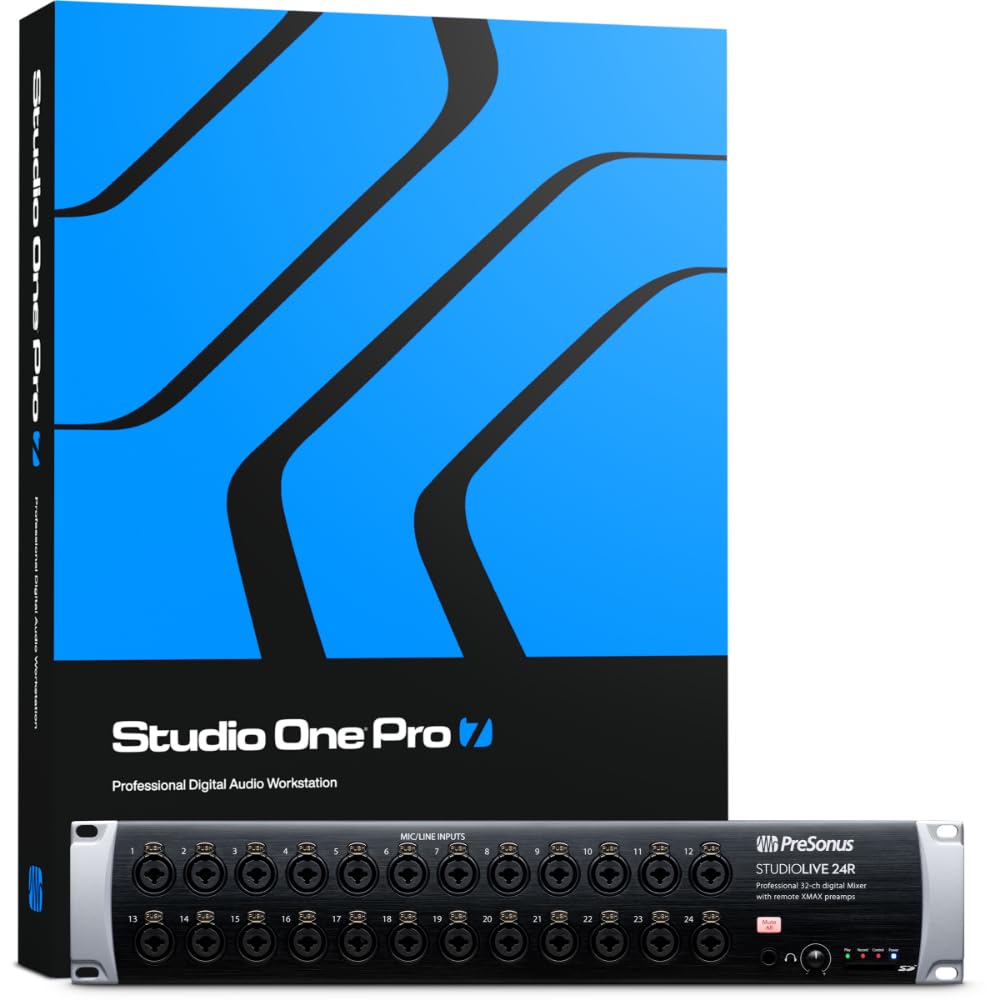
A rack-unit that pulls triple duty as a mixer, stage box, and 40-channel recording interface.
If you want one box that handles front-of-house mixing, multitrack recording, and expandability, this PreSonus 24R keeps life simple. It gives you 24 recallable mic preamps plus 8 digital channels — all 32 channels feed into a 40×40 USB 2.0 recording interface, so you can capture every input individually on a laptop. The Fat Channel processing on every input includes vintage EQ and compressor modes that you can compare instantly with an A/B switch, which speeds up soundcheck noticeably.
One reviewer paired this rack mixer with a JBL Eon One monitor and reported that the preamps are quiet and the WiFi connection is reliable when using an external router. At 10.8 lbs, it is more than half the weight of the Behringer X32 PRODUCER (25.13 lbs), making it far easier to carry to gigs. The onboard SD card recorder gives you a backup record in case your laptop has issues, and the UC Surface software runs on Mac, Windows, iPad, and Android so you are not locked to one platform.
The catch is that some buyers report that the Universal Control app can have connection issues during shows, and the QMix-UC app requires nicknames for channels, which is an extra setup step. If you need a full front-panel fader surface for hands-on mixing, a physical console might serve you better than this rack unit.
Why It Wins
- 40×40 USB 2.0 recording interface — captures every input
- Only 10.8 lbs — lightest true rack mixer in this tier
- Built-in SD card recording for fail-safe backup
- FlexMixes for monitors, subgroups, or matrix outputs
Know Before You Buy
- Tablet app connection can drop mid-show
- No built-in talkback microphone
- 24 physical mic preamps, not 32 XLRs
Reach for this if: you want a lightweight rack mixer that records every channel via USB and doubles as an AVB stage box for future expansion.
Look elsewhere if: you need 32 XLR inputs on the unit itself or rely heavily on a tablet-only workflow without a secondary control surface.
2. Behringer 32 A-B Box (X32PRODUCER), Black

The industry-standard digital mixer that balances pro features with a price that fits a church or small venue budget.
This Behringer X32 PRODUCER has become the default recommendation for good reason: it packs 16 Midas-designed fully programmable mic preamps, 17 motorized 100mm faders, and a full 32×32 USB 2.0 audio interface into a rack-mountable chassis. The 40-input, 25-bus architecture gives you headroom for complex monitor mixes and a talkback section with its own XLR mic input, which is a feature you often only find on higher-end consoles.
One owner reported excellent latency — around 4.5ms one-way — which makes it perfectly usable for in-ear monitor mixes where delay is the enemy. The motorized faders mean you can save a full scene and have every fader jump to its saved position as soon as you recall the scene, which is a huge time saver between bands or services. The built-in effects replace external rack units for reverb, delay, and compression on every channel.
Owners mention that the learning curve is steep, partly because the firmware has outpaced the manual. Many buyers rely on Drew Bashier YouTube tutorials to unlock the deeper features. At 25.13 lbs, it is heavier than the PreSonus 24R (which is 10.8 lbs) but still light enough to transport in a single trip with an amp.
The Fader Advantage
- 17 motorized 100mm faders — instant scene recall
- 16 Midas preamps with proven sound quality
- 32×32 USB 2.0 audio interface for multitrack recording
- Extensive third-party support and tutorial ecosystem
The Learning Hump
- Manual lags behind firmware; heavy reliance on YouTube tutorials
- Weighs 25.13 lbs — less portable than smaller rack mixers
- Only 16 Midas preamps; additional channels come via line inputs
For the hands-on engineer: you get physical motorized faders and deep routing flexibility that reward the time you invest in learning the system.
The main hesitation: if you want a simpler tablet-only workflow, the Mackie DL32S is lighter and more intuitive out of the case.
3. BEHRINGER X32 PRODUCER-TP
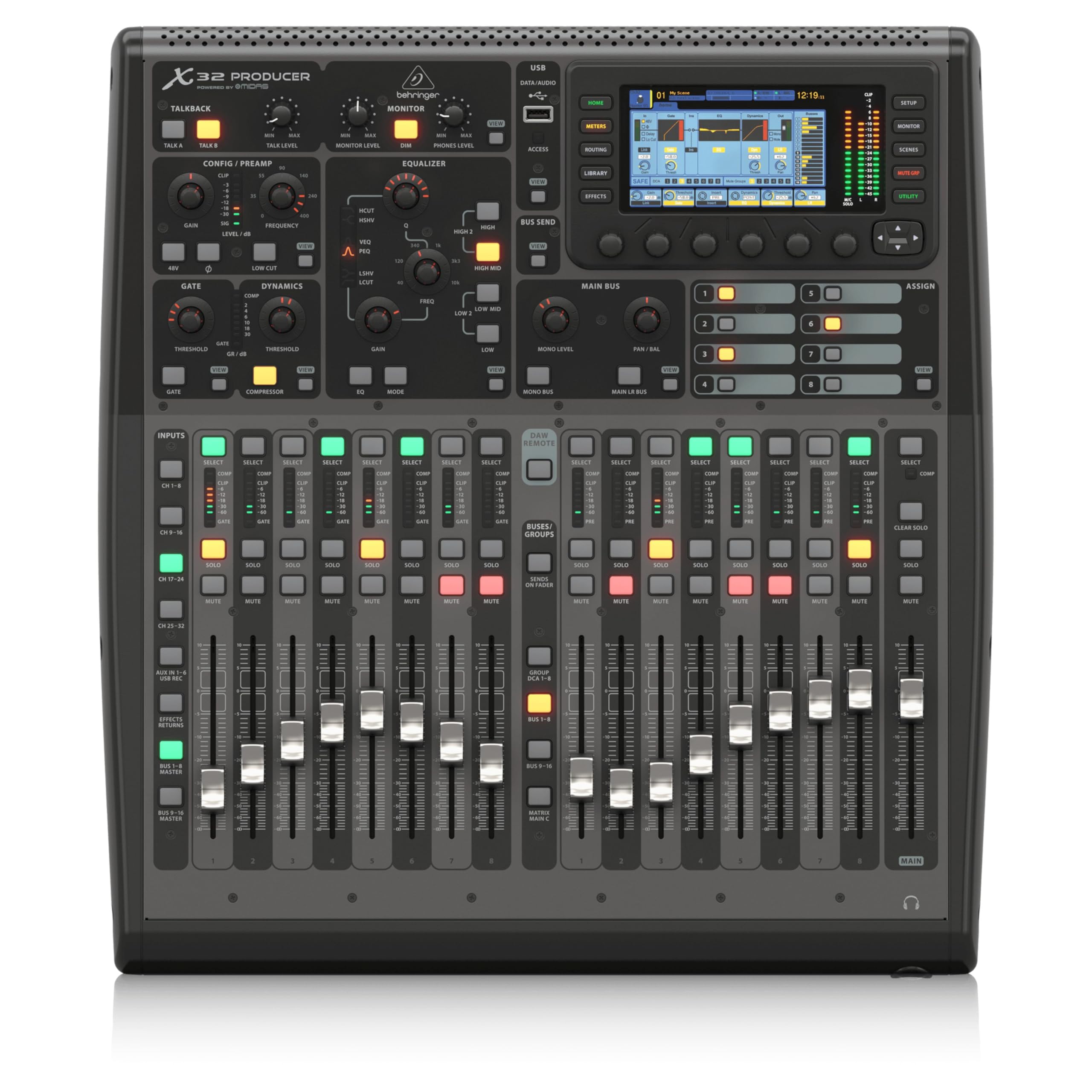
The same X32 PRODUCER engine wrapped in a road-ready flight case for heavy touring.
This is the X32 PRODUCER but with a touring-grade road case already fitted — marine-grade plywood, impact-resistant aluminum extrusions, and high-density protective foam around the console. If you know your mixer will live in a trailer or get loaded in and out weekly, the PRODUCER-TP saves you the cost and hassle of buying a separate case that fits perfectly. Inside, you get the same 16 Midas preamps, 17 motorized faders, and 32×32 USB audio interface as the standard PRODUCER.
A reviewer measured very low latency — sub 8ms roundtrip at a buffer of 128 — and compared the sound quality favorably to their previous RME interface at 48K. The 32×32 DAW I/O means you can record every channel to your DAW while mixing live, and the console retains all settings when powered off, so you do not tweak the same EQ every Sunday. The integrated effects rack handles reverb, delay, and dynamics without external processors.
The trade-off is weight. At 11.4 kilograms (about 25.1 lbs), the console plus the tour case is a two-person lift into a rack. Customers note that the included road case is built well, but the overall package is bulkier than a mixer you would throw in the backseat of a sedan. If you do not tour, the standard X32 PRODUCER is the same console for less money and a smaller footprint.
Built to Travel
- Touring-grade flight case included — marine plywood and aluminum extrusions
- Same 16 Midas preamps and 17 motorized faders as X32 PRODUCER
- Sub 8ms roundtrip latency at buffer 128 — rivals RME quality
- Retains all settings after power off — no re-setup between shows
Portability Cost
- Heavier and bulkier than the standard PRODUCER without case
- No additional I/O over the standard X32 PRODUCER
- Only 16 Midas mic preamps — remaining channels are line-level
Your move if you tour regularly: the included road case is a direct fit that protects the console better than a generic case could.
skip it if you are stationary: buy the standard X32 PRODUCER and spend the savings on a simple rack shelf.
4. Mackie DL32S 32-Channel Digital Rack Mixer

A featherweight 32-channel mixer that fits in a backpack and mixes entirely from a tablet.
At just 8.8 lbs, the Mackie DL32S is dramatically lighter than the Behringer X32 PRODUCER (25.13 lbs) — that is a difference of over 16 lbs, which matters when you are hauling gear up stairs. This is a stage-box format mixer: 32 Onyx+ recallable mic preamps live in the rack unit, and you control everything wirelessly via the Master Fader app on iOS or Android. There is no physical fader surface, so your hands-on control happens entirely through the tablet screen.
A reviewer praised it for multichannel podcast recording via USB ASIO — the 32×32 USB interface sends 16 channels of clean audio to a DAW. Every channel has a gate, compressor, and 4-band EQ, plus 4 stereo FX processors for reverb and delay. The built-in WiFi lets you connect up to 20 devices, so band members can adjust their own monitor mixes from their phones. The catch is that the built-in WiFi has limited range, and most users recommend adding an external router for reliable control during a show.
This mixer is ideal for working musicians who value portability over tactile faders. The trade-off is that with no physical controls, you are fully dependent on the tablet and WiFi connection — if the tablet dies or the connection drops, you lose control until it reconnects. The Onyx preamps are clean and quiet, and the 10 fully-assignable XLR outputs give you flexible routing for monitors and front-of-house.
Why It Travels
- 8.8 lbs — lightest 32-channel mixer in this comparison
- 32 Onyx+ recallable mic preamps — full 32 XLR inputs
- Wireless control via Master Fader app on up to 20 devices
- 32×32 USB recording interface for multitrack capture
The Tablet Reality
- No physical faders or controls — fully dependent on tablet
- Built-in WiFi range is limited; external router recommended
- Solo function only increases volume, does not mute other channels
Best for mobile musicians: you can fit 32 channels of professional mixing in a total weight that is less than a single 12-inch powered speaker.
Pass if you need faders: if you prefer to touch physical knobs and sliders, the Behringer X32 PRODUCER gives you 17 motorized faders for the same general price tier.
5. PreSonus StudioLive Series III 32SC Digital Console Mixer

A digital console built to be the hub of a full AVB network with stage boxes and personal monitors.
The PreSonus 32SC is designed for installs and larger mobile rigs where you want to expand beyond the mixer itself. It has a built-in 128-channel (64×64) USB interface — the most of any mixer in its class — which means you can record every input and output simultaneously into your DAW. The dual-core FLEX DSP Engine powers 286 simultaneous processors, so you never run out of EQ or dynamics even with a complex mix.
AVB networking lets you connect PreSonus NSB stage boxes to add inputs at the stage, and EarMix 16M personal monitor mixers let each musician control their own mix from a smartphone-sized device. The onboard SD card recorder gives you true Virtual Soundcheck — you play back the multitrack recording from a previous soundcheck and dial in the mix without the band being present. At 22 lbs, it is heavier than the 24R but still manageable for a console with this much routing power.
One owner noted the hardware is excellent, but the bundled Studio One 6 Artist software lacks video import and music notation features that are only in the Pro version. If you do not need AVB networking or the maximum USB channel count, the PreSonus 24R covers similar ground at a lower entry point. Some buyers reported registration issues with used units that were already registered by a previous owner.
Network Hub
- 64×64 USB interface — captures every single audio channel
- AVB networking for stage boxes and personal monitor mixers
- Dual-core FLEX DSP with 286 simultaneous processors
- Onboard SD card recorder with Virtual Soundcheck
Software Limits
- Bundled Studio One 6 Artist lacks video and notation features
- AVB ecosystem requires additional PreSonus hardware
- Some used units have registration locks
For the installed-sound pro: you build a networked system where the stage box sits at the stage and the console lives at front-of-house, connected by a single Ethernet cable.
Not for the solo portable operator: the 22 lb weight and AVB complexity are overkill if you just need a simple rack mixer for a small venue.
6. PreSonus StudioLive Series III 32SX Digital Console Mixer
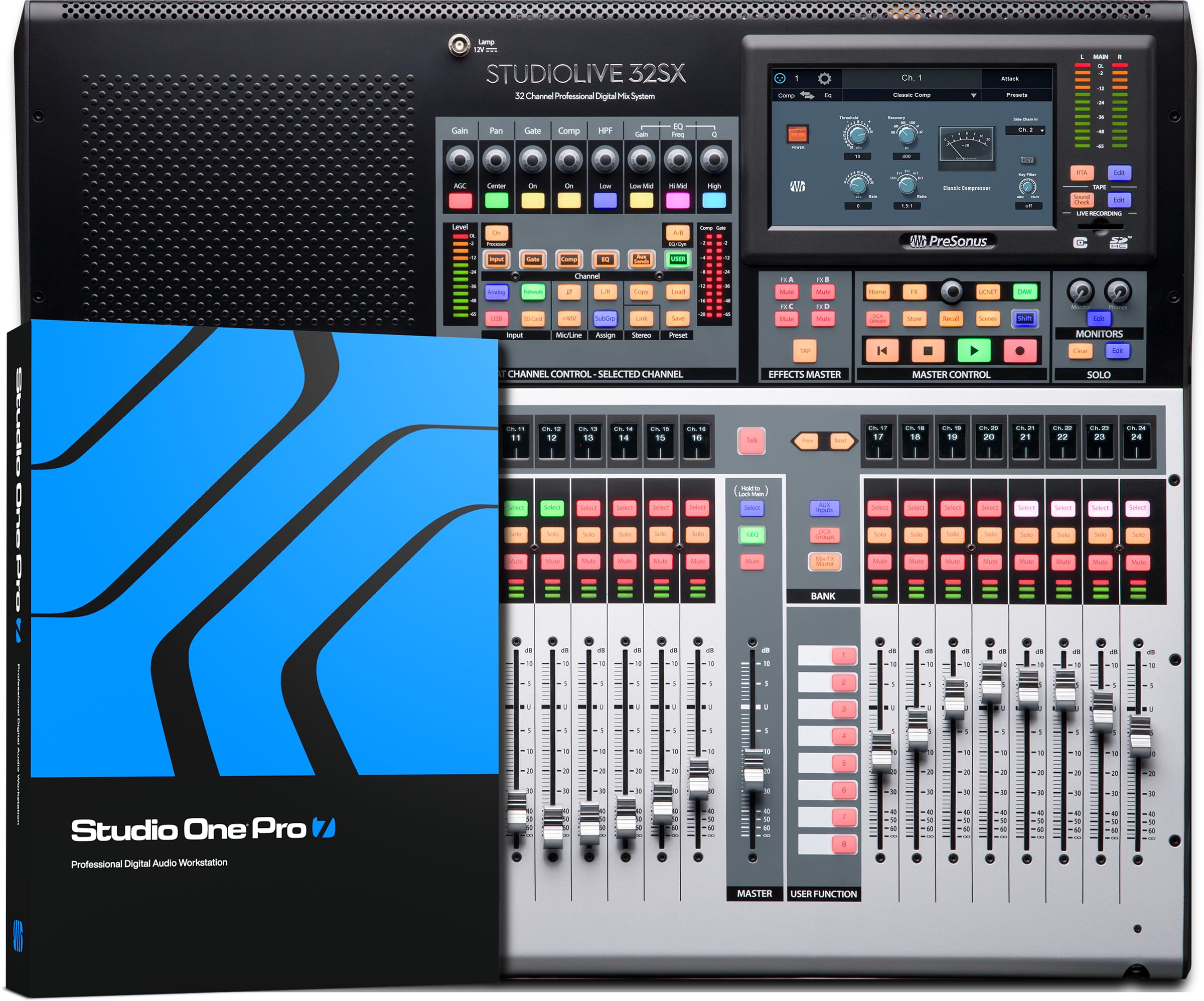
A 40-input surface console that doubles as a controller for Logic, Pro Tools, and Studio One.
The 32SX steps up from the 32SC with more physical inputs — 40 total, with 32 channels — and full DAW control integration. It emulates MCU for Logic and HUI for Pro Tools, so you can use the motorized faders and transport controls to run your recording software without a separate control surface. The dual-core FLEX DSP still delivers 286 simultaneous processors, and the 64×64 USB interface gives you the same massive recording bandwidth as the 32SC. At 30.9 lbs, it is a serious console that demands a solid stand or rack.
Scene management is upgraded with project organization: you can group scenes into projects and apply scene lock and channel safe to prevent accidental changes during a show. This is useful for touring acts that have different setups for each song. The 16 FlexMixes serve as aux mixes, subgroups, or matrix outputs, and the 4 dedicated effects buses let you load legendary reverb emulations and delays.
The same software limitation from the 32SC applies here: Studio One 6 Artist lacks video import and notation, which some buyers find frustrating for a top-tier console purchase. Reviewers who bought used units reported registration issues with the previous owner still attached to the product. If you mix mainly live and do not need DAW integration, the 32SC gives you identical core mixing power at a lower weight.
Console + Controller
- DAW control for Logic, Pro Tools, and Studio One
- 40-input, 32-channel architecture for more I/O flexibility
- Project-based scene management with lock and safe features
- 64×64 USB interface — captures every channel to DAW
The Software Gap
- Studio One Artist lacks video and notation features
- 30.9 lbs — needs a sturdy stand or rack mount
- Registration issues on used units without original owner
Reach for this if: you want one console that mixes live and controls your DAW for recording and overdubs without separate gear.
Look elsewhere if: you rarely use a DAW and prefer a lighter console — the 32SC gives you the same DSP and USB recording at 22 lbs.
7. PreSonus StudioLive Series III 32S Digital Console Mixer

The heaviest hitter in the PreSonus lineup — a full-size console with the most onboard control and I/O.
The 32S is the full-size surface console in the PreSonus StudioLive Series III range, packing 40 inputs across 32 channels into a chassis that weighs 37 lbs. It shares the same dual-core FLEX DSP Engine with 286 simultaneous processors as the 32SC and 32SX, along with the 64×64 USB interface that records every channel. The key difference is the physical layout: you get more dedicated controls and faders on the surface, which reduces the need to dive into touchscreen menus during a fast-moving live show.
AVB networking is built in, so you can connect up to PreSonus NSB stage boxes and EarMix 16M personal monitor mixers over standard Ethernet. The 16 FlexMixes give you flexible routing for monitors or effects sends, and the 4 dedicated effects buses handle reverb, delay, and modulation without eating up your processing channels. The onboard SD card recorder supports true Virtual Soundcheck, letting you refine your mix from a multitrack recording without the band present.
Multiple reviewers commented that the hardware is excellent and works well as a standalone mixer, but the bundled Studio One 6 Artist software lacks video and notation features that are available only in the paid Pro upgrade. A few buyers who purchased new units reported that registration failed because the serial was already tied to a previous owner, which could block future tech support. If you need the maximum channel count and the most physical controls in the PreSonus ecosystem, this is the one — but the 32SX offers the same DSP and I/O for less money and less weight.
Full-Size Power
- 40-input, 32-channel surface — most physical control in the lineup
- 64×64 USB recording interface — captures all channels
- Dual-core FLEX DSP with 286 processors for heavy mixes
- AVB networking for stage boxes and personal monitor expansion
Weight & Software
- 37 lbs — the heaviest console in this comparison
- Studio One Artist lacks video and notation features
- Registration issues reported on new-in-box units
For the venue that needs a permanent console: you get the most physical faders and dedicated controls for fast live mixing without tablet dependency.
Consider the 32SX instead: if you want the same DSP and USB recording in a 30.9 lb chassis that also offers full DAW control integration.
8. Soundcraft Si Expression 3 Digital 32-Channel Live Audio Mixer Console
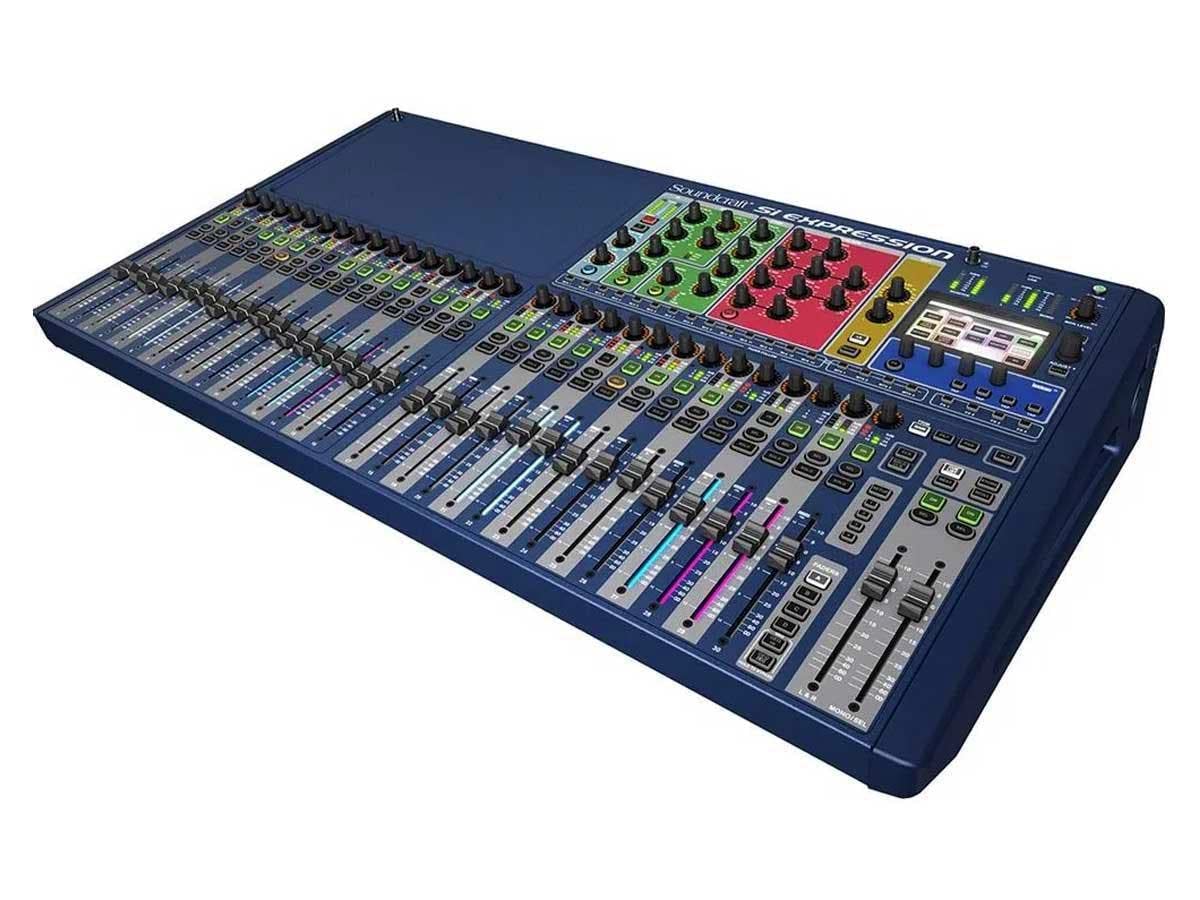
A large-format console with 66 inputs to mix and freely assignable faders for complex routing.
The Soundcraft Si Expression 3 is a different breed from the rack-mounted mixers above — it is a full-size console with 32 mono mic inputs, 4 line inputs, and the capacity to mix 66 inputs total, meaning you can use expansion cards to bring in digital sources. The faders are freely assignable, so you can patch any input, subgroup, or VCA (voltage-controlled amplifier, a way to group channels) to any fader layer without being stuck in fixed block boundaries. This flexibility is the main reason houses of worship and large installs choose this board.
At 51 lbs, this is the heaviest mixer in this comparison — it is built for permanent installation in a venue, not for weekly load-outs. The built-in effects and processing are solid, with a ViSi Connect option card slot for 64×64 input/output expansion if you need to grow the system later. One buyer who upgraded from PreSonus called it excellent for church use, citing the motorized faders and ease of use after an initial learning period.
However, the customer experience is inconsistent. One reviewer noted persistent problems with snapshot distortion, main outputs failing unexpectedly, and channel feedback that required multiple warranty replacements. Another buyer recommended looking at the Soundcraft Si Impact instead, which has 24 channel faders with programmable scribble strips and 32 XLR inputs at a lower price. The Expression 3 lacks scribble strips entirely, which means you need tape or a printed label sheet to identify channels.
The Routing Power
- 66 inputs to mix — more than any other console here
- Freely assignable faders — route any source to any fader
- ViSi Connect expansion slot for 64×64 I/O
- Motorized faders with full scene recall
Real-World Caveats
- 51 lbs — designed for permanent install, not portability
- No scribble strips on channels — must label manually
- Multiple reliability reports: snapshot distortion, output failures
- Higher price than comparable Behringer or PreSonus consoles
For the venue with a dedicated sound booth: you get the most assignable faders and expansion capacity of any mixer in this list, and you can bolt it to a desk permanently.
Pass on this if you move gear: at 51 lbs and with reliability concerns reported, the Behringer X32 PRODUCER gives you more features and proven reliability at a fraction of the weight and cost.
Understanding the Specs
Channel Count vs Mic Preamps
A “32-channel” digital mixer does not always have 32 physical XLR inputs. Some count the digital channels from a USB or stage box connection as part of the 32. For live sound, the number that matters is the number of recallable mic preamps — that is your actual wired input count for microphones and direct instruments. The Behringer X32 PRODUCER has 16 Midas preamps, while the Mackie DL32S gives you 32 Onyx+ preamps in the same 32-channel count.
Latency and Round-Trip Time
Latency is the delay between playing a note and hearing it through the mixer. For in-ear monitors, anything above 10ms becomes distracting for the performer. Good digital mixers measure round-trip latency — the time for sound to go in, through the DSP, and back out. The Behringer X32 PRODUCER shows about 4.5ms one-way, and the X32 PRODUCER-TP achieves sub 8ms roundtrip at a buffer of 128, which is comparable to high-end audio interfaces.
FAQ
Can I use a 32-channel digital mixer without a tablet or computer?
How many channels can I record simultaneously with USB?
What is the difference between 32 channels and 16 Midas preamps?
Will a rack-mountable 32-channel mixer fit in a standard 19-inch rack?
Can I expand a 32-channel mixer with stage boxes later?
How much does a 32-channel digital mixer weigh?
What is the best 32-channel digital mixer for a church or house of worship?
Can I use a 32-channel digital mixer for multitrack podcast recording?
Is the Behringer X32 PRODUCER still a good buy in 2025?
Which 32-channel mixer has the lowest latency for in-ear monitors?
Final Thoughts: The Verdict
For most buyers, the best 32 channel digital mixer is the PreSonus StudioLive 24R because it combines a light rack-mountable chassis, a 40×40 USB recording interface (so you can record and play back 40 channels at once), and AVB networking (Audio Video Bridging, a standard for low-latency audio over Ethernet) for future stage box expansion. If you want a full physical fader surface with motorized recall, grab the Behringer X32 PRODUCER. And for maximum portability with zero physical faders and 32 Onyx+ preamps, the lightweight Mackie DL32S weighs just 8.8 lbs.
How We Picked
We do not accept paid placement, and we did not hands-on test every unit. Instead, we match each pick to a real buyer and use-case by comparing the manufacturers’ published specifications against the patterns in verified customer reviews — so you get each pick’s real strengths and trade-offs instead of marketing copy.
Sources & Methodology
Specifications: manufacturer listings and product documentation. Review insights: verified customer reviews, as of July 2026. Pricing: not shown on this page (it changes often); check the current price via the retailer link.
As an Amazon Associate, Gadgets Feed earns from qualifying purchases. This does not affect which products we feature.
Product prices and availability are accurate as of the date/time indicated and are subject to change. Any price and availability information displayed on Amazon at the time of purchase will apply to the purchase of this product. As an Amazon Associate I earn from qualifying purchases.
CERTAIN CONTENT THAT APPEARS ON THIS SITE COMES FROM AMAZON. THIS CONTENT IS PROVIDED "AS IS" AND IS SUBJECT TO CHANGE OR REMOVAL AT ANY TIME.
Amazon and the Amazon logo are trademarks of Amazon.com, Inc. or its affiliates.