
A portable 3200-watt generator is a pivotal piece of gear for anyone serious about off-grid capability. Whether you’re powering a 13,500 BTU RV air conditioner during a summer trip, keeping a refrigerator and sump pump running during a storm, or running essential power tools at a job site, this wattage class represents the sweet spot between real-world appliance power and reasonable portability. The challenge is that the market splits sharply between traditional inverter generators and modern battery power stations, and each type serves a massively different use case that beginners often misunderstand.
I’m Min — the co-founder and writer behind Gadgets Feed. I have spent hundreds of hours researching the technical specifications, real-world customer feedback, and market trends within the portable power and generator category to separate genuine workhorses from marketing fluff. My focus is on the measurable specs—like runtime at 25% load, total harmonic distortion, and surge capacity—that actually determine whether a generator will start your AC or shut down under load.
This guide breaks down 11 distinct models to help you find the right 3200 watt generator for your specific needs, from ultra-quiet inverter units to massive battery stations with solar charging.
How To Choose The Best 3200 Watt Generator
Choosing a generator in this class requires matching your appliance list to the generator’s running and surge wattage. A 3200-watt surge unit with a 2600-watt running capacity is very different from one with a 3200-watt running capacity, even though both carry the same peak label. You must also decide between the endless fuel supply of a gas inverter and the zero-maintenance, silent operation of a large battery station.
Surge Watts vs. Running Watts
The label “3200-watt generator” almost always refers to the surge or peak wattage—the brief burst of power needed to start an electric motor, like the compressor in an RV AC or a refrigerator. The running (rated) watts are typically lower, often around 2600W to 2800W for gas inverters. If your AC requires 3200 surge watts and 2000 running watts, a 3200-surge/2800-running unit will work. But if you plan to run a microwave, coffee maker, and a space heater simultaneously, you need to add up the running watts and ensure the total stays well below the rated continuous output.
Fuel Type: Gas, Dual-Fuel, or Battery
Traditional gas-powered inverters like the Honda EU3200i offer proven reliability and unlimited runtime as long as you have fuel, but they require regular maintenance, produce fumes, and generate noise and vibration. Dual-fuel models (gasoline and propane) like the EcoFlow Smart Generator add flexibility and longer shelf life for fuel storage. Battery power stations, such as the OUKITEL P2001 Pro, offer silent operation, zero emissions, and no maintenance, but their capacity is finite (measured in watt-hours) and recharging takes time. Your choice depends on whether your primary scenario is a multiday power outage requiring constant runtime or a quiet campsite where noise is a problem.
Portability and Weight
A 3200-watt gas inverter typically weighs between 47 and 60 pounds. This is manageable for most adults but awkward for long carries without wheels. Battery stations in this wattage class range from 26 pounds (BROWEY) to 53 pounds (IEE P3200), but the inclusion of wheels or a telescoping handle makes a massive difference in usability. Check the dimensions carefully—some gas inverters are tall enough to fit under an RV bed, while others are too boxy. The handle type (built-in carry vs. telescoping cart) and wheel size are practical details that affect daily use more than power charts.
Quick Comparison
On smaller screens, swipe sideways to see the full table.
| Model | Category | Best For | Key Spec | Amazon |
|---|---|---|---|---|
| Generac GP3300i | Inverter Gas | Home Backup & RV | 59.5 lbs, TruePower Tech, COsense | Amazon |
| Honda EU3200i | Inverter Gas | Premium Reliability | 54-58 dB, Bluetooth App, 8.6 hrs | Amazon |
| EcoFlow Dual Fuel | Dual-Fuel Inverter | EcoFlow Ecosystem | 3200W DC charge, LPG/Gas, app | Amazon |
| OUKITEL P2001 Pro | Battery Station | High Capacity Home | 2048Wh, 1.5 hr charge, app control | Amazon |
| IEE P3200 | Battery Station | Fast Recharge | 2048Wh, 1.2 hr charge, smart app | Amazon |
| GENMAX GM-3200i | Inverter Gas | Budget Value | 47.3 lbs, 57 dB, 8 hrs runtime | Amazon |
| PowerSmart 3600W | Inverter Gas | RV AC Power | 3600W surge, 50.7 lbs, 1.3 gal tank | Amazon |
| Aceup Energy 4000W | Inverter Gas | Smart Display | 50 lbs, digital gauge, 5-in-1 knob | Amazon |
| BROWEY S1600 | Battery Station | Solar Integration | 26 lbs, built-in 40W panel, 1024Wh | Amazon |
| BLAVOR S1600 | Battery Station | Renewable Power | 26 lbs, foldable 40W solar, 3500 cycles | Amazon |
| VTOMAN FlashSpeed 2400 | Battery Station | Fast Recharge + Jumpstart | 1408Wh, 58 min charge, 12V jumpstart | Amazon |
In‑Depth Reviews
1. Generac 3,300-Watt Gas Powered Portable Inverter Generator

Generac is a household name in standby and portable power, and the GP3300i brings their engineering reputation into the inverter space. Its 3300-watt surge and roughly 2800-watt running capacity (derated at higher altitudes) provides genuine “run the whole campsite” power, including most 13,500 BTU RV air conditioners. The PowerRush Advance Technology delivers over 50 percent more starting capacity, which is the spec that matters most when a compressor kicks on and needs that split-second surge.
Noise output is a strong point at conversational levels—multiple owners confirm it runs as quietly as the marketing suggests, making it suitable for campgrounds with sound restrictions. The COsense carbon monoxide detection system adds a critical safety layer, automatically shutting down the unit if CO builds up in an enclosed space. The 1.2-gallon fuel tank provides a realistic 8 to 10 hours of runtime at a light load with Economy Mode engaged, and the parallel-ready port lets you pair a second unit for double output.
The weight sits at 59.5 pounds with no wheels, which is the unit’s main portability drawback—you will have to lift it into a truck bed or RV compartment. Some owners also note that the power output drops at elevations above 5,000 feet, a common issue with carbureted engines, and the lack of a dedicated eco-mode off switch can make cold starts slightly finicky. For a premium mid-range inverter backed by Generac’s service network, this is a strong contender for home backup and RV use.
Why it’s great
- PowerRush Advance delivers the surge needed for RV AC and well pumps.
- COSense auto-shutdown protects against CO buildup.
- Economy Mode adjusts engine speed for long, fuel-efficient runtimes.
Good to know
- No wheels on the 60-lb frame makes it less convenient to move.
- Some altitude derating is expected; full power requires lower elevation.
2. Honda EU3200i 3200 Watt Inverter Generator
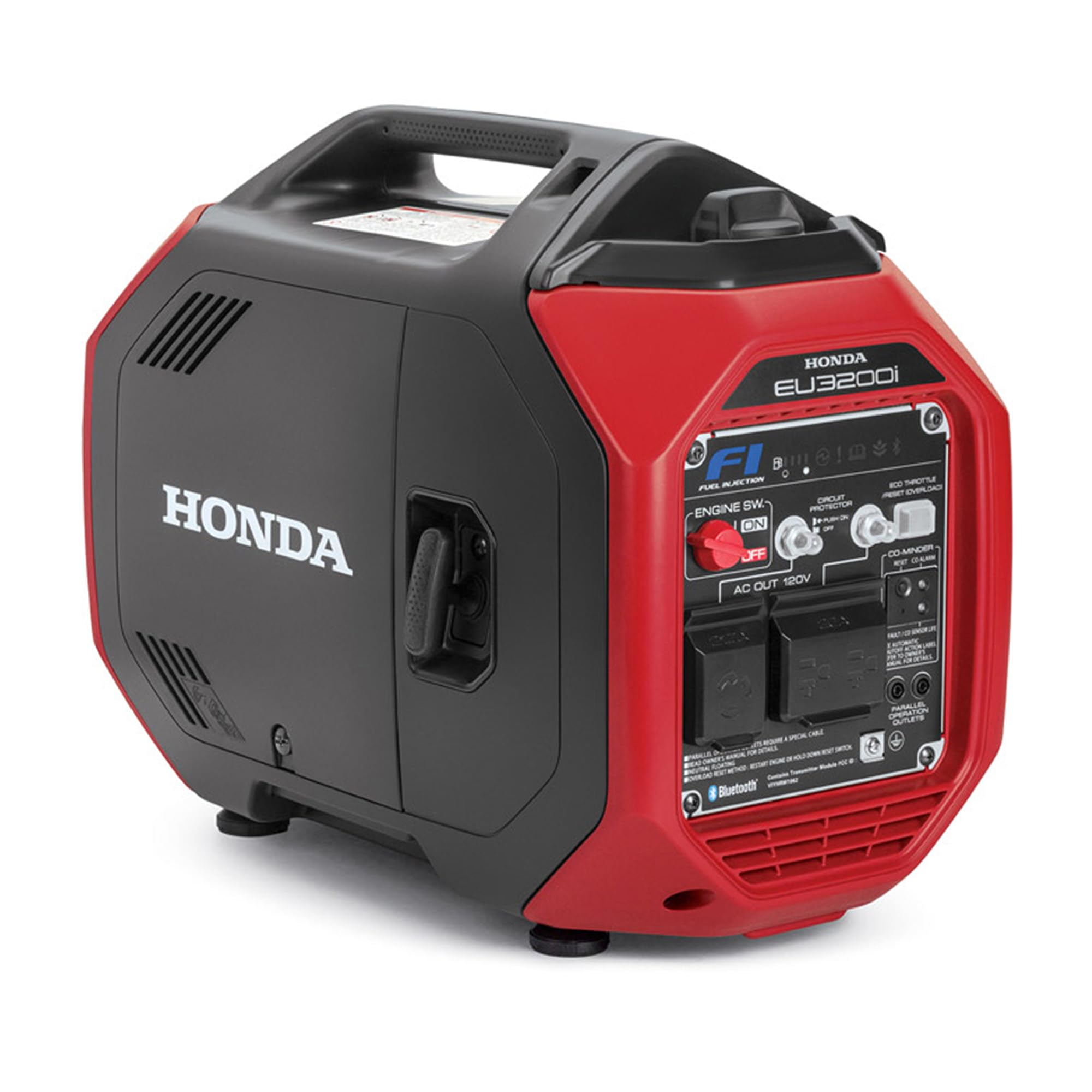
Honda’s EU3200i is the gold standard in the 3kW inverter class, and its reputation is built on two things the spec sheet doesn’t fully convey: starting reliability and actual noise levels. The 208cc GX engine uses Honda’s Eco Throttle system but drops the choke lever entirely—just turn the switch, pull the cord, and it starts. Owners report consistent second-pull starts even after months of storage, a major quality-of-life advantage over cheaper units that need carburetor cleaning after a season.
At 54 to 58 decibels under normal load, this is one of the quietest gas generators on the market. You can hold a conversation at normal volume standing next to it. The 1.2-gallon tank delivers up to 8.6 hours of runtime at a 25% load, and the Bluetooth My Generator app allows remote start/stop and fuel level monitoring—a genuinely useful feature when the generator is stored in a side compartment. The CO-MINDER system monitors ambient CO levels and shuts down the unit before those levels become dangerous, matching the safety standard set by Generac.
The catch is the price, which sits at a significant premium over functionally similar inverters. It also weighs 66 pounds dry, heavier than the Generac and many competitors, and there is no parallel kit included in the box. Owners report that 3rd-party warranty support from Honda can be difficult if the unit is not purchased through an authorized dealer. For buyers who value guaranteed reliability, whisper-quiet operation, and resale value, the Honda remains the benchmark that others are measured against.
Why it’s great
- Inverter produces clean sine wave power safe for sensitive electronics.
- Eco Throttle adjusts RPM automatically for fuel efficiency at partial loads.
- Bluetooth app enables remote monitoring and start/stop from inside the RV.
Good to know
- Premium price positions it well above mid-range competitors.
- Warranty support can be restrictive for 3rd-party purchases.
3. EF ECOFLOW 3200W DC Fast Charging Dual Fuel Smart Generator

EcoFlow’s Smart Generator is not a standalone generator in the traditional sense—it is designed as an intelligent fuel-to-battery charger for the Delta Pro ecosystem, though it can operate independently as a 1900-watt running inverter. The dual-fuel capability (gasoline and LPG/propane) provides redundancy for fuel availability, and the 20-pound propane tank connection unlocks up to 24 kWh of effective energy when paired with a Delta Pro 3 battery. The standout spec is the 3200-watt DC fast charging, which fills a Delta Pro battery 40% more efficiently than standard AC charging.
The smart integration is the real selling point: EcoFlow’s app allows seven start methods and six shutdown modes, including night-care quiet mode and PV-priority mode that only fires the generator when solar production drops. This eliminates the need to manually manage fuel burn—the generator fires up only when the battery needs topping. At 83 pounds with wheels, it is easier to roll than to lift, and the noise at 70 dB is moderately loud but not disruptive in a neighborhood context. The 3-year warranty is above average for the category.
This generator is explicitly designed to pair with EcoFlow batteries and is overkill as a standalone unit for most users. It lacks CARB approval for California delivery, and some owners report frustrating FedEx delivery issues. If you are building an EcoFlow solar+battery system, this is the most efficient and convenient way to add fuel-based backup. If you just need a standard 3200-watt generator, the standalone Honda or Generac offers better value.
Why it’s great
- DC fast charging is 40% more fuel-efficient than AC charging of Delta Pro.
- Dual fuel (LPG and gas) provides fuel flexibility and propane’s long shelf life.
- App-controlled auto start/stop integrates seamlessly with the EcoFlow ecosystem.
Good to know
- Primarily designed as a battery charger; standalone power output is limited to 1900W running.
- Heavy 83-lb unit, though wheels mitigate portability issues.
4. OUKITEL P2001 Pro 3200W/2048Wh Power Station
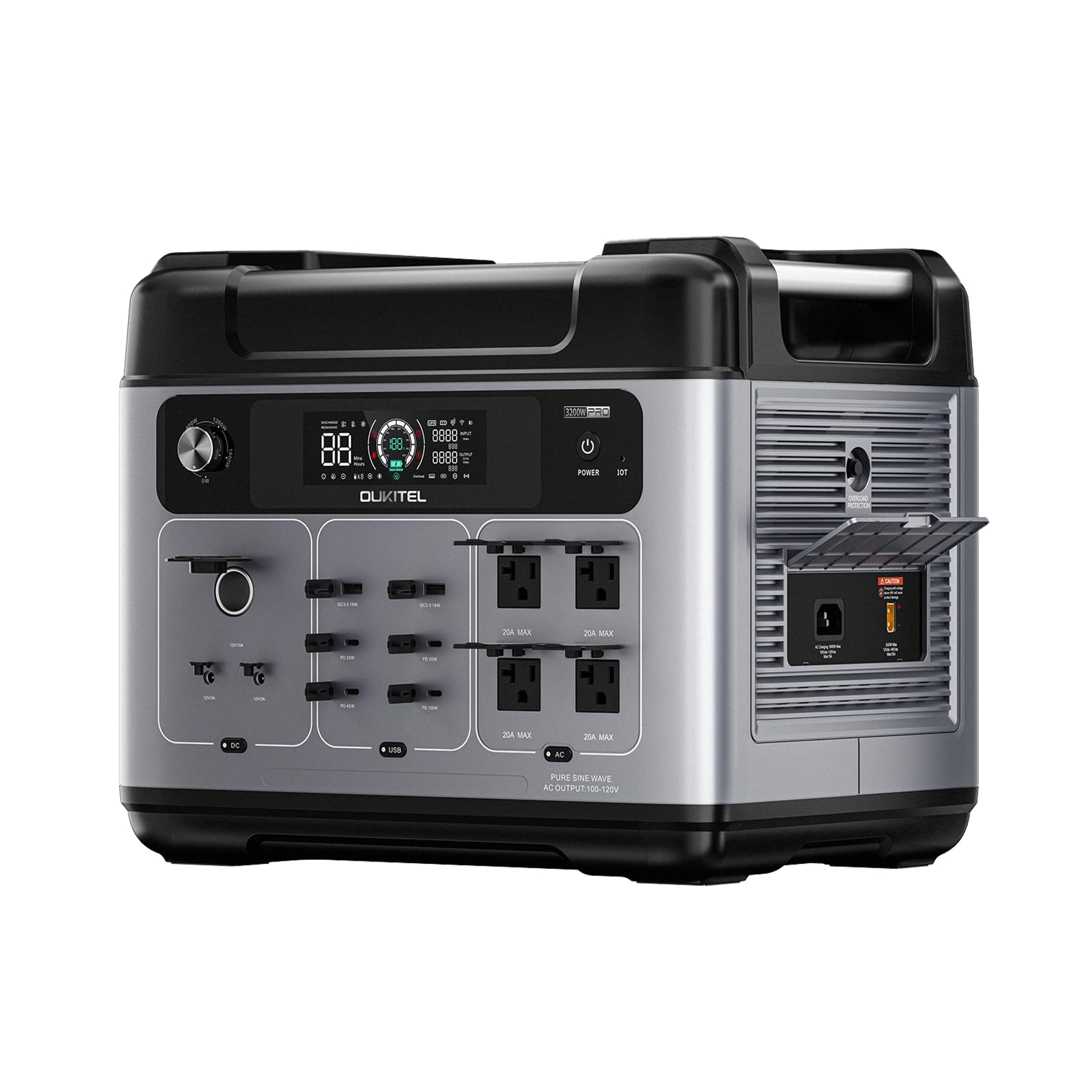
The OUKITEL P2001 Pro is a massive battery station with a 2048Wh capacity that competes directly with smaller gas generators on energy output while offering zero emissions and silent operation. Its 3200W rated AC output (6400W peak) is enough to run a full-size refrigerator, a microwave, lights, and a CPAP machine simultaneously for an extended power outage. The 1.5-hour full recharge time via 1800W AC input is exceptionally fast for this capacity class, reducing the downtime between recharges to a quick lunch break.
The LiFePO4 battery chemistry delivers 4000 charge cycles to 80% capacity, translating to roughly 15 years of daily use—far beyond what any gas generator engine will last without a rebuild. The 13 outlets include 4 AC outlets, 4 USB-C PD ports (one at 100W for laptops), and 2 DC5525 ports, giving you flexibility for everything from power tools to phone charging. The OLED display tracks input/output in real time, and the Bluetooth/WiFi app provides remote monitoring and control via 2.4GHz connection.
At 47.5 pounds, this unit is heavy for a battery station, though it is lighter than most comparable gas inverters. The lack of built-in wheels is a notable omission for a unit this size. Some iOS users report the app is not available in the US App Store, though it works fine on Android. For homeowners who want silent, maintenance-free backup power with massive capacity, the P2001 Pro is a compelling choice, especially when paired with solar panels for indefinite off-grid operation.
Why it’s great
- 2048Wh capacity provides a full day of average home backup without recharging.
- LiFePO4 cells rated for 4000 cycles—essentially a 15-year lifespan.
- Ultra-fast 1.5-hour full charge via wall AC eliminates long wait times.
Good to know
- No built-in wheels makes moving the 47.5-lb unit awkward.
- iOS app availability in the US is currently missing for some users.
5. IEE 3200W Portable Power Station P3200
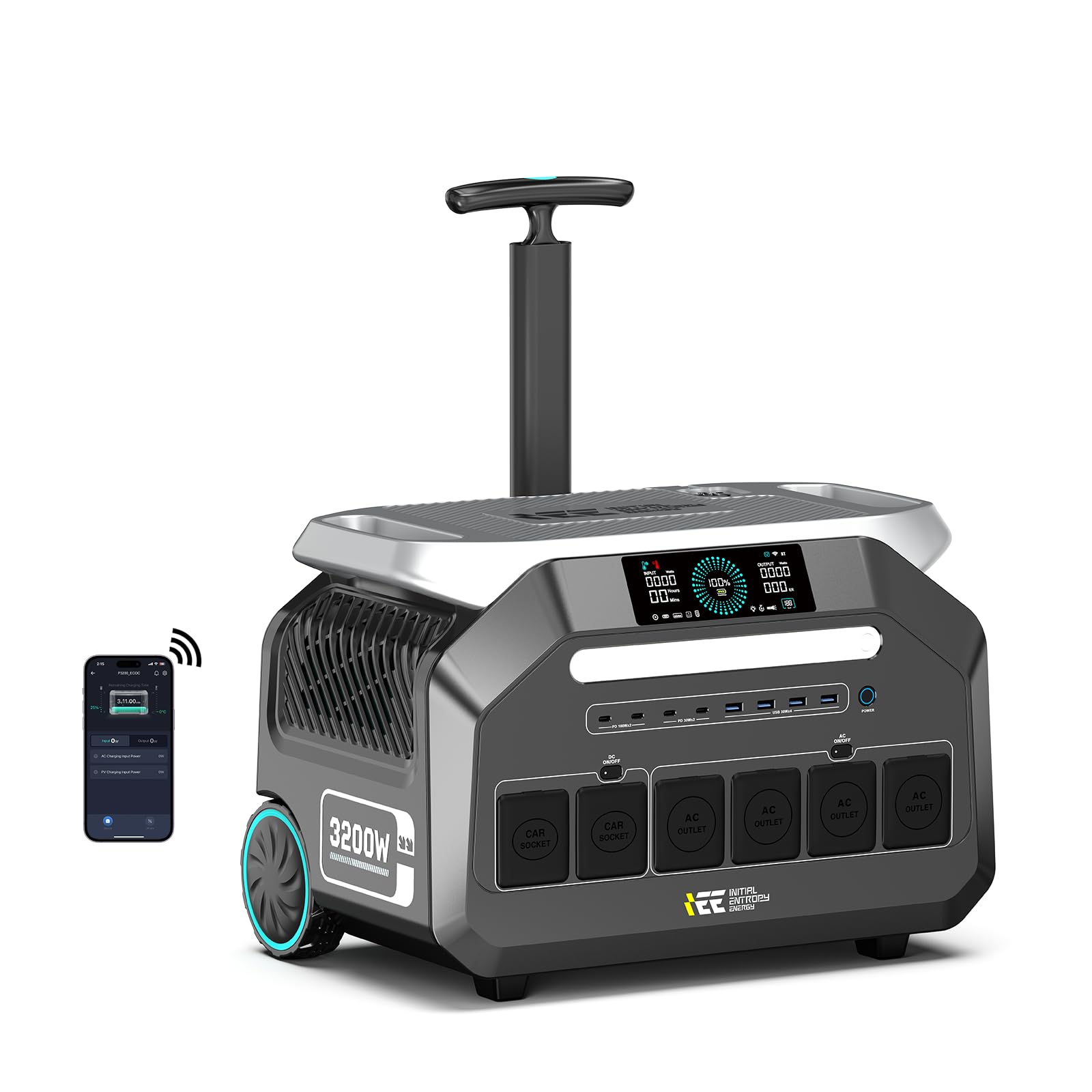
The IEE P3200 packs the same 2048Wh capacity as the OUKITEL P2001 Pro but pushes the recharge speed even further, hitting a full 100% charge in just 1.2 hours (72 minutes) via 1800W AC input. If you combine AC with solar input up to 1000W, you can theoretically reach 80% in around 1.6 hours. This makes it one of the fastest-charging 2kWh-class battery stations on the market, which is critical for users who need to recharge quickly between outage cycles or during limited generator runtime.
The unit weighs 53 pounds but includes movable wheels and a compact 17.5-inch height, making it easier to roll around than the weight suggests. The 16 outlets are generous: 4 AC outlets, 4 USB-A, 4 USB-C PD ports, 2 cigar lighter ports, and 2 DC5525 ports. The smart app (iOS and Android) provides the same Bluetooth/WiFi monitoring as the OUKITEL, allowing you to control input/output and see remaining runtime at a glance. The EPS switchover is rated at less than 10ms, fast enough to keep a computer or CPAP from resetting during a grid outage.
The IEE brand is newer and less established than OUKITEL, and the 5-year warranty is generous but unproven in terms of real-world claim handling. Some owners found the manual lacking detail on specific functions. For buyers who prioritize the fastest possible recharge and wheeled portability in a 2kWh+ battery station, the P3200 is a strong option that competes directly with the more established EcoFlow and Jackery ecosystems at a mid-range price.
Why it’s great
- Fastest-in-class 1.2-hour full recharge via 1800W AC input.
- 16 versatile outlets support simultaneous charging of multiple high-draw devices.
- Wheeled design improves portability despite the 53-lb weight.
Good to know
- Brand is less established than competitors; warranty claims are unverified.
- Some functions lack detailed explanation in the user manual.
6. GENMAX Portable Generator GM-3200i

The GENMAX GM-3200i is the budget-friendly entry point into the 3200-watt inverter category without sacrificing the core specs that matter most. Weighing just 47.3 pounds, it is one of the lightest inverters in its class, making it genuinely easy to lift into a truck bed or carry to a campsite. The 145cc 5.2 HP engine delivers 3200 surge watts and 2800 running watts, which is enough to handle a 13,500 BTU RV AC, a refrigerator, and a few appliances simultaneously.
Noise levels are competitive at 57 dB with no load and 68 dB at full load, measured at 23 feet—roughly the volume of a normal conversation to a moderate rainfall. The parallel ready feature lets you link two GM-3200i units for up to 5600 running watts, effectively scaling your system as your power needs grow. The 1-gallon fuel tank provides roughly 8 hours of runtime at a 25% load with Eco Mode engaged, though many owners report 4 to 6 hours at a 50% load, which is typical for this tank size.
Build quality is good for the price point, but reliability reports are mixed: some owners report vapor locking or CO sensor failures after a few hours of use, while others report 80+ hours of trouble-free operation. The low-oil shutdown uses a finicky dipstick reading that must not be screwed in to check oil level—an important detail missing from the manual. For the budget-conscious buyer who understands the trade-offs, the GM-3200i offers the best power-to-weight ratio in this list at a very accessible price.
Why it’s great
- Ultra-light 47.3 lb frame makes it the most portable gas inverter in its class.
- Very quiet operation at 57 dB no-load, suitable for campground use.
- Parallel ready for future expansion to double the power output.
Good to know
- Mixed reliability reports; some units experience vapor lock or sensor failures.
- Oil level check procedure differs from manual—dipstick must be out, not screwed in.
7. PowerSmart 3600-Watt Portable Inverter Generator

The PowerSmart DL5035C offers a higher surge capacity than the GENMAX at 3600W, with 3200W running watts, making it one of the few models in this price range that clearly exceeds the 3200-watt running threshold for heavier loads. The 149cc 4-stroke OHV engine produces 26.7 amps steady, enough to start and run a 15,000 BTU RV air conditioner without strain, a detail that multiple RV owners confirm in their reviews. The 1.3-gallon fuel tank is slightly larger than the GENMAX’s, delivering up to 8 hours at 25% load.
At 50.7 pounds, it is only slightly heavier than the GENMAX but still sits at the lighter end of the inverter class. The integrated carry handle and 21.9-inch length make it compact enough to fit in an RV storage compartment. The inverter produces clean sine wave power with less than 3% total harmonic distortion, making it safe for laptops, CPAP machines, and other sensitive electronics without additional power conditioning. The paralleling capability (kit sold separately) lets you pair two PowerSmart units for 6400W of combined power.
Build quality feels robust for the price, with a solid metal frame and well-protected outlets. The 2-year warranty is standard for this tier. Some owners note the included owner’s manual is sparse and doesn’t cover maintenance intervals in enough detail. The unit lacks a fuel gauge or runtime meter, which makes fuel management more guesswork than the Aceup Energy model with its digital display. For RV users who need 30-amp RV AC power from a portable package, the PowerSmart is a strong mid-range contender.
Why it’s great
- 3600W surge and 3200W running watts reliably start 15,000 BTU RV AC units.
- Clean sine wave under 3% THD protects sensitive electronics.
- Light enough (50.7 lbs) for one person to lift into a truck bed.
Good to know
- Manual lacks detailed maintenance guidance for long-term ownership.
- No fuel gauge or runtime meter; fuel level must be checked manually.
8. Aceup Energy 4000 Watt Portable Inverter Generator
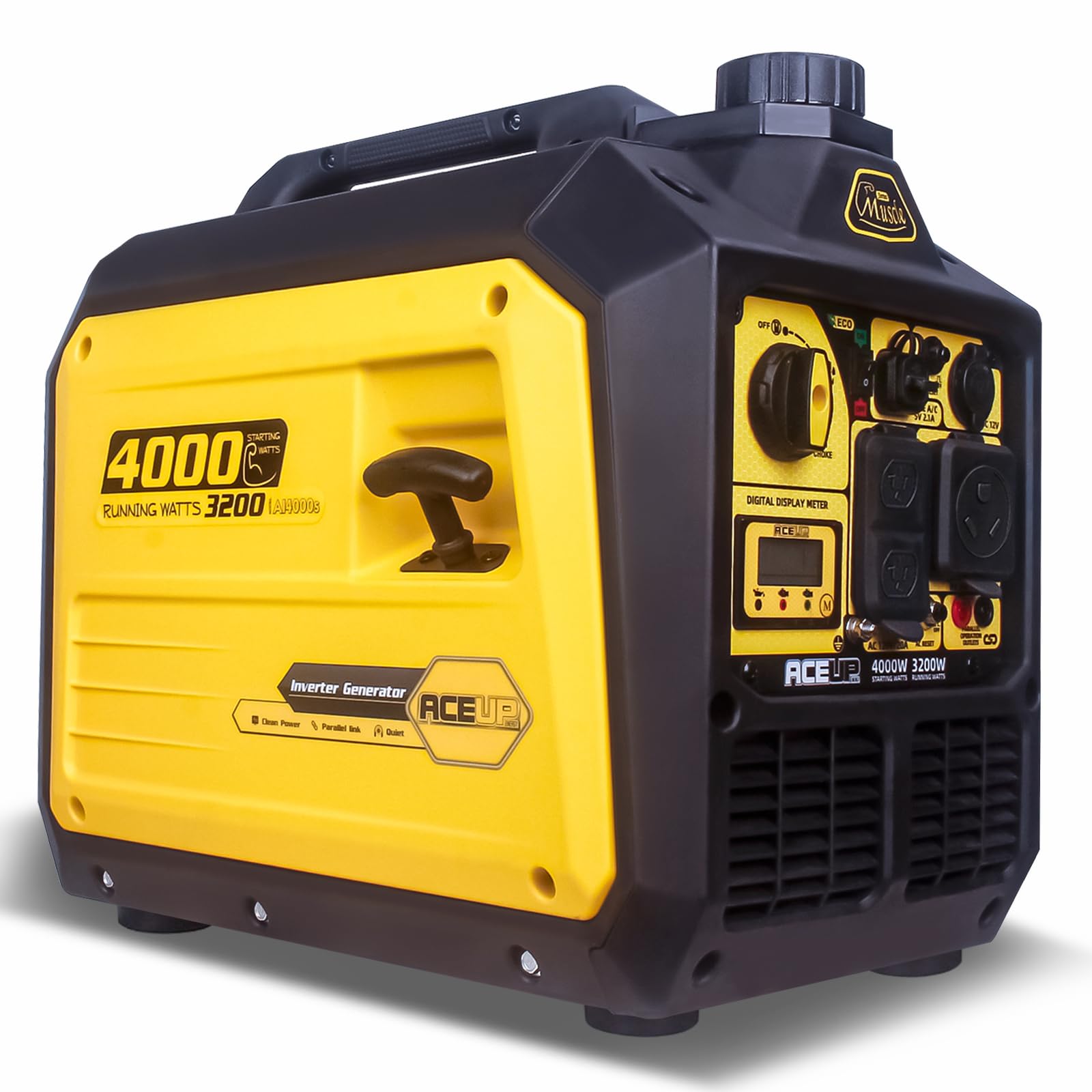
The Aceup Energy 4000W (4000 peak, 3200 running watt) inverter generator distinguishes itself with a built-in intelligent digital gauge that tracks voltage, runtime, fuel level, hertz, and power output simultaneously—a rare feature at this price point. This eliminates the guesswork of fuel management and load balancing that plagues cheaper inverters. The 149cc 4-stroke OHV engine is the same displacement as the PowerSmart, and the 1.32-gallon fuel tank provides up to 5 hours of runtime at half load, which is a bit shorter than the competition due to the more aggressive power output.
The 5-in-1 control knob integrates fuel on/off, engine on/off, and choke into a single rotating switch, reducing the startup sequence to a single action. When you turn off the engine, the fuel valve closes simultaneously, preventing carburetor flooding—a thoughtful design detail that extends engine longevity. The unit includes a 120V 20A duplex outlet, a 30A RV receptacle, and a 12V DC 8.3A car charger outlet, plus parallel capability for pairing a second unit.
At 50 pounds and 19.7 inches long, it is compact enough to fit in an RV side compartment. Owners praise its quiet operation (conversation-level at 23 feet) and reliable first-pull starting. Some concerns exist regarding a potential fuel tank collapsing issue reported by a small number of users, though this appears to be an isolated batch defect rather than a systematic problem. The 2-year warranty and lifetime technical support provide decent backup. For buyers who want real-time load monitoring without guessing, the Aceup Energy model is a smart choice.
Why it’s great
- Digital display shows voltage, frequency, and runtime for precise load management.
- 5-in-1 knob simplifies startup and prevents carburetor flooding on shutdown.
- Compact footprint (19.7″L) fits well in tight RV compartments.
Good to know
- Runtime at half load (5 hours) is shorter than some competitors.
- Minor reports of fuel tank deformation; likely isolated to early production batches.
9. BROWEY 1600W (3200W Peak) Portable Power Station

The BROWEY S1600 is a battery power station that integrates a foldable 40W solar panel directly into its chassis, a design that earned the iF Design Award. This is the cleanest, simplest way to get solar charging without carrying separate panels and cables—just unfold the panel, angle it toward the sun, and the MPPT controller starts feeding the 1024Wh LiFePO4 battery. The 1600W AC output (3200W peak) is sufficient for a refrigerator, power tools, CPAP machines, and multiple smaller devices simultaneously via 8 ports including a 100W USB-C PD port.
The LiFePO4 battery is rated for 3000+ cycles to 80% capacity, giving it a 10-year lifespan under normal use. The multi-mode LED light (low/medium/high/strobe/SOS) adds practical value for camping and emergencies. At just 26 pounds, this is the lightest unit in this guide that can still deliver 1600W of continuous AC power—a remarkable power-to-weight ratio that makes it easy to grab and go. The 3-hour full charge from a wall outlet is reasonable, and the ability to solar charge while simultaneously powering devices means you can run indefinitely in good sun.
The built-in 40W panel is slow as a sole charging source—it will take over 24 hours of direct sunlight to fully charge the 1024Wh battery. You will want to supplement with external solar panels for practical off-grid use. The port labels are low-contrast in dim light, making outlet identification difficult at night. For campers and preppers who value a true all-in-one solution with the quietest possible operation, the BROWEY is a uniquely designed option that reduces the amount of gear you need to carry.
Why it’s great
- Built-in 40W solar panel eliminates the need for separate solar carry gear.
- Exceptionally lightweight at 26 lbs for the 1600W/3200W peak output.
- LiFePO4 battery provides 10-year lifespan and safe chemistry.
Good to know
- Built-in 40W panel is slow; external panels recommended for practical solar charging.
- Port labels are difficult to read in low-light conditions.
10. BLAVOR Portable Power Station 1600W (Peak 3200W)
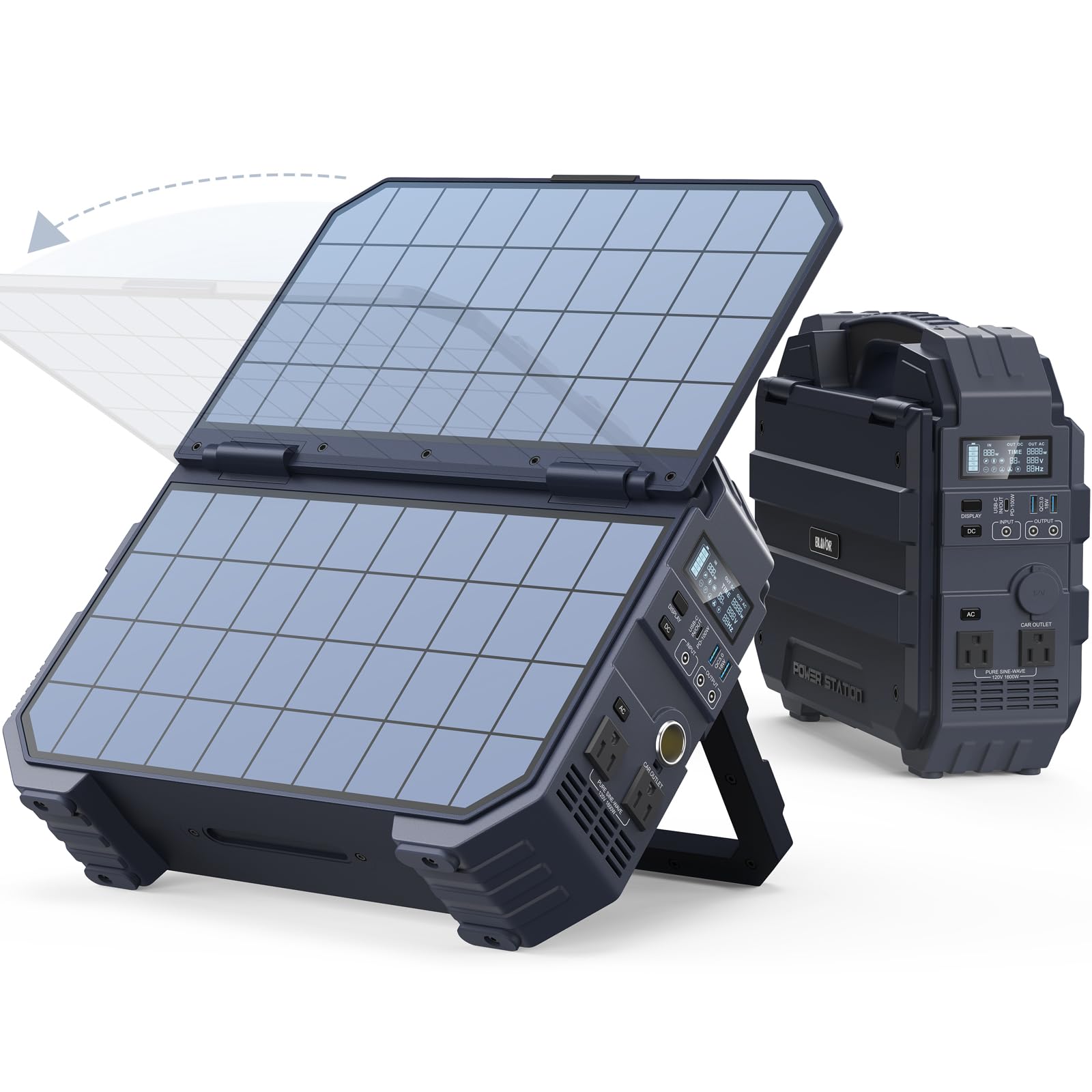
The BLAVOR S1600 is essentially the same hardware platform as the BROWEY S1600—a 1024Wh LiFePO4 battery station with a built-in foldable 40W solar panel, 1600W AC output, and 3200W peak surge capacity. The two units share the same fundamental specs and are likely built in the same OEM facility, but the BLAVOR features a slightly different color scheme (dark blue vs. green) and a marginally higher cycle rating of 3500 cycles to 80% capacity. The 100W USB-C PD port supports two-way fast charging, allowing the station itself to be charged through the USB-C port when paired with a high-wattage USB-C charger.
At 26 pounds with a 17.2 x 13.3 x 5.6-inch footprint, this is one of the most portable power stations in the 1.6kW class. The fixed handle and foldable stand make setup simple, and the LCD display provides real-time input/output and remaining battery percentage. The eight outlets include two AC outlets, two USB-C PD ports, two USB-A ports, a 12V DC car outlet, and a DC5525 port, covering a wide range of devices. The EPS switching (under 10ms) ensures connected electronics stay on during a grid interruption.
Again, the built-in 40W panel is more of a trickle charger than a primary solar source—it can maintain charge over a long weekend but won’t refill a depleted battery quickly. Some owners note that the user manual lacks clear instructions for proper shutdown (press DC or AC button individually). For buyers choosing between BROWEY and BLAVOR, the decision comes down to aesthetic preference and minor cycle rating differences; both represent the same core capability at the same price point.
Why it’s great
- Ultra-portable 26-lb design with integrated solar panel for true all-in-one power.
- 3500-cycle LiFePO4 battery outlasts many competitors for long-term daily use.
- Dual 100W USB-C PD ports support two-way fast charging for laptops.
Good to know
- Built-in 40W solar panel is slow; consider external panels for faster recharging.
- Shutdown procedure is not intuitive—requires pressing individual output buttons.
11. VTOMAN FlashSpeed 2400 Portable Power Station
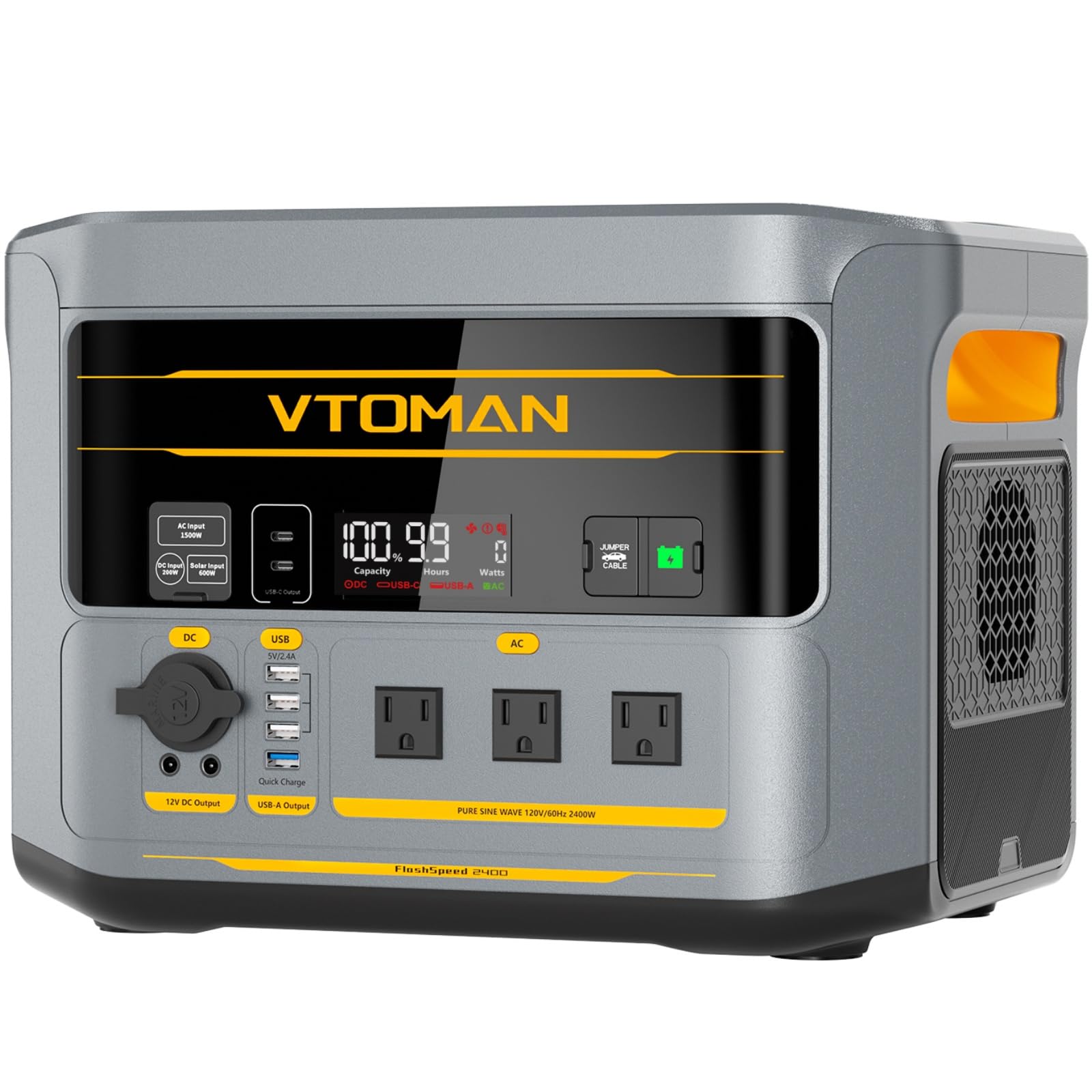
The VTOMAN FlashSpeed 2400 packs a 1408Wh LiFePO4 battery with a 2400W AC output (3200W peak), slightly less continuous output than the 3200W-rated models above but still capable of powering about 95% of home appliances. The headline feature is the 1500W AC input, which recharges the unit from 0% to 100% in just 58 minutes—the fastest full recharge in this list and a critical advantage for users who face back-to-back outage cycles. The 12V jump-start capability is a unique bonus, capable of jump-starting most cars, SUVs, and light trucks directly from the station’s battery.
The 12 ports include 3 AC outlets, 4 USB-A, 2 USB-C PD, and 3 DC ports, providing flexibility for a full campsite or home office setup. The 600W solar input with MPPT is the highest solar acceptance in this battery station group, meaning you can pair it with a large portable solar array for faster off-grid recharging. The 5-mode LED light (low/medium/high/strobe/SOS) adds emergency utility, and the 10ms UPS backup ensures zero-drop power during grid transitions.
Some owners report issues with the unit not detecting the charging plug, which VTOMAN support often resolves by performing a full discharge and pressing the three yellow buttons to reset—a fix that suggests some firmware volatility. The unit’s weight is not specified but is comparable to other 1.4kWh stations at around 25-30 lbs. For users who need the fastest possible AC recharge alongside a vehicle jump-start feature, the VTOMAN is a unique and practical option at a mid-range price.
Why it’s great
- Industry-leading 58-minute full recharge via 1500W AC input.
- Integrated 12V jump-start capability for cars and light trucks.
- 600W MPPT solar input supports large external panels for fast off-grid charging.
Good to know
- Some units require a hard reset if charging plug is not detected.
- 2400W continuous output is lower than the 3200W-rated competitors in this guide.
FAQ
Can a 3200 watt generator run a 15000 BTU RV air conditioner?
What is the difference between an inverter generator and a battery power station?
How do I calculate how many watts I need from a 3200 watt generator?
Why do some 3200 watt generators cost while others cost ?
Final Thoughts: The Verdict
For most users seeking the best 3200 watt generator, the winner is the Generac GP3300i because it blends TruePower inverter technology, the safety of COsense monitoring, and PowerRush surge capacity into a package from a trusted brand at a mid-range price. If you want silent, zero-emissions power with app control and massive capacity for long outages, grab the OUKITEL P2001 Pro. And for job-site or RV reliability where failure is not an option, nothing beats the starting consistency and low-deciBel operation of the Honda EU3200i.