
Our readers keep the lights on and my morning glass full of iced black tea. As an Amazon Associate, I earn from qualifying purchases.
Specs are compiled from manufacturer listings and verified buyer reviews and can change over time — please confirm the key details on the product page before buying.
Choosing a 33×10.5R15 tire means deciding how much rock-crawling grip you need versus how tolerable the highway drone gets. The two tires here take opposite approaches — one leans into serious mud and rock traction, the other balances a quieter ride with rugged looks. This guide breaks down their real strengths so you can pick the set that matches how and where you actually drive.
I’m Min — the founder and writer behind Gadgets Feed. This guide is built by comparing the manufacturers’ published specifications and the patterns across verified customer reviews, so you get each pick’s real strengths and trade-offs instead of marketing spin.
Both tires fit light trucks, SUVs, and crossovers, but they differ in load capacity and size precision. That’s why understanding the specs of 33×10.5r15 tires matters before you commit to a set.
Our Picks at a Glance
How To Choose The Best 33×10.5R15 Tires
The size 33×10.5R15 means a 33-inch diameter, 10.5-inch tread width, and 15-inch wheel fit. But two tires with the same printed size can differ in weight capacity, sidewall stiffness, and how they feel on pavement. You need to match those deeper specs to your vehicle and driving style.
Match the load index to your rig
The load index indicates the maximum weight a single tire can safely carry. A higher number means a higher capacity. If your truck carries heavy gear or tows, picking a tire with a higher load index gives you more safety margin.
Decide how loud you can live with
Aggressive mud-terrain treads grip well off-road but often hum on the highway. All-terrain designs use a less chunky pattern, which usually means a quieter ride. Think about how many miles you drive on pavement versus dirt before choosing.
Check the actual mounted diameter
The printed size is a nominal figure, and the real diameter can vary by half an inch or more between brands. That small difference can affect your speedometer reading and whether the tire clears your suspension and fenders. Always verify fitment on your specific vehicle.
Quick Comparison
In‑Depth Reviews
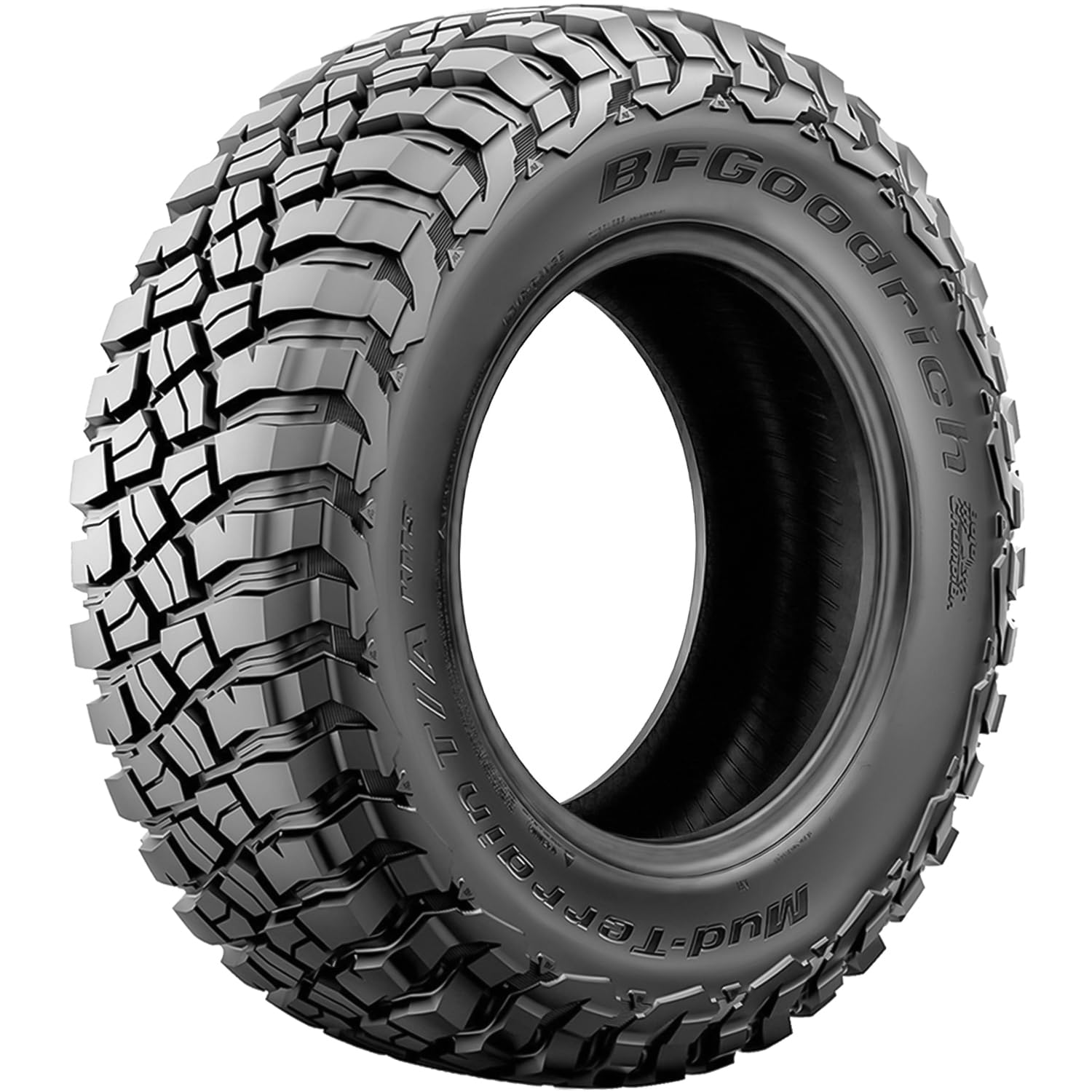
1. BFGoodrich Mud Terrain T/A KM3
The serious off-road pick that trades highway quiet for extreme traction.
This tire is built for conditions that demand real grip. The Krawl-TEK technology delivers 8 percent better rock traction than previous models, while the Terrain-Attack tread pattern uses massive blocks for grip from any angle in mud or soft soil. The result is a tire that climbs confidently on rock and mud.
It is slightly smaller in diameter than its sibling — 32.5 inches versus 33 inches — so check your fender clearance before committing. The 2205-pound load capacity with a Load Index of 108 is solid for light trucks and SUVs, though the General below beats it on sheer capacity with a 2600-pound rating. Buyers report that the tire “holds up on desert terrain (sand, wash, shell, rock, street) with better grip/thickness than factory.”
The trade-off is highway noise. Aggressive mud treads hum on pavement, and owners note this one is not quiet — though several say it is not too loud for a mud tire. After 6,000 miles of desert driving, owners mention even wear and no damage, which points to durable construction. The increased sidewall thickness is designed to protect against splits and punctures.
Trail-Ready Strengths
- 8 percent better rock traction than previous KM2 models for climbing
- Race-proven sidewall protection resists splits and punctures
- Customers note even wear after 6,000 miles on desert terrain
Pavement Trade-Offs
- Not a quiet tire on the highway — owners say so plainly
- Mounted diameter runs 32.5 inches, slightly shorter than the label suggests
- Load capacity of 2205 pounds trails the General Grabber X3
Reach for this if: you tackle rock, mud, and sand regularly and want a tire that grips hard on the trail.
Look elsewhere if: most of your miles are highway cruising, since the aggressive tread brings noticeable road noise.
2. General Tire Grabber X3

Aggressive styling with a quieter ride and a bigger weight capacity.
This tire pairs a mean look with a more livable daily drive. Low road noise is a stated goal here, and owners back it up — the review pages sum it up: “the quietest aggressive grabbing.” It handles mud, dirt, and rocky terrain while keeping the cab comfortable enough for regular pavement use. The 33-inch diameter matches the label exactly, unlike the BFGoodrich which comes in at 32.5 inches.
Where the Grabber X3 really leads is weight capacity. That extra margin matters for hauling or towing. The aggressive tread and bold side bites also clean out nicely in mud, according to buyers who run them off-road.
Durability is a strong point in real-world use. Reviewers point out a year of driving with 7 to 10 thousand miles on them and still “a ton of tred” left. The one recurring gripe is delivery — check the date code, as some tires arrive two years old. It is backed by a 45-day trial for fitment confidence.
Big-Margin Hauler: the 2600-pound load capacity gives this the edge for heavier trucks — 18 percent more than the BFGoodrich.
Daily-Drivable: low road noise makes it the better pick if you spend a lot of time on pavement but still want off-road capability.
Grab it if: you want rugged looks, a quieter ride, and the highest load capacity in this duo for a heavier rig.
Think twice if: you demand the absolute pinnacle of rock-crawling bite, since the BFGoodrich leans harder into extreme traction.
Understanding the Specs
Load Index and Load Range
The load index is a number that translates to a maximum weight per tire, so a higher index means you can carry more. The BFGoodrich sits at Load Index 108 for 2205 pounds, while the General Grabber X3 hits Load Index 114 for 2600 pounds. Load Range C refers to the ply rating and sidewall strength — a higher range means a stiffer sidewall that handles more pressure, which matters for heavy loads and off-road durability.
Mounted Diameter Reality
The size printed on the sidewall is a nominal figure, and the real mounted diameter can differ between brands. The BFGoodrich measures 32.5 inches in diameter, while the General Grabber X3 hits a true 33 inches. That half-inch difference changes your speedometer reading and can affect whether the tire clears your fenders and suspension at full flex, so always confirm fitment on your vehicle.
FAQ
What does the 33×10.5R15 size actually mean?
Will a 33×10.5R15 tire fit my stock truck?
What is the difference between load index 108 and load index 114?
How do mud-terrain and all-terrain tires compare on the highway?
How long should a 33-inch off-road tire last?
What does Load Range C mean on a tire?
How does tire diameter affect my speedometer?
Are these tires good for desert and rocky terrain?
Final Thoughts: The Verdict
Across the board, the 33×10.5r15 tires winner is the BFGoodrich Mud Terrain T/A KM3 because it is the proven crowd favorite for serious off-road work — 4.7 stars across 100+ owners — and its rock and mud traction is legendary. If you want the quietest ride with the highest load capacity, grab the General Tire Grabber X3. And for heavier loads the General, with its 2600-pound capacity, is the one to reach for.
How We Picked
We do not accept paid placement. Every pick is matched to a real buyer and a real use-case; we do not hands-on test units.
Sources & Methodology
Specifications: manufacturer listings and product documentation. Review insights: verified customer reviews, as of August 2026. Pricing: not shown on this page (it changes often); check the current price via the retailer link.
As an Amazon Associate, Gadgets Feed earns from qualifying purchases. This does not affect which products we feature.