
Matching a #35 chain sprocket to a mini bike, go-kart, or small machinery project comes down to one hard reality: the wrong tooth count or bore size turns a weekend build into a parts scavenger hunt. A sprocket that deforms under the first torque spike or arrives with a misaligned keyway sets you back hours. The people who finish their builds fast know exactly which bore diameter, tooth profile, and heat-treat range matters for their specific shaft and load.
I’m Rikta — the co-founder and writer behind Gadgets Feed. I’ve analyzed dozens of #35 sprocket listings, cross-referencing pitch specs, heat-treat data, and real builder feedback to separate components that hold up from those that slip. (And Homer 🐱 sat on the caliper case while I measured a 12-tooth blank — unimpressed by the whole procedure).
The field of entry-level to performance-driven #35 sprockets is narrow enough that one wrong click wastes your shaft alignment. This guide breaks down seven distinct options so you know exactly which 35 chain sprocket fits your bore, tooth target, and durability needs without guesswork.
How To Choose The Best 35 Chain Sprocket
Every #35 sprocket shares the same 3/8-inch pitch, but bore size, tooth count, hub type, and heat treatment split them into completely different use cases. Focusing on the wrong variable — say, picking a tooth count before confirming your shaft diameter — is the single fastest way to end up with a part you cannot mount.
Match Bore Diameter and Keyway First
Your shaft diameter is non-negotiable. A 5/8-inch bore sprocket will not center on a 3/4-inch shaft, and a 3/4-inch bore on a 5/8-inch shaft introduces wobble that accelerates chain wear. Check for an integral keyway — 0.187 inches is the standard for #35 B-type sprockets — and confirm the two set screws sit at 90 degrees for positive locking.
Tooth Count Determines Your Mechanical Advantage
Lower tooth counts (12 or 15) deliver higher torque multiplication at the cost of top speed, making them ideal for climbing or heavy load starts. Higher counts (60, 72, or 75) raise your top end but reduce low-speed grunt. For a Predator 212cc on a mini bike, a 72-tooth rear with a 12-tooth front is a proven high-torque combo; the same engine with a 60-tooth rear trades some hill power for more straight-line speed.
Heat Treat Hardness Separates Short Lifespan from Long
A sprocket with hardened teeth in the HRC38-42 range resists deformation under moderate loads — think electric motors, small engines, and light machinery. Jump to HRC45-55 for high-torque gas engines or continuous-duty applications where the chain wraps tight and the teeth take sustained punishment. A non-hardened or black-oxide-only sprocket wears noticeably faster once the chain stretches.
Quick Comparison
On smaller screens, swipe sideways to see the full table.
| Model | Category | Best For | Key Spec | Amazon |
|---|---|---|---|---|
| Gekufa 72 Tooth | Rear Sprocket | High-torque mini bikes | 2-inch bore / 72 teeth | Amazon |
| YOXUFA 60 Tooth | Rear Sprocket | Predator 212cc builds | 51mm bore / 60 teeth | Amazon |
| Coleman-Compatible 75 Tooth | Rear Sprocket | Mini bike / drift trike rear | 6-hole mount / 75 teeth | Amazon |
| Jeremywell 20 Tooth B Type | Mid-Range Driver | Torque converter / jackshaft | HRC45-55 teeth / 3/4 bore | Amazon |
| RHKING 15 Tooth B Type | Mid-Range Driver | General machinery / can crusher | HRC38-42 / 3/4 bore | Amazon |
| RHKING 12 Tooth B Type | Small Driver | Compact motor / limited space | 5/8 bore / 12 teeth | Amazon |
| uxcell 12 Tooth B Type | Entry-Level Driver | Light go-kart / budget build | Black oxide / 3/4 bore | Amazon |
In‑Depth Reviews
1. Gekufa 72 Tooth Sprocket
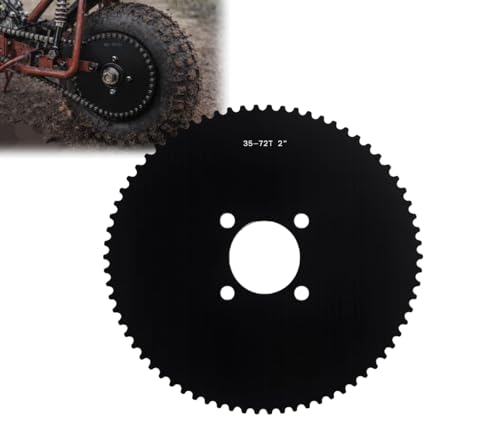
This 72-tooth rear sprocket is the torque monster of the group. With a full 2-inch bore and a 4-bolt mounting pattern (M8 hardware required), it locks directly onto mini bike and go-kart wheel hubs built for Predator 79cc through 420cc engines. The premium steel construction holds up under hard acceleration, and the 8.66-inch outside diameter gives you a massive gear ratio advantage when paired with a 12-tooth driver.
Real builders have reported hitting 40 mph on a stock Predator 212 with this sprocket while maintaining enough low-end grunt to climb steep hills. The included mounting screws simplify installation, though you will want to verify your bolt-circle spacing — 2.87 inches across — matches your hub before you torque everything down.
One caveat: a small number of units arrived with a slightly shorter tooth profile than the original part, which could reduce chain life over the long haul. Measure your chain slack carefully after the first few rides. If raw pulling power is your priority, this sprocket delivers the highest mechanical advantage in the lineup.
Why it’s great
- Massive 2-inch bore fits heavy-duty hubs
- 72 teeth create exceptional torque for hills
- Premium steel resists wear under demanding conditions
Good to know
- Teeth profile may be slightly shorter than OEM spec
- Requires M8 bolts not always included
2. YOXUFA 60 Tooth Sprocket
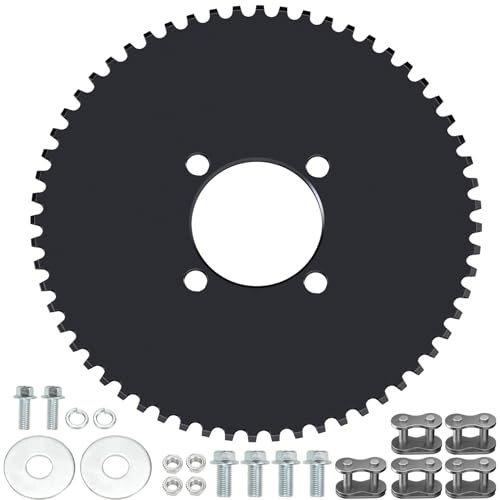
The YOXUFA 60-tooth sprocket hits a sweet spot for Predator 79cc, 212cc, and 420cc engine builds. The 51mm center bore and 10mm mounting hole diameter match the standard wheel pattern found on many go-karts and drift trikes, and the precision-machined metal alloy construction delivers consistent tooth engagement without excessive flex.
This package goes further than most by including five #35 master links and a full set of mounting screws — a thoughtful addition when you are buttoning up a build late at night. The 185mm (7.28-inch) overall diameter keeps the sprocket compact enough to clear small frames while still providing a substantial reduction ratio for improved acceleration.
A few users reported the bolt pattern did not align perfectly with their rim, requiring minor drilling. Double-check your hub’s bolt-hole circle — 51.5mm center to center — before committing. For the builder who wants a complete kit with minimal trips to the hardware store, this is the strongest value proposition in the mid-range.
Why it’s great
- Includes master links and mounting hardware
- Precision-machined alloy for consistent engagement
- Compact diameter clears small frames easily
Good to know
- Bolt pattern may not match every rim
- Occasional fitment issues with non-standard hubs
3. MWMNUN 75 Tooth Rear Sprocket

Designed specifically for Coleman CT100U, Trail Motovox MBX10, MBX11, and MM-B80 mini bikes, this 75-tooth sprocket bolts directly onto existing hubs with six inner mounting holes. The 231mm (9.1-inch) overall diameter provides maximum reduction for small-displacement engines, trading top speed for hill-climbing ability and low-end snap.
The package includes two #35 chain buckles, six mounting screws, and a wrench — everything you need to swap the rear cog in one session. Riders who swapped from a stock 60-tooth sprocket reported noticeably better acceleration off the line, with a modest top-speed drop from 23 mph to 21 mph on a 2.5 hp engine, a trade worth making for trail riding.
One build noted the hole pattern was slightly off for a Mega Moto 80cc go-kart, requiring hole enlargement. The teeth can also arrive with a mildly rough edge that smooths out after a few hours of chain run-in. For dedicated mini bike platforms with 6-hole hubs, this sprocket is the most application-specific option available.
Why it’s great
- Direct bolt-on for Coleman and Motovox mini bikes
- 75 teeth maximize low-end torque
- Complete hardware kit included
Good to know
- Hole pattern may drift from spec on some frames
- Teeth may need a short break-in period
4. Jeremywell 20 Tooth B Type
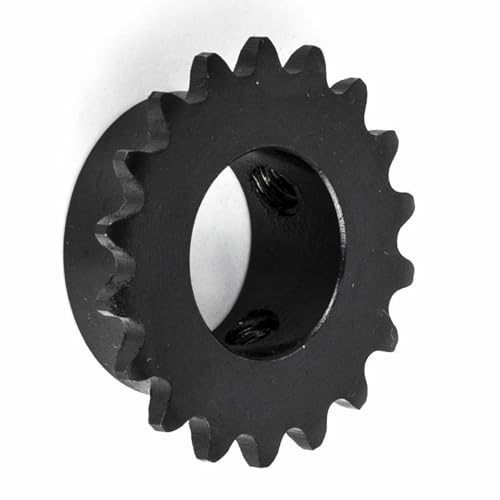
The Jeremywell 20-tooth sprocket stands out for its aggressive heat-treat range — HRC45-55 on the teeth — making it the hardest driver sprocket in this comparison. The 3/4-inch bore with a 0.187-inch keyway and two set screws at 90 degrees delivers a rock-solid mount for torque-converter jackshafts and engine output shafts.
Builders have used this sprocket in demanding conversions: one turned a car alternator into a three-phase motor driven by a #35 chain on a go-kart, running silently and reversing direction without issue. The 1.937-inch hub diameter provides ample surface contact for set-screw clamping, and the pre-greased, pre-stretched claim means no initial lubrication step before running.
The main limitation is the 20-tooth count — it is a mid-range driver, not a high-speed or high-torque specialist. If your project needs a smaller or larger driver, you will need to look elsewhere. For applications where the chain sees constant tension and the teeth must resist peening, the HRC45-55 surface is the clear winner.
Why it’s great
- HRC45-55 teeth resist peening under heavy loads
- 1.937-inch hub provides stable clamping surface
- Consistent keyway alignment with 90-degree set screws
Good to know
- Only 20 teeth — not for extreme speed or torque builds
- Pre-greased claim does not eliminate chain maintenance
5. RHKING 15 Tooth B Type

This RHKING 15-tooth sprocket hits the middle of the road in every dimension that matters for small machinery and electric motor projects. The AISI 1045 medium carbon steel core receives high-temperature quenching on the tooth surface to HRC38-42, providing wear resistance without making the metal brittle. The 3/4-inch bore and 0.187-inch keyway with two 90-degree set screws are industry-standard for B-type mounting.
Real-world use spans from a DIY electric can crusher to replacing a worn sprocket on a 30-year-old trail mower where the original part was still in production. The overall black oxide coating resists surface rust well enough for indoor and covered outdoor equipment, and the no-lubrication design means it runs clean on light-duty cycles.
The HRC38-42 hardness is adequate for electric motors and small gas engines up to about 5 hp but will wear faster than the Jeremywell if you run sustained high-torque loads. Some buyers felt the price-to-perceived value ratio was slightly high for a basic hardened sprocket. For general-purpose replacement and moderate loads, this is the most versatile driver in the list.
Why it’s great
- Versatile 15-tooth count suits many applications
- AISI 1045 steel with black oxide resists corrosion
- Industry-standard B-type keyway and set screws
Good to know
- HRC38-42 is not ideal for continuous high torque
- Some find the price premium hard to justify
6. RHKING 12 Tooth B Type 5/8″ Bore
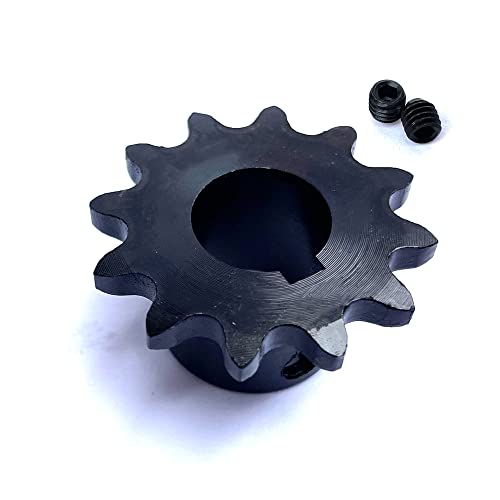
When your shaft is 5/8 inch and your space is tight, this RHKING 12-tooth sprocket is the smallest B-type driver in the lineup. The reduced bore diameter shrinks the overall hub profile, letting you fit the sprocket into compact motor mounts and tight chain runs where a 3/4-inch bore would not clear. The same AISI 1045 steel and HRC38-42 tooth hardness carry over from the 15-tooth version.
The 12-tooth count is ideal for high-reduction setups — pair it with a 60- or 72-tooth rear sprocket and you get massive mechanical advantage for climbing or starting under load. The black oxide treatment resists flash rust during storage, and the keyway with two set screws keeps the sprocket locked on the shaft without additional fasteners.
Because the tooth count is so low, chain wrap is minimal — you only have three or four teeth in full engagement at any moment, which accelerates wear if the chain is not kept properly tensioned. This sprocket works best as a driven input on a torque converter or a small electric motor where the chain load is steady rather than shock-loaded.
Why it’s great
- 5/8-inch bore fits smaller shafts perfectly
- 12 teeth maximize reduction ratio potential
- Same reliable AISI 1045 steel as larger variant
Good to know
- Low tooth engagement requires careful chain tension
- Not suited for high-speed continuous running
7. uxcell 12 Tooth B Type

The uxcell 12-tooth sprocket is the entry-level option for budget-conscious builders who need a functional B-type driver without paying for extended hardness. The carbon steel core gets high-temperature quenching on the tooth surface, and the full black oxide coating provides basic corrosion resistance for indoor or covered use. The 3/4-inch bore, 0.187-inch keyway, and two set screws at 90 degrees match the standard B-type specification.
Buyers have used it successfully on go-karts with torque converter kits and on golf cart electric-to-gas conversions, where it served as the primary driver sprocket. The 40mm (1.57-inch) tooth outer diameter keeps the sprocket physically small, and the lightweight 2.46-ounce construction is easy to handle during installation.
The trade-off is durability. Without a published Rockwell hardness range, the teeth are likely softer than the RHKING or Jeremywell options, meaning faster wear under sustained torque. A few users noted that the set screws felt slightly undersized compared to premium sprockets. For a first build or a temporary replacement where budget is the primary constraint, this sprocket gets the job done.
Why it’s great
- Lowest entry price for a functional B-type sprocket
- Black oxide finish offers basic rust protection
- Lightweight and easy to install
Good to know
- No published Rockwell hardness data
- Set screws may feel less robust than premium parts
FAQ
Can I use a #35 sprocket on a #40 or #41 chain?
How do I know if a 12-tooth driver will cause chain skipping?
What does the black oxide coating actually protect against?
Can I run a #35 sprocket without lubrication?
Final Thoughts: The Verdict
For most users, the 35 chain sprocket winner is the Gekufa 72 Tooth because its 2-inch bore and 72-tooth count deliver the best torque multiplication for mini bikes and go-karts using Predator-class engines. If you want the hardest-wearing driver sprocket for a jackshaft or torque converter, grab the Jeremywell 20 Tooth with its HRC45-55 teeth. And for a budget-conscious first build, nothing beats the uxcell 12 Tooth for getting a project off the ground without overspending.