
Our readers keep the lights on and my morning glass full of iced black tea. As an Amazon Associate, I earn from qualifying purchases.
Specs are compiled from manufacturer listings and verified buyer reviews and can change over time — please confirm the key details on the product page before buying.
If you want the one tint shade that cools your cabin and shields your interior without turning night driving into a guessing game, 35% is it. It is the middle ground most drivers land on after limo-dark film: enough shade to cut glare, enough clarity to read a road sign after sunset. Get the shade and the roll right and you tint once — not every summer re-doing a job that bubbled.
I’m Min — the founder and writer behind Gadgets Feed. This guide is built by comparing the manufacturers’ published specifications and the patterns across verified customer reviews, so you get each pick’s real strengths and trade-offs instead of marketing spin.
You will see rolls that are flawless on flat glass and rolls that fight every curve, ceramic film that ignores your toll tag and dyed film that plays nicer with your budget. Every pick below is a genuine 35% VLT film, and the differences that matter are thickness, film construction, and how honestly the shade matches the label — which is exactly what separates the keepers from the returns in this 35% window tint field.
Our Picks at a Glance
How To Choose The Best 35% Window Tint
Every roll on this list is labeled 35% VLT, which means the film lets about 35% of visible light through — dark enough to cut glare and add daytime privacy, light enough that you still see clearly at night. That single number is your baseline. Past it, four things decide whether you get a clean install or a frustrating afternoon.
VLT means visible light transmission, and it stacks
VLT (visible light transmission) is the percentage of visible light the film allows through the glass. A 35% film on a window that already has factory tint does not read as 35% when you are done — the two layers multiply, so the finished glass ends up noticeably darker than the label. If your car has factory privacy glass in the rear already, a 35% film over it goes quite dark. Check your state’s limit for front side windows before you cut anything, because the film shade and the finished shade are not the same number.
Film construction: dyed, carbon, or ceramic
Dyed film gets its color from dye in a single layer of PET plastic — it is the budget-friendly option and blocks heat mostly by absorbing it. Carbon film adds a layer that rejects more infrared heat and resists fading better over time. Nano-ceramic film uses nonmetallic ceramic particles and is the one to pick if you care about heat rejection without any metal that could interfere with GPS, toll tags, or keyless entry. Match the construction to your car and your budget.
Thickness and ply count decide who can install it
Tint is measured in plies (the number of film layers bonded together) and mils (thousandths of an inch of thickness). A thicker film is more forgiving to handle and resists tearing, but it is stiffer, which makes it harder to shrink around a deeply curved rear window. A thinner film conforms more easily but creases under less pressure. First-timers usually do better with a slightly thicker film and a big roll to practice on.
Roll size: match it to the job, not the price
Rolls here run from a 20-inch by 20-foot hobby size up to a 36-inch by 100-foot pro roll, and the width matters as much as the length. Wider rolls let you cover a rear window in one pass instead of seaming two pieces. If you are tinting a full sedan you will want the longer rolls; if you are touching up two side windows or a set of patio doors, a smaller roll saves you money and storage space.
Quick Comparison
| Model | Best For | Film Construction | Roll Size | UV Block | Amazon |
|---|---|---|---|---|---|
| United Universal Black Window Tint Film★ Best Overall | Beginners tinting a whole car | 1Ply Dyed PET | 20″ x 100′ | 99% | Amazon |
| ARANA Ceramic Car Window TintBudget Champion | Small DIY jobs and flat glass | Nano Ceramic | 20″ x 20FT | 99% UVA/UVB | Amazon |
| smilfuy Car Window Tint FilmCompact Pick | Budget single-window touch-ups | 1-layer PET | 236.22 x 29.52 inches | — | Amazon |
| TOYOCO Nano Ceramic Tint Roll | Signal-friendly heat rejection | Nano Ceramic | 36 in x 5 ft | 99.99% | Amazon |
| RockRose Premium Carbon Tint | Truck side windows and curves | 2PLY Premium Carbon | 36″ x 20FT | 99% | Amazon |
| RockRose 1PLY Carbon Tint | Test panels and small windows | 1PLY Carbon PET | 24″ x 100FT | 99% | Amazon |
| LuxeShade Professional Tint Roll | DIY enthusiasts and practice | Carbon Nano / Plastic | 24IN x 100FT | Yes | Amazon |
| Tview T2BK3536 Window Film Roll | Full vehicle coverage in one roll | 2ply 1mil | 36″ x 100′ | True | Amazon |
In‑Depth Reviews
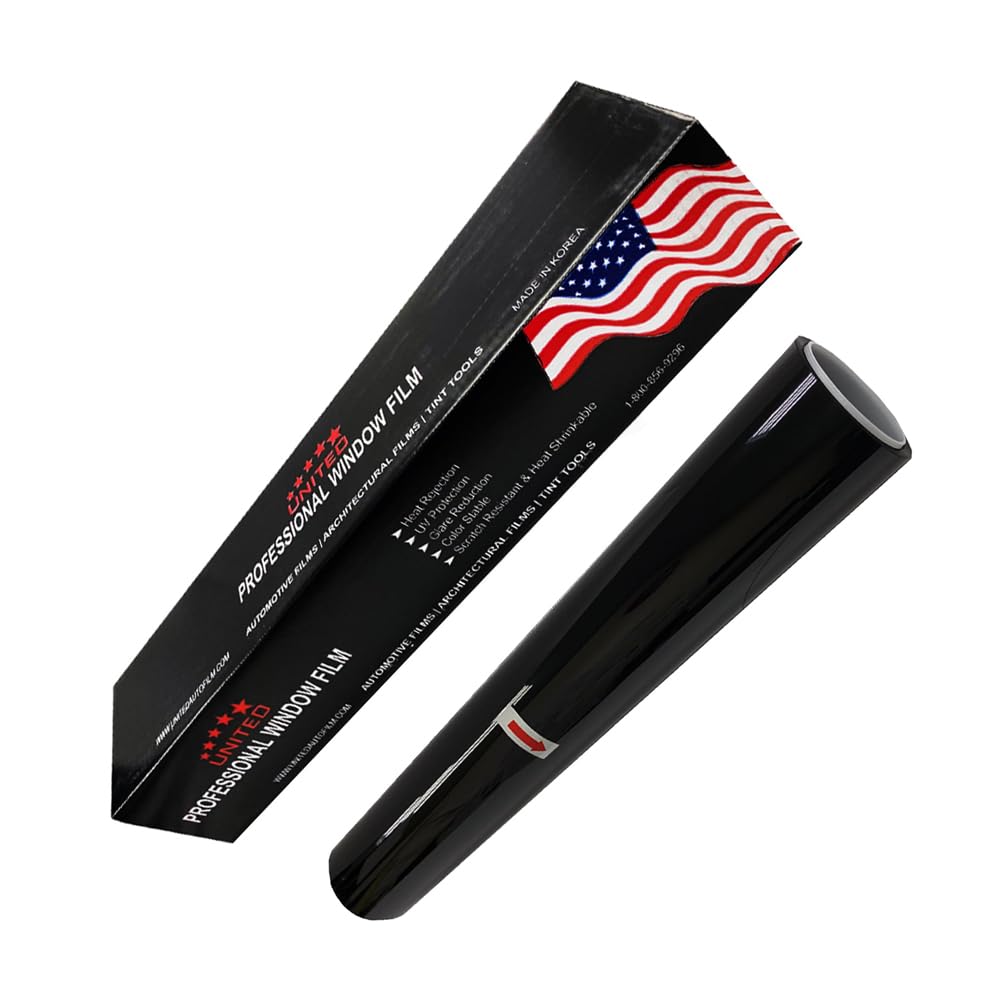
1. United Universal Black Window Tint Film 20″ x 100′ – 35% VLT 1Ply Dyed PET Car Tint Roll, Deep Black Privacy Film with 99% UV Block
Our pick — over 4★ from 200+ verified ratings; the strongest balance of quality and price.
One massive roll, 166.67 square feet of it, that forgives a beginner’s mistakes six cars over.
This is the roll you buy when you have never touched a squeegee and refuse to pay for a redo. The 166.67 square feet of 1Ply dyed PET film is enough to go around twice: buyers report tinting an entire Kia Niro — rear glass included, laid over existing tint — with no bubbles or discoloration after two months, and still having half a roll left. A second car’s front windows ate barely half of it. For a first-timer, that surplus is the whole game. You get to ruin a panel, peel it off, and try again without ordering more film.
The 1Ply dyed PET construction is not the heat-rejection king — dyed film absorbs heat rather than reflecting it, and the honest expectation here is a cooler, darker cabin with strong privacy, not ceramic-grade thermal blocking. What it does deliver is 99% UV block, which is the number that protects your dashboard, upholstery, and door panels from cracking and fading over years of sun. As buyers put it after months at 35% over factory 35%: “novice tinted all Kia Niro windows incl. rear, over existing tint, no bubbles/discoloration after 2 months.” That forgiveness is why this tops the list: the film meets a new installer halfway.
Where it sits above the ARANA is volume: 166.67 square feet against a much shorter hobby roll, so this one covers a whole truck in a single purchase. The recurring note to know before you buy is that the shade runs light and the material is soft — it creases under easy pressure, so patience at the heat-shrink stage matters more than force. Treat it as a generous beginner’s roll rather than a pro-shop film and it over-delivers.
What earns its keep
- 166.67 square feet covers a full vehicle with room for retries
- 99% UV block protects interior trim and upholstery
- Deep black 35% finish darkens properly with no purple hue
Where it hands you homework
- Soft, thin 1Ply film creases easily under pressure
- Dyed construction absorbs heat rather than rejecting it like ceramic
- Reported shade runs lighter than the 35% label suggests
The call: Reach for this if you are tinting a whole car yourself for the first time and want spare film for the panels you will fumble.
Think twice: If your priority is maximum heat rejection on a black car in full sun, ceramic film earns its keep more clearly.
2. ARANA 35% VLT 20″×20FT Ceramic Car Window Tint Film
Ceramic heat rejection and 99% UV block in a small roll built for modest jobs.
The ARANA hands you nano-ceramic film at an entry-level tier, which is the unusual part — most ceramic rolls ask for a lot more commitment in both size and spend. This one is a 20-inch by 20-foot roll, sized for side windows and patio doors rather than an entire SUV. Applying it to three sets of patio doors, one owner found it durable and easy to run with the windex-and-squeegee method, cutting solar heat enough to notice a difference in air-conditioning use. It also blocks 99% of UVA and UVB radiation, the aging-and-fading rays, and sticks with stable adhesive the maker says resists bubbling, peeling, and yellowing.
Here is the honest head-scratcher. The plastic wrap will fool you — the item dimensions on the listing read 1.96 inches by 1.96 inches, which is the packaged roll, not the film, so do not mistake that for a thumbnail-sized cut. The actual roll is the 20-inch by 20-foot stated in the size field. Where this film stumbles is the same place a lot of the industry stumbles: the shade runs light. A common line in the reviews is that it looks closer to 20% than the 35% it claims, and the film is thin enough to crease if you lean on it. First-timers, though, keep surprising themselves — one self-described novice got a month in with no peeling and a finish that looked professional.
Against the United roll above, this gives you ceramic construction but far less film, so the trade is material quality for coverage. For a couple of side windows or a set of doors, that is a fair swap.
The value math: You are trading roll size for ceramic heat rejection and 99% UV block — smart if your job is small, wasteful if you need to cover a whole truck.
Right for: Small jobs where you want ceramic UV and heat performance without buying pro-size film.
Look elsewhere: If you are covering a full vehicle, the bigger rolls make far more sense here.
3. smilfuy 35% VLT Car Window Tint Film for Auto Sun Shade Roll 30″× 19.68Ft
A tidy starter roll that ships with its own squeegee and knife, ready from the start.
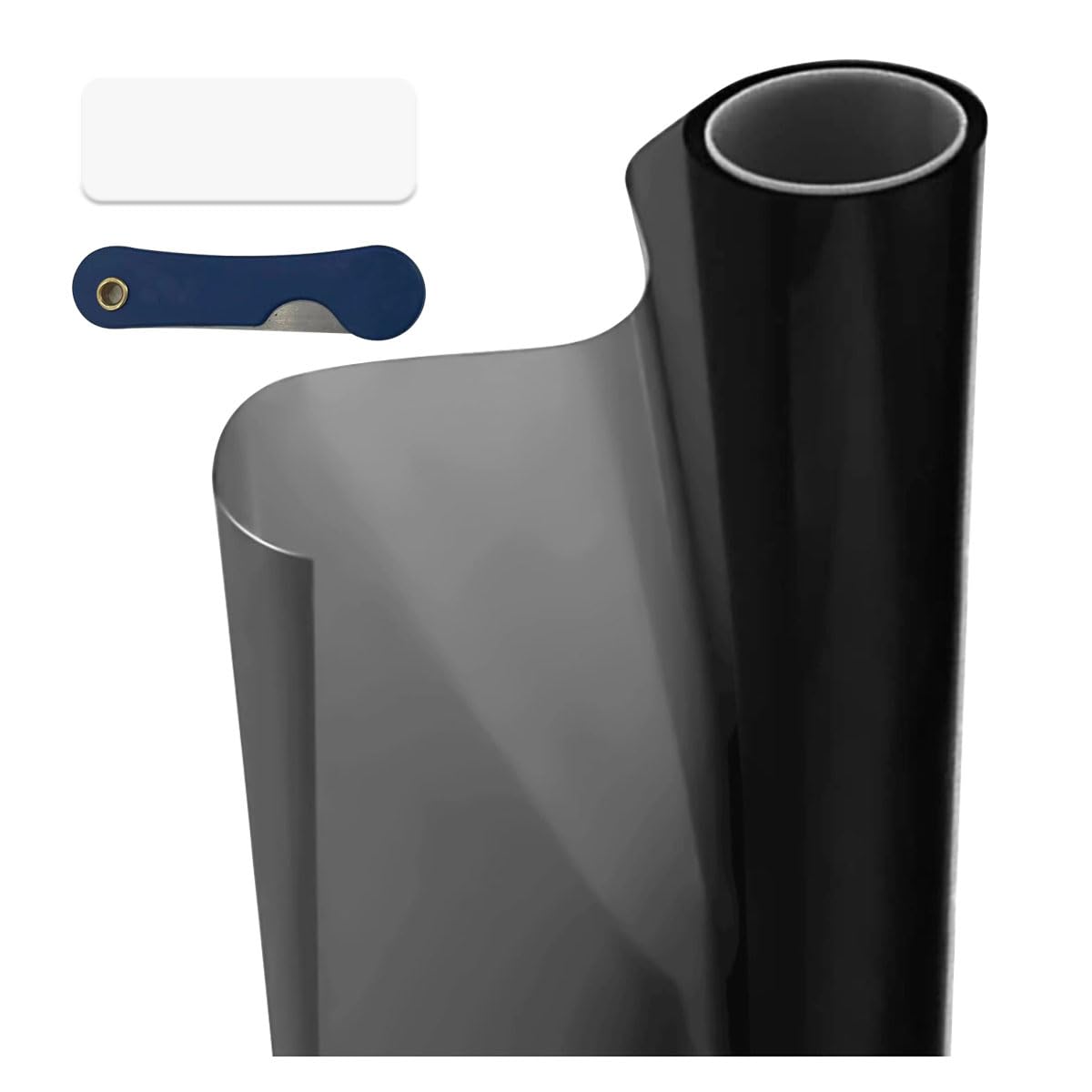
What you notice first with the smilfuy is that it comes as a kit, not just a roll — squeegee and knife included, so you are not hunting for tools before your first cut. The film is single-layer PET designed to cut glare while keeping your driving view clear, and it is rated to work on everything from car glass to sunroom glass to office partitions, so leftover film has a second life at home. The listing gives you a choice of shades from 5% to 35%, and this version is the 35%, the balanced one.
The installation reality is not sugar-coated in the feedback: getting the backing off is a pain, and a thin film blurs slightly more than thicker stock once it is on glass. But the quality story has a strong counterweight — owners who install it carefully report it lasting about a year with no peeling or bubbling, and the film’s forgiving design lets you peel it back while it is still wet, squeegee the bubbles out, and let it cure. It rewards technique over brute force. Spray generously, keep a towel down to catch the runoff, and scrape every drop of moisture out before you walk away.
Compared to the ARANA’s ceramic build, this is simpler dyed-style PET, but the included tools and the wide roll make it the easier first project for someone who owns none of the gear yet.
Pick this one: If you want a one-box starter kit for one or two windows and value the included squeegee and knife.
Not the one: If you expect an easy peel-and-stick job with zero learning curve — thin film demands real technique.
4. TOYOCO Nano Ceramic Car Window Tint Film Roll, 35% VLT, 36 in x 5 ft
Nonmetallic ceramic that keeps your GPS, toll tag, and keyless entry talking to your car.
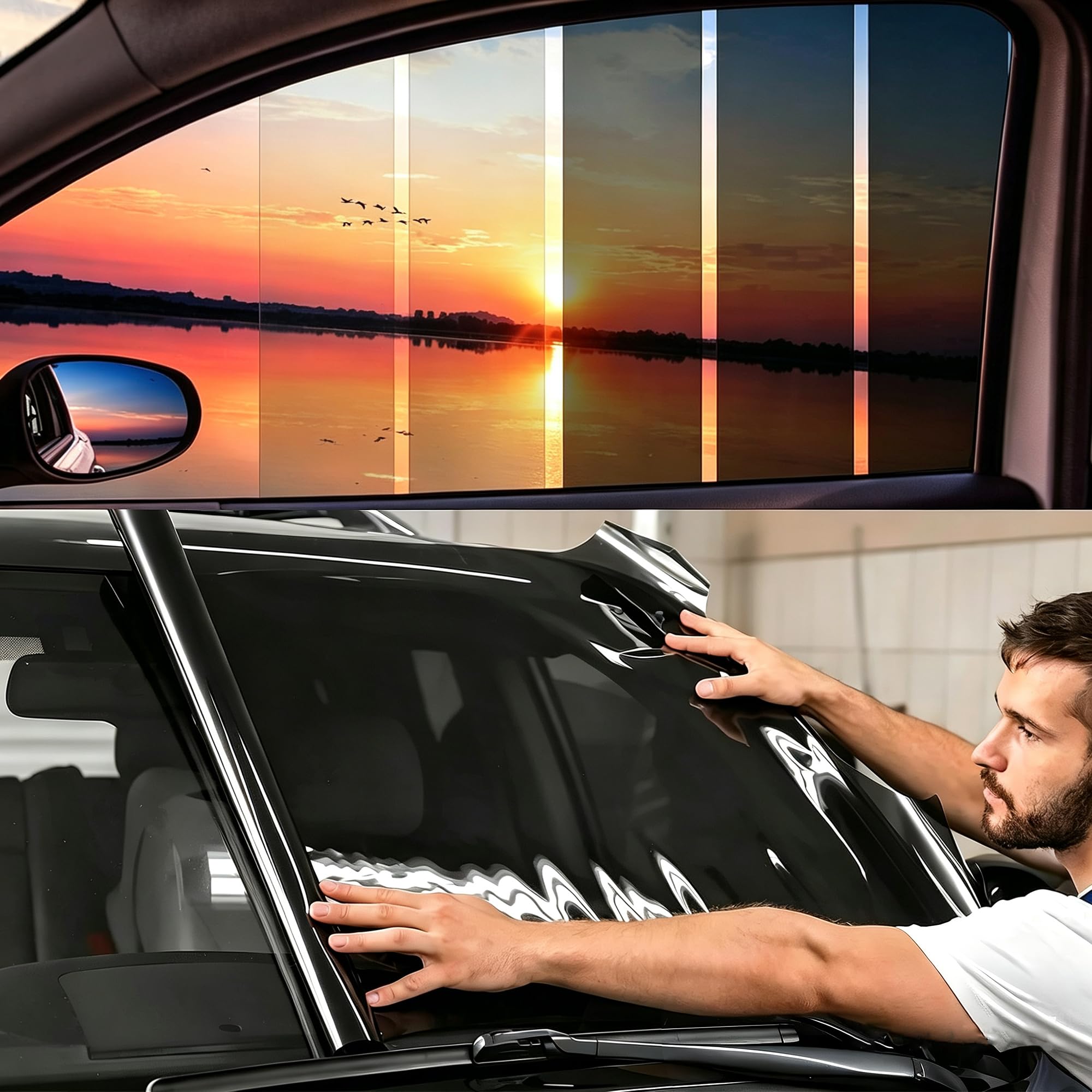
Metal in a tint film can quietly wreck the stuff you rely on daily — GPS that drifts, a toll transponder that reads on the third try, a key fob that needs you to stand closer. The TOYOCO sidesteps that entirely with nonmetallic nano-ceramic construction, so your radio signals, mobile devices, satellite radio, and toll tags stay connected. On the numbers, it rejects 99% of UV rays and over 95% of infrared energy across every shade in its range — the infrared figure being the heat component that ceramic film is known for catching, so the cabin does not bake the way it does under a purely dyed film. The 35% version here is the balanced shade, and the scratch-resistant surface is built to survive normal cleaning without hazing.
Two things earn this a place near the top. First, the 36-inch width lets you cover a large side or rear window in a single pass instead of seaming two strips together — seams are where tint jobs look homemade. Second, this film is heat-shrinkable, which means it conforms to curved side and rear glass with a heat gun, and TOYOCO provides step-by-step video guidance to walk you through plan, cut, shrink, and apply. First-timers reported good results when they prepped the glass properly, and the film held up well enough during install that they would buy it again.
The catch is thickness. This film is thin enough to tear if you rush the backside removal, and creasing is the most common frustration. Go slow, use a lot of soapy water on both the adhesive side and the glass, and remember to peel the backing — forget that step and nothing sticks.
Why it stands out
- Nonmetallic ceramic keeps GPS, toll tags, and keyless entry working
- Blocks 99% UV and over 95% of infrared heat across all shades
- 36-inch width covers big panels in one pass with video install help
What to watch
- Thin film tears and creases if you rush the install
- The 5-foot length is tight for a full vehicle
- You must remove the backing film or nothing adheres
Best fit: A driver who wants real ceramic heat rejection without metal interference and needs a wide panel covered cleanly.
Wrong fit: A full-vehicle project on a tight timetable — the small 5-foot roll will run out before you finish.
5. RockRose 35% Premium Carbon Car Window Tint Film 36 in x 20FT 2PLY Charcoal Privacy Film
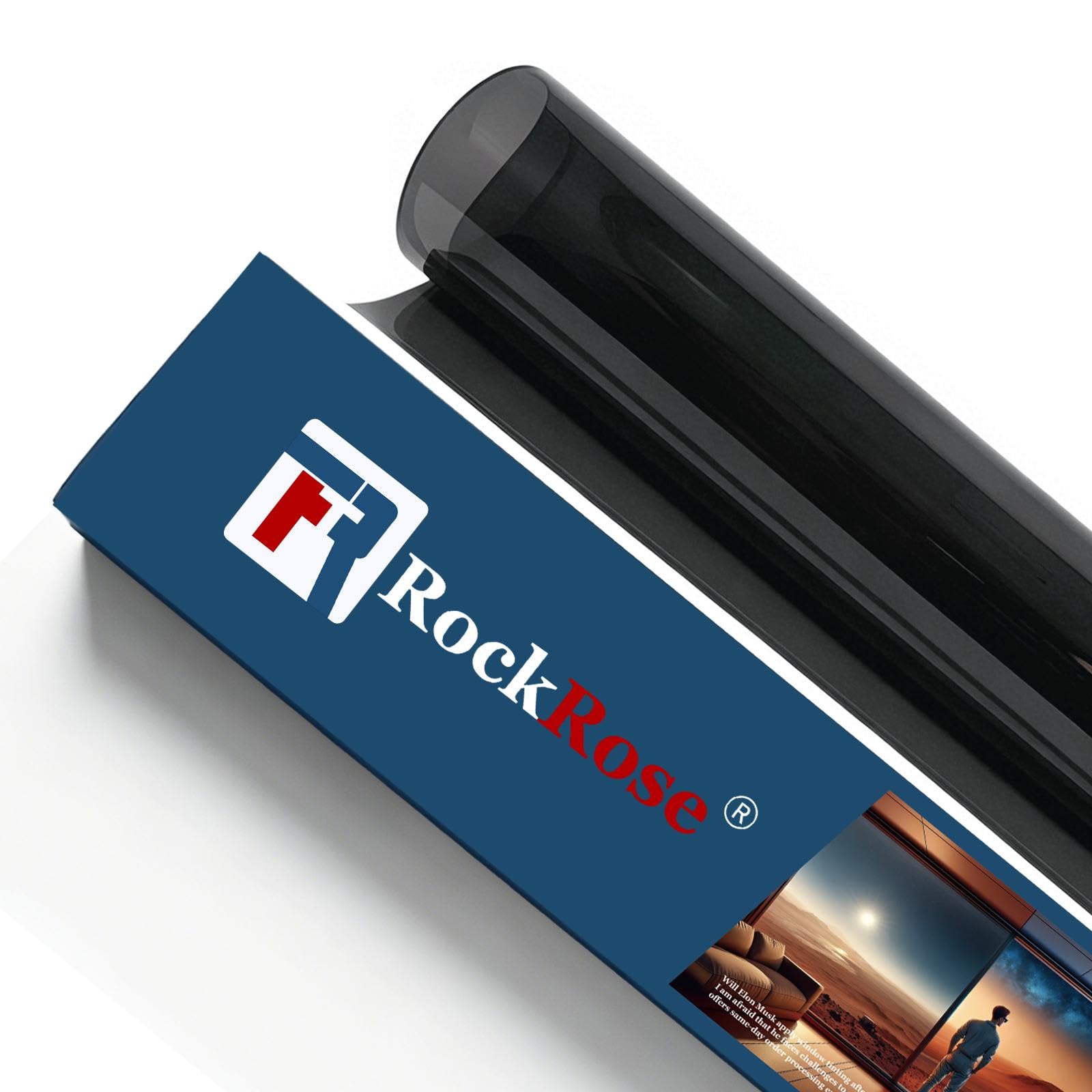
The truck-owner’s pick: thick 2-ply carbon that takes a heat gun without quitting.
The RockRose Premium Carbon is the film you buy when curved glass and full-size panels are on the menu. The 36-inch by 20-foot roll gives you width to cover a truck side window in one piece, and the 2PLY carbon build blocks 99% of UV rays while cutting up to 55% of infrared radiation — the heat you feel radiating off a windshield after the car has been parked in the sun. Carbon film also resists the fading that cheap dyed film develops, so the deep black 35% finish stays consistent instead of drifting purple over a couple of summers.
What owners consistently celebrate is how cooperative the film is on the bench. Installing on the side windows of a truck, one buyer called it not too hard to wrangle and praised the result as “fairly well for my first time tinting.” The thicker material reads as quality in hand — it holds its shape, pushes bubbles out cleanly, and takes a heat shrink. That durability has a real payoff for anyone tinting home glass too: a full-time RVer ran a RockRose roll across every window of a 30-foot RV and walked away with a cooler cabin, waking up cool, and privacy that held even with the interior lights on.
The trade-off is the flip side of that thickness. Stiff 2-ply carbon does not love compound curves — flat panes and gentle bends are its home, but a deeply curved rear window will fight you with a heat gun and want to crease. Practice on a test panel first, and keep the trickier curves for a film designed to shrink.
Where it wins: Thick, forgiving 2-ply carbon with strong 99% UV and 55% IR blocking that suits trucks, flat glass, and home windows alike.
Suits you if: Your job is flat or gently curved glass and you want durable carbon film that resists fading.
Not for: A heavily sculpted rear window where heat-shrink flexibility matters more than thickness.
6. RockRose 35% Car Window Tint 24 in x 100FT 1PLY Carbon Charcoal Privacy Film
A 100-foot carbon roll sized for test jobs, small windows, and a lot of retries.
Where the Premium Carbon above is all about thickness and curve-fighting, this RockRose 24-inch by 100-foot roll is about volume and control. It blocks up to 99% of harmful UV rays, provides up to 35% infrared rejection and 45% TSER, and is built as 1PLY carbon PET that the maker says resists peeling, bubbling, and fading. TSER, or total solar energy rejected, is a single number that rolls up everything the film does to keep your car cooler — and 45% is a solid figure for a film aimed at side windows and home glass. The 1-ply build is thinner and more pliable than the 2-ply version, which makes it easier to shrink around curves and more forgiving to cut.
The 100-foot length is the reason this earns a spot for anyone with multiple cars or a practice-heavy project. Owners describe it as good-quality film that is not too sticky or tacky, go on cleanly, and do their job without creating the blue tint that ruins a bad job. One note the listing leaves out but a buyer discovered the hard way: a single windshield film arrived warped and spread a bubble in the sun, which is a fit issue with one panel, not a fault of the whole roll — and the maker’s support on that came joined with a fair bit of finger-pointing. For a thin 1-ply film, expect to spend extra time on prep, and keep your cuts generous so a bad panel does not cost you a good one.
Set against the Premium Carbon roll, this trades some stiffness for shrinkability. Set against the smaller ARANA, it trades the lower price for enough film to finish the job.
Choose it if: You want a long run of pliable carbon film for several windows, home glass, and plenty of do-overs.
Pass on it if: Your priority is the thickest, most durable stock available — the 1-ply here is deliberately softer.
7. LuxeShade Professional Auto Window Tint Film Roll, 35% Premium Carbon, 24IN x 100FT
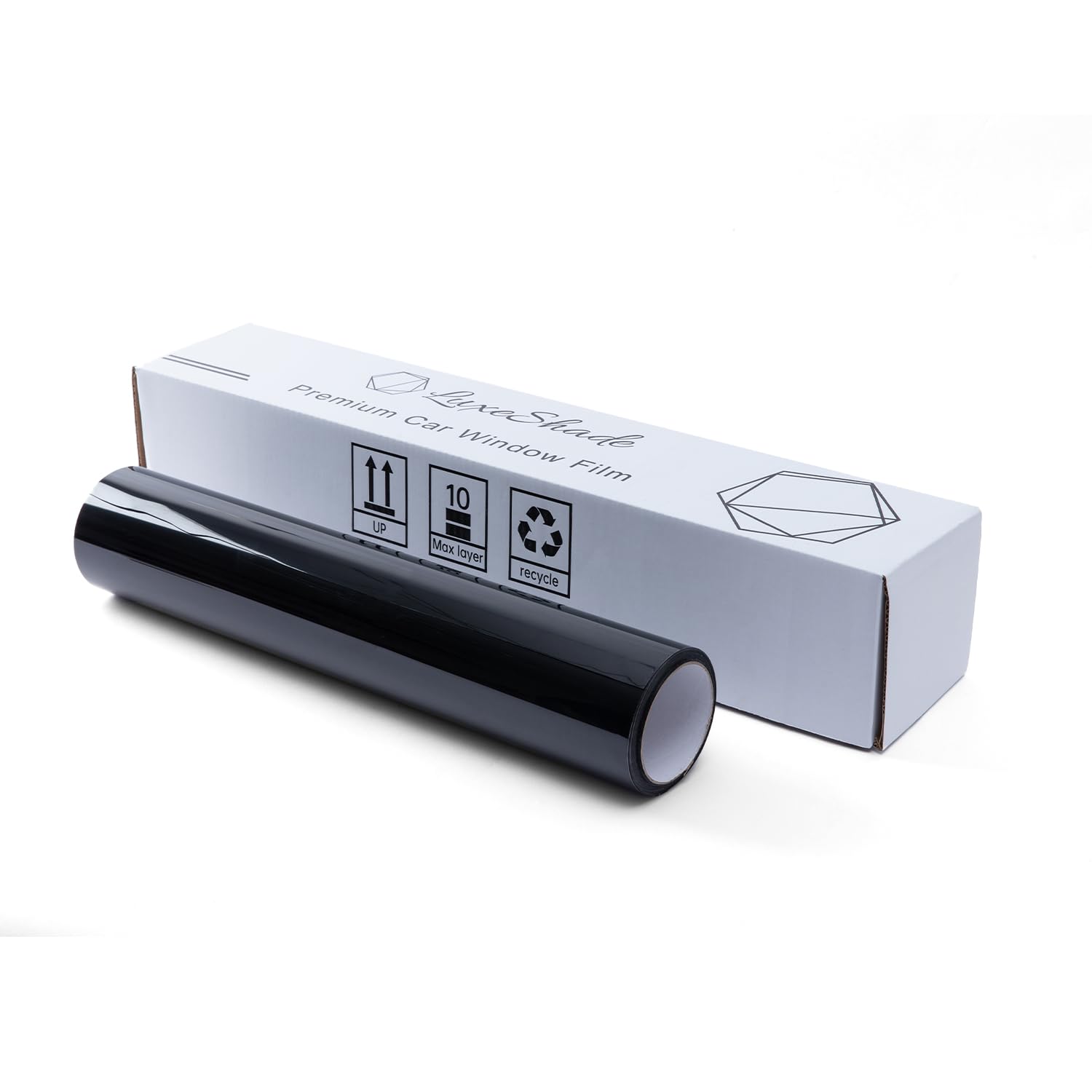
Plenty of film for learning on trucks, SUVs, and home windows without sweating the leftovers.
LuxeShade’s roll is aimed at the person who wants room to make mistakes without buying a second roll. It is a 24-inch by 100-foot run — 200 square feet all told — of carbon nano film rated for heat control and UV protection, with a scratch-resistant surface the listing also pitches as windshield protection against minor damage. The size is the headline: enough to cover a truck, tint the house, and still have a strip left for the shop. Owners tinting homes found it kept houses cooler, and those working on their cars appreciated the smooth finish when they took their time with prep.
Where this film earns its recommendation is friendliness to beginners. The material handles well, cuts and applies without fighting back, and the reviews repeatedly point to its value as a practice roll — a place to build up the squeegee and heat-gun muscle memory before you commit to a car you care about. It also resists heat buildup well enough to matter on a scorching day, which is the whole point of tinting in the first place. A first-timer on their third car found this easier to work with than two other brands they had used, landing a smooth, bubble-free finish.
The honesty check: the shade runs a touch lighter than some expect, and the film is on the thicker side, so a deeply curved window will test your patience. It works as expected for many, but it is a budget-minded practice film rather than a top-shelf pro product — buy it to learn on, not as your final answer for a show car.
The pitch in one line: 200 square feet of handle-anywhere carbon nano film that is affordable enough to waste a panel or two while you learn.
Yes if: You want an inexpensive, plentiful roll to practice on vehicles, trucks, and home windows alike.
No if: You need the deepest shade or the thinnest film for tricky curved glass.
8. Tview T2BK3536 2ply 1mil 36 X 100ft Window Film Roll Vlt 35%

A wide 36-inch, 100-foot roll built for crews that go through film fast.
The Tview is the one you reach for when the job needs width and reach in the same roll. Its 36-inch by 100-foot dimensions cover a full vehicle — including wide glass — in a single pass, and the 2ply 1mil construction (two layers bonded to a one-thousandth-of-an-inch thickness) is a versatile middle-ground that conforms to curved surfaces without being floppy. The film resists bubbling and peeling, handles high heat, and its pliability makes it willing to bend around the curved rear glass that trips up stiffer films. Where a slimmer roll forces you to seam two pieces, the 36-inch width does a rear window in one continuous piece.
Owners treat this as a solid, repeat-buy workhorse rather than a showpiece. It fades slower than the first brand some buyers tried, and at the quantity offered, it works as a low-risk starter tint for DIYers and a stock film for small shops alike. It is not high-end like the premium pro shops, and the reviews say so plainly — no discoloration issues as it fades, and no haze in the sunlight. One honest limit to know: it is a soft film that scratches more easily and does not hold up as well on roll-up-and-down mechanical windows, so it shines on fixed rear and side glass.
Next to the LuxeShade practice roll, this adds a wider 36-inch format and greater heat resistance, which matters more if your priority is finishing a large vehicle cleanly rather than practicing messily.
Where it delivers
- 36-inch width covers full-size glass in a single continuous piece
- 2ply 1mil film resists bubbling and peeling across heat cycles
- Fades slower than some rival films with no discoloration reported
Know before you buy
- Soft film scratches easily and is not ideal for roll-up windows
- It is a solid workhorse, not a top-shelf pro product
- Better suited to fixed rear and side glass than daily-moving windows
Made for: High-volume tinting on full vehicles where a wide 36-inch roll and heat resistance matter most.
Skip it: If your windows roll up and down every day — soft film is not the long-term partner for moving glass.
Understanding the Specs
VLT (visible light transmission)
VLT is the percentage of visible light the film lets through — 35% VLT means roughly 35% of outside light reaches your eyes. It determines how dark your finished windows look in daylight and how clearly you see at night. Lower numbers mean darker and more private; higher numbers mean lighter and clearer. Remember that VLT multiplies when you stack films: a 35% film over a window that already carries factory tint ends up darker than 35%. Check your local tint laws before you cut, since the film shade and the finished shade are not the same number.
UV and IR rejection
These two specs describe what the film does beyond darkening. UV rejection is how much ultraviolet radiation the film blocks — a 99% figure like the one on several rolls here protects your dashboard, seats, and trim from the fading and cracking that sun causes over time. IR rejection is how much infrared energy, the invisible radiation that carries most of the sun’s heat, the film reflects or absorbs; higher IR means a cooler cabin on a hot day. A film can have excellent UV block and only modest IR, which is why UV numbers alone do not tell you how much heat relief you will feel.
Ply count and film thickness
Ply count is the number of film layers bonded together, and it drives how the film behaves in your hands. A 1Ply film is a single layer — thin, pliable, and easy to shrink around curves, but also quick to crease or tear if you rush. A 2PLY film bonds two layers, which makes it stiffer, more durable, and more resistant to peeling, at the cost of some curve-hugging flexibility. Heavier, thicker material often feels more premium and resists scratching better, while thinner stock needs a gentler touch but conforms more readily.
Roll width and length
The width of the roll determines whether you can cover a panel in one piece or must seam two strips together — seams are where DIY jobs look homemade. Widths here run from 20 inches up to 36 inches, and longer rolls simply give you more attempts. A 20-inch by 20-foot hobby roll suits side windows and patio doors; a 36-inch by 100-foot pro roll covers a whole vehicle with room to spare. Buy for the largest window you plan to tint, and size the length to the retries you expect.
FAQ
Is 35% window tint legal on my car?
How dark is 35% tint at night?
What is the difference between dyed, carbon, and ceramic tint?
Do I need a heat gun to install window tint?
Will ceramic tint block my GPS or toll tag?
How much tint film do I need for one car?
Why did my tint bubble and how do I prevent it?
Can I use car window tint film on home windows?
How long does a quality 35% tint film last?
Is 1Ply or 2PLY tint better for my car?
Final Thoughts: The Verdict
If you are tinting for the first time and want a single roll that lets you make mistakes and still finish the job, the United Universal Black Window Tint Film is the one to start with — 166.67 square feet of 1Ply dyed PET with 99% UV block, enough film to tint a whole car and still have spare. If heat rejection without any metal interference is what you are after, the TOYOCO Nano Ceramic roll answers with 99% UV and over 95% infrared rejection in a nonmetallic build. And if you are covering a truck or home windows where flat glass and durability matter most, the RockRose Premium Carbon 2PLY film brings the thickness, the 99% UV block, and the 55% infrared rejection to match.
How We Picked
We do not accept paid placement. Every pick is matched to a real buyer and a real use-case; we do not hands-on test units.
Sources & Methodology
Specifications: manufacturer listings and product documentation. Review insights: verified customer reviews, as of September 2026. Pricing: not shown on this page (it changes often); check the current price via the retailer link.
As an Amazon Associate, Gadgets Feed earns from qualifying purchases. This does not affect which products we feature.