
Choosing a 35mm camera today means navigating a market flooded with vintage relics hiding mechanical decay and modern reissues carrying premium price tags. The sweet spot lies in matching the right film format — full-frame, half-frame, or APS-C — with your shooting style, whether that’s zone-focus street photography or aperture-priority landscapes.
I’m Min — the co-founder and writer behind Gadgets Feed. I’ve spent countless hours dissecting lens coatings, shutter accuracy, and mount compatibility across the current 35mm landscape to separate real value from nostalgic hype.
This guide cuts through the noise to help you find the best 35mm cameras that deliver sharp, reliable results without forcing you to gamble on decades-old electronics.
How To Choose The Best 35mm Cameras
Selecting a 35mm camera involves more than just picking a familiar brand. You need to align the camera’s format size, focusing mechanism, and lens system with your intended use — whether that’s everyday snapshots, artistic street photography, or learning manual exposure techniques.
Full-Frame vs. Half-Frame vs. APS-C
The biggest decision is frame size. Full-frame 35mm uses the entire 24x36mm area, giving you maximum resolution and shallow depth-of-field control. Half-frame cameras like the Pentax 17 or Kodak EKTAR H35N expose two 18x24mm images per standard 36-exposure roll, yielding 72 shots — ideal for casual shooting or travel where film cost matters. APS-C lenses like the TTArtisan 35mm F1.4 produce a crop factor equivalent (52mm on Nikon Z), giving you a tighter field of view that works well for portraits on mirrorless bodies.
Manual Focus vs. Autofocus
Manual focus lenses — such as the PERGEAR 35mm F1.4 — offer full creative control, durable all-metal builds, and lower price points, but require patience and good eyesight or focus peaking. Autofocus systems like the 7-point AF in the Canon Rebel 2000 or the contrast-detection AF in the Halina Tegra AF290 provide speed and convenience, particularly for capturing fleeting moments. For beginners, an autofocus SLR with program mode lowers the learning curve considerably.
Lens Mount and Interchangeability
Your mount choice dictates future lens options. Canon EF-mount cameras (Rebel 2000, EOS Kiss) give access to decades of affordable autofocus glass. The Canon AE-1 uses the older FD mount, limiting you to vintage manual lenses. The Pentax 17 and Kodak EKTAR H35N have fixed lenses, so what you see is what you get. If you plan to build a lens collection, prioritize a camera with a widely supported mount like Canon EF or Leica L for mirrorless adapters.
Quick Comparison
On smaller screens, swipe sideways to see the full table.
| Model | Category | Best For | Key Spec | Amazon |
|---|---|---|---|---|
| Pentax 17 | Half-Frame Compact | Versatile everyday carry | 25mm F3.5, 72 shots per roll | Amazon |
| Canon AE-1 | Vintage SLR | Classic manual photography | 50mm F1.8 FD, TTL metering | Amazon |
| Canon Rebel 2000 | Autofocus SLR | Beginner-friendly film SLR | 7-point AF, 28-80mm EF lens | Amazon |
| Canon EOS Kiss | Autofocus SLR | Reliable film SLR with lens | 35-80mm EF, ISO 100-3200 | Amazon |
| YONGNUO YN35mm F2 | Prime Lens | Budget prime for Canon DSLRs | F2 aperture, 0.25m focus distance | Amazon |
| PERGEAR 35mm F1.4 | Manual Prime Lens | Full-frame L-mount, low light | F1.4 aperture, 63.2° FOV | Amazon |
| TTArtisan 35mm F1.4 | Manual Prime Lens | APS-C mirrorless portraits | F1.4 aperture, 180g weight | Amazon |
| Kodak EKTAR H35N | Half-Frame Point & Shoot | Budget half-frame, star filter | Built-in star filter, bulb mode | Amazon |
| Halina Tegra AF290 | Point & Shoot | Entry-level compact film | 28mm wide, contrast AF | Amazon |
In‑Depth Reviews
1. Pentax 17

The Pentax 17 is a modern half-frame 35mm camera built from the ground up for film enthusiasts who don’t want to gamble on aging gear. Its 25mm F3.5 lens — treated with Pentax’s HD coating — delivers sharp images with a 37mm equivalent field of view, making it ideal for street and everyday shooting.
The zone-focus system divides distance into six zones, removing the guesswork from manual focus while keeping you in control. The top and bottom covers are magnesium alloy, giving it a premium, durable feel without excessive weight. The manual film advance lever recreates the tactile feedback of classic film cameras.
At 72 shots per 36-exposure roll, the Pentax 17 effectively halves your per-shot film cost. It supports ISO from 50 to 3200 and produces pleasing color and black-and-white images. The quiet shutter is a boon for candid photography, and the overall build quality justifies its mid-range position for serious hobbyists.
Why it’s great
- 72 shots per roll saves film cost
- HD coated 25mm F3.5 lens is sharp with vintage character
- Lightweight magnesium alloy build
- Quiet shutter perfect for candids
Good to know
- Fixed lens limits focal length options
- Zone-focus requires some practice
2. Vintage Canon AE-1

The Canon AE-1 is the quintessential entry-level vintage SLR, and this renewed unit from Blue Pen Refurbishing arrives cleaned, tested, and paired with a 50mm F1.8 FD lens. Its shutter priority auto-exposure mode is intuitive for beginners, while full manual control gives experienced shooters creative freedom.
The built-in TTL metering system provides accurate exposure readings across lighting conditions, and the 1/1000 to 2-second shutter speed range covers most everyday scenarios. The all-metal body has a classic chrome finish that looks as good on a shelf as it does in your hands.
Keep in mind the FD mount limits your lens options to vintage Canon glass, and the camera lacks modern autofocus conveniences. However, customers report receiving fully functional units that produce beautiful images on their first roll, making this a dependable gateway into manual film photography.
Why it’s great
- TTL metering delivers accurate exposures
- 50mm F1.8 FD lens is sharp and fast
- Shutter priority mode eases learning curve
- Robust metal build with classic aesthetic
Good to know
- FD mount limits modern lens choices
- No autofocus — all manual focus
3. Canon Rebel 2000
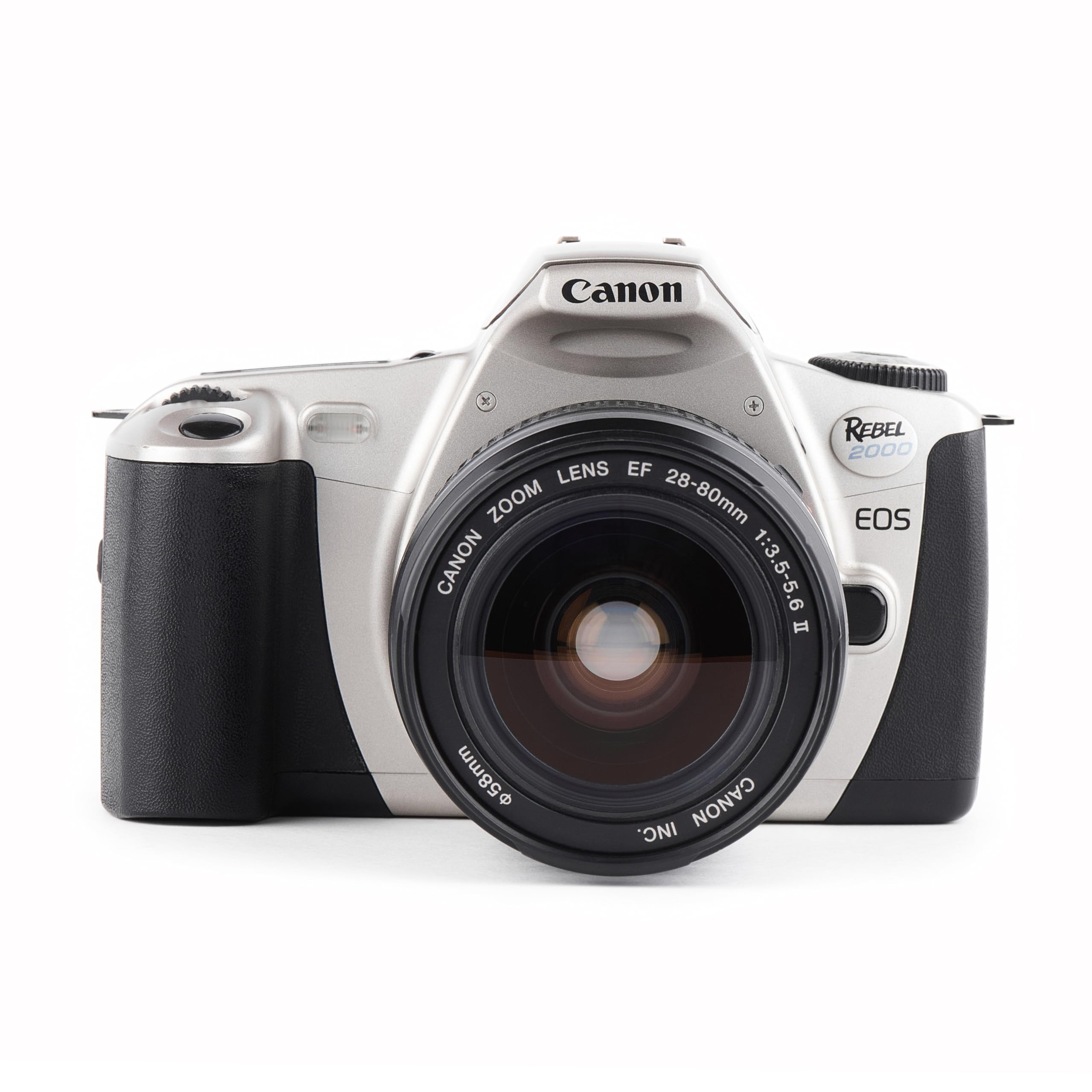
The Canon Rebel 2000 is a late-90s autofocus SLR that packs modern-feeling automation into a lightweight film body. Its 7-point autofocus system locks onto subjects quickly, and the four exposure modes — Program, Aperture Priority, Shutter Priority, and Manual — let you grow into the camera.
The bundled 28-80mm EF zoom lens covers wide-angle to short telephoto, making it a versatile walk-around kit. Automatic film loading, advancing, and rewinding eliminate the mechanical hassle that intimidates new film shooters. The built-in flash is adequate for fill light in daytime or low-light snapshots.
Buyers report receiving units in near-mint condition, with the camera functioning perfectly despite its age. The EF mount unlocks access to Canon’s massive lens catalog — from budget primes to L-series glass. For anyone wanting an affordable, reliable entry into film SLRs, this is a strong contender.
Why it’s great
- 7-point autofocus is fast and reliable
- EF mount provides huge lens selection
- Fully automatic film transport
- Four exposure modes for learning
Good to know
- Plastic body feels less premium
- 28-80mm kit lens has average sharpness
4. Canon New EOS Kiss

The Canon EOS Kiss — sold as the Rebel G in North America — is a compact, user-friendly autofocus SLR that punches above its price point. Its wide-area autofocus point delivers accurate focus in most conditions, and the intuitive LCD display and button layout make settings adjustments quick even for first-time film users.
The bundled 35-80mm EF zoom lens provides a useful range for portraits, landscapes, and everyday scenes. The camera supports ISO 100-3200 and offers full auto, program, aperture priority, and shutter priority modes — giving you flexibility to experiment. The built-in flash is reliable for low-light fill.
Buyers consistently praise the camera’s excellent condition upon arrival, with many reporting beautiful results from their first roll. The battery life is notably long, and the EF mount means you can swap in any Canon autofocus lens. This is a turnkey film SLR for serious hobbyists or students.
Why it’s great
- Wide-area AF point is accurate
- Long battery life reported by users
- Compact body with clear LCD display
- Versatile 35-80mm zoom lens included
Good to know
- Plastic build lacks heft of metal SLRs
- Kit zoom lens has moderate light gathering
5. YONGNUO YN35mm F2

The YONGNUO YN35mm F2 is an affordable autofocus prime lens for Canon EF-mount cameras, giving film shooters a 35mm field of view at a fraction of the cost of Canon’s own 35mm F2. The lens structure uses 7 elements in 5 groups and delivers sharp images with pleasant bokeh wide open.
Autofocus is functional but noticeably noisy and slower than Canon’s native offerings — something to consider if you shoot quietly in public settings. The all-metal mount adds durability, though the overall barrel feels plasticky. A major caveat is the lack of a dedicated lens hood; you’ll need a threaded ring adapter.
For the price, the image quality punches well above expectations. Users note that sharpness is good even at F2, and color rendering is pleasing with minimal chromatic aberration. If you’re looking for a cheap 35mm prime to learn with or use as a walk-around lens on a budget, this fits the bill.
Why it’s great
- Sharp wide open at F2 with good bokeh
- Autofocus works on Canon EF mount cameras
- Very budget-friendly for a 35mm prime
- Solid metal mount
Good to know
- Autofocus is noisy and slow
- No dedicated lens hood included
6. PERGEAR 35mm F1.4

The PERGEAR 35mm F1.4 is a full-frame manual lens designed for L-mount mirrorless cameras like the Lumix S5, S9, and Leica bodies. Its ultra-wide F1.4 aperture excels in low-light conditions and provides shallow depth-of-field control, with a 10-blade diaphragm that produces smooth, circular bokeh.
The all-metal construction includes a clicked aperture ring with distinct stops from F1.4 to F16, and the focus ring turns smoothly with the right amount of resistance. Multi-layer coating on the front element suppresses flare and ghosting. At close to 30cm minimum focus distance, you can capture detailed still lifes.
Some reports note that on full-frame sensors, corner vignetting can be visible at F1.4, and a minority of users have flagged inconsistent edge sharpness. Most buyers, however, find the build quality and image rendering impressive for the price point — calling it a native L-mount bargain for manual focus shooters.
Why it’s great
- F1.4 aperture excellent for low light and bokeh
- Smooth all-metal build with clicked aperture ring
- Multi-layer coating reduces flare
- Native L-mount with no adapter needed
Good to know
- Corner vignetting at F1.4 on full-frame
- Manual focus only — no autofocus
7. TTArtisan 35mm F1.4
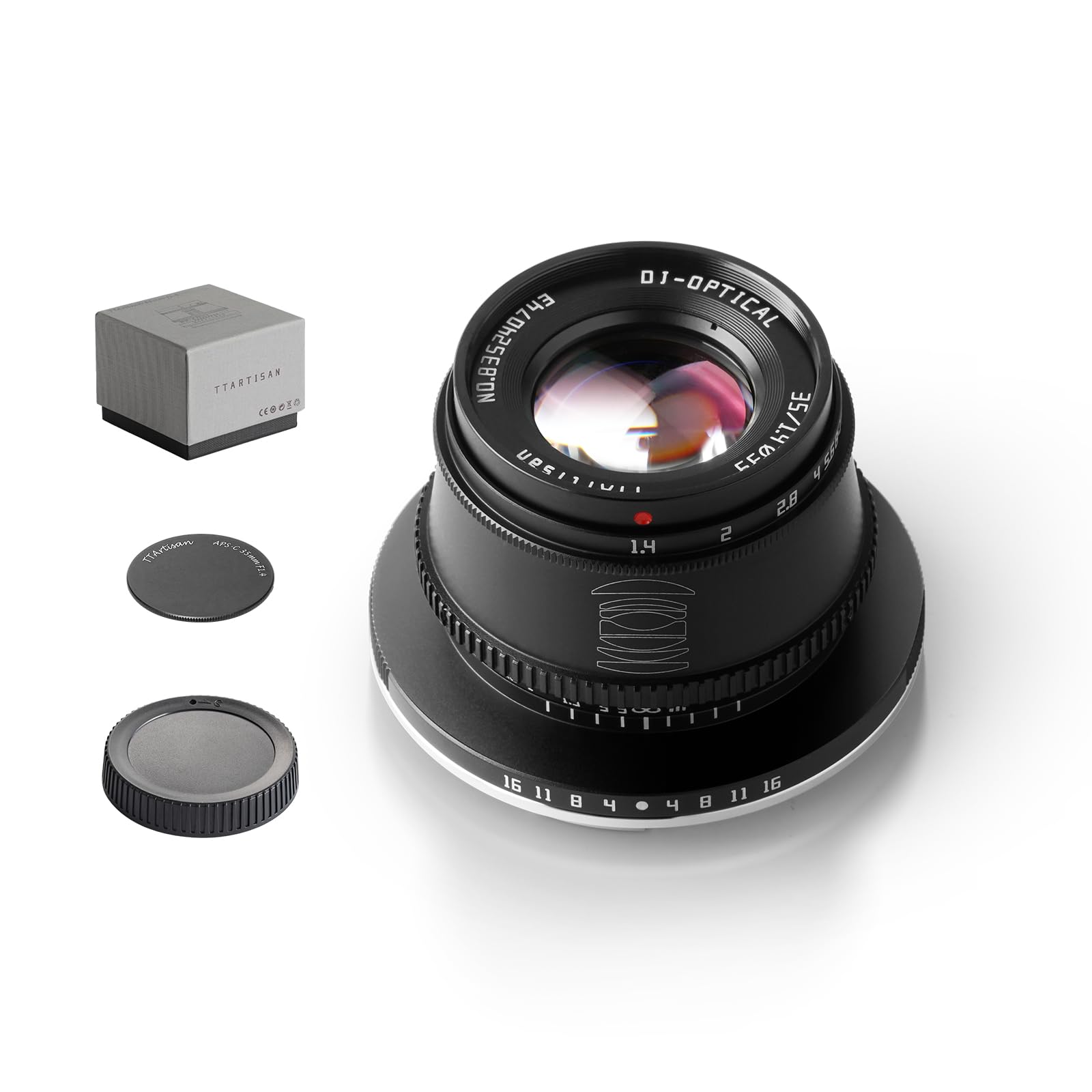
The TTArtisan 35mm F1.4 is a compact, lightweight manual lens for APS-C Nikon Z-mount cameras, delivering a 52mm equivalent field of view ideal for portraits and street photography. At just 180 grams — comparable to an apple — it won’t weigh down your mirrorless body during long shooting sessions.
The F1.4 aperture is genuinely bright, allowing you to shoot in dim conditions and create pronounced subject separation. Construction uses aviation-grade aluminum alloy with 6 groups of 7 elements and 10 diaphragm blades. The click-stop aperture ring and multi-thread focus ring provide positive tactile feedback.
Users consistently praise the build quality and sharpness for the price, with many calling it the best value lens they own for Nikon Z. The 11-inch minimum focus distance opens up creative close-up possibilities. A few isolated reports mention sharpness inconsistency at wide distances, but the overwhelming consensus is positive.
Why it’s great
- F1.4 aperture enables low-light shooting and bokeh
- Compact 180g design for everyday carry
- Aviation-grade aluminum build with tactile rings
- Excellent value for Nikon Z shooters
Good to know
- APS-C only — 52mm equivalent on Nikon Z
- Manual focus with no electronic communication
8. Kodak EKTAR H35N

The Kodak EKTAR H35N improves on its predecessor with a coated glass lens element that sharpens image clarity — a meaningful upgrade from plastic optics. As a half-frame camera, it captures 72 exposures on a standard 36-exposure roll, making it an economical choice for beginners and casual shooters.
The standout feature is the built-in star filter, which renders point light sources with a four-beam flare effect, adding a creative touch to night shots. The bulb function enables long exposures for light trails, and a tripod hole supports steady long-exposure work. The compact, pocketable design makes it easy to carry daily.
Photo quality is surprisingly solid for an entry-level 35mm camera, especially with Kodak Portra 400 or Ilford B&W film. The half-frame format encourages experimentation without breaking the bank on film. Users love the bundle’s accessories and report that it’s a fun, low-stakes way to enjoy film photography.
Why it’s great
- 72 shots per roll cuts film costs
- Coated glass lens is a noticeable upgrade
- Built-in star filter adds creative flair
- Bulb function enables long exposures
Good to know
- Fixed lens with no zoom or interchangeable option
- Best image quality depends on film choice
9. Halina Tegra AF290

The Halina Tegra AF290 is a compact, automatic point-and-shoot 35mm camera with a 28mm wide-angle lens and built-in flash. It’s designed for simplicity — load film, point, and shoot — making it an accessible entry point for those new to film photography or wanting a retro-styled snapshot camera.
Powered by two AA batteries, the camera features contrast-detection autofocus and aperture modes from F2.8 to F5.6. The 28mm wide-angle is great for group photos and landscapes. It comes in a box with a manual and strap, and the vintage aesthetic is appealing for casual use.
Quality control appears inconsistent, with some customers receiving units that jammed or shredded film. Others report satisfying results and a fun, low-commitment film experience. This is the most budget-friendly fully automatic camera in the list, but the reliability variance makes it a gamble rather than a safe recommendation.
Why it’s great
- Fully automatic point-and-shoot simplicity
- 28mm wide-angle lens fits group shots
- Powered by common AA batteries
- Retro design with included strap
Good to know
- Inconsistent quality control reports
- Plastic build feels less durable
FAQ
What is the advantage of a half-frame 35mm camera like the Pentax 17?
Can I use Canon EF lenses on a vintage FD-mount camera like the AE-1?
Does a manual focus lens like the PERGEAR 35mm F1.4 work with focus peaking on mirrorless cameras?
What film ISO works best for the Kodak EKTAR H35N?
Why would I choose the YONGNUO YN35mm F2 over Canon’s native 35mm F2 lens?
Final Thoughts: The Verdict
For most users, the best 35mm cameras winner is the Pentax 17 because it blends modern build quality, half-frame economy (72 shots per roll), and a sharp HD coated 25mm F3.5 lens into a lightweight magnesium-alloy body that feels premium without the vintage reliability gamble. If you want a full-frame SLR with autofocus and huge lens access, grab the Canon Rebel 2000. And for a budget-friendly manual prime lens that turns your Nikon Z into a portrait machine, nothing beats the TTArtisan 35mm F1.4.