
The magic of a 35mm film point-and-shoot camera isn’t just nostalgia — it’s the deliberate, one-shot-at-a-time discipline that digital never teaches. Each frame costs a real decision, pushing you to see light, composition, and moment with sharper intent. Whether you’re chasing the grain of Portra 400 or the sting of a missed focus, the right compact film camera turns every roll into a lesson.
I’m Min — the co-founder and writer behind Gadgets Feed. I’ve spent hundreds of hours analyzing film camera specs, reading through community feedback on zone-focus systems, and comparing lens coatings, metering patterns, and build materials so you don’t have to sort through the noise yourself.
This guide distills everything into a clear verdict on the best 35mm film point-and-shoot camera for your specific needs, whether you’re new to film or returning after years away.
How To Choose The Best 35mm Film Point-And-Shoot Camera
Picking a film point-and-shoot means balancing convenience against image control. The most important variables are the lens quality, the metering system, and the focus method — because these directly determine whether your photos come out sharp and well-exposed. A fixed-focus camera is simpler but limits close-ups, while an autofocus model adds reliability at the cost of complexity.
Focus Type: Zone, Fixed, or Autofocus
Zone-focus cameras (like the Pentax 17) use distance markings that you match to your subject — great for street photography once you learn the distances. Fixed-focus cameras (like the Kodak Ektar H35N) are truly point-and-shoot but won’t focus closer than a few feet. Autofocus models (like the Canon Rebel 2000 or Halina Tegra) handle the work for you, but some older autofocus systems can hunt or fail in low light.
Half-Frame vs Full-Frame
A half-frame camera exposes two vertical images on a single 35mm frame, giving you 72 shots per 36-exposure roll. This cuts per-shot cost in half and is perfect for social media-friendly vertical photos. Full-frame cameras give you 36 landscape-oriented shots per roll with higher resolution per frame. Your choice depends on whether you prioritize economy or maximum image quality per exposure.
Lens Coating and Build Quality
Coated glass lenses reduce flare and improve contrast, while uncoated plastic lenses produce softer, more vintage-looking images. Metal-bodied cameras (like the Canon AE-1) survive decades of use, while lightweight plastic bodies (like the Kodak PIXPRO) are easier to carry but less durable. If you plan to shoot in varied lighting, a coated glass lens and a reliable light meter make the biggest difference.
Quick Comparison
On smaller screens, swipe sideways to see the full table.
| Model | Category | Best For | Key Spec | Amazon |
|---|---|---|---|---|
| Pentax 17 | Half-Frame | Premium build, social-media-friendly vertical shots | 25mm F3.5 HD-coated lens, zone-focus | Amazon |
| Canon AE-1 | SLR | Interchangeable lenses and manual control | 50mm F1.8 FD lens, TTL metering | Amazon |
| Canon Rebel G | SLR | User-friendly autofocus with multiple modes | 35-80mm EF lens, 7-point AF | Amazon |
| Canon Rebel 2000 | SLR | Everyday film shooting with lens flexibility | 28-80mm EF lens, 7-point AF | Amazon |
| Kodak Ektar H35N | Half-Frame | Budget-friendly entry with extra creative modes | Coated glass lens, bulb mode, star filter | Amazon |
| Halina Tegra AF290 | Point-and-Shoot | Retro aesthetic with simple autofocus | 28mm wide-angle lens, F2.8-F5.6 | Amazon |
| Kodak PIXPRO FZ45 | Digital | Digital alternative with zoom and video | 16MP sensor, 4x optical zoom | Amazon |
| Panasonic LUMIX ZS99 | Digital | Ultra-long zoom in a compact body | 24-720mm Leica lens, 30x zoom | Amazon |
| Canon PowerShot SX740 HS | Digital | All-in-one bundle with 4K video | 20.3MP sensor, 40x optical zoom | Amazon |
In‑Depth Reviews
1. Pentax 17 35mm Film Camera

The Pentax 17 is a modern marvel — a brand-new half-frame camera built with a magnesium alloy top and bottom, a 25mm F3.5 HD-coated lens, and a zone-focus system split into six distance zones. It shoots 72 images per 36-exposure roll, making it the most economical way to shoot 35mm film without sacrificing lens quality. The manual film advance lever recreates the tactile ritual that digital cameras erase.
ISO range spans 50 to 3200, and the automatic exposure control handles most lighting conditions competently. The HD coating, borrowed from Pentax’s SLR lens line, suppresses flare and ghosting effectively for a fixed-lens compact. At 110 grams, it’s nearly weightless in a jacket pocket, yet the build feels dense and precise — not plasticky.
Reviewers consistently praise the image quality and build, though some note the zone-focus takes a roll or two to learn. The fixed lens (non-interchangeable) limits compositional flexibility, and the price sits firmly in premium territory. For casual shooters who want a reliable, repairable film camera with modern production quality, this is the one.
Why it’s great
- 72 shots per roll cuts film cost per frame
- HD-coated lens produces sharp, contrast-rich images
- Lightweight magnesium alloy build feels premium
Good to know
- Zone-focus requires practice for consistent sharpness
- Lens is fixed and non-interchangeable
2. Vintage Canon AE-1 35mm SLR Camera with 50mm F1.8 Lens

The Canon AE-1 is a legendary 35mm SLR that defined a generation of photographers. This renewed version comes with the classic 50mm F1.8 FD lens, offering beautiful shallow depth-of-field and low-light capability that no point-and-shoot zoom can match. The built-in TTL metering system gives accurate exposures in aperture-priority or full manual modes.
Shutter speeds range from 1/1000 to 2 seconds plus Bulb, and the metal body feels reassuringly solid. The FD lens mount opens up a huge ecosystem of used lenses, from wide-angle to telephoto, giving you flexibility no fixed-lens compact can touch. The ISO range of 12-3200 covers nearly all film stocks.
Customers report renewed units arriving in good working condition, though some received cameras with minor cosmetic wear. It requires some learning to operate manually, and the lack of autofocus means you’re responsible for nailing focus. For shooters who want full creative control and a timeless design, this SLR is the real deal.
Why it’s great
- Fast F1.8 lens produces creamy background blur
- Interchangeable FD lenses for any shooting situation
- Robust metal body built to last decades
Good to know
- Manual focus requires practice and good eyesight
- Renewed condition varies — check seller reputation
3. Canon New EOS Kiss (Rebel G) with 35-80mm EF Lens

The Canon Rebel G (sold as New EOS Kiss in Japan) is a lightweight autofocus SLR that makes film shooting almost as easy as digital. It comes with a 35-80mm EF zoom lens and features a 7-point autofocus system, plus Program AE, aperture priority, shutter priority, and full manual modes. The built-in pop-up flash helps in low light without needing an external unit.
ISO range goes up to 3200, handling fast films like Delta 3200 or Portra 800 without issue. The EF lens mount means you can use modern Canon EF glass, including the excellent 50mm F1.8 STM lens.
User feedback is overwhelmingly positive, with many noting the camera arrived in excellent condition for its age. Battery life is long, and the controls are intuitive even for beginners. The main downside is the plastic build, which doesn’t feel as premium as metal-bodied alternatives. For a versatile, affordable entry into film SLR shooting, this is a superb choice.
Why it’s great
- Reliable 7-point autofocus system works well in good light
- EF lens mount offers huge used-lens compatibility
- Lightweight and comfortable for extended carry
Good to know
- Plastic body less durable than metal SLRs
- Autofocus can struggle in very dim conditions
4. Canon Rebel 2000 SLR Film Camera with 28-80mm EF Lens
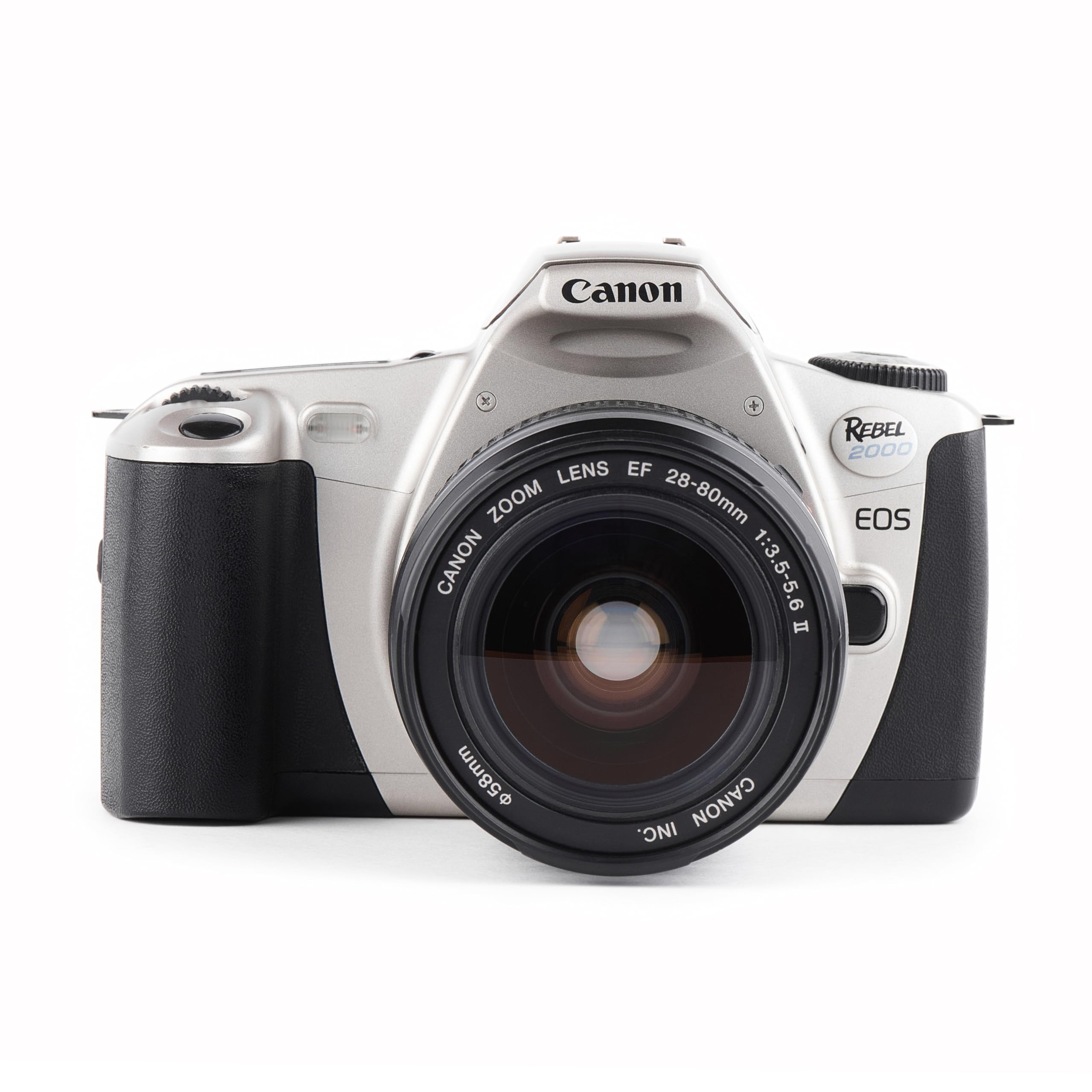
The Canon Rebel 2000 is a 35mm autofocus SLR that pairs a 28-80mm EF zoom lens with a 7-point AF system, automatic film transport, and multiple exposure modes. It’s designed to make film photography as straightforward as possible while still offering manual control when you want it. The built-in pop-up flash and automatic rewind simplify the entire workflow.
It supports Program AE, aperture priority, shutter priority, and full manual — covering everything from point-and-shoot convenience to creative control. The 28-80mm zoom range gives you wide-angle to short telephoto coverage in one lens. The auto loading and rewinding mean you never touch the film cassette during operation.
Customer reviews are very positive, with users calling it easy to use and capable of beautiful results. Some report receiving units in less-than-mint condition, so checking the seller’s return policy is wise. For someone who wants a film SLR without the learning curve of manual focus, the Rebel 2000 delivers consistent results.
Why it’s great
- Automatic film loading and rewind simplifies handling
- Multiple exposure modes suit beginners and enthusiasts
- 28-80mm zoom covers most everyday shooting needs
Good to know
- Condition varies — inspect immediately on arrival
- Autofocus speed is slower than modern DSLR
5. Kodak Ektar H35N Half Frame Film Camera

The Kodak Ektar H35N is a half-frame fixed-focus camera that punches well above its price point. The premium kit includes a built-in star filter for creative light effects, a coated glass lens that noticeably improves clarity over all-plastic competitors, and a bulb mode for long-exposure night shots. A tripod hole lets you stabilize the camera for those bulb exposures.
Because it’s half-frame, each 36-exposure roll gives you 72 photos — nearly doubling your shooting economy. The camera is focus-free from about 1 meter to infinity, so you just point, compose, and shoot. It runs on one AAA battery (not included) and accepts any standard 35mm film cartridge.
Users consistently highlight how beginner-friendly it is while still producing surprisingly good results, especially with higher-quality film stocks like Kodak Portra 400. The sliding open button can be accidentally activated in a pocket, and the fixed-focus limits close-up sharpness. For the absolute lowest barrier to entry into film, this is the best starting point.
Why it’s great
- 72 shots per roll drastically reduces per-frame cost
- Coated glass lens delivers sharper images than plastic-lens alternatives
- Bulb mode and star filter add creative options
Good to know
- Fixed focus means blurry results under 1 meter
- Sliding button may open accidentally in bags
6. Halina Tegra AF290 35mm Film Camera

The Halina Tegra AF290 is a compact autofocus point-and-shoot with a 28mm wide-angle lens and a built-in flash, designed for straightforward snapshot photography. It uses 2x AA batteries and features a contrast-detection autofocus system, making it easy to hand to anyone for instant shooting. The retro aesthetic and simple controls appeal to beginners wanting a classic film look.
The lens aperture ranges from F2.8 to F5.6, giving decent low-light performance at the wide end. The camera includes a manual and strap in the box. The plastic construction keeps weight low but feels less premium than metal-bodied alternatives.
Customer feedback is mixed — while some love the vintage vibe and simplicity, others report quality control issues like jammed dials or film transport problems. Checking individual seller reviews is critical before buying. For those willing to take a chance on a budget autofocus compact, it can deliver charming results when it works.
Why it’s great
- 28mm wide-angle lens captures more scene context
- Autofocus system simplifies shooting for beginners
- Retro design is visually appealing
Good to know
- Quality control varies — some units arrive with defects
- Plastic body feels less durable than competitors
7. Kodak PIXPRO FZ45 Digital Camera

The Kodak PIXPRO FZ45 is a 16MP digital point-and-shoot with a 4x optical zoom lens (27mm wide-angle equivalent) and 1080p video recording. It’s powered by two AA batteries and uses a 2.7-inch LCD screen for composition and review. The 16MP CMOS sensor delivers detailed shots in good light, and the 4x zoom gives framing flexibility that fixed-lens film cameras lack.
It supports class 10 SD/SDHC/SDXC cards up to 512GB, so storage is nearly unlimited. The built-in flash helps in low light, and the camera includes basic auto modes for casual shooting. The stock alkaline batteries are weak — users recommend rechargeable NiMH AAs for extended life.
Reviewers love it as an ultra-budget digital introduction, noting that with proper settings (taken from online tutorials), it can produce images reminiscent of higher-end digicams. The video quality is functional but not impressive, and the digital zoom degrades image quality significantly. For someone who wants a simple digital camera to learn composition before moving to film, this fits the bill.
Why it’s great
- 16MP sensor captures detailed everyday photos
- 4x optical zoom offers compositional flexibility
- AA battery power means easy replacement anywhere
Good to know
- Stock batteries are low quality — buy rechargeables
- Video quality is poor compared to modern phones
8. Panasonic LUMIX ZS99 Point and Shoot Camera

The Panasonic LUMIX ZS99 is a compact digital camera built around a Leica 24-720mm lens with 30x optical zoom, making it the ultimate travel companion for subjects far and wide. It records 4K video at 30p and 4K Photo bursts at 30fps, plus 120fps HD slow-motion. The 1,840k-dot tiltable touchscreen and USB-C charging add modern convenience.
Bluetooth 5.0 and a dedicated Send Image button make wireless transfer to your phone effortless. The 30x zoom range (with 60x Intelligent Zoom) pulls in distant details no fixed-lens film camera can match. Auto modes are beginner-friendly, while manual controls satisfy enthusiasts.
Users praise the image quality for its price tier and the incredible zoom range in a pocketable body. Some criticize autofocus speed in low light and a deep menu system. A few units shipped with non-US manuals, suggesting gray market stock. For travel photographers who need versatile zoom without carrying a DSLR, this is a strong digital choice.
Why it’s great
- 24-720mm Leica lens covers wide to extreme telephoto
- 4K video and photo burst capture action shots well
- USB-C charging and Bluetooth make travel seamless
Good to know
- Autofocus hunts in low light
- Menu system is deep and not always intuitive
9. Canon PowerShot SX740 HS Digital Camera Bundle
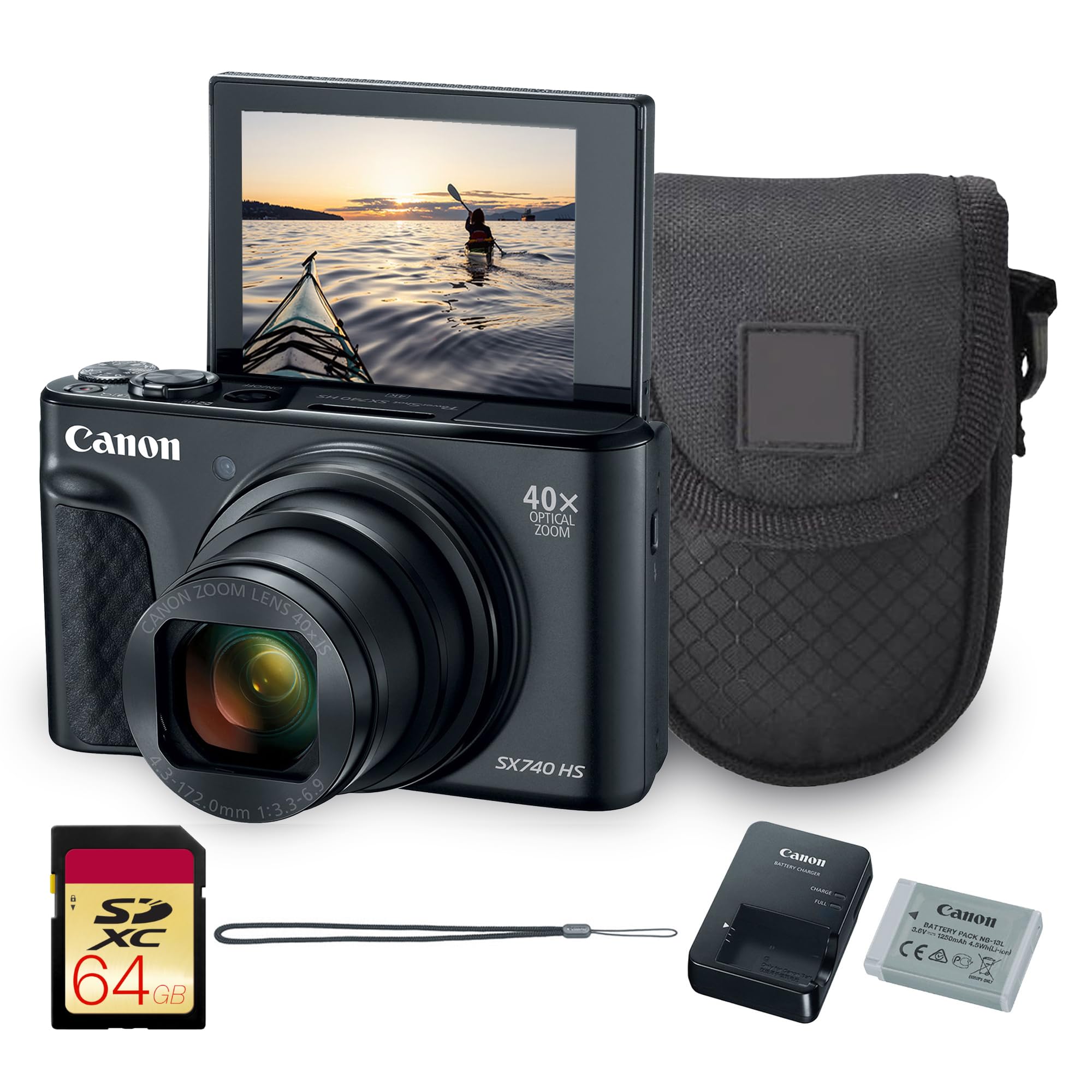
The Canon PowerShot SX740 HS is a 20.3MP compact digital camera with a massive 40x optical zoom lens (24-960mm equivalent) and 4K UHD video recording. This bundle includes a bag, 64GB memory card, battery, charger, and wrist strap — everything you need right out of the box. The DIGIC 8 processor enables fast operation and 5-axis image stabilization for handheld video.
The 40x zoom goes from wide-angle landscapes to distant wildlife effortlessly. Wi-Fi and Bluetooth built-in let you transfer photos to your phone via the Canon Camera Connect app. The 3-inch tiltable LCD screen flips up for selfies and vlogging, and the camera fits in a jacket pocket despite the powerful lens.
Users rave about the image quality, long battery life (some reporting 5 days of use without recharge), and ease of use. A few report the bundle includes an international model that can’t be registered on Canon’s US website. For someone who wants a zero-fuss digital zoom camera with excellent reach and good low-light performance, this bundle delivers.
Why it’s great
- 40x optical zoom covers 24-960mm — massive range
- 4K UHD video with 5-axis stabilization is smooth
- Bundle includes bag, memory card, and full accessories
Good to know
- Some units are international models — no US warranty
- No built-in flash included on this model
FAQ
What does half-frame mean on a 35mm camera?
Can I use modern batteries in vintage film cameras?
Which film stock works best for point-and-shoot cameras?
How do I test if a used film camera works before buying?
Final Thoughts: The Verdict
For most users, the best 35mm film point-and-shoot camera winner is the Pentax 17 because it combines modern production quality, a sharp HD-coated lens, and half-frame economy in a lightweight magnesium alloy body. If you want interchangeable lenses and full manual control, grab the Canon AE-1. And for an ultra-budget entry with creative extras, nothing beats the Kodak Ektar H35N.