
Our readers keep the lights on and my morning glass full of iced black tea. As an Amazon Associate, I earn from qualifying purchases.
Specs are compiled from manufacturer listings and verified buyer reviews and can change over time — please confirm the key details on the product page before buying.
A 35mm prime opens wider than a kit zoom, so it gathers more light, blurs backgrounds more, and resolves more detail. The catch is mount compatibility: a Nikon Z lens will not fit a Sony body, and a Fujifilm X lens will not fit either. Once the mount matches, choose between a fast f/1.4 for dim rooms and a compact f/2 for all-day carry. That is exactly what this guide sorts out for you.
I’m Min — the founder and writer behind Gadgets Feed. This guide is built by comparing the manufacturers’ published specifications and the patterns across verified customer reviews, so you get each pick’s real strengths and trade-offs instead of marketing spin.
I ranked these by mount system first, then by aperture and autofocus behavior, so you can find the right fit for your camera. Whether you shoot Sony, Fujifilm, Canon, Nikon, L-Mount, or an APS-C body, this breakdown of the best 35mm prime lens covers the details that matter most.
Our Picks at a Glance


How To Choose The Best 35mm Prime Lens
Buying a 35mm prime is not about finding the biggest number on a spec sheet. It is about matching three things to how you actually shoot: your camera’s mount, the aperture you need for the light you work in, and the size you are willing to carry.
Match the mount before anything else
A lens only fits the camera system it was built for. Sony E-mount lenses fit Sony mirrorless bodies, Fujifilm X lenses fit Fujifilm bodies, and Canon RF lenses fit Canon EOS R cameras. A Nikon Z lens will not mount on a Sony body, and no adapter turns a wrong-mount lens into a good everyday choice. Check your camera’s mount name in its menu or manual, then buy only within that system.
Decide between f/1.4, f/1.7, f/1.8, and f/2
The aperture number tells you how big the hole in the lens opens, and a smaller number means more light reaches the sensor. An f/1.4 lens gathers more light than an f/1.8, which helps in dim rooms and gives a softer, blurrier background behind your subject. The trade-off is weight and cost — wider apertures usually mean bigger glass. If you shoot mostly outdoors in daylight, an f/2 or f/1.8 is smaller, lighter, and still bright enough.
Autofocus: look at the motor, not the badge
Most modern 35mm primes use an STM stepping motor, which moves the glass smoothly and quietly for both photos and video. Some older designs focus slower and make audible clicking noises. If you shoot video, a silent motor keeps autofocus noise out of your recorded audio. If you shoot stills of moving kids or pets, focus speed matters more than a quiet motor.
Quick Comparison
| Model | Best For | Mount | Max Aperture | Weight | Amazon |
|---|---|---|---|---|---|
| Fujinon XF35mmF2 R WR★ Best Overall | Street and travel on Fujifilm bodies | Fujifilm X | f/2 | — | Amazon |
| VILTROX AF 35mm F1.7 Air EBest Value | Budget portraits on Sony APS-C | Sony E | f/1.7 | 180 g | Amazon |
| Tamron 35mm f/2.8 Di III OSD M1:2Macro-Ready Pick | Macro and landscape on Sony full frame | Sony E | f/2.8 | 7.4 ounces | Amazon |
| Brightin Star AF 35mm F1.8 | Concert and low-light stills on Sony | Sony E | f/1.8 | — | Amazon |
| VILTROX 35mm F1.8 II EVO FE APO | Everyday shooting on Sony full frame | Sony E / Sony FE | f/1.8 | 0.33 kg | Amazon |
| Canon RF 35mm F1.8 IS Macro STM | Hybrid photo and video on Canon EOS R | Canon RF | f/1.8 | 0.3 kg | Amazon |
| Panasonic LUMIX S 35mm F1.8 | Video work on L-Mount bodies | L-Mount | f/1.8 | 10.4 ounces | Amazon |
| Fujifilm XF35mmF1.4 R | Film-look portraits on Fujifilm bodies | Fujifilm X | f/1.4 | 187 g | Amazon |
| Nikon NIKKOR Z 35mm f/1.8 S | Group portraits and events on Nikon Z | Nikon Z | f/1.8 | — | Amazon |
| Sigma 35mm F1.4 DG DN Art | Pushed-quality stills on Sony E | Sony E | f/1.4 | 454 g | Amazon |
| Sony FE 35mm f/1.4 GM | Top-tier stills and video on Sony E | Sony E | f/1.4 | 1.2 pounds | Amazon |
In‑Depth Reviews
1. Fujinon XF35mmF2 R WR — Black
Our pick — over 4.5★ from 800+ verified ratings; the strongest balance of quality and price.
The compact Fujifilm prime that keeps shooting when the rain starts.
If you shoot Fujifilm and want one lens that lives on the camera, this is the crowd favorite — 4.8 stars across 800+ owners. Its weather-resistant build uses 8 sealing points, so rain and dust stay out of the barrel on a walkabout shoot. It works down to 14 degrees, which is the cold morning or ski-trip scenario where cheaper lenses seize up.
Sharpness is the headline. Images stay crisp wide open at f/2, and the inner focus system drives autofocus at 0.08 seconds with nearly silent operation — so candid street frames and video clips both come out clean. A Nano-GI coating reduces ghosting and flare when you shoot toward a light source, and the 9-blade aperture creates smooth, circular background blur.
Close work is genuinely capable too: a minimum working distance of about 13 inches and 0.17x magnification let you get in tight on small details. The one honest trade-off is field of view. At 44.2 degrees the 35mm reads as a 53mm equivalent on Fujifilm’s APS-C bodies, which is lovely for street and documentary but likely too tight for wide landscape frames. Weigh the weather sealing against the Fujifilm f/1.4 below — the f/1.4 opens wider for low light, while this lens focuses faster and keeps water out.
What earns it the top spot
- Weather-resistant design with 8 sealing points handles rain and dust
- 0.08-second autofocus is fast and nearly silent
- Sharp images with pleasing circular bokeh from the 9-blade aperture
- Nano-GI coating cuts ghosting and flare
- Reliable down to 14 degrees for cold-weather shooting
Where it asks something back
- 53mm equivalent framing may feel tight for landscape work
- No image stabilization built in, so slow handheld shots rely on steady technique
- The f/2 aperture gathers less light than the f/1.4 options in this list
Made for you if: you want one compact, weather-sealed Fujifilm lens that handles street, travel, and documentary without slowing you down.
Think twice if: you need the widest possible framing or the brightest aperture for very dim venues.
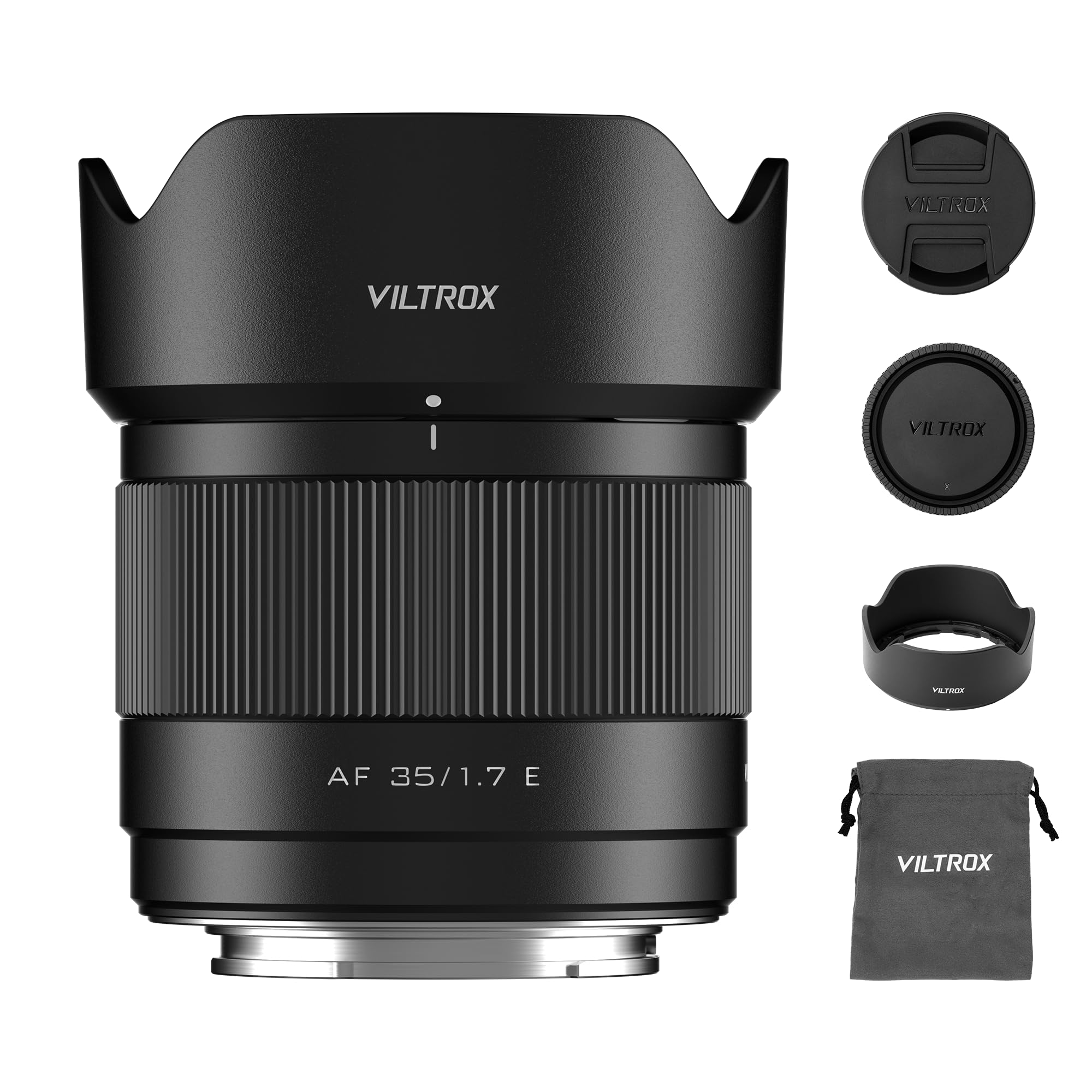
2. VILTROX AF 35mm F1.7 Air E Lens
A pocket-size Sony prime that fights above its weight in low light.
For Sony APS-C shooters who want just one lens to start with, this one is the standout on value — and it is the sharpest proof of that in this whole list. It opens to f/1.7, which is a wider gap in light-gathering than the Tamron 35mm f/2.8 below, since f/1.7 versus f/2.8 is a 65% larger aperture. That extra light is what lets you keep shooting handheld at dusk instead of packing up.
The build is a genuine surprise at this tier. It uses 11 elements in 9 groups — including 1 ED (extra-low dispersion), 1 aspherical, and 2 high-refractive-index lenses — so chromatic aberration stays controlled while the whole lens weighs just 180 grams. That is light enough to hang on a wrist strap all afternoon. A noiseless STM focus motor handles face and eye detection quietly, which matters when you are recording video, and the 9 aperture blades produce clean, round light spots behind your subject.
Buyers are blunt about the value: it holds its own against glass that costs far more, and as owners put it, one called it “as good as Samyang 85mm f/1.4 for less.” The honest catch is subtle autofocus noise — you can catch a faint hum if you listen carefully, though most people never notice it. It also skips image stabilization, so video stabilization rides entirely on your camera body. If your priority is the lowest entry point into a bright, sharp Sony prime, this is the one to reach for.
Value vs. the field: at f/1.7, this 180-gram lens asks far less than the full-frame Sony primes for a comparable low-light payoff.
The fine print: no image stabilization and slightly audible AF during video — plan on in-body stabilization or a gimbal for shake-free footage.
Reach for this if: you are on Sony APS-C and want bright-aperture portraits and street shots without stretching your setup.
Look elsewhere if: you need razor-quiet autofocus for professional video or image stabilization inside the lens.
3. Tamron 35mm f/2.8 Di III OSD M1:2
A travel prime that also shoots half-size macro, at 7.4 ounces flat.
When you want a 35mm for Sony full frame that does double duty, this is the argument for it: you get the standard 35mm framing and a 1:2 macro (close-up) mode in the same metal barrel. That means the same lens that shoots a street scene can also pull in a flower or a coffee-cup detail, which is exactly the range a travel shooter packs for. It weighs 7.4 ounces, light enough to leave mounted all day without feeling it on your neck.
Image quality is the reason to keep it. Buyers rave about smooth bokeh at every aperture, crisp shots free of chromatic aberration, and a compact build with moisture-resistant construction that shrugs off damp weather.
Here is the honest trade-off, and it is the one most-discussed point in the reviews: the autofocus is old-school. It is slow, it hunts in low contrast, and the focus motor makes audible clicking noises. For landscapes and stationary subjects that is a non-issue — you focus once and shoot. For moving subjects it can frustrate. Manual focus is a fine workaround for the patient shooter. Buy it for the images and the macro reach, not for lightning autofocus.
Why photographers keep it
- 1:2 macro mode adds real close-up capability beyond a normal prime
- Sharp, aberration-free images with smooth bokeh at all apertures
- Just 7.4 ounces, so it disappears in a travel bag
- Moisture-resistant construction for wet-weather use
The honest trade-off
- Autofocus is slow and hunts in low light — fine for stills, awkward for action
- Audible clicking from the focus motor, which rules out quiet video use
- f/2.8 is dimmer than the f/1.8 and f/1.4 options here
Your pick if: you want a light Sony travel lens that also shoots macro, and your subjects tend to hold still.
Skip the upgrade if: you shoot fast-moving subjects and need snappy, silent autofocus above all.
4. Brightin Star AF 35mm F1.8 for Sony E-Mount
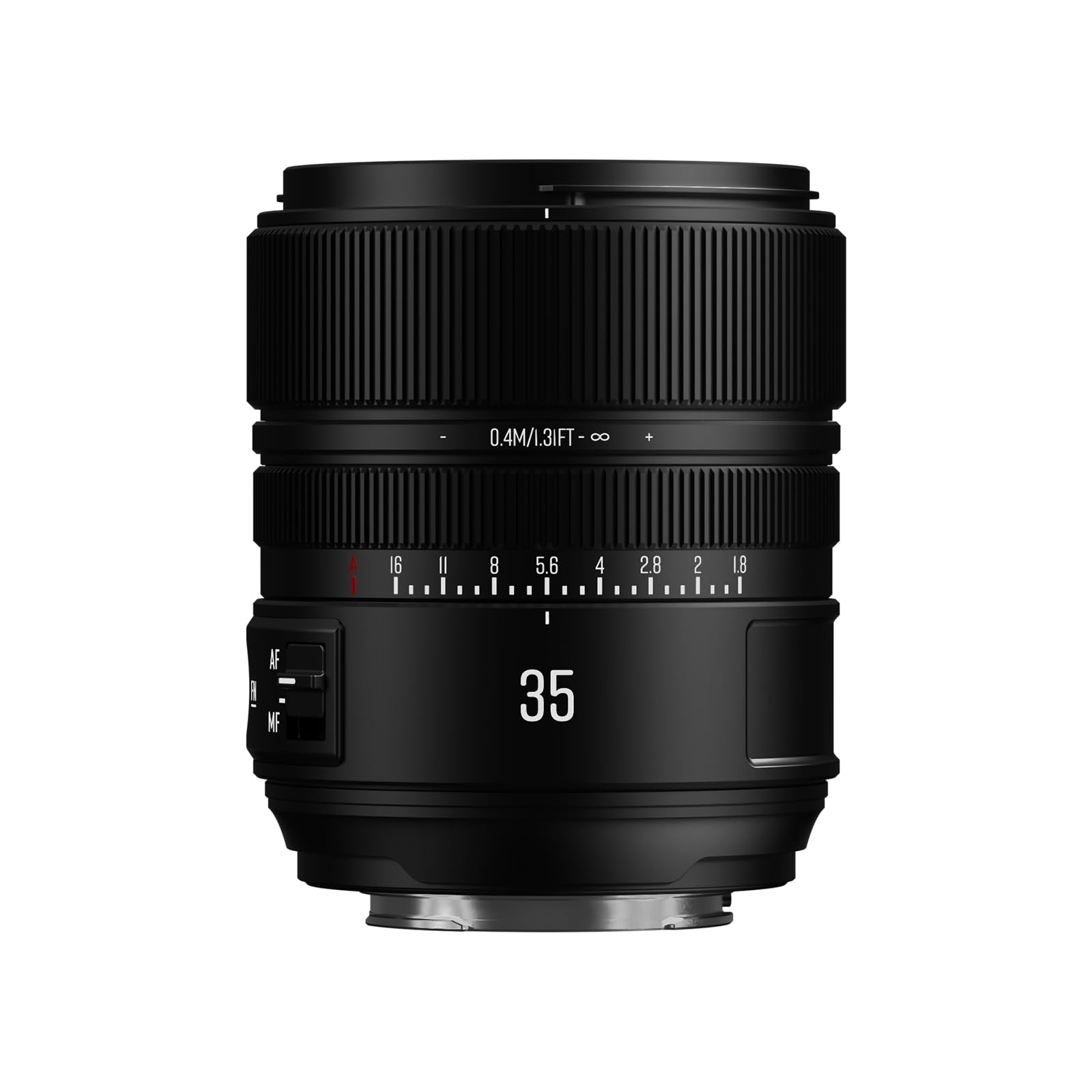
A concert-shooter’s ally, built to pull detail out of dim venues.
If your shooting happens after dark — gigs, events, night streets — this Sony E-mount prime earns its place. The headline is the f/1.8 aperture paired with a clean, uncluttered background: the out-of-focus area sits in a soft, natural blur so your subject stands forward. That is precisely what a low-light frame needs when the ambient light is thin.
The autofocus carries real weight for video and stills alike. An STM silent stepper motor drives high-speed, smooth, low-noise focusing that beginners can trust to lock on. The optical formula backs it up with 11 elements in 8 groups, including 2 aspherical lenses, 2 high-refractive-index lenses, and 1 ED low-dispersion lens — the combination that keeps edges crisp and color clean even when you shoot wide open. There is also strong control of focus breathing, so refocusing mid-video does not jump the framing.
Concert and low-light photographers make the strongest case for it, capturing usable detail where slower glass would leave them with mush. It is also versatile enough to work on both full-frame and crop-sensor Sony bodies, so it survives a camera upgrade. The honest limitation is that it is not a compact lens — it is larger and heavier than a slim street prime, so it behaves more like a working tool than a pocket carry. If dim venues are your home turf, that weight is a fair trade.
Where it shines: the f/1.8 aperture and 1 ED lens element combine to hold color and detail in dark rooms.
Keep in mind: it is bigger and heavier than a slim street prime, and it needs a stabilized camera body for handheld video.
The right call for: concert, event, and night photographers who need a fast aperture and reliable quiet focus.
Not the one for: minimalists who want the lightest possible lens to slip in a jacket pocket.
5. VILTROX 35mm F1.8 II EVO FE APO Lens
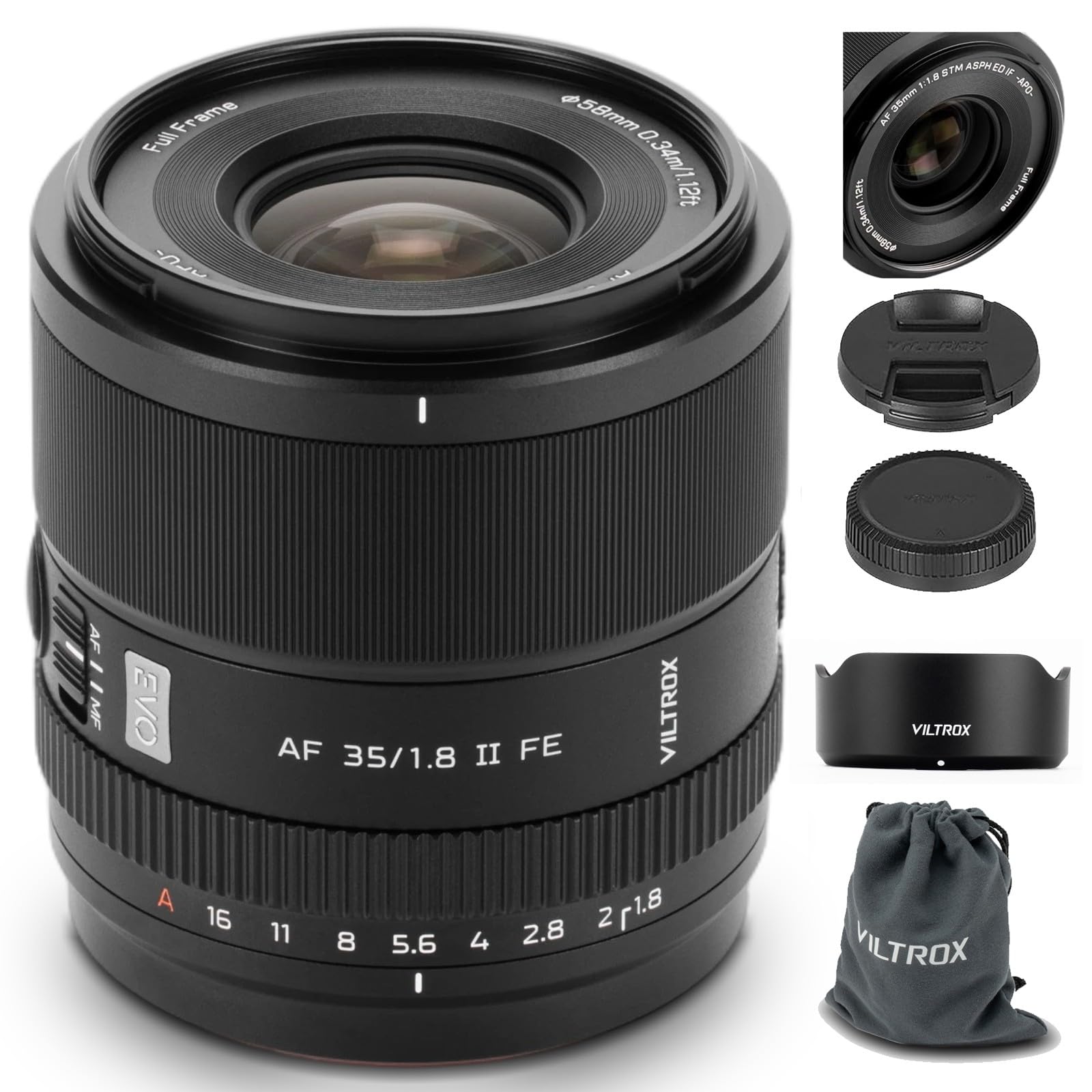
A full-frame Sony prime with real handling controls and sharp color.
Full-frame Sony shooters who want a do-everything 35mm get a genuinely competitive option here. It weighs 0.33 kg, light enough to leave on the body for a whole walking day. The f/1.8 aperture handles low light, and with a 0.34m minimum focusing distance you can get in close on small subjects without switching lenses — the everyday-versus-detail flexibility a one-lens kit needs.
The optics lean on an advanced APO design — 13 elements in 10 groups, including 2 ED, 3 HR, and 1 UA element — which is the formula that keeps color pure and detail sharp corner to corner. An STM stepping motor drives fast, accurate autofocus that responds instantly, so playful pets and moving street subjects stay in focus. What makes it a pleasure to shoot is the handling: dedicated physical controls including an Fn button, a CLICK switch, and an AF/MF switch put the settings you change most right under your thumb.
The one point to weigh is bokeh consistency. The background blur is a mixed bag in owner feedback — some love the separation it creates, while others note distortion in certain scenes. It is not a lens you buy purely for dreamy blur; you buy it for sharpness, color purity, and hands-on control. If a creamy, character-heavy background is your top priority, the Sigma or Sony primes further down this list lean that way. For balanced everyday output, this is a strong, well-built choice.
What stands out
- 13-element APO design drives sharp detail and pure color
- Physical Fn button, CLICK switch, and AF/MF switch for hands-on control
- 0.34m close focusing for near-detail shots
- 0.33 kg body for all-day carry
Where it splits opinion
- Bokeh gets mixed reactions — some see distortion rather than smooth blur
- No image stabilization, so video relies on your camera’s steadying
- Not the character-first choice if dreamy background blur is your goal
Ideal if: you shoot Sony full frame and want sharp color with tactile controls you can feel without looking.
Pass if: you are chasing the softest, most distinctive bokeh in every frame.
6. Canon RF 35mm F1.8 IS Macro STM Lens

One Canon RF lens that handles a full wedding day without a tripod.
Canon EOS R shooters who move between photo and video get the most useful single lens here. Optical image stabilization delivers up to 5 stops of shake correction, which means you can shoot handheld in dim rooms and after dark without blurring the frame — the difference between a clean reception shot and a smeared one. The 0.3 kg body stays light on a shoulder strap through a long event.
The macro side is what surprises people. With 0.5x magnification and a minimum focusing distance of 0.17M, you can pull in tight on rings, flowers, or product details on the same lens you shoot portraits with. A control ring lets you set exposure directly from the barrel, and an STM motor keeps autofocus smooth for video. Buyers describe it as super sharp and delightfully light, and it works across lighting conditions without fuss.
Owners who spend all day with a heavy 70-200 then swap to this for the receptions rave about the relief — it is the lightweight lens that keeps the night going. The honest note is that f/1.8 is bright but not as bright as the f/1.4 options further down this list, so in truly dark venues the Sigma and Sony primes pull ahead on light. For most Canon shooters, though, that stabilization plus macro reach beats a faster aperture you rarely use.
Why it works so hard: 5 stops of stabilization plus 0.5x macro in one 0.3 kg lens covers both close details and dim, handheld rooms.
One spec to weigh: f/1.8 gives up some light to the f/1.4 primes if you shoot in near-darkness often.
Best matched to: Canon EOS R shooters who want one stabilized lens for events, video, and close-ups.
Second-guess it if: your work lives in very dark venues and you need the widest aperture available.
7. Panasonic LUMIX S 35mm F1.8 (S-S35)

A lightweight L-Mount prime tuned for clean, stable-looking footage.
L-Mount shooters get a lens tailored to video here. It keeps focus breathing to a minimum, so when the lens refocuses mid-clip the framing does not visibly breathe in and out — a detail documentary and interview shooters feel immediately. Aperture control stays smooth across the range, which keeps exposure shifts gentle rather than jumpy.
The physical package is built for field use. At 10.4 ounces it is easy to carry all day, and the dust, splash, and freeze-resistant design stands up to harsh conditions — cold mornings and dusty locations are fair game. The 0.24 m minimum focusing distance lets you close in on details, and the programmable focus throw lets you set the manual focus ring to sweep from infinite to close focus exactly how you like it.
On imagery, owners call the output near clinically perfect with great full-frame bokeh, though a few note it trades away some character for that precision — a clean, modern look rather than a vintage one. There is no built-in stabilization, which the brand treats as unnecessary given body stabilization on the S5 series. Video-first shooters who want reliability over personality will feel at home behind it.
Built for footage
- Minimal focus breathing keeps framing steady during video refocus
- Dust, splash, and freeze-resistant design for harsh conditions
- Light 10.4-ounce body for all-day carry and gimbal use
- Programmable focus throw for custom manual-focus feel
Worth knowing
- No built-in stabilization, so relies on the camera body
- Some find the rendering more clinical than characterful
- Fujifilm and Sony have far wider lens ecosystems around this focal length
Suits you if: you shoot video on a Panasonic L-Mount body and want controlled, clean, breath-free footage.
Reconsider if: you prize a vintage, character-rich rendering over near-perfect precision.
8. Fujifilm XF35mmF1.4 R
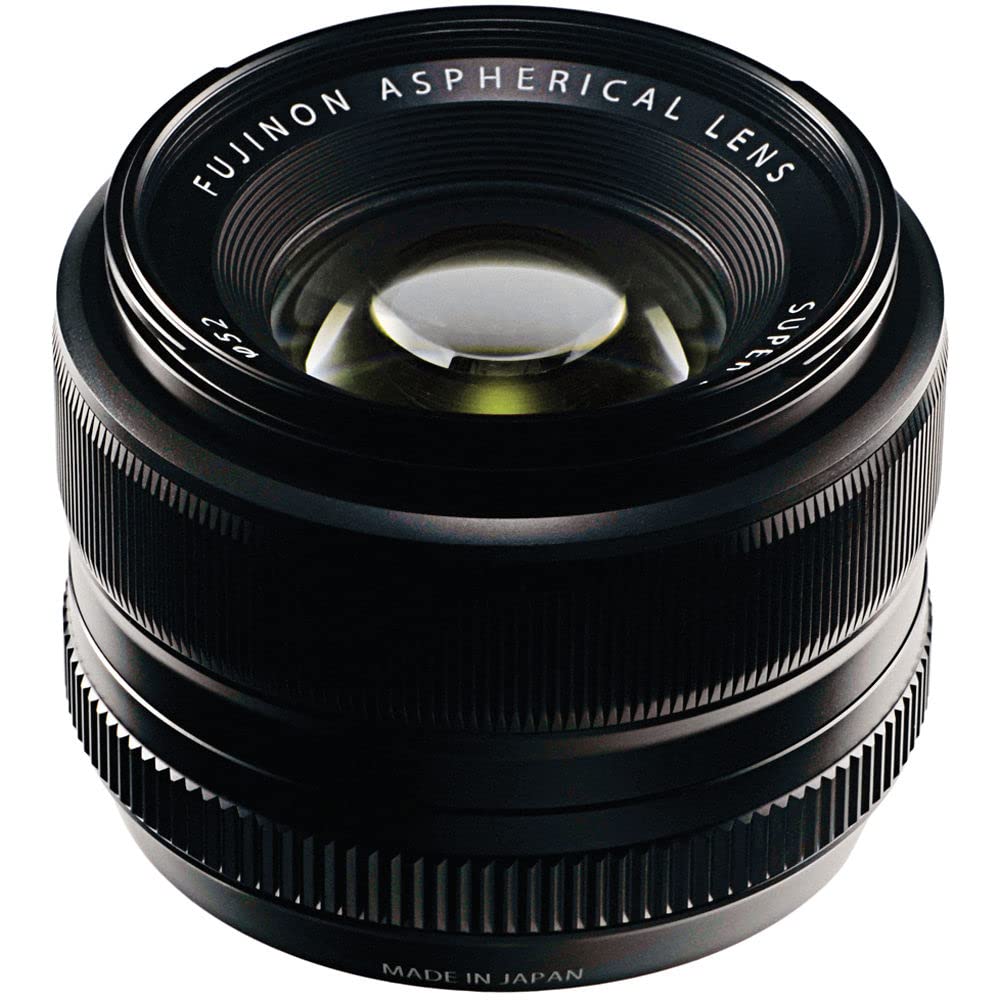
The Fujifilm prime that renders faces like a favorite film stock.
Fujifilm shooters who chase a film-style look keep coming back to this lens, and it shows in what wins people over: image quality and its circular bokeh. The f/1.4 aperture is the reason — it gathers enough light to keep shooting in dim scenes while pouring on background blur. Sharpness holds from the center of the frame to the corners, so detail does not fall apart at the edges.
The rendering is where it earns its reputation. The focus rolls off smoothly, colors and contrast pop, and chromatic aberration is effectively absent, giving portraits that soft, old-school character the modern clinical lenses skip. At just 187 grams it is light enough to leave on the body, and the 8-element, 6-group design includes one aspherical element to keep things sharp. Frame angle comes in at 44.2 degrees — the natural, eye-like perspective portraits and street scenes love.
Now the honest part, and it is the most-discussed point in owner feedback: the focus is a mixed bag. Some find it quick enough for street work, while others note it is slower and noisier than the compact f/2 version above, and it skips weather sealing entirely. If you shoot fast action in the rain, the f/2 is the safer call. If you want the film look and shoot deliberately, this one is the reason Fujifilm shooters build whole kits around a single lens.
The heart of it: the f/1.4 aperture and 8-element design deliver smooth focus falloff and popping color that reads unmistakably film-like.
The trade-off: focus speed divides owners and there is no weather sealing, so damp conditions and fast subjects are the weak spots.
The pick for you if: you shoot portraits and street on Fujifilm and want that soft, characterful film rendering.
Choose the f/2 instead if: you need faster, quieter focus and weather resistance for outdoor work.
9. Nikon NIKKOR Z 35mm f/1.8 S
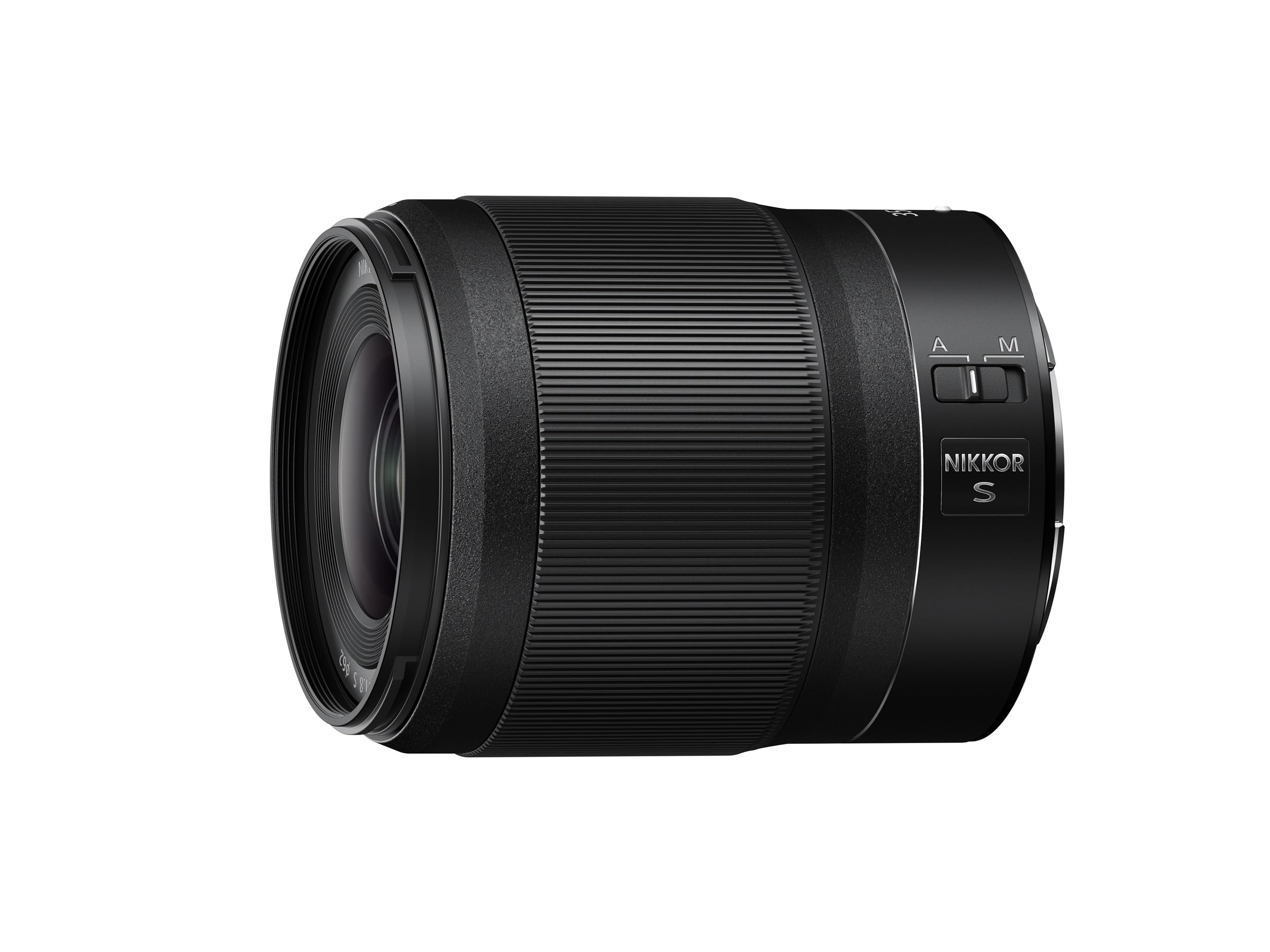
A Z-mount prime that keeps corners as sharp as the center.
Nikon Z shooters who shoot group portraits at events get a dependable workhorse here. The f/1.8 aperture delivers what Nikon calls uncanny performance — extreme sharpness from the center of the frame all the way out to the edges, so the people on the far sides of a group shot stay as crisp as the one in the middle. That edge-to-edge consistency is the whole point of buying into the S-series of lenses.
Handling does what event shooters need. A new ultra-quiet stepping motor drives silent focusing, so nothing rattles or clicks when you are working close to subjects. Combined with the offset background blur and strong low-light performance, it lets you keep shooting natural light instead of relying on a flash. It also supports 5-axis dual-detect optical VR through the Z camera body, which steadies both stills and handheld video. Versatility carries over to subjects beyond people — it works well for tight indoor spaces like museums and botanical gardens.
The honest note here is fit, not quality. Focus performance gets mixed reactions — some find it fast, others describe it as sluggish in certain conditions. And on full frame, 35mm reads as fairly wide, which one owner wished they had traded for a 50mm. If your work is group photos and environmental portraits where you want breathing room around subjects, that width is an asset. If you want a tighter, more intimate framing, look at the 50mm instead.
Why event shooters lean in
- Extreme edge-to-edge sharpness keeps group shots even across the frame
- Ultra-quiet stepping motor for silent focusing near subjects
- 5-axis dual-detect optical VR via the Z camera body
- Strong low-light performance with dreamy background blur
The fit to consider
- Focus speed draws mixed feedback in some conditions
- 35mm is wide on full frame — some prefer the 50mm for tighter framing
- No lens-body image stabilization built in, so it depends on the camera
Built for: Nikon Z shooters doing group portraits, events, and environmental work where sharpness across the frame matters.
Consider a 50mm if: you want tighter, more intimate framing than 35mm gives on full frame.
10. Sigma 35mm F1.4 DG DN Art for Sony E

An Art-series 35mm that brings f/1.4 brightness and dagger-sharp detail.
Sony shooters who want top-tier image quality without the flagship price tag land here. The f/1.4 aperture gathers serious light for dim conditions, and edge-to-edge sharpness holds up across the frame — owners describe it performing as well as the far pricier Sony 35mm GM. Weigh it against the faster GM below and the story is close: the GM brings 1.2 pounds of flagship glass, while this Art sits at 454 grams and delivers comparable sharpness for less.
Autofocus is quick and confident, so it is difficult to catch a blurry frame when your settings are right. Low light is where the wide brim pays off, snapping detailed photos in dim rooms with great color and minimal distortion. The build is compact and durable, light enough for long sessions without tiring your arm — the reason it earns a place as a regular working lens rather than an occasional one.
The trade-off you should know is weight, and it is the one recurring note across owner feedback — the lens is somewhat heavy for its size, and it is heavier than the compact f/1.8 primes above it in this list. There is also a real-world caution: at least one buyer received the wrong lens model from a third-party seller, so check the box and contents carefully on arrival. Buy it for the optics and the f/1.4 brightness, and accept the heft as the price of that glass.
The appeal: f/1.4 brightness with edge-to-edge sharpness that rivals the top-tier Sony prime, plus fast, precise autofocus.
Plan for it: it carries real weight and the lens gets somewhat heavy in hand over a long shoot — a working-tool compromise for the optics.
The one for you if: you want f/1.4 quality and near-flagship sharpness on Sony E without paying flagship prices.
Look at the lighter primes if: your priority is a featherweight lens you barely feel on the body.
11. Sony FE 35mm f/1.4 GM

The flagship 35mm that nails focus almost every time you press the shutter.
For Sony shooters who want the best and will pay for it, this is the top of the stack. The f/1.4 aperture delivers extraordinary brightness and a shallow depth of field, so you get that cinematic separation between subject and background. Two XA extreme aspheric elements push resolution hard, and an ED low-dispersion element reduces chromatic aberration, keeping color crisp through the frame. On sharpness it edges past the Sigma Art — this is the reference 35mm for Sony full frame.
Autofocus is where it separates itself from everything else here. Buyers report it nails focus nearly every time, and the speed is described as blazing — the difference between catching a decisive moment and missing it. At 1.2 pounds it is a compact, well-balanced lens despite the fast aperture, light enough to carry on hikes for landscape shots and steady enough for portraits. It also supports first-party Sony breathing compensation, so video focus shifts stay smooth on body-stabilized cameras.
The uses stack up broadly: street, landscape, portrait, and video all suit it, and many owners barely take it off the camera. A fluorine front element coating and a dust- and moisture-resistant build mean it handles the outdoors, while the Nano AR Coating II suppresses reflections, flare, and ghosting when you shoot toward the sun. The one honest consideration is weight — 1.2 pounds is not light for a prime, and owners mention it as a heftier carry than compact alternatives above. For image quality and focus reliability, that is the fair cost of admission.
What you carry: 1.2 pounds of premium glass — heavier than the compact primes in this list, so it is a deliberate carry rather than a featherweight.
The flagship choice when: your priority is the sharpest, most focus-reliable 35mm for Sony full frame across stills and video.
Weigh the heft first if: you want an ultra-light everyday lens and rarely shoot wide open.
Understanding the Specs
Max Aperture (f-number)
The aperture is the adjustable hole inside the lens that light passes through, and the f-number measures how wide it opens. A smaller number means a bigger hole, so an f/1.4 lens lets in more light than an f/1.8, which shows up as brighter low-light shots and a softer, blurrier background behind your subject. That wider hole is also why f/1.4 lenses tend to be larger and heavier than f/2 versions. If you rarely shoot in dim rooms, an f/2 aperture keeps the lens lighter and easier to carry.
Mount and Focal Length Equivalence
The lens mount is the physical bayonet that connects the lens to your camera body, and it must match your system exactly — a Nikon Z lens will not mount on a Sony body, and a Canon RF lens fits only Canon EOS R cameras. Focal length equivalence is the second key number: on a crop-sensor (APS-C) body, a 35mm lens frames like a longer lens because the smaller sensor crops the view. On Fujifilm and Sony APS-C bodies that means 35mm renders around 53mm, a natural, eye-like perspective rather than a wide one. On full frame, 35mm stays genuinely wide.
Autofocus Motor and Noise
Autofocus is driven by a small motor inside the lens that shifts the glass to lock focus. Modern STM stepping motors move that glass smoothly and quietly, which keeps both stills and video clean — you never hear the lens hunting on your recorded audio. Older motor designs can be slower and audible, producing the clicking and whirring some owners describe. If you shoot video or work close to people, prioritize a silent STM motor; for stills of stationary subjects, a slower autofocus is fine.
Weight, Size, and Weather Sealing
Weight decides how long you can comfortably carry the lens, and it swings a lot across this category — from around 180 grams up to 1.2 pounds, which is the difference between a lens that disappears in a jacket pocket and one you notice on your shoulder by the end of a long day. Weather sealing is a set of gaskets that keep rain and dust out of the lens barrel, so a weather-resistant design lets you keep shooting in light rain where an unsealed lens would send you packing. If most of your shooting is indoors or in dry weather, sealing matters less; if you shoot outdoors in all seasons, it is worth prioritizing.
FAQ
Will a 35mm prime lens fit my camera body?
Is f/1.4 better than f/1.8 for a 35mm prime?
What does 35mm look like on a crop-sensor camera?
How much does lens weight matter for a 35mm prime?
Do I need image stabilization in a 35mm prime lens?
Can a 35mm prime shoot close-up macro photos?
Which autofocus type is quiet enough for video?
Does a more expensive 35mm prime make better photos?
What does the aperture blade count change in a photo?
Do I need weather sealing on a 35mm prime?
Final Thoughts: The Verdict
For most Fujifilm shooters, the 35mm prime lens winner is the Fujinon XF35mmF2 R WR because its weather-resistant build, 0.08-second autofocus, and sharp f/2 images make it the lens that simply stays on the camera in any weather. If you want a bright, lightweight Sony prime at the lowest entry point, grab the VILTROX AF 35mm F1.7 Air E — its f/1.7 aperture and 180-gram body make it a fierce value. And for the sharpest, most focus-reliable Sony full-frame glass, the Sony FE 35mm f/1.4 GM is the one to reach for, with its XA elements and dust- and moisture-resistant build. Match the mount first, then let your light and your carry change the answer.
How We Picked
We do not accept paid placement. Every pick is matched to a real buyer and a real use-case; we do not hands-on test units.
Sources & Methodology
Specifications: manufacturer listings and product documentation. Review insights: verified customer reviews, as of September 2026. Pricing: not shown on this page (it changes often); check the current price via the retailer link.
As an Amazon Associate, Gadgets Feed earns from qualifying purchases. This does not affect which products we feature.