
The mechanical click of a mirror slap, the tactile weight of a metal body, and the deliberate act of advancing film frame by frame — that’s the experience of shooting with a 35mm SLR. In a world of disposable digital cameras, these analog workhorses demand you learn exposure, composition, and patience. Whether you are a student overcoming your first darkroom class or a professional returning to roots, the right body and lens define every roll you shoot.
I’m Min — the co-founder and writer behind Gadgets Feed. I have spent hundreds of hours cross-referencing shutter accuracy, metering reliability, and lens mount compatibility across vintage and renewed 35mm SLR bodies to build a guide that separates functional classics from decorative paperweights.
After dissecting specifications and poring over real user roll tests, this guide breaks down the nine highest-rated options to help you find the best 35mm slr camera for your budget and skill level.
How To Choose The Best 35mm SLR Camera
Selecting a 35mm SLR is different from buying a modern digital camera. The body is a mechanical platform, and the lens is the real brain. Beginners often over-prioritize looks over function — a pristine chrome finish means nothing if the foam light seals have turned to dust. Focus on three pillars: your willingness to shoot fully manual, the lens ecosystem you want to grow into, and the condition of the light meter and shutter.
Manual vs Auto-Exposure Priority
Full-manual bodies like the Pentax K1000 or Vivitar V3800N let you set aperture and shutter speed independently — every shot is a learning opportunity, and many work without batteries (except the meter). Auto-exposure SLRs like the Canon Rebel 2000 give you program, aperture, and shutter priority modes, which speed up shooting when chasing moving subjects but add electronic complexity that can fail decades later. Match the body to your tolerance for thinking through every exposure.
Lens Mount and Glass Compatibility
The lens mount is your camera’s long-term commitment. Canon FD mounts (AE-1) are native to classic Canon glass but don’t adapt easily to modern EOS bodies. Pentax K-mount (K1000, Vivitar V3800N) offers deep compatibility with decades of third-party and Pentax lenses. Canon EF mount (Rebel 2000, Rebel G) unlocks the same autofocus glass used on early digital SLRs, giving you cheap, high-quality used lenses. Decide which ecosystem fits your future lens shopping.
Light Meter Reliability and Battery Dependency
A dead light meter turns a premium body into a guessing game. Mechanical bodies like the Pentax K1000 use a simple CDS meter powered by a single LR44 battery — easy to replace and accurate for years. Electronic bodies like the Canon Rebel series require two CR123A or lithium cells; if the battery dies mid-roll, the shutter locks up. Inspect renewed listings for “meter tested” or “mirror in good condition” in the reviews, as these are the most common failure points.
Quick Comparison
On smaller screens, swipe sideways to see the full table.
| Model | Category | Best For | Key Spec | Amazon |
|---|---|---|---|---|
| Nikon D850 | DSLR | Digital-Like Film Experience | 45.7MP FX BSI Sensor | Amazon |
| Nikon D5 | DSLR | Sports & Low-Light Pro | 153-Point AF, ISO 102400 | Amazon |
| Pentax 17 | Half-Frame | 72 Shots Per Roll | 25mm f/3.5 HD Coated | Amazon |
| Canon AE-1 | Vintage SLR | Classic Manual Control | TTL Meter, FD Mount | Amazon |
| Pentax K1000 | Manual SLR | Battery-Free Reliability | 50mm f/2 Prime, K-Mount | Amazon |
| Vivitar V3800N | Manual SLR | Budget K-Mount Workhorse | 28-70mm f/3.4-4.8 Lens | Amazon |
| Canon Rebel 2000 | Auto SLR | Beginner Autofocus | 7-Point AF, 28-80mm Lens | Amazon |
| Canon Rebel G | Auto SLR | Reliable Autofocus Body | ISO 100-3200, 35-80mm | Amazon |
| KODAK Snapic A1 | Compact 35mm | Pocket-Sized Entry Level | 3-Element Glass, 2-Zone Focus | Amazon |
In‑Depth Reviews
1. Nikon D850 DSLR Camera Bundle
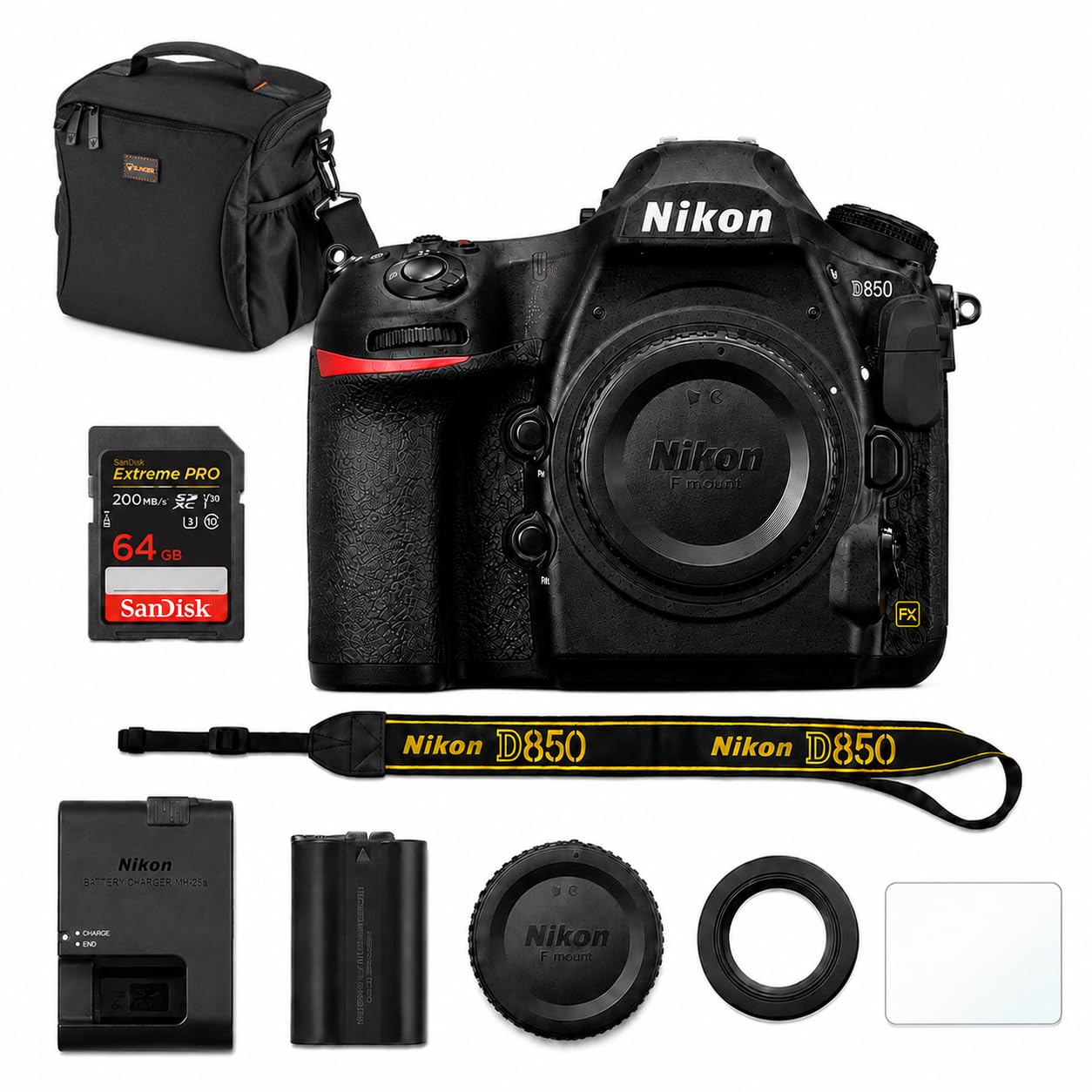
The Nikon D850 packs a 45.7MP full-frame BSI CMOS sensor paired with the EXPEED 5 processor, delivering exceptional dynamic range and low-noise performance that rival modern mirrorless cameras. Its Multi-CAM 20K 153-point autofocus system locks onto subjects reliably even at f/8, making it a powerhouse for sports, wildlife, and event photography. The 7 fps burst (9 fps with the optional grip) ensures you never miss a decisive moment.
Beyond stills, the D850 records 4K UHD video at 30p and can create stunning 8K time-lapse movies using the built-in Focus Shift Mode. The 3.2-inch 2.36m-dot tilting touchscreen LCD makes navigating menus and reviewing shots effortless, even in bright sunlight. This bundle includes the camera body, battery, charger, strap, a 64GB SanDisk Extreme PRO SD card, a Slinger bag, and a screen protector — saving you the hassle of sourcing accessories separately.
Real users consistently rate the image quality as “exceptional for stills” and praise the autofocus performance in low light. The only recurring note is the camera’s size and weight — it is a large DSLR body, so expect a heftier carry compared to smaller film SLRs. For those who want a digital SLR that bridges the gap between analog feel and modern technology, this is the definitive choice.
Why it’s great
- Exceptional 45.7MP resolution with rich color and dynamic range
- Highly responsive 153-point AF system with f/8 support
- Includes high-value accessories (64GB card, bag, screen protector)
Good to know
- Large and heavy body compared to film SLRs
- Included SD card is UHS-I, not the fastest for 4K video work
2. Nikon D5 20.8 MP FX-Format DSLR (CF Version)

The Nikon D5 is built for professionals who need to shoot in the worst light. Its native ISO 102400 sensitivity extends to an insane ISO 3280000, allowing clean handheld shots in near darkness. The 20.8MP FX-format CMOS sensor paired with the EXPEED 5 processor delivers excellent low-light JPEGs and RAW files that preserve detail where other cameras would produce noise.
The 153-point Multi-CAM 20K autofocus system is the fastest Nikon had produced at launch, with Group Area AF and 180k-pixel RGB metering that tracks erratic subjects with surgical precision. The D5 shoots 12 fps for up to 200 consecutive shots with full AE and AF, making it a beast for sports, press, and wildlife photographers who need to capture the exact split-second.
Users consistently call it “built like a tank” and praise the 4K UHD video quality at 30 fps. The ergonomics are refined — the relocated ISO button and redesigned grip make day-long shooting manageable. The CF card version offers blazing write speeds, though it lacks built-in Wi-Fi for phone transfers unlike the D500. If your work demands the highest ISO performance and relentless autofocus, the D5 delivers without compromise.
Why it’s great
- Industry-leading native ISO 102400 for extreme low-light shooting
- 12 fps burst for 200 frames with continuous autofocus
- Exceptionally durable magnesium-alloy body built for heavy pro use
Good to know
- Resolving power is lower than the 45.7MP D850 for studio work
- No built-in Wi-Fi; requires additional accessories for wireless transfer
3. Pentax 17 35mm Half-Frame Film Camera

The Pentax 17 is a modern reimagining of the half-frame concept, capturing two 17mm x 24mm images on a single 35mm frame — effectively doubling your roll to 72 exposures. Its retro-inspired magnesium-alloy body feels solid yet lightweight, and the manual film advance lever recreates the tactile satisfaction of classic SLRs. The 25mm f/3.5 lens (37mm equivalent) features HD coating borrowed from Pentax SLR lenses, delivering sharp, color-rich images with vintage character.
Zone focusing is divided into six zones, from close-up to infinity, so you estimate distance and set focus without squinting through a rangefinder. The automatic exposure system handles metering, leaving you to compose and shoot — ideal for street photography and everyday carry where speed matters. The quiet shutter makes it perfect for candid shots without drawing attention.
Owners consistently praise the build quality and fun factor, calling it “the most perfect camera on the market today” and a reliable alternative to finicky vintage half-frames. The only trade-offs are the fixed non-interchangeable lens and a price point that some consider high for a point-and-shoot half-frame. If you want maximum shots per roll, modern reliability, and classic aesthetics, the Pentax 17 delivers a unique experience.
Why it’s great
- 72 exposures per 36-shot roll saves on film costs
- Magnesium-alloy body with premium HD-coated lens
- Quiet, discreet shutter perfect for street photography
Good to know
- Fixed lens limits focal length flexibility
- Zone-focus system requires practice to master distance estimation
4. Canon AE-1 35mm SLR with 50mm f/1.8 (Renewed)

The Canon AE-1 is one of the most iconic 35mm SLRs ever made, famed for its TTL metering system and shutter-priority automatic exposure that freed photographers to focus on composition. The included 50mm f/1.8 FD lens is razor-sharp wide open and renders beautiful bokeh, making it a favorite for portrait and street photography. The shutter speed range spans from 1/1000 to 2 seconds plus Bulb, giving you creative flexibility for long exposures.
Renewed units from reputable sellers like Blue Pen Refurbishing typically arrive in excellent cosmetic condition with fully functioning meters and clean viewfinders. The AE-1 accepts Canon FD and FL lenses, opening a vast ecosystem of affordable vintage glass. The camera is fully mechanical with no electronic shutter lock, so it remains usable even if the battery powering the meter dies mid-roll.
Users consistently note that renewed cameras from Amazon refurbishment teams “look like new” and function perfectly. A small number of buyers reported light meter or mirror issues on first units, but sellers like Blue Pen promptly replaced them. If you want the classic SLR experience with a legendary name, the AE-1 with its fast 50mm lens is a timeless investment.
Why it’s great
- Classic 50mm f/1.8 FD lens delivers sharp, fast glass
- Shutter-priority AE makes exposure easy while retaining control
- Fully mechanical shutter works without battery power
Good to know
- FD lenses are not compatible with modern Canon EOS bodies
- Meter relies on a battery that can be hard to find in some countries
5. Pentax K1000 Manual Focus SLR with 50mm Lens (Renewed)

The Pentax K1000 is the gold standard for learning film photography — a fully manual, all-mechanical body that works without any electronics save for the built-in CDS light meter. The included 50mm f/2 prime lens offers a natural field of view and a fast aperture for low-light shooting, and its K-mount compatibility means you can attach thousands of used Pentax and third-party lenses. The camera is simple: set your aperture and shutter speed, match the meter needle, and shoot.
Renewed units from this listing are described as “excellent conditions and works great” by most buyers, with the light meter staying accurate for years powered by a single LR44 battery that costs pennies. The mechanical shutter operates down to Bulb mode without power, making the K1000 a reliable backup even if the battery dies. The all-metal construction feels substantial in hand without being overly heavy.
A small number of users reported broken light meters or mirror damage on arrival, which underscores the importance of buying from sellers who explicitly test the meter and mirror before shipping. For those who want to learn exposure from scratch and own a camera that will outlast them, the K1000 remains the benchmark manual SLR.
Why it’s great
- Fully mechanical operation works without batteries (except meter)
- 50mm f/2 lens is fast and sharp for its class
- K-mount ecosystem offers affordable, high-quality used lenses
Good to know
- No auto-exposure modes — every shot requires manual settings
- Some renewed units may have untested light meters or mirror issues
6. Vivitar V3800N 35mm SLR with 28-70mm Lens

The Vivitar V3800N is a budget-friendly fully manual SLR that uses the Pentax K-mount, making it compatible with the same vast lens ecosystem as the K1000 at a fraction of the price. It ships with a 28-70mm f/3.4-4.8 multicoated zoom lens, offering wide-angle to portrait flexibility right out of the box. The bright viewfinder features split-image focusing and a 3-LED display that helps you dial in correct exposure without guessing.
This camera operates entirely without batteries except for the light meter, and its rugged steel body can withstand years of classroom or field use. The depth-of-field preview button and multiple exposure capability give creative photographers tools usually reserved for higher-end models. The hot shoe synchronizes at 1/125 second, making it compatible with most vintage and modern flash units.
Users consistently describe it as “reliable, great-feeling SLR compatible with Pentax K-mount lenses” and “excellent for beginners or replacing a deceased SLR.” The only downsides are the slightly small body size that can feel unbalanced with heavy telephoto lenses, and the tight aperture ring at wide open. For learners who want a manual camera with a zoom lens and upgrade path, the V3800N is an outstanding entry point.
Why it’s great
- Pentax K-mount compatibility for cheap, excellent used glass
- Steel body and full manual control for durability
- Depth-of-field preview and multiple exposure built in
Good to know
- Body is slightly small and can feel unbalanced with larger lenses
- Aperture ring is tight at f/3.5, requiring some force to turn
7. Canon Rebel 2000 SLR Film Camera with 28-80mm EF Lens (Renewed)
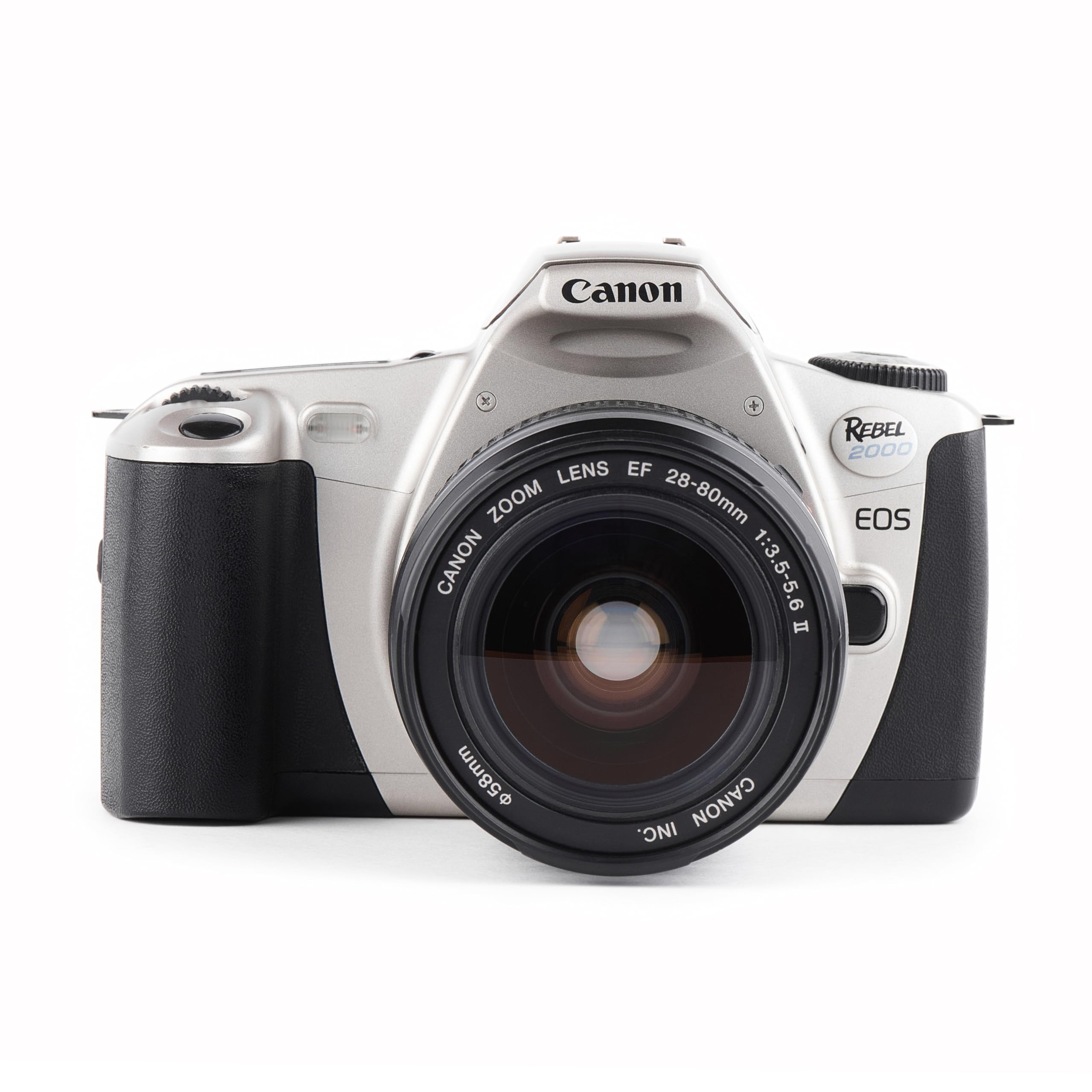
The Canon Rebel 2000 (EOS 300 in Europe) is a lightweight, automatic SLR that brings modern autofocus to the film world. Its 7-point autofocus system locks onto subjects quickly and accurately, even in challenging light, and the 28-80mm EF zoom lens covers everything from group shots to portraits. The camera offers four exposure modes: Program AE, Aperture Priority, Shutter Priority, and full Manual, giving you room to grow as you learn.
Film transport is fully automatic — load the cartridge, close the back, and the camera advances to frame one and rewinds when the roll is done. The built-in pop-up flash includes red-eye reduction, and the ISO range of 100-400 covers most consumer films. The body is impressively compact and light, making it easy to toss in a bag for daily carry without the heft of a metal-bodied classic.
Users consistently call it “great for the money” and “amazing weight film camera.” The renewed units arrive in nearly new condition, with many buyers noting they “would never know it” was used. A small number reported late or missing accessories, so verify the listing includes the battery and strap. For a beginner who wants point-and-shoot convenience with SLR flexibility, the Rebel 2000 is the easiest path to great film photos.
Why it’s great
- Fast, reliable 7-point autofocus system
- Four exposure modes (Program, AV, TV, Manual) for learning
- Ultra-light and compact body for easy carry
Good to know
- Requires two CR123A batteries that are non-standard
- Some renewed units may arrive without accessories
8. Canon New EOS Kiss (Rebel G) SLR with 35-80mm EF Lens (Renewed)

The Canon Rebel G (sold as New EOS Kiss in Japan) is essentially the same camera as the Rebel 2000 but with a wider ISO range of 100-3200, making it more versatile for different lighting conditions and film stocks. The included 35-80mm EF autofocus lens offers a slightly wider standard zoom range, and the camera retains the same 7-point autofocus system, four exposure modes, and built-in flash as its successor.
The user interface is designed for simplicity — a clear LCD display shows all settings, and the controls are intuitive enough for a beginner to pick up without reading the manual. The camera’s wide-area autofocus point covers more of the frame than earlier EOS models, improving focus accuracy for off-center subjects. The body is made of lightweight polycarbonate, keeping the weight low for all-day shooting.
Renewed units are consistently praised for arriving “in excellent condition for 30+ years old” with “all features work including meter, screen, buttons.” Users note the included lens is “really good” and produces “amazing” photos. The only drawback is the standard 30-second maximum shutter speed, which limits long-exposure night photography. For a robust, affordable autofocus film SLR with excellent glass, the Rebel G is a smart choice.
Why it’s great
- Wide ISO range 100-3200 for diverse film types
- Reliable 7-point autofocus with wide-area coverage
- Excellent condition renewed units with fully working electronics
Good to know
- Maximum shutter speed of 30 seconds limits long-exposure work
- Polycarbonate build is light but less durable than metal bodies
9. KODAK Snapic A1 35mm Film Camera (Ivory White)
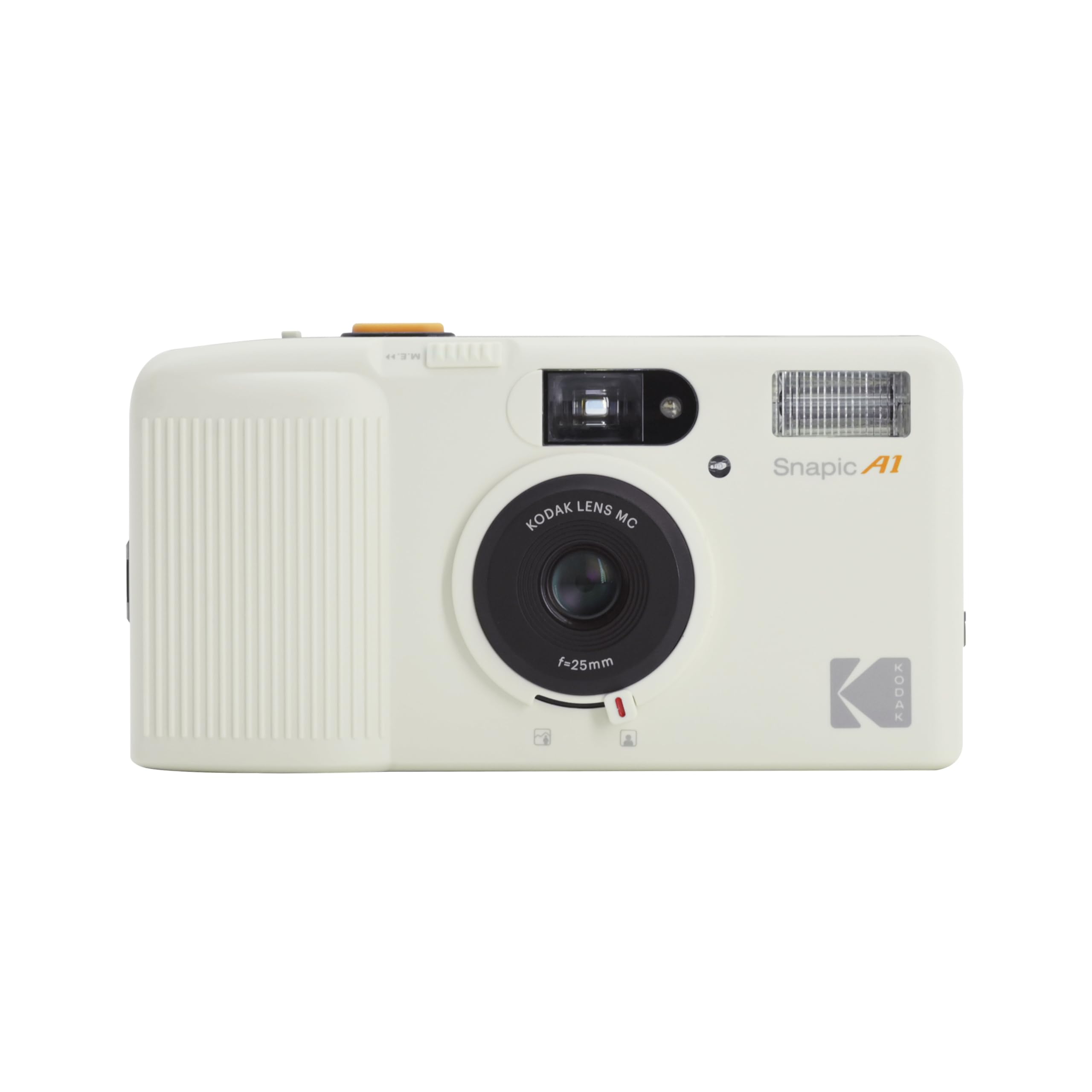
The KODAK Snapic A1 is a compact, reusable 35mm point-and-shoot that upgrades from disposable cameras with its 3-element glass lens — producing sharper images with more detail than plastic-lens disposables. The built-in auto flash with red-eye reduction works well for indoor and fill-flash situations, while the multiple exposure feature lets you blend two scenes on a single frame for creative double exposures. The 2-zone focus system switches between near and far subjects easily.
Film transport is automatic — load your favorite 35mm film (compatible with Kodak Gold 200, Portra, or any standard 35mm stock), snap away, and the camera advances and rewinds for you. The body measures just 4.65 x 2.44 x 1.38 inches and weighs 117 grams, making it truly pocketable. It runs on a single AAA battery (alkaline only — NiMH rechargeables won’t work with the flash circuit).
Users consistently call it a “perfect entry-level film camera” that outperforms the more expensive Kodak Ektar H35. The main feedback is that the flash button can be accidentally pressed, and the camera works best outdoors on sunny days — night shots tend to underexpose. If you want a step-up from disposables with a real glass lens and double exposure capability, the Snapic A1 is a fun, affordable gateway to 35mm film.
Why it’s great
- 3-element glass lens produces sharper images than plastic disposables
- Compact and lightweight for true pocket carry
- Multiple exposure mode for creative double shots
Good to know
- Only works with alkaline AAA batteries, not NiMH
- Flash button can be pressed accidentally in a bag
FAQ
What is the best 35mm film for a beginner with an SLR?
Can I use modern DSLR lenses on a vintage 35mm SLR?
How long do light seals in renewed 35mm SLRs last?
Does a higher shutter speed limit matter for film photography?
Final Thoughts: The Verdict
For most users, the best 35mm slr camera winner is the Pentax K1000 because its fully mechanical design, K-mount lens ecosystem, and accurate light meter make it the ideal learning platform and lifelong companion. If you want autofocus convenience and modern lens compatibility, grab the Canon Rebel 2000. And for maximum shots per roll with a modern, reliable build, nothing beats the Pentax 17.