
A 36-inch deck hits a sweet spot between the agility of a standard lawn tractor and the raw output of a commercial zero-turn, but choosing the wrong configuration—gas versus electric, rider versus remote-control—can turn a time-saving investment into a frustrating money pit. The sheer diversity of power systems, cutting technologies, and terrain capabilities in this category means one wrong assumption about your property can leave you with a machine that scalps your lawn or stalls halfway through a slope.
I’m Min — the co-founder and writer behind Gadgets Feed. I’ve spent weeks cross-referencing torque ratings, battery chemistries, deck materials, and real-world customer experiences to separate the machines that genuinely earn their cost from those that rely on marketing hype alone. Every recommendation here is backed by concrete specs and verified owner feedback from properties like yours.
Whether you manage a tight suburban lot or a sprawling hillside property, this guide breaks down the essential considerations for finding your ideal 36 inch mower, cutting through the noise to focus on what actually matters for your grass type, terrain, and maintenance expectations.
How To Choose The Best 36 Inch Mower
Choosing a mower in this class means balancing deck width, power delivery, and terrain compatibility. A 36-inch cut can dramatically reduce mowing time on a half-acre or larger property, but only if the machine can handle your specific grass density and ground conditions without constant intervention.
Deck Material and Cutting Performance
The deck is the heart of any mower. Stamped steel decks are common on budget-friendly models, but the thin gauge can warp over time, leading to uneven cuts. Fabricated or composite decks—like EGO’s Super Composite—resist corrosion and maintain blade alignment longer. Also look for blade-tip speed measured in feet per minute; higher speeds (above 18,000 FPM) handle thicker grass without bogging. Dual-blade systems on some electric models also improve mulching efficiency by creating a finer clip that decomposes faster.
Power Source and Runtime Reality
Gas engines deliver consistent torque across the entire mowing session, but they demand regular oil changes, air filter swaps, and winterization. Electric mowers reduce ongoing maintenance but depend heavily on battery capacity measured in watt-hours (Wh). A 56V system with a 6.0Ah battery yields roughly 336Wh per battery; most electric riders in this category use multiple packs to reach 1,000Wh or more. Real-world runtime often falls 20-30% below advertised figures in tall or damp grass, so always size up from the minimum you think you need.
Transmission, Traction, and Terrain Handling
For traditional riders, a hydrostatic transmission provides smooth, pedal-controlled speed variation without clutching. Zero-turn models offer the tightest turning radius—critical for navigating trees and flowerbeds. If your property includes slopes, check the maximum grade rating: stamped steel decks on entry-level mowers may struggle past 10-15 degrees, while tracked or AWD robot mowers can handle up to 80-100% slopes. Self-propelled push mowers like the EGO rely on a variable-speed dial rather than a transmission, which works well on flat to moderate terrain but can feel heavy in tight corners.
Quick Comparison
On smaller screens, swipe sideways to see the full table.
| Model | Category | Best For | Key Spec | Amazon |
|---|---|---|---|---|
| EGO LM3004SP-2 | Cordless Push | Flat, medium-sized lawns | 30” deck, 13.2 ft-lbs torque, 75 min runtime | Amazon |
| CRAFTSMAN 13AC77XYA93 | Gas Rider | Up to 2 acres, flat terrain | 11.5 HP engine, 7-speed transmission | Amazon |
| AIWEIYA AWY-550 | Remote Control | Steep slopes, brush | 21.6” cut, 7 HP gas, 45° climbing | Amazon |
| MOVA LiDAX Ultra 3000 | Robot Mower | Hilly 0.75 acre, wire-free | 15.8” cut, 165 min battery, 80% slope | Amazon |
| WORX Vision Cloud WR344 | Robot Mower | 1 acre, RTK guidance | 8.7” cut, 84% slope, 10 TOPS AI | Amazon |
| Segway Navimow X430 | Robot Mower | 1 acre, complex terrain | 17” cut, 180W motors, zero-turn AWD | Amazon |
| Mammotion LUBA 3 5000H | Robot Mower | 1.25 acres, multi-zone | 15.7” cut, 215 min battery, 165W motors | Amazon |
| Lymow One Plus | Robot Mower | Large acreage, steep slopes | 16” cut, 100% slope, 15,000mAh LiFePO₄ | Amazon |
| Mowrator S1 4WD | Remote Control | Rough, overgrown terrain | 21” cut, 18Ah battery, 75% slope | Amazon |
| Greenworks 7427202 | Electric Rider | 1.25 acres, eco-friendly | 30” deck, 1,920 Wh total, 6 MPH | Amazon |
| Husqvarna Z254F | Gas Zero-Turn | Large lawns, commercial-level cut | 54” deck, 23 HP Kawasaki, 6.5 MPH | Amazon |
In‑Depth Reviews
1. EGO Power+ LM3004SP-2
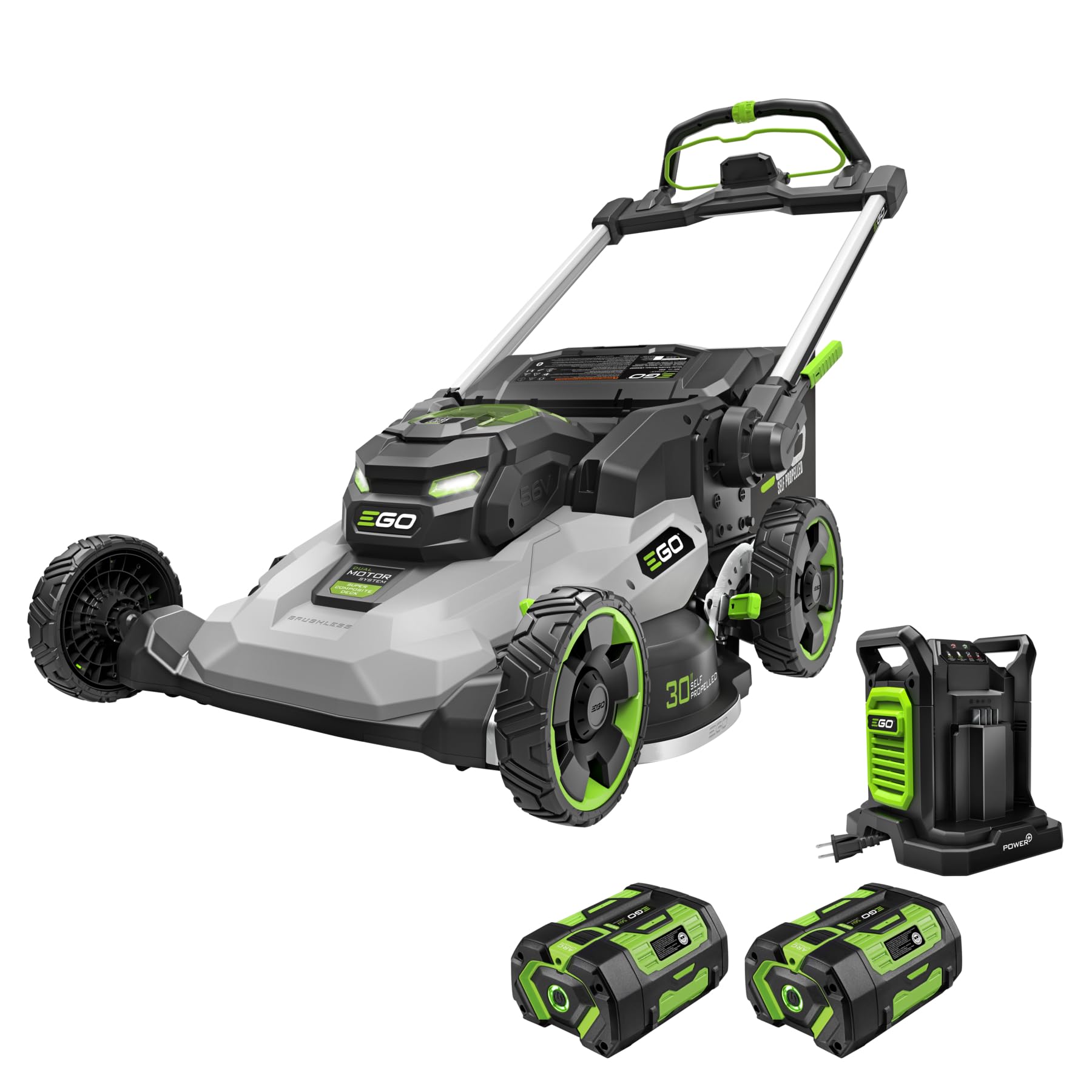
The EGO LM3004SP-2 redefines what a cordless push mower can achieve with a 30-inch Super Composite deck that delivers peak torque of 13.2 foot-pounds—outperforming many 200cc gas models while eliminating the maintenance burden of oil changes and spark plugs. The dual 56V 6.0Ah batteries provide up to 75 minutes of runtime on a single charge, which covered a 3/4-acre test lawn in real-world reviews without needing a recharge. Touch Drive self-propelled technology lets you control engagement with palm pressure, while a speed dial at your fingertips adjusts pace on the fly without clutching or shifting.
Cut quality benefits from dual motors driving independent blades, with three speed modes—ECO, Normal, and Turbo—that adapt to grass conditions. Turbo mode proved especially effective in reviews for handling tall, wet St. Augustine grass, though some owners noted the self-propel speed engages abruptly rather than gradually. The nine-position cutting height adjustment ranges from one to five inches, accommodating everything from Bermuda to fescue with levers at the front and rear for quick changes. The mower also folds compactly for vertical storage, occupying roughly the same footprint as a standard 21-inch model despite the wider deck.
EGO backs this machine with a 10-year limited warranty on the deck, five years on the tool, and three years on the batteries—nearly double the coverage period of most gas riders. The real-world trade-off comes down to terrain: the 166-pound weight feels heavy when pivoting in tight corners, and owners on bumpy ground recommend avoiding lifting with the batteries installed. For flat to moderately sloped lawns up to an acre, this mower delivers gas-level cut quality with electric convenience and a fraction of the noise.
Why it’s great
- 13.2 ft-lbs of cutting torque matches or exceeds 200cc gas mowers
- 75 minutes real-world runtime from two 56V 6.0Ah batteries
- Folds flat for space-saving storage without sacrificing deck width
Good to know
- Self-propel engages instantly rather than ramping up gradually
- Heavy at 166 lbs; difficult to lift or turn on soft ground
2. CRAFTSMAN 13AC77XYA93
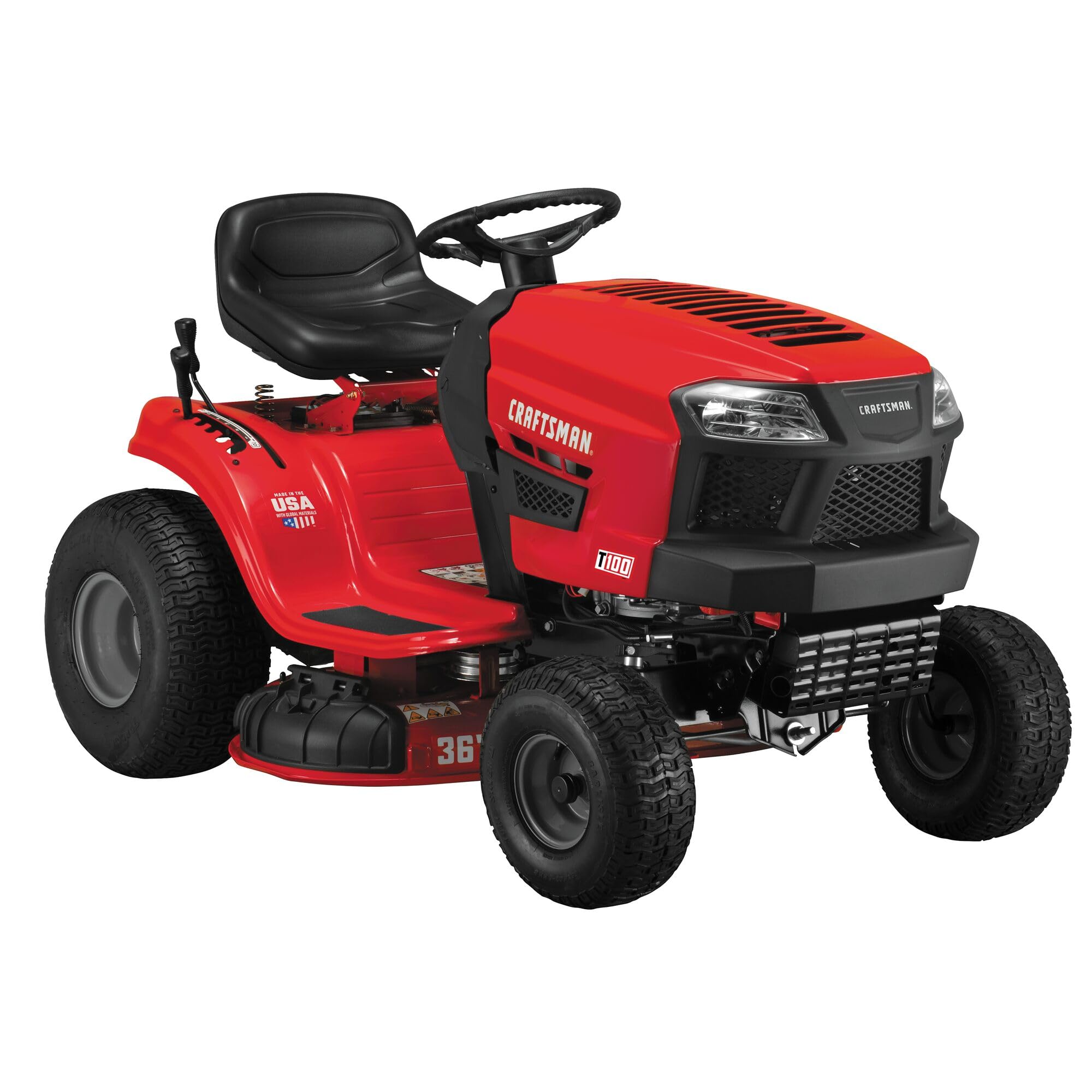
The CRAFTSMAN 13AC77XYA93 is a traditional gas riding mower built around a 36-inch reinforced stamped steel deck and an 11.5 HP Briggs and Stratton single-cylinder engine, engineered to cover up to two acres while fitting through standard 36-inch gates. The 18-inch turning radius and heavy-duty Turf Saver wheels make it notably maneuverable for a rider its size, and the included mulching kit provides professional-grade finish without separate purchases. The 7-speed manual transmission lets you select the ideal ground speed for different grass densities, though shifting requires the brake and clutch to be engaged simultaneously.
Assembly is straightforward with the deck pre-installed; owners report the mower arrives pre-filled with break-in oil that must be changed after five hours of operation. The contoured low-back seat delivers adequate comfort for shorter operators—several reviews from taller users above six feet noted limited legroom, while a five-foot-five spouse found it perfect. The 350-pound weight and alloy steel construction give it a planted feel on flat ground, but the stamped steel deck lacks the rigidity of fabricated alternatives and may develop uneven cutting patterns over years of heavy use.
A notable limitation is the blade engagement system: the blades automatically disengage when reversing, which can be inconvenient on properties requiring frequent back-and-forth maneuvering. Some early owners experienced transmission issues, with one review reporting failure on the second use, while the majority praised its reliable starting and quiet operation for a gas engine. The CRAFTSMAN fills the entry-level rider slot well for flat, open lawns where the 36-inch cut substantially reduces mowing time compared to a push mower, but buyers with sloped or complex terrain should consider upgrading to a hydrostatic or zero-turn model.
Why it’s great
- 36-inch deck fits through standard gates while cutting up to 2 acres
- Mulching kit included for clippings management
- 18-inch turning radius aids navigation around flower beds
Good to know
- Transmission requires brake/clutch to shift—no on-the-go changes
- Blades stop in reverse, slowing jobs on obstacle-heavy lawns
3. AIWEIYA AWY-550
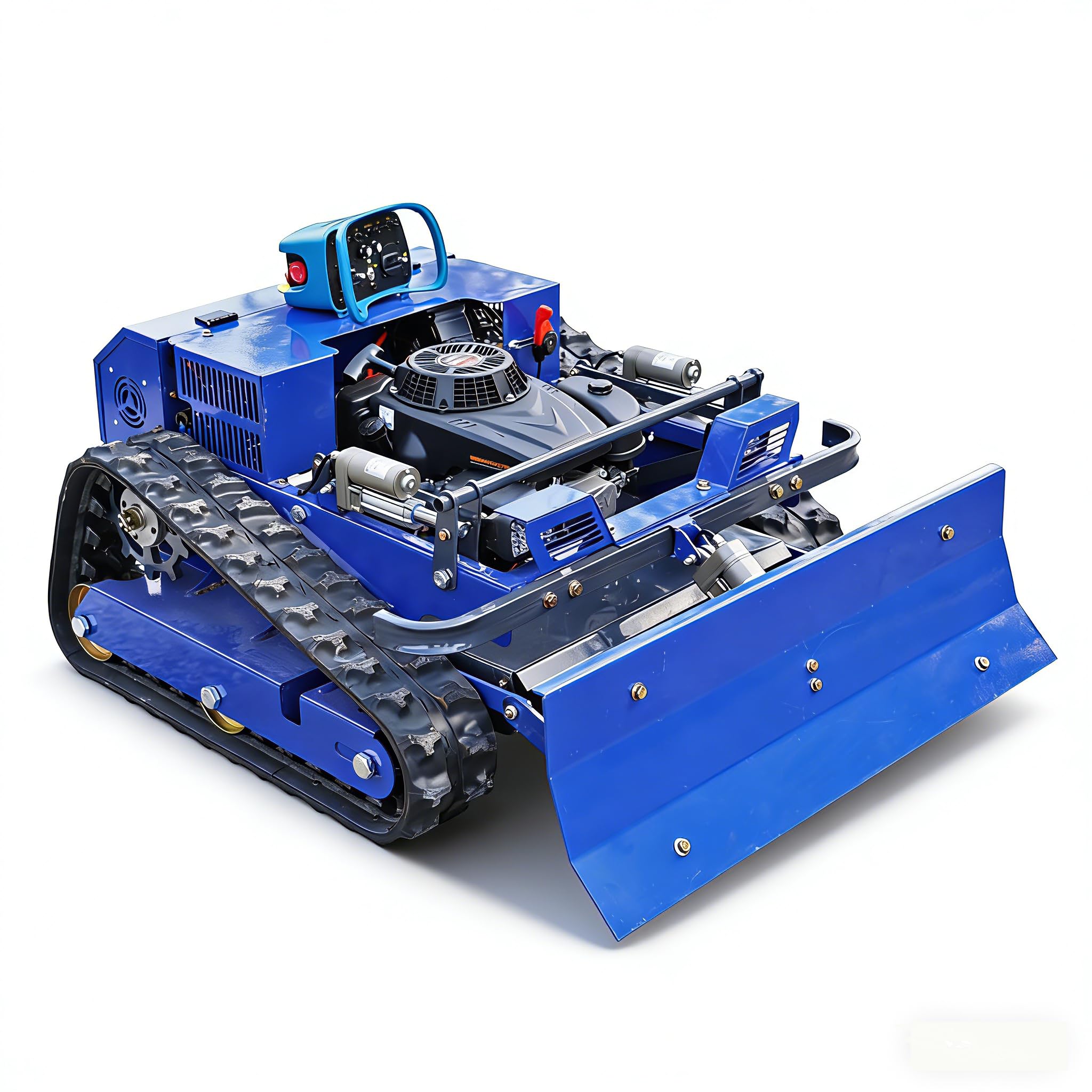
The AIWEIYA AWY-550 breaks from traditional riding or push mowers with a remote-controlled, oil-electric hybrid crawler track design that climbs slopes up to 100% (45 degrees) while cutting with a 21.6-inch manganese steel blade. Its 1600W 24V brushless drive motor powers tracked traction that maintains grip on loose soil, wet grass, and steep inclines where wheeled mowers would spin out—making it uniquely suited for hillside properties, ditch banks, and orchards. The cutting height adjusts remotely from 1.1 to 5.9 inches via the intuitive remote control, with 48 incremental positions that allow precise matching to grass type without leaving your standing position.
The hybrid system combines a gasoline engine that drives a 24V alternator to power the electric traction motors, which means it delivers continuous runtime as long as fuel is supplied, but the fuel tank is notably small—owners report only 15-20 minutes of operation before requiring a refill. That limitation is offset by its ability to handle thick 6-foot brush and reed beds that would stall standard mowers, though the turning action of the tracks can tear grass on sharp turns rather than providing a clean cut. The remote control features a rechargeable battery and supports 360-degree rotation and live height adjustment, enabling operators to stay safely on level ground while the mower tackles hazardous banks.
Build quality is exceptionally heavy at 286 pounds with an alloy steel frame, and the included spare blades, filter, and manual add value for long-term ownership. However, the lack of a comprehensive instruction manual frustrates setup: several owners needed YouTube videos to locate the hidden air switch that enables remote operation. Customer support response time is another concern, with some warranty issues taking one to two weeks for replacement part shipment. For buyers who need to cut extreme slopes where no rider or robot can safely go, the AIWEIYA is a capable brute, but it is not a set-and-forget mower—expect a learning curve and periodic mechanical attention.
Why it’s great
- 100% slope capability (45°) with tracked traction for extreme hills
- Remote-controlled cutting height adjustment from 1.1″ to 5.9″
- Powers through dense brush and reeds that stall conventional mowers
Good to know
- Fuel tank runs empty in 15-20 minutes under load
- No printed manual; setup requires external video guides
4. MOVA LiDAX Ultra 3000 AWD
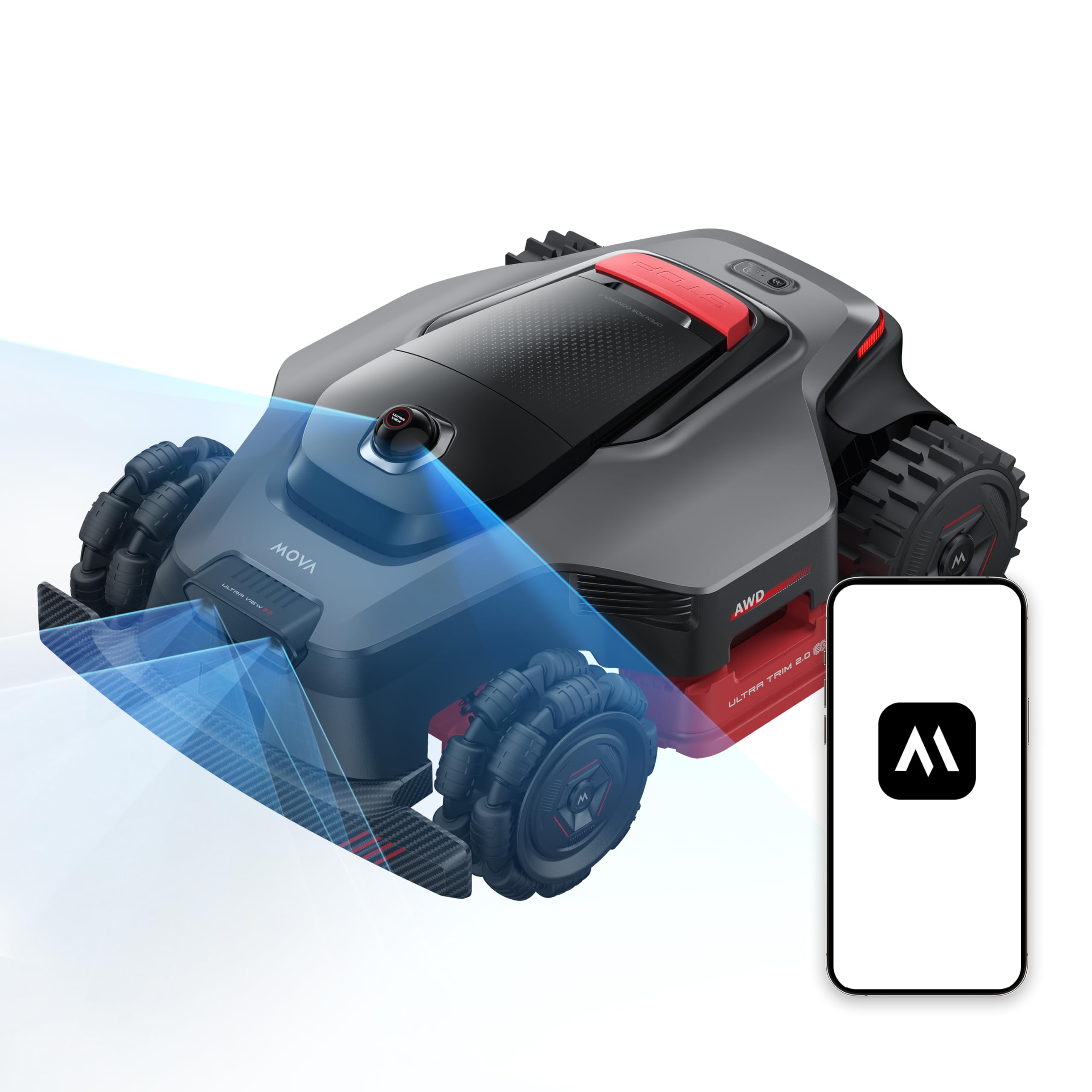
The MOVA LiDAX Ultra 3000 AWD eliminates perimeter wires entirely with a fusion of 360° 3D LiDAR, AI dual-vision cameras, and centimeter-accurate RTK positioning—no base station antenna required. Its four 116W hub motors drive independent wheels that handle slopes up to 80% with an advanced suspension system preventing tip-overs, while floating cutting discs adapt to uneven ground contours. The dual-disc cutting system with 12 blades delivers a 15.8-inch cutting width, and UltraTrim 2.0 technology reduces uncut edge grass to just 1.2 inches, dramatically minimizing manual trimming along fences and flower beds.
Auto-mapping is genuinely simple: power on the mower, let it roam once, and it generates a precise 3D map of your property with centimeter-level detail. The intelligent U-path mowing pattern covers the entire area efficiently before returning to the charging station, with a 36V 243Wh battery providing up to 165 minutes of runtime per charge—enough to cover roughly 0.25 acres per cycle depending on grass density. Owners with hilly 0.75-acre properties report the mower never gets stuck, handles wet grass without slipping, and the rain sensor reliably parks it during showers. The 4G connectivity with three years of free service enables real-time GPS tracking, geofencing alerts, and anti-theft PIN locking via the app.
The main friction point is the app experience: the map interface uses a cartoon-style rendering rather than a realistic satellite overlay, and setting up distinct mowing zones requires a separate zone-creation process. Additionally, the front wheels do not turn independently—they rely on differential steering—which can scuff bare patches on ultra-sensitive turf when pivoting repeatedly. For a wire-free robot that handles complex terrain with minimal owner intervention, the MOVA delivers exceptional autonomy, but perfectionists may find the edge-cutting and app polish slightly behind premium rivals at a similar price point.
Why it’s great
- True wire-free setup with LiDAR + AI dual vision and no RTK station
- AWD with floating discs climbs 80% slopes and adapts to bumps
- 3-year free 4G data for GPS tracking and theft prevention
Good to know
- App map is cartoon-style, not real satellite overlay
- Front wheels use differential steering that may scuff turf
5. WORX Vision Cloud WR344
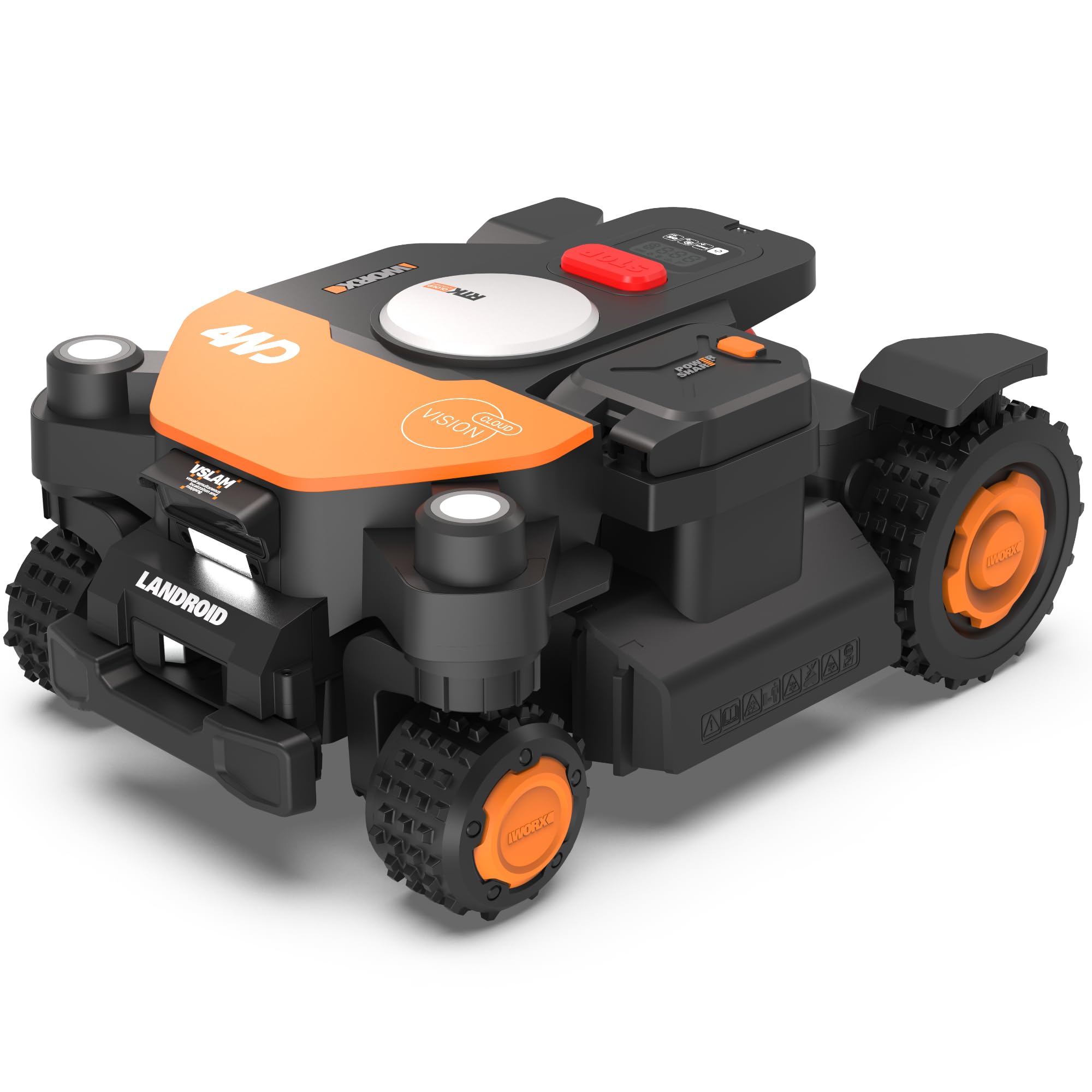
The WORX Vision Cloud WR344 differentiates itself with commercial-grade RTK positioning delivered entirely from the cloud—no local antenna installation or subscription fees—combined with Vision AI that processes up to 10 trillion operations per second for real-time obstacle recognition. Its 4WD chassis with true front-wheel steering climbs slopes up to 84% while turning precise arcs that avoid tearing turf, and the terrain-adaptive chassis keeps all four wheels planted over uneven ground, raised borders, and transitions. The 8.7-inch cutting width is narrower than competitors, but the Cut-to-Zero offset blade trims within centimeters of fixed borders, significantly reducing the need for manual string trimming along edges.
Auto-mapping uses vision AI to understand lawn shapes and boundary types on the first pass, generating smooth paths with close edge-following that produces full coverage. The mower supports multiple mowing patterns—Parallel, Checkerboard, Diamond, and Natural—that create professional striping effects via RTK-accurate navigation. The FiatLux light system enables safe nighttime mowing by automatically activating eye-safe illumination when ambient light drops below a threshold, extending mowing schedules beyond daylight. Owners of 0.7-acre properties report the mower handles slopes that previously required a riding mower, with AI obstacle avoidance that reliably stops for toys, pets, and garden hoses.
The Achilles’ heel is setup reliability: some owners experienced persistent Wi-Fi connection losses between the base station and the mower within distances of only 10 feet, requiring Wi-Fi extenders and firmware troubleshooting before the mower would function. Several reports of map errors, connection drops, and hard-to-click buttons in the manual mapping mode suggest the software maturity has not fully caught up with the hardware refinement. For early adopters willing to navigate a potentially rocky setup process, the Vision Cloud WR344 rewards with a truly wireless, antenna-free robotic mowing experience that produces lawn-striping quality normally associated with high-end riders.
Why it’s great
- Cloud-based RTK eliminates antenna hardware and subscription costs
- Cut-to-Zero offset blade reduces edge trimming by 90%
- FiatLux light system enables safe automatic mowing at night
Good to know
- Setup can be frustrating with Wi-Fi range and mapping errors
- Narrow 8.7-inch cutting width requires more passes than wider alternatives
6. Segway Navimow X430
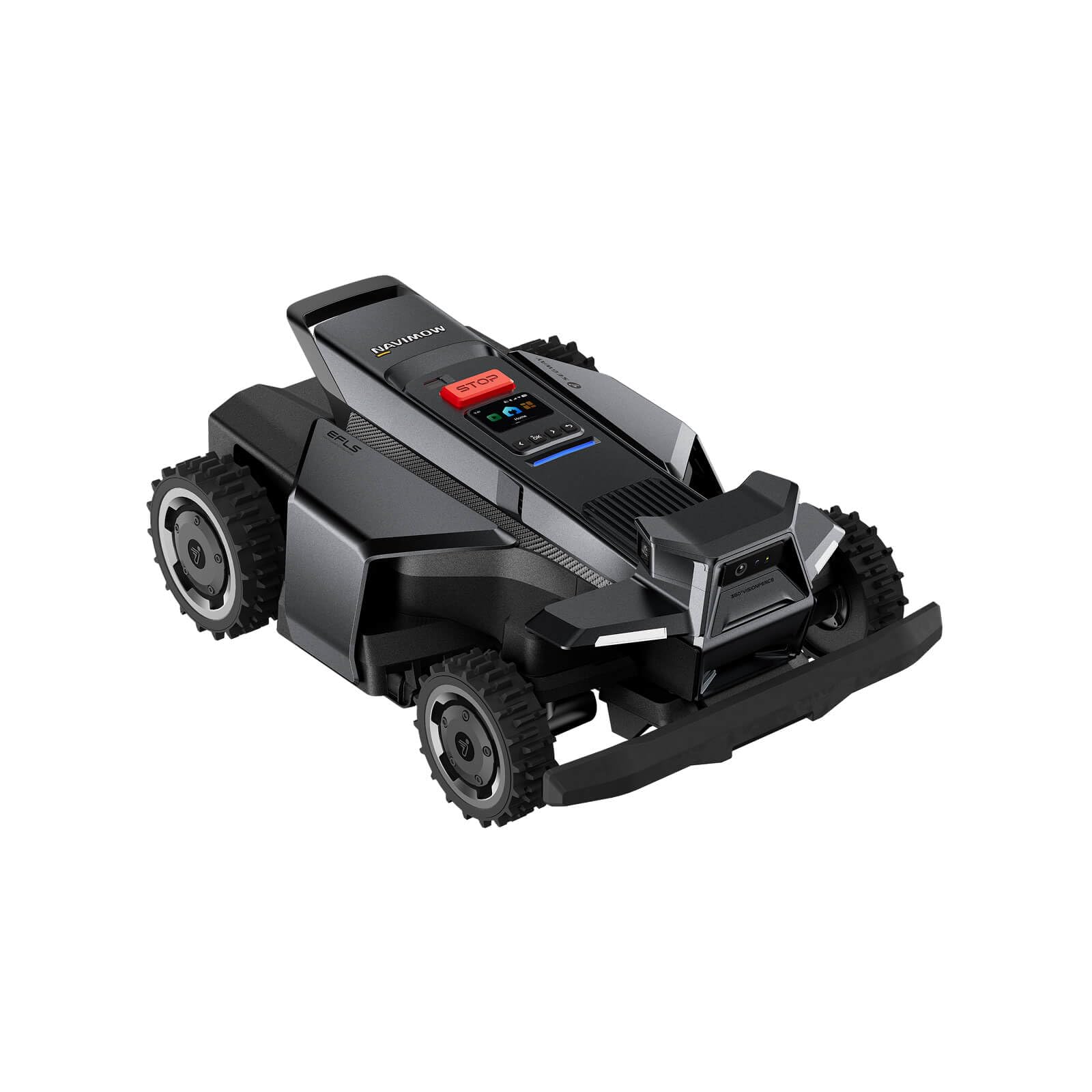
The Segway Navimow X430 is a 4WD robotic mower that brings a true zero-turn mechanism to autonomous lawn care through eccentric front-wheel steering and smart traction control that prevents turf scuffing—a common shortcoming of differential-steer robots. Its 17-inch cutting width is among the widest in the robot category, powered by dual 180W brushless motors driving 12 blades across the cutting discs, with adaptive blade control that detects grass density and adjusts speed and torque accordingly. The EFLS tri-frequency Network RTK combined with 360° Vision and VIO (Visual-Inertial Odometry) maintains centimeter-level accuracy even under dense tree cover or along chain-link fences where standard GPS drops out.
One-tap Auto Mapping completes wire-free setup in minutes, with no external antenna or RTK station required—the mower uses cellular RTK correction signals through its built-in 4G modem. The EdgeSense feature reduces trimming margins to under two inches, and the GeoSketch tool lets you edit maps on your phone to fine-tune no-go zones and mowing paths. The dual suspension system with 2.8-inch obstacle clearance powers through ruts and tree roots while climbing 84% slopes, and the 11-position cutting height adjustment ranges from 0.75 to 4 inches for fine-tuning across grass types. Voice control via Alexa and Google Home adds hands-free convenience for pausing or resuming mowing sessions.
The hardware impresses, but the software experience shows inconsistency: early owners reported firmware updates causing erratic navigation behavior such as the mower straying onto driveways, and one review described a defective charging system that required replacement parts after resolution. Customer support responsiveness drew mixed feedback—some users received quick replacements, while others waited days for acknowledgment. The 63.7-pound weight and large footprint (33.5 x 24 inches) make it less suitable for narrow passageways. When the system works correctly, the cut quality and navigation precision are outstanding, but the variability in out-of-box reliability means it rewards patient tinkerers more than buyers seeking an appliance-grade experience.
Why it’s great
- True zero-turn AWD steering avoids turf tearing during pivots
- Widest robot cut at 17″ with dual 180W motors for dense grass
- Cellular RTK correction works under tree cover without GPS dropouts
Good to know
- Firmware updates have caused intermittent erratic behavior
- Customer support response times can be slow during peak season
7. Mammotion LUBA 3 AWD 5000H
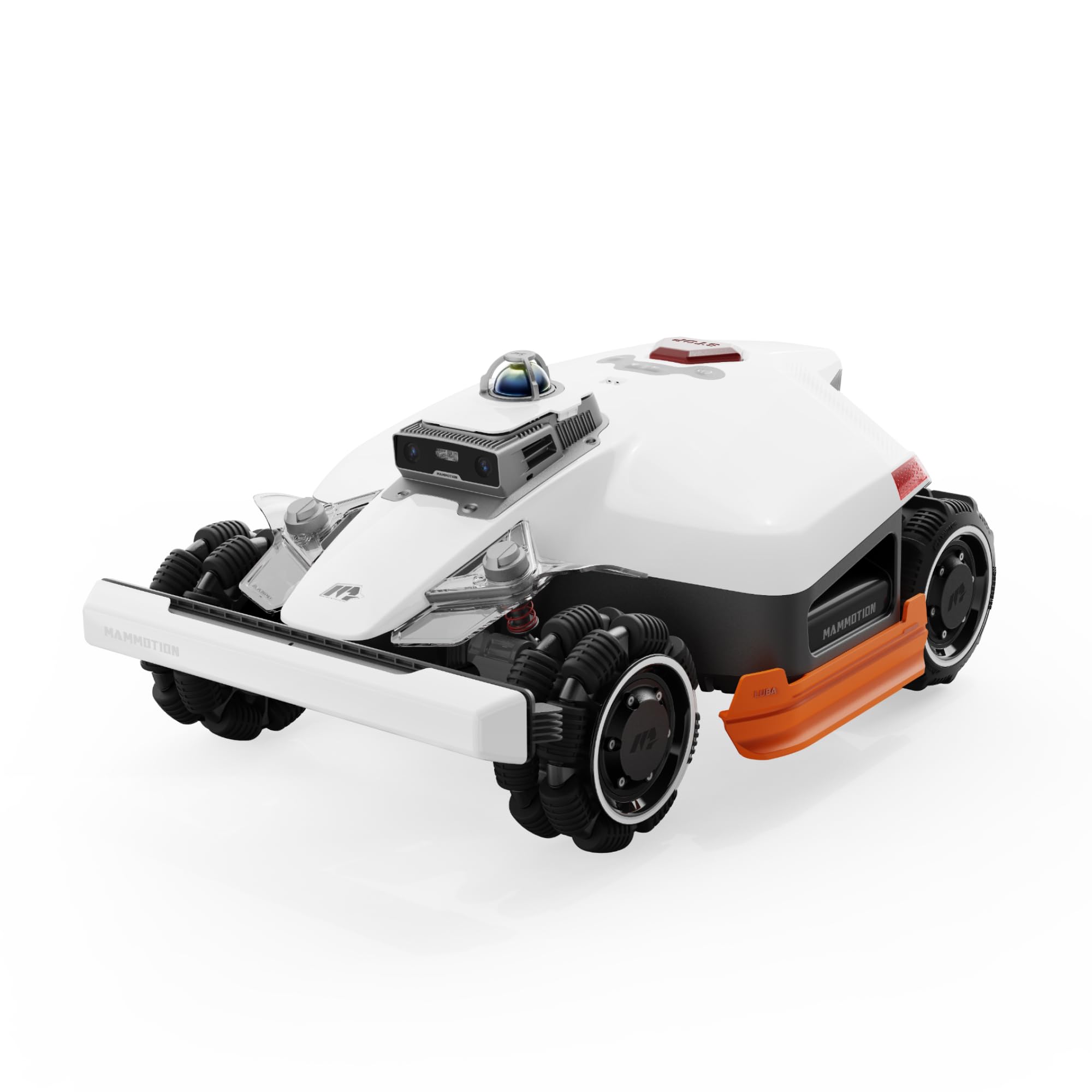
The Mammotion LUBA 3 AWD 5000H deploys a Tri-Fusion navigation system that integrates 360° LiDAR with a 230-foot range, NetRTK satellite corrections, and dual-camera AI vision for intelligent sensor switching—if one system degrades under a tree canopy or between buildings, another seamlessly takes over. The LiDAR unit sweeps a 59° vertical field of view, generating millions of laser returns into a dense real-time point cloud that maps everything from ground contours to tree branches, enabling precise navigation even in cluttered yards. Two high-torque 165W motors drive 6-blade discs that auto-adjust speed and torque based on grass density, with a 15.7-inch cutting width that covers up to 5,400 square feet per hour at optimal pace.
The 15Ah lithium battery delivers a claimed 215 minutes of runtime per charge, which real-world owners report covers approximately 60% of the advertised area under typical mowing conditions—still sufficient for a 1.25-acre property split across multiple sessions. Four independently driven wheels with an adaptive suspension system step over curbs, roots, and thresholds up to 50mm high without getting stuck, while the omni wheel at the rear enables smooth zero-radius pivoting that prevents turf damage. The mower supports up to 50 distinct mowing zones, each with its own schedule, cutting height (2.2 to 4.0 inches), and mowing pattern—choose from perimeter-only, zigzag, checkerboard, or adaptive zigzag via the app.
Owners consistently praise the straight-line cut quality, which rivals the appearance of a professional zero-turn rider, and the Bluetooth setup process is straightforward with both RTK and iNavi (vision-only) modes available. The main limitation is battery coverage expectations: the advertised 1.25-acre capacity assumes ideal conditions, and heavy tall fescue or wet grass reduces real-world throughput by roughly 40 percent, meaning larger lawns may require two recharge cycles per full mow. The edge-cutting algorithm also improves over time as the mower revisits boundaries, but initial passes leave more uncut grass along fences than the Cut-to-Zero competitors. For tech-forward homeowners who want robotic mowing that produces visible lawn stripes and handles multi-zone complexity, the LUBA 3 is the most capable option under .
Why it’s great
- Tri-Fusion navigation switches seamlessly between LiDAR, RTK, and AI vision
- 165W dual motors with adaptive torque handle thick grass without bogging
- 50 programmable mowing zones with independent schedules and patterns
Good to know
- Real-world battery coverage is about 60% of the advertised 1.25 acres
- Edge-cutting quality improves gradually over multiple trimming passes
8. Lymow One Plus
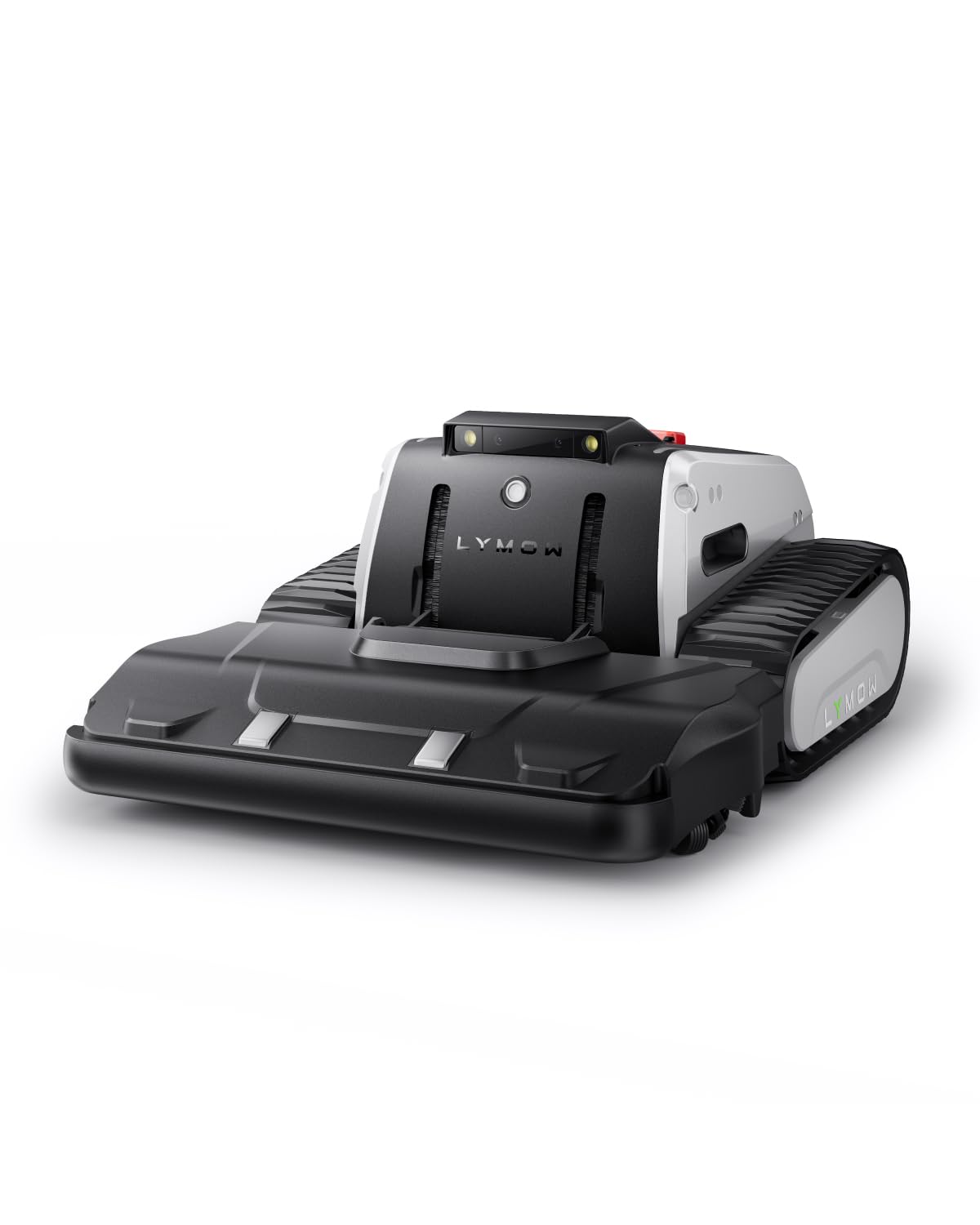
The Lymow One Plus is built for endurance: its 15,000mAh LiFePO₄ battery delivers over 2,000 charge cycles—more than double the lifespan of standard lithium-ion packs—and the Lycut System 2.0 features dual SK5 tool steel blades hardened to 50 HRC spinning at up to 6,000 RPM driven by a 1785W peak power motor. The cyclone airflow lifts flattened grass before cutting, producing an even finish even in wet or dense conditions, while the single-side discharge spreads clippings only onto the lawn rather than patios and walkways. The unique heavy-duty Track Drive System climbs slopes up to 100% (45°) and crosses 2.8-inch obstacles, with a track footprint that distributes weight to prevent turf damage on soft ground.
RTK satellite positioning combined with VSLAM visual mapping enables wire-free setup that takes minutes via smartphone, creating virtual boundaries and optimized mowing routes that ensure complete coverage without missed spots. AI vision with ultrasonic sensors detects and avoids pets, toys, and garden ornaments in real time, while the recognition system trained on dedicated datasets differentiates between static obstacles and moving creatures. The mower handles up to 80 zones with individual schedules and cutting heights ranging from 1.2 to 4.0 inches, and auto-recharges and resumes when the battery runs low or rain starts—the blade deck even lifts itself for easy cleaning after wet grass sessions.
One owner reported mowing 30 acres over 40 days—averaging 0.75 acres per day across a 3-4 acre maintained area—with only software glitches that a reboot resolved and no mechanical failures. However, that same review highlighted the critical importance of RTK base station placement near fence lines to maintain signal lock, and noted that tracks require blade cleaning every 1-3 days in heavy growth. Some early adopters experienced battery failure within weeks and encountered unresponsive customer support, though other reports praised the machine’s ability to handle 8 lawns across duplex properties with only string trimming intervention. The Lymow One Plus is a high-uptime workhorse for large, steep properties, but its reliance on good RTK signal and occasional software quirks means it best suits owners comfortable with basic tech troubleshooting.
Why it’s great
- 15,000mAh LiFePO₄ battery lasts 2,000+ cycles for years of service
- Track Drive climbs 100% slopes (45°) and clears 2.8-inch obstacles
- Lycut 2.0 cyclone blade system lifts flattened grass for even mulching
Good to know
- Requires strong, unobstructed RTK signal near property edges
- Customer support responsiveness has been inconsistent in early units
9. Mowrator S1 4WD
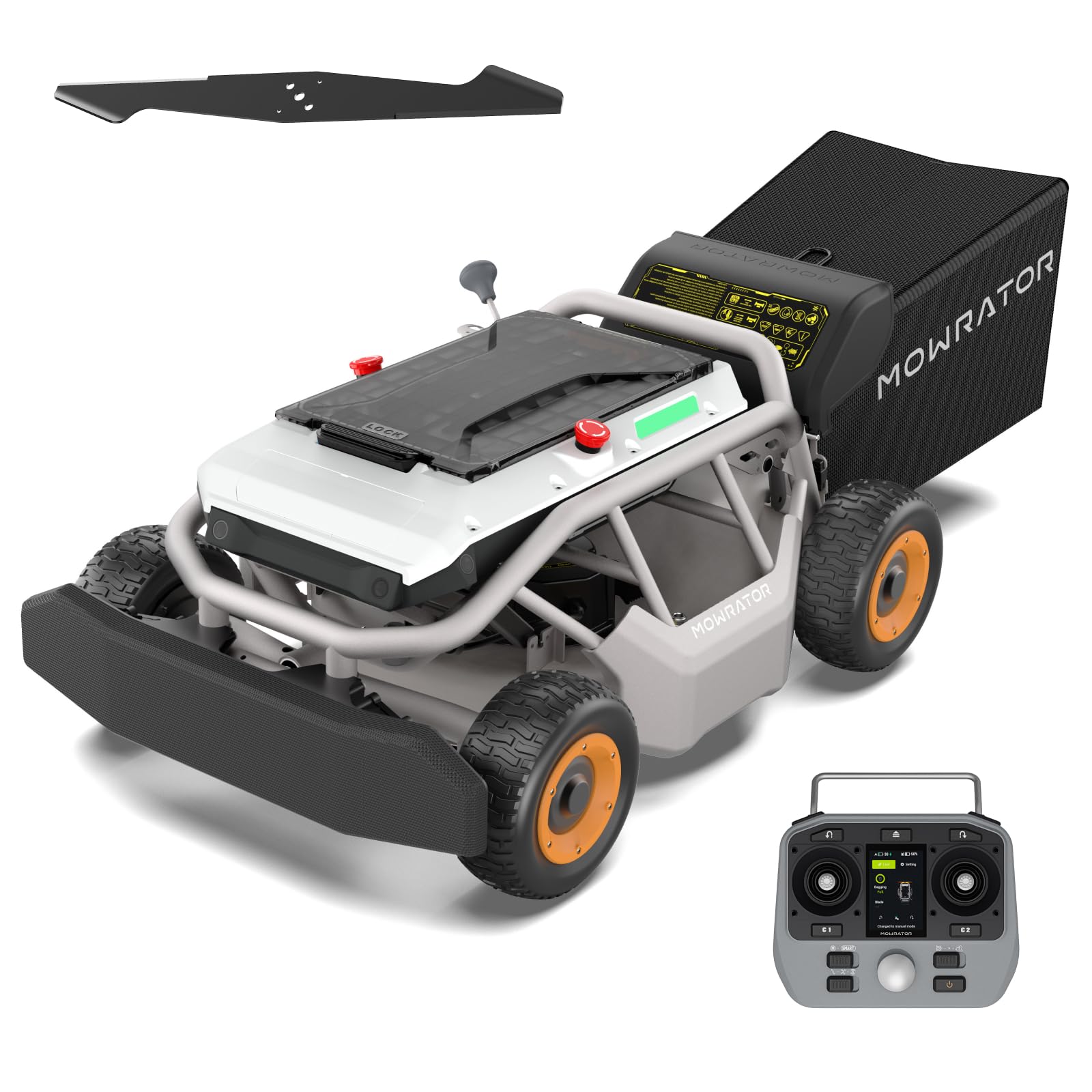
The Mowrator S1 4WD is a remote-controlled tracked mower with an 18Ah lithium battery that delivers 2.25 hours of runtime, a 21-inch cutting width, and adjustable cutting height from 1.5 to 4.3 inches, purpose-built for the roughest terrain and most overgrown properties. Its 4WD system climbs slopes up to 75% (37°) and powers through 6-foot brush and invasive weeds that would stop any push mower or rider cold, with a low-latency remote controller that provides responsive steering feedback at distances up to 1,000 feet. The all-season versatility extends beyond mowing: optional attachments include a tow hitch for hauling, a mulching blade for fall leaves, a snow plow with chains for winter, and an FPV camera kit for remote monitoring from indoors.
The metal, steel, aluminum, and polyurethane construction with a 147.7-pound weight gives the S1 a tank-like feel—owners describe it as “built like a tank” that can handle years of abuse on rocky, rutted terrain. The 21-inch blade cuts a substantial swath, and the brushless motor maintains consistent blade speed even as grass density fluctuates, producing a clean cut without tearing. Battery life is temperature-sensitive: owners in 90°F conditions report runtime dropping below the advertised 2.25 hours, while the remote battery typically lasts 7-8 hours before needing a recharge. The charging station replenishes from 20% to full in approximately two hours, enabling multiple mowing sessions in a single day on larger properties.
The primary drawback is an ongoing beta-testing feel: the mower throws random error codes with no accompanying troubleshooting guide, and one early owner waited three weeks for initial customer support contact—though subsequent warranty replacement parts arrived promptly. The wide tracks can rip turf during sharp turns on soft lawns, limiting its suitability for manicured landscapes, but excels where aesthetics take a backseat to brute clearing capability. For owners with steep, brushy, hard-to-reach acreage who want to eliminate string trimmer labor, the Mowrator S1 delivers unmatched cutting power in a remote-control package, provided they accept the occasional software hiccup and slow support response.
Why it’s great
- 75% slope climbing (37°) with tracked 4WD powers through thick brush
- 18Ah battery provides 2.25 hours runtime; charges fully in 2 hours
- Modular design supports snow plow, tow hitch, and FPV attachments
Good to know
- Unresolved error codes appear without diagnostic documentation
- Wide tracks can tear turf during sharp turns on soft lawns
10. Greenworks 60V 30′ Rider
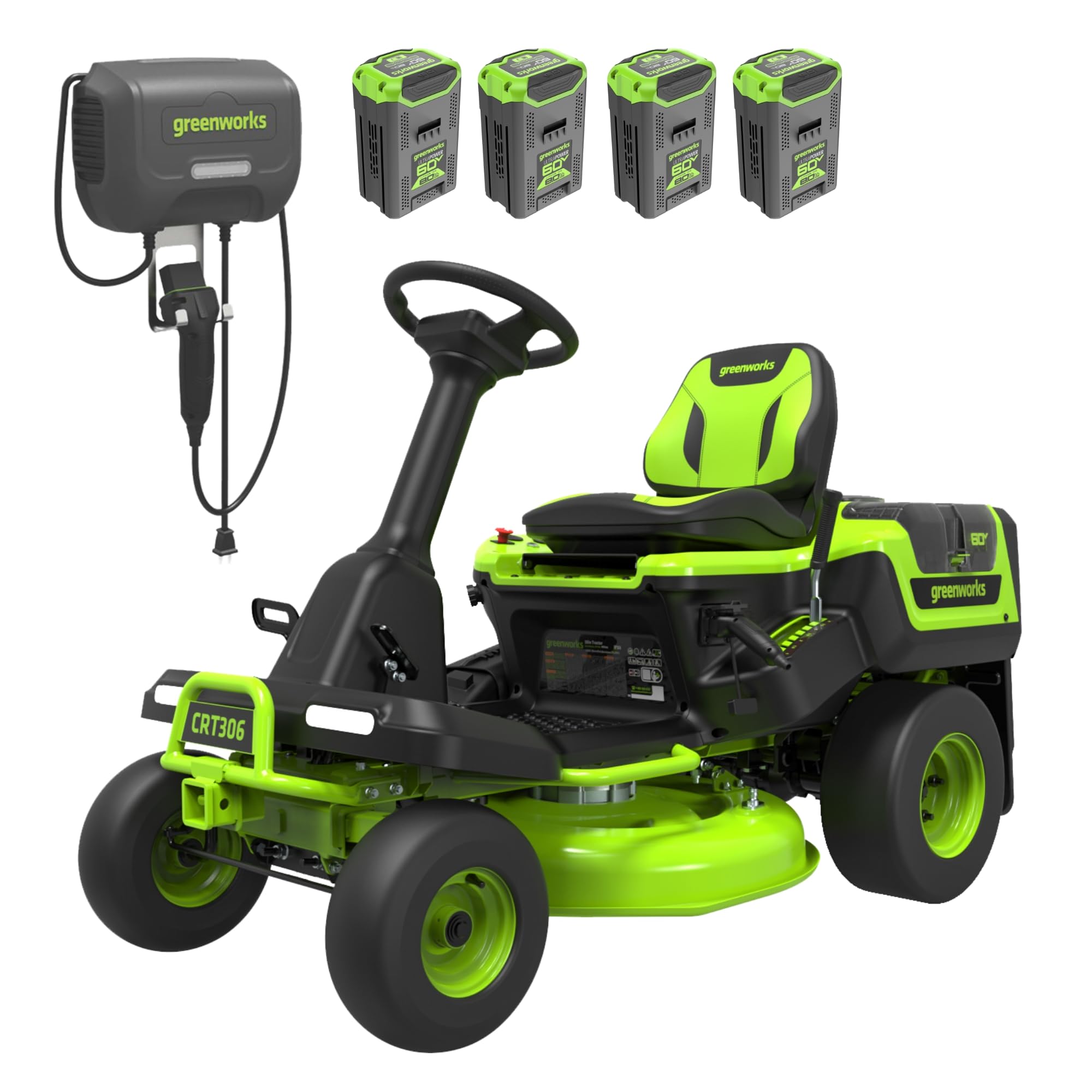
The Greenworks 60V 30′ Riding Mower packs a total of 1,920 Wh from four 60V 8.0Ah batteries—the highest energy capacity in this comparison—delivering gas-equivalent performance from a 16 HP intelligent brushless motor without oil, fuel, or spark plug maintenance. Its 30-inch heavy-duty 4-in-1 stamped steel deck provides side discharge, mulching, bagging, and rear discharge options, with SmartCut Technology that auto-adapts motor speed to grass conditions to prevent bogging in thick growth. Cutting speeds reach 6 MPH with a single-lever seven-position height adjustment from 1.5 to 4.5 inches, and the adaptive traction control handles slopes up to 15° without sliding, keeping the machine tracking straight on hills.
Real-world performance on a one-acre lawn left reviewers with 100% battery remaining after a full mow and leaf blowing session, indicating genuine capacity for the advertised 1.25-acre range under normal conditions. The rear hitch tows up to 200 pounds for hauling trailers or pull-behind attachments like a lawn dethatcher or cart, and the onboard USB-A and USB-C ports let you charge a phone or earbuds while mowing—a thoughtful convenience feature. The integrated deck wash port simplifies cleanup by connecting a garden hose directly to the deck, blasting away clippings without crawling underneath. The 631-pound weight and 82.6-inch length require a sizable garage or shed, but the electric drivetrain eliminates cold-start issues and winterization procedures associated with gas riders.
Assembly frustrations are common: several reviews noted missing essential hardware, such as the screws needed to secure the plastic steering column halves, forcing a trip to the hardware store before the first mow. The side discharge chute also detaches easily when the deck is set low (2.5 inches), falling off on dips and uneven ground, which reviewers suggest could be mitigated by using the mulching blade or rear bag attachment. The metal crate packaging is secure but difficult to dismantle without causing damage—one reviewer described needing help just to unbox it. For eco-conscious buyers with flat to moderately sloped lawns who want rider convenience without gas engine upkeep, the Greenworks delivers impressive runtime and features, provided they budget extra assembly time and potential hardware replacement.
Why it’s great
- 1,920 Wh total battery capacity tackles 1.25 acres on a single charge
- SmartCut Technology auto-adjusts motor speed to prevent bogging
- Integrated USB-A and USB-C ports for device charging while mowing
Good to know
- Assembly crates are difficult to unbox and sometimes missing hardware
- Side discharge chute detaches easily when deck is set to lowest height
11. Husqvarna Z254F

The Husqvarna Z254F is a zero-turn riding mower powered by a 23 HP Kawasaki engine with a 54-inch ClearCut stamped steel deck that produces a best-in-class cut through superior airflow and high-performance blades, reaching a top speed of 6.5 MPH for rapid full-property mowing. The hydrostatic no-maintenance transmission eliminates belt and pulley concerns common on lower-tier zero-turns, enabling smooth direction and speed changes without clutching or shifting. The ergonomic control panel positions the anti-vibration control levers for intuitive handling, and the comfortable high-back seat with anti-slip foot area reduces operator fatigue during long sessions on properties exceeding two acres.
The ClearCut deck delivers superior bagging efficiency thanks to its deep design that maintains consistent suction even in wet or heavy grass, with the option to discharge, mulch, or bag clippings (mulching kit and bagger sold separately). The 18-inch turning radius is tight for a 54-inch deck, allowing the Z254F to maneuver around mature trees and landscape beds without excessive backtracking. Owners running lawn care companies report the mower handles daily commercial use with only basic maintenance—oil changes, air filter swaps, and blade sharpening—and the Kawasaki engine starts reliably even after winter storage. The mower arrives in substantial packaging that protects it during shipping, and separate manufacturers such as Husqvarna proactively contact buyers to confirm warranty registration and ensure a smooth ownership experience.
The Z254F is not designed for tight suburban lawns or properties with narrow gates; its 75-inch length and 595-pound weight require a dedicated storage space and a minimum turning area of about 12 feet for safe operation. The stamped steel deck, while durable for homeowner use, may eventually show wear faster than a fabricated deck under repeated commercial schedules. Some owners noted discrepancies between product imagery and delivery—the deck arrives painted black rather than the orange shown in marketing photos. For buyers who need a reliable zero-turn that balances residential price with near-commercial capability on properties exceeding two acres, the Husqvarna Z254F delivers proven Kawasaki reliability and the fastest cut speed in this comparison, but it demands the space and storage capacity that comes with a full-size riding mower.
Why it’s great
- 23 HP Kawasaki engine with hydrostatic transmission for zero-turn agility
- 54-inch ClearCut deck with deep design for superior bagging airflow
- 6.5 MPH top speed dramatically reduces mowing time on large properties
Good to know
- Large footprint requires 12+ feet of turning clearance and dedicated storage
- Stamped steel deck may wear faster than fabricated decks under heavy use
FAQ
Is a 36-inch deck better than a 42-inch deck for a typical suburban property?
How often do I need to sharpen blades on a 36-inch mower?
Can an electric 36-inch mower handle thick St. Augustine or zoysia grass?
How important is the turning radius on a 36-inch riding mower?
Final Thoughts: The Verdict
For most users, the 36 inch mower winner is the EGO Power+ LM3004SP-2 because it delivers gas-level torque and a 30-inch cut from a quiet, low-maintenance electric platform that charges in about an hour and eliminates all engine upkeep. If you need a budget-friendly gas rider for a flat two-acre property, the CRAFTSMAN 13AC77XYA93 offers reliable Briggs and Stratton power at an accessible price point. And for extreme terrain—steep slopes, dense brush, or overgrown acreage—the Mowrator S1 4WD remote-control tracked mower climbs 75% grades and powers through vegetation that would stop any other machine in this category cold.