
The promise of a 360-watt solar panel is straightforward: enough daily energy to run a small refrigerator, power lights for an off-grid cabin, or top off a sizable battery bank. But the actual output you get can swing wildly between models, as real-world variables like shade, temperature, and mounting angle separate the high performers from the also-rans. Buyers need a guide that cuts through the marketing specs and identifies which rigid panels actually deliver on their nameplate rating when faced with clouds, partial shade, or a hot summer roof.
I’m Min — the co-founder and writer behind Gadgets Feed. After spending dozens of hours dissecting datasheets, cross-referencing customer performance reports, and comparing the internal design choices — from busbar count to cell type — across the current 360-watt and near-360-watt class, I’ve distilled exactly which models earn their place in a serious off-grid setup.
Whether you are building a rooftop solar array for your RV or constructing a ground-mount system for a tiny home, understanding the difference between a bifacial panel with a 25% efficiency rating and a standard monofacial unit is critical. This guide reveals the best 360 watt solar panel options available today based on rigorous real-world testing and technical analysis.
How To Choose The Best 360 Watt Solar Panel
Selecting a 360W panel isn’t just about picking the one with the highest wattage rating. The internal cell technology, the physical dimensions for your roof or ground mount area, and the specific warranty terms will determine your total cost of ownership over the next two decades. Focus on these four decision points to narrow the field.
Cell Technology: N-Type vs. P-Type Monocrystalline
The vast majority of premium 360W panels now use N-Type cells. N-Type silicon does not suffer from Light-Induced Degradation (LID), a phenomenon that causes P-Type panels to lose 2-3% of their output within the first few hours of sun exposure. Beyond LID resistance, N-Type cells offer a lower temperature coefficient, meaning they produce more power on a 100°F roof than a similarly rated P-Type panel. If your panels will be deployed in a hot climate or mounted flat on a dark RV roof, prioritize N-Type to preserve your summer afternoon output.
Bifacial vs. Monofacial Design
A bifacial panel has a transparent backsheet that allows light hitting the rear of the panel to be captured, boosting total generation. The real-world gain depends heavily on the surface beneath the panel. On a white TPO roof, over snow, or on a reflective gravel ground mount, a bifacial 360W panel can produce 10-30% more power than its monofacial counterpart without any extra hardware. However, if you are mounting the panel flush against an opaque RV roof, the backside is essentially blocked, and the bifacial feature becomes irrelevant. Choose bifacial only if your mounting situation allows reflected light to reach the back of the panel.
Physical Size and Weight Constraints
A standard 360W rigid panel typically measures around 68 inches by 41 inches and weighs between 38 and 45 pounds. Before purchasing, measure your available roof space or ground mount area precisely. A panel that is too large for a Class B van roof, for example, will require creative mounting that could compromise wind rating or create shading issues from roof vents. Also note the pre-drilled hole pattern and ensure it is compatible with your Z-brackets or tilt mounts.
Warranty and Degradation Guarantee
The best solar panels offer a 25-year linear performance warranty that guarantees the panel will still produce at least 80-85% of its rated power at the end of 25 years. The annual degradation rate is the key number to compare: look for panels with ≤ 0.4% annual degradation. A panel with a 0.55% degradation rate will lose more than 13% of its capacity over 25 years, potentially leaving you underpowered a decade earlier than expected. Also, check that the warranty covers both the workmanship and the power output, often sold as a 10-year workmanship and 25-year performance guarantee.
Quick Comparison
On smaller screens, swipe sideways to see the full table.
| Model | Category | Best For | Key Spec | Amazon |
|---|---|---|---|---|
| Callsun 360W Bifacial (2x180W) | Premium | Best Overall Bifacial | N-Type, 16BB, Anti-Shade | Amazon |
| Renogy N-Type 400W (2x200W) | Premium | Compact RV Roof Mount | 16BB, 25% Eff, Low Degradation | Amazon |
| EPOCH 400W Bifacial | Mid-Range | High Output Bifacial | N-Type, 16BB, PERC | Amazon |
| Futuresolar 720W Kit (2x360W) | Mid-Range | Large Array Value | Half-Cell, 19.5% Eff, MC4 | Amazon |
| AeternaSol 400W Monofacial (2x200W) | Mid-Range | Best Budget Monofacial | 18BB, 25% Eff, N-Type | Amazon |
| DOKIO 400W Monofacial | Mid-Range | Simple Ground Setup | 400W Lab, 9.84ft Leads | Amazon |
| AeternaSol 400W Bifacial (2x200W) | Budget | Entry Level Bifacial | 18BB, N-Type, IP68 | Amazon |
| ZOUPW 450W Portable | Budget | Portable Emergency Power | 29.5 lbs, Foldable, 16BB | Amazon |
| JJN 1100W Kit (2x550W) | Budget | High Wattage Needs | 550W Each, Bifacial | Amazon |
In‑Depth Reviews
1. Callsun 360W Bifacial Solar Panel (2x180W)
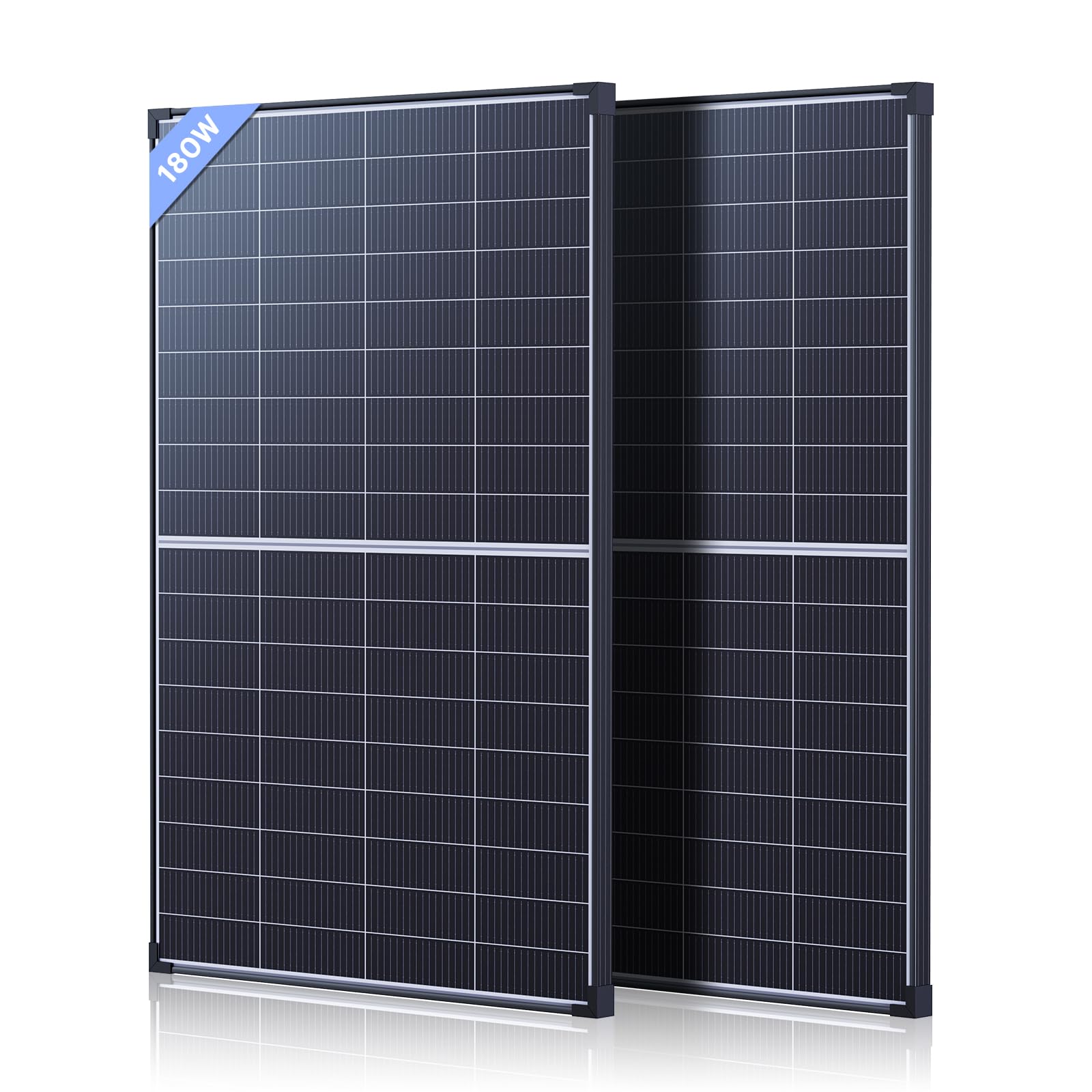
The Callsun 360W kit delivers exactly what the category demands: a true-to-spec 360-watt solar panel that routinely over-delivers in the field. Multiple reports confirm that this 2x180W system produces over 460W on a cold, sunny 30°F day and frequently exceeds its 360W rating in winter conditions. The N-Type 16BB cell architecture and bifacial design are the engines behind this real-world performance, with the TwinCell technology ensuring that partial shade from a roof vent or chimney doesn’t cripple the entire array.
The heavy-duty IP68 rating and reinforced aluminum frame handle snow loads up to 5400 Pa, making it suitable for permanent rooftop or ground-mount installations. The -0.3%/°C temperature coefficient is a standout spec here, meaning the panel maintains far more of its capacity on a 100°F roof compared to standard panels with a -0.4%/°C coefficient. Users pairing these panels with MPPT charge controllers on 12V battery banks regularly see 11+ amps of charging current throughout the morning, even with the panels mounted flat.
One important detail is that this is a panel-only kit — you will need to supply your own charge controller. The 25-year linear performance warranty covering the 25% efficient cells provides long-term confidence, and the compact 46.5 x 30.3 inch footprint per 180W panel makes it a viable option for medium-sized RV roofs where space is premium. The combination of genuine over-performance, bifacial capability, and durable construction makes this the definitive recommendation.
Why it’s great
- Consistently over-delivers on its rated wattage, especially in cool weather
- N-Type 16BB cells with a -0.3%/°C temp coefficient for hot-climate reliability
- Bifacial design adds up to 30% output on reflective ground mounts
Good to know
- Panel only — an MPPT charge controller must be purchased separately
- Frame is thinner than some competitors; use reinforced mounting brackets
2. Renogy N-Type 400W Solar Panel (2x200W)

Renogy is a household name in the RV solar community, and this N-Type 400W kit (2x200W) lives up to that reputation with a clear focus on Class B van owners. At 49.7 x 30.1 inches per panel, it is 7.5% smaller and 11.7% lighter than the previous generation Renogy 400W, giving RV owners critical extra inches for mounting around roof vents and air conditioning units. The advanced 16BB cell technology minimizes micro-crack risks during installation and road vibration — a genuine concern for mobile solar arrays.
The low degradation guarantee is a standout feature: ≤1% in the first year and ≤0.4% annually thereafter, with a 25-year 80% output warranty. This means after a decade, you are still producing over 90% of your original capacity. Users report meeting or exceeding the rated 400W output during peak daylight, with one buyer seeing 1189 watts from a 1000-watt array of these panels, confirming the spec is conservative. The open-circuit voltage of 37.44V per panel means careful series/parallel planning is required for 12V systems, but it is fully compatible with modern high-input MPPT controllers.
One consideration is that at 24V nominal output, these panels are best suited for 24V battery banks or as part of a series string on a high-voltage controller. If you are building a pure 12V system, parallel wiring is recommended to avoid over-voltaging your charge controller. The low temperature coefficient also makes this panel a strong performer in hot climates, where standard panels often lose significant output after noon. For a premium, space-optimized RV panel with the backing of an established brand, this is the benchmark.
Why it’s great
- Compact design ideal for tight Class B van roof spaces
- Industry-leading degradation rate of ≤0.4% annually
- N-Type cells provide excellent performance in high temperatures
Good to know
- Higher open-circuit voltage requires careful system voltage planning
- Premium pricing reflects the brand name and warranty backing
3. EPOCH 400W Bifacial Solar Panel

The EPOCH 400W bifacial panel is a well-executed mid-range entry that punches above its price class. The N-Type A+ grade cells and 16BB busbar design, combined with PERC and half-cut cell technology, give it a clean efficiency rating of 25%. In real-world testing, users report output that rivals premium panels, with one owner on an off-grid cabin keeping a fridge running 24/7 off a small array of these panels, and another seeing 350W from a single panel mounted flat on a camping SUV roof.
The bifacial design is a key differentiator at this price point. The transparent backsheet allows the panel to capture reflected light from the ground, especially useful for ground-mount arrays or white RV roofs. The IP68 junction box and IP67 MC4 connectors provide solid weather resistance, and the panel’s 5400 Pa snow load and 2400 Pa wind load ratings mean it is built for permanent installation. The pre-drilled back holes accept Z-brackets and corner brackets, making installation straightforward for DIY builders.
The main risk with this panel is packaging. Several reports mention that the manufacturer’s shipping boxes are insufficiently padded, leading to damaged frames or shattered glass upon arrival. While customer service appears responsive in providing replacements, the potential for a damaged first unit is a frustration worth noting. For buyers who prioritize value and bifacial performance and are willing to inspect the panel carefully upon delivery, the EPOCH 400W is a compelling option that outperforms its entry-level pricing suggests.
Why it’s great
- Strong real-world output, often producing near or above its rating
- Bifacial design adds meaningful yield on reflective surfaces
- Solid build with IP68 junction box and 5400 Pa snow load rating
Good to know
- Packaging is inconsistent, with some units arriving damaged
- Relatively new brand with a smaller user community than Renogy
4. Futuresolar 720W Solar Panel Kit (2x360W)
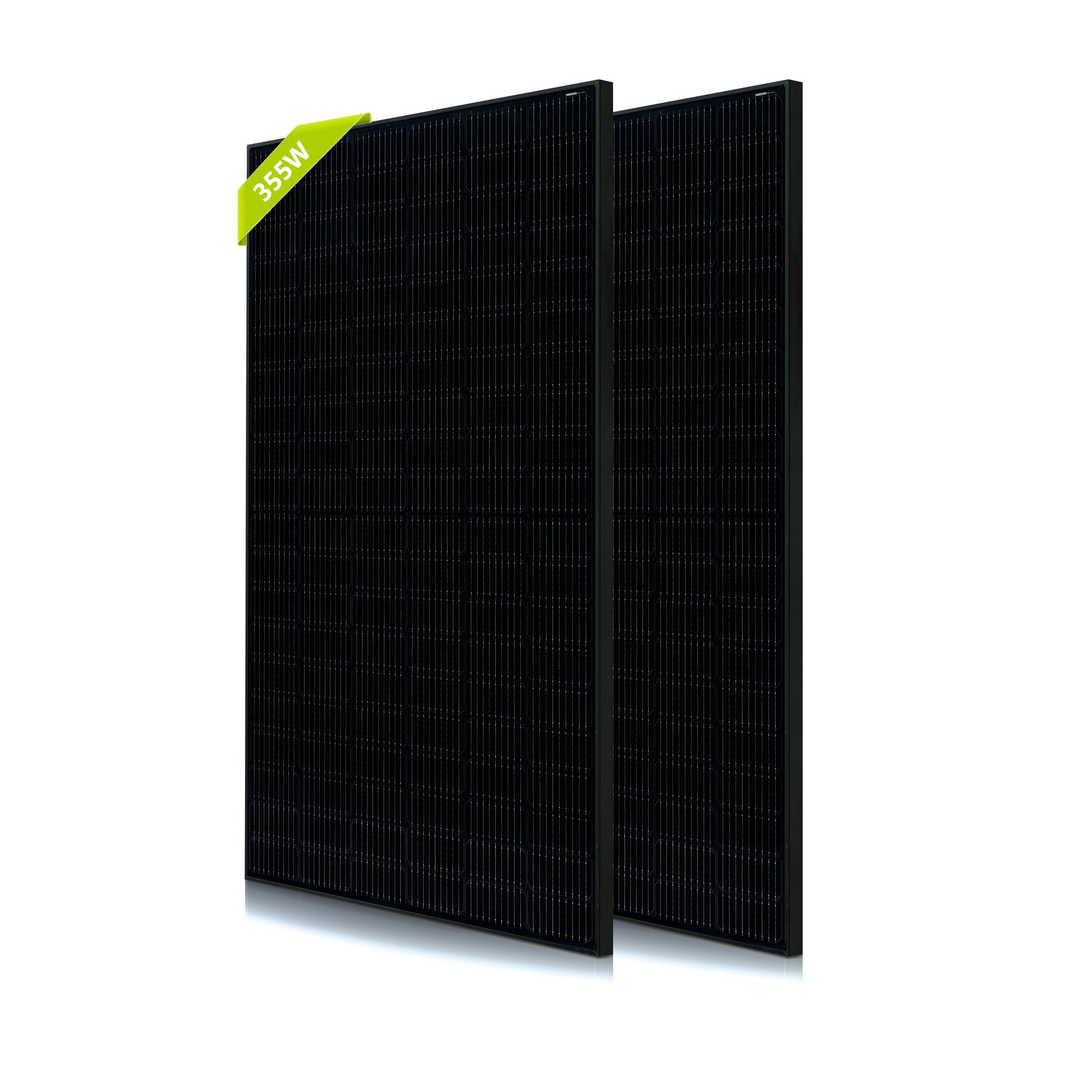
If you are building a larger off-grid array and want the lowest cost per watt without jumping to entry-level panels, the Futuresolar 720W kit delivers serious value. Each of the two 360W panels uses half-cell monocrystalline PERC technology, which improves shade tolerance and reduces the impact of internal resistance compared to full-cell panels. The module efficiency sits at 19.5%, lower than the 25% N-Type panels, but the overall system price per watt is significantly more attractive.
These are standard-sized 70 x 41.4 inch residential-style panels designed for fixed ground mounts, large RV roofs, or shed roofs with ample space. The pre-drilled holes accept standard mounting hardware, and the MC4 connectors are industry standard for both series and parallel configurations. The 25-year linear performance warranty and 10-year workmanship guarantee provide a safety net that many budget panels lack.
The biggest caveat with Futuresolar is packaging quality. Multiple buyers report panels arriving with visible shipping damage, including cracked glass and dented frames. The manufacturer states they will refund or replace damaged units, but this adds a layer of hassle and potential downtime to your installation. For buyers who live close enough to inspect delivery the same day, the savings can be substantial. For those who cannot afford the risk of a damaged panel delaying their project, a premium brand might be the safer bet.
Why it’s great
- Exceptional value on a per-watt basis for a 2x360W system
- Half-cell PERC technology provides improved shade tolerance
- Includes a 25-year linear performance warranty
Good to know
- Packaging is unreliable, with a significant risk of shipping damage
- Only 19.5% efficiency, lower than the 25% N-Type competition
5. AeternaSol 400W Monofacial (2x200W)
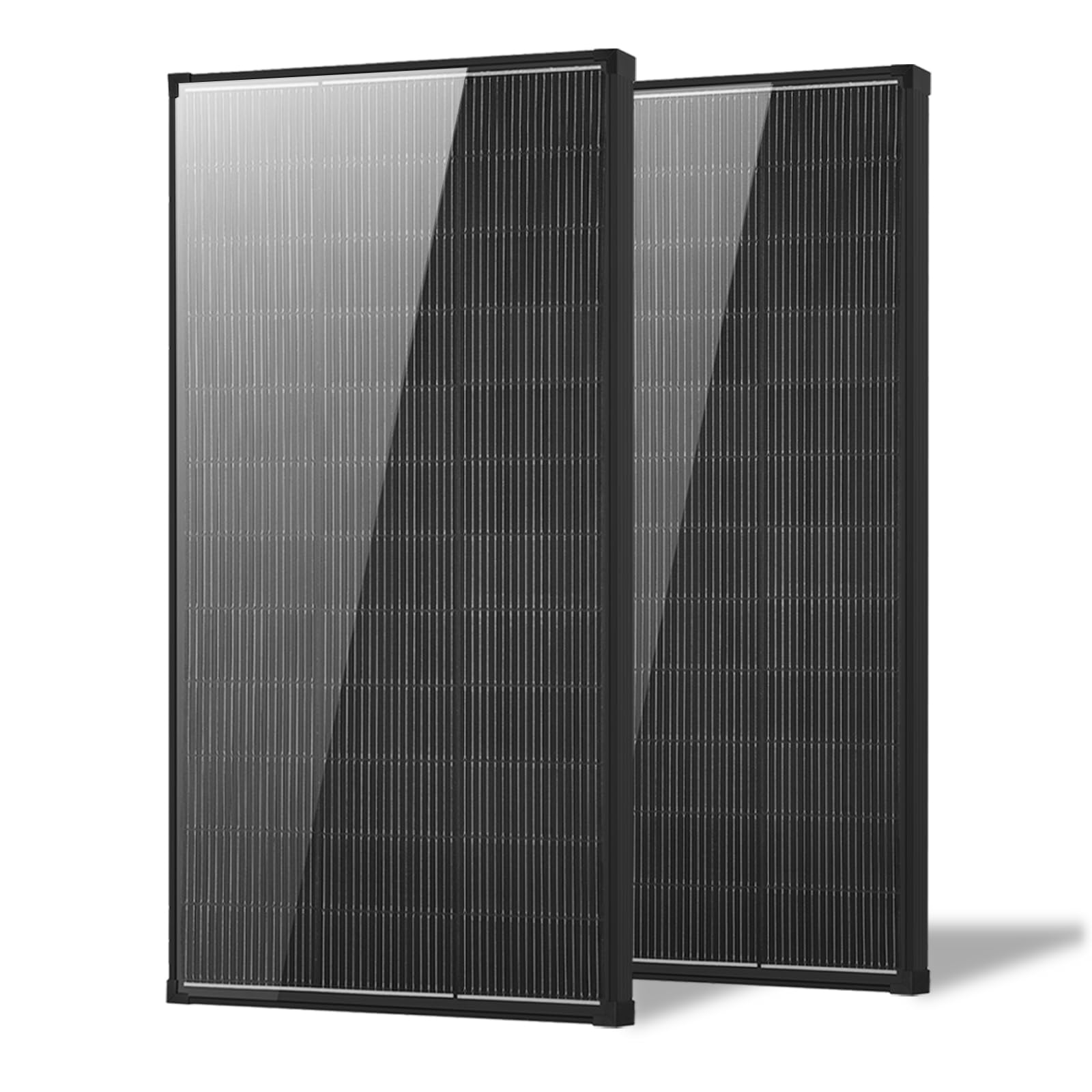
The AeternaSol 400W monofacial kit is an aggressive entry in the budget-friendly segment, packing an 18BB N-Type cell design that is usually found in much more expensive panels. The 18 busbars per cell reduce the effective current path length, boosting conversion efficiency to 25% while also making the panel more resistant to micro-cracks that occur during thermal cycling. For a sub- price point, this is a remarkable concentration of premium cell technology.
The reverse current blocking diode technology prevents parasitic energy drain at night, which is a critical feature for off-grid systems where every watt-hour matters. The 11 AWG oxygen-free copper wiring with UV-resistant sheathing is a detail often overlooked at this price, but it directly impacts long-term reliability. Users report the panels perform as advertised, with one specific test showing 92W output from a single 200W panel at a suboptimal angle — respectable for a non-ideal setup.
The trade-off for the aggressive pricing is the MC4 connector quality. One detailed review notes that the junction box and connectors feel similar to those found on cheaper flexible panels, with a recommendation to avoid putting cable tension on them. For a permanent rooftop install where the cables are tied down securely, this is manageable. For a portable or frequently adjusted ground array, the connector fragility could become a long-term annoyance. For the price-conscious buyer who prioritizes cell technology over connector build, this is a top contender.
Why it’s great
- Outstanding value with N-Type 18BB cells at an entry-level price
- Built-in reverse current blocking diodes prevent nighttime drain
- High-purity 11 AWG OFC wiring for low resistance
Good to know
- MC4 junction box is fragile; avoid cable tension
- Warranty is only 1 year, significantly shorter than premium brands
6. DOKIO 400W Monofacial Solar Panel

The DOKIO 400W panel is built for simplicity. The 9.84-foot MC4 leads are longer than the industry standard, often eliminating the need for extension cables and the extra connection joints that can fail over time. This makes it an excellent choice for first-time solar installers who want to minimize the number of decisions and parts. The tempered glass and aluminum frame construction is straightforward and proven, and the pre-drilled holes align with standard Z-brackets and tilt mounts for sheds, greenhouses, and garden installations.
The panel is large at 67.8 x 44.6 inches and weighs 49.38 lbs, so it is physically imposing. It is a full-size residential panel that replaces a 4x100W array with a single unit. Users report solid performance, with one buyer running 800W total (2x400W) on an EcoFlow Delta Pro and seeing 560W output with partial shade — indicative of good shade tolerance. The manufacturer recommends using an MPPT charge controller for best results, and parallel wiring for 12V systems is preferred to avoid voltage mismatch with high-input controllers.
The 400W rating is a laboratory Standard Test Condition (STC) number, and DOKIO is transparent about this, noting that real-world conditions will reduce output. Customers generally find the output matches expectations for the conditions. One important note is that the panel has no series-fuse protection internal to the junction box, so you must ensure your system’s fuse or breaker is appropriately sized for the panel’s 12.4A short-circuit current. For a simple, no-nonsense ground-mount or shed installation, the DOKIO delivers reliable power with minimum fuss.
Why it’s great
- Long 9.84ft MC4 leads reduce the need for extension cables
- Large single-panel replacement for 4x100W arrays simplifies wiring
- Transparent about STC vs. real-world output expectations
Good to know
- Heavy at 49.38 lbs; requires a sturdy mount
- No internal series fuse; system-level fusing is required
7. AeternaSol 400W Bifacial (2x200W)
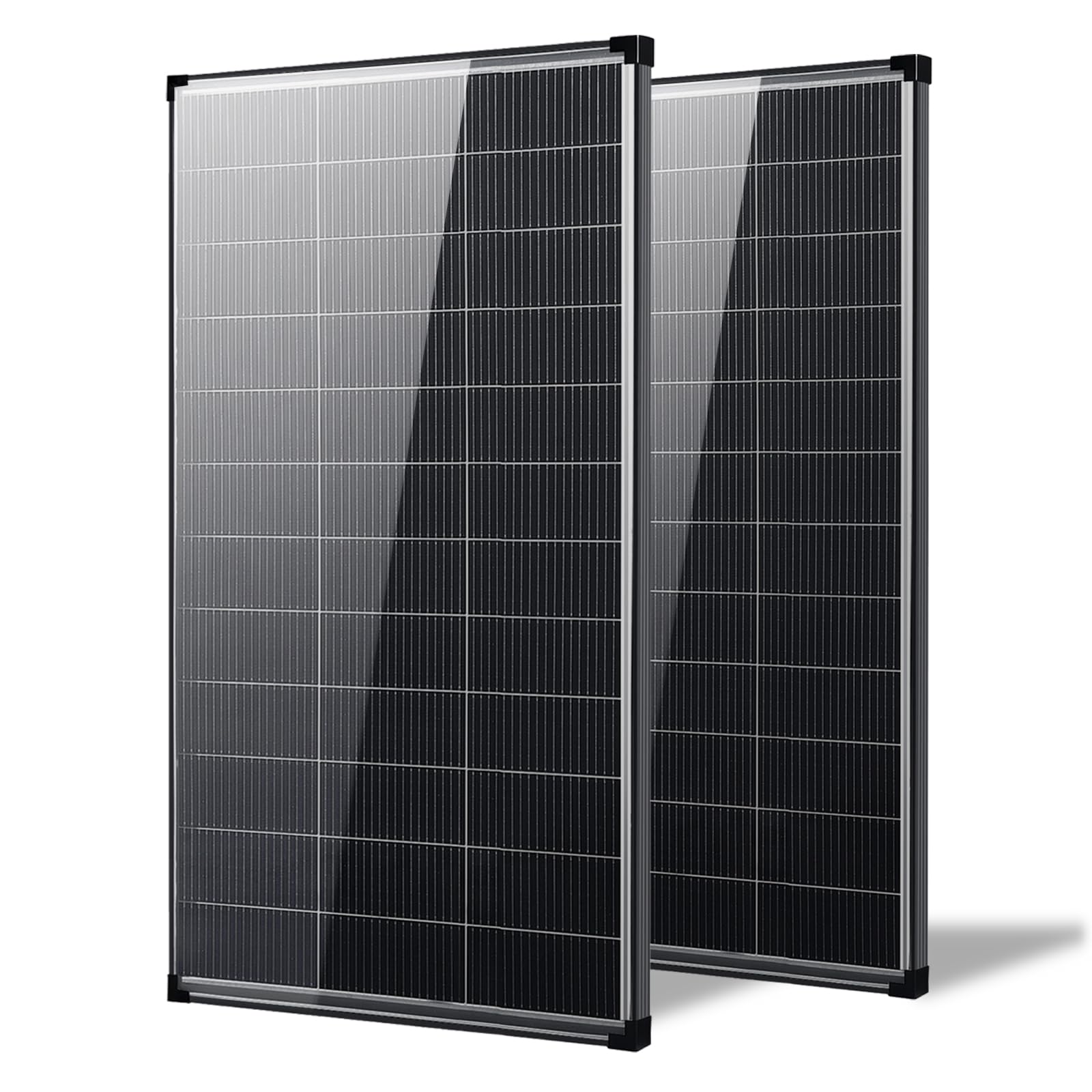
The AeternaSol bifacial kit is the bifacial sibling of the monofacial panel above, sharing the same 18BB N-Type cell architecture and 25% efficiency rating. The key difference is the transparent backsheet, which allows the rear side to capture reflected light. This makes it a natural choice for ground-mount arrays over gravel or light-colored soil, where the bifacial gain can push real-world production noticeably above the rated 400W. For buyers who want to experiment with bifacial technology without committing to a premium price tag, this is a low-risk gateway.
Like its monofacial twin, this panel features the reverse current blocking diode and the 11 AWG oxygen-free copper wire. The IP68 waterproof junction box is filled with polyurethane polymer to prevent moisture ingress, and the anti-corrosion aluminum frame is rated for 2400 Pa wind and 5400 Pa snow loads. The compact 52.8 x 26.4 inch footprint per 200W panel makes it manageable for a single person to handle during installation, which is a practical advantage over larger 400W monolithic panels.
The same MC4 junction box fragility concern applies here. The junction box is similar to what is used on flexible panels, and customers warn against placing tension on the cables. For a fixed installation where the cables are strain-relieved, this should not be a problem. The 1-year warranty is also notably short compared to the 25-year performance guarantees of premium brands. For the budget-conscious off-grid builder who wants bifacial capability, this kit offers a compelling combination of cell technology and price.
Why it’s great
- Affordable entry point into N-Type 18BB bifacial solar technology
- Compact panel size makes solo installation feasible
- Same premium cell tech as the monofacial version at a similar price
Good to know
- MC4 connectors and junction box are not built for tension loads
- Short 1-year warranty provides limited long-term protection
8. ZOUPW 450W Portable Solar Panel
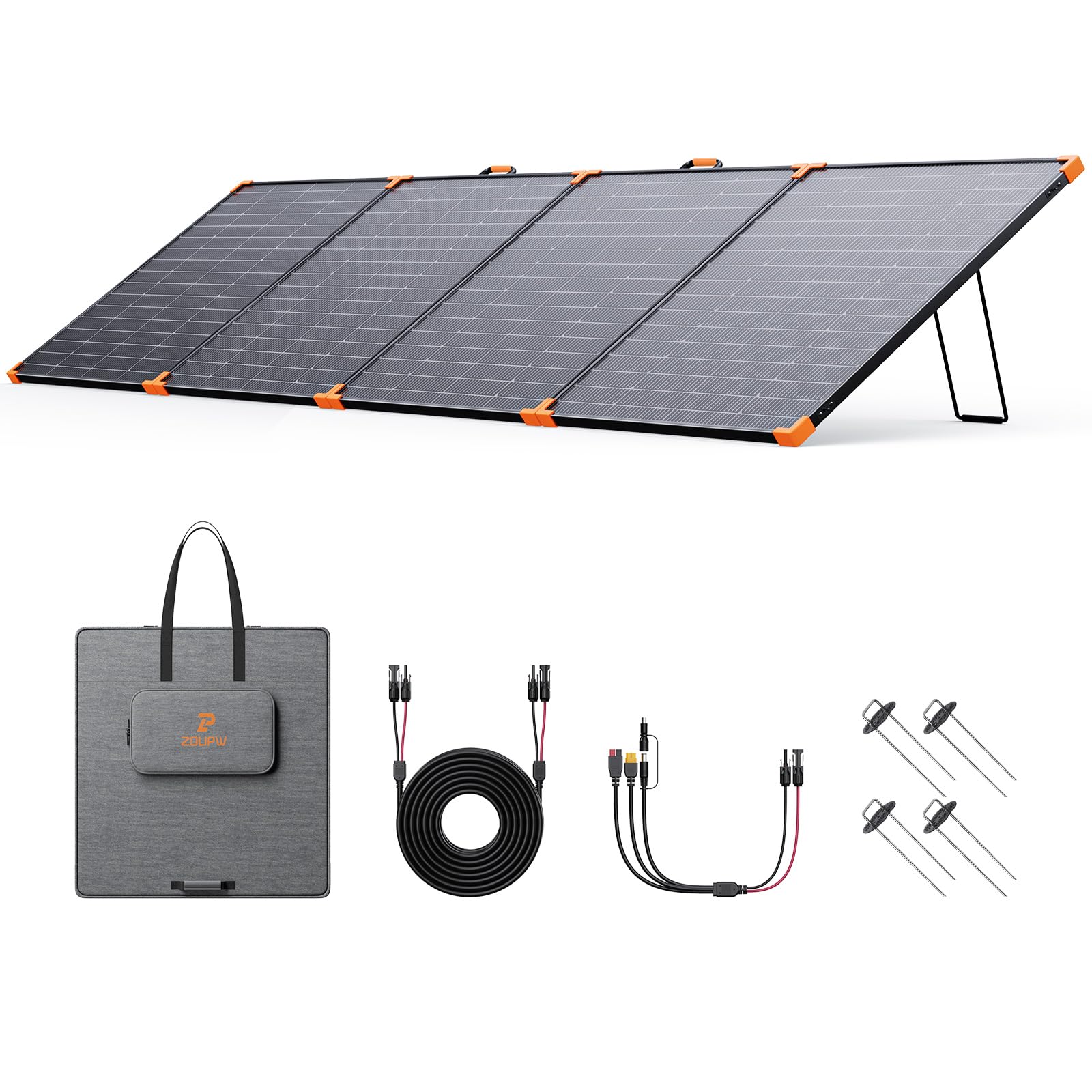
The ZOUPW 450W is a different beast — a portable foldable panel designed to deploy quickly for emergency backup or RV boondocking. At 29.5 lbs with a folded size of 30.4 x 34.6 x 3.5 inches, it is significantly lighter and more packable than rigid glass panels of similar wattage. The N-Type 16BB cell technology and 25% efficiency rating are surprisingly premium for a portable panel, and the built-in kickstands allow for 45° tilt adjustment to optimize sun angle without a separate mount.
The 45.9V open-circuit voltage means this panel is designed exclusively for high-capacity power stations with a 40-60V input range — think EcoFlow Delta series, Anker C1000, and Bluetti Elite 100. It will permanently damage smaller 12V power stations like the Jackery 1000 or Bluetti EB70S. The included 4-in-1 adapter cable with XT60, Anderson, DC7909, and DC8020 connectors provides broad compatibility out of the box. Performance is outstanding for a portable panel, with multiple users reporting sustained output above 450W and peaks exceeding 500W in winter conditions.
The trade-off for portability is durability. The ETFE-coated fiberglass structure is lighter than glass but also less rigid. The panel is not recommended for long-term fixed installation or for use in series or parallel with other panels unless they are identical in age and degradation. The smart bypass diodes prevent hot-spot damage from partial shade, but severe voltage drops can occur when even a small corner is shaded. For portable emergency power and RV travel where the panel is deployed and stored each day, the ZOUPW is an incredibly capable tool. For a permanent ground mount, a rigid panel is better suited.
Why it’s great
- Lightweight and foldable design for easy transport and storage
- Consistently produces 450W+, often peaking over 500W
- Comes with a versatile 4-in-1 connector kit for major power stations
Good to know
- High 45.9V Voc will damage low-voltage power stations
- Not designed for permanent installation; shade tolerance is limited
9. JJN 1100W Bifacial Solar Panel Kit (2x550W)
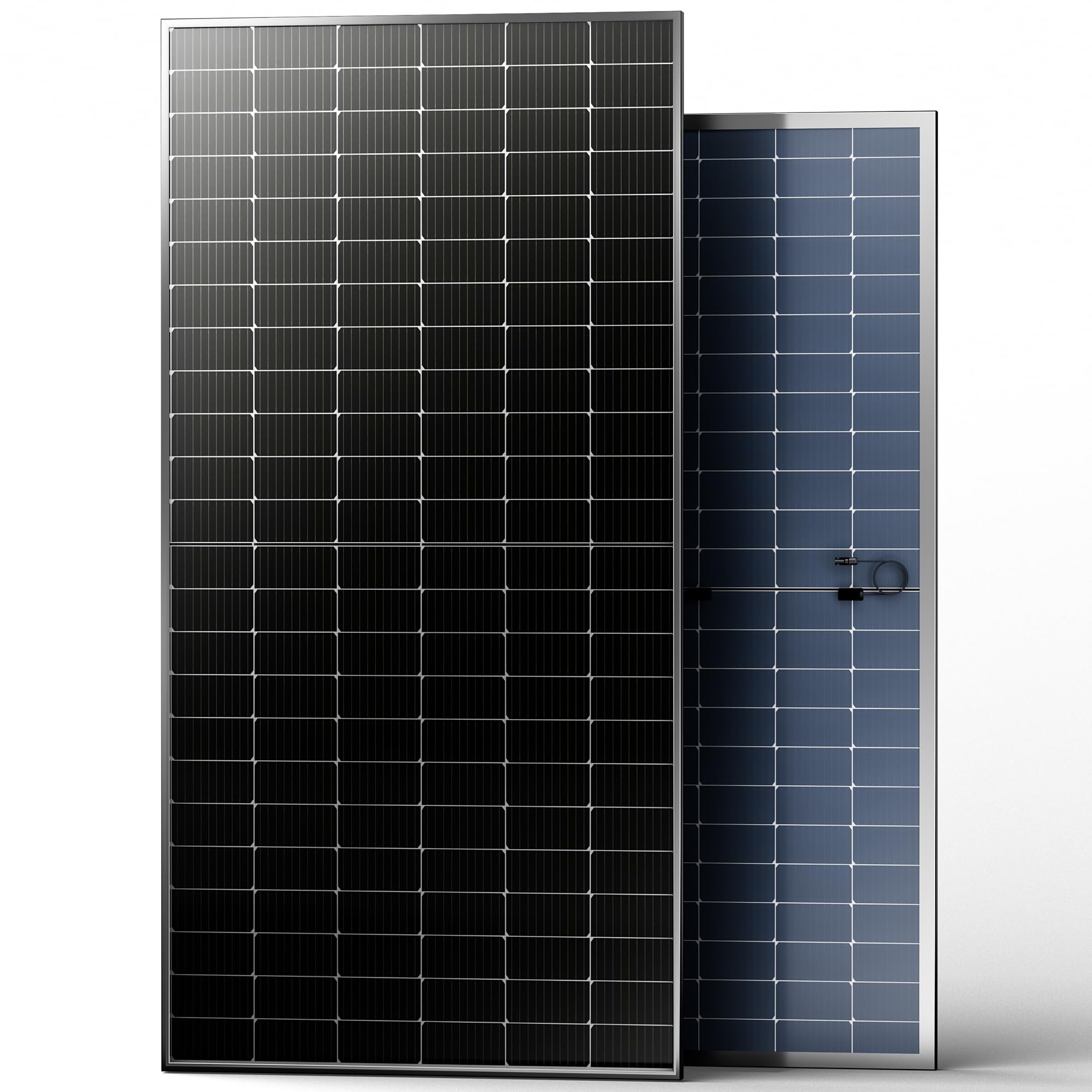
The JJN 550W bifacial panel is a high-output, physically large panel designed for homeowners and serious off-gridders who want to minimize the number of panels required to reach a high total system wattage. At 89.6 x 44.7 inches, this is a full-size 72-cell residential panel that needs significant roof or ground space, but with 550W per panel, you can achieve 1100W with just two panels. The bifacial design can add up to 30% to the monofacial rating, pushing effective output close to 700W per panel when ground-mounted over reflective surfaces.
With a 49.5V maximum voltage, these panels are designed for higher-voltage systems and are best paired with a 48V battery bank or a high-voltage MPPT charge controller. The 23% efficiency rating is lower than the N-Type competition, but the sheer wattage per panel often compensates in overall system simplicity — you need fewer mounting brackets, less wire, and fewer roof penetrations. Users running 5 or 6 of these panels on RVs report peak power close to 1110W, confirming the rated output is achievable.
The main barriers are size and weight. At 123.4 lbs for the pair, these are not solo-install panels. The 1.38-inch thick frame is sturdy but adds to the already heavy weight. Shipping damage is a concern with any large glass panel, and JJN’s packaging has not been universally praised, though customer service appears responsive to replacement requests. For buyers with a 48V system and ample space who prioritize raw wattage over advanced cell technology, the JJN 1100W kit delivers massive power at a compelling per-watt cost.
Why it’s great
- Highest per-panel wattage, reducing total number of panels needed
- Bifacial design can push effective output well beyond 550W
- Excellent for building a high-power array with minimal wiring complexity
Good to know
- Extremely large and heavy panel requires a dedicated installation plan
- 23% efficiency is lower than competing N-Type panels
FAQ
What does a 360 watt solar panel typically weigh and how big is it?
Can I use a 360W panel directly with a 12V battery?
Final Thoughts: The Verdict
For most users, the 360 watt solar panel winner is the Callsun 360W Bifacial Kit because it consistently over-delivers on its nameplate rating, uses modern N-Type 16BB cell technology, and its bifacial design adds real yield on ground-mount installations. If you need a compact N-Type panel for a tight RV roof with minimal degradation over 25 years, grab the Renogy N-Type 400W Kit. And for the best value for a large ground-mount array, nothing beats the Futuresolar 720W Kit despite its packaging risks.