
The 3D FDM printer market has split into two distinct camps: machines that demand hours of manual calibration and tweaking versus models that deliver high-quality prints straight out of the box. For anyone moving past the “hobbyist tinkering” phase, the decision hinges on how much of your time you’re willing to trade for a lower upfront cost. CoreXY speed demons now print a Benchy in under 18 minutes, while traditional bedslingers still struggle with first-layer adhesion after weeks of setup.
I’m Min — the co-founder and writer behind Gadgets Feed. This guide is built on weeks of cross-referencing technical specifications, analyzing real-world user feedback, and comparing build volumes, maximum nozzle temperatures, and motion systems to find the most reliable performers in the mid-range and premium segments.
Whether you need enclosed printing for ABS engineering parts or a multi-color system for vibrant prototypes, the best 3d fdm printer for your workspace balances speed, material versatility, and long-term reliability without requiring a degree in mechanical engineering.
How To Choose The Best 3D FDM Printer
Selecting the right FDM printer means looking beyond the headline print speed. The motion system, build volume, extruder type, and leveling mechanism define whether your experience will be frustration-free or maintenance-heavy. Beginners often over-prioritize speed while ignoring the enclosure and nozzle temperature needed for advanced materials.
Motion System: CoreXY vs. Cartesian Bedslinger
CoreXY printers move the print head on a fixed gantry using two belts, enabling faster acceleration (20,000 mm/s²) without moving the heavy print bed. This reduces ringing and allows higher speeds. Traditional Cartesian bedslingers like the Ender 3 series move the bed on the Y-axis, which limits speed due to mass-induced inertia. For multi-hour prints at high speed, CoreXY is the clear winner.
Auto Bed Leveling and First-Layer Reliability
Manual bed leveling is the single biggest pain point for new users. Modern printers integrate probe-based auto leveling (BLTouch, inductive, or nozzle-as-sensor) that maps the bed surface and compensates for minor warping. The best systems also perform automatic Z-offset calibration, removing the guesswork entirely. If you value your time, skip any printer without reliable auto leveling.
Nozzle Temperature and Material Support
Standard PLA and PETG print well at 240-260°C, but engineering materials like ABS, ASA, Polycarbonate, and carbon-fiber composites require nozzle temperatures of 300°C or higher and an enclosed chamber. For multi-material or multi-color setups, a direct-drive extruder with a hardened steel nozzle is essential to prevent jams and wear from abrasive filaments.
Quick Comparison
On smaller screens, swipe sideways to see the full table.
| Model | Category | Best For | Key Spec | Amazon |
|---|---|---|---|---|
| Bambu Lab A1 | Mid-Range | High-Speed Precision | Acceleration 10,000 mm/s² | Amazon |
| Bambu Lab P1S | Premium | Enclosed CoreXY Workflow | 500 mm/s + Enclosure | Amazon |
| QIDI Q2 | Premium | Engineering Materials | 65°C Heated Chamber | Amazon |
| ELEGOO Centauri Carbon | Mid-Range | Out-of-Box Reliability | 320°C Nozzle / Enclosed | Amazon |
| Creality K1C | Mid-Range | Carbon Fiber Filaments | 600 mm/s + AI Camera | Amazon |
| Anycubic Kobra X | Mid-Range | Multi-Color Starter | 600 mm/s / 19-Color Ready | Amazon |
| FLASHFORGE AD5M | Mid-Range | Fully Auto Calibration | Quick-Release Nozzle | Amazon |
| Original Prusa MK4S | Premium | Production-Grade Open-Source | Input Shaping + PEI Bed | Amazon |
| Creality Ender 3 V3 SE | Budget | Learning & Tinkering | 250 mm/s / Sprite Extruder | Amazon |
In‑Depth Reviews
1. Bambu Lab A1

The Bambu Lab A1 redefines what a mid-range FDM printer can deliver, combining a 256mm³ build volume with a staggering 10,000 mm/s² acceleration. Its active flow rate compensation algorithm reads real-time extrusion data to eliminate over-extrusion and under-extrusion, producing consistently smooth top surfaces even at high travel speeds. The full-auto calibration sequence handles Z-offset, bed leveling, and vibration compensation before every print — removing the single biggest headache for newcomers.
Multi-color printing is possible via the AMS Lite accessory, though the base unit ships as a single-material system. The 1-Clip quick-swap nozzle simplifies material changes, and the entire machine operates at ≤48 dB in silent mode — quiet enough for a shared office space. Users report zero adhesion or clogging issues across hundreds of hours, which is rare at this price point.
The open ecosystem through the Bambu Handy app and Bambu Studio slicer streamlines remote monitoring and model management. The only real concession is the bedslinger design, which uses more desk space than a CoreXY model, but the print quality and ease of use make the A1 the most forgiving transition from box to finished part on this list.
Why it’s great
- Truly plug-and-play calibration — no manual tweaking needed
- Active flow rate compensation ensures flawless extrusion consistency
- Silent mode at 48 dB works in any room without distraction
Good to know
- Bedslinger layout requires extra rear clearance for bed travel
- Multi-color requires separate AMS Lite purchase
2. Bambu Lab P1S

The P1S moves from the A1’s open-frame bedslinger to a fully enclosed CoreXY architecture, unlocking support for ABS, ASA, and Polycarbonate without warping. It matches the A1’s ease of use with automatic bed leveling before every print, but adds a 500 mm/s top speed and 20,000 mm/s² acceleration that cut print times by roughly half compared to traditional printers. Users report the P1S buries previous printers in speed and consistency — one reviewer noted it outperforms a machine.
The enclosed chamber improves print quality for advanced materials while keeping noise contained, and the integrated AMS system supports up to 16-color multi-material prints. The Bambu Studio slicer and MakerWorld community provide a seamless workflow from design to finished part, including remote monitoring via the phone app.
Setup takes about 30 minutes out of the box, and the auto-leveling system plus filament runout pause/resume eliminate the most common failure scenarios. The P1S is more expensive than the A1, but for anyone regularly printing engineering-grade or multi-color parts, the enclosure and CoreXY speed pay for themselves in fewer failed prints.
Why it’s great
- Fully enclosed for ABS/ASA without external enclosure mods
- Superior speed and acceleration for production-level throughput
- 16-color multi-material capability with optional AMS
Good to know
- Not recommended for carbon/glass fiber reinforced filaments
- AMS upgrades add significant cost
3. QIDI Q2
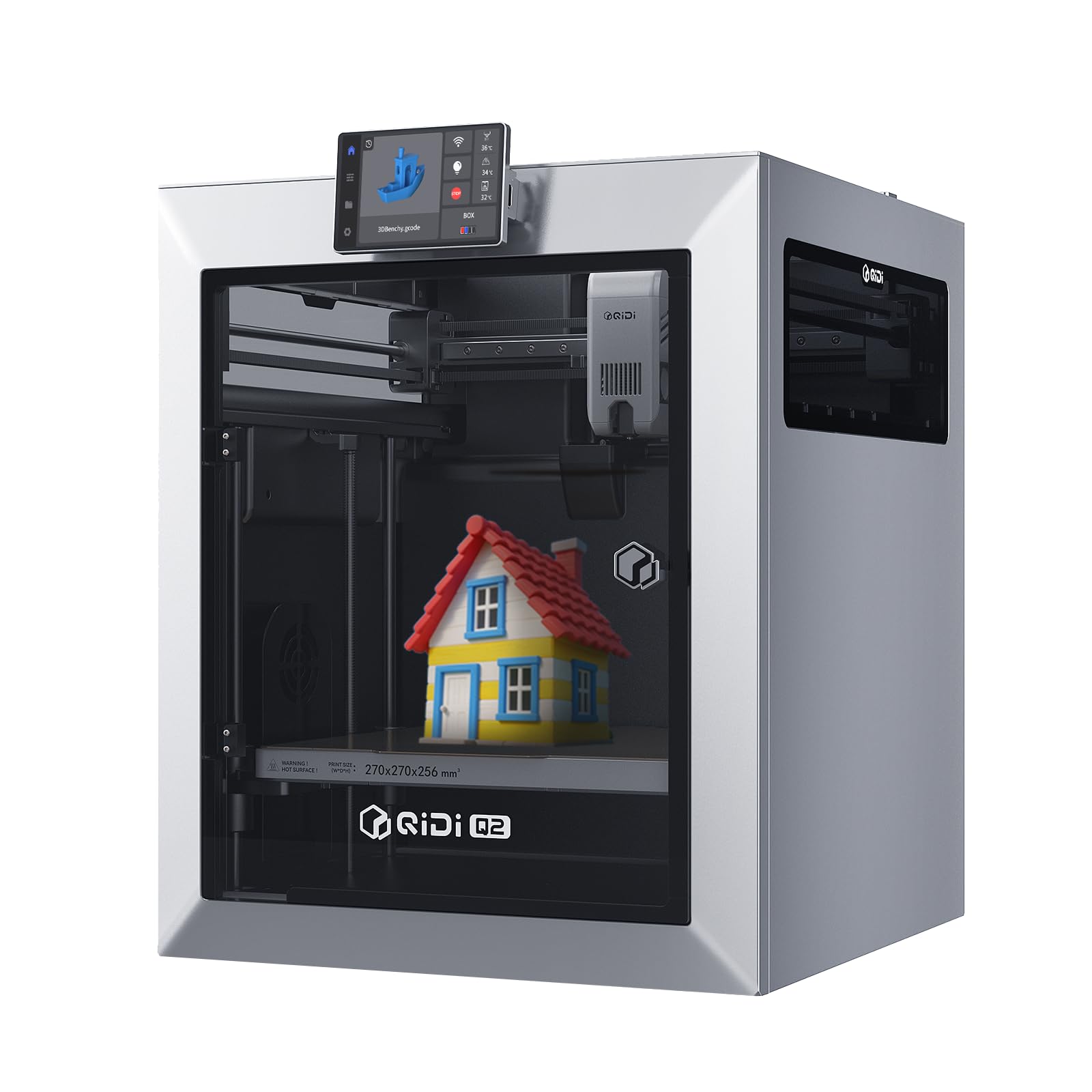
The QIDI Q2 sets itself apart with a 65°C actively heated chamber and a 370°C all-metal hotend, making it the only printer at its price point that can reliably print Polycarbonate, PPA, and Nylon composites without chamber mods. The 270x270x256mm build volume is larger than most competitors, and the nozzle itself acts as the leveling sensor for exceptionally accurate first layers regardless of bed surface condition.
The triple filtration system (G3 pre-filter, H12 HEPA, and activated carbon) makes it safe for indoor operation with ABS and other high-fume materials. The second-generation PTC heater and 1.5GT synchronous belts reduce vibration artifacts, producing smoother sidewalls than the Q1 Pro. Users highlight the 20-minute setup time and AutoPLA/PETG/ABS profiles that produce warp-free prints immediately.
Full Klipper control with an open-source foundation allows advanced users to tune macros and integrate with OctoPrint. The 1080p AI camera enables spaghetti detection and remote monitoring, though some users report false triggers. The Q2 is heavier (39.8 lbs) than most competitors, but the rigid frame contributes to its exceptional dimensional accuracy for engineering prototypes.
Why it’s great
- 65°C actively heated chamber for warp-free ABS and polycarbonate
- 370°C nozzle unlocks PPA, PA, and carbon-fiber composites
- Triple filtration system for safe indoor fume management
Good to know
- Initial firmware had some UI and connectivity issues (mostly resolved)
- AI spaghetti detection can false-trigger on infill patterns
4. ELEGOO Centauri Carbon
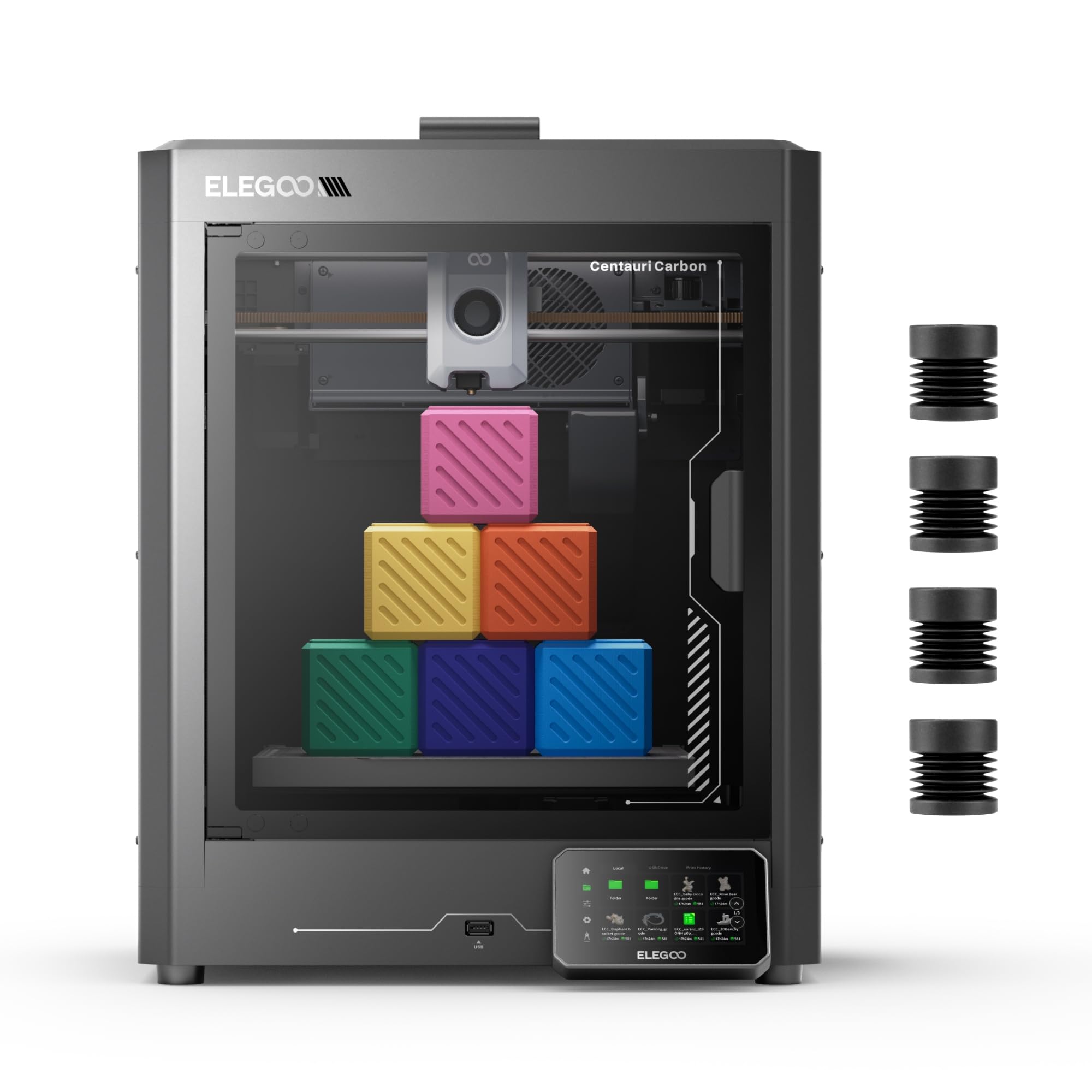
The Centauri Carbon delivers a fully assembled, pre-calibrated CoreXY experience at a price typically reserved for open-frame bedslingers. It prints at 500 mm/s with 20,000 mm/s² acceleration, and the 320°C hardened steel nozzle handles carbon-fiber and glass-fiber filaments out of the box. The rigid die-cast aluminum frame minimizes vibrations, keeping ringing artifacts to a minimum even during aggressive travel moves.
Automatic vibration compensation and pressure advance are baked into the firmware, so users get smooth first layers without manual calibration. The built-in chamber camera with dual LED lighting supports real-time monitoring and time-lapse recording, and the dual-sided PEI build plate has a dedicated PLA-specific surface for superior adhesion at lower bed temperatures.
At 38.5 lbs with a fully enclosed design, it’s a beast for its price class. Users consistently report zero mechanical issues after hundreds of hours of daily use, and the print quality is comparable to enclosures costing twice as much. The only downsides are the proprietary slicer (ElegooSlicer, based on Orca) and occasional firmware quirks that ELEGOO has been responsive in patching.
Why it’s great
- Fully assembled and pre-calibrated — print within minutes of unboxing
- 320°C nozzle for advanced composites without upgrades
- Rigid die-cast aluminum frame for vibration-free high-speed printing
Good to know
- Proprietary slicer, not fully compatible with all third-party slicers
- Heavier than some competitors; requires stable table
5. Creality K1C

The K1C is Creality’s answer to the enclosed high-speed segment, boasting 600 mm/s speed and a 300°C hotend specifically hardened for carbon-fiber filaments. The clog-free direct extruder uses a bolster spring and ball plunger to maintain consistent grip on abrasive materials, while the tri-metal “Unicorn” nozzle integrates a steel tip with a titanium-alloy heatbreak to eliminate jams. The dynamic balancing system counteracts printhead fan vibration to minimize ringing at high speeds.
An AI camera is included as standard equipment, monitoring for foreign objects and malfunctions while also enabling time-lapse capture. The activated carbon air purification system effectively scrubs fumes during ABS and carbon-fiber printing, keeping the enclosure safe for indoor use. Silent mode drops noise to ≤45 dB, making it the quietest enclosed printer in this segment.
The K1C runs Creality OS based on Klipper, offering full open-source customization for advanced users. The auto-calibration sequence handles leveling and resonance compensation in a single tap. While the multi-color CFS system has some software integration rough edges, the K1C’s core print quality and material versatility make it a strong option for users who need carbon-fiber reinforced parts without paying premium-tier prices.
Why it’s great
- Hardened extruder and nozzle for carbon-fiber and glass-fiber filaments
- AI camera with real-time monitoring and malfunction detection
- Silent mode at 45 dB for non-disruptive operation
Good to know
- Multi-color CFS setup has some software integration issues
- Smaller build volume compared to some competitors
6. Anycubic Kobra X
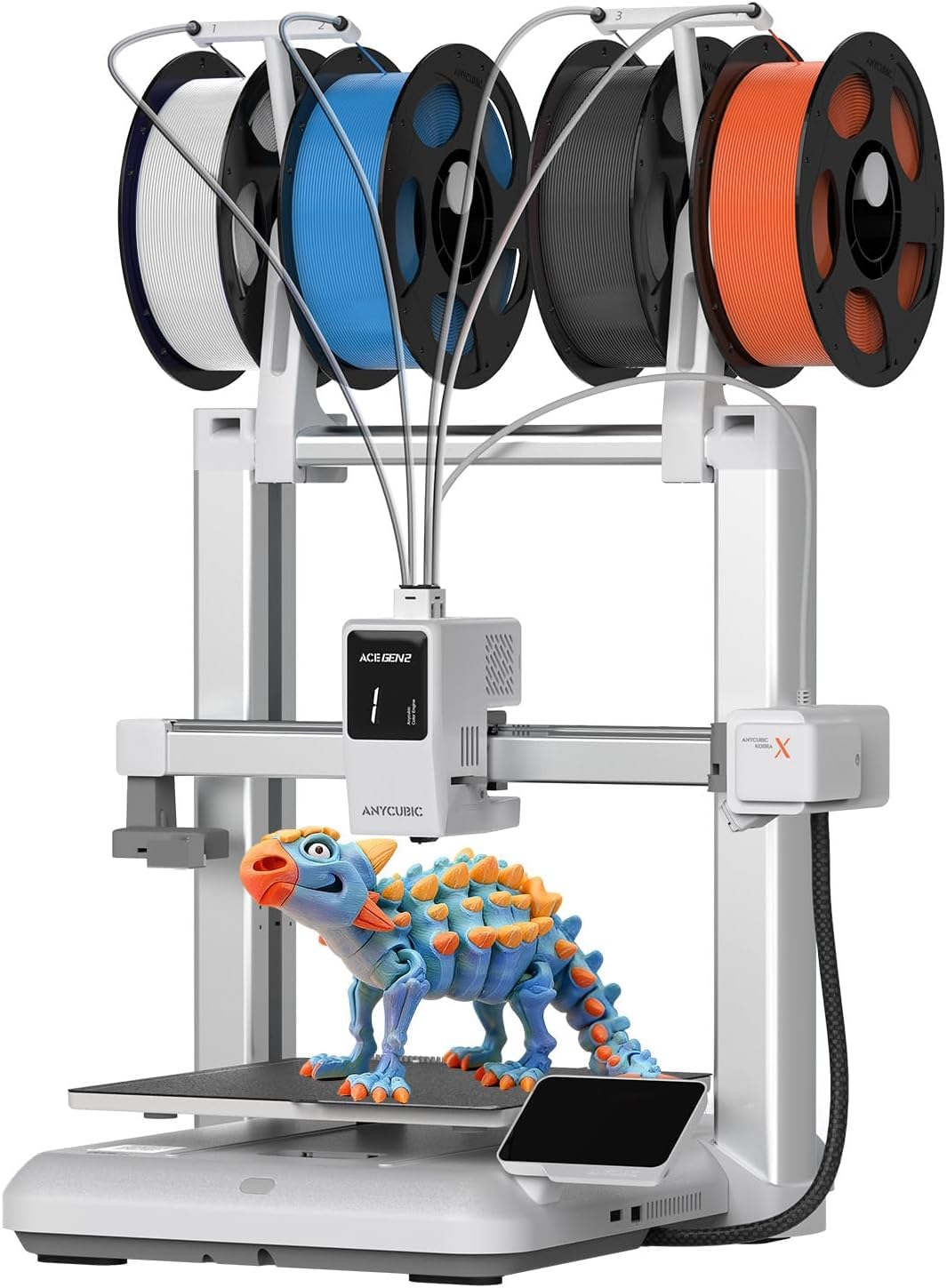
The Kobra X brings native 4-color printing out of the box with its integrated ACE system, expandable to 19 colors with additional ACE 2 Pro units. The 600 mm/s print speed is backed by vibration compensation and a hardened steel nozzle, completing a Benchy in 14 minutes. The LeviQ 3.0 auto leveling system uses 49-point calibration to ensure 100% bed flatness, and the Ai camera provides spaghetti detection and foreign object monitoring.
The open-source software ecosystem (compatible with Orca Slicer and Cura) and dual-band Wi-Fi (2.4G/5G) make remote monitoring seamless through the Anycubic App. The 260mm³ build volume is generous for a mid-range printer, and the top-mount spool holder frees up desk space. Users praise the 265+ hours of reliable printing with PLA, PETG, and TPU without a single adhesion or clogging issue.
Multi-color printing is where the Kobra X truly shines — the Gen 2 ACE system purges 81.25% less filament than competing solutions, cutting both waste and print time. The 300°C nozzle and enclosed-compatible design (with optional upgrades) make it versatile for advanced materials. The phone app could use a bit more polish, but the print quality and color capabilities at this price are unmatched.
Why it’s great
- Native 4-color printing with option to expand to 19 colors
- 81.25% less filament purging waste compared to competitors
- 600 mm/s speed with vibration compensation for smooth layers
Good to know
- ACE 2 Pro and ACE Pro are not interchangeable
- Phone app interface could be more polished
7. FLASHFORGE AD5M

The AD5M is built around the idea that beginners should not need to learn manual leveling. The fully automatic one-click leveling system precisely measures the nozzle-to-bed distance and sets accurate offsets without any user intervention. The all-metal CoreXY structure enables print speeds up to 600 mm/s, and the patent quick-release nozzle can be swapped in 3 seconds — no tools required.
Orca-flashforge slicer supports one-click batch file transmission, and the Flash Maker app enables remote device management and real-time print status monitoring. The 220mm³ build volume is smaller than some competitors, but the resume-after-power-failure feature and flexible PEI steel plate make it practical for unattended overnight prints. Users report consistent print quality from the first run, with setup taking only 15-20 minutes.
The AD5M’s main strength is its reliability: buyers consistently describe it as a “flawless” first printer that works right out of the box. The noise level is quieter than expected, and the Orca slicer is intuitive enough for a 10-year-old to use. The included filament sample is small, but the overall value proposition — CoreXY speed with zero calibration effort — makes the AD5M a compelling entry point.
Why it’s great
- Fully automatic one-click leveling — zero manual calibration
- Tool-free quick-release nozzle swap in 3 seconds
- CoreXY speed without the complexity of self-sourced builds
Good to know
- Smaller 220mm³ build volume limits larger projects
- Included filament sample is minimal
8. Original Prusa MK4S
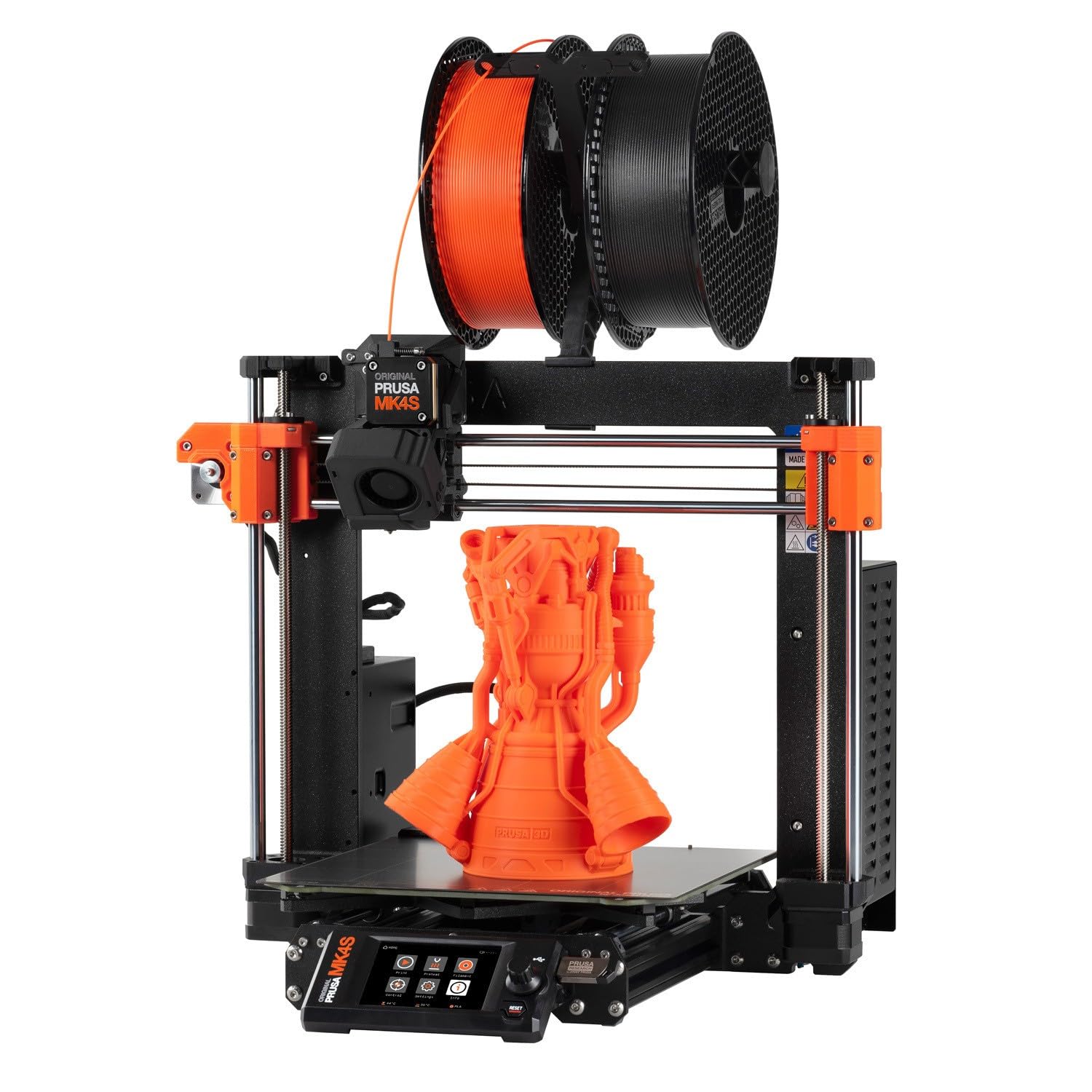
The Prusa MK4S is the gold standard for open-source reliability, combining input shaping for high-speed prints with the company’s legendary 24/7 production-grade build quality. The 9.84×8.3×8.6 inch build volume is smaller than many competing CoreXY machines, but the MK4S compensates with unmatched part consistency — users report zero failed prints due to hardware issues, even with complex overhangs requiring no supports.
The fully assembled version arrives tested and calibrated, though a kit option exists for those who want to build their own printer. Prusa’s interactive online instructions include user comments and tips, making the 3-day build process educational. The PEI spring steel print bed provides excellent adhesion for PLA and PETG, and the nozzle self-cleans between prints to prevent cross-contamination.
Input shaping reduces ringing at speeds up to 200 mm/s, and the Prusa Slicer profiles are pre-tuned for near-perfect first layers. The open-source ecosystem means firmware updates, hardware upgrades, and third-party modifications are fully supported. The Prusa Connect and EasyPrint apps enable remote monitoring and model management. The price is significantly higher than the competition, but the reliability and long-term support justify the cost for production environments.
Why it’s great
- Production-grade reliability with 24/7 operation capability
- Fully open-source ecosystem with lifetime firmware updates
- Input shaping for high-quality prints at faster speeds
Good to know
- Smaller build volume compared to similarly priced CoreXY printers
- Premium price — significantly more expensive than mid-range options
9. Creality Ender 3 V3 SE

The Ender 3 V3 SE represents the modern evolution of the classic Ender 3 platform, now with CR Touch auto leveling, a Sprite direct extruder, and a 250 mm/s top speed. The dual Z-axis with timing belt synchronization reduces wobble, and the 32-bit silent mainboard keeps operation quiet. Assembly takes about 20 minutes, though first-time users should budget extra time for initial calibration and YouTube tutorials.
The PC spring steel build plate with auto filament loading and unloading simplifies material changes. The direct drive extruder handles PLA, PETG, and TPU reliably, and the market-proven Sprite mechanism has shipped over 500,000 units globally. Automatic Z-offset calibration via the strain sensor makes first-layer success far easier than older Ender models.
Despite significant improvements over the original Ender 3, the V3 SE still requires more hands-on maintenance than its enclosed CoreXY competitors. Users report that bed leveling, although automated, still needs occasional manual verification, and some prefer to upgrade the bed springs or build surface. For the budget-conscious user who enjoys tinkering, the V3 SE offers the best value-to-effort ratio, but those seeking immediate reliability should look at higher-tier options.
Why it’s great
- Affordable entry point with CR Touch auto leveling included
- Sprite direct extruder handles flexible filaments reliably
- Dual Z-axis for improved print quality over single-Z designs
Good to know
- Still requires manual tuning and occasional upgrades for best results
- Bed leveling needs periodic verification despite automation
FAQ
Do I need an enclosed printer if I only print PLA?
What is the real-world difference between a bedslinger and a CoreXY printer?
How much maintenance should I expect from a modern FDM printer?
Final Thoughts: The Verdict
For most users, the best 3d fdm printer winner is the Bambu Lab A1 because it combines plug-and-play auto calibration with active flow rate compensation for consistently high-quality prints without any tinkering. If you need enclosed printing for ABS and engineering filaments, grab the Bambu Lab P1S or the QIDI Q2 for its 65°C heated chamber. And for multi-color projects on a budget, nothing beats the Anycubic Kobra X with its native 4-color printing and ultra-low purge waste.