
Forget everything you know about LCD backlight bloom and grayish black bars. The moment you see a self-emissive pixel turn off completely — producing absolute zero light — every other display technology feels like a compromise. That is the core promise of an OLED TV, and the models we are examining represent the most refined expression of that technology available today, with brighter panels, higher refresh rates, and smarter processors than ever before.
I’m Min — the co-founder and writer behind Gadgets Feed. This guide is the result of many hours spent cross-referencing pixel structures, processor names, refresh-rate ceilings, and real-world brightness figures across a wide price spectrum to separate genuine upgrades from marketing churn.
Whether you are shopping for a primary movie room display or the centerpiece of a gaming setup, finding the right option among them requires understanding how panel generations, AI upscaling, and connectivity specs actually affect daily use. This is exactly what this guide to the best 3d oled tv aims to clarify.
How To Choose The Best 3D OLED TV
The shift from LED to OLED is the single largest perceptual upgrade most viewers will ever make, but the fine print — panel type, processor, refresh rate, and HDMI version — determines whether that upgrade feels transformative or merely incremental. Here is what matters most.
Panel Generation: WOLED vs. QD-OLED
Standard white-OLED (WOLED) panels use a white subpixel and color filters, while quantum-dot OLED (QD-OLED) panels replace the white subpixel with a blue OLED layer and quantum dots to produce red and green. QD-OLED generally delivers higher color volume and peak brightness in highlights, making it better for HDR in bright rooms. WOLED panels have matured significantly, especially with LG’s Brightness Booster and micro-lens arrays, but QD-OLED still holds the color gamut edge.
Refresh Rate and HDMI 2.1 Count
OLED response times are already 0.1ms, so the bottleneck is the refresh-rate ceiling. A 120Hz panel covers current-gen consoles fully, but 144Hz and 165Hz panels provide headroom for high-end PC gaming. Equally important is how many HDMI 2.1 ports exist. At least two full-bandwidth 48Gbps inputs allow you to connect a PS5, Xbox Series X, and a soundbar simultaneously without sacrificing 4K 120Hz on any device.
Anti-Reflection and Ambient Light Handling
OLED panels are glossy by nature, which deepens blacks in dark rooms but creates reflections in bright spaces. The new Glare-Free coating on Samsung’s S95F virtually eliminates mirror-like reflections, while Sony and LG rely on circular polarizers and AR treatments. If your room has large windows or recessed ceiling lights, prioritize models with advanced anti-glare layers to maintain black-level integrity during daytime viewing.
Quick Comparison
On smaller screens, swipe sideways to see the full table.
| Model | Category | Best For | Key Spec | Amazon |
|---|---|---|---|---|
| Samsung S90F 65-Inch | QD-OLED | Mid-Range Gaming and Movie Hub | 144Hz, NQ4 AI Gen3 | Amazon |
| Sony BRAVIA 8 II 55-Inch | QD-OLED | Reference-Grade Movies and PS5 | XR Processor, 120Hz | Amazon |
| Samsung S90F 77-Inch | QD-OLED | Large Room QD-OLED Value | 144Hz, 77-Inch Screen | Amazon |
| LG C4 77-Inch | WOLED | Premium All-Rounder with Four HDMI 2.1 | 144Hz, A9 AI Gen7 | Amazon |
| LG C1 77-Inch | WOLED | Budget Large-Format Entry | A9 Gen4, 120Hz | Amazon |
| Sony BRAVIA 8 77-Inch | WOLED | Cinematic Dark Room Setup | XR Contrast Booster 15 | Amazon |
| Samsung S85F 55-Inch | WOLED | Entry-Level OLED Clarity | 120Hz, 4K AI Upscaling | Amazon |
| Sony BRAVIA XR8B 55-Inch | WOLED | PS5 Optimized Mid-Range | XR Processor, 120Hz | Amazon |
| LG B5 83-Inch | WOLED | Giant Screen at Reasonable Cost | Alpha 8 Gen2, 120Hz | Amazon |
| Samsung S95F 83-Inch | QD-OLED | Flagship Glare-Free Cinema | 165Hz, NQ4 AI Gen3 | Amazon |
| Sony BRAVIA 5 98-Inch | Mini LED | Ultra-Large Bright Room TV | XR Processor, 120Hz | Amazon |
In‑Depth Reviews
1. Samsung 65-Inch Class OLED S90F 4K Smart TV (2025 Model)

The Samsung S90F delivers the most balanced package of QD-OLED color volume, motion clarity, and gaming readiness at a mid-premium price. Its NQ4 AI Gen3 processor uses 128 neural networks to upscale SDR and HD content to convincing 4K detail, while the 144Hz refresh rate with VRR covers both console and high-frame-rate PC gaming without tearing. The panel reaches impressive brightness peaks that give HDR highlights real punch, and the anti-reflection coating reduces glare in moderately lit rooms better than older Samsung OLEDs.
Color saturation is noticeably wider than equivalent WOLED panels from the same generation. Deep reds and neon greens in game HUDs or animated films have a vividness that feels almost volumetric. Motion Xcelerator 144Hz keeps fast camera pans in racing titles and sports broadcasts crisp with minimal stutter, and the Dolby Atmos + Q-Symphony integration makes a Samsung soundbar a natural companion for a fuller soundstage.
The 65-inch class is the price-to-performance sweet spot, though the thin bezel requires careful handling during wall mounting. The solar-powered remote reduces battery waste but requires direct light to stay topped up. If you want one TV that excels equally across streaming, gaming, and live sports without stepping into ultra-premium pricing, this is the most well-rounded choice.
Why it’s great
- QD-OLED delivers wider color gamut than WOLED competitors
- 144Hz refresh rate with VRR and FreeSync Premium
- NQ4 AI Gen3 upscaling preserves fine texture detail
Good to know
- Panel is fragile; inspect packaging immediately upon delivery
- Only two full-bandwidth HDMI 2.1 ports for 4K 144Hz
2. Sony BRAVIA 8 II 55-Inch TV, QD OLED (K-55XR80M2)

Sony’s XR processor remains the gold standard for real-time image analysis, and the BRAVIA 8 II leverages that AI power to produce the most film-like OLED image on this list. The quantum dot panel pushes color volume further than Sony’s previous WOLED models, while XR Triluminos Max renders skin tones and natural landscapes with a nuance that cheaper processors crush into posterization. The Acoustic Surface Audio+ system turns the entire screen into a speaker, delivering sound that genuinely seems to originate from the on-screen action.
Studio-calibrated modes for Netflix, Prime Video, and Sony Pictures Core mean you can watch with creator-intended color and gamma right out of the box without hours of manual tuning. The anti-glare coating is less aggressive than Samsung’s Glare-Free layer, so a pitch-dark room is ideal for this TV, but when the lighting is controlled, the black level depth and highlight separation are unmatched. PS5 owners benefit from Auto HDR Tone Mapping and Auto Genre Picture Mode, which eliminate the need to fiddle with TV settings when swapping between games and streaming.
At 55 inches, this is a premium investment for a specific use case: a dedicated movie room or a primary display where picture purity outweighs sheer screen size. The Google TV interface is snappy, and the included Sony Pictures Core credits add immediate value for film collectors. If your priority is reference-grade image processing, this is the definitive pick.
Why it’s great
- XR processor delivers the best SDR and HD upscaling in class
- Acoustic Surface Audio+ creates front-firing, immersive sound
- Auto HDR Tone Mapping is seamless for PS5
Good to know
- Only two HDMI 2.1 ports at 48Gbps
- Heavier than comparable 55-inch OLEDs; two-person wall mount required
3. Samsung 77-Inch Class S90F Smart TV (77S90F)
Stepping up to the 77-inch S90F gives you the same QD-OLED panel and NQ4 AI Gen3 processor as the 65-inch model, but the extra diagonal inches transform the cinematic immersion for a relatively modest jump in price. This is the largest QD-OLED screen available at this tier, and it fills a 10- to 15-foot viewing distance with true reference-grade contrast and color. The 4K 144Hz VRR capability makes it equally suited for PC gaming on a couch, where the wide viewing angle preserves color accuracy across the entire row of seats.
The Glare-Free coating is the same as the S95F, which means daytime sports and bright living rooms do not wash out shadow detail. HDR highlights in movies like Dune or Blade Runner 2049 hit noticeably harder than WOLED competitors at this screen size. The Tizen smart platform is responsive and aggregates streaming apps cleanly, though power users may miss the app flexibility of Android TV. Q-Symphony Pro pairs seamlessly with Samsung soundbars to use the TV speakers as an extra center channel.
The main trade-off at this size is fragility during shipping — reports of repackaged or damaged units are not rare, so document the unboxing thoroughly. If you want the impact of a truly large OLED without jumping to flagship pricing, this is the high-value champion.
Why it’s great
- 77-inch QD-OLED offers best size-to-performance ratio
- Glare-Free coating works well in bright rooms
- 144Hz with VRR for high-end PC gaming
Good to know
- Thin OLED panel is prone to shipping damage
- Anti-reflective coating can be scratched by harsh cleaners
4. LG 77-Inch Class OLED evo C4 Series Smart TV (OLED77C4PUA, 2024)

The LG C4 refines the long-dominant C-series formula with the a9 AI Processor Gen7, Brightness Booster, and a full suite of four HDMI 2.1 inputs. For gamers juggling a PS5, Xbox Series X, and a soundbar, the C4 eliminates the HDMI port scarcity that plagues most competitors. The WOLED panel has been pushed to 144Hz, and with 0.1ms response time plus G-Sync and FreeSync Premium, competitive titles feel virtually lag-free. Dolby Vision and Atmos support is native, and the Filmmaker Mode preserves director intent without aggressive processing.
The evo panel generation brings a measurable brightness increase over the C1 and C2, though it still falls short of QD-OLED in peak color luminance. In a controlled lighting environment, the difference is marginal; in a bright room, the Samsung QD-OLED panels will look punchier. WebOS has been streamlined with the Re:New program promising five years of updates, but the home screen still pushes LG Channels and ads more aggressively than some users prefer. The Magic Remote pointer is clever for cursor navigation but disorienting for standard scrolling.
For mixed-use households where multiple HDMI 2.1 devices are permanently connected, the C4 is the most practical premium large-format OLED. The 77-inch size balances cost and immersion, and the image quality is excellent — it simply does not reach the absolute color ceiling of QD-OLED.
Why it’s great
- Four full-bandwidth HDMI 2.1 ports — no port sharing needed
- 144Hz, G-Sync, FreeSync Premium for PC and console
- Brightness Booster noticeably elevates HDR highlights
Good to know
- WebOS interface includes advertising integrations
- WOLED panel less color-saturated than QD-OLED alternatives
5. LG OLED C1 Series 77-Inch (OLED77C1PUB, 2021)

The LG C1 remains a compelling option for buyers who want a massive 77-inch OLED without chasing the latest generation. Powered by the a9 Gen4 processor, it delivers the same self-lit pixel control and infinite contrast that defines OLED, with 4K 120Hz support for consoles and PC. The 2021 model lacks the Brightness Booster and 144Hz capability of the C4, but for movie and TV consumption in a dark room, the visible difference is small. The Evo panel variant is present in many late-production units, providing a minor brightness bump.
Feature-wise, you still get G-Sync and FreeSync compatibility, four HDMI 2.1 ports, and a comprehensive smart platform with WebOS. The older processor handles 4K streaming without issue, though 1080p upscaling is softer than Sony’s XR or Samsung’s NQ4 Gen3. The C1 also lacks the newer anti-glare treatments, so reflections are more visible in daytime viewing. The Magic Remote is included and works well for voice search and app navigation, though the gyroscopic pointer can feel excessive for simple menu scrolling.
If you can find this unit at a significantly lower price than current-generation models, the C1 offers genuine OLED performance on a 77-inch scale that remains competitive. Just factor in the lower brightness ceiling and the absence of future WebOS updates compared to the C4 or C5.
Why it’s great
- 77-inch OLED at the most accessible price point
- Four HDMI 2.1 ports with G-Sync and FreeSync
- Excellent black level and contrast in dark rooms
Good to know
- Older a9 Gen4 processor is less effective at upscaling low-res content
- Reflective screen; not ideal for bright rooms
6. Sony 77-Inch OLED 4K Ultra HD TV BRAVIA 8 (K-77XR80)

Sony’s XR Contrast Booster 15 pushes the BRAVIA 8’s WOLED panel to exceptional highlight brightness for a non-QD-OLED TV, and the XR processor’s object-based scene analysis produces some of the best shadow detail in the industry. In a dark room, the interplay between deep blacks and specular highlights creates a three-dimensional depth that cheaper processing cannot replicate. The Acoustic Surface Audio+ system vibrates the entire screen to produce sound from the center of the image, which significantly improves dialogue clarity and directionality without needing a soundbar.
The 77-inch BRAVIA 8 is built for film purists. The Netflix Adaptive Calibrated Mode and Prime Video Studio Calibrated Mode mean you get consistent color and gamma across multiple streaming services. Google TV provides a clutter-free interface with excellent voice search via Google Assistant, and AirPlay 2 adds easy Apple device casting. For PS5 owners, the exclusive Auto HDR Tone Mapping and Auto Genre Picture Mode remove the need to adjust settings between games and movies.
The main catch is that the BRAVIA 8 uses a standard WOLED panel, so color saturation in bright highlights is not as intense as QD-OLED alternatives at this screen size. This is a TV that rewards a dark, purpose-built media room. If your setup allows for controlled lighting and you prioritize film-like motion and image processing over raw brightness, this is the Sony OLED to buy.
Why it’s great
- XR Contrast Booster 15 delivers outstanding WOLED brightness
- Sony’s upscaling and motion handling are best-in-class
- Studio-calibrated modes for Netflix, Prime Video, and Sony Pictures Core
Good to know
- WOLED panel cannot match QD-OLED color volume
- Only two HDMI 2.1 ports
7. Samsung QN55S85FAFXZA 55-Inch OLED HDR 4K Smart TV (2025)
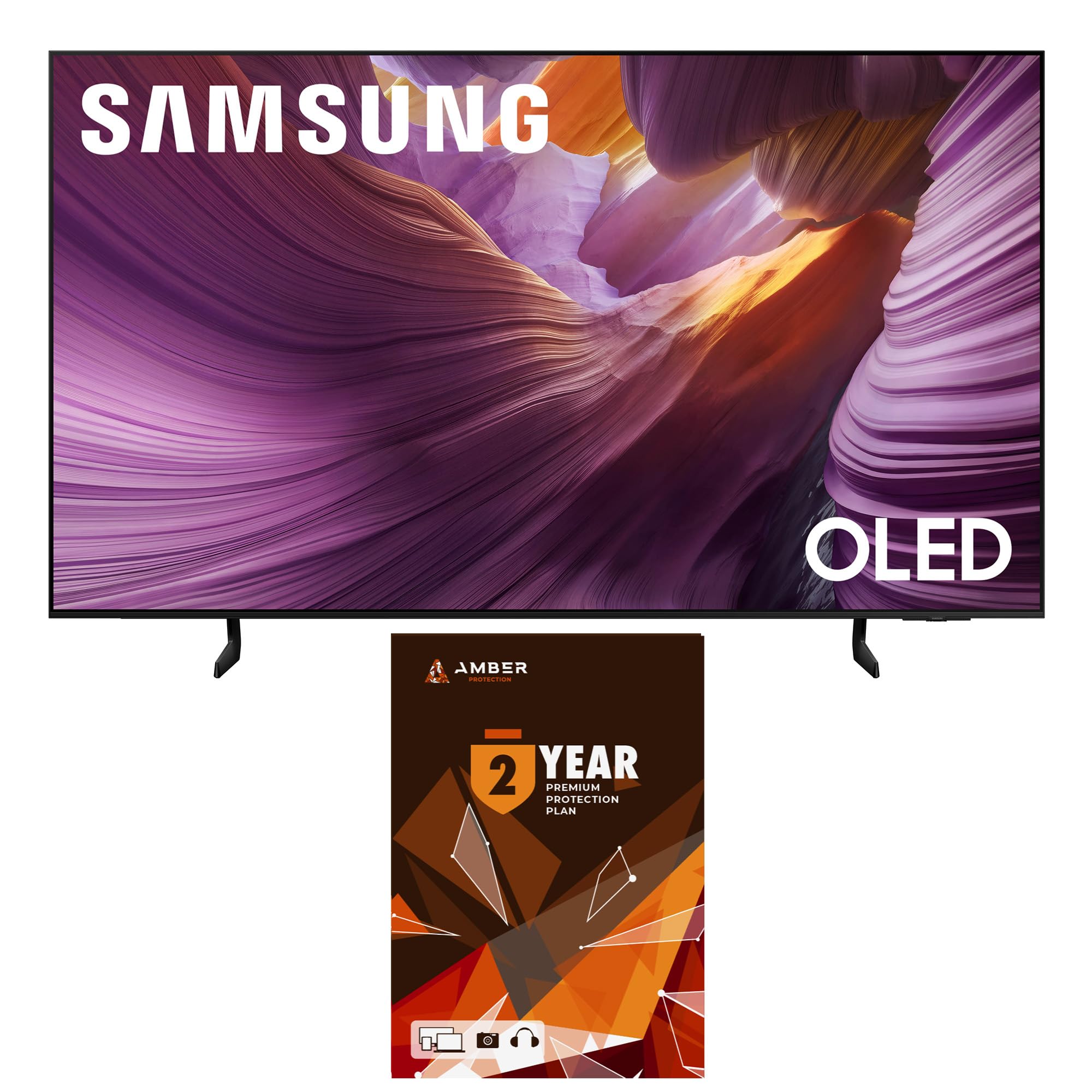
The Samsung S85F is the brand’s gateway to OLED, using a proven WOLED panel paired with the NQ4 AI Gen2 processor and a 120Hz refresh rate. This combination delivers the core OLED benefits — perfect blacks, infinite contrast, and wide viewing angles — at a price that undercuts the QD-OLED models. Pantone Validation ensures color accuracy for skin tones and natural scenery, and the Real Depth Enhancer adds subtle contrast mapping that makes foreground objects pop against backgrounds.
The S85F covers the full 4K resolution and HDR10+ support, and the Motion Xcelerator 120Hz handles sports and console gaming smoothly. Tizen Smart TV provides a stable app ecosystem, though it lacks the app library breadth of Google TV. The bundle also includes a two-year protection plan through the seller, which adds peace of mind for first-time OLED buyers.
This is the perfect TV for someone moving from LED to OLED who wants the foundational experience without paying for advanced features like 144Hz or QD-OLED saturation. The 55-inch size fits most living rooms comfortably, and the Graphite Black design keeps the bezel minimal. If you have the budget to step up to the S90F, the QD-OLED color boost is worth it, but the S85F is a solid entry point with absolutely no bad habits in dark-room viewing.
Why it’s great
- Most affordable path to Samsung OLED with full 4K HDR
- Pantone Validated color accuracy for realistic skin tones
- Bundled two-year protection plan adds confidence
Good to know
- Standard glossy panel shows reflections in bright rooms
- No QD-OLED layer; color volume is typical WOLED
8. Sony 55-Inch OLED 4K Ultra HD TV BRAVIA XR8B (K-55XR8B)

The BRAVIA XR8B is Sony’s mid-range OLED that inherits the XR processor and core PS5 integration features from the flagship models at a lower price. You get the same Auto HDR Tone Mapping and Auto Genre Picture Mode that make PlayStation 5 gaming plug-and-play — the console and TV handshake automatically to optimize brightness and picture mode per title. The XR OLED Motion system reduces blur in fast-paced games without introducing the soap-opera effect that plagues lower-tier interpolation.
Black level performance is classic OLED: pixels shut off completely for true black bars and shadow scenes, while XR Clear Image upscales 1080p and 1440p content with surprising sharpness. The Google TV platform is fast and grants access to all major streaming apps, and AirPlay 2 support adds easy screen mirroring from iPhones and Macs. Dolby Vision and Atmos support ensure that movies look and sound cinematic, though the built-in speakers are adequate rather than exceptional — a soundbar is recommended for full immersion.
The 55-inch size makes this ideal for a dedicated gaming desk or a medium-sized bedroom setup. At its price point, the XR8B competes directly with Samsung’s S85F, but the superior motion processing and PS5 integration give Sony the edge for gamers. The dual HDMI 2.1 ports are sufficient for a console and soundbar, but not if you own multiple HDMI 2.1 devices.
Why it’s great
- Auto HDR Tone Mapping and Auto Genre mode for PS5
- XR OLED Motion delivers blur-free gaming without artifacts
- Sony’s upscaling of sub-4K content is best-in-class
Good to know
- Only two HDMI 2.1 ports (48Gbps bandwidth)
- Built-in audio is average — budget for a soundbar
9. LG 83-Inch Class OLED AI 4K B5 Series Smart TV (OLED83B5PUA, 2025)
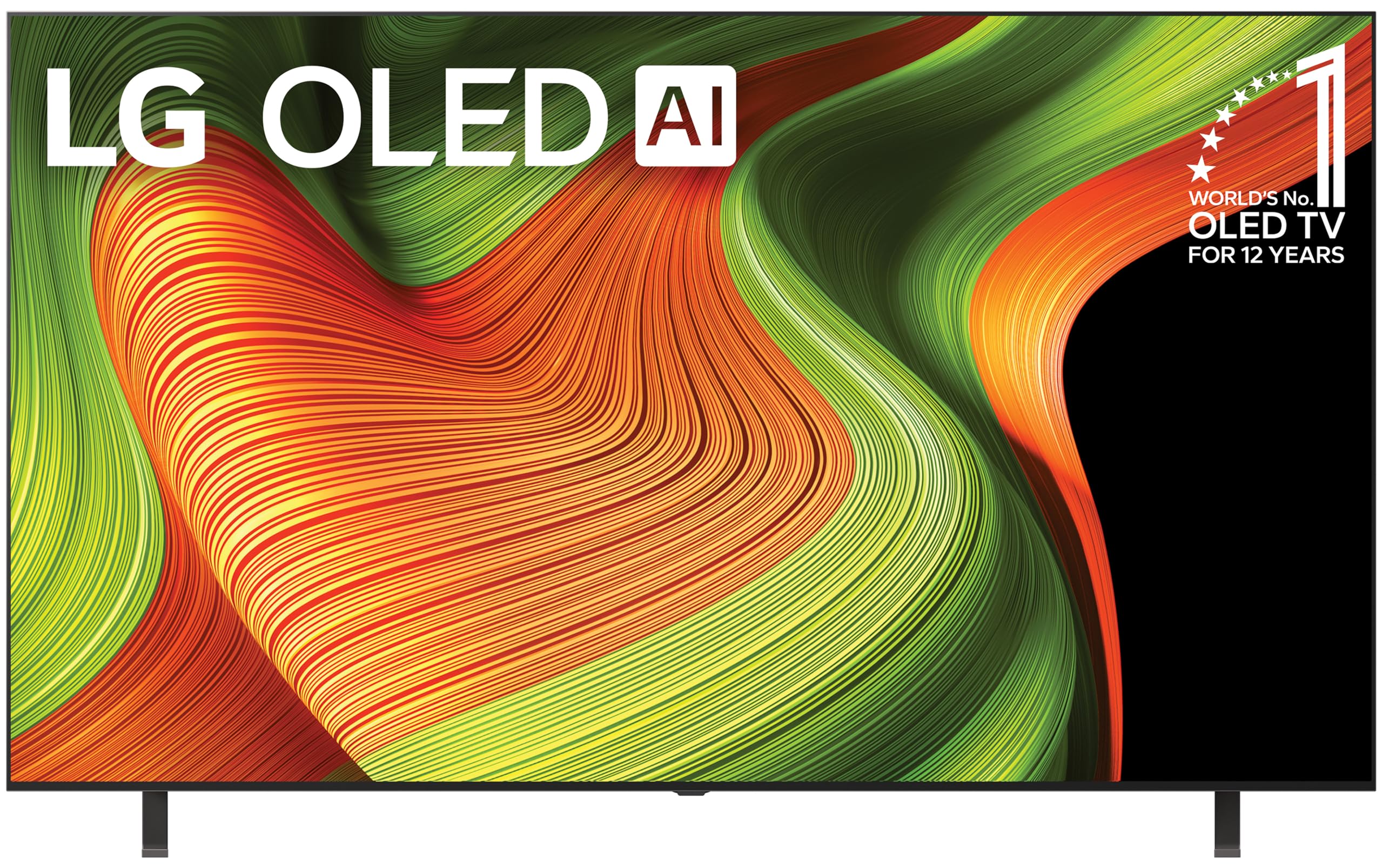
The LG B5 is the entry point into true large-format OLED at 83 inches, and the price-to-screen-size ratio is unmatched by any other OLED in this guide. The Alpha 8 AI Gen2 processor handles 4K upscaling and noise reduction competently, though it lacks the refinement of the a9 series found in the C4. The panel is a standard WOLED without Brightness Booster or micro-lens array, so peak brightness is lower, but in a dark or dimly lit room, the infinite contrast and perfect blacks still produce a staggering image that dwarfs any LED television.
For movie marathons and cinematic sporting events, the sheer scale of 83 inches transforms the viewing experience. Dolby Vision and Atmos are supported natively, and Filmmaker Mode bypasses motion smoothing for a theatrical look. The four HDMI 2.1 ports at 120Hz mean you can connect multiple consoles and a soundbar without compromise. The B5 also supports NVIDIA G-Sync, AMD FreeSync Premium, and VRR for gaming, though the lower brightness ceiling means HDR gaming visuals are less punchy than on the C4 or S90F.
The Magic Remote with pointer control is polarizing — some users love the cursor system, others find it imprecise compared to standard directional remotes. WebOS remains one of the better smart TV platforms for app organization, but the advertising presence in the home screen is noticeable. If your priority is experiencing OLED at a true theater-like scale without paying flagship prices, the B5 delivers that experience with minimal compromises for dark-room use.
Why it’s great
- 83-inch OLED at a price that undercuts competitors by a wide margin
- Four HDMI 2.1 inputs with full 120Hz and VRR
- Infinite contrast and perfect blacks at giant screen scale
Good to know
- Lower peak brightness than C4 or QD-OLED alternatives
- Alpha 8 Gen2 processor is less refined than a9 Gen7
10. Samsung QN83S95F 83-Inch OLED 4K S95F Vision AI Smart TV Bundle (2025)

The Samsung S95F represents the absolute peak of consumer OLED engineering in 2025, combining an 83-inch QD-OLED panel with the NQ4 AI Gen3 processor and a stratospheric 165Hz refresh rate. This is the first OLED to practically eliminate reflections with a true Glare-Free matte coating, which means daytime viewing in bright rooms no longer destroys black-level perception — a historical weakness of OLED. The OLED HDR Pro engine dynamically tone-maps each scene for maximum contrast on a per-pixel basis, producing highlight luminance that rivals entry-level Mini LED while maintaining absolute black.
The 165Hz Motion Xcelerator with VRR pushes gaming fluidity beyond what even high-end PCs can consistently deliver, but it future-proofs against the next generation of console hardware. AI Motion Enhancer Pro tracks fast-moving objects like soccer balls or racing cars with sub-frame precision, eliminating motion blur without introducing artifacts. The Eye Comfort Mode reduces blue light without the yellow cast that plagues standard night modes, making long sessions easier on the eyes. The bundled protection plan and HDMI cable add convenience, though the One Connect box placement can create weight distribution issues when wall-mounting.
At this price point, the buyer is prioritizing technological ceiling over cost. Color volume is visibly richer and brighter than any WOLED on the market, and the anti-glare treatment is genuinely transformative for rooms with windows. If budget is not the limiting factor and you want the most advanced OLED television currently available, the S95F is the unquestionable choice.
Why it’s great
- 165Hz refresh rate with VRR — best-in-class motion
- Glare-Free coating eliminates reflections without degrading blacks
- QD-OLED color saturation and brightness exceed all WOLED models
Good to know
- Off-center One Connect box can unbalance wall mounts
- Bundled HDMI cables may not carry full 48Gbps bandwidth
11. Sony BRAVIA 5 98-Inch TV, Mini LED (K-98XR50)

The Sony BRAVIA 5 at 98 inches is the largest display in this guide, utilizing Mini LED backlight technology rather than self-emissive pixels. The XR Backlight Master Drive controls thousands of individual LED zones to deliver high contrast and punchy HDR brightness that exceeds any OLED, making it the superior choice for extremely bright rooms, daylight sports viewing, or massive home theaters where OLED at 98 inches would be prohibitively expensive. Peak brightness can exceed 1000 nits, ensuring specular highlights in HDR content are genuinely dazzling.
The XR processor with AI technology provides the same excellent upscaling and motion clarity found in Sony’s OLED lineup, and the inclusion of Dolby Vision and Atmos ensures compatibility with the widest range of streaming content. The BRAVIA 5 also supports exclusive PS5 features and includes Sony Pictures Core credits for instant UHD movie access. The acoustic multi-audio system uses frame tweeters to project sound directionally, matching on-screen action to audio placement more effectively than traditional bottom-firing speakers.
The trade-off is black-level performance. Even with thousands of Mini LED zones, blooming around bright subtitles or stars in a night sky is visible against OLED’s per-pixel black extinction. The 98-inch screen is also extremely heavy — installation requires professional mounting and likely a dedicated wall reinforcement. If screen size and brightness in a bright room are your absolute priorities, the BRAVIA 5 is unmatched. For purists who demand perfect black levels, OLED remains the defining technology.
Why it’s great
- 98-inch screen delivers a true cinema-scale experience
- XR Backlight Master Drive produces high brightness with good contrast
- Sony’s processing makes sub-4K content look clean at this giant size
Good to know
- Mini LED bloom is visible on black backgrounds with bright elements
- Requires professional installation due to weight and size
FAQ
Is OLED burn-in still a real concern in 2025?
Can I use an OLED TV as a computer monitor?
What is the difference between WOLED and QD-OLED?
How many HDMI 2.1 ports do I really need for gaming?
Final Thoughts: The Verdict
For most users, the best 3d oled tv winner is the Samsung S90F 65-inch because it balances QD-OLED color, a 144Hz refresh rate, and the powerful NQ4 AI Gen3 processor at a mid-premium price. If you want absolutely reference-grade image processing and perfect PS5 integration, grab the Sony BRAVIA 8 II 55-inch . And for a massive 77-inch QD-OLED that transforms your living room into a cinema, nothing beats the Samsung S90F 77-inch.