
Forget flat poster board and flimsy construction paper. True dimensional paper art demands thick cardstock, precision cutting tools, and a construction method that builds upward — not just outward. The difference between a folded greeting card and a real 3D sculpture comes down to the engineering of the fold, the rigidity of the substrate, and the quality of the adhesive bond at every joint.
I’m Min — the co-founder and writer behind Gadgets Feed. By spending dozens of hours dissecting the technical specifications of paper quilling tools, pop-up mechanics textbooks, foam texture painting kits, and pre-scored flower pot craft sets, I’ve built a clear picture of what separates a frustrating after-school project from a genuinely satisfying artistic build.
Whether you’re teaching kindergarteners or sculpting architectural paper forms for display, the right materials and instruction define the outcome. My goal here is to help you find the best 3d paper art kits and guides that match your skill level and creative ambition.
How To Choose The Best 3D Paper Art
Three-dimensional paper art covers a wide spectrum — from pre-printed craft kits for young children to complex architectural pop-up books and precision quilling. The right choice depends on the crafter’s age, patience level, and desired outcome. A classroom teacher needs a different product than a college art student exploring fluid form.
Material Quality and Construction Method
The physical properties of the paper itself determine whether your creation holds its shape or collapses. Look for double-sided printed cardstock that resists fading and tearing under repeated folding. For quilling, the paper strip width (typically 3mm or 5mm) and fiber density affect how tightly coils hold. Foam-based kits like the joibabe Magic Foam Painting Kit introduce a sponge core that expands when activated by water, creating a plush 3D texture completely different from folded paper sculpture.
Tool Set Completeness vs. Guided Kits
A complete quilling tool set offers slotted pens, crimpers, tweezers, and shaping boards — but it demands that you already know how to use them. Beginners benefit more from a guided craft kit with pre-cut petals, pattern templates, and step-by-step instructions. The Lifelines FlowCrafts kit and MY CREATIVE CAMP quilling set both include project-specific guides that reduce the learning curve dramatically.
Age Appropriateness and Motor Skill Requirements
Not all 3D paper art products are safe or practical for young children. Kits with small parts like pearl pins, metal awls, or glue squeeze bottles with fine tips are best reserved for ages 8 and up. The WATINC Flower Paper Pot Craft Kits are explicitly designed for ages 3+ with perforated cardstock and large felt pieces. Pop-up mechanics books like Duncan Birmingham’s work involve precision cutting and scoring that require steady hands and a tolerance for trial-and-error assembly.
Quick Comparison
On smaller screens, swipe sideways to see the full table.
| Model | Category | Best For | Key Spec | Amazon |
|---|---|---|---|---|
| MY CREATIVE CAMP Beginner’s Quilling Kit | Quilling Kit | First-time quillers, all ages 8+ | 500+ paper strips, 15-piece set | Amazon |
| Lifelines FlowCrafts Paper Flower Bouquet | Flower Craft Kit | Mindful crafting for teens & adults | 80+ petals, magnetic vase included | Amazon |
| joibabe Magic Foam Texture Painting Kit | Foam Painting Kit | Kids and teens exploring 3D texture | 28 foam sheets, 43 total pieces | Amazon |
| Paper Sculpture: Fluid Forms (Book) | Instruction Book | Art students, serious sculptors | 128 pages, cotton paper projects | Amazon |
| Pop-Up Design and Paper Mechanics (Book) | Instruction Book | Learning pop-up engineering | 175 pages, step-by-step diagrams | Amazon |
| YURROAD Paper Quilling Tools Kit | Quilling Tool Set | Quilling beginners & intermediate crafters | 19 tools, 5 3D shaping forms | Amazon |
| WATINC Flower Paper Pot Craft Kits (24 Pack) | Kids Craft Kit | Preschool and kindergarten classrooms | 24 projects, ages 3+ | Amazon |
In‑Depth Reviews
1. MY CREATIVE CAMP Beginner’s Quilling Kit
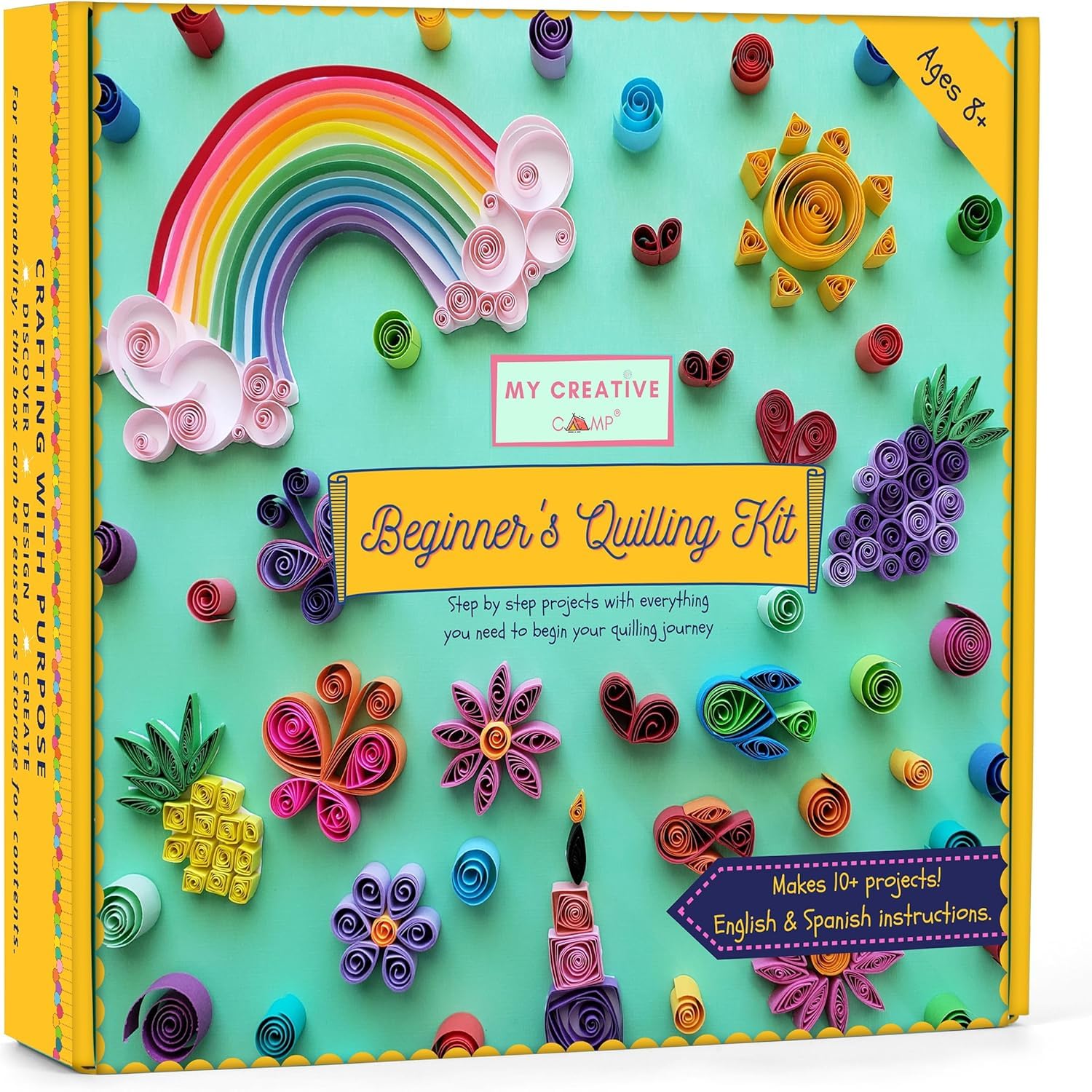
This is the rare kit that actually delivers on the “beginner-friendly” promise. The project booklet walks through 10 designs step-by-step, and the laminated shape chart stays accessible during assembly. With 500+ quilling strips in vibrant colors and sturdy cardstock, you have enough material to practice tight coils and loose scrolls before committing to the final project.
The included storage box keeps everything organized — slotted tool, awl, tweezers, circle board, and glue bottle all snap into place. The paper frames and blank greeting cards provide immediate project surfaces, so you don’t need to buy extra bases. Reviewers consistently mention that instructions are clear enough for both 8-year-olds and adults who failed at quilling before.
One limitation: the glue bottle is small and refilling requires a separate purchase. But for a complete starter ecosystem that removes every barrier to entry, this kit leads the category. The 500-strip count alone beats most competitors by a factor of five.
Why it’s great
- Laminated quick-reference chart speeds learning
- 500+ strips provide long-term project capacity
- Project booklet ranges easy to challenging
Good to know
- Glue bottle is small and not refillable
- Premium price for a starter kit
2. Lifelines FlowCrafts Paper Flower Bouquet
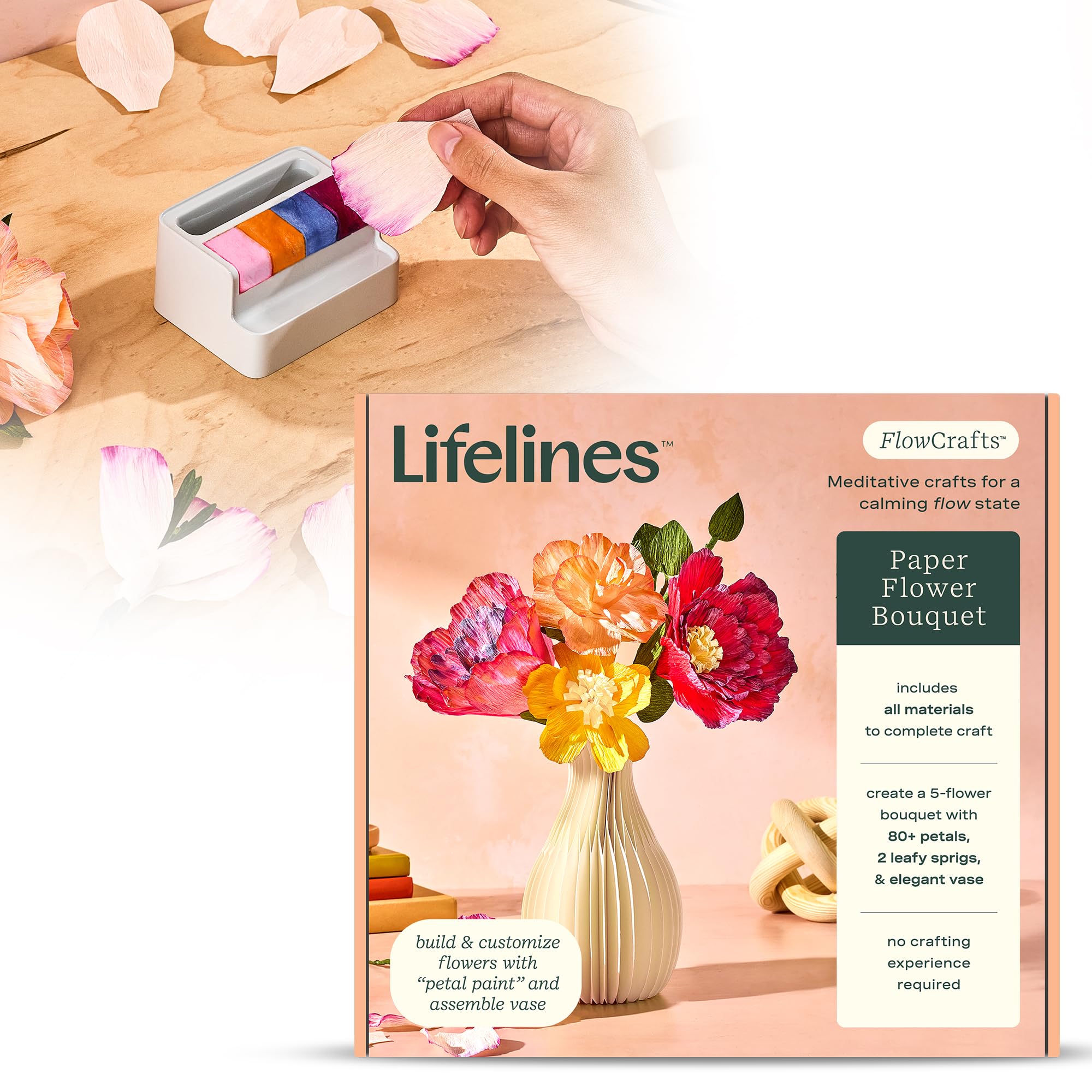
Lifelines approaches 3D paper art from a sensory mindfulness angle — and the kit backs it up. You dip each petal into a special “petal paint,” then attach stamens, sepals, and leaves to stems one by one. The process is deliberately slow, forcing you into a meditative rhythm. The 80+ petals allow for five fully realized flowers plus two leafy sprigs.
The magnetic vase is a clever finishing touch: it holds the bouquet upright without glue or clay, and the elegant design makes the final piece display-worthy. Reviewers note the pleasant scent of the paint and the satisfying tactile quality of the paper. It’s not a kit for speed or volume — it’s for the experience of building.
The main trade-off is limited replay value. Once you’ve made the five flowers, you’ll need a separate paper purchase to continue. But as a one-time mindful craft session for teens, adults, or elderly crafters with dexterity concerns, this kit delivers an unusually refined experience.
Why it’s great
- Sensory paint dip creates unique custom colors
- Magnetic vase elevates display quality
- No prior crafting experience required
Good to know
- Single-use kit with limited project count
- Not suitable for large classroom settings
3. joibabe Magic Foam Texture Painting Kit
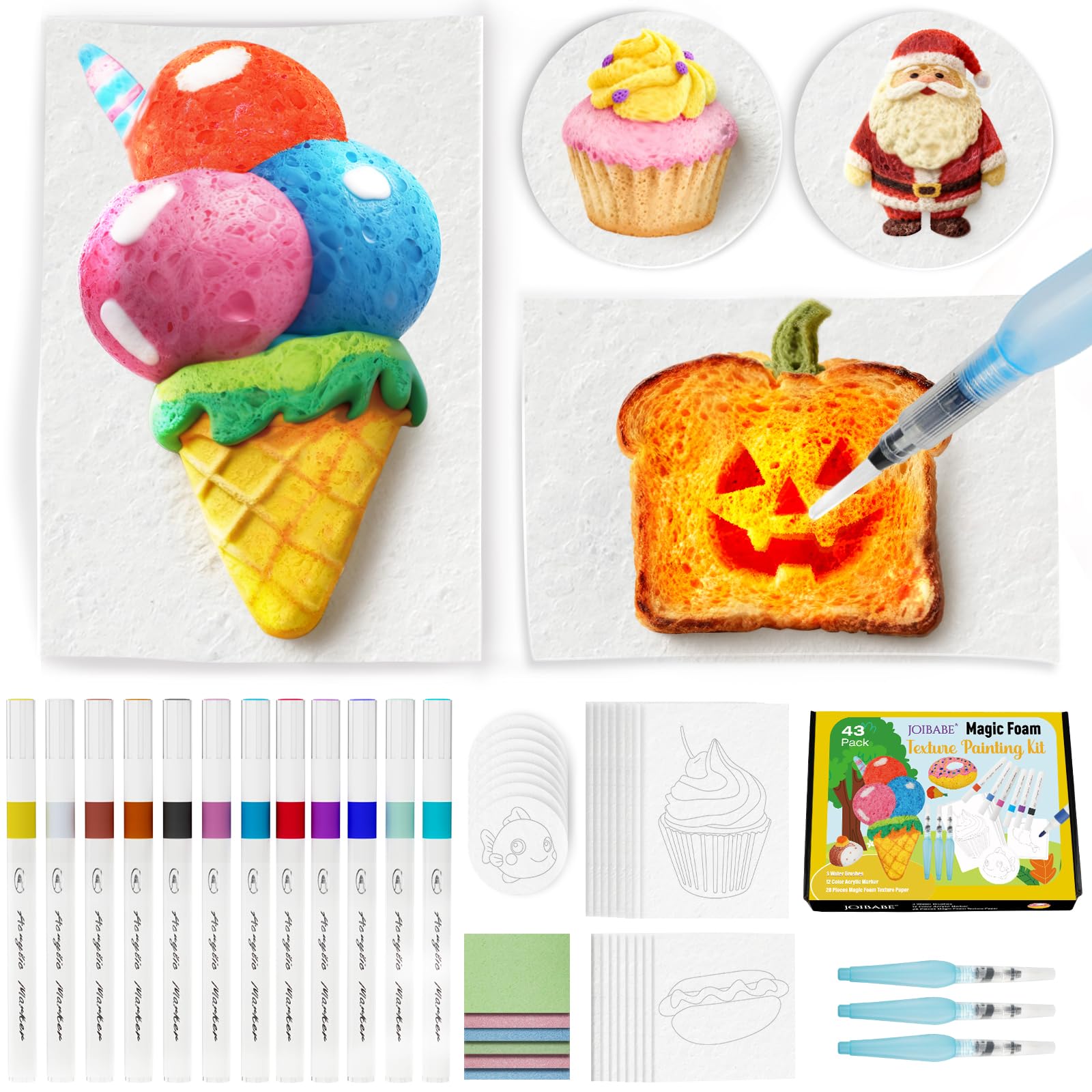
This kit sidesteps traditional paper folding entirely — it uses water-activated wood pulp cotton that expands when dabbed with the included water brushes, creating a spongy 3D texture. The 28 foam sheets include 8 white sponge sheets, 6 colored sponge sheets, 6 square blanks, and 8 round blanks, plus 12 vibrant acrylic markers.
The technique matters: light water dabbing prevents the foam from becoming floppy, and the acrylic markers are waterproof, so colors stay crisp when the base expands. The four pre-designed templates (food, holiday, animal) provide enough structure for young teens, while the blank sheets invite freeform creation. Amazon’s Choice badge and a 4.6-star average reflect consistent satisfaction.
Adults may find the creative ceiling low — the sponge texture is more playful than sculptural. But for kids ages 8-14 who want to see their drawings literally rise off the page, this is a genuinely novel 3D paper experience. The markers and water brushes are reusable on other surfaces, extending value beyond the included sheets.
Why it’s great
- Water-activated foam creates instant 3D texture
- 12 acrylic markers are high quality and waterproof
- Includes storage case for organization
Good to know
- Soft foam may tear at pre-cut keychain holes
- Technique sensitive — too much water ruins the effect
4. Paper Sculpture: Fluid Forms (Book)
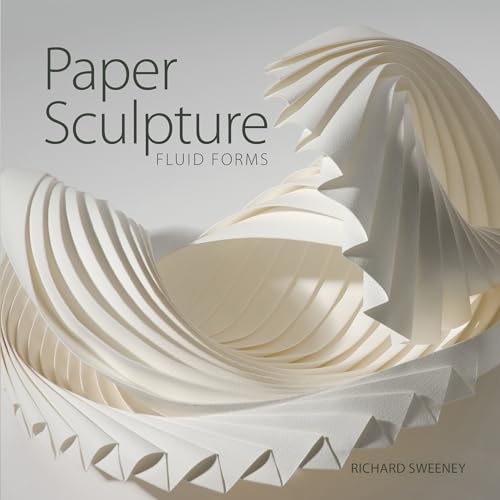
Richard Sweeney’s “Paper Sculpture: Fluid Forms” is not a project book — it’s a design philosophy book. The 128 pages focus on geometric principles of folding, curving, and layering paper to create organic, flowing shapes. The photography is gallery-quality, but the real value lies in the technique breakdowns: how to score, crease, and tension paper to achieve specific curves.
College-level 3D design instructors recommend this book because it teaches form creation rather than pattern replication. Early projects are approachable — simple folded geometric ornaments — but later chapters assume access to cotton paper, which holds folds more effectively than standard cardstock. The softcover binding and paper weight feel premium, consistent with the book’s price point.
This book is not for casual crafters or children. It demands a serious commitment to understanding paper as a sculptural medium. If your goal is to move beyond kit-based crafts into original paper sculpture, this is the most instructionally dense resource available at this price.
Why it’s great
- Teaches geometric principles, not just project patterns
- High-quality photography for visual reference
- Used in college-level 3D design courses
Good to know
- Advanced projects require specialized cotton paper
- Limited beginner-friendly content
5. Pop-Up Design and Paper Mechanics (Book)
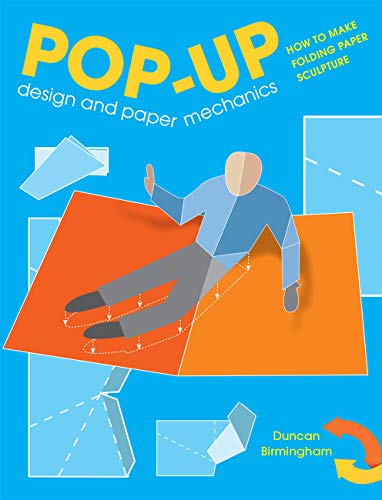
Duncan Birmingham’s manual is the standard reference for anyone serious about pop-up engineering. The 175-page book teaches terminology first — V-folds, parallel folds, box layers — before progressing to compound pop-up structures. Every step includes clear black-and-white diagrams and dimensional measurements. Reviewers note that a trial or two is expected before each design clicks.
The author deliberately assumes you already own basic tools: a craft knife, cutting mat, ruler, and bone folder. No kit components are included. This is a technique book, not a kit, and it respects your ability to source materials. The logical progression means later chapters build on earlier ones, so skipping ahead will frustrate you.
It’s not for small children — the precision cutting and scoring require steady hands and patience. But for teenagers and adults who want to understand why pop-ups work mechanically rather than just following pre-printed templates, this book is indispensable. The reprint edition from GMC Publications (2019) is currently the most readily available version.
Why it’s great
- Systematic teaching of mechanical principles
- Clear diagrams for every fold type
- Progresses from simple to complex structures
Good to know
- No tools or materials included
- Some instructions require re-reading for clarity
6. YURROAD Paper Quilling Tools Kit

This 19-piece set is the most comprehensive quilling tool collection on our list. It includes slotted pens, an awl, tweezers, a quilling comb, a crimper with two wheel gauges, a pattern plate with pins, and five 3D shaping forms (oval, square, triangle, circle, diamond). The crimper requires loosening a screw before first use, but once adjusted, it produces consistent wave patterns.
The double-sided cork board is thick, and the numbered shape templates help beginners align coils precisely. The squeeze bottle for glue has a long metal tip for pinpoint application — though glue is not included. Reviewers note that the corkboard may have minor glue seepage and scuff marks, but the core tools are functional and well-made for the price.
This kit is ideal for intermediate quillers who already have paper strips and glue. Beginners will need to purchase those separately and find a separate instruction guide, as no project booklet is included. The tool density here is unmatched — you get every shaping form you’d need for 3D quilling flowers, borders, and decorative panels.
Why it’s great
- Five 3D shaping forms for dimensional quilling
- Crimper with adjustable dual gauges
- Numbered templates for consistent sizing
Good to know
- No paper strips or glue included
- Corkboard may have cosmetic defects
7. WATINC Flower Paper Pot Craft Kits (24 Pack)
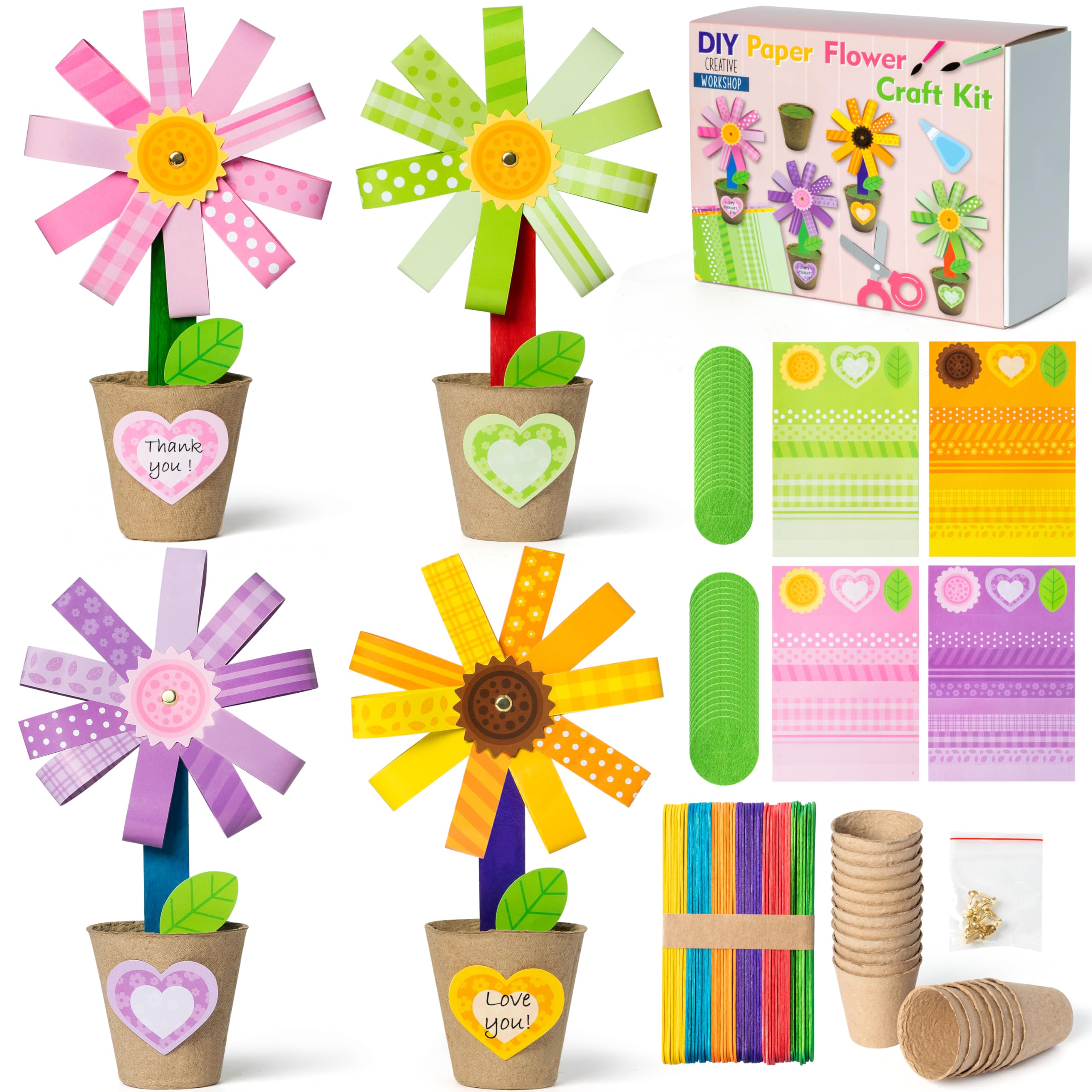
Designed specifically for preschool and kindergarten classrooms, this 24-pack includes everything for 24 independent projects: floral paper strips, paper pot cups, green felt pieces, glue sheets, gold fixing nails, and colored sticks. The perforated cardstock separates easily, and the heart-shaped card stock pieces are pre-printed for writing and drawing. No scissors are required.
Assembly is straightforward — children color the parts, fold the petals, and attach them to the sticks. The finished flowers stand up in the paper pot cups, creating a 3D display without complex mechanics. Teachers report that 4-to-6-year-olds can complete the project with minimal help, though kindergarteners may lack the patience for the finer folding steps.
The main criticism is that the glue sheets provide a weak bond — several reviewers switched to hot glue guns for permanent results. The felt pieces and paper strips are colorful and bright, but the construction is inherently fragile compared to quilled or foam-based alternatives. For a single-use classroom activity or Mother’s Day gift, it works perfectly. For repeated use or display, you’ll want a stronger adhesive.
Why it’s great
- 24 complete projects in one box
- Age-appropriate for 3+ with no cutting needed
- Heart-shaped cards allow personalized messages
Good to know
- Included glue sheets are weak
- Projects are fragile after assembly
FAQ
What gsm paper is best for 3D paper sculpture?
Can a complete beginner learn quilling from a tool-only kit?
How do water-activated foam painting kits differ from traditional paper sculpture?
Final Thoughts: The Verdict
For most users, the best 3d paper art winner is the MY CREATIVE CAMP Beginner’s Quilling Kit because it removes every barrier to entry — 500+ strips, clear instructions, and a storage box — while delivering professional-quality results. If you want a sensory mindfulness experience, grab the Lifelines FlowCrafts Paper Flower Bouquet. And for serious sculptors who want to understand paper mechanics at the structural level, nothing beats the Paper Sculpture: Fluid Forms book.