
A warped first layer, a print that lifts at the corners mid-job, or a model that refuses to release after cooling — the build plate is the single most underrated component in your 3D printer. Choosing the right surface and substrate isn’t about brand loyalty; it’s about adhesion chemistry, thermal uniformity, and release mechanics specific to your filament library.
I’m Min — the co-founder and writer behind Gadgets Feed. I’ve spent countless hours analyzing PEI coating durability, spring steel flex cycles, and magnetic hold strength across dozens of 3D print bed options to pinpoint what actually separates a reliable platform from a frustrating one.
This guide breaks down the top contenders for the best 3d print bed, covering textured PEI, smooth PEI, cold-printing surfaces, and complete heated assemblies so you can match a platform to your specific printer and materials.
How To Choose The Best 3D Print Bed
Building a print farm or just one reliable machine starts with the surface your plastic bonds to. The wrong bed introduces adhesion failures, uneven heating, and premature wear. Focus on three factors: coating material, substrate construction, and compatibility with your specific printer’s heating and motion system.
PEI Coating: Textured vs Smooth vs Special Chemistry
Polyetherimide (PEI) is the gold standard because it bonds well with heated PLA and PETG yet releases cleanly when cool. Textured PEI hides minor warps and provides a matte bottom finish. Smooth PEI gives a glossy bottom surface and better Z-axis precision but requires a cleaner nozzle gap. Newer coatings like the BIQU CryoGrip’s 7-layer cobalt oxide formula allow cold printing at 25-30°C bed temperatures, cutting energy use drastically. Avoid generic PEI sheets thinner than 0.5mm — they degrade faster and lift at the corners under repeated thermal cycling.
Substrate: Spring Steel vs Aluminum Plate
Flexible spring steel plates dominate aftermarket options because you bend them to pop off prints — no scraping. Premium beds use 0.5mm to 0.8mm spring steel with a high-force magnetic sticker base. A thicker substrate resists deformation during long prints at 100°C+ but adds weight to the moving Y-axis. Aluminum plates, like the Creality CR-10 heated bed, are rigid and necessary for direct heat distribution but require a separate PEI sheet or adhesive layer. For most users, a spring steel + magnetic base combo offers the best balance of flexibility and flatness.
Compatibility and Build Volume
Always match the plate dimensions exactly to your printer’s heat bed platform. A 310x310mm plate on a 257x257mm bed will hang over the edges and lose magnetic grip. Also check the wiring — 12V heated beds won’t reach ABS temperatures (110°C+) compared to 24V systems. Some plates include AR codes for automatic build plate detection on printers like the Bambu X1C; using a plate without the correct code can trigger sensor errors. When in doubt, stick to manufacturer-recommended or verified third-party plates for your specific model.
Quick Comparison
On smaller screens, swipe sideways to see the full table.
| Model | Category | Best For | Key Spec | Amazon |
|---|---|---|---|---|
| BIQU CryoGrip Pro Glacier | Cold-print | Energy savings & fast job turnover | 7-layer cobalt oxide cold printing | Amazon |
| Creality K1 Max Matte PEI | Textured PEI | Budget-friendly reliable first layer | Frosted PEI with limit holes | Amazon |
| Bamboo Original Dual-Sided PEI | Dual-side | Versatile textured + smooth finish | 0.5mm magnetic stainless steel | Amazon |
| Upgrade 2-Pack 310x310mm PEI | Multi-pack | Print farm with quick plate swaps | Twin double-sided textured sheets | Amazon |
| ANYCUBIC Kobra 3 Heated Bed | Complete assembly | Replacement heated platform | Pre-applied magnetic sticker plate | Amazon |
| Creality CR-10 Heated Bed | Heated substrate | CR-10 / CR-10S hot end swap | 310x310x3mm, 12V 220W wiring | Amazon |
| 3DLAC Adhesive Spray | Adhesion aid | Extra grip on glass or PEI | 400mL aerosol, low odor | Amazon |
In‑Depth Reviews
1. BIQU CryoGrip Pro Glacier 257x257mm

The CryoGrip Pro Glacier redefines what a build plate can do by enabling cold printing on a 25-30°C bed. Its 7-layer cobalt oxide coating grips PLA, PETG, ABS, and polyamide without glue or heat — a real breakthrough for users who want to save electricity and skip the cooldown wait. The hollow-out handle design stays cool at 100°C hot bed temperatures, letting you swap plates immediately after a job finishes.
On the Bambu Lab X1C and P1S, the integrated AR code scans correctly for automatic build plate detection, so you won’t hit a lidar calibration error. The surface texture sits between smooth and textured PEI, providing a fine matte bottom finish on prints. After hundreds of continuous hours, users report zero ghosting or lifting, with the coating showing no degradation.
One caveat: the Glacier formula has slightly lower adhesion with PLA and PETG compared to the Frostbite variant, though still superior to stock PEI. For ABS printing, keep the printer top closed to prevent warping. Clean with warm water and dish soap only — never acetone on this coating. If you want to cut printing costs and speed up workflow, this is the single best upgrade for Bambu-platform owners.
Why it’s great
- Prints reliably at 25-30°C bed temp, saving significant energy
- Zero adhesion failures across PLA, PETG, ABS, and PA after hundreds of hours
- AR code support keeps X1C lidar calibration complaint-free
Good to know
- Glacier adhesion is slightly weaker than Frostbite for PLA/PETG
- Requires cooling fully before flexing; freezer trick helps release stubborn prints
2. Creality K1 Max Matte PEI Build Plate Kit
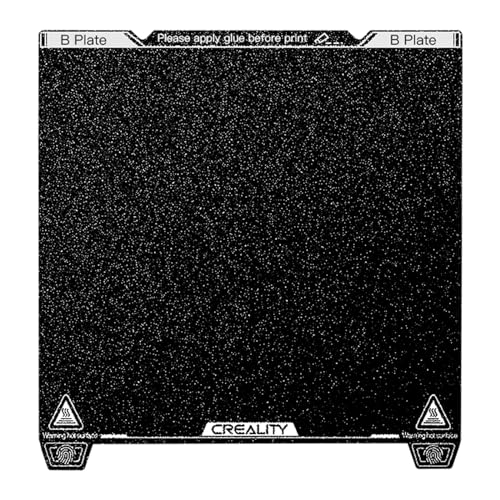
Creality’s official K1 Max plate delivers exactly what the budget-conscious printer needs: reliable frosted PEI adhesion that prevents first-layer warping and releases prints effortlessly once the bed drops to room temperature. The two limit holes align the plate perfectly to the heat bed platform so it never shifts during fast print moves. Two handles at the rear make removal simple even after a long 24-hour print session.
The spring steel is 1.3 pounds of solid construction, bending cleanly for part removal without permanent warping. Users report months of heavy use without needing to clean the surface — adhesion stays consistent across PLA, PETG, and even some flexible filaments. Works natively on the K1 Max and Ender 3 V3 Plus, but third-party testers confirm it fits the original Ender-3 with a magnetic sticker base.
One limitation: this is a single-sided textured plate only. You don’t get a smooth PEI side for glossy-bottom prints or Z-axis precision work. If you’re running a print farm on a tight budget and only need one reliable workhorse surface, this plate delivers without any fuss. For those who want dual-sided versatility, the Bamboo Original below offers more flexibility at a slightly higher cost.
Why it’s great
- Limit holes guarantee zero plate shift during high-speed printing
- Holds adhesion for months without cleaning across multiple filaments
- Bends cleanly for easy print release without scratching the coating
Good to know
- Single-side textured only — no smooth side for glossy finishes
- Not ideal for resin or extremely high-temp filaments above 110°C
3. Bamboo Original Dual-Sided Textured/Smooth PEI Plate
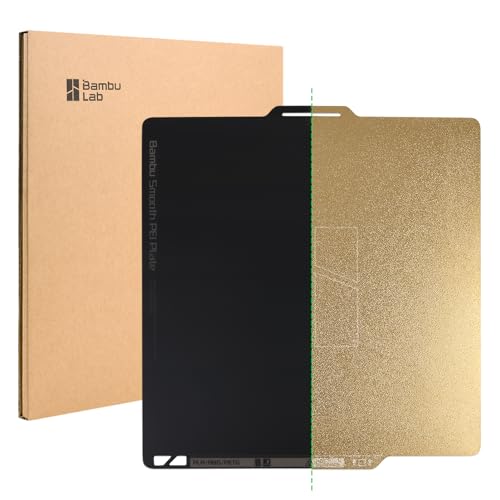
This plate gives you two surfaces in one: textured PEI for standard matte-bottom prints with strong adhesion, and smooth PEI for glossy bottoms and tighter Z-axis precision. The 0.5mm magnetic stainless steel layer enhances magnetic hold to the heat bed and resists warping across repeated 100°C cycles. The smooth side is especially useful for locking down first layers on tall parts where slight warping could cause the print to detach mid-job.
Compatible with full-size Bambu Lab machines (X1C, X1E, P1P, P1S, A1), the plate dimensions match the 257x257mm build volume exactly. Users report easier release on the textured side compared to generic dual-sided plates, with no adhesive residue or ghosting from previous prints. The smooth side does require more care — parts can be harder to remove than textured, and you must let the bed cool fully before bending.
A critical warning: never use acetone on either side. Acetone eats through the PEI coating and leaves permanent damage. Stick to 75% isopropyl alcohol or warm soapy water. For very specific filaments like polycarbonate or nylon, you may still need a glue stick on the smooth side. If you want one plate that covers both everyday PLA and occasional precision projects, this dual-sided design is hard to beat.
Why it’s great
- Textured and smooth sides for matte or glossy bottom finishes
- Strong magnetic hold to 0.5mm stainless steel prevents warping
- Self-releases when cooled — no scraping needed on textured side
Good to know
- Smooth side can be stubborn for part removal; full cooldown required
- Acetone will ruin the coating — use only alcohol or soapy water
4. Upgrade 2-Pack 310x310mm Double-Sided Textured PEI
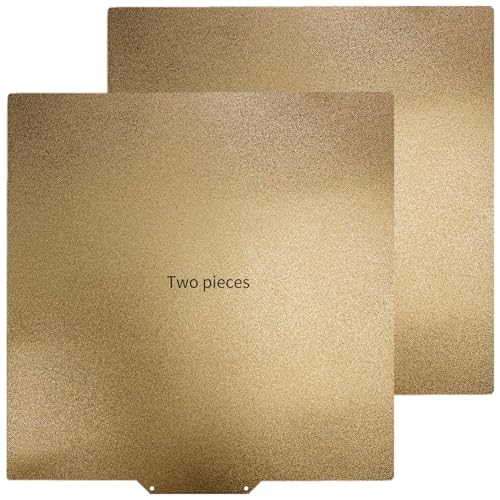
For printers running multiple jobs back-to-back, having two double-sided plates means you never wait for a plate to cool. This 2-pack from G-hubble offers 310x310mm sheets with textured PEI on both sides, giving you four usable surfaces per set. The spring steel is thinner than OEM plates but that actually improves flexibility for releasing prints — just bend gently and parts pop off cleanly without scratching.
Compatibility spans the Voron 300, Qidi Plus 4, and the entire Creality CR-10 family including CR-10S, CR-10S Pro, CR-10V2, and CR-10 V3. The PEI coating withstands 300°C heat plate temperatures, so it handles high-temp materials like polycarbonate and nylon without delaminating. Users report no adhesion issues after hundreds of prints, and the textured surface leaves a consistent matte bottom finish on every part.
Expect to maintain proper nozzle-to-PEI distance (0.2-0.3mm) because scratches from a low nozzle will degrade the coating over time. The manufacturer recommends cleaning every 50 print hours with 75% alcohol or mild soap. If you’re running a Voron or CR-10 build volume and want uninterrupted production with minimal plate cooling downtime, this multi-pack is the smart buy.
Why it’s great
- Four printing surfaces in one set for near-continuous production
- 300°C tolerance handles polycarbonate and nylon without damage
- Thinner spring steel bends easily for effortless part removal
Good to know
- Thinner material may feel less substantial than premium 0.8mm plates
- No alignment guides — careful manual positioning required on installation
5. ANYCUBIC 3D Printer Heating Bed Platform for Kobra 3

If your Kobra 3 or Kobra 3 Combo is suffering from Y-axis vibration errors or uneven heating that causes corner lifting, this OEM-grade heating bed assembly is the fix. The flat aluminum plate has a high-temperature resistant magnetic sheet pre-applied, so you just drop in a PEI flex plate on top and you’re ready. The optimized power wiring reaches target temperature quickly and holds steady throughout long prints, eliminating thermal runaway errors that plague generic replacements.
The rigid square plate design resists thermal expansion better than thinner aftermarket beds, which is critical for maintaining a level first layer across the entire 260x260mm build area. At 3.08 pounds, the aluminum substrate adds stability to the Y-axis motion system. Users who installed this to fix vibration test failures during start-up report zero further errors and perfect bed adhesion afterward.
Note that this is a complete heated bed assembly with a magnetic sticker base — it does not include the PEI flex plate itself. You’ll need to purchase a compatible build surface separately. Also, it’s specifically wired for the Kobra 3 and Kobra 3 Combo models, so it won’t physically fit Kobra 2 or other machines without modifications. If you need a flawless direct replacement to get your Kobra 3 back to printing, this is the no-compromise solution.
Why it’s great
- Direct OEM fit for Kobra 3 — fixes Y-axis vibration and thermal runaway errors
- Pre-applied magnetic sticker saves installation time and hassle
- Rigid aluminum resists warping during high-temperature printing cycles
Good to know
- Does not include a PEI flex plate — requires separate purchase
- Compatible only with Kobra 3 and Kobra 3 Combo form factor and wiring
6. Creality CR-10 Heated Bed 310x310x3mm
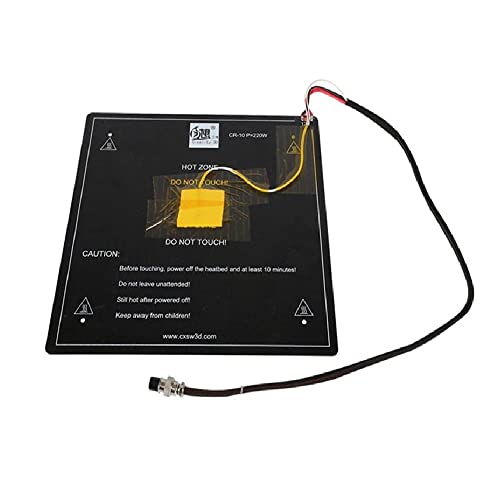
When your original CR-10 or CR-10S heated bed develops hot spots or fails to reach temperature, this 12V 220W aluminum replacement restores uniform heat distribution. The 310x310x3mm substrate includes a pre-installed insulation mat on the bottom, reducing heat loss to the printer frame and helping the bed stay stable during long ABS or PETG runs. The plug-and-play cable connects directly to the existing wiring without soldering or crimping.
The bed reaches 100°C reliably for PLA and PETG, but the 12V power limit means it struggles to hit 110°C+ temperatures needed for ABS. One user reported success eliminating thermal runaway errors that plagued their old warped bed. The surface flatness measures within 0.50mm across the entire plate — good enough for mesh leveling to compensate, but not perfectly flat like a precision-machined aluminum tooling plate. Mounting holes align exactly with CR-10 series frames.
If you’re printing only PLA and PETG, this is a solid drop-in replacement. For ABS users, a 24V heated bed is recommended to reach the higher temperature range reliably. One reviewer noted a defective unit that heated uncontrollably, but that appears to be an outlier — most buyers report consistent performance. At this price point with included cable and insulation mat, it’s the most cost-effective way to revive an older CR-10.
Why it’s great
- Direct plug-and-play replacement for CR-10 and CR-10S
- Includes insulation mat to improve heat retention and stability
- Cable and wiring included — no soldering or adapter needed
Good to know
- 12V system cannot reliably reach ABS printing temperatures (110°C+)
- Surface flatness is acceptable but not perfectly flat out of the box
7. 3DLAC 3D Printing Adhesive Spray 400mL (3-Pack)

Not all adhesion problems are solved by a new build plate. When your glass bed, PEI sheet, or BuildTak surface needs extra grip — especially for tricky filaments like PETG or TPU — 3DLAC spray delivers reliable first-layer bonding without the mess of glue sticks. The colorless low-odor formula works across PLA, ABS, PETG, HIPS, carbon fiber, and TPU. A single application lasts approximately three prints before needing re-coating, making it far more efficient than glue sticks that require manual application every print.
Testers report phenomenal results on textured PEI beds where PETG usually warps or lifts. The spray forms a thin film that secures the part during printing but releases cleanly when the bed cools — no sticky residue left on the bottom surface. Users also confirm it works on glass beds at 120°C for high-temp materials like polycarbonate, outperforming cheaper hairspray alternatives that degrade at those temperatures. The can controls decently, though the nozzle could be more precise for smaller areas.
Keep in mind this is a consumable — each 400mL can provides roughly 15-20 applications depending on how heavy-handed you spray. The three-pack brings the per-can cost down significantly. One trade-off: it’s essentially expensive hairspray in a specialized formulation, but lab testing shows 3DLAC has better thermal stability and adhesion strength compared to standard hairspray. If you want a backup adhesion method without replacing your entire build plate, keep a can of 3DLAC on hand.
Why it’s great
- Works with all common filaments including PETG, ABS, and TPU
- Single application lasts roughly 3 prints before needing re-spray
- Low odor and colorless — no residue on part bottoms
Good to know
- Consumable cost adds up — each 400mL can covers 15-20 applications
- Nozzle spray pattern could be more controlled for precise application
FAQ
Can I use the BIQU CryoGrip Pro Glacier for PETG printing without glue?
What causes the first layer not to stick to a textured PEI plate?
How do I clean a 3D print bed without damaging the coating?
Why does my Bambu Lab X1C show an error when I use a third-party build plate?
Final Thoughts: The Verdict
For most users, the 3d print bed winner is the BIQU CryoGrip Pro Glacier because it eliminates the need for heating your bed, cutting energy costs and turnaround time while still gripping every filament type reliably. If you want a versatile dual-surface plate for both matte and glossy finishes, grab the Bamboo Original Dual-Sided PEI. And for building a print farm with high throughput, nothing beats the value of the Upgrade 2-Pack 310x310mm PEI — four surfaces for the price of one, all ready for continuous production.