
Getting a truly transparent 3D print is one of the toughest challenges in desktop fabrication. Even with a “clear” filament, most prints come out milky, hazy, or filled with tiny bubbles that destroy light transmission. The secret lies in choosing the right base material, dialing in your temperature tower, and understanding that translucent resin requires very different post-processing than FDM spools.
I’m Min — the co-founder and writer behind Gadgets Feed. I’ve spent countless hours comparing extrusion consistency, light transmission ratios, and shrinkage rates across dozens of transparent spools and bottles to build this focused guide.
Whether you are printing functional light pipes, decorative jewel-like models, or clear mechanical housings, finding the right 3d print clear filament means balancing clarity against durability, ease of printing, and long-term yellowing resistance.
How To Choose The Best 3D Print Clear Filament
Not all transparent spools produce the same level of clarity. The biggest split in this category is between FDM-friendly materials (PLA and PETG) and SLA-friendly resins. Each has a different sweet spot for nozzle temperature, layer height, and post-processing. Beginners often assume clear PLA is the easiest route, but PETG usually provides better impact resistance and higher light transmission after finishing.
Material Base: PLA vs PETG vs Resin
Standard clear PLA prints at lower temperatures around 190-215°C and is less prone to stringing, but its natural clarity is limited and it tends to yellow faster under UV. Clear PETG prints hotter at 230-260°C and is more flexible, which reduces cracking around thin transparent walls — a major advantage for functional clear parts. For jewelry, minis, or light guides requiring near-glass transparency, an ultra-clear 405nm resin is the best choice, though it requires washing and post-curing steps that FDM does not.
Layer Adhesion and Bubble Management
Visible bubbles trapped inside a print destroy light transmission instantly. To minimize bubbles, run your filament dry — vacuum-sealed spools with desiccants are essential. Use a higher nozzle temperature (within the material’s range) to improve flow and let trapped air escape. A slower print speed, around 40-60mm/s for the outer wall, gives each layer more time to fuse without trapping air pockets.
Post-Processing for True Clarity
No clear filament comes out of the printer perfectly transparent. FDM prints need sanding from 200 to 2000 grit, followed by a clear acrylic or epoxy coating to fill microscratches and restore light transmission. Resin prints require thorough washing in IPA, then careful UV curing — over-curing causes yellowing. A final clear spray coat is often the difference between a hazy model and a luminous one.
Quick Comparison
On smaller screens, swipe sideways to see the full table.
| Model | Category | Best For | Key Spec | Amazon |
|---|---|---|---|---|
| Bambu Lab PETG Translucent | Premium PETG | High-clarity functional prints | ±0.03 mm tolerance | Amazon |
| Siraya Tech Craft Ultra-Clear Resin | Premium Resin | Crystal-clear miniatures | 405nm rapid curing | Amazon |
| FLASHFORGE Rapid PETG Clear | High-Speed PETG | Fast transparent prints | 600 mm/s print speed | Amazon |
| Creality Hyper PLA | High-Speed PLA | High-speed clear prototypes | 600 mm/s support | Amazon |
| GIANTARM Clear PLA | Standard PLA | Entry-level clear prints | ±0.03 mm accuracy | Amazon |
| RANKI PETG Transparent Yellow | Colored PETG | Transparent safety parts | ±0.03 mm tolerance | Amazon |
| Kretrum PLA Silver | Budget PLA | Affordable decorative prints | ±0.02 mm accuracy | Amazon |
In‑Depth Reviews
1. Bambu Lab PETG Translucent Filament
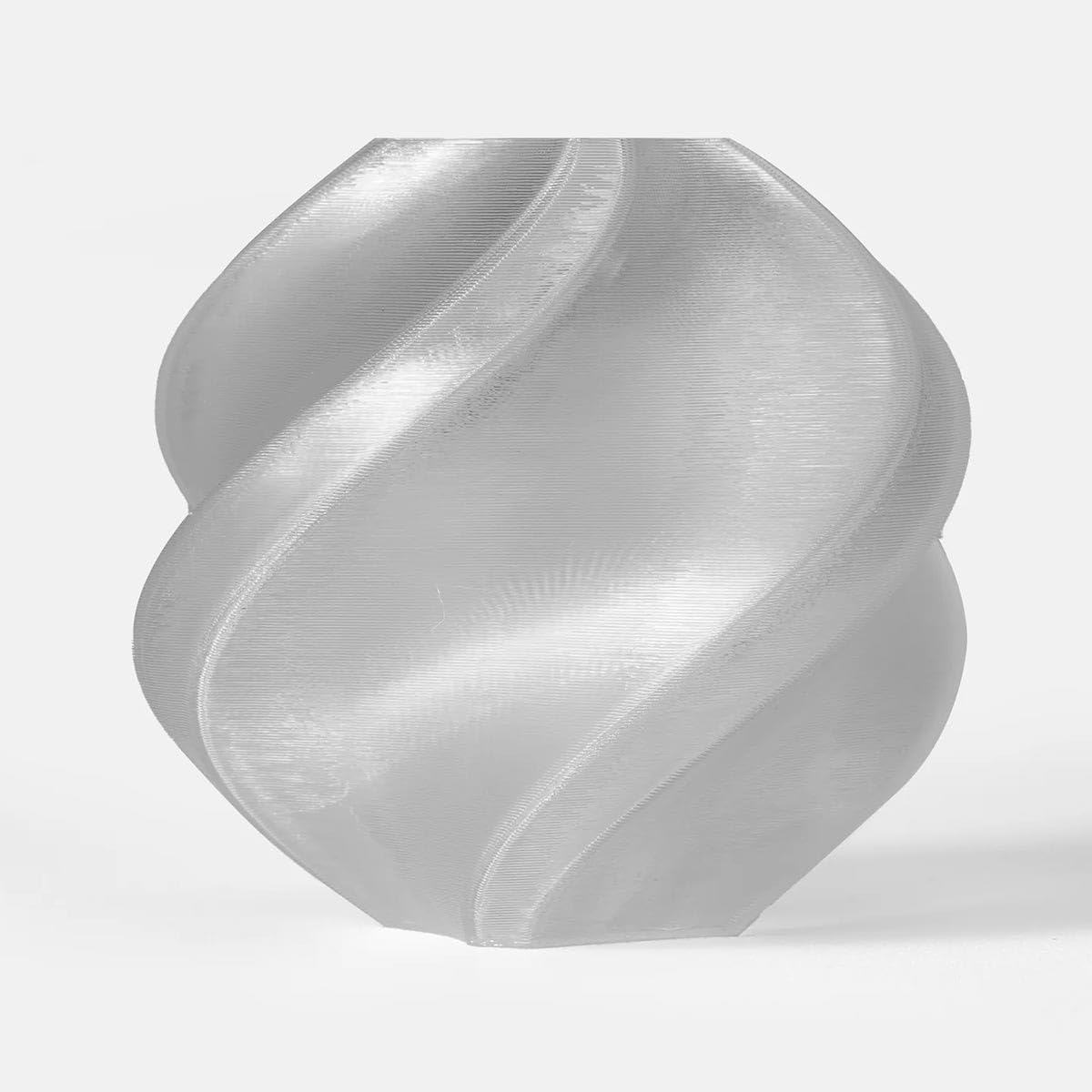
Bambu Lab’s Translucent PETG offers the best balance of clarity and mechanical strength in an FDM spool. The 1.75mm diameter holds a tight ±0.03mm tolerance, which eliminates the under-extrusion gaps that cloud transparent prints. Users report that it prints cleanly on both Bambu Lab machines and standard FDM printers, with low warping and excellent layer adhesion straight out of the vacuum-sealed bag.
The material’s low-shrink formulation minimizes internal stress, so large clear panels and translucent enclosures stay dimensionally stable. Its high temperature and chemical resistance make it suitable for functional parts that sit near motors or in sunlight, where PLA would quickly deform or yellow. The clear variant (32101) retains natural translucency without the milky cast common in lower-cost PETG spools.
Beginners coming from PLA will find PETG forgiving — users specifically mention that the Bambu Lab filament was easy to use despite PETG’s reputation for stringing. The only tradeoff is that achieving optical transparency still requires sanding and a clear coat, as with any FDM material. For those wanting the truest clarity with minimal post-processing in a filament format, this is the pick.
Why it’s great
- Tight dimensional tolerance ensures consistent flow for transparent layers
- Low warp formulation reduces clouding from internal stress
- RFID tag integration auto-sets slicer parameters on Bambu printers
Good to know
- Still requires sanding and coating for full optical clarity
- Premium-tier pricing compared to generic PETG spools
2. Siraya Tech Craft Ultra-Clear 3D Printer Resin

When you need true crystal-clear parts — light guides, lenses, or jewel-like decorative models — Siraya Tech’s Craft Ultra-Clear Resin is the most optically advanced option. This 405nm rapid-curing resin is formulated for monochrome LCD and 8K printers, delivering prints that are nearly water-clear after proper washing and UV curing. Its non-yellowing formula resists the amber tint that plagues many budget clear resins over time.
The resin’s low volume shrinkage during photopolymerization preserves fine detail in transparent geometries. Users report that it prints smoothly with minimal odor, and the smooth surface finish straight off the build plate reduces sanding time dramatically compared to FDM. However, achieving its full transparency requires post-processing: washing in IPA, avoiding over-curing, and applying a clear coating to restore gloss.
This is not a material for large functional brackets or load-bearing parts — it is softer and more brittle than standard resins. But for its intended purpose — craft projects, transparent miniatures, and display-quality clear objects — it sets the benchmark. The higher cost per kilogram is justified by the clarity that no FDM filament can match without extensive finishing.
Why it’s great
- Near water-clear transparency after proper washing and coating
- Non-yellowing formulation retains clarity over time
- Rapid 405nm curing works well with 8K monochrome printers
Good to know
- Requires careful post-processing — over-curing causes yellowing
- Softer and more brittle than standard engineering resins
3. FLASHFORGE Rapid PETG Filament Clear
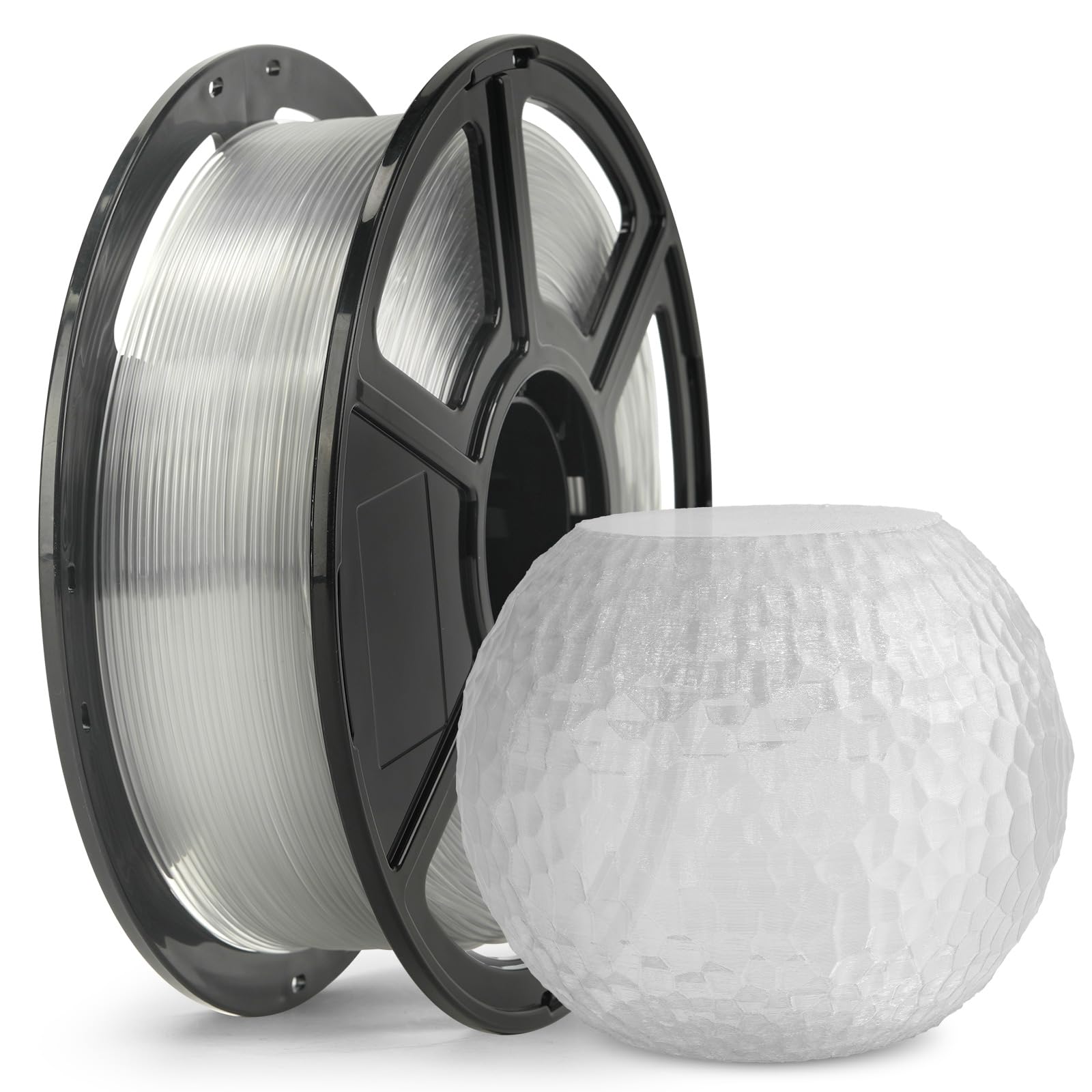
FLASHFORGE’s Rapid PETG is engineered for speed without sacrificing the clarity that makes PETG desirable for transparent prints. Rated for up to 600 mm/s, this filament maintains a tight ±0.02mm dimensional accuracy even at high flow rates, which is critical for preventing the layer misalignment that creates haze. Users running Bambu P1S and AD5X machines report no clogging or inconsistent extrusion at high speed with the clear variant.
The upgraded winding technology keeps the spool tangle-free, preventing the snags that cause sudden extrusion pauses and visible layer lines in transparent parts. The clear color offers excellent light transmission after finishing, and the PETG base provides better impact resistance than PLA for functional clear brackets and enclosures.
One consideration is that FLASHFORGE PETG benefits from drying before printing — while it performs well straight out of the bag, users note that metallic and specialty colors are more moisture-sensitive. For the clear variant, a quick dry at 80°C for 4-6 hours eliminates any residual micro-bubbles. At a mid-range price point, it delivers premium speed capability and reliable clarity.
Why it’s great
- Maintains ±0.02mm tolerance even at 600 mm/s print speeds
- Tangle-free spool prevents extrusion pauses that cloud prints
- Excellent layer adhesion reduces bubble traps in clear walls
Good to know
- Moisture-sensitive — drying improves optical clarity
- Slightly higher price than generic PETG spools
4. Creality Hyper PLA Filament

Creality’s Hyper PLA redefines what a clear PLA can achieve at high speed, supporting up to 600 mm/s while maintaining a ±0.03mm diameter tolerance. This is crucial for transparent prints, where inconsistent filament diameter causes visible light refraction. The material’s higher tensile strength compared to standard PLA allows for thinner clear walls that resist cracking under stress.
The RFID-enabled spool automatically configures slicer settings on Creality K2 Plus and Hi Series printers, ensuring optimal temperature and flow rate for clarity. Users report that it prints cleanly without stringing or clogging, and the low shrinkage keeps transparent panels flat and true. The material is stronger and more flexible than traditional PLA, making it suitable for functional clear prototypes that need to survive handling.
One tradeoff is that as a PLA variant, it does not match PETG’s impact resistance or UV stability, so long-term outdoor transparent prints may yellow faster. But for indoor clear prints requiring speed and surface quality, this is a compelling option. The slight premium over standard PLA is offset by the reliability and the RFID convenience for Creality ecosystem users.
Why it’s great
- RFID tag auto-configures printer for optimal transparent print settings
- High tensile strength allows thinner clear walls without cracking
- No stringing across a wide temperature range
Good to know
- PLA base yellows faster than PETG under UV exposure
- RFID functionality limited to Creality K2 Plus and Hi series
5. GIANTARM Clear PLA Filament
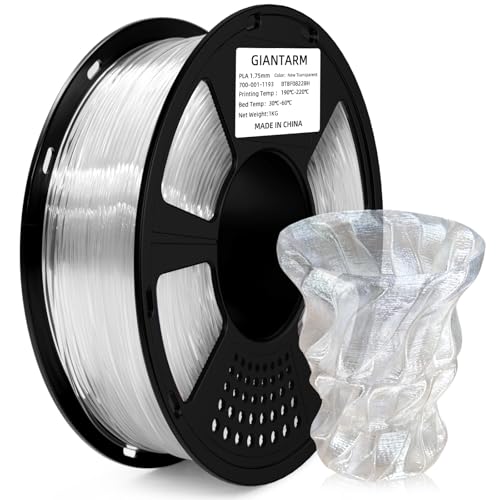
GIANTARM’s Clear PLA is a reliable entry into transparent printing at a reasonable cost. The 1.75mm filament holds a ±0.03mm dimensional accuracy, and the low-shrinkage formulation reduces warping in large flat transparent surfaces. Users report that the silk PLA colors produce an exceptional luster, and the clear variant adheres well to the print bed without needing glue or tape.
The vacuum-sealed packaging with desiccant ensures the filament arrives dry, which is essential for minimizing the micro-bubbles that destroy clarity. The recommended nozzle temperature range of 190-215°C is forgiving, making it approachable for beginners. One user on an Ender 3 Pro printed the entire spool without a single jam — a testament to the consistent diameter.
While this PLA prints cleanly, its natural clarity ceiling is lower than PETG. Expect a translucent, slightly milky finish straight off the printer. Sanding and a clear acrylic coat will improve light transmission, but it will not reach the glass-like clarity of a premium PETG or resin. It is best suited for decorative prints where some translucency is acceptable and budget is the primary concern.
Why it’s great
- Forgiving temperature range ideal for beginners working with clear PLA
- Consistent diameter prevents clogs and under-extrusion haze
- Affordable price point for learning translucent printing techniques
Good to know
- Natural clarity is milky — requires sanding and coating for true transparency
- PLA yellows faster than PETG under direct sunlight
6. RANKI PETG Filament Transparent Yellow

RANKI’s Transparent Yellow PETG is a unique entry in the clear filament space — a vivid, almost fluorescent translucent material that behaves like standard PETG. The 1.75mm diameter with ±0.03mm tolerance feeds smoothly, and the high-purity PETG base provides the toughness needed for functional parts. Users consistently praise its highlighter-like color that glows intensely under UV light, resembling a glow-in-the-dark effect without needing special charging.
The material prints reliably with default PETG settings on most FDM printers, including Bambu Lab P1S and Ender 3 variants. Slight stringing is expected with PETG, but users note it cleans up easily. The transparent yellow works exceptionally well for safety parts, light pipes, and decorative models where both translucency and visibility are the goals.
This is not a “water-clear” filament — the yellow tint is strong. But for projects requiring a specific colored transparent effect with PETG’s durability, it is unmatched in this price tier. Users who have purchased it repeatedly for prototyping and one-off functional prints confirm its consistency. For clear-to-colorless applications, however, the Bambu Lab or FLASHFORGE options are better suited.
Why it’s great
- Unique fluorescent yellow transparency with strong UV glow
- Standard PETG toughness great for functional transparent parts
- Prints reliably out of the box on default settings
Good to know
- Slight stringing typical of PETG may require cleanup
- Colored tint limits use for neutral transparent applications
7. Kretrum PLA Filament Silver
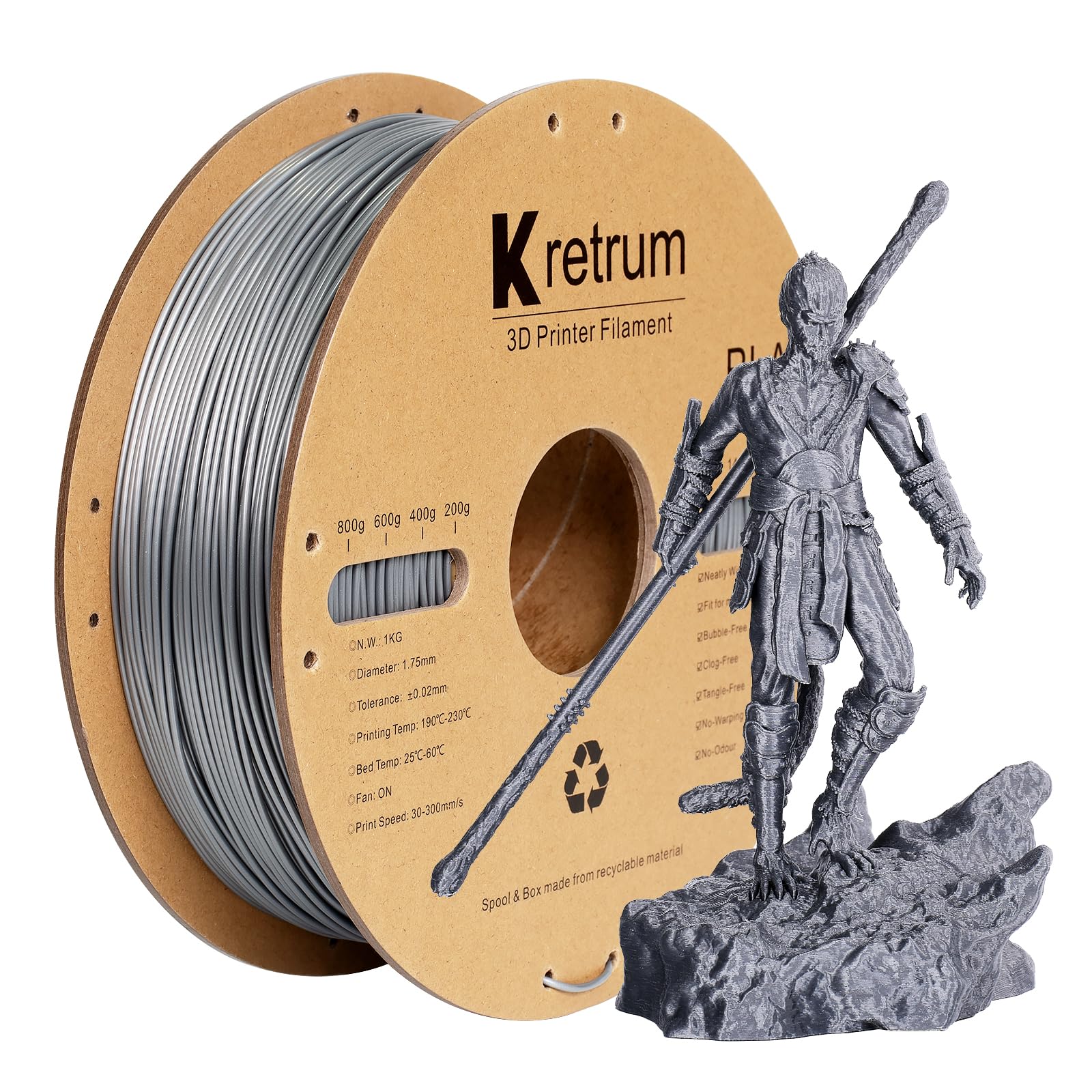
Kretrum’s Silver PLA is the most budget-conscious option for exploring translucent printing without a large investment. The 1.75mm filament boasts an impressive ±0.02mm dimensional accuracy — tighter than many spools twice its price — which directly translates to consistent extrusion in transparent models. The cardboard spool and recycled packaging reflect a growing emphasis on sustainability in the filament market.
The manufacturer pre-dries the material for 24 hours before vacuum sealing with desiccants, so it arrives ready to print. Users report good bed adhesion on Adventurer 5M Pro and similar machines, with minimal stringing when using standard PLA settings (190-230°C nozzle, 25-65°C bed). The silver color provides a gentle metallic translucency that works well for decorative fidget toys and display pieces.
The tradeoffs are typical of budget PLA: the material is less impact-resistant than PETG, and the silver tint means it is not optically clear. One user noted the spool may come slightly under 1kg after humidity loss. For absolute beginners who want to learn overhang and bridging techniques with a translucent material at the lowest entry cost, this spool delivers surprising quality per dollar.
Why it’s great
- Very tight ±0.02mm tolerance for consistent transparent layers
- Pre-dried and vacuum-sealed ensures bubble-free printing
- Eco-friendly cardboard spool and packaging
Good to know
- Silver color is translucent, not optically clear
- May arrive slightly under 1kg weight due to pre-shipment drying
FAQ
Can clear PLA filament really produce glass-like transparent prints?
What causes bubbles inside clear 3D prints and how do I prevent them?
Is clear PETG harder to print than clear PLA?
How long does it take to post-process a clear FDM print for transparency?
Will clear 3D printed parts turn yellow over time?
Final Thoughts: The Verdict
For most users, the 3d print clear filament winner is the Bambu Lab PETG Translucent because it offers the best fusion of clarity, durability, and consistent tolerance in a user-friendly FDM spool. If you want glass-like transparency for small models and display pieces, grab the Siraya Tech Craft Ultra-Clear Resin. And for high-speed transparent prototyping on a budget, nothing beats the FLASHFORGE Rapid PETG.