
Flexible 3D printing opens a world of functional parts—gaskets, phone cases, shock-absorbing bumpers, and wearable prototypes—that rigid PLA or PETG simply cannot produce. The challenge with rubber-like filament, however, is finding the right balance between flexibility for real-world shock absorption and enough rigidity to hold its shape under repeated stress.
I’m Min — the co-founder and writer behind Gadgets Feed. I have spent hundreds of hours analyzing print profiles, customer failure reports, and Shore hardness data across dozens of TPU and Flex filament SKUs to pinpoint which spools deliver reliable, repeatable results without the usual stringing or jamming headaches.
After sifting through thousands of verified buyer experiences and technical specifications, this buying guide reveals the 3d print filament rubber options that consistently produce smooth, elastic prints for both beginners and experienced makers.
How To Choose The Best 3D Print Filament Rubber
Choosing a flexible filament comes down to three priorities: the final part’s flexibility (Shore hardness), the printer’s extrusion system (direct drive or Bowden), and the filament’s moisture sensitivity. Ignore any of these and you are chasing random settings.
Shore Hardness: 95A vs 85A
Shore 95A is the standard for functional rubber-like parts—phone cases, gaskets, and shock-absorbing soles. It behaves like a stiff rubber band. Shore 85A is noticeably softer and squishier, better for seals and wearable devices, but requires slower print speeds and a direct-drive extruder to avoid buckling in the Bowden tube.
Extruder Compatibility
Bowden extruders struggle with flexible filaments because the long tube path allows the soft material to bend sideways instead of being pushed forward. Direct-drive extruders, where the motor sits directly above the hotend, deliver the stiffness needed to feed TPU smoothly. If your printer is Bowden-based, you must run very slow speeds (under 30 mm/s) and disable retraction.
Drying and Packaging
TPU is hygroscopic—it absorbs moisture from the air within hours. Wet TPU produces popping sounds, stringing, and weak layer adhesion. Always look for vacuum-sealed packaging with desiccant. Even then, drying the spool at 50–60°C for 4–6 hours before printing is the single best way to eliminate first-layer failures.
Quick Comparison
On smaller screens, swipe sideways to see the full table.
| Model | Category | Best For | Key Spec | Amazon |
|---|---|---|---|---|
| Siraya Tech Flex TPU 85A | Premium | Soft wearables & seals | Shore 85A / ISO 10993 tested | Amazon |
| ELEGOO TPU 95A 2KG | Premium | High-volume projects | 2kg total / stretches 5x | Amazon |
| ANYCUBIC TPU 95A Grey | Mid-Range | Tough industrial parts | 195-230°C nozzle / tear-resistant | Amazon |
| SUNLU TPU 95A Black | Mid-Range | Consistent everyday prints | ±0.03mm / 80-120mm/s speed | Amazon |
| Creality TPU 95A (B0C7BXRD3B) | Mid-Range | Glossy, high-durability parts | UV & chemical resistant | Amazon |
| Official Creality TPU 95A (B0C2Z1LJGM) | Mid-Range | Spare parts & flexible prototypes | Stretches 3x / low warp | Amazon |
| JAYO TPU 95A Bundle | Budget | Multi-color small prints | 4x 250g spools / ±0.03mm | Amazon |
In‑Depth Reviews
1. Siraya Tech Flex TPU Filament 85A

Siraya Tech’s Flex TPU at 85A Shore hardness is the softest option in this lineup—noticeably more pliable than standard 95A filaments. The ISO 10993 biocompatibility testing adds peace of mind for wearables and external-use devices, though it is not a medical-grade certification. Users report that once dialed in, this filament prints with near-PLA surface quality on enclosed machines like the Bambu X1 Carbon.
The high-flow formulation allows faster speeds than most soft TPUs, but the cardboard spool design caused warping for some buyers, leading to failed prints until the filament was respooled onto a plastic hub. This is a critical detail: if your printer uses an AMS or tightly toleranced spool holder, factor in the need for a respooling jig.
The moisture-resistant resealable aluminum bag extends shelf life up to three years, a significant advantage over paper-wrapped spools that degrade within months. For gaskets, seals, and wearable prototypes needing a squishy, skin-friendly texture, this is the top choice.
Why it’s great
- Softer 85A durometer ideal for gaskets and wearables
- High flow enables faster prints than typical soft TPU
- Moisture-resistant aluminum bag with 3-year shelf life
Good to know
- Cardboard spool may warp and cause feeding failures
- Requires direct-drive extruder for reliable feeding
- Higher price per spool than mainstream 95A options
2. ELEGOO TPU Filament 1.75mm Black 2KG
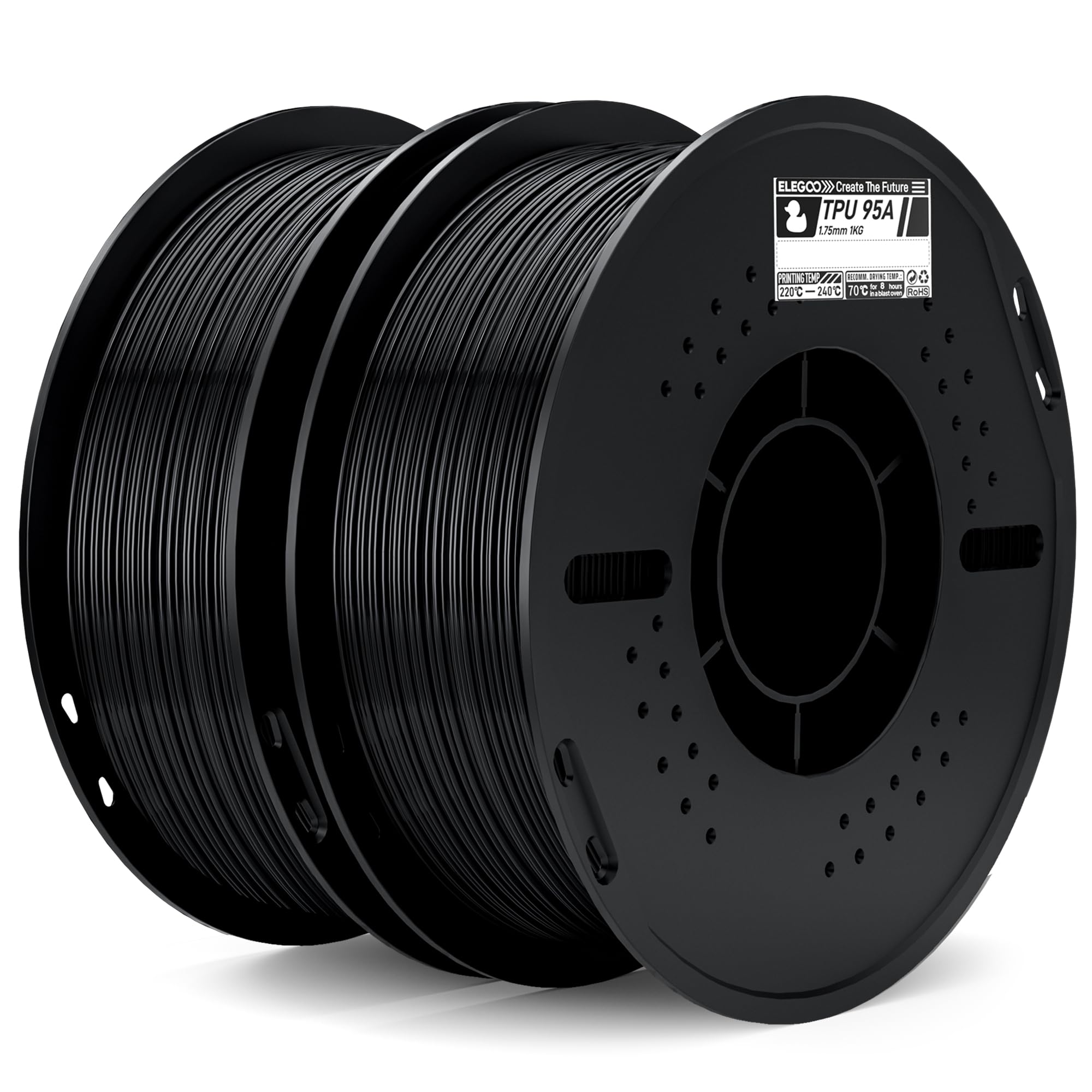
ELEGOO’s TPU 95A comes as two separate 1kg spools, giving you double the material for high-volume projects like custom gaskets, bushings, or protective gear. The filament stretches up to five times its original length without tearing, a useful property for printing snap-fit parts that need to deform during assembly and return to shape.
Bambu A1 and P1S users report excellent results using the generic TPU profile after drying. The material is slightly firmer than some 95A blends—closer to a stiff rubber than a squishy gel—which actually makes it easier to print without stringing or blobbing. Several reviewers noted zero bed adhesion issues on textured PEI plates.
The downsides are minor: the vacuum seal is generally reliable, but a few buyers received spools that needed extra drying. At this price per gram, however, the cost-to-volume ratio is hard to beat for anyone burning through TPU on production-style prints.
Why it’s great
- Two 1kg spools offer the lowest cost per gram in this list
- Stretches 5x without breaking
- Prints consistently with generic TPU profiles
Good to know
- Some spools may arrive moist and require pre-drying
- Firmer feel than other 95A options
- Only available in black
3. ANYCUBIC TPU Filament 1.75mm Grey

ANYCUBIC positions this TPU as a tough, weather-resistant material for outdoor applications, and the buyer feedback supports that claim—users printed car headlight housings, protective sports shoe gear, and flexible bellows with no layer separation. The 95A formulation leans toward the harder end of the scale, which improves impact resistance and dimensional stability during printing.
The recommended nozzle temperature range of 195–230°C is wider than most, giving you room to tweak for stringing reduction without risking under-extrusion. A few users experienced jams after initial success, requiring hotend disassembly to clear the blockage. This seems to stem from heat creep rather than filament quality, so an all-metal hotend or improved heat sink cooling is advisable for long prints.
The grey color provides a neutral base for painting or dyeing, and the vacuum packaging was universally praised for arriving dry. If you need rubber-like parts that endure outdoor UV and physical abrasion, this is the most reliable mid-range pick.
Why it’s great
- Excellent UV and oil resistance for outdoor use
- Wide nozzle temperature range for fine-tuning
- Strong layer adhesion in thick-walled parts
Good to know
- Some users report jamming after extended use
- Firmer than soft 85A, less bounce in thin walls
- Limited to single-color spool (grey only)
4. SUNLU TPU Filament 1.75mm Black 95A
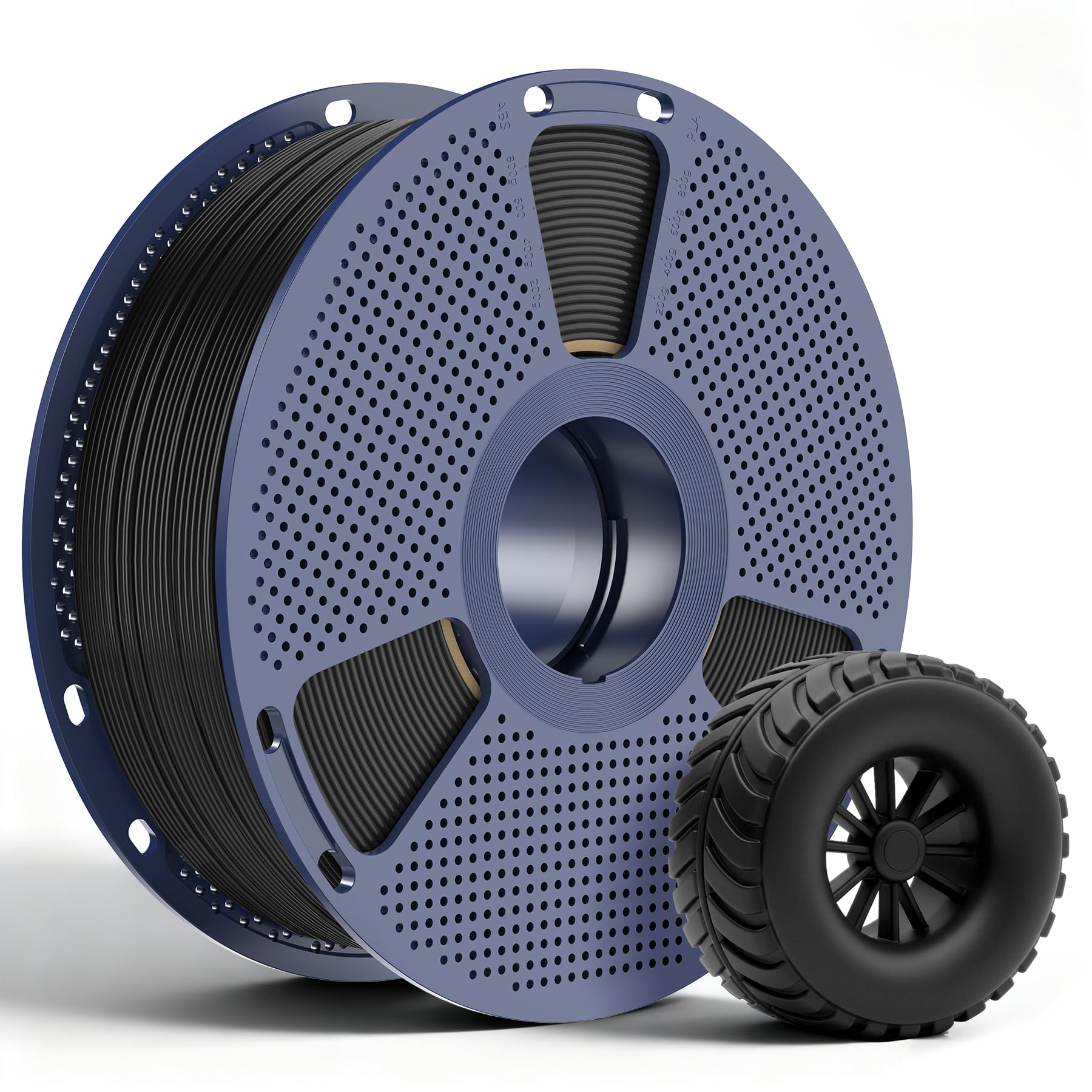
SUNLU’s TPU filament is the go-to for makers who want flexible prints without sacrificing print speed. The recommended speed range of 80–120 mm/s is significantly higher than the typical TPU cap of 40–60 mm/s, making it a good fit for printers with direct-drive extruders that can handle the higher flow rate without underextrusion.
The ±0.03 mm dimensional accuracy is consistent across multiple user reports, with no tangles or diameter fluctuations causing mid-print failures. Buyers consistently praise the brand’s overall reliability across their entire filament lineup. The spool arrived vacuum-sealed with desiccant, and most users reported it was dry enough to use immediately—though drying is still recommended for best results.
The main trade-off is that this is a firm 95A blend; for truly squishy projects like soft insoles or crush-proof gaskets, the 85A options are more appropriate. But for functional parts that need rubber-like flexibility at production-friendly speeds, SUNLU earns its strong repeat-purchase rate.
Why it’s great
- High print speed up to 120 mm/s saves time
- Excellent dimensional consistency reduces tuning
- Brand-wide reputation for reliable quality
Good to know
- Firmer feel than softer 85A TPU options
- Best results with direct-drive extruder
- Limited color selection in this SKU
5. Creality TPU Filament 1.75mm 95A Black

This Creality CR-TPU filament differentiates itself with a noticeably glossy surface finish and enhanced chemical resistance against water, oil, and solvents. The 95A Shore hardness provides the standard rubber-like feel, but the interlayer bonding appears stronger than typical TPU, resulting in smoother surface quality right off the build plate.
Users running Bambu Lab X1C and Ender 3 V3 report clean prints using the Bambu TPU 95A profile or manual settings of 230°C nozzle and 35°C bed. However, one recurring complaint involves the filament being wound too tightly on the spool, causing the material to stick to itself and produce voids or failed prints unless manually unspooled and re-rolled. This appears to be a batch-specific issue rather than a design flaw.
Creality backs this with a 12-month after-sales service, which is longer than the typical 30-day return window from generic brands. For prints requiring a professional, shiny finish and long-term chemical exposure resistance, this is a strong contender despite the spooling inconsistency.
Why it’s great
- High-gloss surface with superior interlayer bonding
- UV, oil, and solvent resistant for harsh environments
- 12-month after-sales support from Creality
Good to know
- Some spools have overly tight winding causing adhesion
- Requires specific profile tuning on Bambu printers
- Single 1kg spool only—no multi-pack available
6. Official Creality TPU Filament 1.75mm Black 95A
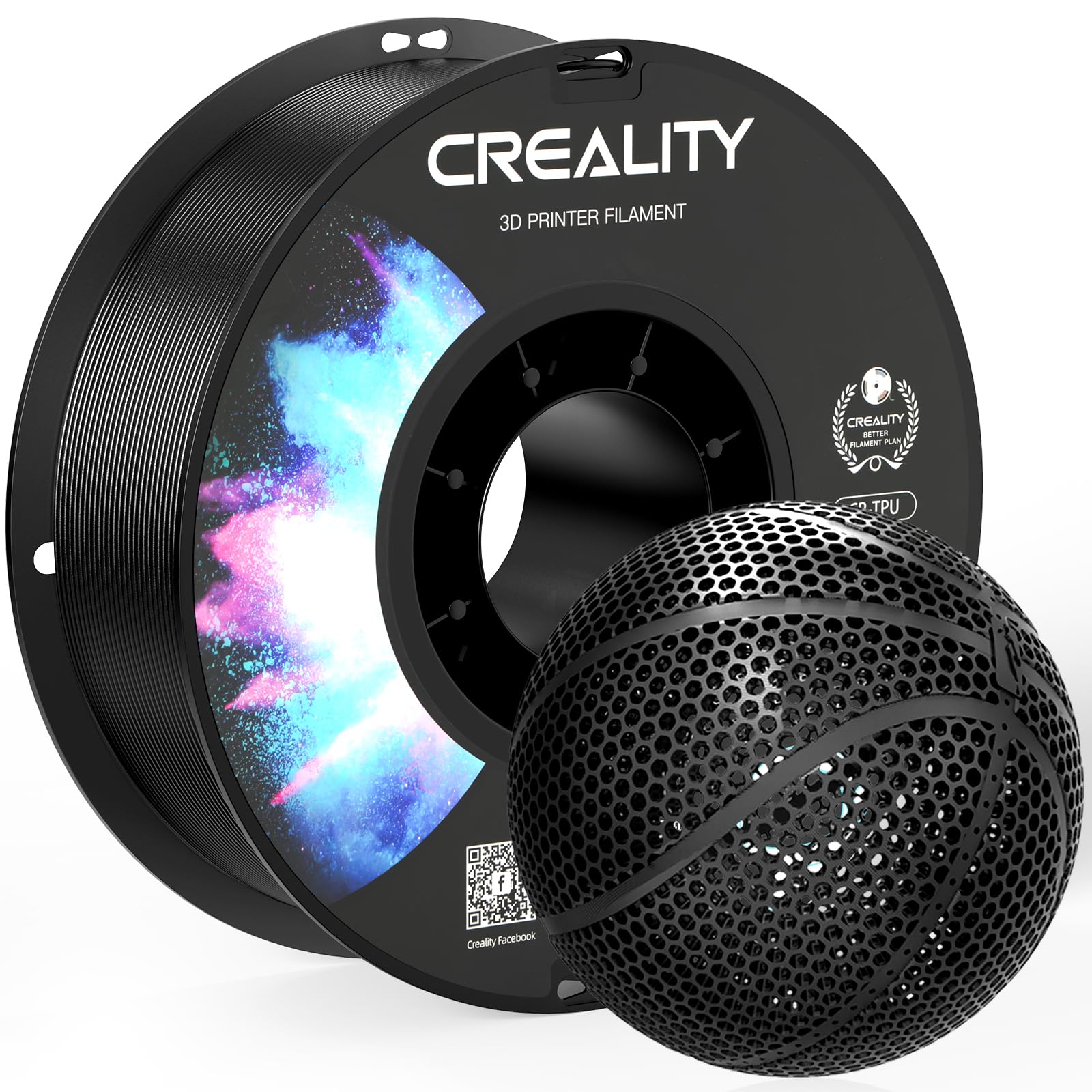
The “Official” designator distinguishes this Creality spool by its Clog-Free patent technology, which aims to reduce jams in both direct-drive and Bowden setups. The 95A TPU stretches up to three times its original length, making it suitable for parts that undergo repeated flexing like shoe treads or flexible connections.
Buyer feedback reveals a common workaround: the spool tension can be tight enough to cause under-extrusion mid-print. Manually unwinding a few meters before starting the print resolves the issue. Recommended settings from experienced users are 60 mm/s, 230°C nozzle, 60°C bed, and only 1 mm of retraction at 45 mm/s to prevent clogging.
Despite needing this pre-print ritual, users report the resulting parts have excellent bed adhesion, low warp, and virtually no odor during printing. The 24-hour pre-drying and vacuum sealing means it arrives dry, which eliminates the most common TPU headache before you even start tuning.
Why it’s great
- Clog-Free design reduces hotend jams
- Arrives dry and vacuum sealed for immediate use
- Low warp and excellent bed adhesion
Good to know
- Tight spool tension sometimes causes under-extrusion
- Best suited for direct-drive extruders
- Requires low retraction settings to prevent jamming
7. JAYO TPU 3D Printer Filament Bundle 95A
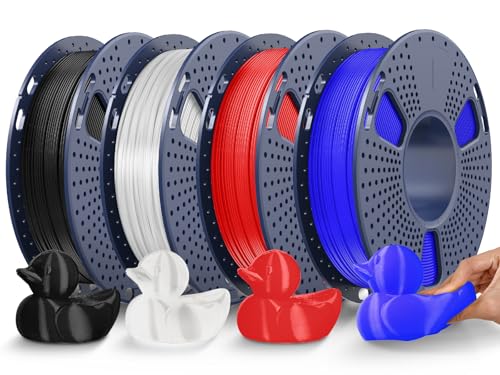
JAYO’s bundle breaks the 1kg total into four 250g spools in black, clear, red, and blue—an ideal format for multi-color projects, testing fit and finish, or gifting. The 95A Shore hardness delivers the standard medium-firm rubber feel, and the ±0.03 mm tolerance ensures consistent extrusion across all four colors.
The caveat is spool size: these small 250g spools are physically tiny and may not fit standard printer spool holders or AMS units without modification. A few users reported poor spool clips causing the filament to fall off during printing. However, those who respooled onto their own hubs had no further issues. The filament itself prints well after drying, producing water-tight, gummy parts with good flexibility.
At this price point, you are sacrificing spool ergonomics and color consistency between batches for the ability to stock multiple colors without committing to full kilo spools. For makers who want to explore TPU printing with low upfront investment, this is the most risk-free entry point.
Why it’s great
- Four colors in one purchase for multi-material projects
- Small 250g spools reduce waste on test prints
- Consistent ±0.03mm diameter across all colors
Good to know
- Spools are mini-sized, may not fit standard holders
- Poor spool clips can cause filament unwinding
- Requires drying before use for best results
FAQ
What does Shore 95A mean for 3D print filament rubber?
Can I print TPU with a Bowden extruder?
Why does my TPU filament keep clogging the nozzle?
Final Thoughts: The Verdict
For most users, the 3d print filament rubber winner is the Siraya Tech Flex TPU 85A because its softer shore hardness and ISO biocompatibility testing open the door to wearables, gaskets, and skin-contact prints that standard 95A filaments cannot match. If you want a budget-friendly dual-spool option for high-volume parts, grab the ELEGOO TPU 2KG. And for outdoor, weather-exposed applications where UV and chemical resistance matter most, nothing beats the ANYCUBIC TPU Grey.