
A 3D printer extruder is the single most critical component determining whether your print succeeds or turns into a tangled, skipping mess. Between grinding gears, inconsistent extrusion, and constant clogs, the wrong extruder wastes filament and hours of your time—especially when you move beyond basic PLA into flexible or high-temperature materials.
I’m Min — the co-founder and writer behind Gadgets Feed. My analysis focuses on gear reduction ratios, stepper motor torque figures, filament path lengths, and real-world user failure rates across dozens of extruder models to separate genuine upgrades from marketing fluff.
Whether you’re battling stringing PETG or pushing TPU through a standard Bowden tube, finding the best 3d printer extruder means matching drive mechanism, mounting compatibility, and thermal limits to your exact printing habits and machine chassis.
How To Choose The Best 3D Printer Extruder
Selecting the right extruder isn’t about picking the most expensive option—it’s about matching drive mechanism, gear reduction, and thermal capabilities to the materials you print most. Bowden systems remain adequate for rigid PLA, but flexible filaments demand a direct drive path shorter than 50mm to prevent buckling.
Gear Ratio and Torque Delivery
A higher gear reduction multiplies stepper motor torque at the expense of filament feed speed. Ratios like 3:1 (Micro Swiss NG) or 3.5:1 (Creality Sprite SE) allow the extruder to push filament with consistent force even at lower motor currents, reducing skipped steps and underextrusion on long retractions.
Filament Path Length and Material Compatibility
Direct drive extruders with a filament path under 41mm—like the Micro Swiss NG—eliminate the Bowden tube’s elasticity, enabling retraction distances as low as 1mm. This prevents stringing with PETG and TPU while reducing the risk of heat creep jams that plague long-path designs when printing at 240°C or higher.
Mounting and Gantry Weight Considerations
Every additional gram on the print head introduces inertia that can cause ringing at higher speeds. Upgrading to a direct drive extruder weighing under 210 grams (Sprite SE territory) keeps mass low enough that a single Z-axis motor still handles acceleration without wobble. Heavier units around 440 grams (Micro Swiss NG) pair best with dual-Z upgrades.
Quick Comparison
On smaller screens, swipe sideways to see the full table.
| Model | Category | Best For | Key Spec | Amazon |
|---|---|---|---|---|
| Micro Swiss NG | Premium Direct Drive | High-torque universal upgrade | 3:1 gear ratio, <41mm filament path | Amazon |
| Micro Swiss Direct Drive | Premium Direct Drive | PETG and ABS reliability | Machined aluminum, 139.25 steps/mm | Amazon |
| Creality K1 Extruder | High-Speed OEM | K1/K1 Max owners | 50N extrusion force, dual-gear | Amazon |
| Creality Sprite SE | Mid-Range Direct Drive | Flexible filament beginners | 3.5:1 gear reduction, 210g weight | Amazon |
| Micro Swiss Bowden Dual Gear | Bowden Upgrade | Stock Bowden replacement | Dual-gear, NEMA 17 fit | Amazon |
| ELEGOO Neptune 3 Extruder | OEM Replacement | Neptune 3 Pro/Plus/Max | Fully assembled, plug-and-play | Amazon |
| Creality Ender 3 Direct Drive | Budget Direct Drive | TPU first-timers on Ender 3 | All-metal hotend, 42-40 stepper | Amazon |
In‑Depth Reviews
1. Micro Swiss NG Direct Drive Extruder

The Micro Swiss NG achieves the industry’s shortest filament path at under 41mm through a bevel gear design that places the stepper motor parallel to the heat break rather than above it. This layout reduces the distance the filament must travel between the drive gears and the nozzle, virtually eliminating the buckling that causes failed TPU prints and stringing in PETG.
The 3:1 gear ratio delivers enough torque to push filament consistently through a .8mm nozzle at 70mm/s without skipped steps, even when printing Nylon or polycarbonate blends. The kit includes a custom stepper motor, extension cable, fan shroud, and adaptation plate for CR-10 and Ender 3 series machines—no separate purchases required.
Some users report that the included CR Touch bracket is missing from the box, and the initial filament loading technique requires a deliberate push past the gears. Once dialed in with a rotation_distance of 7.8 in Klipper and a 1mm retraction distance, the NG produces cleaner overhangs and sharper corners than any Bowden-based competitor at this weight class.
Why it’s great
- Bevel gear design delivers the shortest filament path on the market
- 3:1 reduction provides strong torque for high-temperature materials
- Drop-in installation with included motor and extension cable
Good to know
- CR Touch bracket not consistently included in all units
- Filament loading requires a deliberate push-through technique
- Heavier than Sprite SE at 440g—consider dual-Z support
2. Micro Swiss Direct Drive Extruder for Creality CR-10 / Ender 3

This Micro Swiss direct drive replaces the entire hotend assembly with a machined aluminum block that integrates the heat sink, heat break, and heat block into a single rigid unit. The dual mesh drive gears bite into the filament evenly, producing clean, square filament ends during retraction that re-feed without jamming—a common pain point with stock extruders on Ender 3 and CR-10 printers.
Users calibrating to 139.25 steps per mm report consistent extrusion across the entire print bed, with .8mm nozzles running at 70mm/s without underextrusion. The all-metal heat break handles temperatures up to 260°C, making this extruder capable of printing ABS, PETG, and even low-temperature Nylon blends right out of the box.
The lever arm shoulder screw can sit too deep in its countersink, requiring a light file pass before installation, and the unit is not compatible with the stock Creality fan shroud—a printed shroud is necessary for proper airflow. Despite these minor assembly quirks, the build quality and repeatable extrusion make this a favorite among users switching from PLA to more demanding materials.
Why it’s great
- Machined aluminum construction eliminates plastic gear housing flex
- Dual mesh drive gears produce clean filament ends for reliable retraction
- All-metal heat break supports printing up to 260°C
Good to know
- Not compatible with stock Creality fan shroud—requires printed replacement
- Lever arm shoulder screw may need light filing for smooth operation
- Some units arrive with minor machining scratches on visible surfaces
3. Creality K1/K1 Max/K1C/K1 SE Extruder with Motor

Designed for Creality’s high-speed K1 series and the Ender 3 V3 Plus, this extruder delivers 50 newtons of extrusion force through a dual-gear direct drive mechanism that keeps filament feeding consistently even at 1000mm/s print speeds. The integrated stepper motor mates to a high-strength synchronous wheel and gear set that maintains precise constant rotation without micro-stepping drift over long print sessions.
The shell uses high-grade plastic to shed weight while the internal gears remain all-metal, keeping the entire assembly at 210 grams—light enough that K1 Max users report zero gantry sag after installation. Loading filament becomes significantly easier compared to the OEM split-nozzle extruder, and the integrated design eliminates the separate motor bracket that introduces alignment issues on earlier Creality units.
Compatibility is limited to printers using the new integrated nozzle design; owners of older split-nozzle K1 models must keep the front shell from their existing extruder and swap only the internal mechanism. The unit handles PLA, TPU, PETG, and ABS without adjustment, though the 50N force may overwhelm soft TPU at low speeds if tension isn’t dialed back.
Why it’s great
- 50N extrusion force maintains feed consistency at high print speeds
- Integrated motor simplifies alignment and reduces installation variables
- Lightweight at 210g—suitable for single-Z gantry setups
Good to know
- Only compatible with new integrated nozzle—split-nozzle owners need old front shell
- Extrusion force may require tension reduction for soft flexible filaments
- Priced as a replacement part, not a universal upgrade kit
4. Creality Ender 3 Sprite Direct Drive
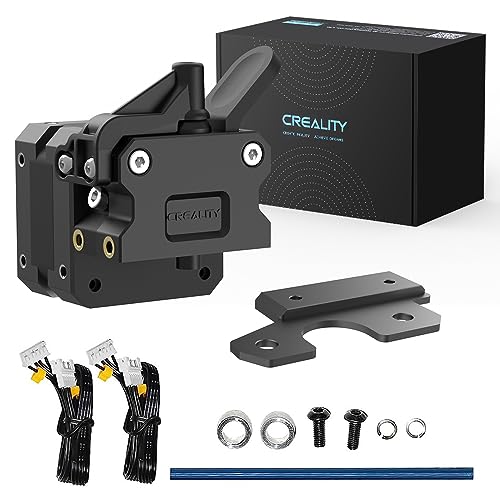
The Sprite SE uses a 3.5:1 gear reduction ratio—higher than the Micro Swiss NG’s 3:1—which amplifies stepper motor torque enough to push TPU 95A without grinding the filament surface. At just 210 grams, it’s one of the lightest direct drive kits available, making it a suitable upgrade for Ender 3 V2 and Ender 5 users who haven’t installed a dual-Z axis upgrade and don’t want to introduce gantry sag.
Installation takes roughly 30 minutes and requires no firmware changes beyond adjusting the E-step value to 424.9. The adjustable tension screw allows fine-tuning the grip pressure on the drive gear, which helps when switching between rigid PLA and softer flexible materials—a feature notably absent from fixed-tension Bowden extruders.
The kit does not include a hotend assembly—it’s purely the extruder mechanism that mounts to your existing hotend. Some users report that the bottom roller offset spacer needs manual adjustment, and the included mounting plate may not align perfectly with CR-10 V2 frames, requiring a custom bracket. Once dialed in, the Sprite SE reduces retraction to 1mm and eliminates the stringing issues that plague Bowden-fed PETG prints.
Why it’s great
- 3.5:1 gear reduction provides excellent torque for flexible filaments
- Ultra-light 210g design minimizes gantry impact on single-Z printers
- Adjustable tension screw allows material-specific grip tuning
Good to know
- Hotend not included—requires existing compatible hotend
- Mounting plate does not fit CR-10 V2 without modification
- Gantry roller spacer may need adjustment during installation
5. Micro Swiss Bowden Dual Gear Extruder

This dual-gear Bowden extruder replaces the single-gear plastic feeder that ships with Ender 3, CR-10, and Anycubic Mega S printers, addressing the most common cause of inconsistent extrusion: worn brass gear teeth. The all-metal construction and dual drive gear configuration apply force evenly to both sides of the filament, preventing the offset grinding that causes filament dust to accumulate in the Bowden tube fitting.
Users who struggled with first-layer adhesion for years report that switching to this extruder produced a perfectly smooth first layer immediately after calibrating E-steps to 137. The higher gear ratio requires slightly higher nozzle temperatures and slower speeds when using very small nozzles, but the gain in extrusion consistency is immediate and measurable across every rigid filament type.
A notable design limitation is the Bowden tube connector’s outer screw-in stopper, which can permanently fuse to the PTFE tube after a jam, making it impossible to replace the connector with third-party parts without replacing the entire extruder body. This effectively makes the Bowden tube a single-use item after a major jam, but for users printing predominantly PLA and PETG at moderate speeds, the extrusion quality improvement over stock plastic feeders justifies the trade-off.
Why it’s great
- Dual-gear design applies even pressure to both filament sides
- All-metal construction eliminates plastic gear housing failure
- Dramatically improves first-layer consistency over stock single-gear extruders
Good to know
- Bowden tube connector fuses after a jam—single-use component
- Higher gear ratio may require temperature tweaks with small nozzles
- Tension release point faces the gantry, making adjustments awkward
6. ELEGOO 3D Printer Extruder for Neptune 3 Pro/3 Plus/3 Max

This fully assembled dual-gear direct drive extruder is designed exclusively for ELEGOO Neptune 3 Pro, 3 Plus, and 3 Max printers, making it the definitive plug-and-play replacement for owners who experience partial clogs or homing failures. The extruder is tested before shipping—some test filament residue may remain inside, but this does not affect performance.
Users report that swapping the original extruder for this OEM unit immediately resolved homing sequence failures where the printer would fail to return to home before auto-leveling. The installation takes roughly two minutes: remove two screws, unplug the old connector, slide the new unit into position, and recalibrate the Z-offset. The package includes a replacement nozzle, so the swap restores full print capability without sourcing additional parts.
Compatibility is strictly limited to Neptune 3 series machines—this extruder does not fit standard Ender 3 or CR-10 frames. The all-metal dual-gear design matches the original OEM specifications exactly, meaning no firmware changes or E-step recalculations are required. For Neptune 3 owners with damaged or worn extruders, this is the fastest path back to reliable printing with zero guesswork.
Why it’s great
- Exact OEM fit—no firmware changes or E-step recalibration needed
- Includes replacement nozzle for complete refresh
- Two-minute installation restores full printing capability
Good to know
- Only compatible with Neptune 3 Pro/3 Plus/3 Max printers
- Test filament residue may be present in new units
- Cannot be adapted to other printer brands or models
7. Creality Original Ender 3 Direct Drive Upgrade Kit

The Creality original direct drive upgrade kit converts Ender 3, Ender 3 V2, and Ender 3 Pro printers from Bowden to direct drive in roughly 20 minutes using the included longer connecting cable, tools, and diagram instructions. The kit uses a 42-40 stepper motor that lowers torque requirements on the drive gear, reducing nozzle blockage during retraction and minimizing the jams that occur when loading new filament spools.
Users report that switching from a 6mm Bowden retraction to a 1mm direct drive retraction solves stringing issues immediately, especially with TPU and other flexible filaments. The all-metal hotend structure withstands temperatures up to 250°C, allowing experimentation with PETG and low-temperature ABS without heat creep concerns. The kit is 100% Creality official, so firmware modifications are optional—the extruder works with stock Creality boards at standard E-step settings.
Some users experienced the PLA drive gear wheel falling off within the first three hours of use, requiring reinstallation of the retaining clip. Additionally, the 250°C maximum safe temperature means PETG printing at higher temperatures may trigger thermal error warnings that require printer restarts. For users primarily printing PLA and TPU who want a low-cost direct drive conversion with no soldering or firmware flashing, this kit delivers reliable results at a hard-to-beat entry price.
Why it’s great
- 20-minute installation with no soldering or firmware changes required
- All-metal hotend supports printing up to 250°C
- Official Creality part ensures compatible mounting and cable lengths
Good to know
- PLA drive gear may detach during first few hours—check retention clip
- 250°C max temperature limits high-temp PETG and ABS use
- Adds noticeable weight to the gantry—consider dual-Z for quality prints
FAQ
Do I need to change my E-step value after installing a new extruder?
Can any direct drive extruder print TPU without modifications?
What is the difference between a Bowden extruder and a direct drive extruder?
Final Thoughts: The Verdict
For most users, the best 3d printer extruder winner is the Micro Swiss NG because its 3:1 gear ratio and sub-41mm filament path deliver the highest extrusion consistency across PLA, PETG, and flexible materials without requiring printer-specific brackets. If you want a lightweight direct drive upgrade under 220 grams, grab the Creality Sprite SE for its 3.5:1 torque multiplication and adjustable tension. And for high-speed K1 series owners needing OEM reliability at 1000mm/s, nothing beats the Creality K1 Extruder.