
Our readers keep the lights on and my morning glass full of iced black tea. As an Amazon Associate, I earn from qualifying purchases.
An artist’s vision lives or dies in the details—the subtle curve of a character’s jaw, the texture of a dragon’s scales, the exact negative space in an architectural maquette. A printer that blurs those lines isn’t a tool; it’s a compromise. This guide focuses on machines that render your digital sculpts into tangible form without losing the soul of the work.
I’m Min — the co-founder and writer behind Gadgets Feed. I’ve spent hundreds of hours analyzing XY resolution, light source uniformity, and layer depth across the resin and FDM landscape to find the machines that serve the creative process rather than fight it.
Whether you need ultra-fine miniatures or large-scale sculptures, the right 3d printer for artists translates your digital vision into physical reality with the clarity your work demands.
How To Choose The Best 3D Printer For Artists
The best printer for an artist isn’t the fastest or the cheapest—it’s the one that faithfully reproduces the finest details without introducing artifacts. Your choice comes down to understanding which specs translate directly to visible quality in your finished prints.
Resin vs. FDM: The Core Decision
Resin printers use a UV-curable liquid and achieve XY resolutions as fine as 14 microns, delivering near-injection-mold smoothness and sharp detail. They excel at miniatures, jewelry, and figurines. FDM printers melt filament spools layer by layer; they offer larger build volumes and tougher materials but leave visible layer lines that require sanding, filling, or priming. If your portfolio demands smooth organic surfaces, resin is the path. If you need large functional props or durable prototypes, FDM makes sense.
XY Resolution and Pixel Size
This spec determines the smallest feature the printer can resolve on the X and Y axes. A 22-micron XY resolution (found in 8K resin printers) captures fine text and facial contours, while a 14-micron resolution (16K screens) preserves the texture of brush strokes or lace patterns. For FDM printers, look at nozzle diameter—a 0.4mm nozzle is standard, but a 0.2mm nozzle allows finer detail at the cost of longer print times.
Build Volume and Real-World Scale
Artists often need to print objects that are either very small (earrings, game pieces) or larger than a coffee mug (helmets, busts, masks). A compact resin printer with a build volume of 6 x 3 x 7 inches is perfect for detailed miniatures. A large-format FDM or MSLA printer (12 inches or more on one axis) lets you print full-scale props or multiple parts in a single batch without splitting the model.
Quick Comparison
On smaller screens, swipe sideways to see the full table.
| Model | Category | Best For | Key Spec | Amazon |
|---|---|---|---|---|
| Bambu Lab P1S | FDM | Enclosed Multi-Material | 500 mm/s, 20000 mm/s² | Amazon |
| ELEGOO Mars 5 Ultra | Resin | Fast 9K Detail | 150mm/h, 18μm XY | Amazon |
| Creality Halot-X1 Combo | Resin | 16K Mega Resolution | 14×19 μm pixel | Amazon |
| Phrozen Sonic Mini 8K S | Resin | Budget Precision | 22μm XY resolution | Amazon |
| Bambu Lab A1 | FDM | Beginner Multi-Color | 10,000 mm/s² accel | Amazon |
| Anycubic Kobra X | FDM | Multi-Color Value | 600mm/s, 260mm³ | Amazon |
| ANYCUBIC Photon Mono M7 PRO | Resin | 14K Pro-Grade | 16.8×24.8 μm XY | Amazon |
| Creality K2 Combo | FDM | 16-Color Workhorse | 600mm/s, 260mm | Amazon |
| ELEGOO Jupiter 2 | Resin | Large MSLA Prints | 302.4 × 161.98 × 300 mm | Amazon |
| Original Prusa MK4S | FDM | Open-Source Reliability | 9.84 × 8.3 × 8.6 in | Amazon |
| QIDI Max4 Combo | FDM | Ultra-Large Engineering | 390×390×340 mm | Amazon |
In‑Depth Reviews
1. Bambu Lab P1S 3D Printer

The P1S is the FDM benchmark for artists who need speed and multi-material capability without sacrificing surface finish. Its fully enclosed CoreXY design reaches 500 mm/s with 20,000 mm/s² acceleration, meaning an intricate 12-hour print on a slower machine can finish in 4 hours here. The enclosed chamber also makes it viable for advanced filaments like ABS and ASA, which are prone to warping in open-frame printers.
The automatic bed leveling and 15-minute setup mean you spend your time sculpting, not fiddling. Real-world users consistently report that the P1S buries previous generation printers in print quality, with virtually no layer lines on standard PLA profiles. The ability to attach multiple AMS units for up to 16 colors eliminates the need for painting for many projects.
Where it stumbles is with flexible materials—TPU can be finicky without tuning, and the proprietary AMS system adds cost if you want full color spectrum. But for an artist producing functional prototypes or multi-material art pieces, this is the most reliable workhorse at this level.
Why it’s great
- Blazing 500 mm/s speed with auto-leveling.
- Multi-material up to 16 colors via AMS.
- Fully enclosed for advanced filaments.
Good to know
- TPU requires tuning.
- AMS system is a separate purchase.
2. ELEGOO Mars 5 Ultra Resin 3D Printer
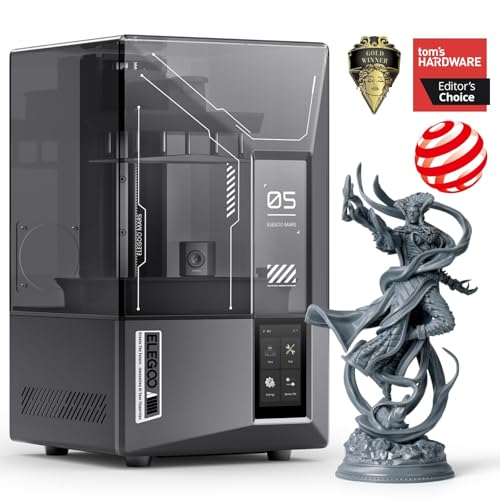
The Mars 5 Ultra delivers 9K resolution on a 7-inch monochrome LCD with an 18-micron XY pixel pitch—enough to capture the texture of woven fabric or fine hair strands on a 28mm miniature. Its tilt release mechanism achieves 150 mm/h print speeds without the layer-shift artifacts that plague cheaper fast-resin printers.
The built-in AI camera monitors the build plate and alerts you to failures in real-time, saving resin and time. Smart leveling means zero manual fiddling; you unbox, fill the vat, and print. The WiFi cluster printing feature also allows you to manage multiple Mars 5 Units from one interface, a boon for small production studios.
Some users note that the AI detection can miss issues depending on lighting and resin opacity, and the lid lacks hinges (it’s a separate cover). But the included Chitubox Pro subscription and the plug-and-play nature make it the strongest entry-level resin printer for serious artists.
Why it’s great
- 18-micron XY for ultra-fine detail.
- AI camera failure detection.
- Plug-and-play auto leveling.
Good to know
- Lid is not hinged.
- AI detection has variable accuracy.
3. Creality Halot-X1 Combo Resin 3D Printer
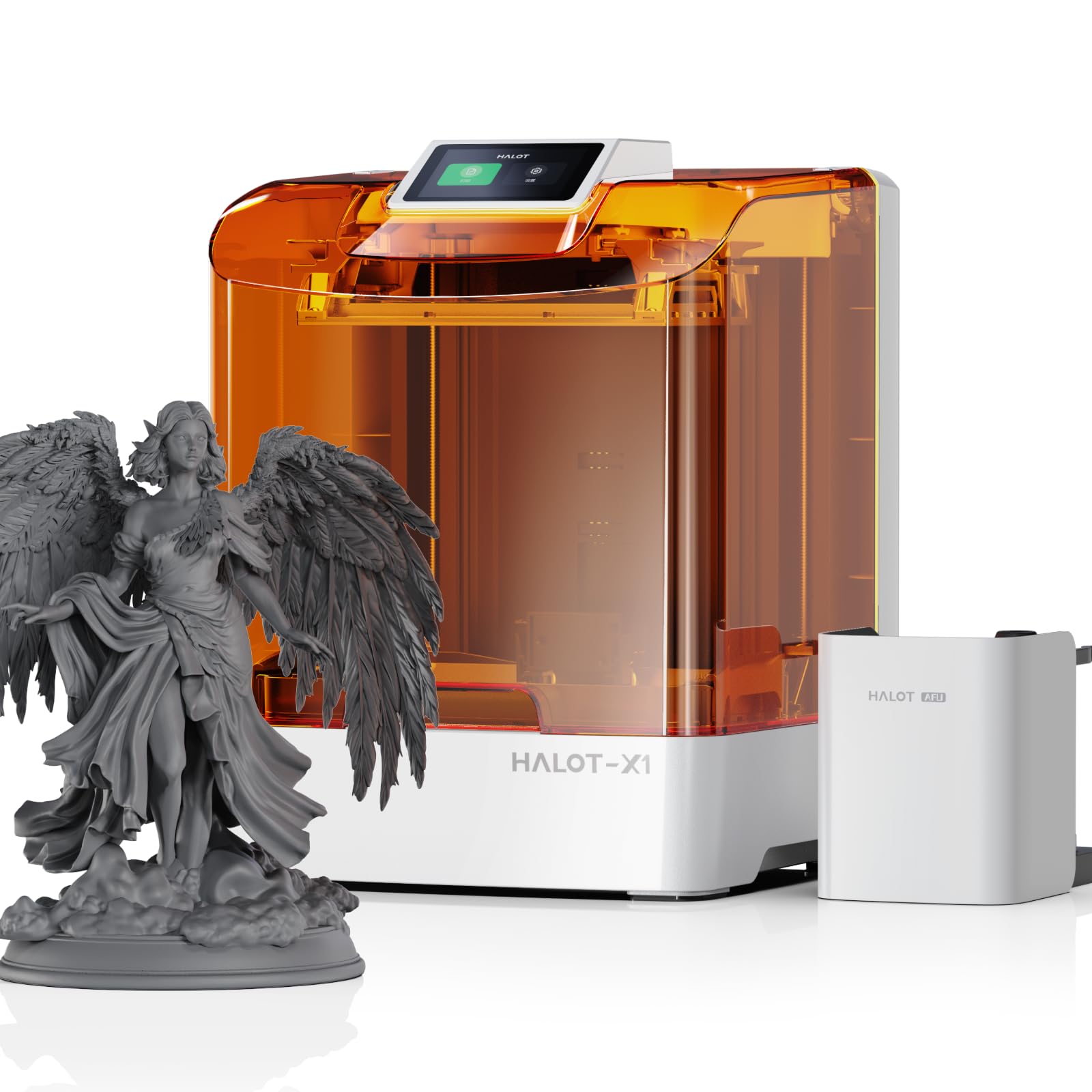
The Halot-X1 Combo boasts a 10.1-inch 16K monochrome LCD—that’s over 94 million pixels with a 14×19 micron pixel size. For an artist, this translates to the ability to print extremely tiny features like the facets on a gemstone or the texture of tree bark without any visible stepping.
Creality’s Intelligent AFU Resin Management system heats the resin to 30–45°C in three minutes, reducing viscosity and improving layer adhesion. The fixed build plate design eliminates traditional leveling entirely—it arrives perfectly trammed from the factory. Real-world users report excellent results with included HalotBox software, though some have had compatibility issues with more advanced slicing.
The trade-off is weight: at 37.4 pounds, this is a desk anchor. And the proprietary slicing software can be a bottleneck for users who prefer Lychee or Chitubox. But if your art demands the absolute highest XY resolution available at this price point, the Halot-X1 delivers.
Why it’s great
- 16K resolution with 14×19 μm pixels.
- Intelligent resin heating system.
- Factory-leveled fixed build plate.
Good to know
- Heavy at 37.4 lbs.
- Slicing software compatibility issues.
4. Phrozen Sonic Mini 8K S LCD Resin 3D Printer

The Sonic Mini 8K S is the gateway drug for artists entering resin printing. With a 22-micron XY resolution, it captures details that are invisible to the naked eye on a 6.5 x 2.8 x 6.7 inch build plate—enough space for a handful of 32mm miniatures or a single intricate jewelry pendant.
Its compact footprint (11.4 x 11.4 x 16.9 inches) fits on any desk, and the precise Z-axis calibration ensures consistent layer alignment. It’s open-platform, meaning you can slice with Lychee, Chitubox, or Tango—no vendor lock-in. Users consistently praise its reliability as a first printer, with many noting that they’ve printed hundreds of models without a single hardware failure.
The catch is that it requires USB drive file transfer; there’s no WiFi. And the build plate is relatively small, so you won’t print helmet-sized pieces. But for the price, it delivers 8K fidelity that rivals printers twice its cost.
Why it’s great
- 8K resolution at a budget-friendly price.
- Open-platform slicing software compatibility.
- Rock-solid Z-axis keeps layers aligned.
Good to know
- No WiFi; must use USB.
- Small build plate limits scale.
5. Bambu Lab A1 3D Printer

The A1 is Bambu Lab’s answer to the artist who wants multi-color FDM printing without the enclosed chamber premium. It hits 10,000 mm/s² acceleration and features active flow rate compensation that ensures consistent extrusion even during rapid direction changes—critical for maintaining surface quality on complex organic shapes.
Full-auto calibration handles Z-offset and bed leveling automatically. The AMS Lite (sold separately) enables up to four colors, letting you print vivid gradients or multi-material parts. Users consistently report excellent results out of the box, with one 13-year-old beginner producing gallery-quality prints within days.
The noise level is rated at ≤48 dB in quiet mode, which is whisper-quiet for a studio environment. However, the open-frame design means it’s not ideal for materials that need an enclosed chamber (like ABS). If your work is primarily PLA and PLA-based, this is the most approachable high-speed FDM printer for artists.
Why it’s great
- Multi-color printing via AMS Lite.
- Full-auto leveling and flow compensation.
- Quiet ≤48 dB operation.
Good to know
- Open frame—limited material compatibility.
- AMS Lite sold separately.
6. Anycubic Kobra X Multicolor 3D Printer
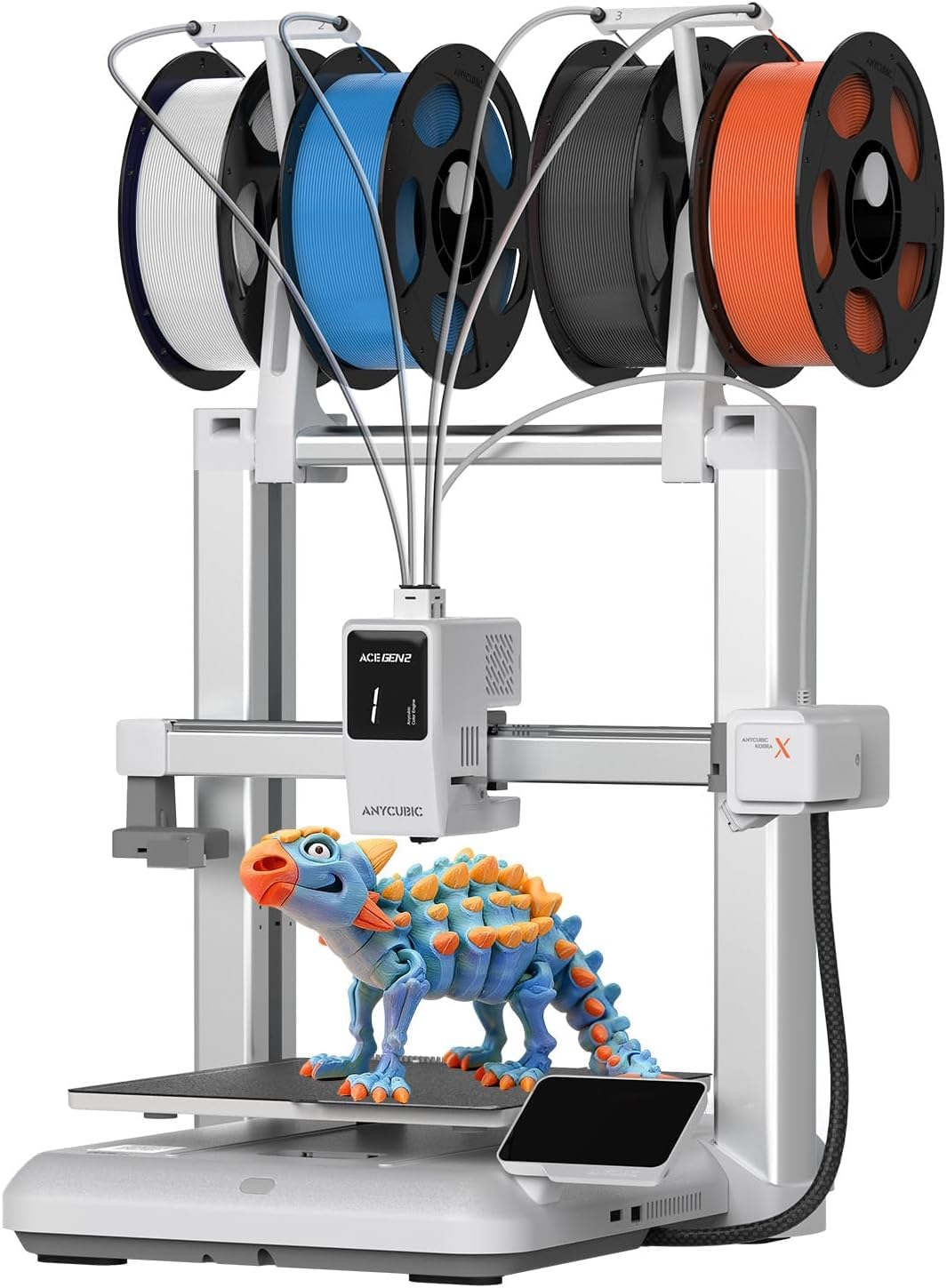
The Kobra X brings native 4-color printing out of the box without requiring a separate material unit—it ships with the ACE 2 Pro integrated, and can expand to 19 colors with four units. Its hardened steel nozzle and vibration compensation keep layer lines consistent even at 600 mm/s, while the LeviQ 3.0 auto-leveling system uses 49-point calibration for first-layer perfection.
The 260mm³ build volume is generous for FDM, handling full-sized masks or multiple parts in one go. Users consistently report exceptional reliability, with zero adhesion or clogging issues even after hundreds of hours on PLA, PETG, and TPU. The spaghetti detection AI and top-mount spool holder are thoughtful touches for a busy studio.
The main complaint is that the ACE 2 Pro system is not backward-compatible with earlier ACE Pro units, which may frustrate existing Anycubic owners. But for a new artist build, this is the best entry into multi-color FDM printing without a premium price tag.
Why it’s great
- Native 4-color printing included.
- 600 mm/s with vibration compensation.
- 49-point auto-leveling system.
Good to know
- ACE Gen 2 not backward compatible.
- Some assembly required.
7. ANYCUBIC Photon Mono M7 PRO 14K Resin 3D Printer

The M7 PRO uses a 14K monochrome LCD (13312×5120 resolution) with an XY resolution of 16.8×24.8 microns, capable of printing holes as small as 0.3mm in diameter. Its COB LighTurbo 3.0 light source achieves over 90% uniformity, ensuring that every corner of the build plate receives equal exposure—critical for full-plate batches of miniatures.
The dynamic heating vat maintains optimal resin temperature, while the auto-fill feature pumps and reclaims resin without spills. Six intelligent detection systems monitor everything from build plate installation to release film lifespan. Users upgrading from older Anycubic models report massive speed improvements, with the M7 PRO completing prints in half the time.
The touch interface can be laggy, and the dark cover makes it hard to see print progress without opening the lid. Some users also report that the advertised 170 mm/h speed requires specific high-speed resins and lower layer thickness, so real-world speeds may vary for critical detail work.
Why it’s great
- 14K resolution with 0.3mm hole capability.
- Auto resin fill and heating vat.
- Six intelligent failure detection systems.
Good to know
- Touch interface can be slow.
- Speed claims depend on resin type.
8. Creality K2 Combo (A) 3D Printer
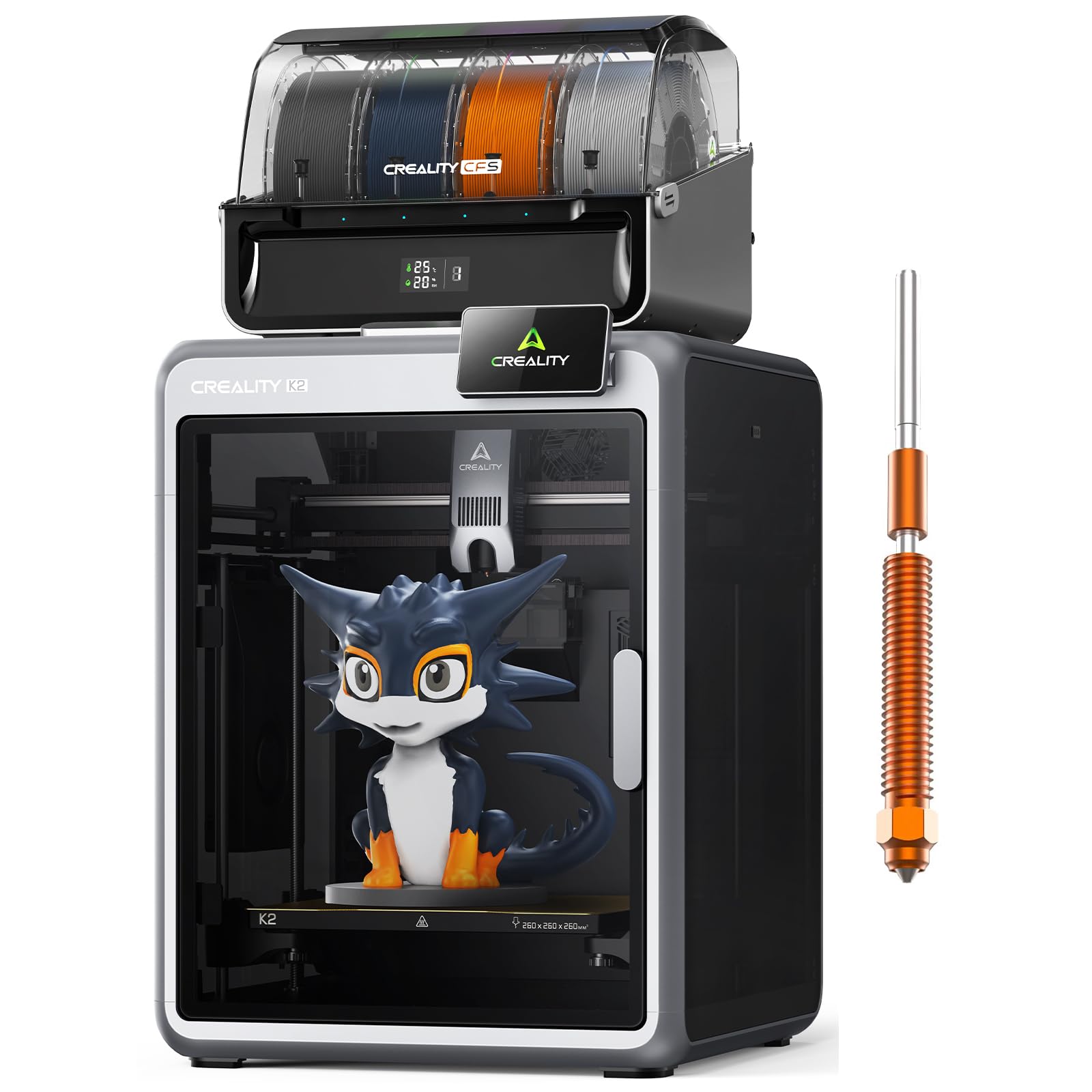
The K2 Combo is Creality’s flagship multi-color FDM machine, capable of up to 16 colors when connecting four CFS units. The direct-drive extruder with step-servo motors adjusts torque in under a millisecond, maintaining extrusion consistency across rapid direction changes. Silent mode uses dynamically balanced fans to keep noise low enough for a shared studio.
The smart auto-leveling only probes the active print area, reducing calibration time significantly. Users who upgraded from Ender-series machines report that the K2 is a completely different experience—faster, quieter, and more reliable. The included CFS also acts as a dry box, keeping hygroscopic filaments dry during long prints.
The biggest frustrations come from the CFS not accepting standard spools (you’ll need printed adapters), and the AI spaghetti detection has missed failures for some users. Assembly took some reviewers over an hour despite claims of “plug and play.” However, the multi-color capability at this build volume is unmatched at the price point.
Why it’s great
- Up to 16 colors with CFS units.
- Ultra-quiet step-servo motors.
- Smart area-based auto-leveling.
Good to know
- CFS requires printed spool adapters.
- AI detection not always reliable.
9. ELEGOO Jupiter 2 Resin 3D Printer
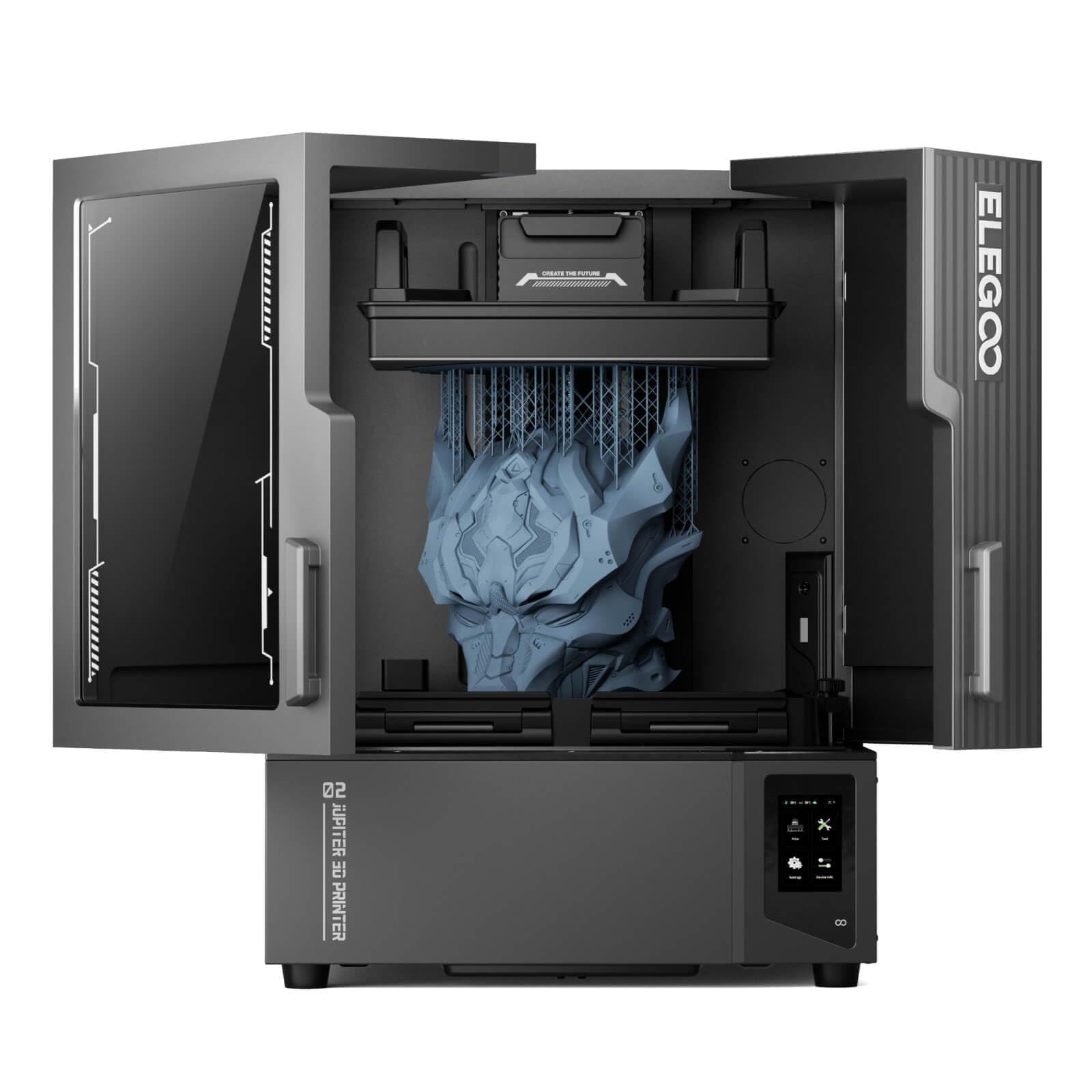
The Jupiter 2 offers a massive 302.4 x 161.98 x 300 mm build volume in a resin printer—enough for full-sized busts or dozens of miniatures in a single batch. Its 16K screen (15120×6230 resolution) with 20×26 micron XY resolution ensures that even at this scale, fine details don’t get lost in pixel stepping.
Smart features include multi-point auto-leveling, smart tank heating (precise 30°C), and an automated resin feeding system that refills from an external reservoir. The double-door design with transparent viewing window lets you monitor prints without opening the chamber. Real-world users running 24/7 report it’s the only printer in this class worth buying, with one reviewer logging over 250 kilograms of resin.
The machine is 63.8 pounds and stands nearly 3 feet tall—it needs a dedicated space. The lid is not hinged, making large prints awkward to retrieve. And at this size, FEP suction forces can cause adhesion issues for beginners who don’t optimize their orientation and support settings carefully.
Why it’s great
- Huge 300mm Z-axis build volume.
- 16K resolution even at large scale.
- Auto resin feed and smart heating.
Good to know
- Very heavy (63.8 lbs) and tall.
- Requires careful orientation tuning.
10. Original Prusa MK4S High-Speed 3D Printer
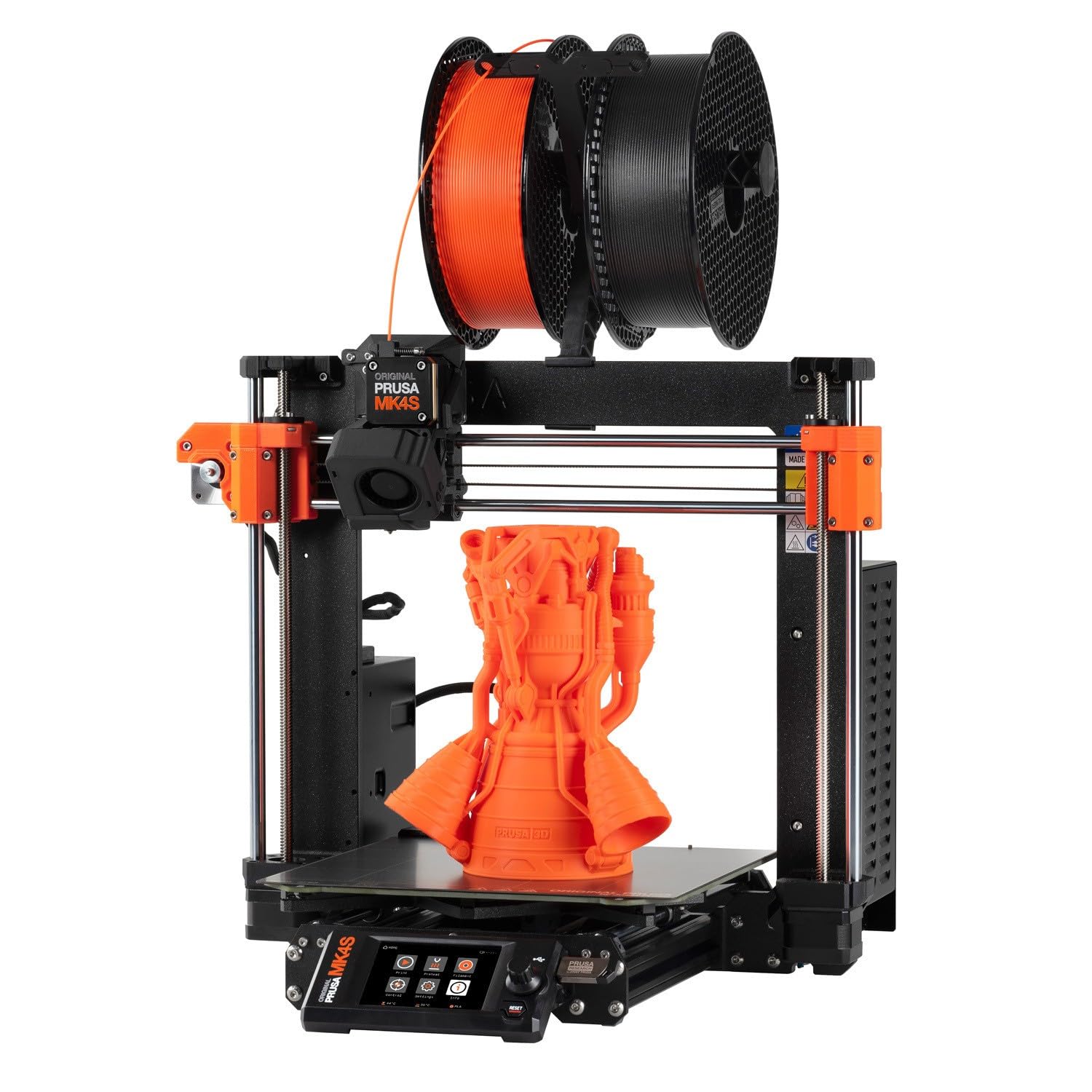
The MK4S is the gold standard for open-source FDM reliability. Input shaping reduces ringing at higher speeds, and the self-cleaning print head ensures consistent extrusion. The 9.84 x 8.3 x 8.6 inch build volume is modest, but the print quality—especially on complex organic shapes—rivals machines costing far more.
Prusa’s ecosystem includes Prusa Slicer, which has optimized profiles for hundreds of filaments. The machine ships fully assembled and tested, with a 1kg spool of Prusament PLA included. Users upgrading from budget printers report that the MK4S produces flawless prints even at default settings, with zero leveling or adhesion issues.
The price is the barrier—it sits at a premium tier where other machines offer larger build volumes or multi-color capabilities. The MK4S also lacks native multi-material support without the MMU3 upgrade (sold separately). But for an artist who values reliability and long-term support over flash features, the Prusa is the investment that keeps delivering.
Why it’s great
- Best-in-class reliability and support.
- Input shaping for clean high-speed prints.
- Open-source and fully upgradeable.
Good to know
- Premium price for modest build volume.
- Multi-material requires separate MMU3.
11. QIDI Max4 Combo 3D Printer
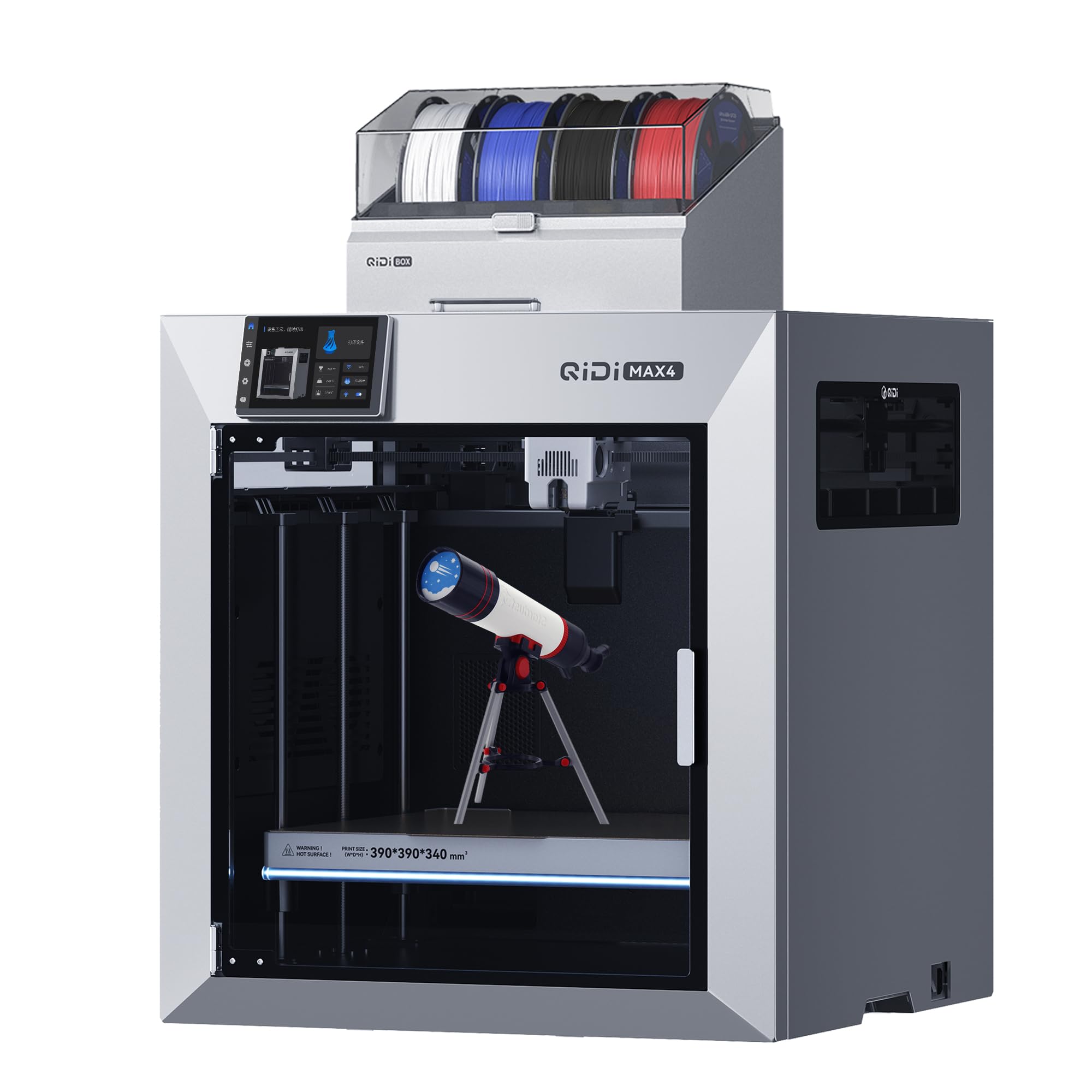
The Max4 Combo is the ultimate large-format FDM printer for artists who work at scale. Its 390 x 390 x 340 mm build volume is 55% larger than its predecessor, and the 65°C actively heated chamber allows printing with industrial materials like PPA-CF, ABS-CF, and PC even in cool environments.
The closed-loop motors on X/Y axes achieve 800 mm/s with 30,000 mm/s² acceleration, while the 2mm lead screw Z-axis maintains 0.01mm positioning precision. The QIDI BOX system enables 16-color multi-material printing with real-time filament monitoring. Users note that setup is straightforward and the print quality out of the box is exceptional, with one reviewer calling it the best value for high-volume engineering filament use.
The machine weighs 120 pounds—this is a permanent workshop fixture, not a desktop toy. The Polar Cooler (needed for optimal PLA printing) must be purchased separately. And the multi-material unit can struggle with brittle filaments that jam in the sensor boxes. But for an artist producing large-scale sculptures or functional art in carbon-fiber nylon, this is the printer that gets the job done.
Why it’s great
- Massive 390mm build volume.
- 65°C heated chamber for advanced materials.
- 800 mm/s with high precision Z-axis.
Good to know
- Very heavy (120 lbs).
- Polar Cooler sold separately.
FAQ
Is a resin printer safe to use in my home studio?
Can I achieve the same surface finish with FDM as resin?
What is the ideal XY resolution for figurine painting?
Final Thoughts: The Verdict
For most artists, the best 3d printer for artists is the Bambu Lab P1S because it combines high-speed FDM with multi-material versatility and an enclosed chamber that supports advanced filaments. If you need ultra-fine detail for miniatures, the ELEGOO Mars 5 Ultra delivers 9K precision with plug-and-play ease. And for artists working at truly large scale, the QIDI Max4 Combo offers industrial-grade build volume and material compatibility that no other machine in this list can match.