
That broken interior clip, that cracked engine shroud, that snapped bumper bracket — a trip to the dealer for an OEM replacement can set you back hundreds, with a two-week wait to boot. A dedicated 3D printer for car parts turns that headache into a weekend project, letting you print durable, functional components in ABS, polycarbonate, or carbon-fiber-infused nylon that outlast the factory originals.
I’m Min — the co-founder and writer behind Gadgets Feed. I’ve spent months parsing heated chamber specs, flow rates, and motion system kinematics across dozens of printers to find the ones that actually survive in a steamy engine bay or a hot dashboard without warping into uselessness.
Whether you need interior trim clips, custom brackets, or under-hood mounts that can handle vibration and heat, the 3d printer for car parts must deliver high-temperature capability, a stable enclosure, and enough XY precision to maintain tight tolerances.
How To Choose The Best 3D Printer For Car Parts
Printing durable, heat-resistant automotive components demands a printer that goes well beyond the entry-level PLA machine. You need a heated enclosure, a high-temp nozzle, a rigid frame, and reliable bed adhesion to produce parts that survive vibration, UV, and under-hood temperatures.
Heated Chamber Temperature
For ABS, ASA, polycarbonate, and nylon — the workhorses of automotive printing — an ambient chamber temperature of at least 50°C is critical to prevent layer separation and warping as the part cools unevenly. Look for active chamber heating (PTC or cartridge-based) rather than passive enclosure, which only retains waste heat from the bed.
Nozzle & Hotend Capability
A hotend capable of 300°C or higher lets you print advanced materials like polycarbonate, nylon-12, and carbon-fiber-reinforced composites. A hardened steel or brass-hardened steel nozzle is mandatory for abrasive carbon-fiber filaments; standard brass nozzles will wear out in a single spool.
Build Volume vs. Part Size
Most automotive brackets, trim clips, and engine bay covers require a build plate of at least 250×250×250mm. For larger items like bumper mounts or knee bolster cores, a printer with a 300×300×300mm or larger volume saves you from splitting and gluing parts.
Frame Rigidity & Motion System
CoreXY motion systems paired with an all-metal frame deliver the precision and speed needed for functional parts with tight tolerances. A loose or wobbly frame introduces layer-shift and ringing, which ruins the dimensional accuracy required for bolt-on components.
Quick Comparison
On smaller screens, swipe sideways to see the full table.
| Model | Category | Best For | Key Spec | Amazon |
|---|---|---|---|---|
| QIDI Q2 | Premium Mid-Range | All-around automotive workhorse | 65°C heated chamber, 370°C nozzle | Amazon |
| Bambu Lab P1S | Mid-Range | Multi-color & fast prototyping | 500 mm/s, enclosed, AMS ready | Amazon |
| ELEGOO Centauri Carbon | Mid-Range | Out-of-box carbon fiber printing | 320°C hardened nozzle, CoreXY | Amazon |
| Flashforge AD5M Pro | Mid-Range | Quick-swap nozzles for versatility | 600 mm/s, 280°C, quick-swap nozzle | Amazon |
| Creality K1C | Mid-Range | Carbon fiber with AI monitoring | 600 mm/s, 300°C, AI camera | Amazon |
| SainSmart ZR | Mid-Range | Large multicolor prints | 300mm³ build, 4-color MIFS | Amazon |
| Anycubic Kobra S1 Combo | Mid-Range | Integrated filament dryer & multi-color | 600 mm/s, ACE PRO dryer, 4-color | Amazon |
| Longer LK5 Pro 3 | Value Budget | Large build volume on a budget | 300×300×400mm, TMC2209 | Amazon |
| Flashforge AD5M Pro (2025) | Mid-Range | Dual-nozzle kit & enclosed | 600 mm/s, CoreXY, smart monitoring | Amazon |
| QIDI Max4 Combo | Premium Large Format | Oversized industrial automotive parts | 390×390×340mm, 65°C, 800 mm/s | Amazon |
| Original Prusa CORE One | Premium | Reliable workhorse with open-source | 55°C chamber, CoreXY, 250×220×270mm | Amazon |
In‑Depth Reviews
1. QIDI Q2 3D Printer
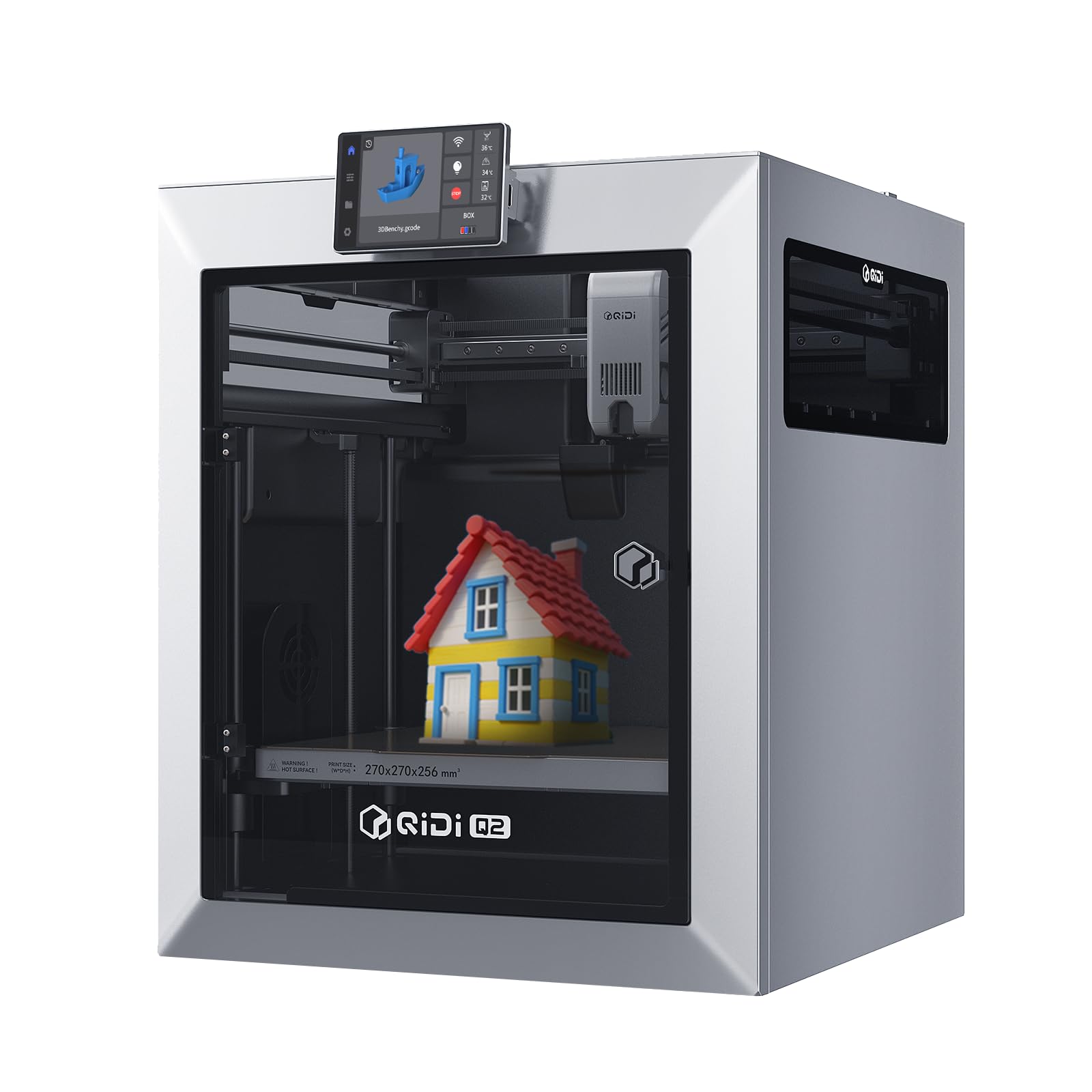
The QIDI Q2 earns the top spot because its 65°C actively heated chamber and 370°C nozzle unlock genuine engineering-grade materials — ABS, polycarbonate, PA-CF — straight out of the box. That nozzle-as-leveling-sensor system delivers first-layer accuracy that is unaffected by slight bed variations, crucial for parts with tight bolt-hole tolerances. The 1.5GT synchronous belt reduces vibration artifacts, so structural brackets and engine covers finish with smooth layer adhesion instead of ringing.
Setup takes under 20 minutes, and the first print — using the preloaded PLA profile — came off flawless in testing. The triple filtration system (G3 pre-filter, H12 HEPA, activated carbon) suppresses ABS fumes well enough for indoor garage use, and the 1080p AI camera catches spaghetti failures before wasting a 12-hour print. The QIDI BOX add-on enables up to 16-color multicolor printing, but the single-filament experience out of the box is already category-leading for automotive work.
Some users report firmware quirks — UI text occasionally displays in mixed English/Mandarin — and the 12-minute pre-print preparation cycle is longer than competitors. But for pure material capability, print reliability, and chamber temperature, the Q2 beats everything within its price tier.
Why it’s great
- Active 65°C chamber prevents ABS/nylon warping completely.
- 370°C nozzle handles carbon-fiber and glass-fiber composites.
- Filtration system makes indoor ABS printing viable.
Good to know
- Firmware UI can show mixed languages and sporadic responsiveness.
- Pre-print calibration cycle takes 12 minutes per job.
2. Bambu Lab P1S 3D Printer

The Bambu Lab P1S is a closed-chamber CoreXY machine that balances raw speed with out-of-box reliability. Its 500 mm/s print speed and 20,000 mm/s² acceleration slice through small trim clips in under 15 minutes without sacrificing the 0.1mm precision needed for snap-fit interior parts. The fully enclosed body stabilizes chamber temperature for ABS and ASA — though it lacks active chamber heating, so large nylon prints may still show bottom-layer curling.
The AMS system supports up to 16 colors or multi-material prints, which is handy for printing dual-color emblems or flexible TPU gaskets alongside rigid structural brackets. Bambu Studio slicer streamlines workflow, and the 30-minute unpack-to-print time is the fastest among serious contenders. Auto bed leveling and filament runout detection mean you can walk away mid-print.
Carbon and glass-fiber reinforced filaments are explicitly not recommended by Bambu Lab — the stock nozzle is brass and will degrade. For structural under-hood parts requiring carbon-fiber nylon, you will need a third-party hardened extruder upgrade. The P1S excels as a fast, no-tinker PLA/ABS/ASA machine for interior parts but hits its ceiling with abrasive composites.
Why it’s great
- Plug-and-play setup with auto-leveling and intuitive slicer.
- Multi-material AMS enables flexible TPU and rigid parts in one job.
- Enclosed design improves ABS/ASA print quality over open-frame.
Good to know
- Not recommended for carbon-fiber or glass-fiber filaments.
- Requires AMS for multi-color; adds significant cost.
3. ELEGOO Centauri Carbon 3D Printer
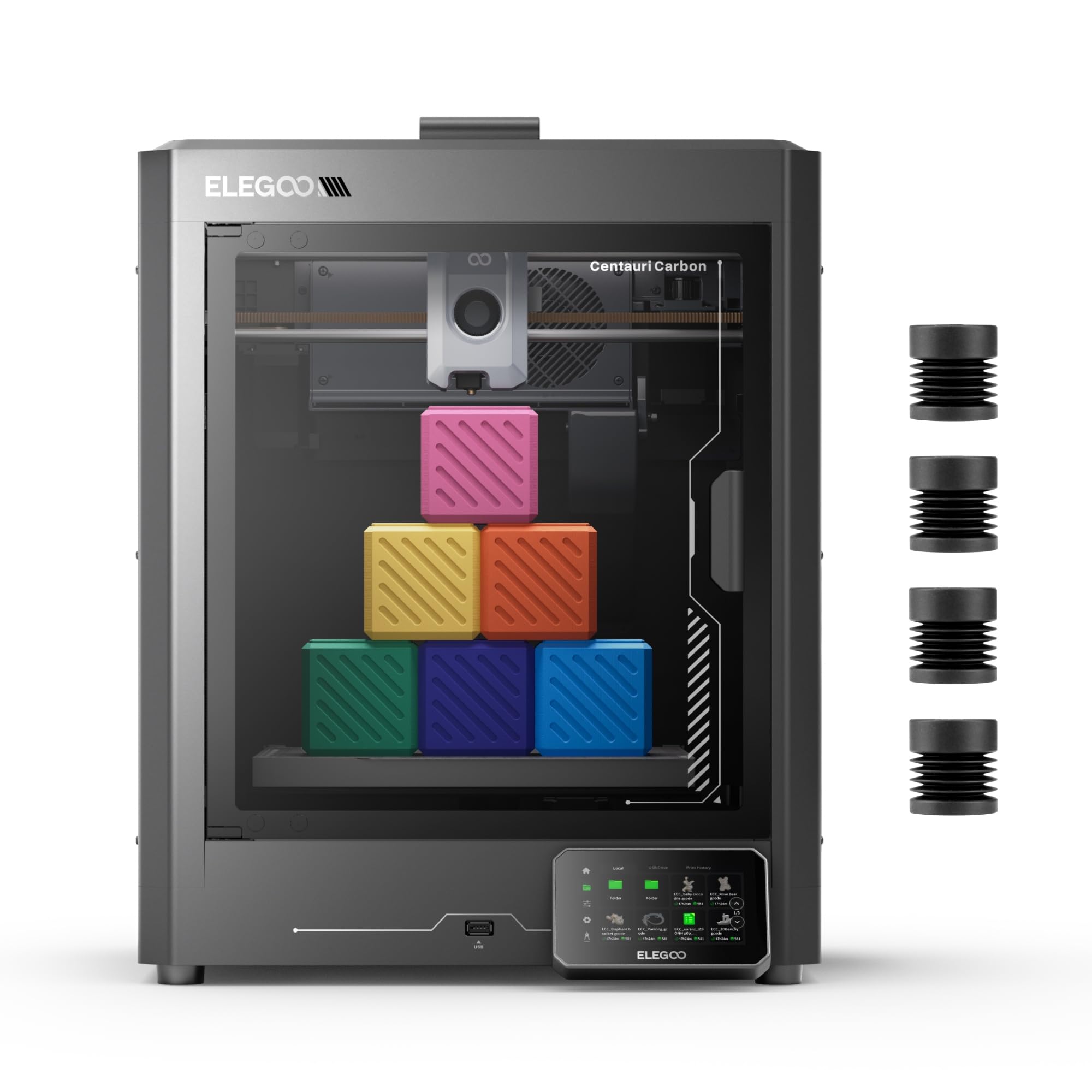
The ELEGOO Centauri Carbon punches well above its price segment with a 320°C hardened steel nozzle and built-in chamber camera, both rare at this level. The CoreXY motion system delivers consistent 500 mm/s speeds with automatic vibration compensation, producing strong layer adhesion for ABS interior brackets. The calibration and leveling are truly hands-free — you unbox, plug in, and the printer does the rest.
The 256×256×256mm build volume is adequate for most engine bay brackets and interior panels, though you will need the larger Max4 for full bumper mounts. Real-time monitoring through the chamber camera and dual LED lighting makes it easy to catch errors early. The dual-sided PEI plate offers excellent adhesion for PLA with minor warping when printing large ABS bases.
Customer reviews note mixed reliability — a few units suffered hotend communication failures within the first week, and the cable/connector design is not the most durable. Tech support is helpful but slow for US customers. When it works, the Centauri Carbon delivers print quality that rivals printers costing twice as much, making it the smart budget pick for carbon-fiber-capable automotive printing.
Why it’s great
- Hardened steel nozzle handles carbon-fiber filaments out of the box.
- Fully pre-assembled with automatic calibration — zero tinkering required.
- Integrated camera and LED lighting for remote print monitoring.
Good to know
- Some units experience hotend communication failures after short usage.
- Customer support response times can be slow for warranty claims.
4. FLASHFORGE Adventurer 5M Pro

The Adventurer 5M Pro is built for users who switch materials frequently — the quick-detach nozzle swaps in under three seconds, enabling fast transitions from a 0.4mm PLA profile to a 0.6mm nozzle for carbon-fiber nylon. The CoreXY all-metal frame handles 600 mm/s travel speeds with vibration compensation that keeps layer lines tight on functional brackets. The nozzle heats to 200°C in 35 seconds, so there is minimal warm-up waiting.
The enclosed chamber with dual-layer filtration (HEPA + carbon) makes this one of the safest enclosed printers for ABS in a home garage or workshop. The mobile app Flash Maker provides real-time monitoring and alerts, and the filament runout sensor and auto-resume function save long overnight prints. The 220×220×220mm build volume is the smallest in this guide, which limits one-piece larger parts like bumper supports.
Reliability reports are split — initial units from 2023 had frequent print failures and feeding issues, but current models show much better consistency. Some users report software compatibility problems with macOS Sequoia, requiring an older laptop for slicing. If your primary need is prototyping a variety of small brackets with quick material changes, the Adventurer 5M Pro is hard to beat.
Why it’s great
- 3-second nozzle swap ideal for switching materials mid-project.
- HEPA + carbon filtration makes indoor ABS printing safer.
- Fast 35-second nozzle heat-up time reduces wait.
Good to know
- Build volume (220mm³) limits print size for larger automotive parts.
- Slicer software may require older operating system versions.
5. Creality K1C 3D Printer

Creality designed the K1C specifically to address carbon-fiber printing, equipping it with a steel-stiffened driver and a titanium alloy heatbreak that handles 300°C without heat creep. The clog-free direct extruder uses a bolster spring and ball plunger to grip abrasive carbon-fiber filament securely, preventing the skipping and jamming that plagues standard extruders. The 600 mm/s print speed and 20,000 mm/s² acceleration make it one of the fastest printers for its build volume at 220×220×250mm.
The AI camera with failure detection (spaghetti, debris, foreign matter) pauses the print automatically, a useful safety net for overnight jobs. The three-fan cooling system — hotend fan, part cooling fan, auxiliary fan — keeps composite layers cold quickly, improving bridging for overhanging bracket geometries.
The K1C arrives fully assembled with auto calibration including Z offset, bed leveling, and input shaping. Some users encountered Z-axis motor binding and slightly warped build plates early on, though later production runs have improved. It prints PLA, PETG, and ABS out of the box but truly shines with carbon-fiber reinforced materials where other printers fail.
Why it’s great
- Clog-free extruder designed specifically for abrasive carbon-fiber filament.
- AI camera detects print failures and pauses automatically.
- Triple-fan cooling system handles high-temp materials well.
Good to know
- Some early units had Z-axis binding and bed flatness issues.
- Small build volume limits one-piece larger parts.
6. SainSmart ZR CoreXY Multicolor
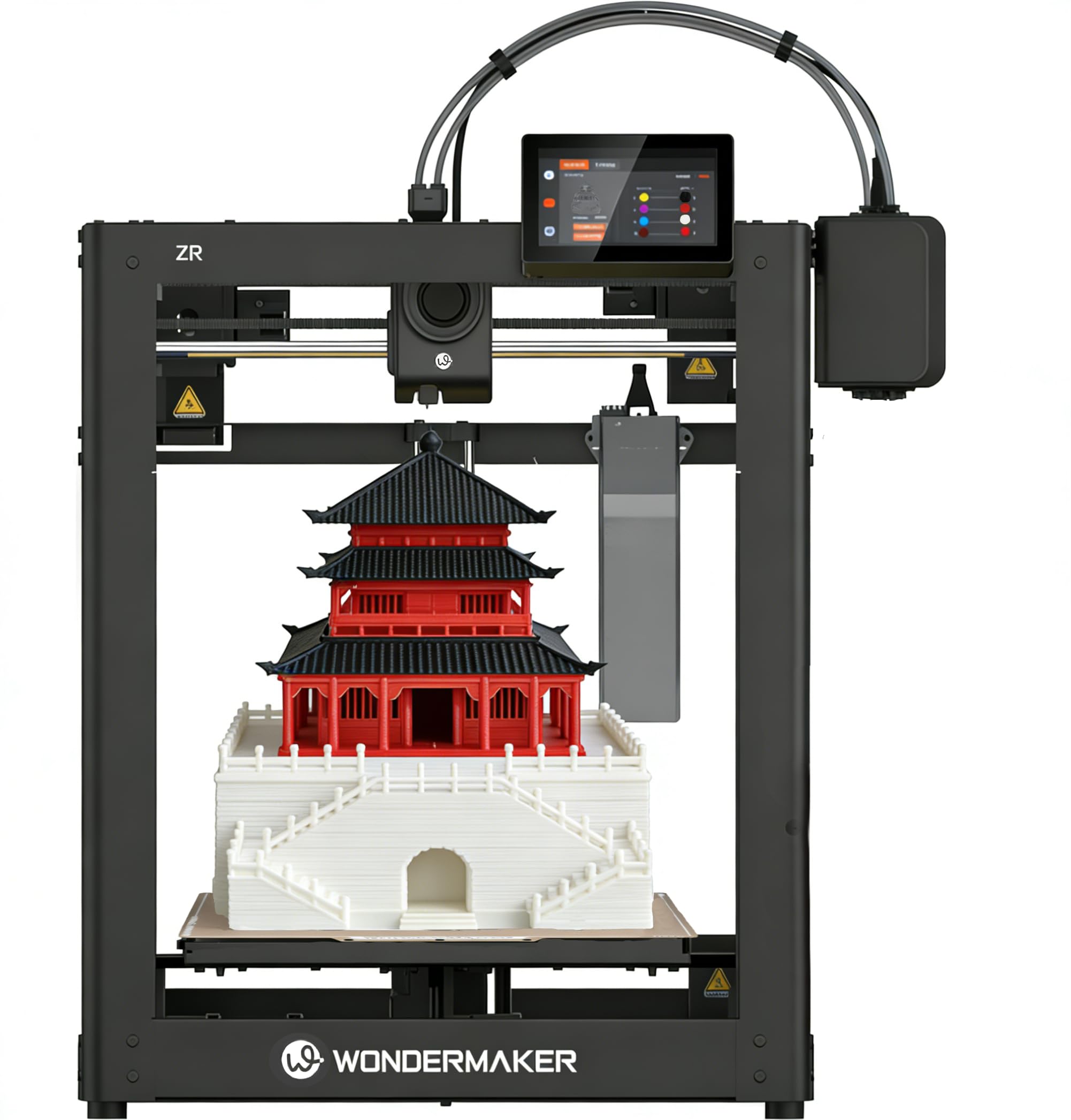
The SainSmart ZR offers a massive 300×300×300mm build volume with native 4-color printing via its Multicolor Integrated Filament System (MIFS), a combination that is rare at its price point. The hardened steel 300°C nozzle paired with the dual-gear all-metal extruder handles PLA-CF, PETG-CF, and TPU without skipping. The all-metal CoreXY frame with silent mode (48 dB) allows overnight operation in a garage without disturbing the household.
Print quality matches the Bambu P1S for single-color prints, with the Benchy taking about 25 minutes longer — still very fast for a 300mm³ machine. Klipper firmware with ORCA Slicer enables fine-tuning of acceleration and jerk for specific automotive part geometries. The dual 15,000 RPM hotend fan and 3,500 RPM auxiliary fan provide aggressive cooling necessary for overhanging bracket surfaces.
Review feedback is mixed — early adopters report frustrating AMS software bugs, excessive filament purging waste, and a Windows-only slicer that leaves Mac users stranded. The lack of a true auto bed leveling sensor for remote prints and some noisy vibration artifacts keep it from being a slam-dunk, but for big multicolor automotive emblems and interior panels, the ZR delivers.
Why it’s great
- 300mm³ build prints one-piece large interior panels and mounts.
- 4-color MIFS enables multicolor badges without swapping filament.
- Hardened nozzle and dual-gear extruder handle abrasive filaments.
Good to know
- Slicer and AMS software suffer from bugs and excessive purge waste.
- Windows-only slicer limits Mac users.
7. Anycubic Kobra S1 Combo
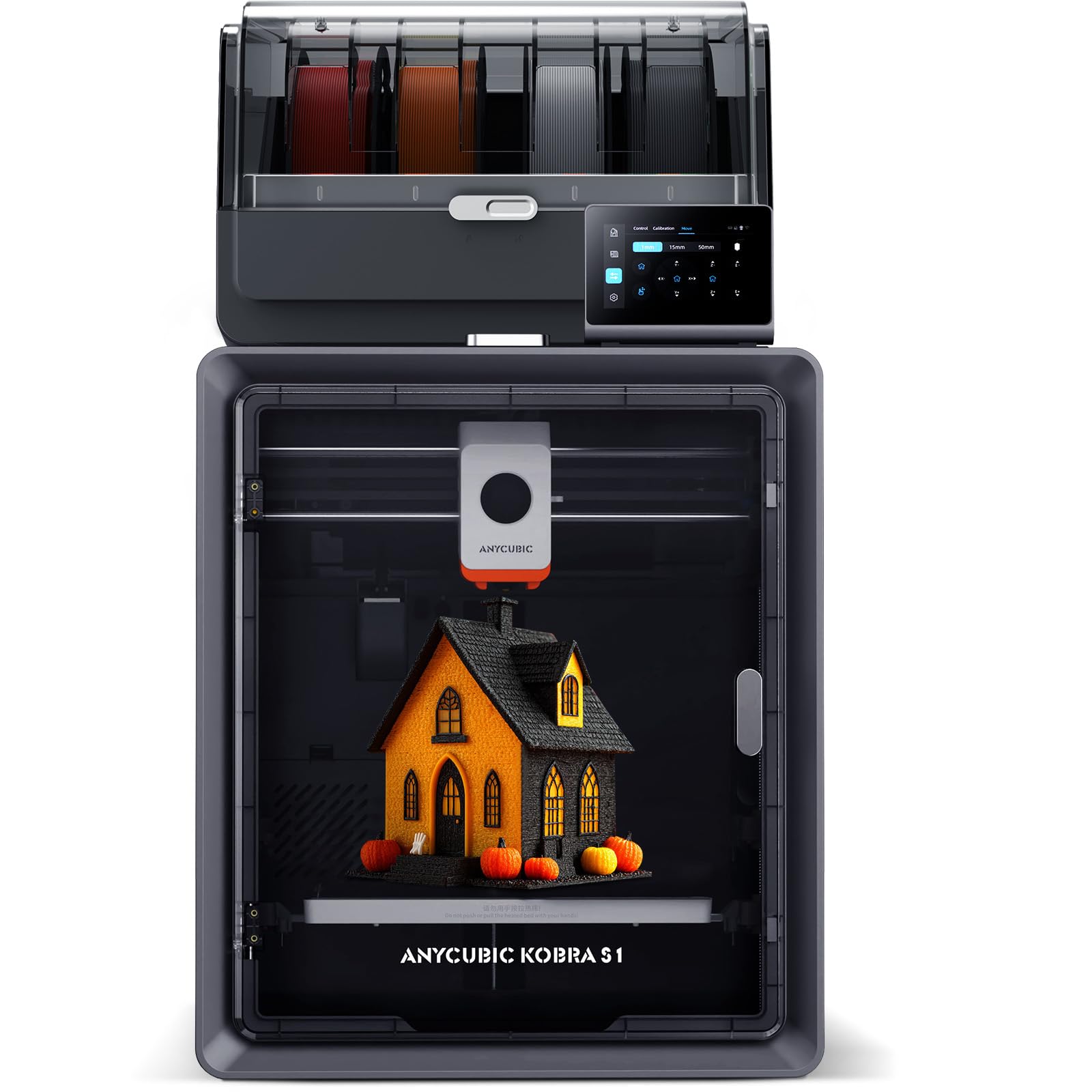
The Kobra S1 Combo’s standout feature is the ACE PRO — an integrated filament drying system with dual PTC heating and 360° hot air circulation that keeps nylon and polycarbonate spools at optimal humidity levels before they enter the hotend. For automotive materials that absorb moisture within hours, this is a difference-maker that prevents steam-induced extrusion defects and layer blistering. The CoreXY motion system hits 600 mm/s with 20,000 mm/s² acceleration for fast bracket production.
The 250×250×250mm build volume sits between the compact Adventurer 5M Pro and the large QIDI Q2, adequate for most engine bay components. The Kobra OS includes flow compensation for smoother surface finishes on visible interior trim pieces. The Anycubic App allows one-click printing from anywhere, and the multi-plate document parsing simplifies complex multi-part assemblies.
Quality control has been inconsistent — some units arrive scuffed or missing USB drives, and the ACE dryer struggles with cardboard spool reels. App connectivity can be finicky, and the 4-color filament changes are slower than dedicated systems from Bambu. When you get a good unit, the Kobra S1 Combo is a fantastic bang-for-buck multicolor automotive printer.
Why it’s great
- Filament dryer ensures moisture-sensitive nylon prints flawlessly.
- 600 mm/s print speed with flow compensation for smooth surfaces.
- 4-color printing adds versatility for multicolor automotive parts.
Good to know
- Quality control can be inconsistent on arrival.
- Cardboard spools do not fit well in the ACE dryer.
8. Longer LK5 Pro 3

The Longer LK5 Pro 3 provides a massive 300×300×400mm build volume at an entry-level price, making it the cheapest way to print one-piece large interior panels, floor trim, or bumper brackets. The open-frame design with reinforced triangular structure reduces resonance for a 0.1mm precision level that is respectable for non-structural interior parts. The upgraded 32-bit motherboard with TMC2209 stepper drivers runs quietly enough for overnight prints in an apartment garage.
Filament depletion detection and power-loss auto-resume protect long prints, and the silicon carbide lattice glass platform distributes heat evenly to reduce warping. The printer comes 90% pre-assembled and can be running within 30 minutes — a boon for beginners who want to print large automotive parts without a big investment.
The manual bed leveling system is finicky — users report the knobs respond inconsistently to temperature changes, and adding a BLTouch for auto-leveling requires complex wiring and firmware changes. The open-frame design also means ABS and nylon parts will warp badly without an aftermarket enclosure. This printer is best suited for PLA or PETG prototype brackets where size matters more than material strength or heat resistance.
Why it’s great
- Massive 300×300×400mm build for large automotive panels.
- Ultra-quiet TMC2209 drivers enable overnight printing.
- Power-loss recovery and filament runout sensor save long prints.
Good to know
- Manual bed leveling is inconsistent and temperature-sensitive.
- Open frame requires an enclosure for ABS or nylon printing.
9. FLASHFORGE AD5M Pro (2025)

The 2025 update of the AD5M Pro refines the original Adventurer 5M with a fully enclosed chamber, dual-layer filtration, and a built-in camera for real-time monitoring. The CoreXY motion system with vibration compensation maintains smooth layer adhesion at 600 mm/s, and the quick-swap nozzle (0.4mm and 0.6mm included) allows switching between fine detail PLA prints and 0.6mm carbon-fiber nylon extrusion in seconds. The 220×220×220mm build volume is compact but sufficient for most interior trim clips, brackets, and small engine covers.
The integrated mobile app lets you start, stop, and tweak parameters remotely, and the auto-shutdown feature prevents fire risk after job completion. The dual-sided PEI build plate holds PLA without adhesive, and the 1-click auto bed leveling ensures consistent first layers for parts that need to flex and snap into place.
Some users report extruder failures after a few months of use, and the USB drive included in the box contains outdated slicing software that is incompatible with macOS Sequoia. When the hardware works, prints are fast and clean — but the reliability questions make it better suited as a secondary prototyping machine rather than a primary production unit.
Why it’s great
- Enclosed chamber with dual HEPA/carbon filtration for safe ABS use.
- Quick-swap nozzle system enables fast material transitions.
- Remote monitoring and auto-shutdown via mobile app.
Good to know
- Extruder failures reported after extended use.
- Included USB slicer is outdated and not compatible with newer OS.
10. QIDI Max4 Combo
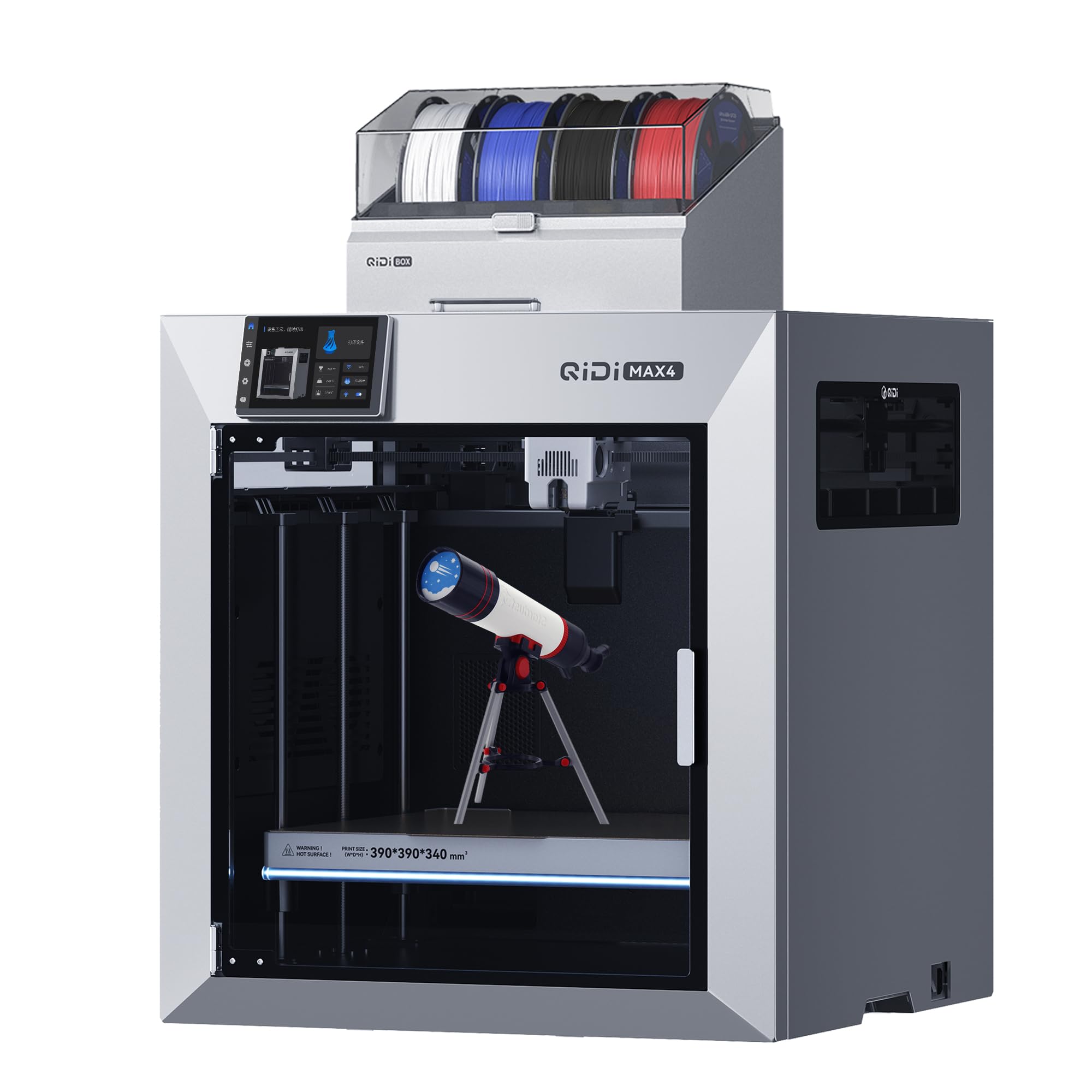
The QIDI Max4 Combo is the king of large-format automotive printing, with a 390×390×340mm build volume that can swallow an entire bumper bracket or a full dashboard panel in one piece. The closed-loop servo motors on the X and Y axes deliver 800 mm/s speeds with 30,000 mm/s² acceleration, and the 2mm lead screw with anti-backlash nut on the Z-axis ensures near-zero vertical play for functional parts. The 65°C active heated chamber is critical for warp-free ABS-CF and PPS-CF prints.
The 40mm³/s high-flow hotend with hardened steel nozzle supports standard materials and industrial-grade abrasives like carbon-fiber-reinforced nylon. The Polar Cooler system (purchased separately) optimizes layer cooling for large overhangs. The AI camera detects spaghetti failures and pauses instantly, protecting days-long prints.
At 120 pounds, this is a permanent installation — not a desk machine. The UI is choppy, and pre-print calibration takes several minutes. Some early units shipped with warped beds, though QIDI provided replacements quickly. For serious automotive work requiring production-grade parts in large quantities, the Max4 is unmatched, but the size and price are overkill for occasional clip printing.
Why it’s great
- Enormous build volume for one-piece large automotive structures.
- Closed-loop servo motors for high-speed precision and anti-backlash Z-axis.
- 65°C active chamber handles industrial-grade composites without warping.
Good to know
- Heavy (120 lbs) and requires permanent placement.
- UI and calibration routines are slower than smaller printers.
11. Original Prusa CORE One
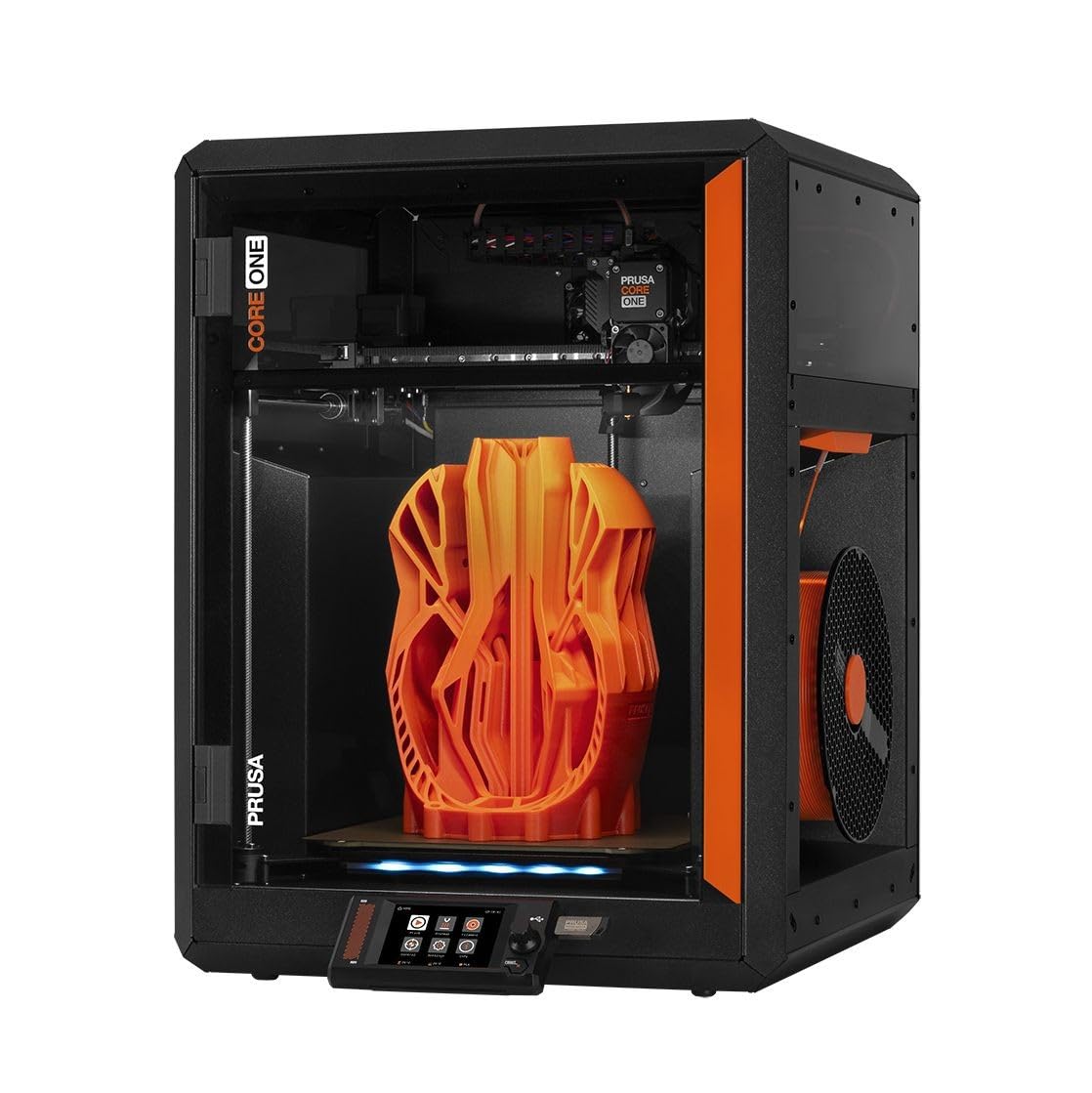
The Original Prusa CORE One is engineered for those who value reliability and open-source philosophy over raw speed. The enclosed chamber with active temperature control maintains 55°C, enabling high-quality ABS, ASA, polycarbonate, and nylon prints with minimal warping. The all-steel exoskeleton frame provides maximum rigidity, reducing layer-shift during high-acceleration CoreXY moves. The 250×220×270mm build volume is moderate but precise enough for tight-tolerance automotive brackets that must fit first time.
Prusa’s software ecosystem — PrusaSlicer and PrusaConnect — remains the most polished open-source toolchain available, with one-click printing and intuitive material profiles. The CORE One arrives fully assembled and tested, and lifetime technical support and 24-hour customer service back every unit. Prusament PLA is included in the box to get you started immediately.
The machine is not cheap, and the MMU3 multi-material upgrade is expensive and cumbersome. Some early units experienced layer shifts requiring support intervention. For enthusiasts who want a “buy-it-for-life” platform with a massive community and no cloud-lock, the Prusa CORE One is the gold standard — but the closed-source alternatives offer more features for the same or less money.
Why it’s great
- Active 55°C chamber with excellent temperature stability.
- All-steel exoskeleton frame eliminates vibration artifacts.
- Open-source software ecosystem with lifetime Prusa support.
Good to know
- Premium price without multi-material features included.
- MMU3 upgrade is expensive and bulky.
FAQ
What is the best filament for printing car parts?
Do I need a heated chamber for ABS car parts?
Can a 3D printer for car parts print carbon fiber filament?
What build volume do I need for common automotive components?
Final Thoughts: The Verdict
For most users, the 3d printer for car parts winner is the QIDI Q2 because its 65°C active heated chamber and 370°C nozzle unlock genuine engineering-grade materials like carbon-fiber nylon and polycarbonate for durable, warp-free automotive components — without breaking the bank. If you want multicolor flexibility and fast prototyping of interior parts, grab the Bambu Lab P1S. And for oversized one-piece parts like full bumper brackets or dashboard panels, nothing beats the massive build volume of the QIDI Max4 Combo.