
You’re designing a wax tree for a lost-wax casting process, and the difference between a flawless ring and a failed pour comes down to a few microns of layer height on a resin 3D printer. Standard FDM printers leave visible layer lines that require hours of sanding and polishing before a mold can be invested, making them a poor fit for jewelry making. The right resin 3D printer eliminates the post-processing bottleneck, producing castable masters with vanishingly thin layers that burn out cleanly in an investment kiln without leaving ash residue that ruins the mold.
I’m Min — the co-founder and writer behind Gadgets Feed. Having spent hundreds of hours evaluating resin 3D printers, from budget entry-level units to industrial-scale production machines, I’ve compared dozens of technical specifications—including monochrome LCD resolution in microns, build volume dimensions, XY pixel pitch, resin viscosity compatibility, and heating capabilities—to determine which models truly support the jewelry casting workflow from design to final burnout.
After thorough market research and specification analysis, this guide features the top resin and dual-extrusion 3D printers engineered for jewelry production, detailing print accuracy, material compatibility with castable resins, and burnout oven integration so you can confidently choose the right 3d printer for jewelry making for your workshop.
How To Choose The Best 3D Printer For Jewelry Making
Selecting a 3D printer for jewelry production requires focusing on resolution, material compatibility, and post-processing workflow integration. Most jewelry makers need to print castable resin masters with layer heights between 0.01 mm and 0.05 mm, which demands a monochrome LCD printer with XY resolution at or below 35 microns. The printer’s build volume must accommodate the size of your largest flask—typically between 3″ x 5″ and 8″ x 10″ for jewelry investment casting—while maintaining sufficient Z-axis stability for tall, slender ring shanks without wobble.
Monochrome LCD Resolution and XY Precision
The XY resolution determines the finest detail your printer can reproduce on a single layer. For jewelry making, an XY resolution of 28 microns or finer is recommended because it renders smooth bezel settings, sharp gem facet edges, and crisp engraving details without visible pixel stepping. Printers with 8K resolution on a 10-inch LCD panel typically deliver around 28 to 32 microns, while 14K and 16K panels push that down to 16 to 18 microns. The improvement is noticeable on reflective surfaces like signet ring faces where every pixel manifests as a visible texture line.
Resin Heating and Viscosity Management
Castable jewelry resins are often more viscous than standard model resins because they contain a high percentage of wax or burnout-friendly polymer. Without active heating in the resin vat, these thick resins flow poorly between the build plate and the FEP film, causing incomplete layer curing, delamination, or brittle prints. Printers with integrated heated vats, such as models maintaining 30°C, ensure consistent resin flow and higher print success rates in ambient workshop temperatures as low as 15°C. Some premium units also offer chamber heating to prevent the entire Z-axis assembly from cooling the resin as the build plate rises.
Peel Force and Release Technology
Every layer of a resin print must peel away from the bottom of the vat. High peel force can warp delicate jewelry models, create layer shift artifacts, or cause small features like prongs to tear off. Newer release technologies—such as tilt-release mechanisms that rock the vat rather than lifting the build plate straight up—reduce peel force by up to 60%, enabling thinner supports that leave less scarring on the finished master. Wave-release technology introduces micro-airflow between the plate and film, further decreasing adhesion. These features directly reduce the time spent sanding support nubs off your wax patterns before casting.
Burnout Oven Integration and Temperature Range
After printing, the resin master must be burned out of its investment mold, a process requiring a programmable burnout oven that reaches at least 1400°F. For resin-based patterns, a maximum temperature of 2200°F ensures complete ash-free burnout without thermal shock cracking the investment material. The oven should include a pre-drilled vent hole for gas escape, a programmable controller for ramp-and-hold cycles, and a chamber size that accommodates your flask dimensions. A resin printer paired with an incompatible or non-programmable kiln can produce incomplete burnout, leaving carbon residue that causes gas porosity defects in the final metal casting.
Quick Comparison
On smaller screens, swipe sideways to see the full table.
| Model | Category | Best For | Key Spec | Amazon |
|---|---|---|---|---|
| ELEGOO Saturn 4 Ultra 16K | Resin MSLA | High-detail jewelry masters with heated vat | 16K LCD (18.5 μm XY) | Amazon |
| ANYCUBIC Photon P1 | Resin MSLA | Dual-color & dual-material jewelry designs | 14K LCD + ball screw Z-axis | Amazon |
| ANYCUBIC Photon Mono M7 Pro | Resin MSLA | Fast production with heated resin vat | 14K LCD, dynamic 30°C heating | Amazon |
| Phrozen Sonic Mighty 8K | Resin MSLA | Compact high-res jewelry production | 8K LCD (28 μm XY) | Amazon |
| Flashforge AD5X | FDM Multi-Color | Multi-color wax-like prototyping | 300°C direct drive, 0.25mm nozzle | Amazon |
| Creality K2 Combo | FDM Multi-Color | Large multi-color wax patterns | 16-color CFS, 600mm/s print speed | Amazon |
| Phrozen Sonic Mega 8K S | Large-Format Resin | Mass production of jewelry masters | 15″ 8K LCD, 33×18.5x30cm build | Amazon |
| QIDI Max4 Combo | FDM Professional | Industrial jewelry mold patterns | 390x390x340mm build, 65°C chamber | Amazon |
| TableTop USA Hi-Temp 2200 | Burnout Oven | Complete resin burnout for casting | 2200°F max, programmable cycles | Amazon |
| Raise3D E2 | IDEX FDM | Dual material wax supports | IDEX, 13×9.4×9.4in build volume | Amazon |
| Original Prusa XL 5-Toolhead | Multi-Material Pro | High-end multi-color jewelry patterns | 360x360x360mm, 5 independent extruders | Amazon |
In‑Depth Reviews
1. ELEGOO Saturn 4 Ultra 16K Resin 3D Printer
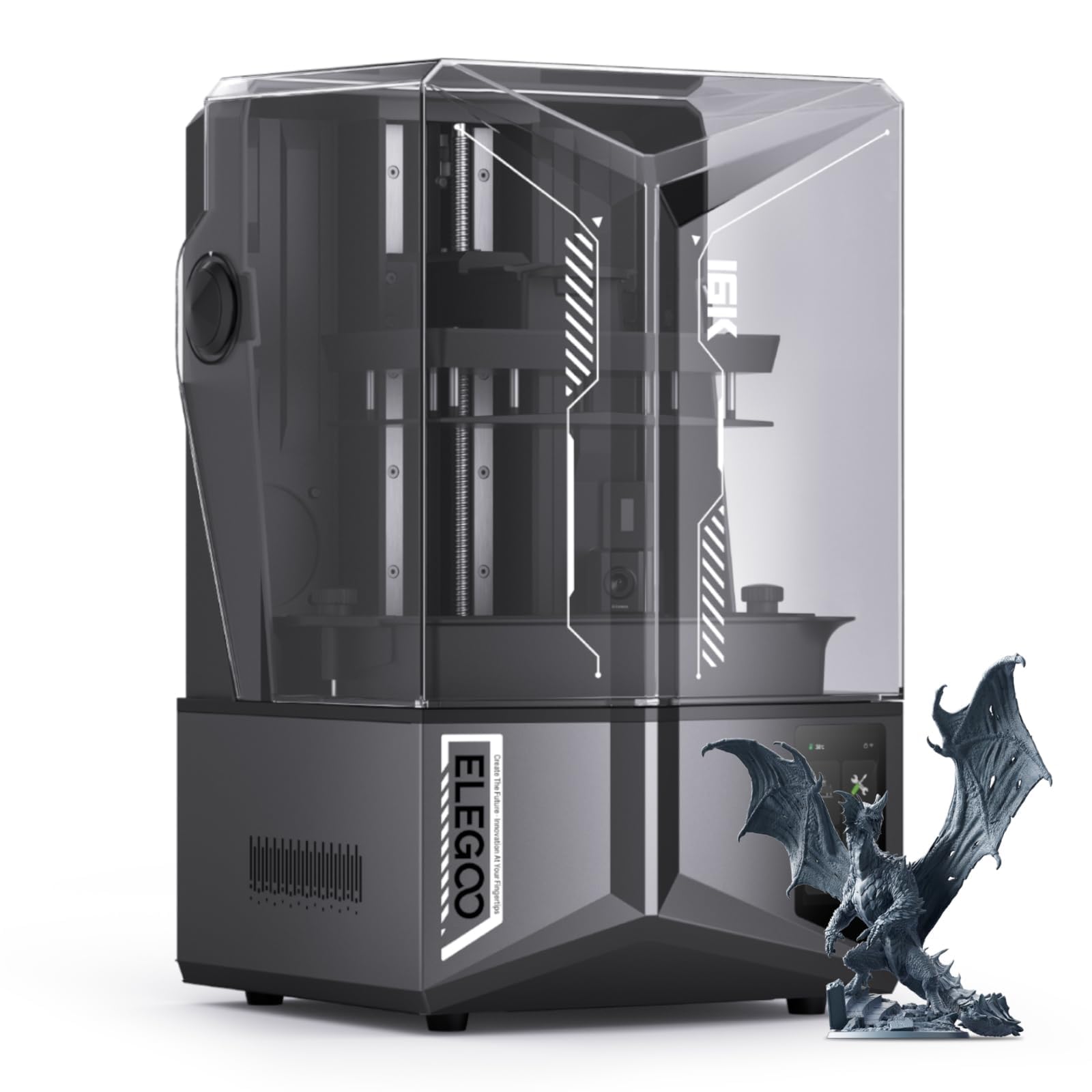
The Saturn 4 Ultra 16K delivers an 18.5-micron XY resolution on a 10-inch monochrome LCD panel, producing jewelry masters with smoother vertical walls and sharper internal geometry than any 8K printer can manage. The tilt-release mechanism reduces peel force by rocking the resin vat rather than lifting the build plate straight up, so delicate prongs and filigree structures release without bending or tearing. Combined with auto-leveling that requires zero manual adjustment, this printer gets a user from unboxing to a successful test print of a signet ring in under 40 minutes.
The intelligent tank heating system maintains a stable 30°C in the resin vat, ensuring consistent flow even with more viscous castable resins like PolyMaker PolyCast or PowerResin Castable. Built-in AI camera monitoring with time-lapse capture lets you review the print layer-by-layer after completion, which is useful for diagnosing support failures on complex multi-stone ring designs. The build volume of 8.33 x 4.66 x 8.66 inches fits standard 3 x 5-inch and 4 x 6-inch flask sizes comfortably.
User reports confirm that after fine-sanding the build plate surface and adjusting base exposure to 40–45 seconds for better adhesion, the Saturn 4 Ultra consistently delivers flawless prints with virtually zero Z-line artifacts. The 4-point automatic leveling system eliminates the tedious manual paper-leveling routine required by older resin printers. Noise levels are moderate at about 40 dB during operation, making it suitable for a shared workshop environment.
Why it’s great
- 16K LCD delivers the finest XY resolution of any resin printer in its price tier, producing visible detail indistinguishable from 12K or lower panels at 28mm scale
- Tilt release mechanism reduces peel force by roughly 50%, allowing thinner supports that leave less sanding work on the final wax master
- Intelligent tank heating maintains the resin at a consistent 30°C, dramatically reducing failed prints caused by cold, thick resin flow inconsistencies
Good to know
- Resin can pool on the build plate after a print; most users print a simple drip bracket as their first project to fix this
- Wi-Fi file transfer works most of the time, but a firmware update once caused setting recovery issues for one reviewer
- Initial adhesion improvements required fine-sanding the build plate, adding an extra five minutes to first-time setup
2. ANYCUBIC Photon P1 Resin 3D Printer
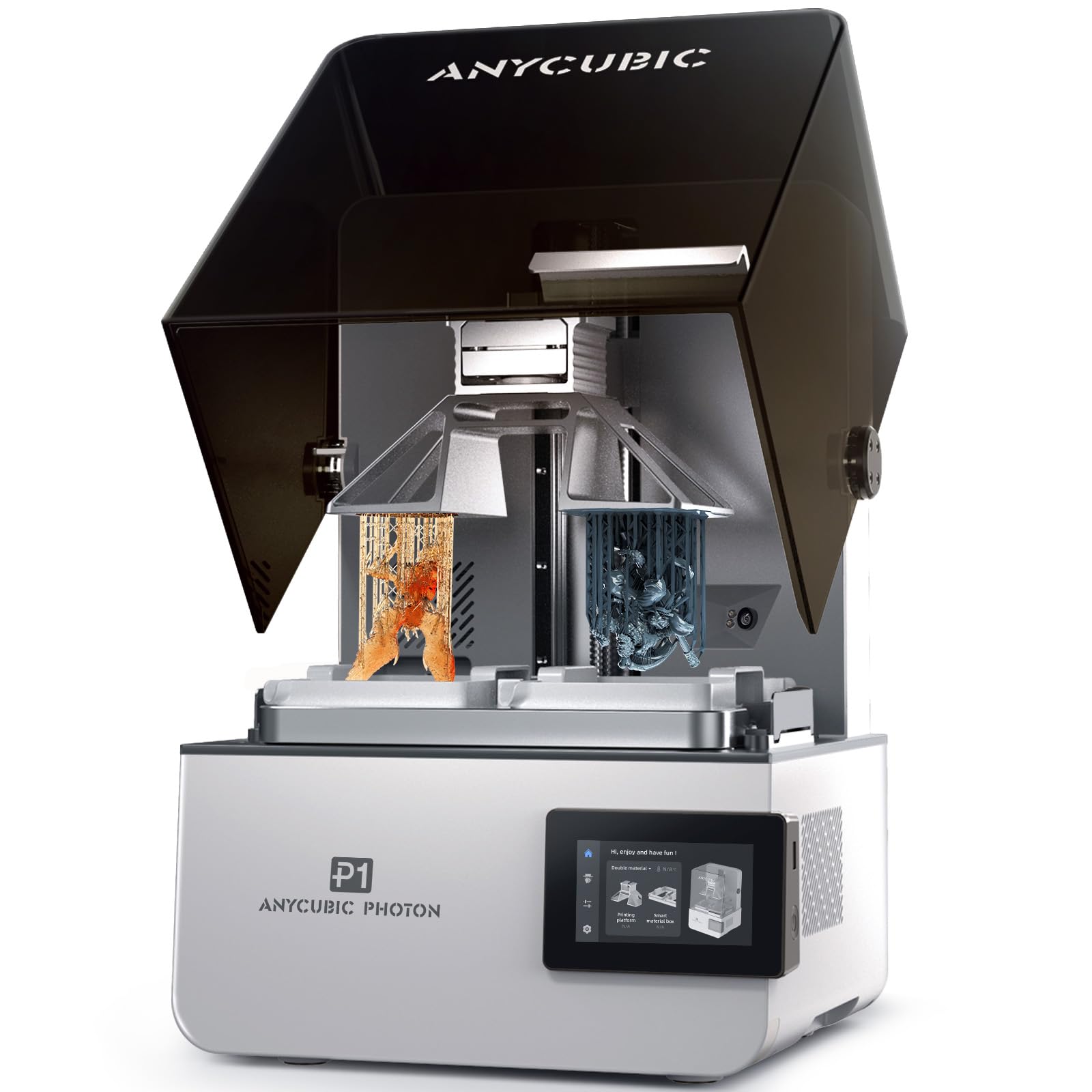
The Photon P1 stands apart from other resin printers because it supports true dual-color and dual-material printing via two independently operating resin vats. This feature allows a jewelry designer to print a single master pattern using a support structure in standard resin and a wax-like castable resin for the actual model, reducing total support removal time. The ball screw Z-axis and dual linear rails eliminate wobble on tall ring shank prints, maintaining consistent layer alignment even at 100 mm build heights.
Wave Release Technology generates micro-airflow during plate lifting, reducing peel force by 60% compared to traditional straight-lift mechanisms. This allows the use of lighter supports that break cleanly away from intricate details like bezel settings and claw prongs without leaving visible scars. The printer handles resins with viscosities up to 8,000 cps—40 times higher than standard resins—which is essential when working with high-wax-content castable resins that tend to be thick and sticky.
Smart Leveling 3.0 performs factory-calibrated automatic self-checks before each print, with real-time pressure feedback across four corners. Users report that the first three prints come out perfect with no manual calibration required, and the textured screen protector prevents damage from resin spills during vat changes. The dual-vat setup also allows running two separate prints simultaneously, effectively doubling production throughput for high-volume jewelry workshops.
Why it’s great
- Dual-color and dual-material printing with independent vats eliminates the need to manually swap resins between prints, saving significant time in multi-stage jewelry workflows
- Ball screw Z-axis and industrial-grade steel plate provide rock-solid stability for tall jewelry models, preventing layer shift on ring shanks over 30mm in height
- Supports ultra-high-viscosity resins up to 8,000 cps, expanding compatibility with professional castable resins that standard resin printers cannot handle
Good to know
- The slicer software can occasionally crash when processing complex multi-material files, requiring a restart of the design workflow
- Dual-color printing requires learning separate slicer settings for each vat, which adds a moderate learning curve for first-time users
- Build volume of 8.78 x 4.96 x 9.05 inches is slightly smaller than some competitors, limiting flask sizes to 3 x 5 inches or smaller
3. ANYCUBIC Photon Mono M7 Pro 14K

The Photon Mono M7 Pro prints at 170 mm/h using high-speed resin, making it one of the fastest resin printers in its class for jewelry batch production. A full set of six identical signet ring masters can be printed in under 90 minutes, compared to roughly 4 hours on a standard resin printer running at 30 mm/h. The 14K monochrome LCD panel delivers 16.8 x 24.8 micron XY resolution, producing holes as small as 0.3 mm in diameter—useful for printing hollow shank designs that reduce resin waste in casting.
The COB LighTurbo 3.0 light source system uses Fresnel lenses and front-facing reflectors to achieve light uniformity above 90% with a light angle tolerance within 3°. This ensures that every layer receives consistent UV energy across the entire build plate, eliminating under-cured edges on large jewelry models positioned near the corners. The dynamic temperature-controlled resin vat actively heats the resin to maintain the optimal print temperature throughout the entire print, even during overnight runs in a cold workshop.
The M7 Pro includes six types of intelligent detection: build plate installation detection, resin level detection, residue detection, release film lifespan management, failed print detection, and component connection status monitoring. These systems automatically pause the print if they detect an issue, which reduces material waste. Users upgrading from the Photon Mono 2 report a significant reduction in print failures and fewer calibration errors, though some note that the light-off delay needs to be increased from the default 2 seconds to 6 seconds to prevent vat blocking with standard resins.
Why it’s great
- Print speed of 170 mm/h with high-speed resin cuts batch production times by over 60% compared to standard resin printers, ideal for high-volume jewelry workshops
- Light uniformity above 90% ensures consistent curing across the entire build plate, eliminating edge softness that can ruin fine bezel geometry
- Intelligent detection system automatically pauses prints when it detects resin shortages or leveling issues, preventing wasted resin on failed overnight prints
Good to know
- The light-off delay may need to be manually increased to 6 seconds from the default 2 seconds to avoid vat blocking errors with standard, non-high-speed resins
- The top cover is heavy and bulky, making it awkward to lift and store during resin refills and print removal
- Dark cover can hide print failures inside, making it difficult to spot adhesion problems without using the AI camera feature
4. Phrozen Sonic Mighty 8K Resin 3D Printer

The Sonic Mighty 8K delivers 28-micron XY resolution on a 10-inch monochrome LCD, rendering miniature-level detail that experienced users say is visually indistinguishable from 12K panels on 28mm scale jewelry items. The build volume of 8.6 x 4.8 x 9.3 inches fits most standard flask sizes used in hobbyist and small-production jewelry casting. The reinforced dual linear rails on the Z-axis ensure precise layer alignment, producing ring shanks with smooth vertical surfaces that require minimal post-polishing before investment.
Auto-leveling is straightforward and beginner-friendly: you loosen two screws, lower the build plate, tighten, and the printer handles the rest. Users transitioning from FDM printers find the simple workflow manageable within the first print. The Monochrome LCD screen offers a longer lifespan than older RGB screens, typically lasting 2,000 to 3,000 hours of use before requiring replacement. The printer works with Lychee Slicer and Chitubox Pro, both of which support the 8K file format natively.
The Phrozen community is active, with users sharing optimized exposure settings for Phrozen and third-party castable resins. A common modification is adding a screen protector and switching to nFEP release film to reduce peel forces and increase print speed. Some users note that the built-in camera offers limited functionality—it cannot stream video remotely—but the print quality from the 8K LCD more than compensates for this omission. The printer produces nearly invisible Z-lines when properly dialed in, which is critical for jewelry masters that need a smooth surface for casting.
Why it’s great
- 28-micron XY resolution produces detail indistinguishable from 12K printers at typical jewelry master scale, saving money without sacrificing quality
- Auto-leveling is quick and beginner-friendly, requiring just two screws before the printer self-calibrates
- Active community support provides pre-optimized resin profiles for Phrozen and third-party materials, reducing the trial-and-error phase
Good to know
- The built-in camera has limited functionality and cannot stream live video for remote monitoring
- Cold ambient temperatures below 20°C can cause print failures unless a mini-heater is added inside the enclosure
- Resin reservoir pour groove and fill line markings could be improved for easier spill-free refilling
5. Flashforge AD5X Multi-Color 3D Printer
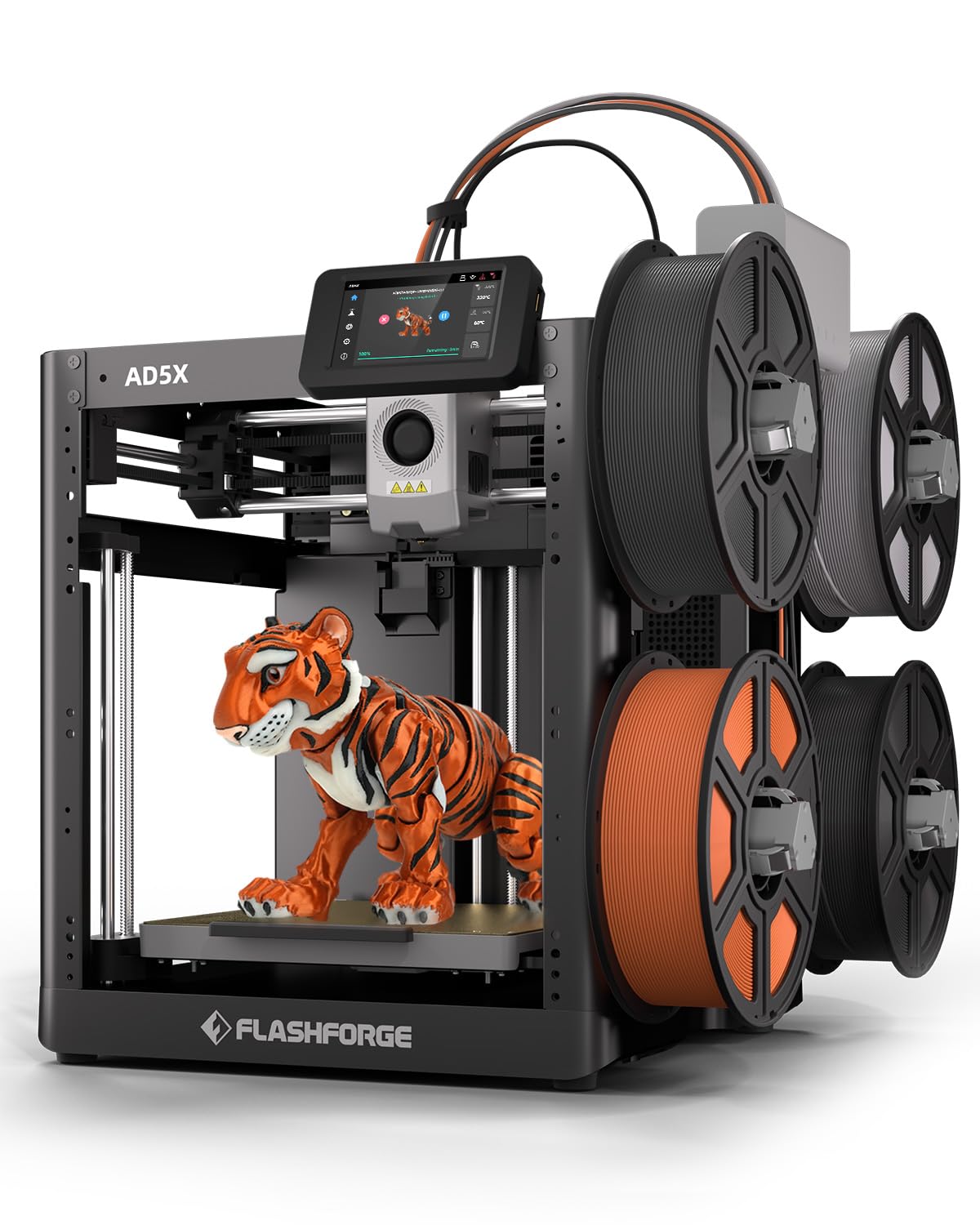
The AD5X is an FDM printer suitable for jewelry makers who need to produce multi-color wax-like prototypes or test fitments before committing to a castable resin master. The CoreXY structure allows printing speeds up to 600 mm/s with 20,000 mm/s² acceleration, so a single ring prototype can be produced in under 20 minutes. The direct-drive extruder reaches 300°C and supports four nozzle sizes from 0.25 mm—for ultra-fine detail—to 0.8 mm for infill-heavy base structures.
The 1-click auto-leveling system uses a sensor that probes only the area relevant to the print, completing leveling in under 10 seconds. The PEI-coated spring steel build plate provides excellent first-layer adhesion, and users report no clogs or adhesion failures even after a month of continuous use. The built-in resume printing function handles power interruptions gracefully, storing print progress and automatically resuming when power is restored.
The multi-color capability, using up to four filament colors simultaneously, allows jewelry designers to print color-coded prototype assemblies where each component in a complex ring or bracelet is printed in a different color. The 220 x 220 x 220 mm build volume is sufficient for most wearables, though splitting larger items like bangles into six parts is necessary due to size constraints. Users note the printer is noisier during multi-color printing due to filament change mechanics, but the included enclosure helps dampen sound to acceptable levels.
Why it’s great
- Ultra-fast CoreXY mechanism at 600 mm/s produces rapid prototypes for iterative jewelry design testing without long wait times
- 0.25mm nozzle option enables printing extremely fine details like tiny filigree patterns for visual evaluation before committing to resin
- Multi-color printing with up to 4 colors simultaneously allows color-coded prototype assemblies for modular jewelry designs
Good to know
- As an FDM printer, it cannot produce the smooth surface finish needed for direct investment casting without significant post-processing
- Multi-color printing noise is higher than single-color mode; the enclosure helps but isn’t silent
- Software stack (OrcaSlicer) has initial issues pulling IFS multi-color profiles, requiring manual configuration at first
6. Creality K2 Combo 3D Printer
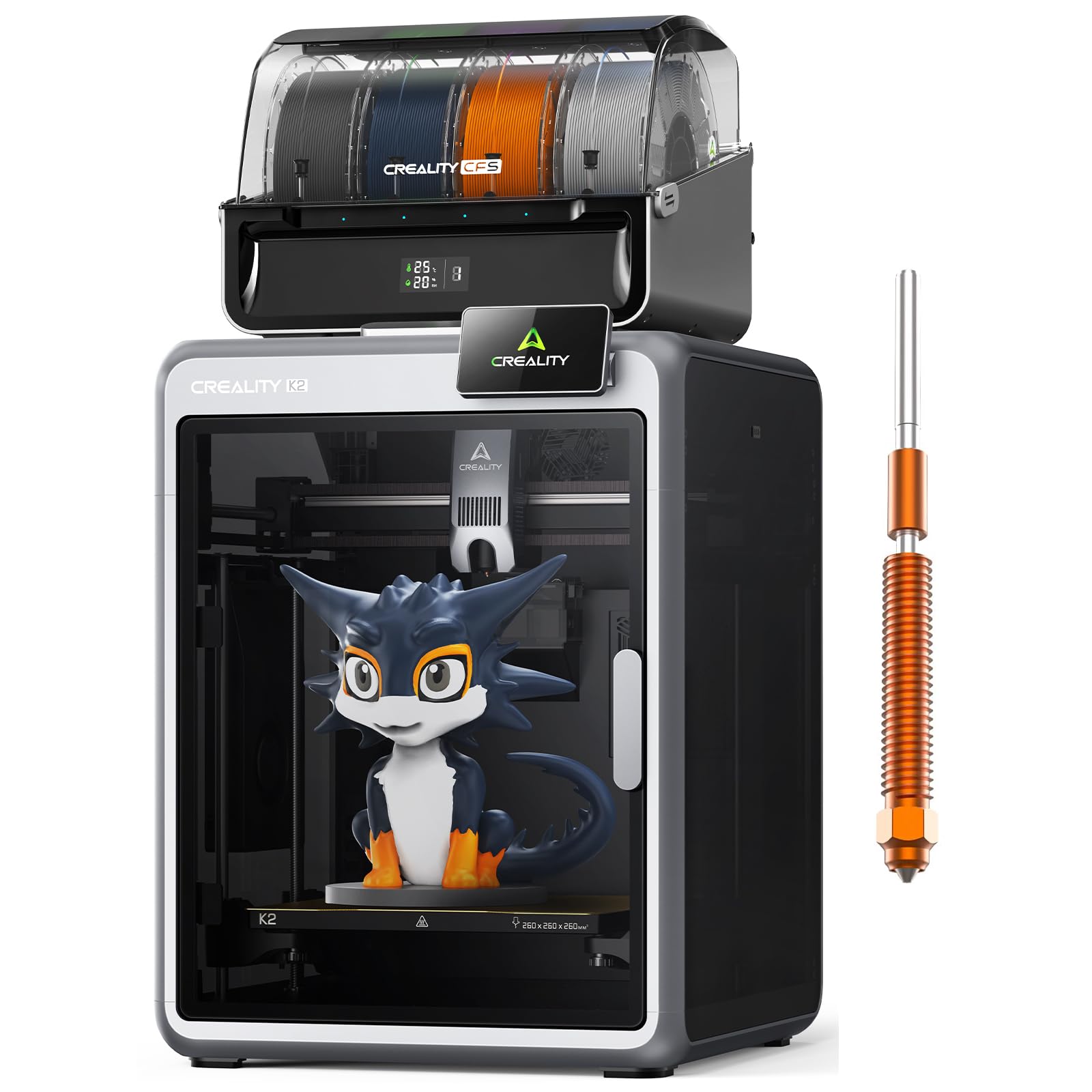
The K2 Combo pairs a 260 x 260 x 260 mm build volume with up to 16-color filament swapping via four connected CFS (Creality Filament System) units, making it a powerful tool for producing large, multi-color jewelry display prototypes or full-scale wax patterns for statement pieces. The CoreXY structure prints at 600 mm/s with step-servo motors that dynamically adjust torque in less than one millisecond, maintaining extrusion consistency across high-speed, multi-color filament swaps.
The smart auto-leveling system only probes and levels the bed area relevant to the print geometry, completing leveling in roughly 30 seconds. The AI camera monitors for spaghetti failures, filament jams, and idle states in real-time, automatically pausing the print if an error is detected. The 65-pound weight contributes to the printer’s stability at high speeds, reducing vibration and layer shift artifacts even on tall prints like necklace pendants or bracelet components.
Users report that print quality is excellent out of the box, with smooth layer lines and automatic four-color swaps that produce vibrant gradients on prototypes. The CFS includes filament drying functionality, which helps prevent moisture-induced stringing on prototyped parts intended for visual client presentations. However, the CFS does not accept standard cardboard spools without printed adapters, which can take 4–5 hours each to print for initial setup.
Why it’s great
- 16-color multi-material printing via 4 CFS units enables full-color jewelry prototypes without any manual filament swapping during the print
- Silent step-servo motors and dynamically balanced fans produce noise levels comparable to laptop typing, suitable for a shared design studio
- Filament drying function in the CFS prevents moisture-related stringing on delicate prototyped details like filigree or micro-mosaic patterns
Good to know
- CFS cannot accommodate standard 1kg cardboard spools; printed adapters are required, taking 4–5 hours each to produce before the first print
- Auto-refill and purge amounts can be high, consuming extra filament for color changes on multi-color projects
- Wi-Fi only supports 2.4 GHz networks; users with 5 GHz only networks need a hardware workaround for remote monitoring
7. Phrozen Sonic Mega 8K S Resin 3D Printer

The Sonic Mega 8K S is designed for professional jewelry production studios that need to print large batches of masters simultaneously. Its 33 x 18.5 x 30 cm build plate can fit up to 80 detailed 1/32-scale ring masters in under 90 minutes when using ACF film and TR300 high-speed resin. The 15-inch 8K monochrome LCD delivers 43-micron XY resolution—coarser than desktop 8K printers but adequate for jewelry masters that will be sanded and polished before investment casting.
The space-saving lift-up lid design eliminates the need for vertical clearance above the printer, allowing it to sit on shelving units or in tight workshop corners. The built-in heavy-duty metal drip hanger lets the build plate drain back into the vat after printing, saving resin and reducing waste—a significant cost factor when using expensive castable resins at production scale. The ACF (All-Cutter Fluoropolymer) film reduces suction forces during high-speed printing, improving the success rate on thin-walled jewelry items.
Users report that the Mega 8K S is a professional-grade tool with excellent build design, quiet operation, and reliable print quality. The auto-refill mechanism is superior to competing large-format printers, though some users note that the plate’s large size and required holes prevent using a flexible build plate. Phrozen’s warranty support is responsive; one user received a replacement LCD within two days after a chip in the screen caused print defects.
Why it’s great
- Massive 33 x 18.5 x 30 cm build plate fits 80+ jewelry masters in a single print, ideal for high-volume production environments
- ACF film combined with TR300 high-speed resin achieves print speeds up to 10x faster than standard mid-size resin printers
- Built-in metal drip hanger drains used resin back into the vat, reducing consumable waste and saving money per batch
Good to know
- The 43-micron XY resolution is noticeably coarser than desktop 8K printers, requiring more post-processing for ultra-fine detail work
- Large build plate cannot accept flexible plates due to the required drainage holes, making part removal more difficult
- Self-filling mechanism reportedly doesn’t work reliably for all users; manual vat filling may still be the primary method
8. QIDI Max4 Combo 3D Printer
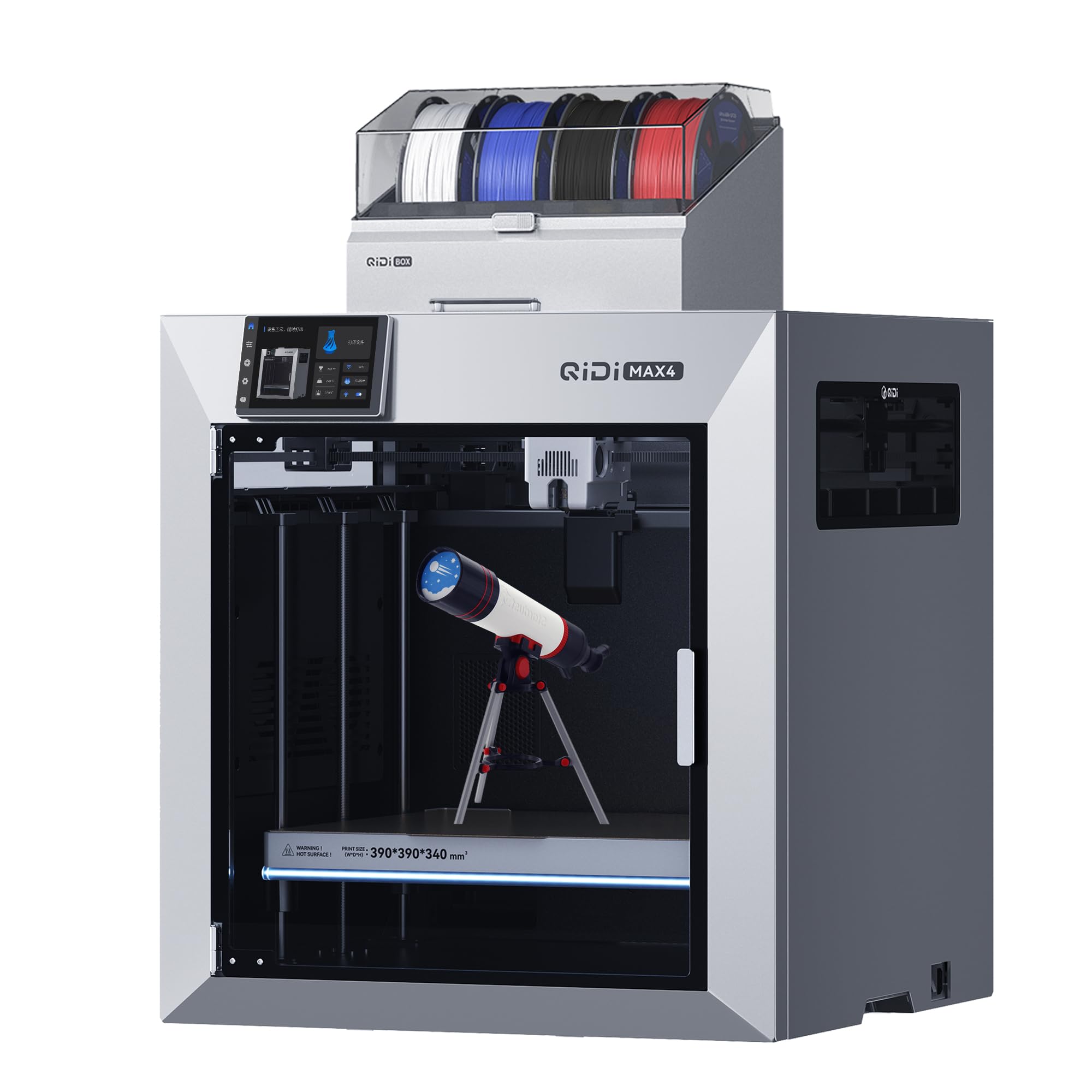
The Max4 Combo is an industrial FDM printer with a 390 x 390 x 340 mm build volume—55% larger than its predecessor MAX3—capable of printing full-size jewelry display molds, wax tree bases, and large bracelet or necklace prototypes in a single piece without splitting. The closed-loop motors on the X and Y axes achieve a maximum speed of 800 mm/s and acceleration of 30,000 mm/s², while the Z-axis 2mm lead screw and anti-backlash nut reduce vertical gaps to produce smooth, layer-line-free surfaces.
The 65°C active heated chamber and self-developed Polar Cooler system create an ideal printing environment for high-temperature engineering materials like ABS-CF, PC, and PPS-CF, which are useful for creating durable mold frames and casting flasks. The 40 mm³/s high-flow hotend with a hardened steel nozzle supports abrasive materials like carbon fiber-reinforced nylon, expanding beyond wax-like filaments to functional jewelry prototyping materials.
When connected to the QIDI BOX, the Max4 supports up to 16-color and multi-material printing with intelligent filament management, including real-time filament level monitoring and automatic pause when filament runs out. The integrated AI camera detects printing abnormalities like spaghetti failures and pauses the print automatically. Users praise the easy setup guided by on-screen prompts, large build volume, and the ability to run generic PETG with excellent first prints.
Why it’s great
- Massive 390 x 390 x 340 mm build volume prints full-scale necklace forms and bracelet molds in a single piece, eliminating the need to split and glue
- 65°C active heated chamber enables use of engineering-grade filaments for durable mold frames that can withstand thousands of casting cycles
- Closed-loop motors and anti-backlash Z-axis produce vibration-free prints with smooth surfaces suitable for master patterns
Good to know
- Pre-print wait time is long due to chamber heating; the machine takes approximately 15-20 minutes to reach 65°C before printing
- Multi-color purge amounts are high, generating significant waste when switching between materials during a single print
- The Polar Cooler must be purchased separately and is not included with the Max4 Combo package
9. TableTop USA Hi-Temp 2200 Degree Electric Burnout Oven

This burnout oven is an essential companion for any resin 3D printer used in jewelry casting. It reaches a maximum operating temperature of 2200°F, sufficient to completely burn out resin-based 3D printed patterns without leaving carbon residue that would compromise the metal casting. The programmable controller allows you to set ramp-and-hold cycles, which is critical for gradual heating that prevents thermal shock from cracking the investment plaster mold around the printed pattern.
The pre-drilled vent hole on the top of the kiln allows gases from the burning resin to escape without pressurizing the oven, reducing the risk of explosive mold failure during the burnout process. The high-temperature thermocouple provides accurate temperature readings up to the maximum setting, ensuring that the burnout cycle stays within the optimal range for resin—typically 1300°F to 1500°F for most castable resins, with a final hold at 1800°F for complete ash oxidation.
The oven accommodates 3 x 5 inch flasks or smaller, which is the standard size for most jewelry investment casting. The countertop design fits on a standard workshop bench. Users report that the packaging protects the kiln well during shipping, that programming is straightforward after watching a YouTube walkthrough, and that initial firing and first eight-hour burnout runs were flawless. The manufacturer’s customer support is responsive, with one user receiving immediate diagnosis and resolution of a crossed-wire issue during assembly.
Why it’s great
- 2200°F maximum temperature ensures complete ash-free burnout of 3D printed resin patterns, leaving zero carbon residue in the investment mold
- Programmable controller allows precise ramp-and-hold cycles essential for preventing thermal shock damage to the plaster investment
- Pre-drilled vent hole safely evacuates combustible gases during burnout, reducing explosion risk in the enclosed kiln chamber
Good to know
- Chamber dimensions of 5 x 6 x 6 inches only accommodate flasks up to 3 x 5 inches; larger flasks will not fit
- Some units have experienced heating element failure after approximately 12 burnout cycles, requiring element replacement
- The 3-month customer service window for repairs is shorter than the typical period needed to identify manufacturing defects
10. Raise3D E2 Desktop 3D Printer

The E2 features Independent Dual Extruder (IDEX) technology, allowing two print heads to work independently on separate models simultaneously or in mirror mode for precise left-right symmetry. For jewelry making, this means you can print a wax pattern and its complementary sprue system at the same time, or run two different materials—such as a wax-like filament for the pattern and a water-soluble support material for intricate undercuts—without manual filament changes.
The auto-bed leveling and video-assisted offset calibration system guides users through a simple alignment process using the 7-inch touchscreen interface. The build volume of 13 x 9.4 x 9.4 inches is sufficient for printing multiple jewelry masters or a single large bangle in one piece. The flexible build plate allows easy removal of delicate wax patterns without bending or breaking them, and the HEPA air filtration system captures ultrafine particles during printing.
Power loss recovery automatically stores progress and resumes when power is restored, while filament run-out sensors pause the printer when it runs out of material, preventing wasted prints during unattended overnight runs. The printer supports a wide range of filaments, including flexible TPU for rubber casting patterns and PVA for dissolvable support structures. However, users report a variable success rate: some describe a 90% failure rate with adhesion issues, while others praise the printer’s polished product quality and support responsiveness.
Why it’s great
- IDEX dual extruder technology prints two independent wax patterns simultaneously, effectively doubling the throughput of a single-extruder printer
- Mirror mode allows printing symmetrical jewelry designs with perfect left-right accuracy, ideal for earrings and cuff bracelets
- Filament run-out sensors and power loss recovery prevent print failures during unattended production runs
Good to know
- Some users report a failure rate exceeding 70% with the printer’s own PLA filament, requiring third-party adhesion solutions for consistent results
- The warranty support process can take months to resolve, with some users reporting that the manufacturer refuses returns or repairs for defective units
- Pre-calibrated offset alignment video process adds approximately one hour to initial setup before the first print can commence
11. Original Prusa XL 5 Independent Toolhead 3D Printer
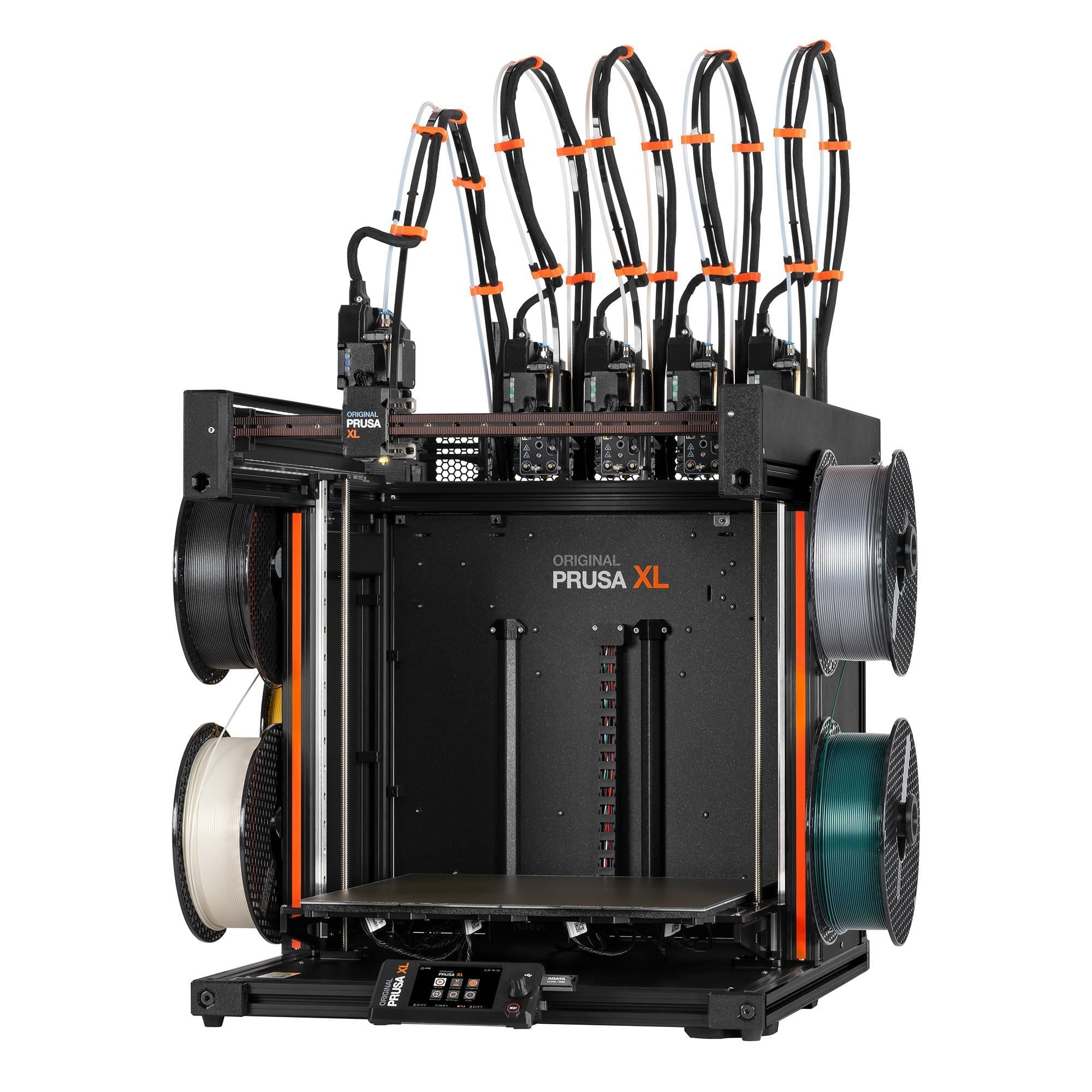
The Prusa XL with five independent toolheads is the ultimate multi-material printer for professional jewelry design studios. Each toolhead can be loaded with a different material or color, allowing you to print a single complex pattern containing wax, water-soluble support, flexible material for rubber-like casting parts, and up to two additional contrast colors in a single uninterrupted job. The CoreXY architecture maintains speed and precision even with frequent tool changes between layers.
The segmented heated bed system features intelligent heating zones that activate only under the areas being printed, reducing energy consumption and preventing warping on large prints. The 360 x 360 x 360 mm build volume fits most jewelry production needs, including large display molds and bracelet prototypes. The printer ships with one Satin print sheet and a 1kg spool of Prusament PLA, and Prusa Research provides lifetime technical assistance and 24-hour professional customer service.
Users appreciate that the Prusa ecosystem is fully open, with no forced updates or account requirements, and the printer integrates seamlessly with Prusa Slicer and Printables.com. The five-tool system requires no manual filament swapping, making it ideal for complex multi-material jewelry prototypes where each component demands different material properties. However, assembly requires about half a day, and some users report that certain plastic parts arrived broken in shipment, requiring additional print time to replace before using the printer for production.
Why it’s great
- Five independent toolheads allow simultaneous printing with wax, PVA support, and flexible filament in a single job, eliminating manual color or material swaps
- Segmented heated bed activates zones only under the print area, reducing energy consumption and preventing warping on large jewelry prototypes
- Open ecosystem with no forced firmware updates or account requirements gives full control over the print process to professional users
Good to know
- Assembly requires roughly half a day to complete, with multiple fragile parts needing careful installation after unboxing
- Some units ship with broken plastic parts due to transportation, requiring replacement parts to be printed before the first production print
- Software setup requires a wired Ethernet connection for initial registration; Wi-Fi setup alone may fail during first-time configuration
FAQ
Can I use any resin 3D printer for lost-wax casting, or do I need a special printer?
What layer height should I print at for jewelry casting patterns?
Final Thoughts: The Verdict
For most users, the best 3d printer for jewelry making winner is the ELEGOO Saturn 4 Ultra 16K because its 18.5-micron XY resolution, intelligent tank heating, and tilt-release mechanism deliver jewelry masters with exceptional detail and a low failure rate across a wide range of castable resins. If you need dual-color or dual-material printing for complex multi-stage workflows, grab the ANYCUBIC Photon P1. And for high-volume production studios printing dozens of masters per batch, nothing beats the Phrozen Sonic Mega 8K S.