
Our readers keep the lights on and my morning glass full of iced black tea. As an Amazon Associate, I earn from qualifying purchases.
Specs are compiled from manufacturer listings and verified buyer reviews and can change over time — please confirm the key details on the product page before buying.
Printing with PETG is a different game than PLA. The material is tougher, more heat-resistant, and less brittle — but it also strings easier, needs higher nozzle temperatures (a hotter tip to melt the filament), and won’t stick to a dirty print bed. The right machine handles this fussy filament reliably, so your functional parts come out strong and finished on time instead of as a tangled mess.
I’m Min — the founder and writer behind Gadgets Feed. This guide is built by comparing the manufacturers’ published specifications and the patterns across verified customer reviews, so you get each pick’s real strengths and trade-offs instead of marketing spin.
The best machines here pair an all-metal hotend (a melt zone made entirely of metal, not plastic) with a direct-drive extruder (a motor that pushes filament straight into the hotend with no long tube). Those two features handle PETG’s higher melt point and flexible nature. That is the core of any good 3d printer for petg.
Our Picks at a Glance
How To Choose The Best 3D Printer For PETG
PETG is a forgiving filament once you know its quirks, but it demands hardware that can handle 230–260°C nozzle temps (the temperature the hotend melts the plastic) and a consistent feed path (the route the filament takes into the nozzle). The wrong extruder or a PTFE-lined hotend (a part with a plastic tube inside) will leave you fighting clogs mid-print. Focus on these three things first.
All-Metal Hotend — The PETG Gatekeeper
A PTFE-lined hotend degrades above roughly 240°C, which is right where PETG prints. All-metal hotends go well beyond that without breaking down, so you never get that burnt-plastic smell or a deformed liner jamming your nozzle mid-job. Every printer on this list uses an all-metal design for exactly that reason.
Direct Drive Extruder — Stringing Buster
PETG is flexible enough to buckle in a long Bowden tube (a long plastic pipe that guides filament), causing under-extrusion (not enough plastic coming out) or failed layers. A direct-drive extruder sits right on the print head, pushing filament with almost no gap. That short path means retractions (pulling filament back slightly between moves) work better, which is the main trick for cutting down PETG’s famous stringing (thin wisps of plastic between parts).
Build Volume and Enclosure
Bigger parts need bigger space, but PETG also likes a stable temperature around it. An enclosed chamber keeps drafts off the print, which reduces warping (the edges curling up) on tall or wide models. If you plan on printing large functional brackets or storage bins, an enclosure is worth the extra space on your desk.
Quick Comparison
| Model | Best For | Max Print Speed | Build Volume | Weight | Amazon |
|---|---|---|---|---|---|
| Bambu Lab P1S Combo★ Best Overall | smooth Multi-Color PETG | 500 mm/s | 256 x 256 x 256 mm | 47.5 lb | $499.99Amazon |
| Creality K2 ComboPremium Pick | Premium Multi-Material | 600 mm/s | 260 x 260 x 260 mm | 65.9 lb | $549.00$790.00Amazon |
| Snapmaker U1 | Fast Multi-Color, No Waste | 500 mm/s | 270 x 270 x 270 mm | 59.0 lb | $929.00Amazon |
| Anycubic Kobra X | Budget Multi-Color PETG | 600 mm/s | 260 x 260 x 260 mm | 20.9 lb | $299.98Amazon |
| FLASHFORGE Adventurer 5M Pro | Beginner-Friendly PETG | 600 mm/s | 220 x 220 x 220 mm | 32.1 lb | $379.00Amazon |
| Creality Ender 3 V3 Plus | Large PETG Parts | 600 mm/s | 300 x 300 x 330 mm | 30.9 lb | $219.00Amazon |
In‑Depth Reviews
1. Bambu Lab P1S Combo
Our pick — over 4★ from 550+ verified ratings; the strongest balance of quality and price.
An enclosed powerhouse that handles PETG and multicolor without the fuss.
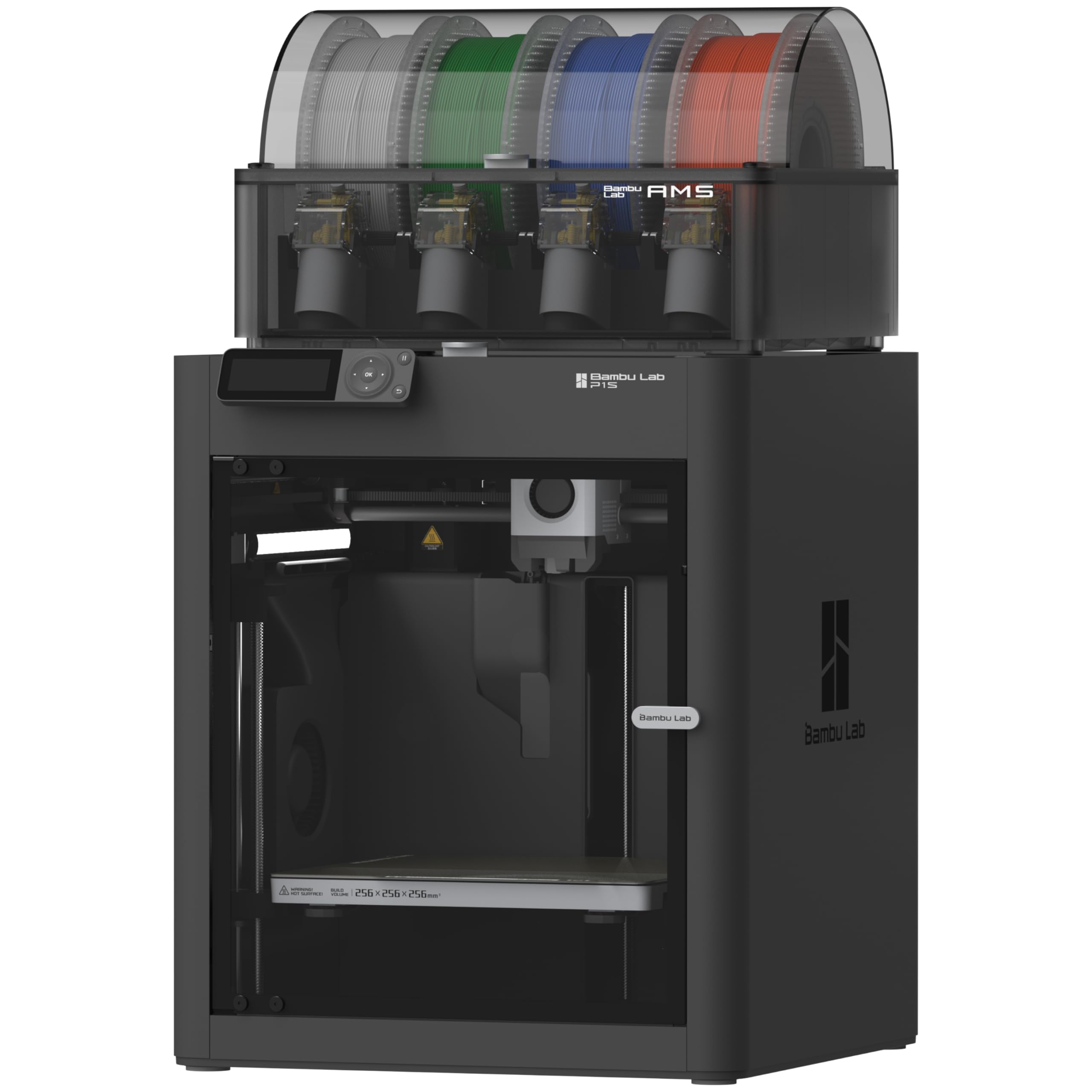
The Bambu Lab P1S Combo has a fully enclosed body from the start, so drafts stay off your print and the temperature stays steady. That means tall PETG parts are far less likely to warp (the edges curling up) or delaminate (layers separating). It hits speeds up to 500 mm/s (the print head moves half a meter every second) and 20000 mm/s² acceleration, so you do not sacrifice throughput for material quality.
The AMS unit (Automatic Material System, a device that holds and swaps filament spools) lets you run up to 16 colors or multiple materials in a single job. You can print a PETG structural part with a TPU (a flexible rubber-like plastic) grip layer without manually swapping filaments. The data lists its 4.4 rating across 573 reviews, and buyers report the auto bed leveling (the printer measuring the bed surface and adjusting the first layer) makes setup simple — you configure the machine and start printing PETG within about 15 minutes.
The 47.5-pound weight is substantial, so you will want a sturdy table underneath. It is also larger than the Anycubic Kobra X (15.31 x 18.03 x 15.31 inches vs 23 x 13 x 22 inches), taking up more vertical desk space — a trade-off for that enclosed structure.
Why It Handles PETG Well
- Fully enclosed body prevents drafts and warping during PETG prints
- AMS unit supports multi-material prints like PETG + TPU
- Auto bed leveling makes first-layer adhesion consistent
A Few Considerations
- 47.5 pounds needs a sturdy, dedicated desk
- Enclosure means less vertical clearance than some open-frame printers
Reach for it if: you want a set-and-forget enclosed printer that does true multi-color PETG without manual filament swaps.
Look elsewhere if: your prints rarely exceed a single color and you need the largest possible build volume for big functional parts.
2. Creality K2 Combo
A heavyweight with step-servo precision (a motor that makes tiny, exact turns) that tames PETG at speed.
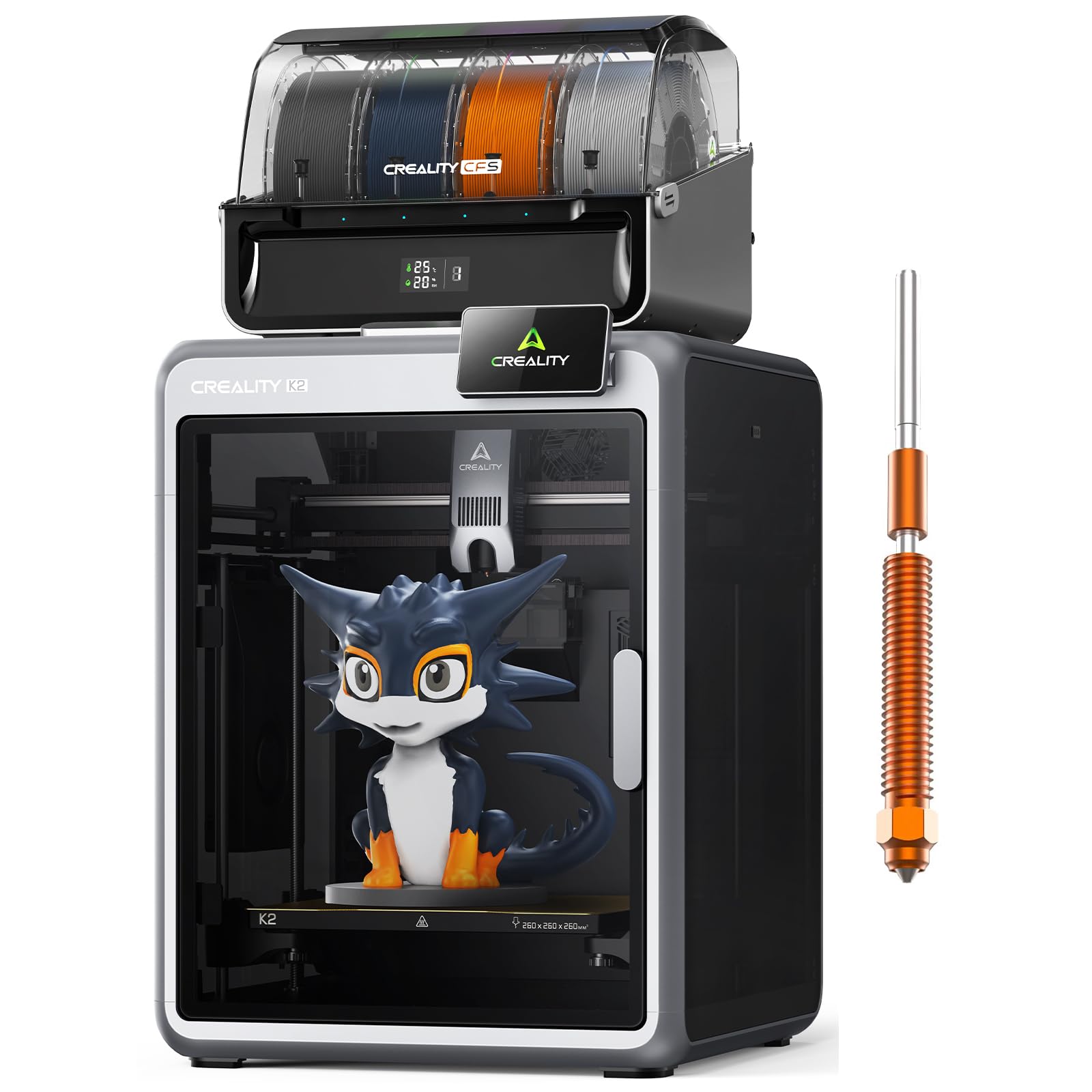
The Creality K2 Combo brings a next-gen direct drive extruder that grips PETG without slack, and it pairs with a CFS unit (Creality Filament System, a multi-spool holder) for up to 16 colors. That is the kind of control that turns PETG’s stringy behavior into clean, sharp layers.
The AI camera watches for spaghetti failures (when the print turns into a mess of plastic strands) and idling, so a 10-hour functional PETG print is not a sleepless event. It is also quiet in silent mode — owners mention it is no louder than someone typing on a laptop. That is a big plus if your printer sits in a living area or home office.
At 65.9 pounds, this is the heaviest machine on the list — 3.2x heavier than the Anycubic Kobra X at 20.9 pounds. That mass gives it a rock-solid frame, but moving it to a different room is a two-person job. The 260 mm³ (260 x 260 x 260 millimeter) build volume is standard for this tier, not the largest available compared to the Creality Ender 3 V3 Plus (300 x 300 x 330 mm).
The K2’s Strengths
- Step-servo motors deliver micro-adjustments for consistent PETG extrusion
- Silent mode is genuinely quiet for overnight prints
- AI camera lets you monitor long PETG prints remotely
What You Give Up
- 65.9 pounds is very heavy and hard to reposition
- Build volume is 260 mm³, not the largest in this bracket
Grab this if: you print tall PETG functional parts overnight and want the confidence from AI monitoring plus whisper-quiet operation.
skip it if: you have limited floor space and need a printer that is easy to move between workspaces.
3. Snapmaker U1
Four independent toolheads (print heads) that swap in 5 seconds, wasting zero filament between colors.
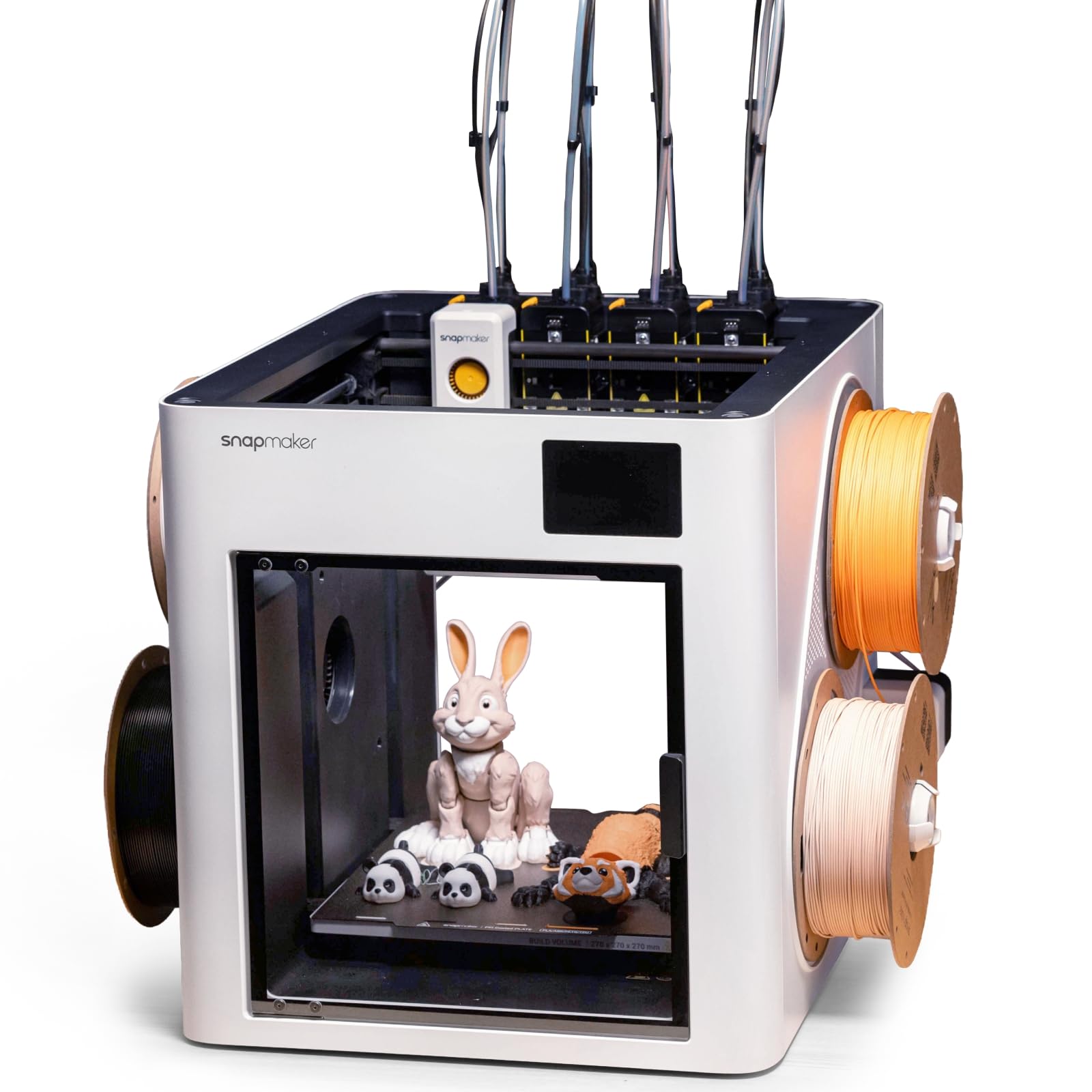
Traditional multi-color printers purge (push out and discard) a massive tower of filament every color change — Snapmaker U1 sidesteps that entirely. Instead of unloading and reloading one nozzle, it swaps toolheads. Each of the four extruders stays preloaded and preheated, so going from a PETG structural layer to a TPU grip layer is a 5-second move with no purge waste. The maker claims filament waste drops by up to 5X, and multi-color speed increases by up to 5X.
The CoreXY motion system (a belt-and-pulley design for fast, precise head movement) uses lightweight carbon fiber X-axis rails to reach 500 mm/s while staying accurate across the full 270 x 270 x 270 mm build volume. That 270 mm³ space is a touch larger than both the Bambu Lab P1S (256 mm³) and the Creality K2 (260 mm³), giving you more room for bigger PETG functional parts. Smart calibration handles toolhead offset (the exact position difference between nozzles) and vibration compensation automatically, so switching materials mid-print does not throw off layer alignment.
At 59 pounds, it is still a heavy machine, and the 4-toolhead system adds complexity. Customers note the Snapmaker Orca slicer (the software that turns a 3D model into printer instructions) is open source and works well, but new users have a small learning curve getting multi-material profiles tuned. The 4.6 rating from 49 reviews is the highest in this list, indicating early adopters are very satisfied.
Smartest Multi-Material System: The toolhead-swap design eliminates the purge tower entirely, making multi-color PETG prints faster and far less wasteful than any filament-switching system. If you hate throwing away plastic, this is the machine.
The Trade-Off: Four toolheads add moving parts and a higher upfront cost compared to single-extruder printers. Beginners may need extra time to learn the slicer’s multi-material workflow.
This is for: makers who print PETG combined with TPU or soluble supports regularly and want zero material waste between color changes.
It is less practical for: people who only print single-color PETG — the multi-toolhead system adds complexity you would rarely use.
4. Anycubic Kobra X Multicolor
A lightweight color machine that prints PETG at 600 mm/s without breaking your desk.
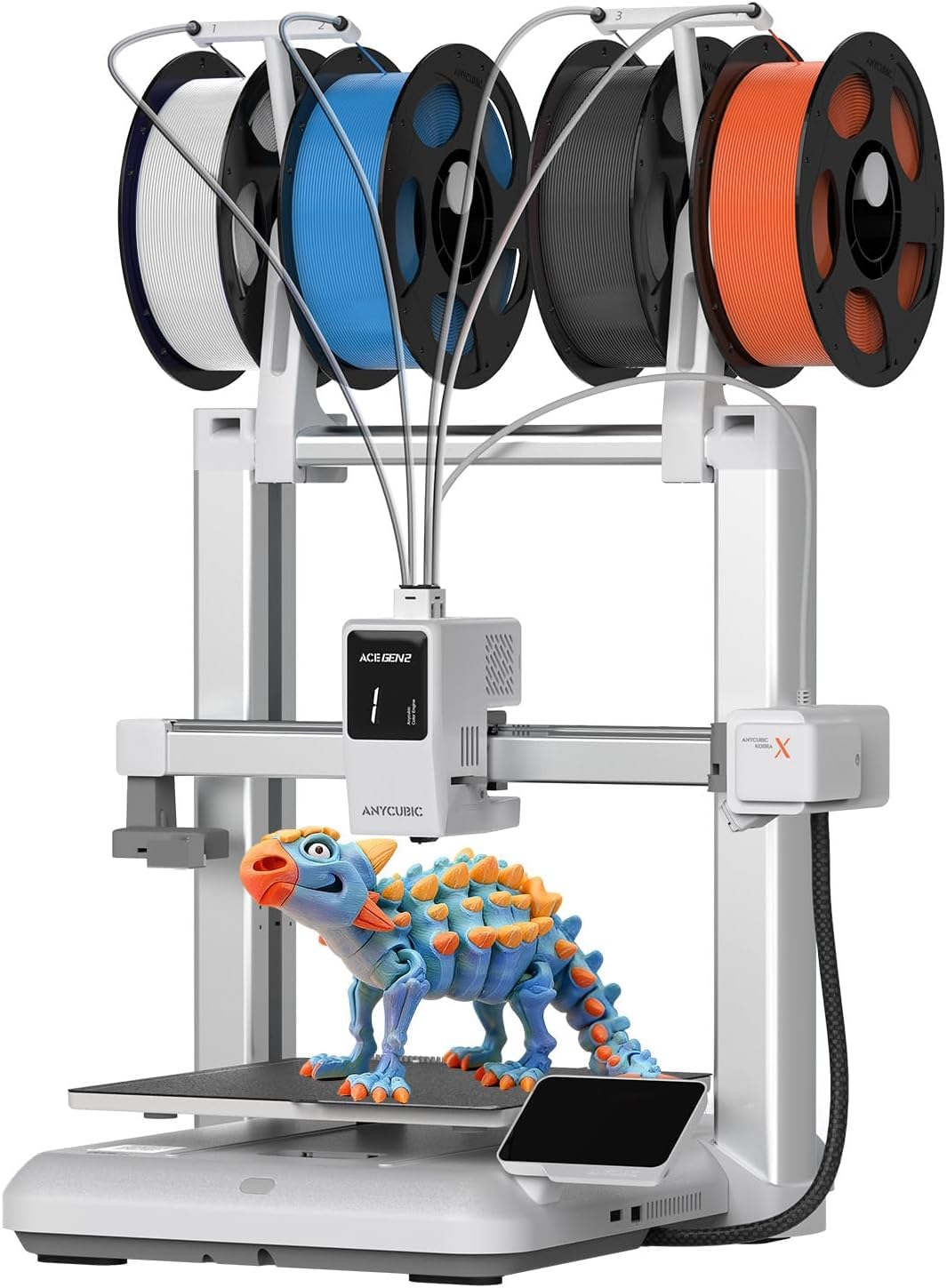
The Anycubic Kobra X Multicolor comes with native 4-color printing built-in and can expand up to 19 colors with additional ACE 2 Pro units (Automatic Color Engine, a spool-switching addon). That is impressive for a printer that weighs just 20.9 pounds — 3.2x lighter than the Creality K2 Combo at 65.9 pounds. It is also more compact (23 x 13 x 22 inches vs the Bambu Lab P1S at 15.31 x 18.03 x 15.31 inches), fitting on smaller desks without dominating the room.
The hardened steel nozzle handles PETG’s abrasive nature (the material can wear down softer nozzle tips), and the 300°C maximum nozzle temperature gives you headroom for tougher blends. LeviQ 3.0 auto bed leveling runs a 49-point calibration to ensure a flat first layer, which is critical for PETG adhesion. It runs at just 45 dB (decibels, a measure of sound level), making it one of the quietest printers here during operation — quieter than the Snapmaker U1’s four-toolhead system.
The data notes the innovative top-mount spool holder saves desk space. Buyers highlight the fast 15-minute setup time and the massive 10,000-model library for inspiration. The trade-off is that the ACE 2 Pro units are not compatible with older ACE Pro hardware, so plan your expansion path from the start if you want all 19 colors.
Value Highlights
- 20.9 pounds makes it the lightest multi-color option here
- 300°C nozzle temp gives headroom for PETG and beyond
- 45 dB quiet operation suits a shared living space
One Thing to Know
- ACE 2 Pro units are not backward-compatible with older ACE Pro hardware
Ideal for: hobbyists who want a budget-friendly entry into multi-color PETG printing without a heavy machine that needs a dedicated cart.
Not ideal for: users who already own ACE Pro units from previous Anycubic printers — they will need to buy ACE 2 Pro for expansion.
5. FLASHFORGE Adventurer 5M Pro

A fast, unbox-and-go machine that hits 200°C in 35 seconds for PETG.
The FLASHFORGE Adventurer 5M Pro focuses on getting you printing fast with minimal friction. The nozzle heats to 200°C in 35 seconds, and the Core XY all-metal frame keeps things stable during high-speed 600 mm/s printing. The quick-detachable nozzle design (280°C max) means you can swap to a 0.6 mm or 0.8 mm nozzle for larger PETG functional parts without disassembling the hotend.
Pressure sensing auto bed leveling measures the platform at multiple points, so you get a perfect first layer without manual Z-axis (vertical) calibration. The dual-sided PEI (Polyetherimide, a flexible, durable build plate material) platform lets you pop models off without tools — just flex the plate. That matters for PETG because it can bond aggressively to the wrong surface.
The built-in dual circulation system reduces dust, helping keep PETG prints clean. The Flash Maker mobile app gives you remote video monitoring and real-time progress tracking. The 15.75 x 14.96 x 17.83 inch footprint is compact for a 220 mm³ printer (220 x 220 x 220 mm). Buyers with over 998 ratings averaging 4.0 report the 10-minute unbox-to-print time is accurate, making this a solid pick for first-time PETG users.
Fastest to First Print: The 35-second heat-up and 10-minute setup time mean you can be printing PETG before you finish your coffee.
Compact Cube: The 220 mm³ build volume is smaller than other picks here — the Creality Ender 3 V3 Plus offers 300 mm³ for larger parts, so measure your planned parts before buying.
Choose this if: you are new to 3D printing and want a reliable, enclosed PETG machine that works from the start with minimal tuning.
Pass if: you need to print parts larger than 220 mm in any dimension — the Ender 3 V3 Plus is better suited for big functional pieces.
6. Creality Ender 3 V3 Plus

The largest build volume on this list — 300 mm³ for one-piece PETG functional parts.
The Creality Ender 3 V3 Plus stands out by offering a 300 x 300 x 330 mm build volume, which is substantially larger than the 260 mm³ found on the Creality K2 or the 270 mm³ on the Snapmaker U1. That extra space lets you print life-size items in one piece or batch-produce many small parts without rearranging your slicer plate. For PETG applications like full-size tool organizers or spare parts, that is a real productivity gain.
The CoreXZ motion system with Y-axis dual motors hits 600 mm/s and 20000 mm/s² acceleration. The tri-metal “Unicorn” nozzle features an integrated all-metal design with a hardened steel tip, so PETG’s heat and slight abrasiveness do not wear it down quickly. The direct drive extruder uses a bolster spring and ball plunger to grip filament tightly — the maker claims 1000+ hours of clog-free extrusion.
Two 500 mN.m (milliNewton meters, a unit of torque) motors drive the Y-axis along linear rods to handle the large, heavy print bed. Two support rods connect the base to the top gantry, forming a rigid triangle that reduces Z-axis shaking. Auto calibration handles Z-offset (the nozzle-to-bed distance), leveling, and input shaping (vibration reduction) in one tap. The 960 customer reviews (4.0 average) confirm this is a well-tested design, though some note the larger bed takes longer to heat evenly than smaller printers.
Big Volume Advantages
- 300 x 300 x 330 mm is the largest build volume on this list
- Tri-metal “Unicorn” nozzle resists PETG wear for long life
- Two Y-axis motors handle heavy prints without skipping
Size Trade-Offs
- Open-frame design means no draft protection for tall PETG parts
- Large bed takes longer to heat evenly than smaller printers
Best for: users who frequently print large PETG functional parts in one piece and need the extra Z-height (vertical height) for tall prototypes.
Consider another if: your space gets breezy or your room temperature fluctuates — the open frame makes warping more likely on very tall PETG prints without an enclosure.
Understanding the Specs
All-Metal Hotend
The hotend is the part of the printer that melts the filament. In cheaper printers, the path is lined with PTFE (a type of non-stick plastic) that starts breaking down around 240°C — right where PETG prints. An all-metal hotend uses metal for the entire melt zone, so you can safely run PETG at 250–260°C without damaging the liner or getting burnt particles in your print. Every printer in this guide uses an all-metal hotend for that reason.
Direct Drive Extruder
The extruder pushes filament into the hotend. A Bowden setup has the motor far away and pushes filament through a long tube, which can cause PETG to buckle or under-extrude (not enough plastic coming out). Direct drive means the motor sits right on top of the hotend, giving it a very short path. That short path allows better retraction control — the extruder pulls filament back slightly between moves — which is the main way to reduce PETG’s stringing (thin wisps of plastic between parts). All picks here use direct drive.
FAQ
Can I print PETG on a PTFE-lined hotend?
Do I need an enclosure to print PETG?
What is the best print speed for PETG?
Is multi-color printing with PETG reliable?
Which nozzle size should I use for PETG?
Will PETG clog my direct drive extruder?
How long does a PETG print take compared to PLA?
Does PETG need a heated bed?
Can I print PETG and TPU together?
What is the difference between PETG and PETG-CF?
Final Thoughts: The Verdict
For most people, the best 3D printer for PETG is the Bambu Lab P1S Combo because it wraps an enclosed chamber, reliable multi-color printing, and fast 500 mm/s speeds into a package that handles PETG without constant tuning. If you want the largest build volume for one-piece functional parts, grab the Creality Ender 3 V3 Plus. And for the most efficient multi-material system that wastes nearly zero filament, the Snapmaker U1 is the clear choice.
How We Picked
We do not accept paid placement. Every pick is matched to a real buyer and a real use-case; we do not hands-on test units.
Sources & Methodology
Specifications: manufacturer listings and product documentation. Review insights: verified customer reviews, as of July 2026. Pricing: not shown on this page (it changes often); check the current price via the retailer link.
As an Amazon Associate, Gadgets Feed earns from qualifying purchases. This does not affect which products we feature.
Related Guides
Product prices and availability are accurate as of the date/time indicated and are subject to change. Any price and availability information displayed on Amazon at the time of purchase will apply to the purchase of this product. As an Amazon Associate I earn from qualifying purchases.
CERTAIN CONTENT THAT APPEARS ON THIS SITE COMES FROM AMAZON. THIS CONTENT IS PROVIDED "AS IS" AND IS SUBJECT TO CHANGE OR REMOVAL AT ANY TIME.
Amazon and the Amazon logo are trademarks of Amazon.com, Inc. or its affiliates.