
You spend hours tuning a suspension arm, only to snap it on the first jump. That’s the real cost of waiting weeks for backordered parts — your RC rig sits idle. A dedicated machine that prints durable nylon-reinforced or carbon-fiber-filled parts changes the math entirely. One roll of filament covers dozens of replacement knuckles, shock towers, and chassis braces for a fraction of the retail price.
I’m Min — the co-founder and writer behind Gadgets Feed. I’ve spent countless hours analyzing print-head temperatures, CoreXY acceleration curves, and heated-chamber capabilities to separate machines that merely print from those that reliably produce functional RC components.
Whether you’re repairing a basher buggy or prototyping a custom drift chassis, the right machine connects your CAD file to a finished part that threads, flexes, and holds. This guide ranks the best 3d printer for rc parts — from high-speed CoreXY workhorses to detail-focused resin machines — based on real-world build volume, material compatibility, and layer adhesion.
How To Choose The Best 3D Printer For RC Parts
RC parts live under constant vibration, impact, and torque. A printer that handles standard desk toys will fail when you demand layer adhesion for a motor mount. Focus on three areas: build volume, hot-end temperature, and frame rigidity. The material you need — whether tough PLA, PETG, ABS, or reinforced nylon — dictates the printer’s required specs.
Build Volume and Part Size
A full 1/10-scale RC chassis requires a build area around 300 x 300 x 300 mm. Smaller printers in the 200³ mm range can handle arms and knuckles, but anything larger than a shock tower means splitting models and gluing — which introduces weak points. Measure your largest replacement part before choosing a machine. For resin printers, the Saturn 4 Ultra’s 8.33 x 4.66 x 8.66 inch volume covers most small-scale parts with exceptional detail.
Hot-End Temperature and Material Range
Standard PLA has poor impact resistance for RC use. You want PETG for flexibility, ABS for heat resistance, or carbon-fiber-filled nylon for structural components. A hot-end that reaches 280°C enables PETG and ABS reliably. For CF-nylon and polycarbonate blends, target a nozzle capable of 300°C or higher. The Creality K1C and ELEGOO Centauri Carbon handle these temperatures natively without requiring upgrade parts.
Frame Stability and Accuracy
Layer wobble from a flimsy frame ruins threads and screw-hole alignment on RC parts. CoreXY printers like the Flashforge Adventurer 5M and Prusa MK4S use a gantry design that distributes forces evenly, minimizing ringing. Resin printers like the Saturn 4 Ultra eliminate X/Y movement entirely by curing layers via LCD — delivering smooth surfaces that fit metal RC screws without post-processing.
Quick Comparison
On smaller screens, swipe sideways to see the full table.
| Model | Category | Best For | Key Spec | Amazon |
|---|---|---|---|---|
| ELEGOO Centauri Carbon | FDM CoreXY | CF-Nylon RC chassis parts | 320°C brass-hardened nozzle | Amazon |
| Creality K1C | FDM CoreXY | Fast carbon-fiber production | 300°C clog-free extruder | Amazon |
| Anycubic Kobra S1 Combo | FDM CoreXY | Multi-color RC body shells | 600mm/s speed + ACE Pro drying | Amazon |
| ELEGOO Saturn 4 Ultra 16K | Resin LCD | Detailed scale RC components | 16K mono LCD, 150 mm/h speed | Amazon |
| Creality Ender 5 Max | FDM CoreXY | Massive 400mm³ RC parts | 700mm/s + 64-point auto leveling | Amazon |
| Original Prusa MK4S KIT | FDM Cartesian | DIY reliability for production | Input shaping + open-source | Amazon |
| FLASHFORGE Adventurer 5M | FDM CoreXY | Budget-friendly RC replacement parts | 280°C direct extruder | Amazon |
| Longer LK5 Pro 3 | FDM Cartesian | Large single-part RC repair jobs | 300mm³ build with resume | Amazon |
| HEPHI3D TINA2 Plus | FDM Mini | Entry-level small RC accessories | 250mm/s + cloud slicing | Amazon |
In‑Depth Reviews
1. ELEGOO Centauri Carbon
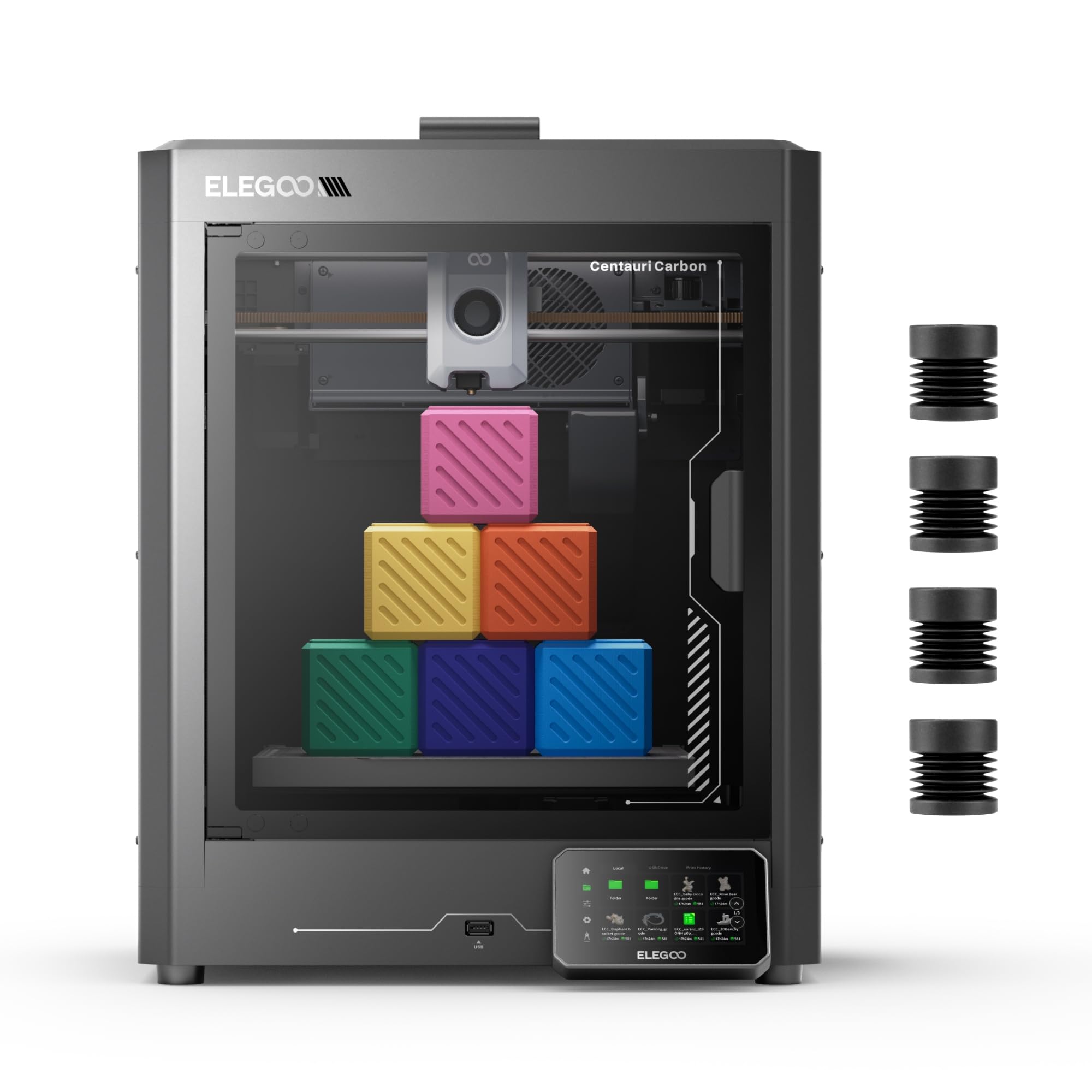
This machine arrived fully assembled out of the box, and within ten minutes we were sending a print job over Wi-Fi. The die-cast aluminum frame stays rigid at 500 mm/s travel speeds, which directly translates to clean threads on RC motor mounts — no ghosting or shifted layers. Reviewers consistently note that the first layer adheres perfectly on the dual-sided plate, even with carbon-fiber reinforced nylon that normally warps on lesser printers.
The enclosed chamber holds heat well for ABS and nylon-based parts, and the built-in camera sends time-lapse footage straight to your phone so you can catch a failed print before it wastes half a spool. One user reported a hotend error after six days, but the replacement unit ran 400 hours without a single clog.
For the price, no other printer on this list combines a 320°C brass-hardened steel nozzle, CoreXY speed, and an active heated chamber in one ready-to-run package. If you’re tired of breaking shock towers and want to print your own replacement set in CF-nylon, this is the one.
Why it’s great
- 320°C nozzle handles carbon-fiber and nylon blends for true structural RC parts
- Pre-calibrated auto-leveling and CoreXY motion produce reliable first layers
- Enclosed chamber with LED camera enables remote monitoring and time-lapse capture
Good to know
- Heavy unit at 38.5 pounds — place on a sturdy table before printing
- Early units had cable issues; current production appears to have resolved them
2. Creality K1C

The K1C is the printer that convinced me an affordable CoreXY could print carbon-fiber filament without constant nozzle clogs. Creality added a bolster spring and ball plunger to the direct extruder, which grips the abrasive filament tightly while the steel-encased copper nozzle resists wear. Users report printing PLA, PETG, ABS, and CF-nylon all on the same nozzle without swapping.
Boot-up takes under three minutes — the auto calibration handles Z-offset, bed leveling, and input shaping in one tap. The side auxiliary fan reduces stringing on overhanging RC body shell details, and the intelligent AI camera catches spaghetti failures before they ruin a six-hour print. Some owners note the magnetic bed starts to show wear after heavy use, but replacement plates cost about ten dollars.
The 600 mm/s travel speed feels genuinely fast. A standard RC battery tray in PETG finishes in roughly an hour instead of four on an older bed-slinger. If you want a mid-range machine that chews through carbon-fiber spools without hesitation, the K1C earns its spot.
Why it’s great
- Clog-free extruder designed specifically for abrasive carbon-fiber filaments
- Full auto calibration in one button push — leveling, Z-offset, and input shaping
- Auxiliary fan system minimizes stringing on complex RC shell geometries
Good to know
- Replacement magnetic plates needed after prolonged use with abrasive filaments
- Enclosure is plastic; not as well insulated as higher-priced competitors
3. Anycubic Kobra S1 Combo
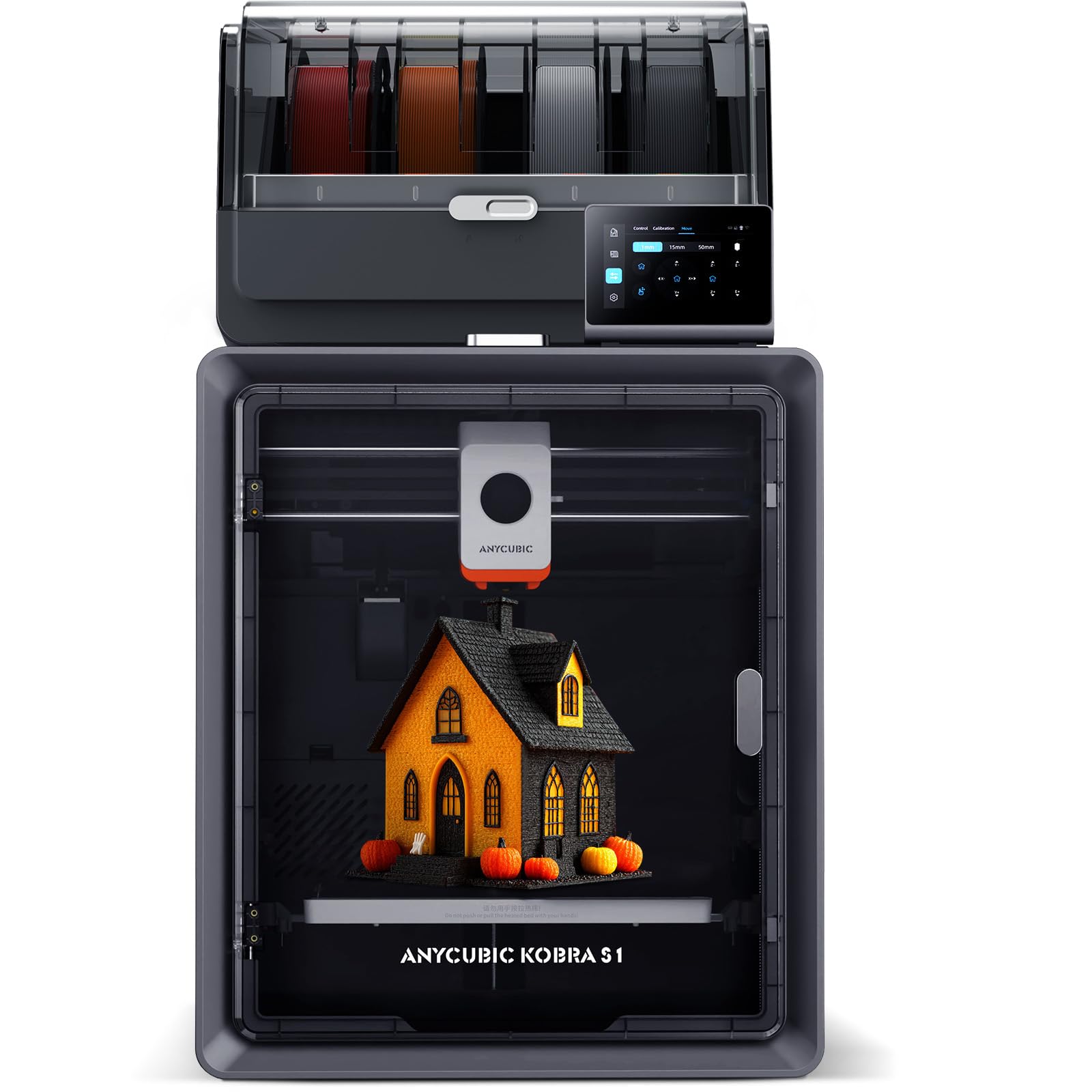
Multi-color RC body shells typically require painting or vinyl wraps, but the Kobra S1 Combo prints them directly in four colors using the ACE PRO filament system. The integrated dryer is critical for PETG — moisture causes bubbles that ruin a smooth body panel finish. Dual PTC heating modules circulate warm air around the spools, keeping hygroscopic materials dry mid-print.
The 600 mm/s travel speed and flow compensation algorithm produce surfaces that feel injection-molded. For scale RC enthusiasts, this matters when you want a realistic dashboard or cooling vent without sanding. Reviewers praise the slicer quality and note that the ACE PRO handles cardboard reels slightly less reliably than plastic ones — a cheap adapter fixes this.
Out of the box it is nearly plug-and-play, though some users experienced early firmware and Wi-Fi connectivity hurdles that later replacement units resolved. At this price point, the color switching and integrated drying make it a unique tool for RC builders who want aesthetic parts without post-processing.
Why it’s great
- ACE PRO filament dryer prevents moisture bubbles in PETG body panels
- Four-color printing eliminates painting for multi-tone RC shells
- Flow compensation creates smooth surface finishes with minimal layer lines
Good to know
- ACE PRO struggles with cardboard filament spools — use plastic or adapters
- Filament changes between colors are relatively slow compared to dedicated multi-material systems
4. ELEGOO Saturn 4 Ultra 16K
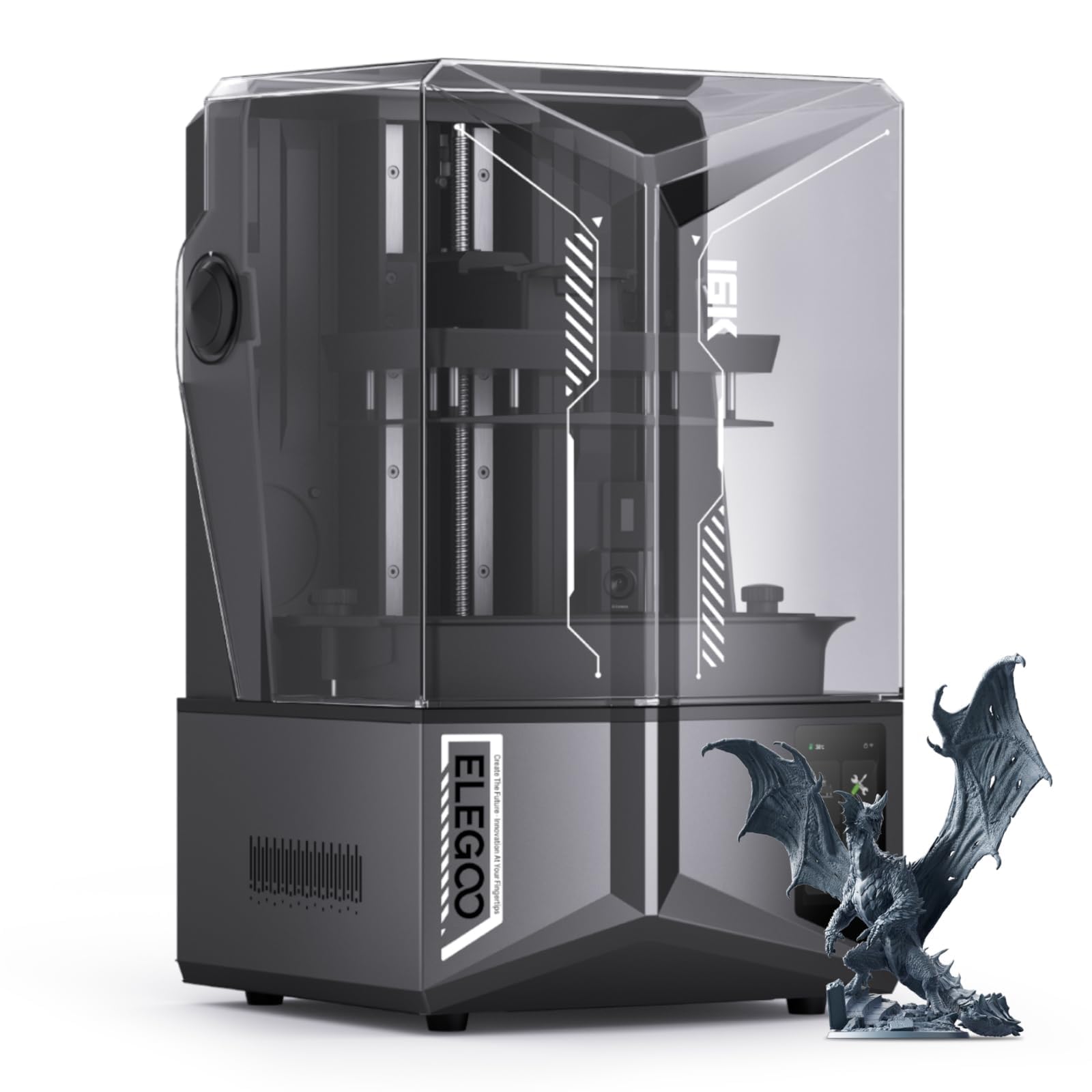
When you need a scale RC replica part — a steering rack with threaded holes, a dashboard vent, or a detailed engine block — the Saturn 4 Ultra’s 16K LCD resolves layers invisible to the naked eye. The tilt-release mechanism peels the cured layer from the FEP film without the heavy suction forces that warp thin parts on traditional resin printers.
The heated vat maintains resin at 30°C, reducing viscosity so that tough or translucent engineering resins flow evenly. Multiple reviewers who had never used a resin printer before managed perfect prints on their first attempt, thanks to automatic leveling and the intuitive touchscreen. The AI camera alerts you if the build plate is empty or a model warps, saving time and resin.
This printer is not for large RC chassis parts — the 9.3 x 5.2 x 8.7 inch build volume suits smaller components. But for anything requiring fine threads or snap-fit tolerances, the Saturn 4 Ultra delivers detail that no FDM machine can match at this price. The included filtering system also keeps VOC odors manageable for home workshops.
Why it’s great
- 16K mono LCD produces smooth surfaces with no visible layer lines on small parts
- Heated resin vat at 30°C improves viscosity and adhesion for tough engineering resins
- Tilt-release mechanism reduces peeling forces that cause thin RC part warping
Good to know
- Small build volume limits parts to knuckles, gears, and control horns — not full chassis
- Resin printing requires post-processing (washing and curing) that adds time to each project
5. Creality Ender 5 Max
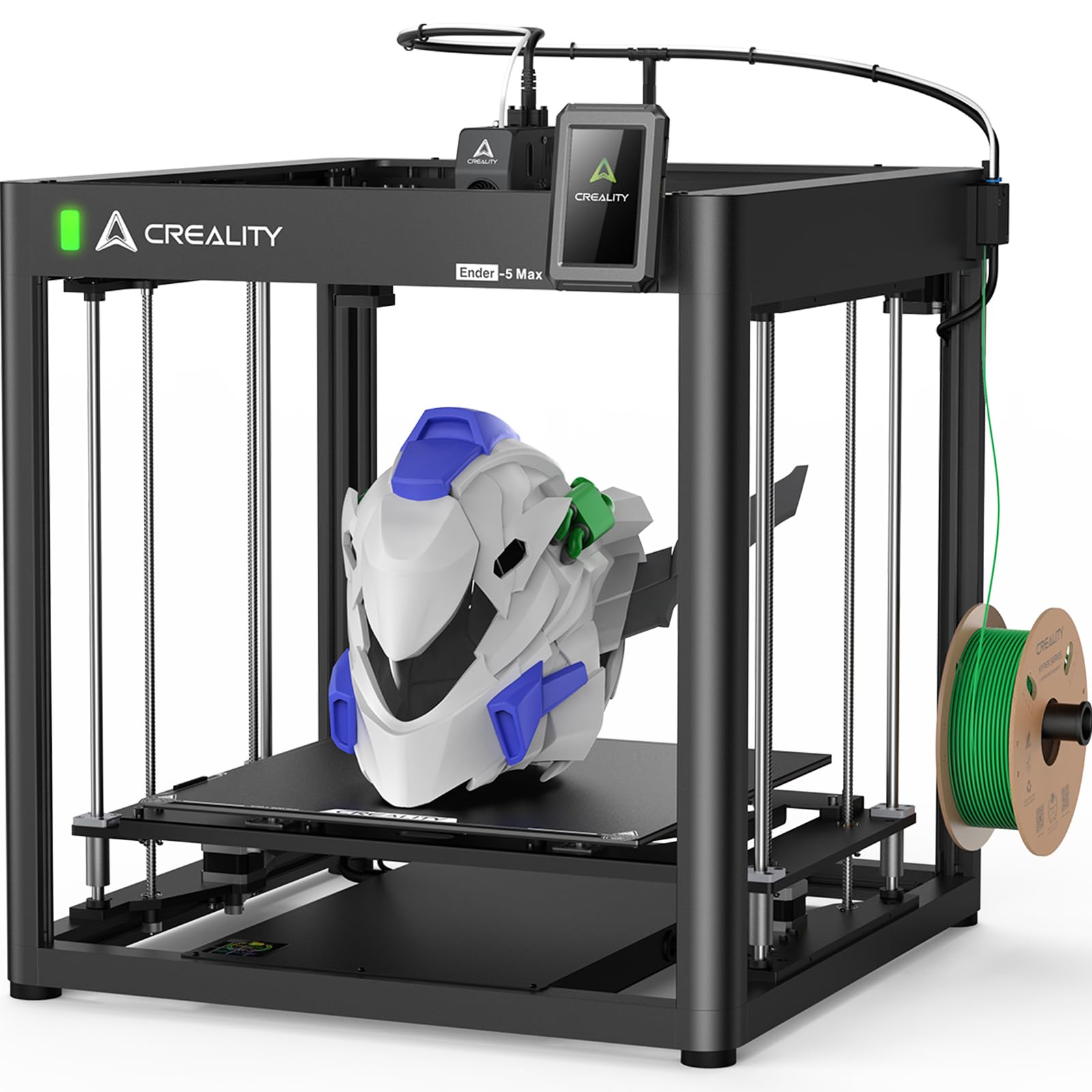
The Ender 5 Max solves one problem nobody else on this list addresses: you can print a full 1/8-scale RC buggy chassis in one piece. The 400 x 400 x 400 mm build volume is massive, and the 1000W heated bed reaches temperature so fast you barely wait. The 64-point auto-leveling system corrects even warped beds, which is critical at this scale where a single millimeter of tilt ruins a six-hour print.
The reinforced die-cast aluminum frame keeps vibrations low despite the aggressive 700 mm/s travel speed. For small print farms, the WLAN group management lets you control multiple units from one interface — useful if you plan to batch-produce RC suspension arms for a local racing club. Some early users reported bed adhesion issues that required tightening loose components, but the CoreXY structure eliminates many of the ringing problems common on older bed-slinger designs.
If you need to print full RC chassis tubs or batch dozens of replacement shock towers in one go, the Ender 5 Max is the only machine with this kind of build envelope at a realistic price point. Just budget for a dedicated surface — this printer weighs nearly 70 pounds.
Why it’s great
- 400mm³ build volume fits full RC chassis in a single print
- 1000W rapid-heating bed reaches temperature in minutes for large PETG parts
- WLAN multi-printer control enables print farm management for batch production
Good to know
- Some units ship with loose components — inspect all bolts before first use
- Heavy 68.9 pound build requires a sturdy workbench or dedicated stand
6. Original Prusa MK4S KIT
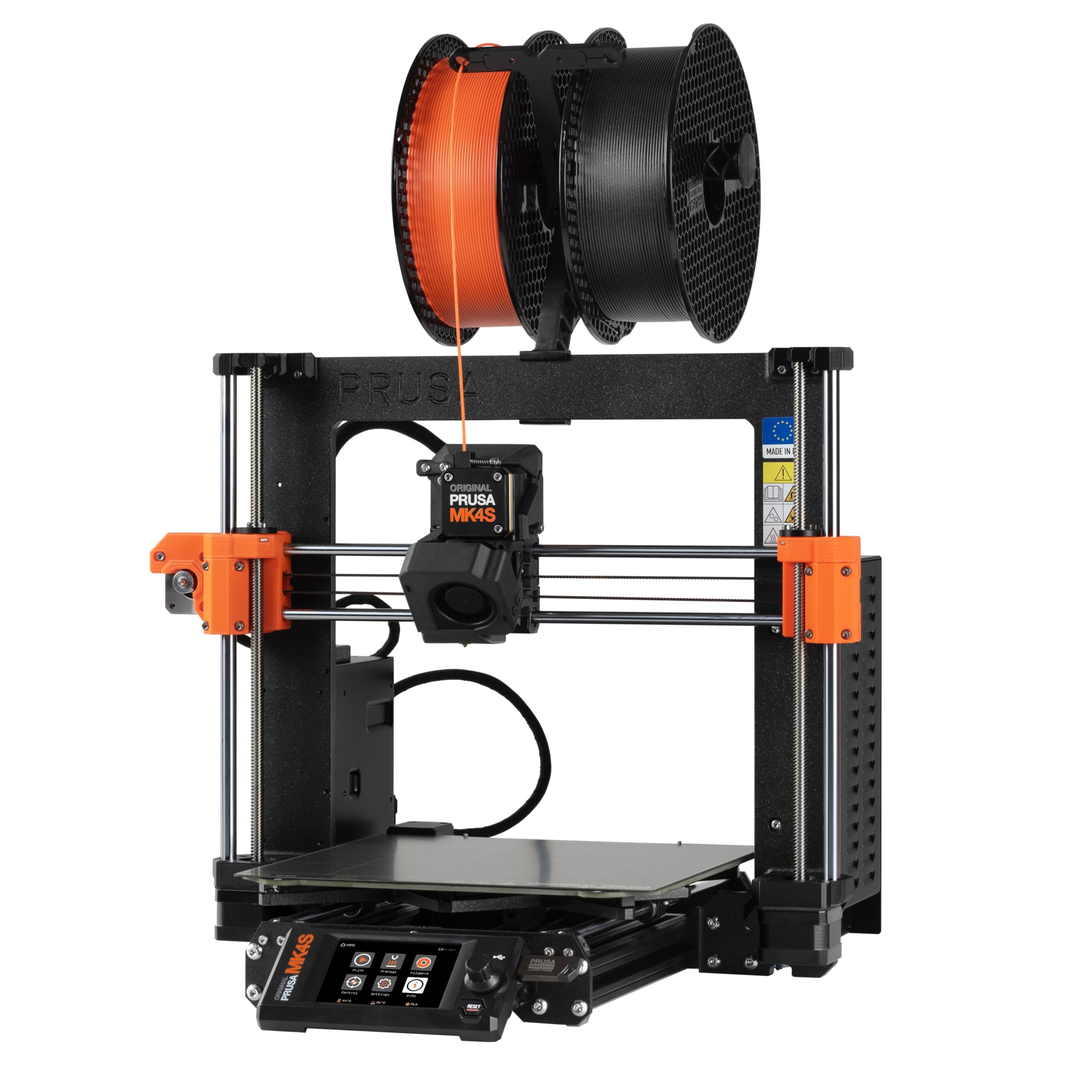
The Prusa MK4S KIT is not a speed demon at 9.84 x 8.3 x 8.6 inches, but it is the most reliable printer here for repeatable RC part production. The self-assembly process takes a full day, and that investment pays off in understanding exactly how every screw and bearing works — when you eventually need to replace a hotend fan mid-project, you will know exactly what to do.
Input shaping and automatic calibration produce edged surfaces that fit together without filing. Users who upgraded from budget printers report that the Prusa Connect app and EasyPrint workflow eliminated the constant bed leveling and first-layer debugging they endured before. The all-metal hotend prints PETG and ABS reliably, and the open-source firmware allows full customization for niche RC materials.
The real advantage here is long-term support. Prusa provides firmware updates for years and sells every spare part individually. If you want a machine that will still print perfect RC suspension parts five years from now, the MK4S is the investment that outlasts every budget option.
Why it’s great
- Lifetime firmware updates and full spare parts availability ensure long-term usability
- Input shaping delivers clean threads and snap-fit tolerances without calibration tinkering
- Open-source firmware allows customization for exotic filaments used in RC components
Good to know
- The DIY kit assembly takes over 8 hours — not for impatient users
- Smaller build volume means splitting large RC parts or using multiple print jobs
7. FLASHFORGE Adventurer 5M

The Adventurer 5M punches far above its price point. The CoreXY all-metal structure achieves 600 mm/s travel speed and 20,000 mm/s² acceleration, which means an RC control arm prints in under two hours instead of six. The quick-detachable nozzle system lets you swap between 0.25 mm, 0.4 mm, and 0.8 mm nozzles depending on whether you need fine detail on steering servos or thick layers on shock towers.
Auto-leveling is genuinely one-tap — no paper calibration or manual knob twisting. The dual-channel part cooling fan keeps bridges clean when printing PLA support structures for PETG parts. Over 1,500 customer reviews place it among the best entry-level CoreXY machines on the market, with consistent feedback that first prints succeed without troubleshooting.
Battery capacity is not a meaningful metric here — the real spec is the 280°C direct extruder, which unlocks ABS and PETG for impact-resistant RC parts. The included sample filament is small, so order a spool of PETG before the printer arrives. At this price, the Adventurer 5M is the lowest-cost path into RC-capable FDM printing.
Why it’s great
- Quick-detachable nozzle system enables fast switching between fine and high-flow prints
- One-tap auto-leveling eliminates manual calibration — first prints succeed reliably
- 600 mm/s CoreXY travel dramatically reduces print time for RC repair parts
Good to know
- Only includes a small sample of starter filament — buy additional spools immediately
- Enclosure is not heated, limiting performance for large ABS parts in cool rooms
8. Longer LK5 Pro 3

The LK5 Pro 3 is built on a reinforced triangular frame that minimizes resonance — a critical feature for tall RC parts like chassis uprights that amplify layer wobble on less rigid machines. The 300 x 300 x 400 mm build volume accommodates most 1/10-scale components in one piece, and the silicon carbide lattice glass platform distributes heat evenly across the full print bed.
The TMC2209 ultra-quiet driver means this machine lives comfortably in a bedroom or shared workshop without noise complaints. Filament depletion detection and auto-resume printing automatically stop and restart when a spool runs out or power cuts — a lifesaver for overnight EC part prints that span 12 hours. One reviewer clocked 300 hours of PLA, PETG, ABS, and TPU printing without mechanical failure.
Manual bed leveling via four knobs is more hands-on than auto-leveling competitors, but once set, the glass platform holds calibration for weeks. If you want a quiet, large-format printer that handles flexible TPU for RC tires alongside rigid PETG for suspension, the LK5 Pro 3 delivers reliable output at a budget-friendly price.
Why it’s great
- Reinforced triangular frame minimizes resonance for tall, straight RC chassis parts
- Silicon carbide glass platform provides even heating and strong adhesion across full build area
- Ultra-quiet TMC2209 drivers allow overnight printing in noise-sensitive environments
Good to know
- Manual four-point leveling requires more user involvement than auto-leveling competitors
- Glass bed combined with metal scraper can scratch surface — use flexible spatula
9. HEPHI3D TINA2 Plus
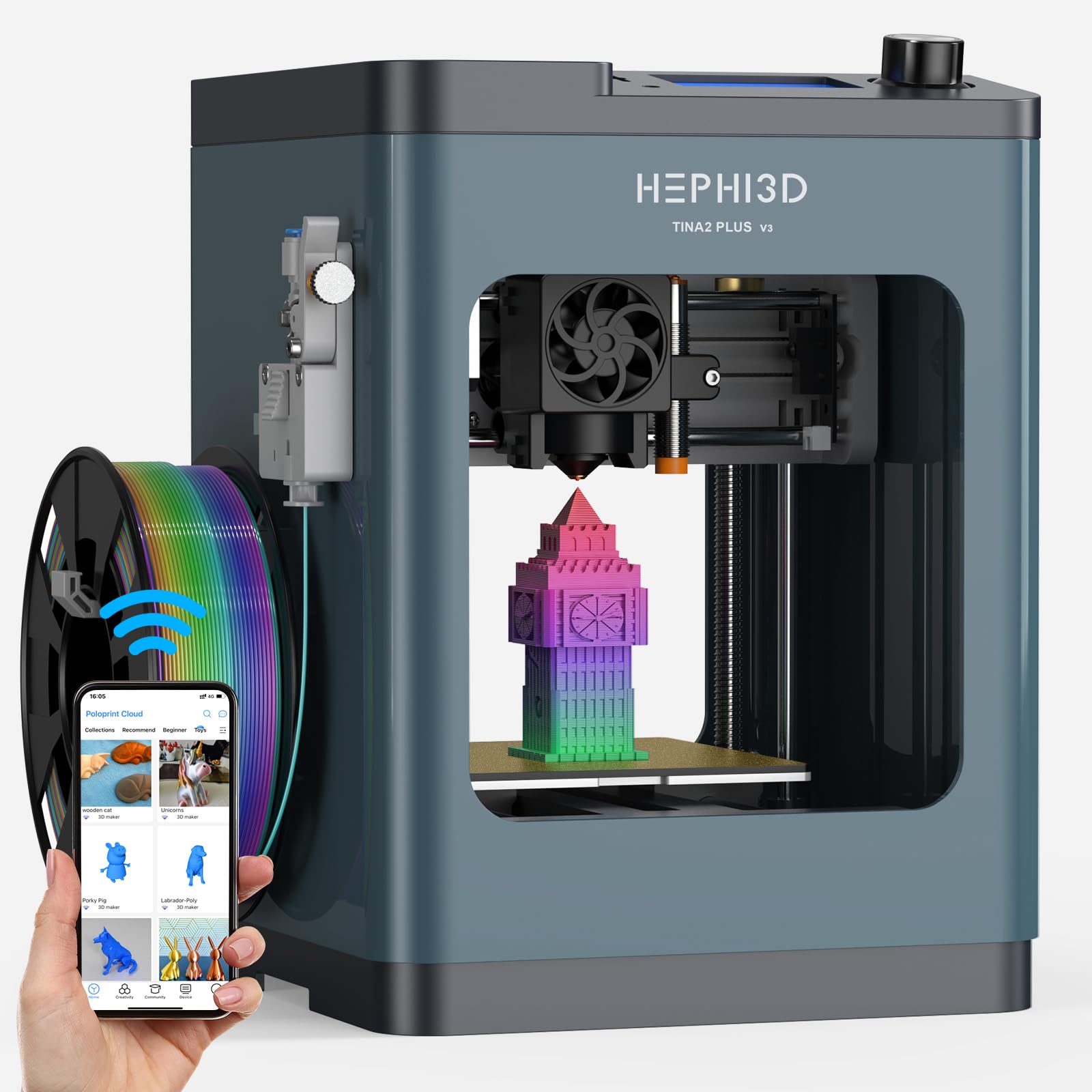
The TINA2 Plus is not built for RC chassis parts — its 8.27 x 8.27 x 11.42 inch bed fits small accessories like servo mounts, battery clips, and antenna holders. But for absolute beginners who want to learn 3D printing before investing in a full-scale RC printer, this machine removes every barrier. It arrives fully assembled, the Poloprint Cloud app handles slicing and Wi-Fi file transfer from your phone, and the recommended 150 mm/s speed prints a small part in under an hour.
Auto bed leveling is set at the factory, so there is no calibration whatsoever. The library of 3,000+ online models includes RC-specific brackets and mounts, ready to print with one tap. Some reviewers mention that children under 13 find the slicing setup confusing, but the app walkthrough covers the basics clearly for motivated beginners.
If you already own a proper RC-printer and just want a secondary machine for quick small parts, or if you are introducing a family member to the hobby, the TINA2 Plus is the safest entry point. It will not print a durable suspension arm, but it will teach you the workflow without the frustration of assembly and tuning.
Why it’s great
- Fully assembled out of the box with factory auto-leveling — zero setup required
- Cloud app slicing and Wi-Fi file transfer from phone eliminates computer dependency
- Library of ready-to-print RC accessory models reduces the CAD learning curve
Good to know
- Small build volume cannot fit full chassis components — limited to small mounts and brackets
- App workflow may confuse users under 13 without adult assistance for slicing settings
FAQ
Can a budget 3D printer handle carbon-fiber reinforced filament for RC parts?
What layer height should I use for RC parts to ensure strength?
Should I choose FDM or resin printing for RC parts?
Final Thoughts: The Verdict
For most users, the best 3d printer for rc parts winner is the ELEGOO Centauri Carbon because it combines a 320°C hardened nozzle, enclosed heated chamber, and CoreXY speed in an affordable, pre-calibrated package that prints carbon-fiber reinforced nylon right out of the box. If you want multi-color RC body shells without painting, grab the Anycubic Kobra S1 Combo. And for tiny, detailed scale components with injection-molded surface finish, nothing beats the ELEGOO Saturn 4 Ultra 16K.