
The frustration of a 3D printer that demands constant leveling, clogs mid-print, or produces layers so rough they need sanding is a rite of passage—one you can skip entirely. The market has matured past the era where a sub-$1000 machine meant endless tinkering; today, a smart, fast, and reliable FDM or resin printer is the baseline, not the exception.
I’m Min — the co-founder and writer behind Gadgets Feed. I’ve spent countless hours dissecting the thermal performance, motion systems, and firmware ecosystems of machines in this tier to separate the true workhorses from the ones that will waste your filament and patience.
Whether you are building functional prototypes or detailed miniatures, finding the right 3d printer under $1000 is about matching your material needs and print volume to a machine that delivers consistent, high-quality results without the headache.
How To Choose The Best 3D Printer Under $1000
The sub-$1000 market is now split between ultra-fast enclosed CoreXY machines and affordable resin systems, along with a few reliable bed-slingers. Your choice should hinge on your primary material and part size rather than just the sticker price.
CoreXY vs. Bed-Slinger vs. Resin
CoreXY printers like the QIDI Q2 or ELEGOO Centauri Carbon move the print head in both axes via fixed motors, enabling higher speeds (500-600 mm/s) and better stability at the cost of a slightly higher price. Bed-slingers like the Longer LK5 Pro move the bed on the Y-axis, which limits speed but offers massive build volumes for less money. Resin printers like the ELEGOO Saturn 4 Ultra use a vat of liquid resin cured by a UV LCD, delivering microscopic detail perfect for miniatures and jewelry, but require post-processing and proper ventilation.
Enclosed vs. Open Frame
An enclosure is not a luxury—it is a requirement for printing engineering-grade materials like ABS, ASA, Nylon, or Polycarbonate, which warp badly in drafts. Machines like the Bambu Lab P1S and QIDI Q2 come fully enclosed with active chamber heating, allowing you to print these high-strength filaments reliably. Open-frame printers are fine for PLA and PETG, which are easier to print, but they lock you out of a whole world of advanced materials.
Multi-Color Printing: Is It Worth It?
Native multi-color systems (Bambu Lab AMS, Creality CFS, Anycubic ACE) let you print in up to 16 colors by swapping filaments mid-print. This adds a lot of creative potential and eliminates manual painting, but at the cost of increased filament waste from purging. If you plan to print functional parts in a single color, you can skip the combo and save money. If you want to print detailed, colorful models without post-processing, the premium for a multi-color combo is well spent.
Quick Comparison
On smaller screens, swipe sideways to see the full table.
| Model | Category | Best For | Key Spec | Amazon |
|---|---|---|---|---|
| Bambu Lab P1S | Enclosed CoreXY | High-speed single/multi-color workhorse | 500 mm/s, 20000 mm/s² | Amazon |
| QIDI Q2 | Enclosed CoreXY | Engineering materials & premium detail | 65°C heated chamber, 370°C nozzle | Amazon |
| Creality K2 Combo | Multi-Color CoreXY | Vibrant multi-color prints without post-processing | 16-color CFS, step-servo motors | Amazon |
| ELEGOO Saturn 4 Ultra 16K | Resin (MSLA) | Ultra-detailed miniatures & jewelry | 16K mono LCD, 150 mm/h | Amazon |
| Bambu Lab A1 Combo | Multi-Color Bed-Slinger | Beginner-friendly multi-color + LED lamp projects | AMS Lite, ≤48 dB noise | Amazon |
| Anycubic Kobra X | Multi-Color CoreXY | Affordable entry into multicolor 3D printing | 600 mm/s, 19 colors (4 ACE Pro) | Amazon |
| ELEGOO Centauri Carbon | Enclosed CoreXY | Out-of-box perfection & carbon fiber materials | 500 mm/s, 320°C hardened nozzle | Amazon |
| FLASHFORGE Adventurer 5M | Open CoreXY | Reliable workhorse for PLA/PETG | 600 mm/s, 32 mm³/s flow | Amazon |
| Longer LK5 Pro 3 | Large-Format Bed-Slinger | Massive prints on a budget | 300×300×400 mm build volume | Amazon |
In‑Depth Reviews
1. Bambu Lab P1S 3D Printer

The Bambu Lab P1S is the benchmark for speed and reliability in the enclosed CoreXY segment. Its 500 mm/s print speed paired with 20000 mm/s² acceleration means you can produce a detailed Benchy in under 20 minutes without sacrificing surface quality. The fully enclosed design handles ABS and ASA without warping, and the chamber is well-ventilated for more volatile materials.
What sets the P1S apart is the seamless software integration. Bambu Studio is intuitive, with pre-tuned profiles for PLA, PETG, TPU, and ABS that produce consistent results on the first try. The auto bed leveling routine is fast and genuinely reliable—users report hundreds of hours without needing to manually adjust the Z-offset. The 256×256×256 mm build volume is spacious enough for most functional parts and cosplay pieces.
The P1S supports up to 16 colors via the optional AMS unit, making it a future-proof platform if you decide to expand into multi-material printing later. The only compromise is the nozzle temperature limit—it is not rated for carbon-fiber-reinforced filaments, so if you need to print PA-CF or PETG-CF regularly, you should look at the QIDI Q2 or ELEGOO Centauri Carbon instead.
Why it’s great
- Class-leading speed with consistent high-resolution output.
- Fully enclosed chamber supports ABS/ASA without warping.
- Bambu Studio software delivers a refined, low-friction workflow.
Good to know
- Nozzle max temp (300°C) limits carbon-fiber composites.
- AMS multi-color unit is sold separately and adds cost.
2. QIDI Q2 3D Printer
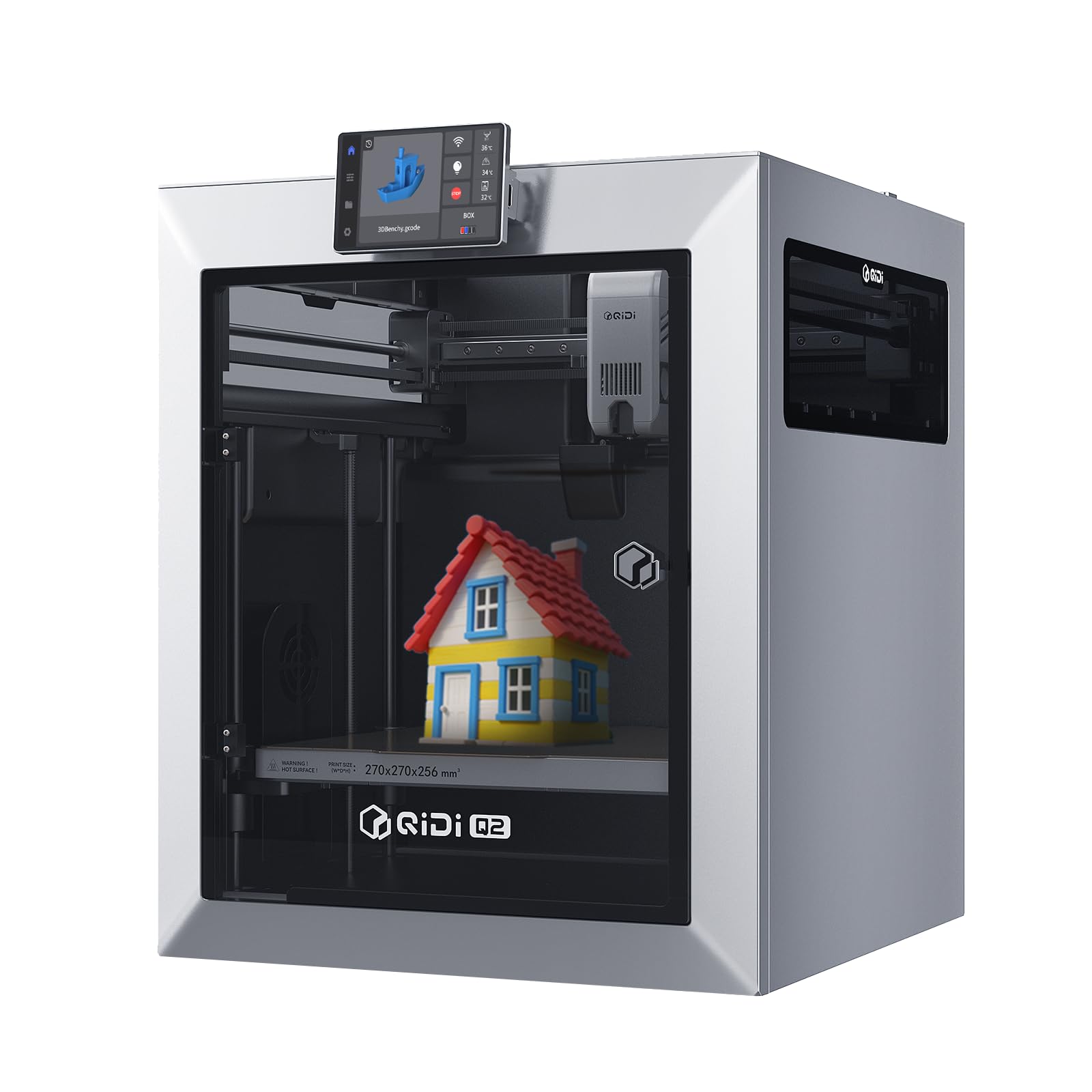
The QIDI Q2 is engineered for users who refuse to be limited by material choice. Its 370°C high-temperature nozzle and 65°C actively heated chamber (second-generation PTC) allow it to print everything from everyday PLA to demanding Nylon, Polycarbonate, and carbon-fiber-reinforced composites without warping or layer adhesion issues. The all-metal CoreXY structure with linear rails delivers 600 mm/s printing with exceptional stability.
A standout feature is the nozzle-as-leveling-sensor system, which cancels out bed surface inconsistencies and ensures a perfect first layer every time. The triple filtration system (G3 pre-filter, H12 HEPA, and activated carbon) makes printing ABS indoors much more tolerable by reducing fumes. The 270×270×256 mm build volume is slightly larger than the P1S, giving you more room for taller prototypes.
The Q2 supports multi-color printing via the QIDI BOX, which also includes dry-while-print technology to keep hygroscopic filaments like PA and PC in optimal condition. The active motor noise cancellation keeps operation quiet, and the 1080p AI camera with spaghetti detection and time-lapse adds a layer of smart monitoring that is rare at this price point.
Why it’s great
- 370°C nozzle and 65°C chamber unlock advanced engineering filaments.
- Triple filtration system for safer ABS printing.
- Nozzle-based auto leveling delivers flawless first layers.
Good to know
- Some early units had firmware instability that was resolved with updates.
- AI spaghetti detection can produce false positives on complex prints.
3. Creality K2 Combo (A) 3D Printer
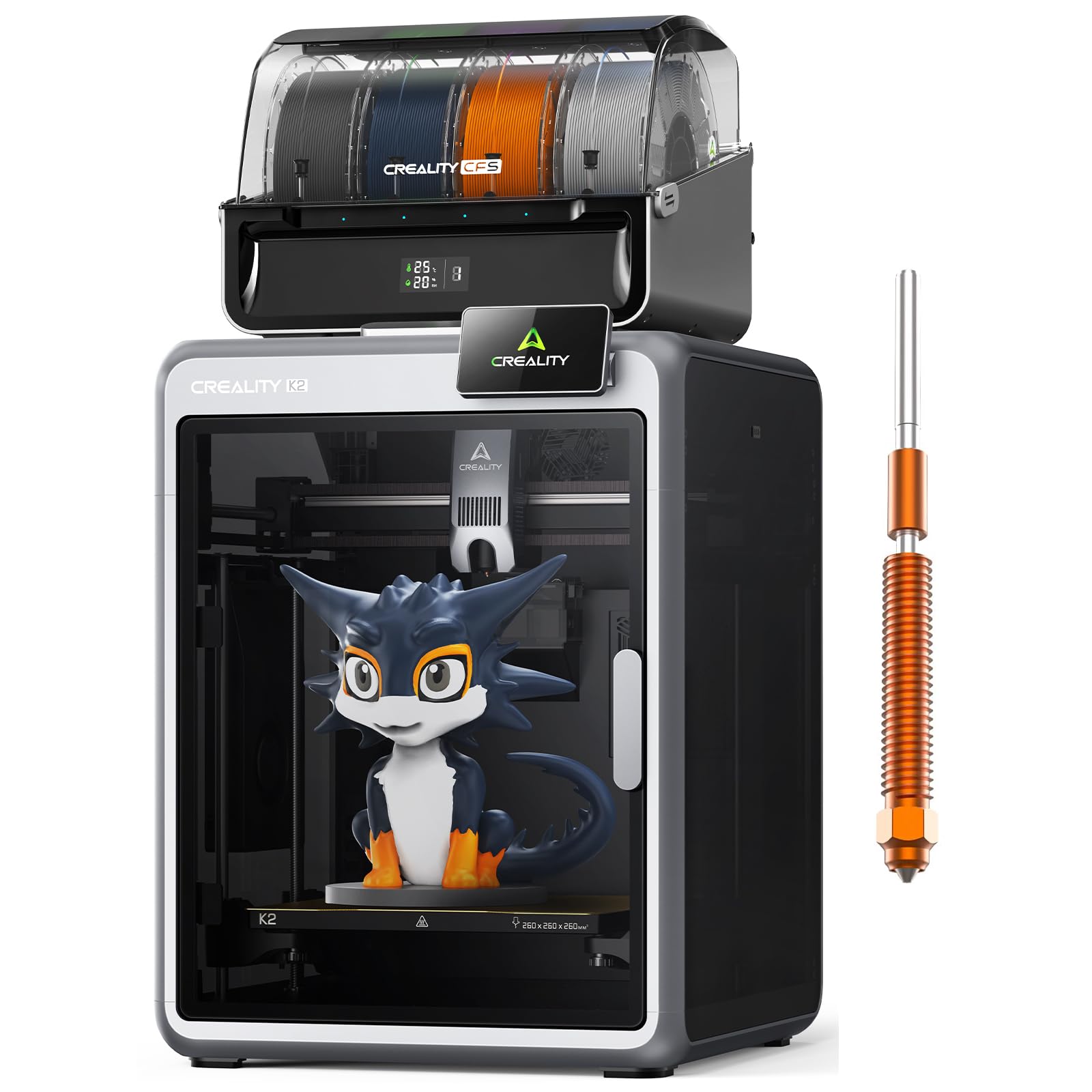
The Creality K2 Combo is a bold entry into the multi-color CoreXY space. Its step-servo motor system on the X, Y, and extruder axes dynamically adjusts torque in under a millisecond, delivering both high speed (600 mm/s) and exceptional extrusion consistency. The 260×260×260 mm build volume is generous, and the included CFS (Creality Filament System) unit supports up to 16 colors when daisy-chaining four units.
Setup is genuinely plug-and-play—95% pre-assembled, just install the screen and spool holder. The auto leveling sensor intelligently probes only the print area, cutting the leveling time significantly. The dual-sided PEI plate offers strong adhesion for PLA and PETG, and the enclosed frame with a bright LED light and decent 1080p camera makes remote monitoring practical. The silent mode using dynamically balanced fans keeps noise down to a whisper.
While the K2 Combo is a fantastic value for multi-color printing, the CFS requires proprietary adapters for standard spools (which you must print yourself), and some early reports mention intermittent feeder slot errors. The AI camera is also less reliable than Bambu’s system at detecting print failures. Still, for the price, it is one of the few machines that gives you a genuine 16-color ecosystem out of the box.
Why it’s great
- 16-color multi-material printing straight from the box.
- Step-servo motors provide precise extrusion and quiet operation.
- Intelligent auto leveling speeds up the pre-print routine.
Good to know
- CFS requires printed adapters for non-Creality spools.
- AI failure detection is less accurate than competitors.
4. ELEGOO Saturn 4 Ultra 16K Resin 3D Printer
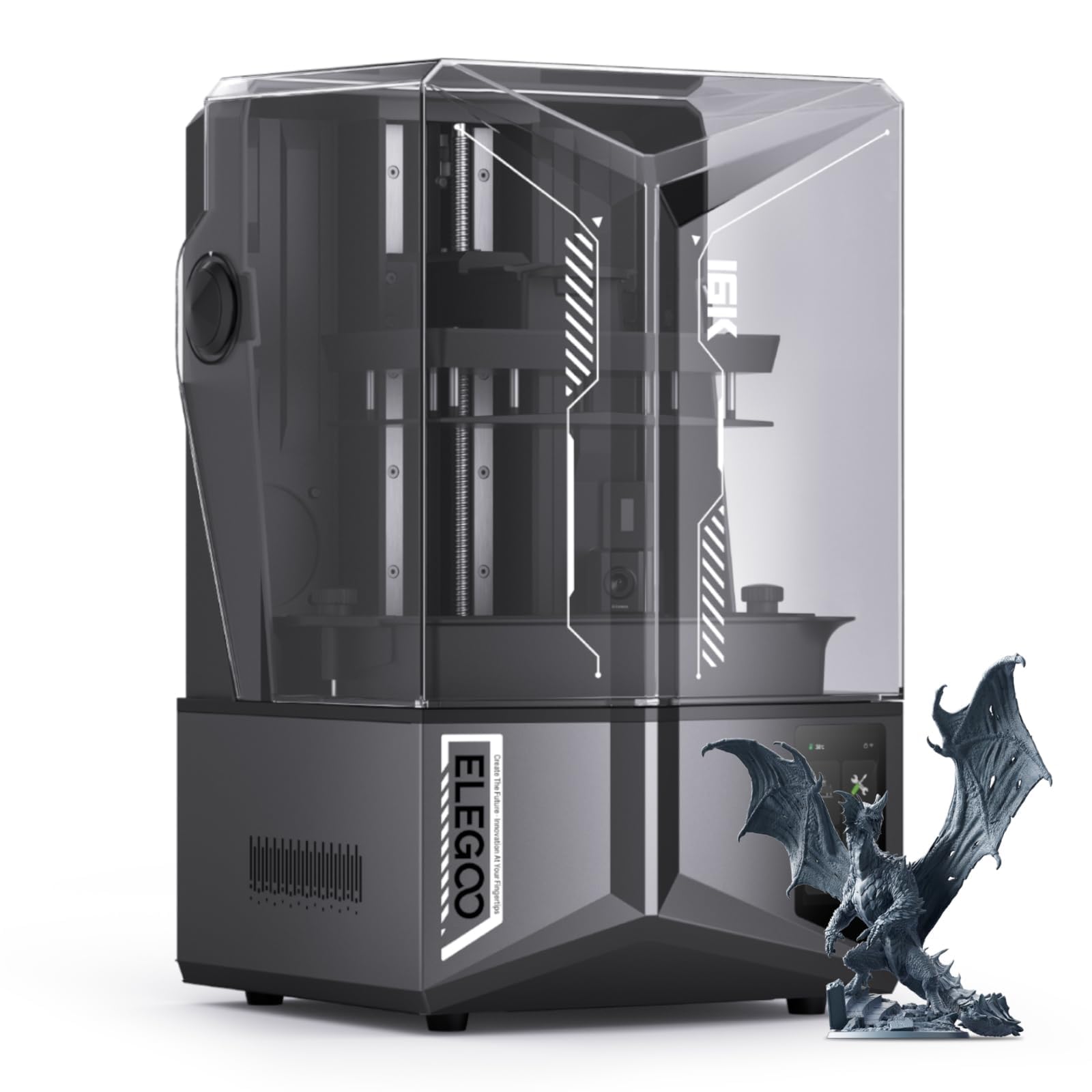
If your world revolves around miniature wargaming figures, jewelry molds, or highly detailed prototypes, the ELEGOO Saturn 4 Ultra 16K is the best resin printer in this price bracket. Its 10-inch 16K mono LCD delivers a pixel resolution that renders individual hairs and fabric textures visible to the naked eye—something no FDM printer can approach. The tilt release technology peels each layer from the FEP film without tearing, enabling print speeds up to 150 mm/h.
The smart tank heating system keeps the resin at a consistent 30°C, improving fluidity and reducing the need for bottom exposure calibration. Auto leveling is genuinely automatic—no manual screws or paper tests required. The integrated AI camera with a chamber light provides real-time monitoring and alerts for failed prints or empty build plates, though the detection accuracy varies depending on resin transparency and ambient light.
Resin printing comes with its own ecosystem: you must handle toxic liquid resin with gloves, wash prints in IPA, and post-cure them under UV light. The Saturn 4 Ultra makes this workflow as painless as possible with its flip-up lid, Wi-Fi file transfer, and intuitive touchscreen UI. For users who want functional, high-strength parts over visual detail, an FDM printer is a better fit; for everything else, this machine is unrivaled in its class.
Why it’s great
- 16K resolution produces unmatched surface detail and texture.
- Heated resin vat at 30°C improves fluidity and reduces defects.
- Auto leveling and tilt release make setup effortless.
Good to know
- Requires toxic resin handling, washing, and UV curing post-processing.
- AI detection results can be unreliable with translucent resins.
5. Bambu Lab A1 Combo + LED Lamp Kit
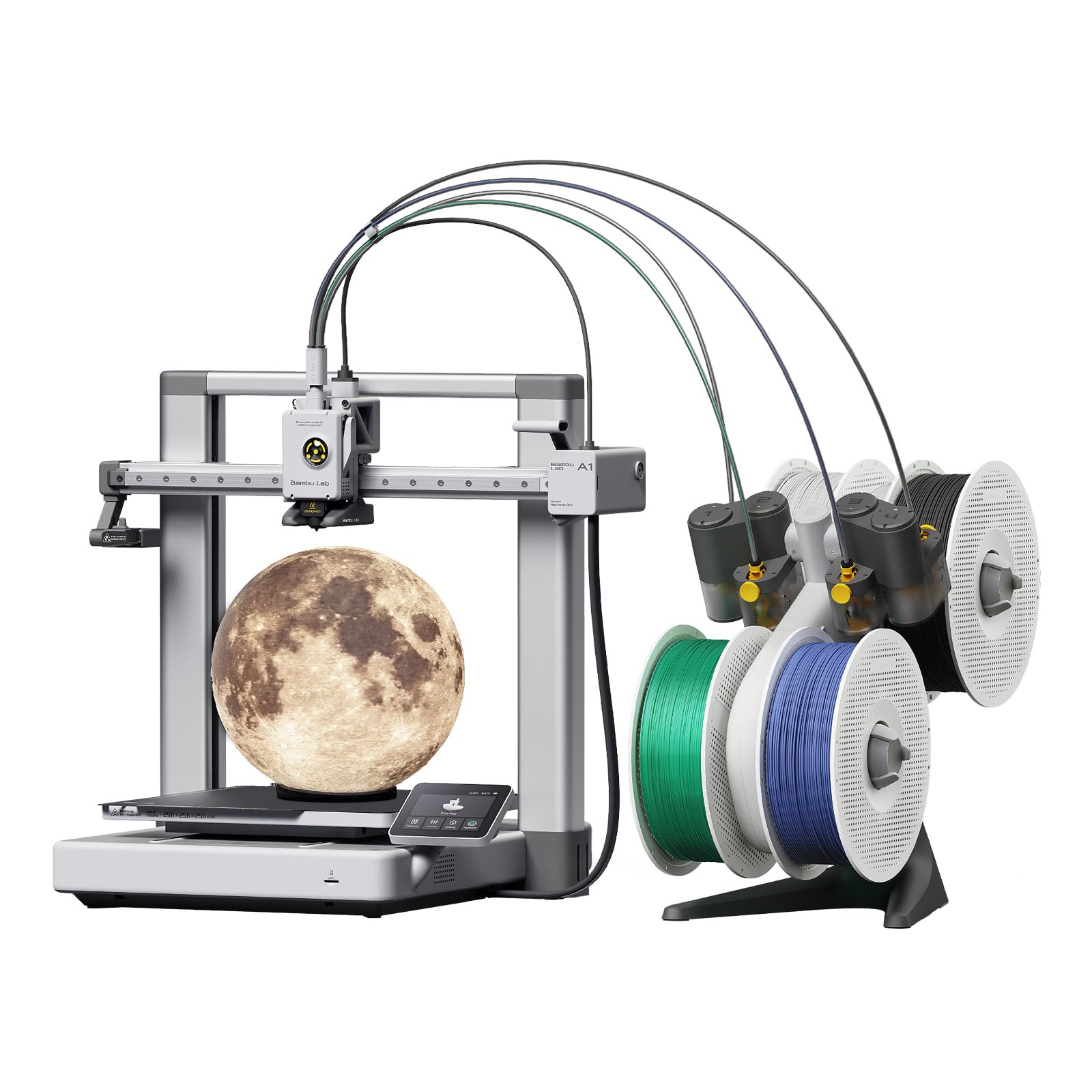
The Bambu Lab A1 Combo brings the same refined software and user experience as the P1S to a more accessible, open-frame design. With 10000 mm/s² acceleration and an active flow rate compensation algorithm, it delivers fast, smooth prints without the complexity of a CoreXY machine. The included AMS Lite supports up to four colors, and the bundle adds an LED Lamp Kit for illuminated decorative projects.
Full-auto calibration handles Z-offset, bed leveling, and vibration compensation without any manual input, which is a lifesaver for newcomers. The 1-Clip quick-swap nozzle makes hot-end changes take seconds. The quiet operation (≤48 dB) means you can run it in a shared space or bedroom without disturbance. The phone app with integrated camera and time-lapse is polished and genuinely useful.
The open-frame design means you are limited to PLA, PETG, and TPU—ABS and ASA will warp without an enclosure. The built-in camera resolution is lower than the P1S, and the AMS Lite does not include a dry box, so hygroscopic filaments need separate storage. For a beginner who wants multi-color right away and is primarily printing PLA, this is the smoothest entry point available.
Why it’s great
- Full-auto calibration removes all setup friction for newcomers.
- AMS Lite brings reliable multi-color to a budget-friendly platform.
- Ultra-quiet operation at 48 dB is ideal for home or office.
Good to know
- Open frame limits material compatibility to PLA/PETG/TPU.
- Only a few grams of sample filament included in the box.
6. Anycubic Kobra X Multicolor 3D Printer
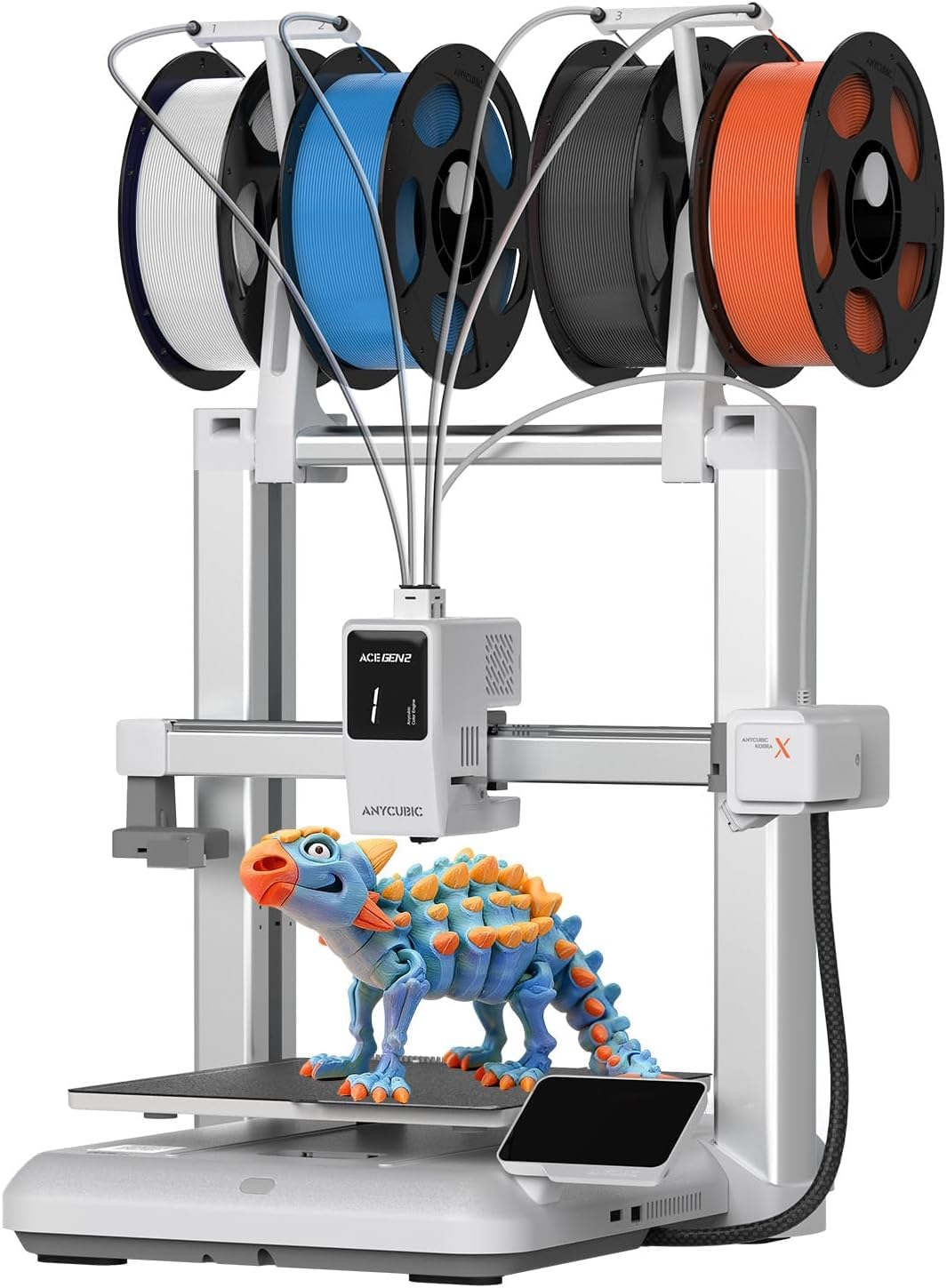
The Anycubic Kobra X is the most affordable way to get native multi-color printing without sacrificing speed. It comes with built-in support for four colors via the ACE 2 Pro system, and can expand to 19 colors with four units. The 600 mm/s print speed with vibration compensation means you are not waiting around, and the LeviQ 3.0 auto bed leveling uses 49-point calibration to ensure the first layer is perfect every time.
The hardened steel nozzle is rated to 300°C, supporting PLA, PETG, TPU, PVA, and ASA. The 260×260×260 mm build volume is standard for the bracket. The top-mount spool holder frees up desk space, and the AI camera with spaghetti detection, combined with dual-band Wi-Fi, makes remote monitoring practical. The bundled library of 10,000 models is a nice bonus for beginners looking for inspiration.
The price puts it in direct competition with the Bambu Lab A1 Combo, but the Kobra X offers a larger build volume and a higher max nozzle temperature for the same money. Some users report inconsistent adhesion with certain filaments, and the phone app is less polished than Bambu’s offering. However, if you prioritize multi-color capability at the lowest entry point, this is the machine to beat.
Why it’s great
- Most affordable native multi-color (4-color) 3D printer available.
- 600 mm/s speed with 49-point auto leveling for reliable first layers.
- Hardened 300°C nozzle covers a wide material range.
Good to know
- Phone app and cloud integration are less refined than competitors.
- Some users experienced adhesion issues with non-PLA filaments.
7. ELEGOO Centauri Carbon 3D Printer
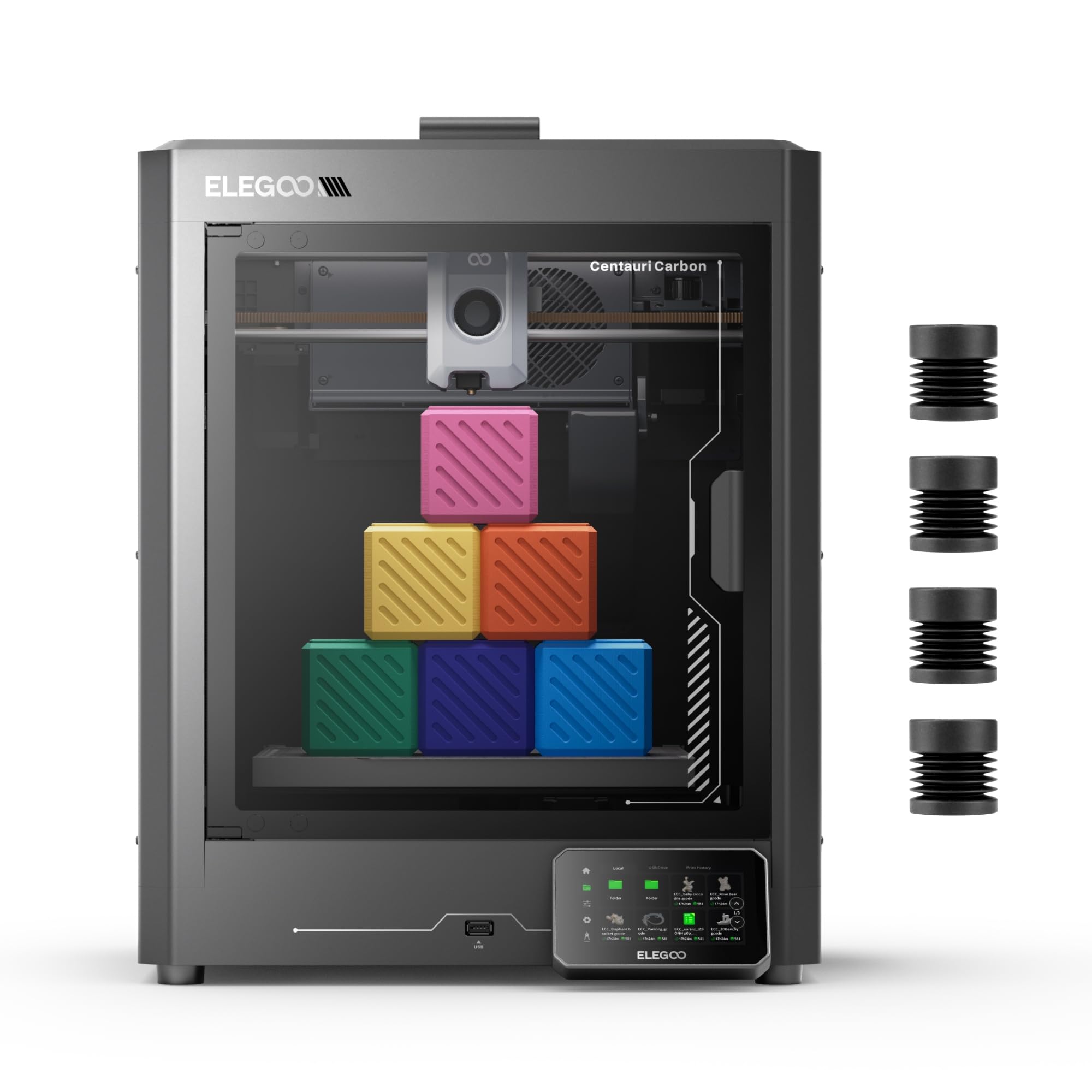
The ELEGOO Centauri Carbon is designed from the ground up to be the most frustration-free printer in its class. It arrives fully assembled and pre-calibrated—just unbox, load filament, and print. The automatic bed leveling and preset slicer profiles in ElegooSlicer produce excellent results on the first attempt, a claim few printers in this tier can honestly make.
The CoreXY architecture with a die-cast aluminum frame and vibration compensation delivers speeds up to 500 mm/s with 20000 mm/s² acceleration. The 320°C brass-hardened nozzle can handle carbon-fiber-reinforced filaments, and the enclosed chamber with enhanced cooling ensures strong layer adhesion for advanced materials. The built-in camera with dual LED lighting and USB-C connectivity adds a layer of convenience that belies its price point.
The primary trade-off is the small but active community compared to Bambu Lab or Creality. The slicer software is functional but lacks the polish of Bambu Studio. A few users have reported hotend communication errors on early units, though ELEGOO’s customer service has been responsive with replacement parts. For someone who just wants to print functional parts without any setup hassle, this is the strongest candidate.
Why it’s great
- Fully assembled and pre-calibrated out of the box.
- 320°C hardened nozzle handles carbon-fiber composites.
- Die-cast aluminum frame ensures stability at high speeds.
Good to know
- Early units had isolated hotend communication failures.
- Slicer software is less feature-rich than established alternatives.
8. FLASHFORGE Adventurer 5M 3D Printer

The FLASHFORGE Adventurer 5M is a compact, open-frame CoreXY printer that punches above its weight in speed and reliability. With a maximum speed of 600 mm/s and a high-flow hotend (32 mm³/s), it can turn out large prints in a fraction of the time of older bed-slingers. The one-click auto leveling ensures a perfect first layer even for beginners, and the vibration compensation algorithm eliminates ghosting cleanly.
The dual-sided PEI steel plate offers excellent adhesion for PLA, PETG, and TPU out of the box, and a 0.6 mm nozzle swap unlocks PLA-CF and PETG-CF. The 50W heater brings the nozzle to 200°C in just 35 seconds, reducing warm-up time significantly. The filament run-out sensor and power-loss recovery provide peace of mind for long prints. The all-metal frame and small footprint (14.3×15.8×17.6 inches) make it easy to place on a desk or shelf.
The 220×220×220 mm build volume is the smallest on this list, so it is not suitable for large cosplay parts or helmets. The open design means it requires a well-ventilated area for printing ABS or ASA, which it technically supports. The touchscreen interface is responsive, though some users report it can be dim in bright rooms. As a dedicated single-color workhorse for the desk, it is hard to beat at this price.
Why it’s great
- Very fast 600 mm/s speed with excellent vibration compensation.
- Compact footprint and all-metal construction for stability.
- Quick-setup with reliable first-layer auto-leveling.
Good to know
- Small 220 mm³ build volume limits large projects.
- Open frame requires a ventilated space for high-temp materials.
9. Longer LK5 Pro 3 3D Printer

The Longer LK5 Pro 3 is the print-volume king in the budget segment, offering a massive 300×300×400 mm build area that is rare in the sub- bracket. The stable triangular frame with reinforced rods minimizes resonance even during high-speed (180 mm/s) printing, and the 0.1 mm precision is respectable for large functional parts like cosplay helmets, brackets, and storage organizers.
It comes 95% pre-assembled, with a 32-bit motherboard featuring TMC2209 ultra-quiet drivers, which reduce motor whine significantly. The silicon carbide lattice glass platform provides uniform heat distribution and strong adhesion, though the manual bed leveling system is dated compared to the auto-leveling machines on this list. The upgraded dual fans provide rapid cooling for sharp overhangs, and the Teflon-lined hotend can reach 250°C, covering PLA, PETG, ABS, and TPU.
The open-source firmware is a double-edged sword: advanced users can tweak G-code and upgrade to BLTouch auto-leveling, but the process is complex and risks bricking the board. Some units ship with a slightly warped bed, which makes manual leveling even more frustrating. For the beginner who wants a massive build volume and is willing to tinker, the LK5 Pro 3 offers incredible value, but impatient users should save up for a pre-calibrated CoreXY machine.
Why it’s great
- Massive 300×300×400 mm build volume at an entry-level price.
- Ultra-quiet TMC2209 drivers and open-source firmware for customization.
- Sturdy triangular frame reduces vibration artifacts.
Good to know
- Manual bed leveling requires patience and frequent re-calibration.
- BLTouch upgrade is complex and risks damaging the motherboard.
FAQ
Can a CoreXY 3D printer at really print faster than a bed-slinger at ?
Is multi-color printing under $1000 reliable for daily use?
Which filament gives the strongest functional parts at this price level?
Final Thoughts: The Verdict
For most users, the 3d printer under $1000 winner is the Bambu Lab P1S because it combines class-leading speed, a reliable enclosed chamber for advanced materials, and a refined software ecosystem that minimizes tinkering. If you want to print carbon-fiber composites and engineering plastics at the highest quality, grab the QIDI Q2 with its 370°C nozzle and active chamber heating. And for multi-color printing without post-processing pain, nothing beats the Creality K2 Combo at this price.