
Our readers keep the lights on and my morning glass full of iced black tea. As an Amazon Associate, I earn from qualifying purchases.
Specs are compiled from manufacturer listings and verified buyer reviews and can change over time — please confirm the key details on the product page before buying.
The worst part of a perfect print is prying, sanding, and cursing at the support material underneath. That struggle defines whether a complex model ends up on your shelf or in the trash. The right support filament makes the difference between a clean, ready-to-finish part and a ruined surface, so getting the choice right from the start saves hours of post-processing.
I’m Min — the founder and writer behind Gadgets Feed. This guide is built by comparing the manufacturers’ published specifications and the patterns across verified customer reviews, so you get each pick’s real strengths and trade-offs instead of marketing spin.
You want supports that come off cleanly without ruining your model. The best 3d printing support material for you depends on matching the right chemistry — dissolving or breakaway — to your specific model and printer setup, whether you print with ABS, PLA, or PETG.
Our Picks at a Glance


How To Choose The Best 3D Printing Support Material
Support filament lives in the gap between your model and the build plate, filling overhangs and bridging gaps so the main material has something to rest on. The best choice depends on what plastic you print with, whether your machine has two print heads, and how much post-processing work you are willing to do. Three decisions matter most: dissolvable versus breakaway, temperature range match, and moisture sensitivity.
Dissolvable vs. Breakaway: Cleaning up your print
Dissolvable filaments like PVA (polyvinyl alcohol) and HIPS (high-impact polystyrene) disappear in a solvent — water for PVA, d-Limonene for HIPS — leaving zero tool marks. Breakaway materials, like PolySupport, peel off mechanically by hand. Dissolvable supports win for internal cavities, narrow channels, and delicate geometry where prying would snap the model. Breakaway supports are faster for boxy shapes and architectural models where you can reach the interface.
Print temperature compatibility between support and model
If the support and the model material print at very different nozzle temperatures, you risk oozing, poor adhesion, or failed layer bonding. PVA (a water-soluble plastic) typically runs cool (160-200°C), making it a natural partner for PLA (190-220°C). HIPS (high-impact polystyrene) prints hot (230-240°C) and matches ABS almost perfectly. Breakaway PLA supports print in the same range as standard PLA, so they co-extrude smoothly on single-nozzle machines.
Moisture: the silent killer of support filament
PVA is hygroscopic — it pulls water from the air, turning brittle and causing popping steam bubbles during printing. Every PVA review here mentions drying requirements. HIPS is far more moisture-resistant and prints reliably straight from the spool. If your workshop has high humidity or you lack a filament dryer, a breakaway material or HIPS will save you constant drying cycles.
Quick Comparison
| Model | Best For | Material | Spool Weight | Dimensional Tolerance | Amazon |
|---|---|---|---|---|---|
| Gizmo Dorks HIPS★ Best Overall | ABS dual-extrusion | HIPS | 1 kg | ±0.02 mm | Amazon |
| SainSmart PVABest Value | PLA/PLA+ supports | PVA | 0.5 kg | ±0.05 mm | Amazon |
| Polymaker PolySupportTop Performer | Hand-removable supports | PLA Break Away | 0.75 kg | — | Amazon |
| TRONXY PVA (B07RYSSVC3) | Budget-friendly PVA | PVA | 0.5 kg | ±0.02 mm | Amazon |
| TRONXY PVA (B0F2F8PSFC) | Value PVA multi-material | PVA | 0.5 kg | ±0.02 mm | Amazon |
| eSUN PVA | Consistent PVA quality | PVA | 0.5 kg | — | Amazon |
| Fused Materials PVA | Versatile PVA compatibility | PVA | 0.5 kg | — | Amazon |
| SUNLU PVA | Large 1kg PVA spool | PVA | 1 kg | ±0.03 mm | Amazon |
| Polymaker PolyDissolve S1 | Premium PVA for PLA/TPU | PVA | 0.75 kg | — | Amazon |
In‑Depth Reviews
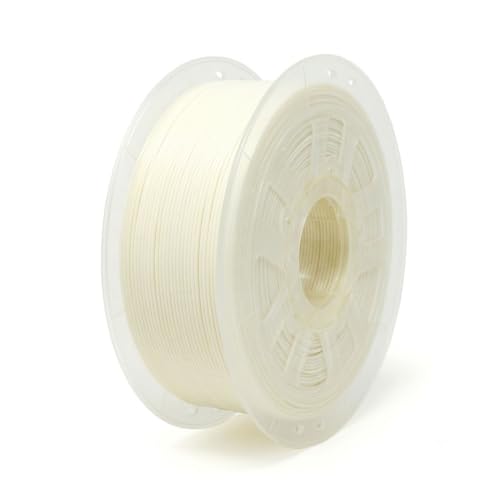
1. Gizmo Dorks 1.75mm HIPS 3D Printer Filament 1kg Spool White
Our pick — over 4★ from 300+ verified ratings; the strongest balance of quality and price.
The ABS lover’s dream support that breaks clean without a solvent bath.
This HIPS (high-impact polystyrene) filament is the standard for dual-extrusion builds alongside ABS. At 1 kg (2.2 lb), it is a standard spool size; most PVA spools in this guide are 0.5 kg (1.1 lb) — and the kind of value that keeps serious makers coming back. Buyers report it as “great for dual-extrusion support with ABS; breaks away easily, no solvent needed,” which means you can skip the d-Limonene bath for simple overhangs and save the chemical soak for complex internal cavities.
The tight diameter tolerance of ±0.02 mm prevents clogs and under-extrusion across popular 1.75 mm FDM printers from Bambu Lab to Creality and Prusa. HIPS also resists moisture far better than PVA, so you can leave the spool on the machine without a dryer. The trade-off is adhesion: the crowd notes that HIPS needs a PEI textured surface or a PLA base layer to stay put, and tall walls can warp. But for pure toughness, lightweight structure, and the ability to sand, drill, and paint the material itself, this is the pick that balances print quality with easy post-processing.
What wins people over is the print quality — the filament lays down consistent, bright layers with no stringing. The most-discussed challenge is bed adhesion, which is solved with a textured sheet or a thin PLA raft. Skip this if you print mainly PLA and want a fully water-soluble support, because HIPS requires d-Limonene to dissolve.
Best for ABS printers: Easy breakaway for most models, d-Limonene dissolvable for intricate interiors, full 1 kg spool at a price that undercuts premium PVA options.
Who should pass: PLA-only users who want room-temperature water solubility — reach for one of the PVA picks below.
Reach for this if… you print ABS and want a support that either snaps off or dissolves in solvent, giving you the best of both worlds.
Look elsewhere if… you need a water-dissolvable support for PLA — HIPS needs d-Limonene, not water.
2. SainSmart 1.75mm PVA Dissolvable 3D Printers Filament – 0.5 kg (Natural)
The PVA that vanishes in under 30 seconds of warm water.
SainSmart’s PVA is a specialized weapon for PLA Pro and PLA+ users who need supports to dissolve instantly. Owners mention it “dissolves in warm water less than 30 seconds” and peels off 99% of the time without tools. This makes it the fastest-cleaning dissolvable support on the list — no overnight soak, no scrubbing.
The catch is compatibility: this PVA does not stick to standard PLA. It works only with PLA Pro and PLA+, so you must match it to the right model material. The recommended nozzle temperature is 160-180°C, and the 0.5 kg spool (17.6 oz) is half the weight of Gizmo Dorks’ HIPS — a noticeable difference if you print large supports frequently. It also requires a glue stick on the bed for adhesion and oozes more than standard filaments, so using a prime tower or ooze shield is advised by experienced users.
The broadest feedback is that compatibility is mixed — some owners get great prints, others find it won’t stick to their PLA brand. This PVA makes sense if you already use PLA Pro or PLA+ and want the fastest dissolution possible. skip it if you print with generic PLA or want a support that works across many materials.
Dissolves Fast
- Dissolves in warm water in under 30 seconds
- Peels off 99% of support material by hand
Compatibility Limitation
- Does not stick to standard PLA — requires PLA Pro or PLA+
- Needs glue stick for bed adhesion and a prime tower to manage ooze
The fast-track pick for PLA Pro users: This support dissolves faster than any other PVA on the market, but it only works if you pair it with the right base material — PLA Pro specifically.
pass on it if: you print with generic PLA or want a one-spool-fits-all support filament.
3. Polymaker Break Away Support Material for 1.75mm PLA Filament 0.75 kg
Hand-removable support that goes where dissolvable filaments cannot.
Polymaker’s PolySupport is a breakaway filament designed for models where dissolving is overkill — geometric boxes, architectural models, and brackets. It prints at standard PLA temperatures (220-230°C nozzle, 25-60°C bed) and peels off by hand without solvents or water baths. The 0.75 kg spool is lighter than a full 1 kg of HIPS, but the material lasts because you only run it on the support interface layers (2-3 layers thick), not the entire support structure.
Owners note “the break away material needs a little effort to breakaway sometimes,” so the separation is not always easy — especially on dense supports. The finish is better than standard PLA supports, requiring less sanding, but some picking is still necessary. The packaging switch to a fully recycled cardboard spool is a welcome eco-move, though a few users find the cardboard less rigid than plastic in automated material systems.
This is the right pick if you want a single-material workflow (no second hotend needed for dissolvable filament) and your models have accessible support interfaces. it’s not for you if you need to clear deep internal channels where no tool can reach — that scenario calls for a fully dissolvable PVA or HIPS.
No solvents, no water: Mechanical removal keeps your workspace chemical-free, ideal for schools and offices.
Not for tight interiors: Prying tools cannot reach narrow channels — choose a dissolvable material for those prints.
Reach for this if… you want a clean, solvent-free support that snaps off by hand and works on a single-extruder printer.
Look elsewhere if… your models have deep internal cavities that only water or solvent can reach.
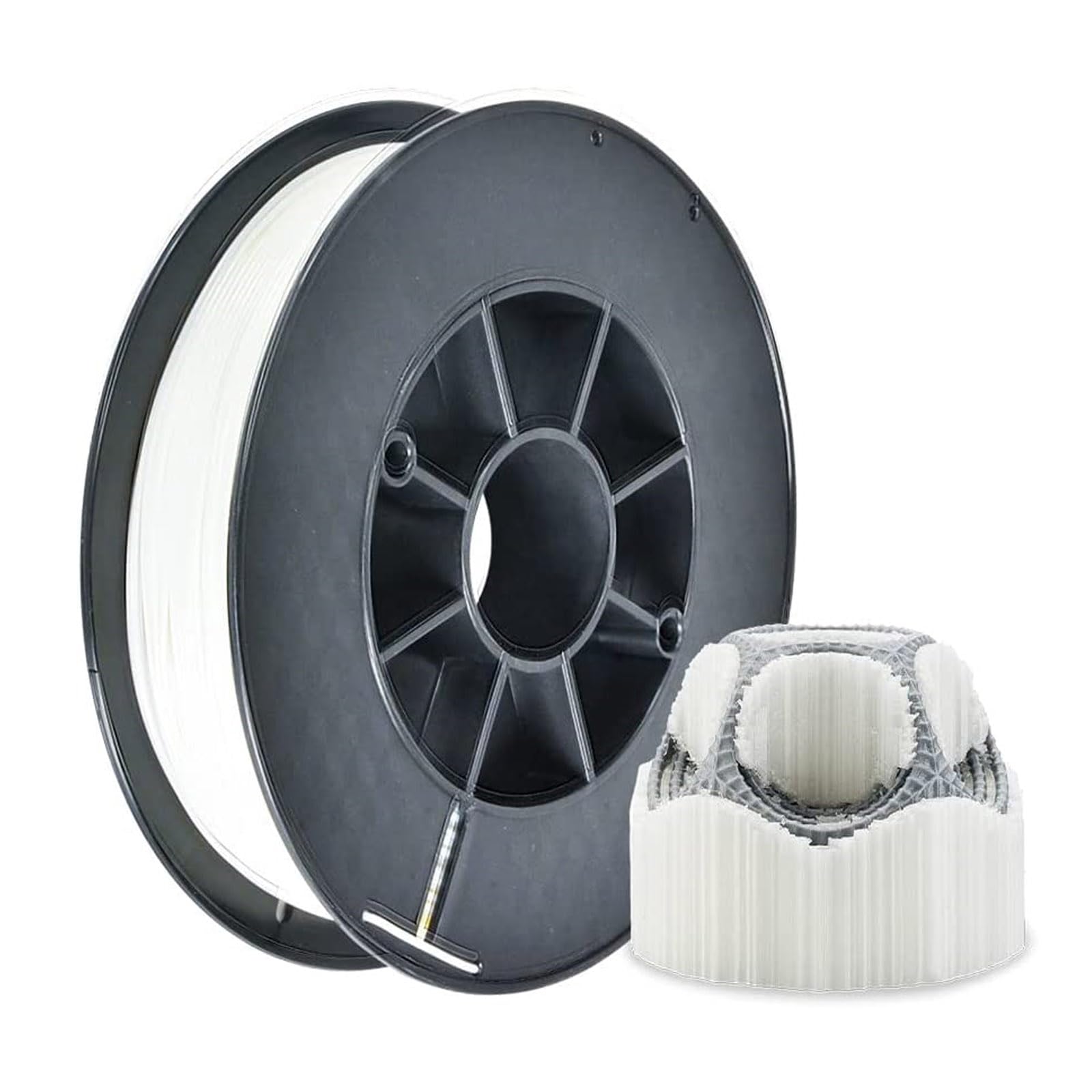
4. TRONXY PVA Filament 1.75mm 0.5 kg (B07RYSSVC3)
The budget PVA that softens in warm water rather than fully dissolving.
TRONXY’s PVA works differently than most dissolvable filaments: it does not dissolve completely at room temperature. Instead, it softens at 55-60°C, allowing you to peel support layers off by hand without damaging the printed surface. This approach saves you from waiting hours for a full dissolve, though you do need access to warm water and a bit of manual work. The spool is 0.5 kg (1.1 lb) with a tight ±0.02 mm diameter tolerance.
The print quality earns praise — 68 owners highlight it as a positive. But quality overall is mixed: some call it the worst PVA they have used, pointing to brittleness right out of the bag. The manufacturer warns that the filament absorbs moisture quickly; you must reseal the vacuum bag promptly or the filament becomes brittle and jams. The recommended print speed is under 30 mm/s to avoid plugging, which slows down larger prints.
This is a solid entry-level PVA if you understand the trade-off: warm water softens the support, but it won’t disappear. The crowd favorite is the translucent orange variant for its vibrant color. Skip this if you want a true water-dissolvable PVA that vanishes without manual peeling.
Budget-friendly PVA: Softens in warm water for easy hand removal, no harsh chemicals needed.
The honest catch: Not a full dissolve — you still peel layers off by hand, and the filament needs prompt resealing to stay printable.
Best for: Printers who want a cheap PVA for simple supports that can be peeled off after a warm water soak.
Not for: Users who expect a filament that fully dissolves in room-temperature water without manual removal.
5. TRONXY PVA Filament 1.75mm 0.5 kg Clear (B0F2F8PSFC)

The same warm-water PVA with broader material compatibility.
This second TRONXY PVA variant shares the same softening mechanism (55-60°C water makes the support peel away) but extends compatibility to PLA, TPU, and PETG. The 0.5 kg spool (17.64 oz) has the same ±0.02 mm tolerance and print speed limit under 30 mm/s. Where the earlier TRONXY PVA focuses on PLA, this clear filament aims at multi-material users who switch between flexible TPU and rigid PETG.
Quality and print quality both get strong marks from owners, and the value-for-money rating sits high. The most common note is that the filament performs well on newer printers but can struggle with adhesion on older, pickier machines. The clear, transparent finish also shines more than standard PLA, making it a nice visual bonus if the support is visible during printing.
The key limitation is the same as its sibling: this PVA softens rather than dissolves. You peel the support off after a warm bath. If you want a support that works across TPU and PETG without switching filaments, this is a versatile entry-level option. look elsewhere if you want complete dissolution in plain water.
Multi-material helper: Bonding to PLA, TPU, and PETG makes this a one-spool solution for mixed-material printers.
The limit: Requires 55-60°C water and manual peeling — not a true dissolve.
Reach for this if… you print across PLA, TPU, and PETG and want a single PVA that handles all three.
Look elsewhere if… you want instant, full dissolution in room-temperature water.
6. eSUN Water Soluble PVA Filament 1.75mm 0.5 kg

The consistent PVA that experienced users trust after drying.
eSUN’s PVA earns respect from makers who know how to handle hygroscopic filaments. The key step is drying the spool for 24 hours and using a drying unit during the print. Once dried, it prints reliably at 210°C and dissolves in warm water in about an hour — faster with agitation. The 0.5 kg spool (17.63 oz) is designed for IDEX (independent dual extruder) systems, where one nozzle prints PLA at 220°C while the other runs this PVA at 210°C.
The filament is not compatible with Bambu Lab’s AMS system due to the plastic spool width, which loses it two stars from some owners. For open-frame dual-extruder printers, though, the material quality is excellent. The vacuum-sealed bag with desiccant helps keep the filament dry until first use, but after opening, the clock starts ticking on moisture absorption.
This is the pick for makers who own a filament dryer and want a reliable, brand-name PVA. steer clear if you use a Bambu Lab AMS or prefer a support that does not require pre-drying.
Reliable after drying: Experienced users praise its consistent printing and clean dissolution in warm water.
AMS users beware: The spool does not fit Bambu Lab AMS systems, and the filament must be dried before every long print.
Best for: Makers with a filament dryer and a dual-extruder printer who want a proven PVA brand.
Not for: Bambu Lab AMS owners or anyone looking for a skip-the-drying support solution.
7. Fused Materials PVA Filament 1.75mm – Water-Soluble Support 0.5 kg

Professional-grade PVA with stronger toughness and CE certification.
Fused Materials positions this PVA as a professional-grade filament with better dissolvability and toughness than generic alternatives. It is ROHS and CE certified, which matters for workshops that need compliance documentation. The 0.5 kg spool (1.1 lb) is vacuum-sealed in a resealable mylar pouch, so you can store leftovers without a separate container.
Compatibility earns the top praise from owners — it works with most common materials such as PLA and adheres well to painter’s tape and most PLA brands. However, adhesion is mixed: some customers note that it does not stick well unless the brand of PLA matches the support. The brittleness straight from the start is the most common negative aspect, with several users noting that the filament snaps with minimal bending. Drying in a heated chamber for hours solves the brittleness, turning the material soft and usable.
This is a good mid-range PVA for makers who appreciate the resealable pouch and certification confidence, but you must budget time for drying. If you want to print straight from the package without pre-drying, this filament is not for you.
Certified and consistent: ROHS and CE approval plus a resealable pouch make this ideal for professional and educational use.
Plan for drying: Brittle on arrival — expect a multi-hour dry session before the first successful print.
Reach for this if… you need certified materials and already have a drying routine for PVA.
Look elsewhere if… you want a PVA that prints reliably without an extra drying step.
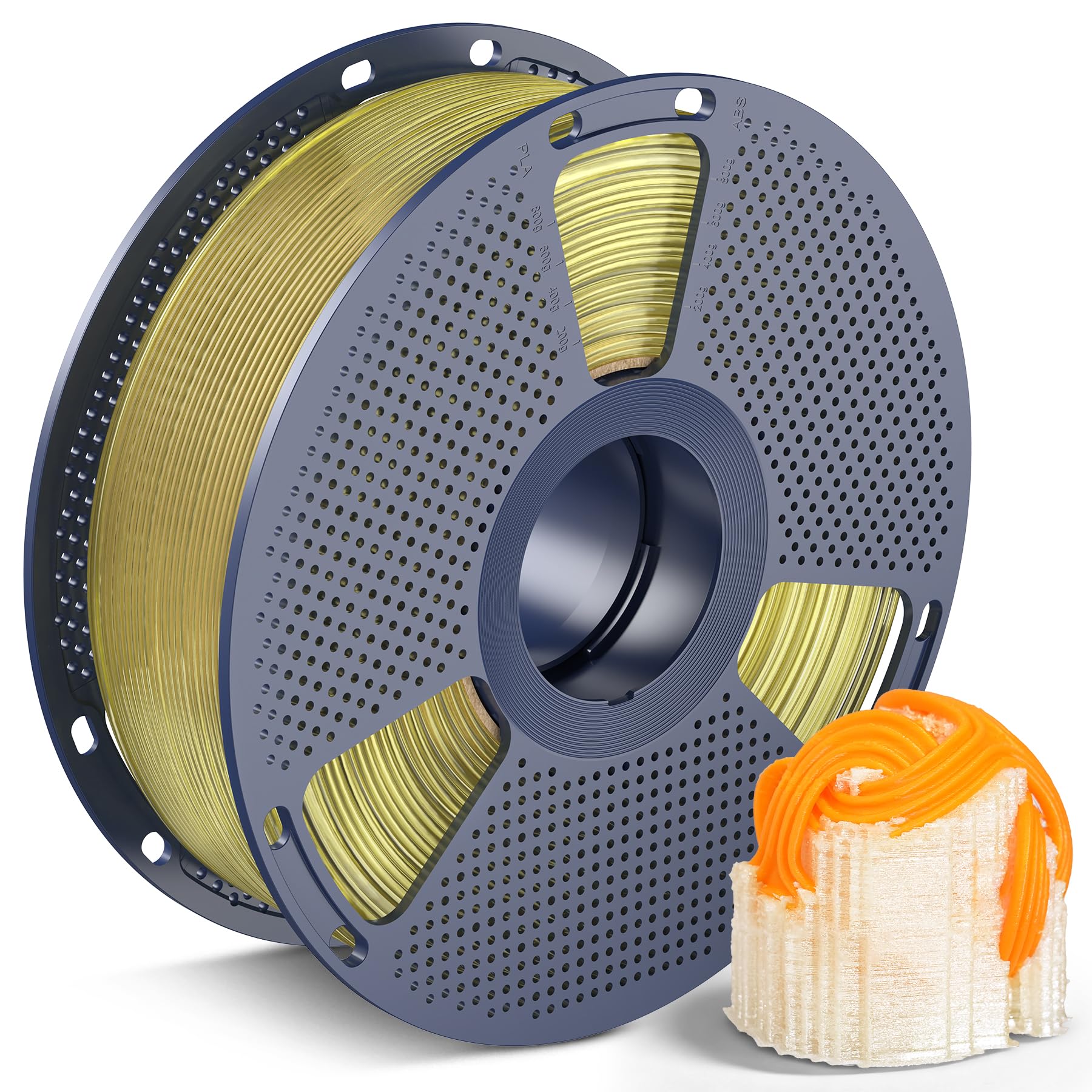
8. SUNLU PVA Filament 1 kg, 1.75mm Water Soluble Support
A full kilogram of PVA for heavy support users.
SUNLU offers the only full 1 kg PVA spool in this roundup — it offers 1 kg of material versus the typical 0.5 kg or 0.75 kg spools. The filament carries a ±0.03 mm diameter tolerance and is advertised as compatible with PLA, PETG, TPU, ABS, ASA, and Nylon. The spool dimensions (203.2 mm diameter, 63.5 mm width, 55.88 mm hub hole) fit Bambu Lab H2D and X1 series printers, giving AMS users a PVA option that the eSUN spool lacks.
Performance is polarizing. Some reviewers point out great results with easy support removal, calling it “great filament” and “prints reliably.” Others describe long strings of failed prints — poor adhesion to PLA, curling at the nozzle, and spaghetti failures even after 16-hour drying cycles. The recommended settings (nozzle 200-230°C, print speed 50-200 mm/s) are unusually wide, reflecting inconsistent behavior across different printers.
This spool makes sense if you burn through PVA quickly and want the volume without switching spools mid-project. The high failure rate reported by a minority of owners means you should budget for trial-and-error tuning.
Maximum PVA volume: 1 kg of material at a price that beats buying two 0.5 kg spools.
Inconsistent quality: A significant number of shoppers say adhesion failure and clogging despite careful drying.
Best for: Volume users who need a full kilo of PVA and have a Bambu Lab printer with AMS.
Not for: Beginners or anyone who needs a predictable, set-and-forget support material.
9. Polymaker PolyDissolve S1 PVA Filament, 1.75mm, 750 g

AMS-friendly PVA with the quality that Polymaker is known for.
Polymaker’s PolyDissolve S1 fills the premium PVA slot for users who want reliable dissolution and smooth AMS feeding. The 750 g spool (26.46 oz) sits between the 1 kg and 0.5 kg spool sizes, and owners confirm it feeds without tangles, jams, or snapping. The recommended print speed (30-40 mm/s) is slower than SUNLU’s range, but the trade-off is consistent layer bonding and clean dissolution in water after several hours.
The material is designed for PLA, TPU, PVB, and Nylon — a wider range than most PVA options that list only PLA. The nozzle temperature (215-225°C) sits higher than typical PVA ranges, which makes it a better thermal match for PLA+ and high-temperature PLA. The packaging uses Polymaker’s fully recycled cardboard spool in upgraded 3.0 packaging.
The reliability score is mixed: quality is excellent, but adhesion issues and bubbles appear in some prints, especially if the filament has absorbed moisture. Owners emphasize that a filament drier is non-negotiable, even in dry climates. This is the right pick if you want a premium, AMS-friendly PVA that works across multiple materials and you already have a drying routine.
AMS-ready premium: Smooth feeding through Bambu Lab AMS with consistent diameter and no tangles.
Drying is mandatory: Even dry-climate users report jams and breakage without a filament drier running during the print.
Reach for this if… you have a multi-material setup with AMS and want a premium PVA that delivers clean results after drying.
Look elsewhere if… you are not prepared to use a filament drier for the entire print cycle.
Understanding the Specs
Dimensional Tolerance (±X mm)
The variation in the filament’s diameter along its length. A tighter tolerance, such as ±0.02 mm, means the filament width stays nearly identical from start to finish. This prevents the extruder from jamming, reduces under-extrusion gaps, and delivers consistent layer adhesion. Wider tolerances of ±0.05 mm can cause periodic clogs or uneven flow on printers with tight-grip extruders.
Spool Weight (kg / g)
The total mass of material on the spool, not including the spool itself. A 1 kg spool holds 35.27 oz, while a 0.5 kg spool holds 17.6 oz. Larger spools mean fewer changeovers during long prints but require more dry storage space and are heavier for the printer’s spool holder to support.
Nozzle Temperature Range (°C)
The hotend temperature setting where the support filament melts and bonds correctly. PVA generally runs between 160-200°C, while HIPS and breakaway PLA need 220-240°C. Mismatching the support temperature to your model material causes oozing, poor layer fusion, or the support to peel off during the print. Check that your support and model temperatures overlap within 10-15°C.
Dissolution Method
How the support material is removed after printing. PVA dissolves in water (some at room temperature, others need 55-60°C water to soften). HIPS dissolves in d-Limonene, a citrus-based solvent. Breakaway PLA removes by hand with no liquid. Water dissolution is non-toxic and safe for home use, but takes hours. Solvent removal is faster but requires handling chemicals. Hand removal is instant but cannot reach internal cavities.
FAQ
Can I use PVA support with an ABS print?
Does HIPS dissolve in water like PVA?
How long does PVA take to dissolve in water?
Can I print breakaway supports on a single-extruder printer?
How do I prevent PVA from absorbing moisture during storage?
What is the difference between PVA and HIPS for support material?
Can I use supports with a 0.5 kg spool for a full-plate print?
Do I need a dual-extruder printer for dissolvable supports?
What printer settings should I start with for PVA?
Is breakaway support better than dissolvable support?
Final Thoughts: The Verdict
Across the board, the 3d printing support material winner is the Gizmo Dorks HIPS because it combines a full 1 kg spool at a budget-friendly price with the flexibility of both breakaway and dissolvable removal. If you want the fastest dissolving support for PLA Pro, grab the SainSmart PVA. And for a premium, AMS-friendly PVA that works across multiple materials, the Polymaker PolyDissolve S1 is the one to reach for.
How We Picked
We do not accept paid placement. Every pick is matched to a real buyer and a real use-case; we do not hands-on test units.
Sources & Methodology
Specifications: manufacturer listings and product documentation. Review insights: verified customer reviews, as of July 2026. Pricing: not shown on this page (it changes often); check the current price via the retailer link.
As an Amazon Associate, Gadgets Feed earns from qualifying purchases. This does not affect which products we feature.