
True 3D at home is not dead—it has simply evolved beyond the passive polarized sets that once lined retail shelves. Today, a 3D TV with glasses means either a pair of smart AR/XR glasses that project a massive virtual screen with stereoscopic depth, or a high-end projector system paired with active shutter or polarized eyewear that delivers genuine left-eye/right-eye separation. The technology is more mature and immersive than ever, but choosing the right setup requires understanding the distinction between wearable displays and full projection environments.
I’m Min — the co-founder and writer behind Gadgets Feed. I have spent hundreds of hours analyzing the optical engines, refresh rates, field-of-view measurements, and 3D frame-sequential or side-by-side encoding methods that define this niche category, separating genuine stereoscopic performance from marketing claims.
Whether you want a portable screen that turns every commute into a private IMAX or a dedicated home theater rig that fills an entire wall with dimensional depth, this guide will help you find the best 3d tv with glasses that matches your lifestyle and budget.
How To Choose The Best 3D TV With Glasses
Selecting the right 3D system starts with deciding between two fundamentally different delivery methods: wearable AR glasses that place a stereoscopic screen directly in front of your eyes, or a full-size laser/QLED TV or projector that uses active shutter glasses to create depth on a large wall or screen. Each path has distinct trade-offs in portability, immersion, and comfort for long viewing sessions.
Wearable AR Glasses vs. Projector-Based 3D Systems
Wearable AR glasses like the XREAL and VITURE models use micro-OLED panels to display a discrete left and right image, creating stereoscopic 3D without needing a dark room or bulky hardware. They are ideal for travel, gaming on handheld consoles, and private viewing. Projector-based systems, such as the Dangbei MP1 MAX and AWOL VISION LTV-3000 Pro, require active shutter glasses and a dedicated screen or wall, but deliver a true theater-scale experience with deeper contrast and room-filling sound. The choice hinges on whether mobility or screen size matters more to your use case.
Refresh Rate and Latency Matter for Comfort
3D content demands a display that can refresh fast enough to alternate left and right frames without visible flicker or motion artifacts. A 120Hz panel is the baseline for comfortable 3D—it allows each eye to receive 60 frames per second, which is the minimum for fluid perception. Models that push to 120Hz in 3D mode or offer motion-to-photon latency under 5ms (like the XREAL series with their X1 chip) reduce eye strain significantly during action-heavy scenes or gaming.
Field of View and Screen Size Equivalents
In wearables, field of view (FOV) directly dictates how large the virtual screen feels. A 52° FOV approximates a 150–160 inch screen from a few meters away, while a 57° FOV pushes that to a 171 inch equivalent. For projectors, the throw ratio and brightness in lumens determine how large you can project while maintaining a convincing 3D effect—look for at least 2400 lumens for a 120 inch screen in a moderately lit room.
Quick Comparison
On smaller screens, swipe sideways to see the full table.
| Model | Category | Best For | Key Spec | Amazon |
|---|---|---|---|---|
| XREAL One Pro | Wearable AR | Best Overall 3D Immersion | 57° FOV, 120Hz, 6DoF | Amazon |
| VITURE Luma Pro | Wearable AR | Razer-sharp 1200p Display | 52° FOV, 1200p, 2D-to-3D | Amazon |
| XREAL 1S | Wearable AR | Native 3DoF 3D | 52° FOV, REAL 3D, Bose | Amazon |
| TOZO VIZO Z1 Pro | Wearable AR | Budget Wearable 3D | 47.5° FOV, 120Hz OLED | Amazon |
| NexiGo Aurora Pro | UST Projector | Premium UST 3D Theater | 2400 lumens, Active 3D | Amazon |
| AWOL VISION LTV-3000 Pro | UST Projector | Triple Laser 3D Setup | 2000 lumens, Dolby Vision | Amazon |
| JMGO N1S Ultimate | Laser Projector | Daylight-Bright 3D | 3300 lumens, Blu-ray 3D | Amazon |
| Dangbei MP1 MAX | Laser Projector | Mid-Range Home Theater 3D | 3100 lumens, Blu-ray 3D | Amazon |
| TCL 55″ QM7K | QLED TV | Bright-Living-Room 3D | Mini LED, 144Hz panel | Amazon |
| Sony 77″ BRAVIA XR8B | OLED TV | Reference OLED 3D TV | OLED, XR Processor, 120Hz | Amazon |
| Samsung 98″ DU9000 | UHD LED TV | Supersize 98″ 3D Screen | 120Hz, PurColor | Amazon |
In‑Depth Reviews
1. XREAL One Pro AR Glasses

The XREAL One Pro earns the top spot thanks to its best-in-class 57° field of view, which translates to a 171-inch virtual screen that genuinely fills your peripheral vision. Powered by the self-developed X1 spatial computing chip, it delivers native 3DoF tracking with just 3ms motion-to-photon latency at 120Hz—eliminating the nausea-inducing lag that plagues lesser wearables. The REAL 3D mode converts any content into stereoscopic depth with a single switch, and the optional XREAL Eye unlocks full 6DoF spatial anchoring for total immersion.
The dual IPD design (M: 57–66mm, L: 66–75mm) covers more than 95% of users, and the Bose-tuned audio provides surprisingly robust open-ear sound. The 0.55-inch Sony Micro-OLED panels deliver crisp 1080p per eye, and the electrochromic dimming lets you instantly block out ambient light for uninterrupted viewing. The built-in controls for brightness, display mode, and screen distance mean you never need to reach for a phone mid-session.
Some users report minor light leakage around the nose bridge in low-light environments, and the prescription lens frame costs extra if you need corrective optics. A 5/5 from a verified buyer described it as “the best AR glasses on the market,” while a 4/5 noted minor discomfort when lying on one side. The beam adapter is required for older HDMI devices, adding to the total cost.
Why it’s great
- Widest 57° FOV among wearables for true immersion
- Ultra-low 3ms M2P latency eliminates motion sickness
- REAL 3D mode works with any content instantly
Good to know
- No built-in myopia adjustment—prescription frames sold separately
- Requires HDMI adapter for non-USB-C DP devices
- Side-lying comfort is slightly compromised
2. VITURE Luma Pro XR Glasses
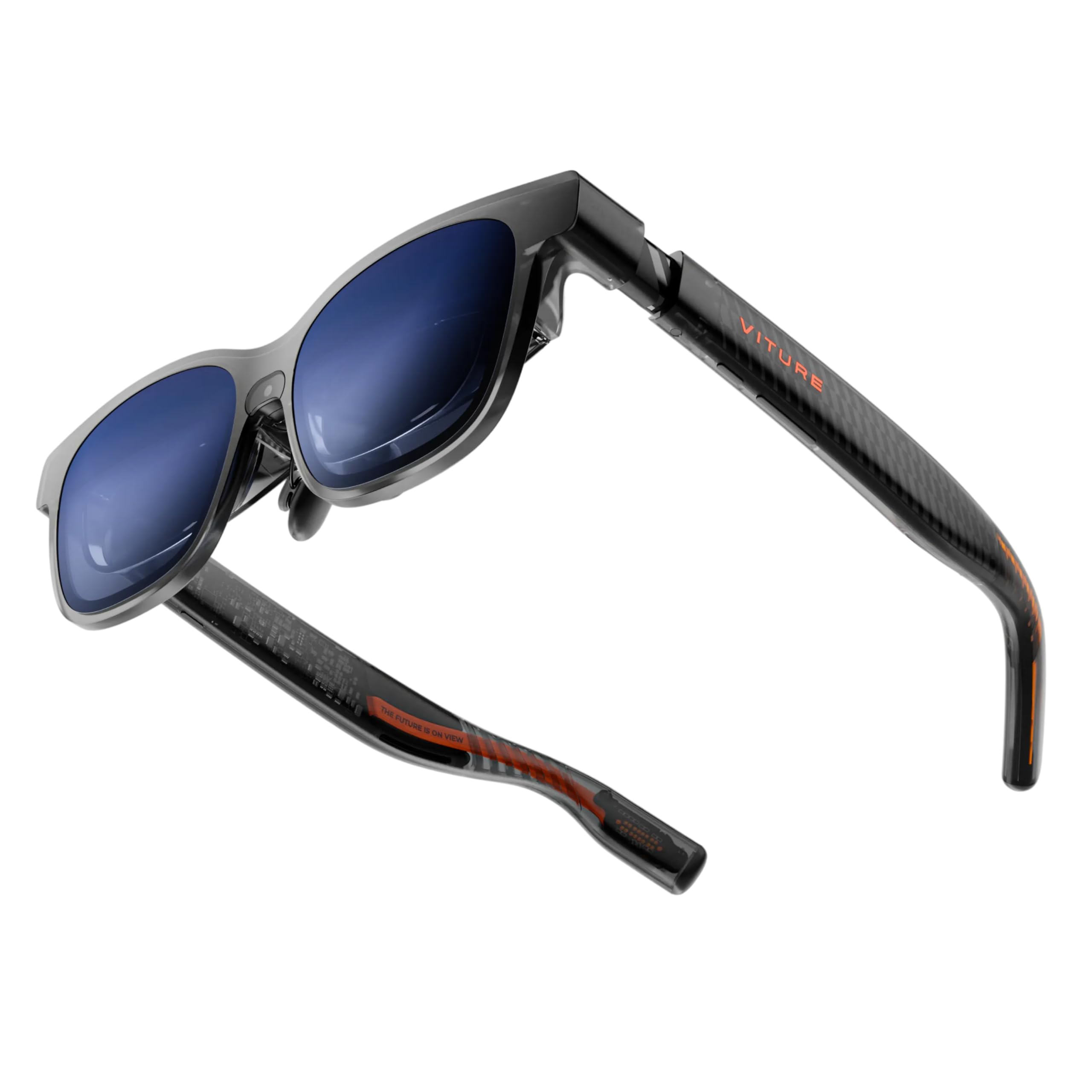
The VITURE Luma Pro pushes the resolution ceiling for wearable 3D glasses with its proprietary 1200p per-eye display, which renders text razor-sharp—even sharper than the already excellent VITURE Pro. The 52° FOV creates a 152-inch virtual screen, and the 120Hz refresh rate with industry-leading 1000 nits brightness ensures smooth, vivid playback even in bright rooms. The world’s first real-time 2D-to-3D conversion is the standout feature: it algorithmically adds stereoscopic depth to any streaming video or game, turning flat content into a dimensional experience without requiring native 3D files.
Harman-tuned audio delivers deeper bass and clearer highs than previous generations, and the electrochromic film darkens the lenses with one tap for total immersion. The magnetic ergonomic nose pad and tilt-adjustable temples make long sessions comfortable, and the built-in myopia adjustment up to -4.0D means most nearsighted users can dial in clarity without inserts. The RGB lighting on the frame adds a customizable flair for gamers.
Users with astigmatism may experience starburst effects or double images, as noted in a 3/5 review. The field of view feels slightly narrower than claimed for some face shapes, and the 152-inch equivalent may feel more like a large monitor than a true cinema screen. A 5/5 buyer from Verified Purchase called it a “huge upgrade” for brightness and fit.
Why it’s great
- 1200p per-eye—sharpest text in any wearable 3D display
- Real-time 2D-to-3D conversion for any content
- Built-in myopia adjustment up to -4.0D
Good to know
- Not ideal for users with astigmatism
- Top/bottom of display may clip on some face shapes
- Audio lacks deep bass for bass-heavy genres
3. XREAL 1S AR/XR Glasses
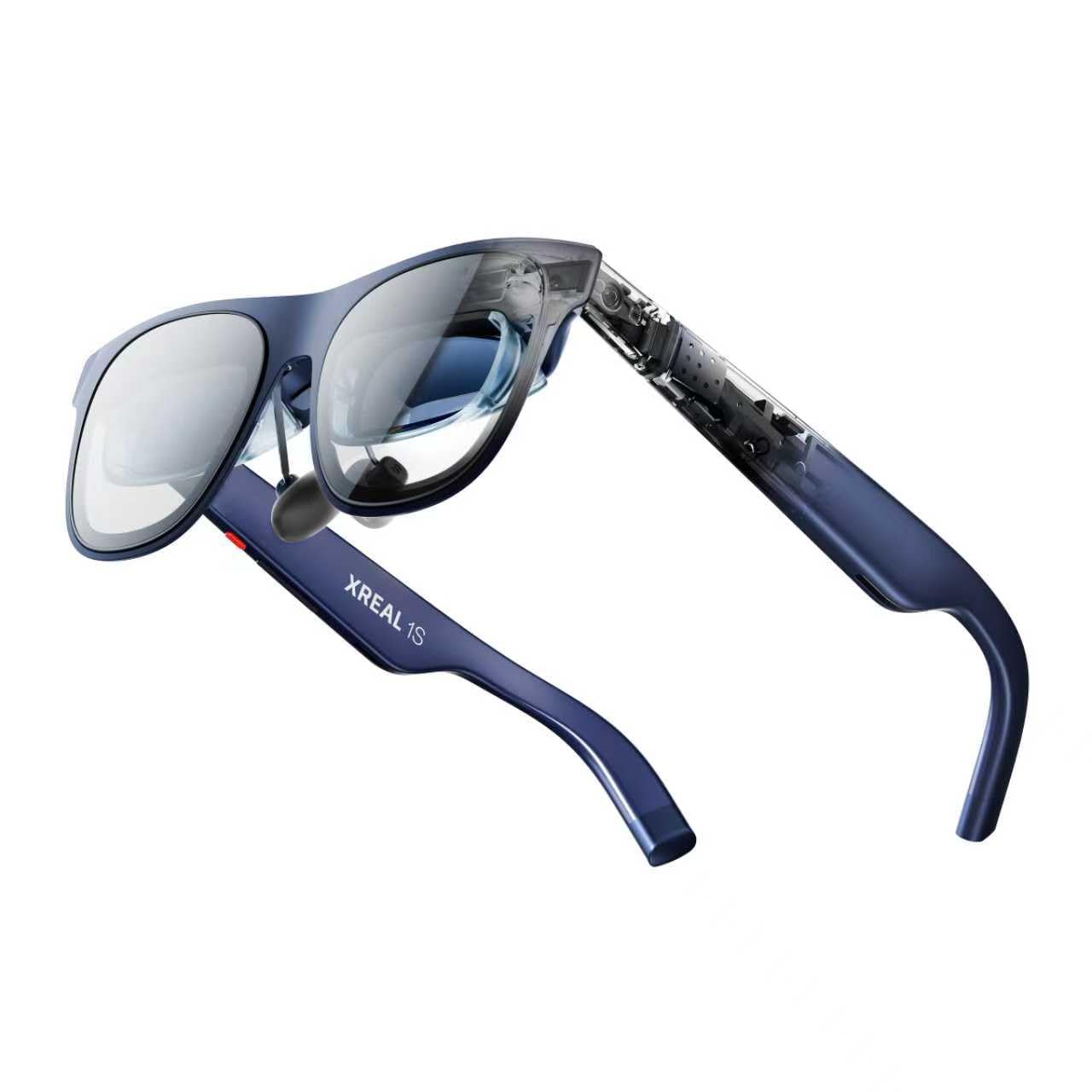
The XREAL 1S brings the company’s REAL 3D spatial technology to a more accessible price point, instantly transforming games, movies, apps, and photos into true stereoscopic depth with a single switch. The 52° FOV yields a 500-inch virtual screen equivalent, and the native 3DoF tracking powered by the X1 chip keeps the screen anchored in space during head movement. The 120Hz refresh rate in 3DoF mode and 90Hz global refresh eliminate flicker and blur for comfortable extended viewing.
Bose-tuned audio is co-engineered for AR-grade drivers, delivering spacious, balanced sound with clear vocal clarity—ideal for dialogue-heavy content or immersive gaming. Every unit is individually color-tuned, and the optical engine clarity is 9% better than the previous generation. The TÜV Rheinland certification for low blue light, flicker-free performance, and 100% UV protection makes it safe for long sessions.
A 4/5 review noted that the plastic frame can produce slight light leakage and the 3D mode can be tiring during extended use. The setup is plug-and-play without any app, but some users reported having to search Reddit for setup tips due to lack of a built-in wizard. Still, a 5/5 reviewer called it “hands down the best AR glasses” they have used.
Why it’s great
- REAL 3D mode converts any content instantly
- Bose audio delivers excellent open-ear clarity
- TÜV Rheinland certified for eye safety during long sessions
Good to know
- Plastic frame allows some side light leakage
- No setup wizard—requires manual configuration
- 3D mode can cause fatigue in prolonged use
4. TOZO VIZO Z1 Pro AR Glasses
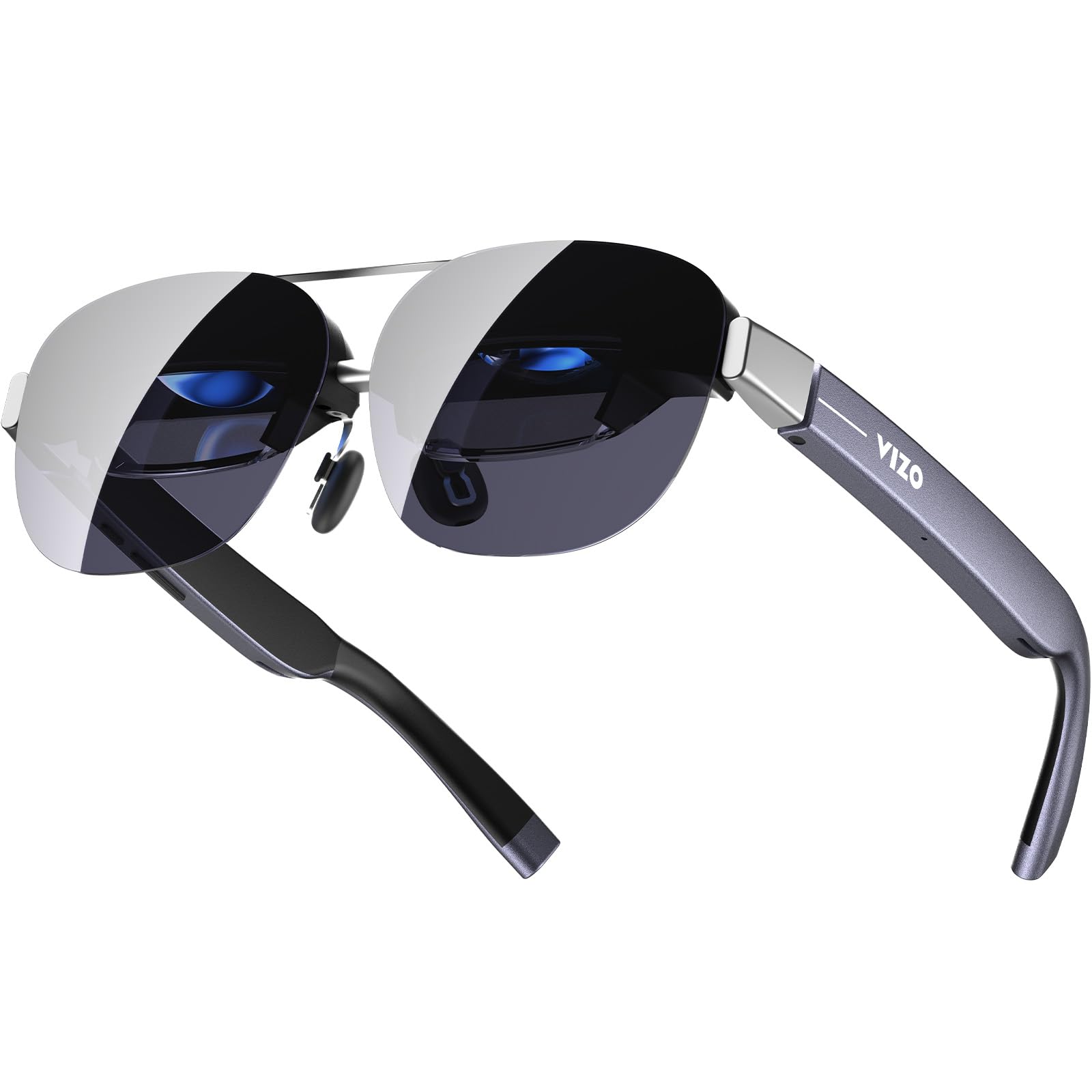
The TOZO VIZO Z1 Pro competes in the value segment of wearable 3D displays with a 160-inch virtual screen, Micro-OLED panels per eye, and a 2D/3D switch that lets you toggle stereoscopic depth with a button. The 47.5° FOV is narrower than the XREAL and VITURE offerings, but the 120Hz refresh rate ensures smooth motion at a price point that undercuts premium competitors. The 3840×1080 combined resolution (1920×1080 per eye) delivers Full HD clarity with 98% DCI-P3 color coverage and a 200,000:1 contrast ratio.
At just 63 grams, the Z1 Pro is lightweight and folds like a pair of sunglasses, making it genuinely portable. The detachable frame allows prescription lens insertion, and the dual stereo speakers with physical volume controls keep the experience self-contained. Plug-and-play USB-C connectivity works with any compatible smartphone, tablet, or laptop without extra apps.
Reviews note the lack of degrees-of-freedom tracking—this is strictly a fixed-screen experience with no head-anchored mode. A 5/5 buyer called it “my new favorite way to watch movies,” but a 5/5 review also flagged the absence of screen size and distance adjustment as a drawback at the “Pro” price. Corner blur is present, and the audio bleeds audibly in quiet environments.
Why it’s great
- Lightweight 63g design folds like sunglasses
- 2D/3D switchable with one button
- Plug-and-play USB-C—no app needed
Good to know
- No head-tracking or spatial anchoring (fixed 0DoF)
- Corner blur compared to premium AR glasses
- Audio bleed is noticeable in quiet rooms
5. NexiGo Aurora Pro 4K Laser TV

The NexiGo Aurora Pro is the only UST projector on the market that combines Dolby Vision, HDR10+, and a native 3000:1 contrast ratio from its ALPD 4.0 RGB+ laser engine. Factory-calibrated to a deltaE less than 3, the color accuracy is virtually imperceptible from reference monitors. The 2400 lumens brightness, paired with the included 120-inch Fresnel ALR screen, delivers a stunning 3D experience via active shutter glasses—even with some ambient light in the room.
The 120Hz MEMC motion compensation keeps fast action smooth, and the 8ms input lag is the lowest measured among UST projectors, making it viable for competitive gaming. The dynamic laser dimming reduces black levels by over 60%, improving contrast in dark scenes without compromising color, while also cutting energy use by more than 30%. The built-in Google TV handles all major streaming apps.
A 1/5 review highlighted overheating issues that cause shutdowns after extended use, with loud fan noise and a remote that triggers false motion sensor readings. Another 5/5 review praised the “stunning clarity and depth” and called it an excellent value for a complete UST setup. The built-in speakers are adequate but a dedicated sound system is strongly advised for serious home theater use.
Why it’s great
- Only UST projector with Dolby Vision + HDR10+
- 8ms input lag—fastest among UST projectors
- Factory-calibrated color with dE < 3
Good to know
- Overheating reported in long 4K sessions
- Fan noise becomes intrusive after 1–2 hours
- Built-in sound system lacks bass and power
6. AWOL VISION LTV-3000 Pro

The AWOL VISION LTV-3000 Pro stands as the world’s first UST projector with a built-in center channel speaker, mapping dialogue directly to the screen for crystal-clear vocal clarity without requiring a separate soundstage. The triple laser engine (no color wheel) covers 107% BT.2020 and 147% DCI-P3, producing colors that rival commercial digital cinema projectors. Active shutter 3D support makes this a dedicated home theater projector for enthusiasts who want genuine stereoscopic depth at 150 inches.
The 0.25:1 throw ratio places the projector just 12.84 inches from the screen for a 150-inch image, and Dolby Vision HDR with dynamic tone mapping optimizes every frame. The LTV-3000 Pro supports PJ Link IP control for smart home integration with Control4, and the energy-efficient laser source consumes roughly 1/10 the power of a comparable LED TV. The all-scene 4K 3D performance is impressive—users report “vibrant yet natural color, deep blacks, and excellent shadow detail.”
A 5/5 Verified Purchase reviewer noted that the internal speakers are “dreadful” and require EQ adjustments, while another 4/5 review flagged the low 60Hz refresh rate that causes motion blur in fast 3D scenes. The 3D mode must be activated manually every session, and UHD 4K handshake issues occasionally require switching HDMI inputs. The fan noise becomes noticeable after 90 minutes of 4K playback.
Why it’s great
- Built-in center channel speaker for dialogue clarity
- Triple laser covers 107% BT.2020 for cinema-grade color
- Supports active shutter 3D with Dolby Vision
Good to know
- Internal speakers are weak without EQ adjustments
- 60Hz refresh rate causes blur in fast 3D action
- 3D mode must be manually activated each session
7. JMGO N1S Ultimate Triple Laser Projector

The JMGO N1S Ultimate is daylight-ready with 3300 ISO lumens of brightness—enough to maintain a vivid 4K image even in a sunlit room. The triple laser engine delivers a 1600:1 contrast ratio, ΔE<1 color accuracy, and 110% Rec. 2020 color gamut, ensuring that 3D content retains the same punch and depth as 2D HDR material. The projector supports Blu-ray 3D natively, so you can connect a 3D Blu-ray player and enjoy frame-sequential stereoscopic content at its full resolution.
The FlexiSmart 2.0 adaptive system uses a 3D-TOF sensor and CMOS camera to provide real-time auto keystone and focus, even adjusting to wall color or screen material. The 360° horizontal and 135° vertical gimbal allows placement flexibility from floor to ceiling. Audio is handled by a 20W subwoofer with 45Hz ultra-bass and support for Dolby Digital+ and DTS-HD Master Audio, delivering room-filling sound without external speakers.
Initial reviews on Amazon are limited, but initial impressions highlight the exceptional daytime performance and rich colors. Potential drawbacks include the bulkier form factor compared to traditional UST projectors, and the reliance on built-in speakers for 3D audio immersion—a dedicated sound system will still improve the experience. The Google TV 3.0 interface includes certified Netflix and over 10,000 apps.
Why it’s great
- 3300 lumens—bright enough for daylight 3D viewing
- Native Blu-ray 3D support with frame-sequential
- Gimbal mount for flexible ceiling-to-floor placement
Good to know
- Larger footprint than flat UST projectors
- Built-in speakers can’t match dedicated soundbars
- Limited early reviews available for reliability assessment
8. Dangbei MP1 MAX Triple Laser Projector
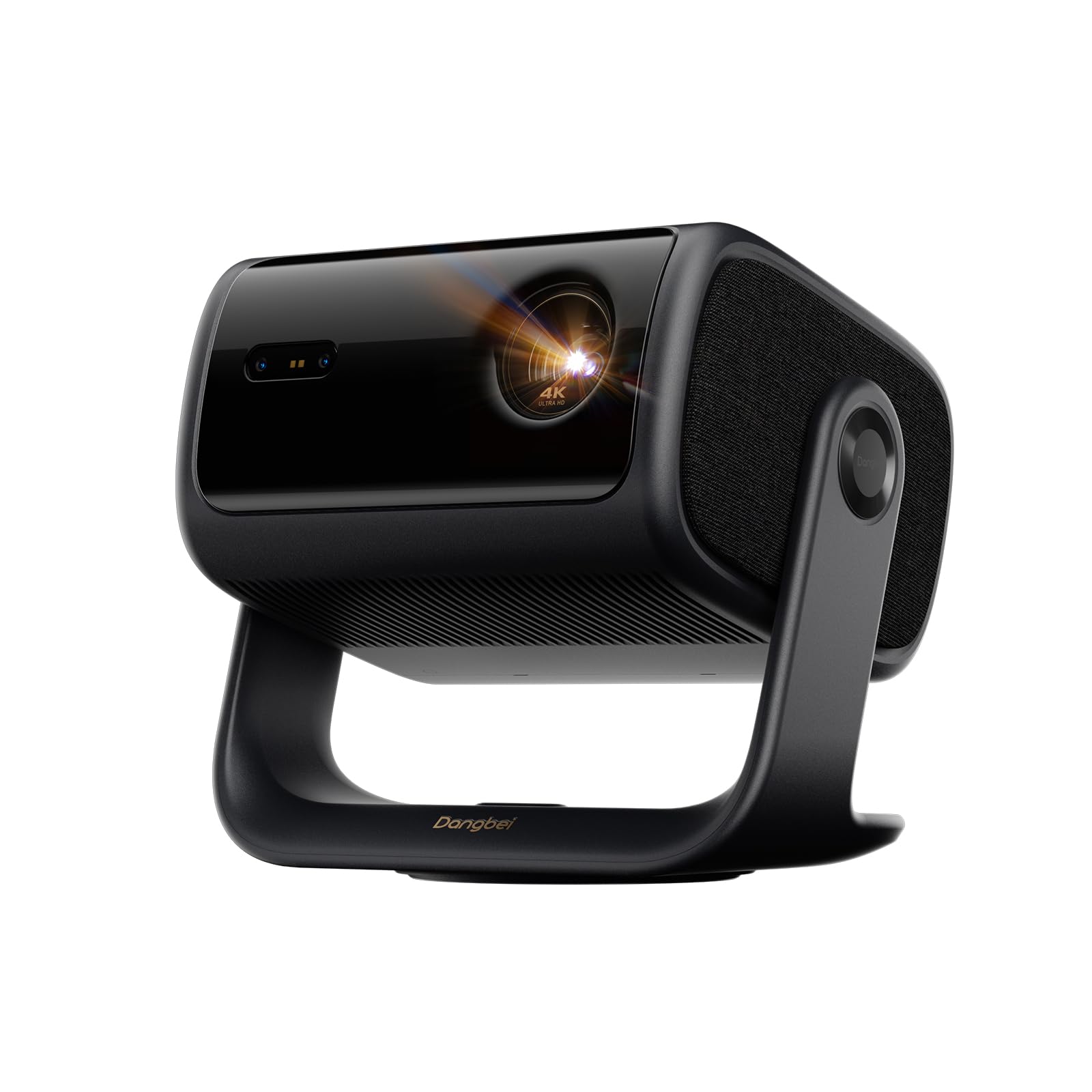
The Dangbei MP1 MAX hybridizes triple laser and LED technology to achieve 3100 ISO lumens, supporting bright 4K HDR images suitable for daytime viewing. The ΔE<1 color accuracy and 110% BT.2020 coverage make colors incredibly lifelike, and the built-in Blu-ray 3D support allows you to connect a standard 3D Blu-ray player for genuine frame-sequential stereoscopic playback. The InstanPro AI platform handles auto focus, keystone correction, screen fit, and obstacle avoidance automatically.
The built-in adjustable stand provides 360° horizontal rotation and 135° vertical tilt, so you can project onto a wall, screen, or ceiling without purchasing a separate mount. The dual 12W speakers with a 750cc acoustic chamber and bass-reflex system deliver solid sound down to 45Hz, and Dolby Audio and DTS:X support ensure the 3D soundtrack is fully immersive. Google TV with Netflix is certified out of the box.
First impressions from a 5/5 review called the image sharp and detailed with approximately 90% color accuracy, noting no laser speckles or text issues. Another buyer reported that the built-in Google TV won’t install a preferred VPN, which was a frustration for some streaming setups. The internal sound is “good and loud” but not hi-fi, and the fan noise is minimal.
Why it’s great
- 3100 lumens—bright enough for living rooms
- Blu-ray 3D support with auto setup
- Built-in adjustable stand for placement flexibility
Good to know
- Built-in Google TV may block some VPN apps
- Internal sound is decent but not hi-fi quality
- Best sale price often improves value significantly
9. TCL 55 Inch QM7K Mini LED QLED
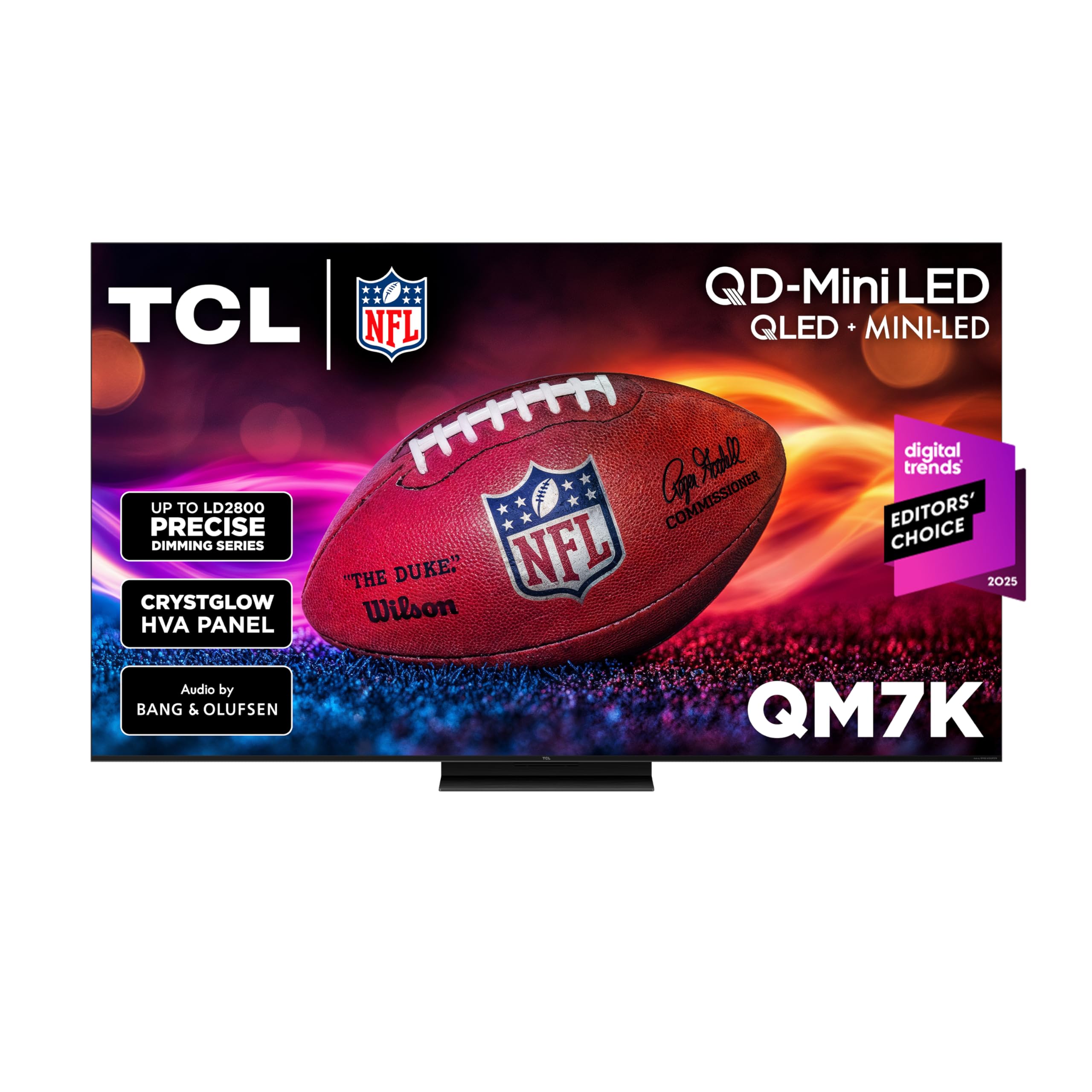
The TCL 55-inch QM7K uses QD-Mini LED technology to combine QLED color volume with pixel-level dimming precision—up to 2500 local dimming zones in the LD2500 series. The native 144Hz panel supports 240Hz VRR, making it ideal for high-frame-rate 3D content with active shutter glasses. The CrystGlow HVA panel blocks reflections aggressively, preserving black levels and contrast in bright rooms, which is critical for maintaining the 3D illusion without washing out the image.
The TCL Halo Control System includes features like the Super High Energy LED Microchip and Zero Delay Transient Response to reduce ghosting in fast-moving 3D scenes. The Onkyo-tuned dual speakers with Dolby Atmos provide room-filling audio without an external soundbar. Google TV is built in with support for Alexa and Google Assistant.
A 5/5 buyer called it “the best value” for Mini LED with excellent brightness and deep blacks, while another 1/5 review noted that units sold as “Used – Acceptable” arrived damaged. The built-in sound is decent but won’t satisfy purists, and the remote feels cheaper than the TV’s build quality would suggest.
Why it’s great
- Up to 2500 local dimming zones for pure blacks in 3D
- 144Hz native panel with 240Hz VRR for smooth 3D
- Anti-reflective coating preserves 3D contrast in any light
Good to know
- No 3.5mm audio jack—requires HDMI audio extraction
- Cheap remote feels out of place for the price
- Used units may arrive damaged from third-party sellers
10. Sony 77 Inch OLED BRAVIA XR8B

The Sony BRAVIA XR8B is an OLED powerhouse with over 8 million self-lit pixels, enabling perfect blacks and infinite contrast—the ideal foundation for stereoscopic 3D content where depth perception relies on absolute separation between dark and bright zones. The XR Processor uses intelligent scene analysis to boost color, contrast, and clarity in real time, and the 120Hz panel with XR OLED Motion eliminates judder in fast 3D sequences. Two HDMI 2.1 ports support 4K@120Hz, making it perfect for both 3D Blu-ray and PS5 gameplay with Auto HDR Tone Mapping.
The studio-calibrated picture modes for Netflix and Prime Video ensure content looks exactly as the creator intended, while Dolby Vision, Dolby Atmos, IMAX Enhanced, and DTS:X provide comprehensive format support. The Acoustic Surface Audio+ turns the entire screen into a speaker, creating directional sound that follows the action—particularly effective for 3D spatial audio. Google TV with Google Assistant and Apple AirPlay 2 round out the smart features.
A 5/5 Verified Purchase buyer called it “absolutely killer TV for PS5” with amazing picture and deep blacks. Another 5/5 review praised the “best looking TV I’ve literally ever seen.” The 77-inch size is ideal for 3D immersion, but the price is premium-tier, and the stand is wide—requiring a substantial media console. Built-in sound is good but still benefits from a dedicated soundbar for the full 3D audio experience.
Why it’s great
- Perfect blacks with 8M+ self-lit OLED pixels for 3D depth
- XR Processor intelligently enhances every 3D frame
- Acoustic Surface Audio+ for directional 3D sound
Good to know
- Premium price—among the most expensive options
- Wide stand requires a large media console
- Built-in speakers still improve with external system
11. Samsung 98-Inch 4K Crystal UHD DU9000

The Samsung 98-inch DU9000 is for those who want a truly massive flat panel for 3D viewing—98 inches of Crystal UHD 4K resolution that can fill an entire wall. The Motion Xcelerator 120Hz ensures 3D content stays fluid without tearing, and the Supersize Picture Enhancer uses AI to reduce noise and increase sharpness specifically optimized for very large screens. The PurColor technology expands the color spectrum beyond traditional RGB models, and Mega Contrast automatically adjusts brightness and contrast to ensure 3D objects stand out against backgrounds.
The built-in Crystal Processor 4K upscales all content to near-4K quality with 3D color mapping and Adaptive Sound. Q-Symphony allows the TV speakers to pair with a Q-Series or S-Series soundbar for coordinated output. The Tizen OS provides access to all streaming apps, and the Game Bar with virtual aim point and AI Auto Game Mode makes it suitable for 3D gaming. The 98-inch size is a logistical challenge—it measures 85.9 x 51.1 inches and must be delivered by two people.
A 5/5 review confirmed the picture quality is “awesome” and the TV arrived undamaged, while a 1/5 review reported a cracked screen and poor customer service from Amazon. The UHD panel lacks OLED-level black levels, so 3D contrast in dark scenes may not match the Sony OLED. The built-in speakers are adequate but a sound system is recommended for true immersion.
Why it’s great
- 98-inch screen—the largest flat panel for 3D immersion
- 120Hz Motion Xcelerator for smooth 3D playback
- AI Supersize Picture Enhancer optimized for large screens
Good to know
- Logistical difficulty—requires two-person delivery and heavy setup
- LCD backlight can’t match OLED black levels for 3D
- Customer service issues reported for damaged units
FAQ
Can I watch regular 2D content on a 3D TV with glasses?
Do I need special glasses for each type of 3D system?
How does the real-time 2D-to-3D conversion work in the VITURE Luma Pro?
Is 3D content still available on streaming platforms?
Can I use these 3D glasses with PlayStation 5 or Xbox for 3D gaming?
Final Thoughts: The Verdict
For most users, the best 3d tv with glasses winner is the XREAL One Pro because its 57° FOV, 3ms M2P latency, and plug-and-play REAL 3D mode deliver the most convincing portable stereoscopic experience at a premium yet justifiable price. If you want razor-sharp text and instant 2D-to-3D conversion, grab the VITURE Luma Pro. And for a full-size home theater that fills an entire wall with true active shutter 3D, nothing beats the NexiGo Aurora Pro with its Dolby Vision support and included ALR screen.