
Our readers keep the lights on and my morning glass full of iced black tea. As an Amazon Associate, I earn from qualifying purchases.
Specs are compiled from manufacturer listings and verified buyer reviews and can change over time — please confirm the key details on the product page before buying.
Choosing a 3-person backpacking tent is about far more than counting sleeping spots. The real challenge is balancing floor space against packed weight, because a tent that fits three on paper often fits two people plus gear in practice. That is exactly why this guide digs into actual dimensions and owner experiences rather than trusting the label on the box.
I’m Min — the founder and writer behind Gadgets Feed. This guide is built by comparing the manufacturers’ published specifications and the patterns across verified customer reviews, so you get each pick’s real strengths and trade-offs instead of marketing spin.
Let’s read the fine print on floor area, peak height, and packed size to find the 3p backpacking tent that truly works for your next trip.
Our Picks at a Glance

How To Choose The Best 3P Backpacking Tent
The most common mistake new buyers make is assuming a “3-person” tent provides 3 separate sleeping pads side by side. In reality, most of these shelters are designed as a generous space for two adults plus their gear, or a snug fit for three if everyone is close. Matching your group size to the actual floor width in inches, rather than the marketing label, is the single best way to avoid a disappointing first pitch.
Weigh Your Priorities on the Trail
If you plan to carry this tent for miles, the number on a scale matters more than any other spec. Look for a tent around 4 to 5 pounds if you are splitting the load between two hikers, and pay close attention to the packed size so it fits inside or strapped onto your backpack without awkward bulk. Tents closer to 6 or 7 pounds offer more durable fabric and headroom, but they change the feel of a long hike.
Check the Floor Space, Not Just the Capacity Label
A wide floor lets two campers sleep on oversized pads without touching the mesh walls, which prevents condensation from brushing against your sleeping bag at night. Compare the floor width and length in inches directly between models, since a difference of several inches translates to noticeable comfort when you are lying down stretched out.
Look at Waterproofing and Ventilation Together
Waterproof ratings like PU3000mm on the fly and floor tell you the tent resists heavy rain, but a tent that seals water in also traps moisture from your breath. Good airflow through mesh panels and adjustable vents keeps the interior dry from condensation, which is just as important as the rainfly’s seal. Look for a design that balances a high waterproof coating with real ventilation options.
Quick Comparison
| Model | Best For | Floor Area | Peak Height | Packed Weight | Amazon |
|---|---|---|---|---|---|
| Naturehike Ultralight 3P★ Best Overall | Balanced space & value | 38700 sq cm | 45.3 in | Under 4.3 lbs | Amazon |
| CANTUO 2/3 Person TentValue Pick | Budget duo with footprint | 31.64 sq ft | 43.3 in | 4.12 lbs | Amazon |
| Kelty Grand Mesa 2PCompact Classic | Roomier solo or cozy duo | 30 sq ft | 44 in | 4 lbs 7 oz | Amazon |
| Naturehike Mongar Upgraded 3P | Dual doors & awning | 43.8 sq ft | 43.3 in | 6 lbs | Amazon |
| Marmot Crane Creek 3P | Reliable brand for duo | 41.5 sq ft | — | — | Amazon |
| The North Face Stormbreak 3 | Storm-proof classic | 39.72 sq ft | 46 in | 6 lbs 10 oz | Amazon |
| Snugpak Scorpion 3 | Rugged all-weather duo | 3733 sq in | — | 7.4 lb | Amazon |
| Big Agnes Copper Spur HV | Featherweight UL couple | 29 sq ft | — | ~3 lbs | Amazon |
| NEMO Dragonfly OSMO | Premium 2P comfort | — | — | 3.8 lbs | Amazon |
In‑Depth Reviews
1. Naturehike Ultralight 3-Person Backpacking Tent
Our pick — 4.5★ from 900+ verified ratings; the strongest balance of quality and price.
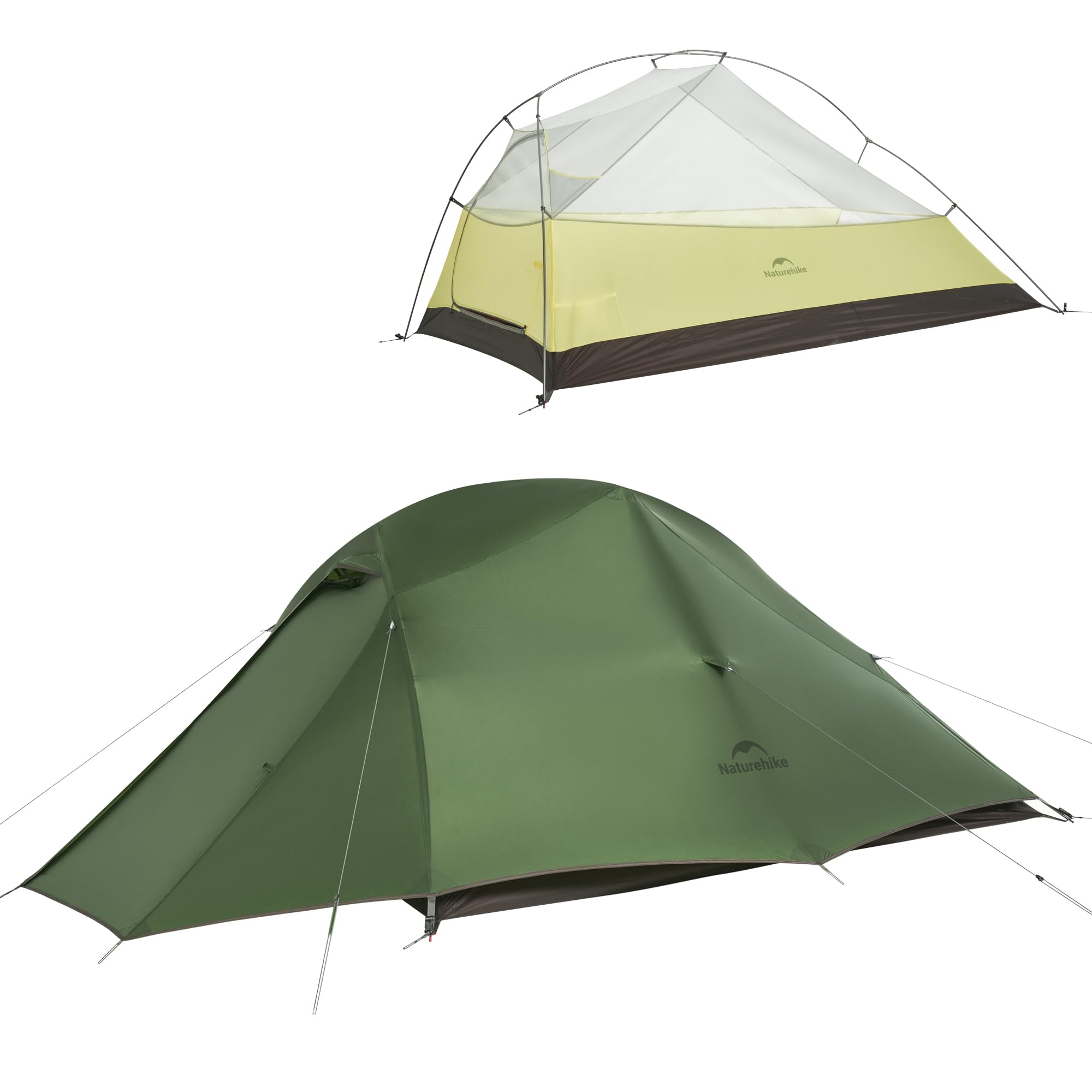
The rare “3-person” tent that is genuinely roomy for two and packs down to a category-leading tiny bundle.
This shelter is the upgraded Cloud up 3, and the geometry alone tells you why it tops the list: a 116.1-inch floor length and 82.7-inch width with a 45.3-inch peak height. It packs down to just 16.9 x 6.7 inches and weighs under 4.3 lbs, which means the whole thing fits easily inside a mid-size backpack with room for your other gear. It holds more floor space than the CANTUO below — that tent’s 55.1-inch width is a full 50% narrower — and its 116.1-inch length stretches a full 40% longer for taller sleepers.
The build quality backs up the value: a 20D nylon fly and floor carry a PU3000mm waterproof coating, while the included footprint uses tougher 210T ripstop polyester at PU5000mm. Buyers report it has “survived severe thunderstorm/sandstorm with sand-bag anchors; poles bent but held, no water ingress,” which tells you the aluminum alloy frame takes real punishment. The dual-Y pole structure pitches freestanding, and the upgraded buckles replace straps for a faster, cleaner setup.
Look closer and the honest fit appears in the review pages: most owners describe it as comfortable for two and tight for three, which is expected at this weight class. The high-density B3 mesh inner promotes airflow, and the fly can be pitched alone as a sun shelter. The floor is thin enough that a few recommend laying the footprint or an extra tarp on gravel, since the footprint itself runs a touch oversized and could channel rain underneath in strong wind.
What wins people over
- Compact 16.9 x 6.7-inch pack size for a true 3P floor.
- Footprint bundled in, saving a separate purchase.
- Verified storm survival with no water ingress.
Who should think twice
- Three full-size adults will sleep cramped, not comfy.
- Thin floor needs care on rough or gravel ground.
- Poles can be tricky solo when tips detach.
Reach for this if: you are a duo wanting generous floor space and the lowest packed bulk at a sensible weight.
Plan around: the single door can make middle-of-the-night exits awkward — keep the one who drinks water last on the edge.
2. CANTUO 2/3 Person Backpacking Tent
A 4.12-pound shelter with a higher rain rating than the Best Overall, at a friendlier price.
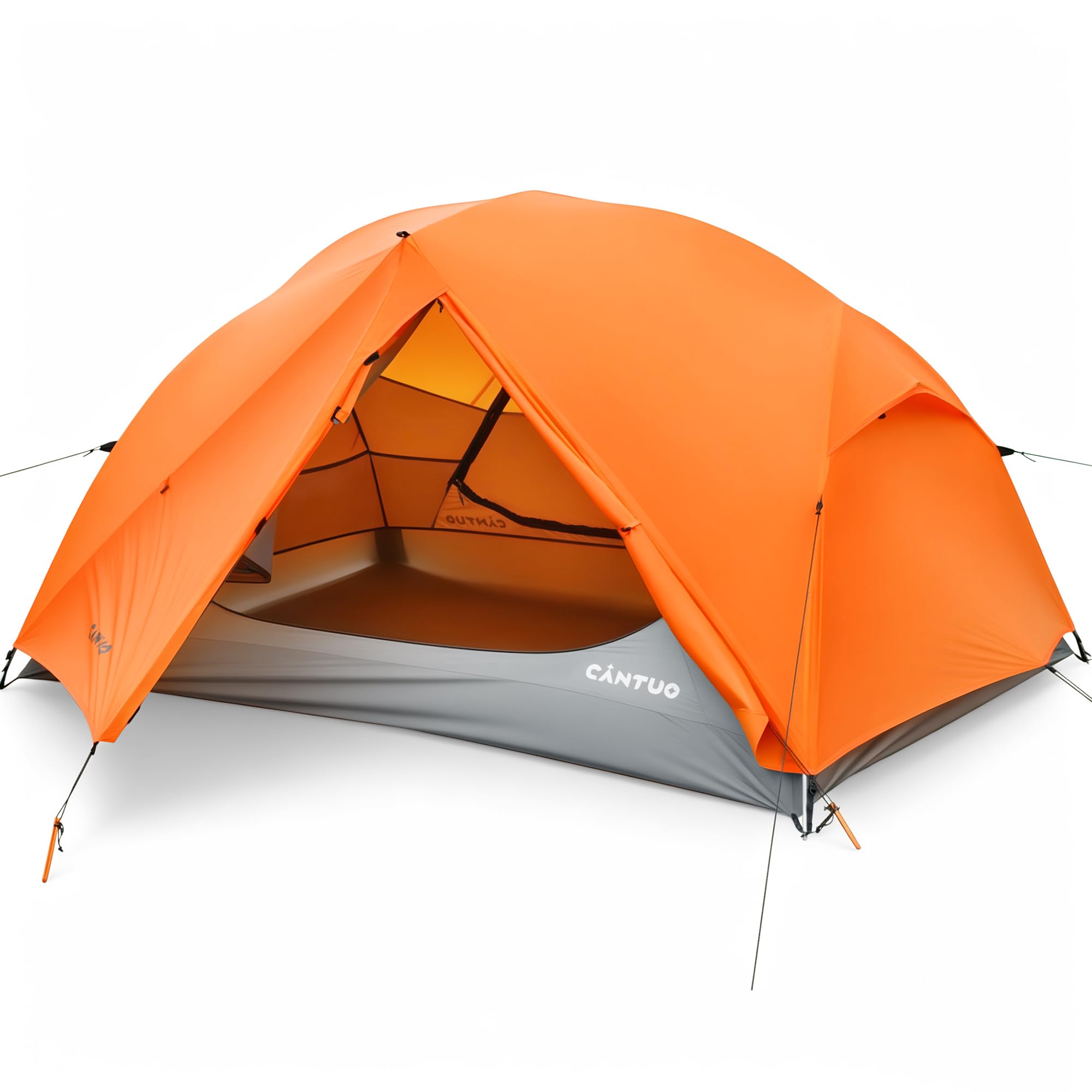
Budget tents often cut corners on fabric, but this one leans the other way: both the fly and floor use 20D ripstop nylon with a PU4000mm coating, a step above the 3000mm found on many rivals. On paper it reads as a tight 2-person — an 82.7-inch length and 55.1-inch width create a 31.64 sq ft interior that fits two oversized 25-inch pads, so it runs noticeably narrower than the Naturehike’s 82.7-inch width above. The 43.3-inch peak height still lets you sit up straight while changing.
Organization is where this tent punches above its tier. It packs four oversized interior pockets plus dual vestibules with independent entries, giving each sleeper a clean side for boots and a backpack. The 7001 aluminum alloy poles weigh only 1.2 lbs and the whole kit stores down to a compact 15.7 x 5.5 x 5.5-inch bundle. As the owners put it: “Setup and takedown is super simple!”
Real-world testing backs the specs: the review pages note it survived a 6-hour torrential rainstorm with high winds, with only slight water ingress at a bottom vent. One consistent thread is that its true capacity is two adults — a parent reports it fit three when the third was a 4-year-old — so treat the “3” in the name as a stretch goal. The rain fly staked down can also block the entry, which makes a quick middle-of-the-night exit a little clunky.
The strong suits
- Higher PU4000mm waterproofing for heavy rain confidence.
- Footprint tarp included in the box.
- Four interior pockets plus twin vestibules for gear.
The honest limits
- A true two-person interior despite the “3” label.
- Guy line instructions could be clearer.
- Staked-down rain fly can block the door.
Best for: a couple on a budget who want a tough, well-organized two-person shelter with a footprint already in the bag.
Look elsewhere if: you actually need to sleep three adults — this one will feel cramped.
3. Kelty Grand Mesa 2P Backpacking Tent
A freestanding tent that survives hours of sideways rain and stays bone dry inside.
Kelty built this around dependable materials rather than chasing the lightest number: a 68D polyester floor and rainfly with fully taped seams, supported by two compact pressfit aluminum poles. The freestanding frame means you can pitch it and drag it around to find the best spot, which the detailed reviews confirm over and over. One owner kept it dry through hours of sideways rain without a drop of condensation, and another logged 12 nights across 4 trips with the tent still holding up.
You get a roomy 30 sq ft of interior space (the floor is 85 x 57 inches with a 44-inch peak height), so two campers can sit up and stretch out. When packed, it shrinks to 16 x 7 x 7 inches and weighs 4 lbs 7 oz, which is manageable for a car-camping trip or a short hike. Setup takes about 3 to 5 minutes because the Kelty Quick Corners (plastic brackets that lock the poles in place) and color-coded clips guide you through. The single door plus vestibule gives you a dry spot to stash gear, and the EZ-Zip vestibule (a zippered awning) rolls up out of the way when you do not need it.
Be honest about the size before you buy: the review evidence is split, with some calling it perfect for one person plus gear and others saying it is too small for two full-size adults. The recurring fit note is that a 6-foot sleeper touches the ends lengthwise, so treat it as a roomy solo shelter or a cozy two-person option for close friends rather than a spacious duo tent.
In one line: a bombproof, easy-pitch classic that trades an inch or two of length for Kelty’s trusted durability.
Choose it for: solo thru-hikers wanting palace-like space, or two tolerant friends splitting a reliable 3-season shelter.
Note the trade: taller campers will find their feet and head brushing the end walls.
4. Naturehike Mongar Upgraded 3 Person Tent
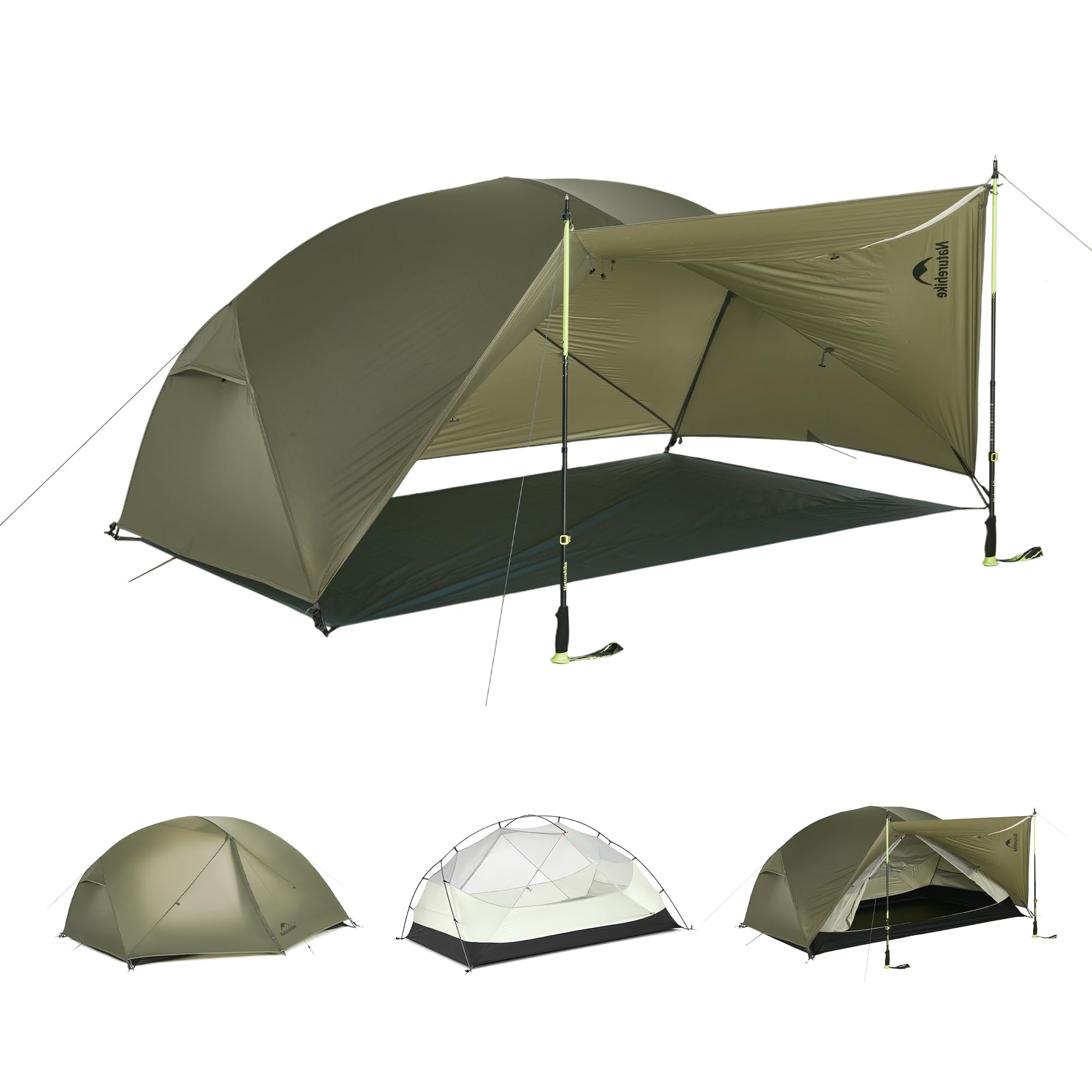
Dual doors, an expandable awning, and the biggest floor in this round — 43.8 sq ft of living space.
If you want the most living space for three people, the Mongar Upgraded delivers the biggest floor in this guide at 86.6 x 72.8 inches. The expandable awning (propped up by your trekking pole) adds covered shade or rain protection for cooking and gear, so you can stay dry outside the tent. Two doors with independent vestibules mean nobody crawls over their partner for a midnight bathroom break — a real relief on a long trip.
The fabric story stays strong at a 6-pound total: a 20D nylon fly and floor carry the PU3000mm waterproof coating, while the included 210T ripstop footprint protects the underside. Nine-point-five-millimeter aluminum alloy poles keep the structure rigid, and the whole setup is rated for a 2-minute assembly with color-coded parts. Multiple owners mention surviving 20-30 mph winds and storms while staying dry inside.
Storage is a highlight here: long end pockets, ceiling triangles, a light hook, and a hanging cord keep essentials off the floor. The dual vestibules hold packs out of the weather, and the mesh panels plus adjustable vestibule height cut down condensation. The fly zippers can snag on the fabric if you rush, and the included stakes are basic enough that a few owners swapped in titanium ones, but at this weight and space the value is hard to argue.
Why it stands out
- Largest floor area here at 43.8 sq ft for real 3P comfort.
- Two doors and vestibules for private entry.
- Trekking-pole awning adds covered living space.
What to watch
- 6 lbs is heavier than ultralight rivals.
- Fly zippers need a gentle hand to avoid snags.
- Basic stakes are worth upgrading for hard ground.
The pick for: parties of three who refuse to sacrifice living space or want a covered porch for rainy-day cooking.
Expect to carry: about two pounds more than featherweight alternatives — the awning and dual doors are what you are hauling.
5. Marmot Crane Creek 3P Tent
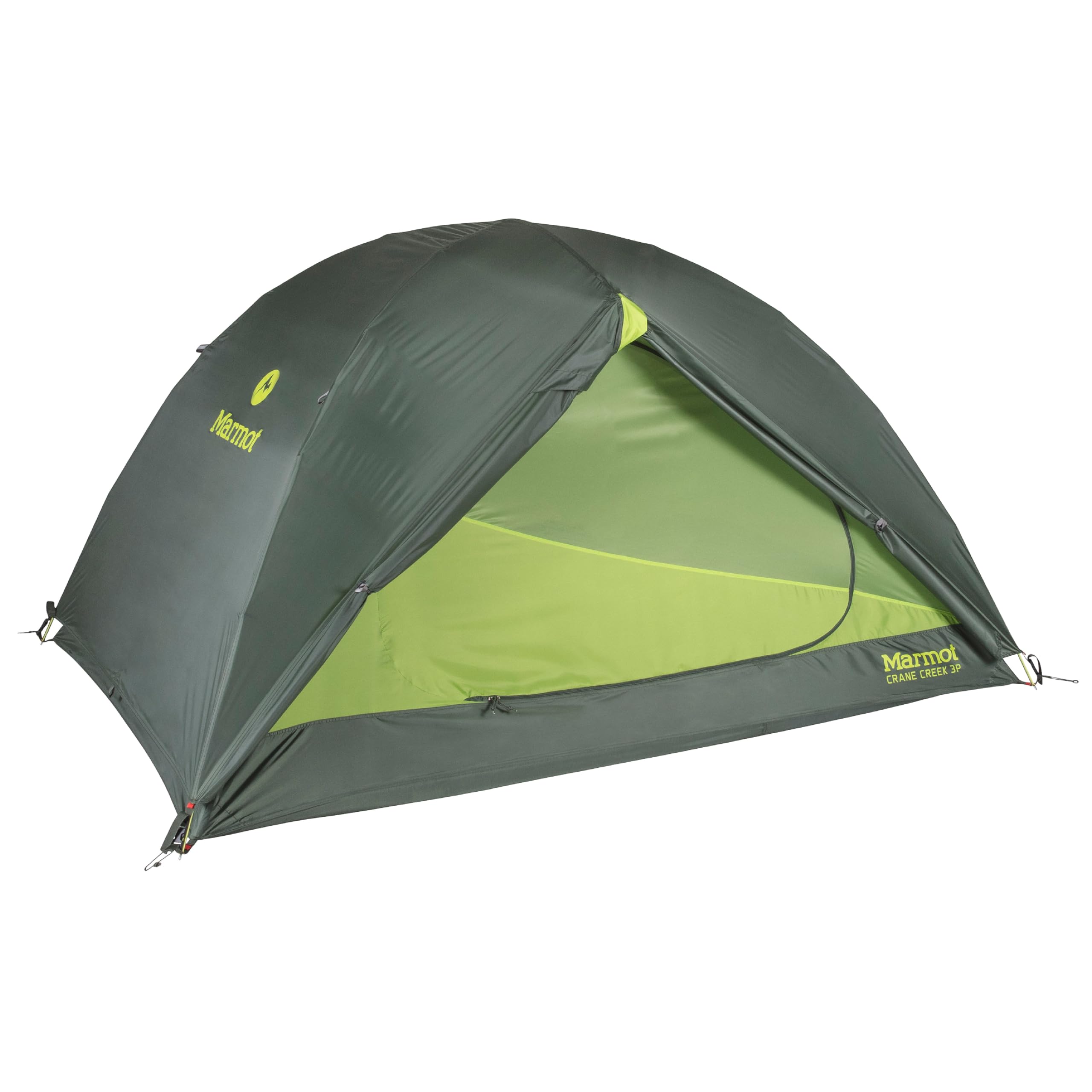
A decade of hard trips in a 41.5 sq ft interior that still fits a cot and a backpack with room to spare.
Marmot’s reputation shows in the long view: one owner reports using this tent for about 10 years across dozens of trips with no condensation and no leaks. The 41.5 sq ft interior fits two adults plus gear, or one adult with a cot and backpack, and the 7000-series aluminum poles shrug off wind that would fold cheaper frames. It is freestanding, so you can move it one-handed to find the perfect flat patch of ground.
The two large D-shaped doors and dual vestibules earn constant praise because they mean nobody climbs over a sleeping partner. Five interior pouches stash your phone, glasses, and headlamp within reach, and the seam-taped polyester fly keeps moisture out in normal rain. Owners note it is not ultralight — a few describe it as better split between two packs for a backpacking trip rather than carried solo.
Full disclosure on the durability question: some customers note the rain fly leaking terribly in sustained downpours, which is why a tarp is recommended for storms lasting 12 hours or more. The build quality is obvious from the first pitch, with smooth zippers and taut walls, and it comes from a brand trusted since 1971. Just know the capacity label reads three but the real-world fit is two adults and a dog-sized pile of gear.
The bottom line: buy this for proven, long-haul durability and easy two-door comfort — pack a tarp if your trips run into extended downpours.
Reach for it when: you want a tent that survives a decade of weekends and makes entry feel easy with its dual D-shaped doors.
skip it if: you are chasing the lightest possible pack weight — this one is built tough, not featherlight.
6. The North Face Stormbreak 3 Tent
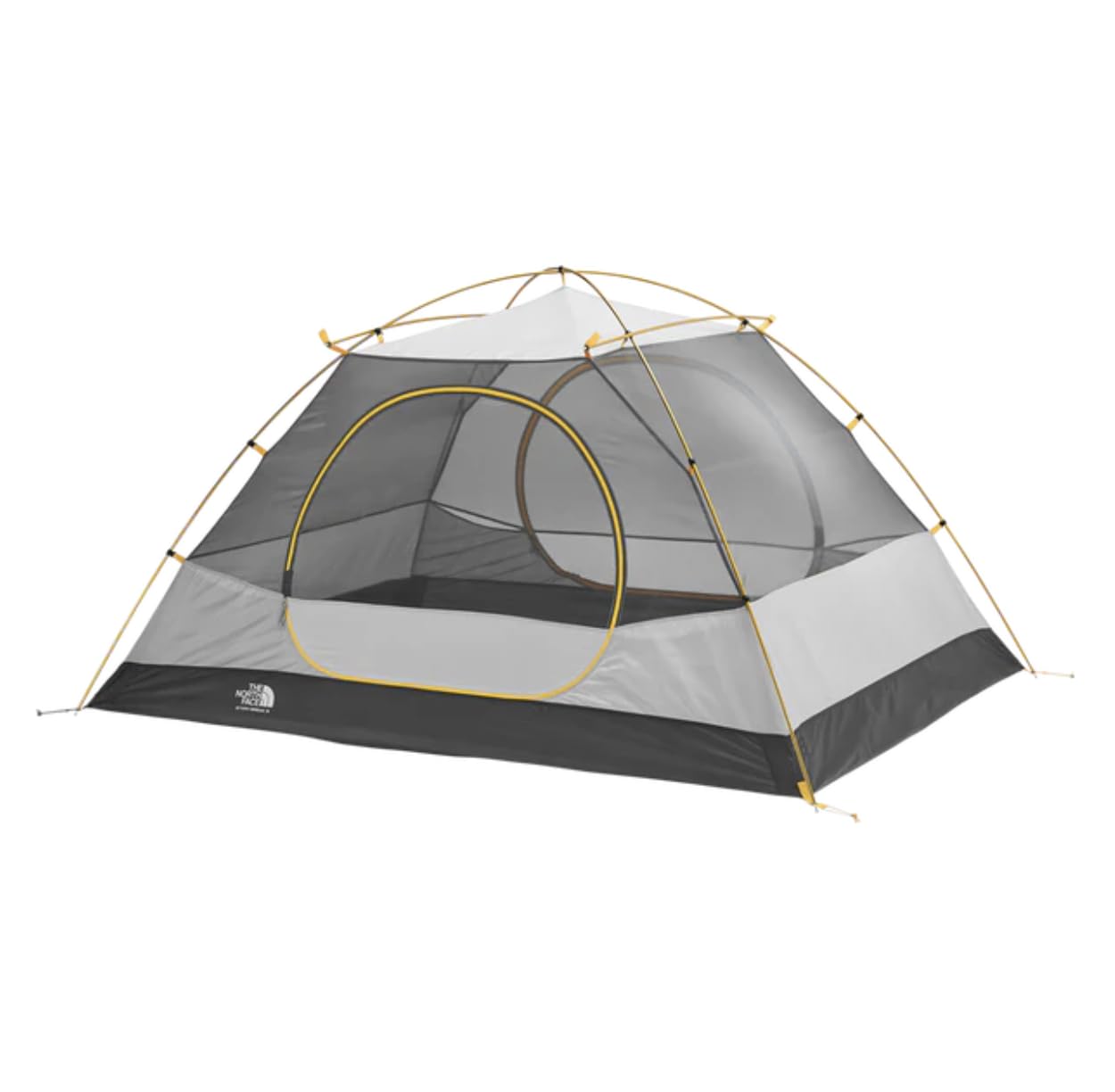
The tent that slept peacefully and dry through a 5-inch downpour on a gravel riverbank.
When the name says Stormbreak, the engineering follows: a fully seam-taped canopy and floor in 75D polyester taffeta, coated with a non-PFC Durable Water Repellent finish. The canopy, rainfly, and floor all use that same tough 75D fabric, which is why reviewers point out surviving 50mph winds and heavy rain without a drop of leakage or condensation. One kayak camper summed up the first night perfectly — dry through a 5-inch downpour with no seepage from underneath.
Ventilation is the clever part: high-low ventilation openings pull cool air in low and push warm, moist air out high, which keeps you comfortable without constant fly adjustments. The two doors use mesh stuff pockets instead of rolling them up, keeping entryways clear, and the twin-zip vestibules store gear securely. The full specs list a 39.72 sq ft floor at 88 x 65 x 46 inches, with the total weight at 6 lbs 10 oz.
The honest feedback is that condensation control is a little weak for some campers, and the rain fly can be tricky to drape solo in a strong breeze. It also reads as a proper two-person shelter with gear rather than a tight three — which is why several owners call it perfect for a couple. A wilderness guide vouches for it in Gulf island wind and storms, calling it a worthy successor to earlier North Face models.
Built to weather
- Fully seam-taped 75D polyester canopy, fly, and floor.
- Proven dry in downpours and 50mph gusts.
- High-low vents move warm, damp air out.
Honest caveats
- 6 lbs 10 oz total runs heavy for long hikes.
- Fly is fiddly to pitch solo in wind.
- Condensation control leaves some campers wanting more.
Your tent if: you camp where weather turns fast and staying dry beats shaving a pound.
Think twice if: every ounce counts on multi-day carries — this is a durable basecamp-style 3P, not an ultralight.
7. Snugpak Scorpion 3 Tent

A 5000mm waterproof outer and dark, warm interior that makes it feel like a mobile cave.
The Scorpion 3 is the overachiever of this list, and construction is what everyone raves about — it is the most discussed trait in the review data by a wide margin. The 100% waterproof outer carries a serious PU5000mm coating, which is why shoppers say holding up in 55mph gusts and heavy downpours while staying dry inside. It handles moderate snow too, with owners describing it as a strong 3-season shelter that leans toward 4-season behavior for the money.
The interior is genuinely dark, which keeps it warm in the sun and helps you sleep past sunrise, and the angled compact shape sheds wind better than a tall dome. With a 7.4 lb pack weight and 17 x 8-inch pack size, it compresses smaller than the military-style tents it often replaces. Setup uses lightweight anodized 7001 aluminum poles with pressfit connectors, and the fly-first pitch keeps the inner tent dry when the rain starts mid-setup.
Read the reviews carefully and a pattern emerges: most owners say it fits two people plus luggage comfortably, not three men, despite the “3 person” label. The single door and 3 vents work well, but the vestibule zippers can be awkward to reach from inside, and the guylines tend to absorb moisture and stretch when wet. One dissenting voice called assembly genuinely difficult even in daylight, which is a fair warning if you plan to arrive after dark.
Standout spec: the PU5000mm outer (a waterproof rating on the rainfly) pushes rain protection a full tier above the PU3000mm rivals here — so you stay dry in a downpour that would soak lesser tents.
Best for: a duo who camps in exposed, weather-prone spots and want a warm, dark, bombproof shelter they can trust in poor conditions.
Not for: three full-size campers or anyone who wants the fastest possible pitch in the dark.
8. Big Agnes Copper Spur HighVolume UL Tent

High-volume pole geometry carves out steep walls and real headroom at a featherweight ~3 pounds.
Big Agnes solves the classic ultralight problem — cramped, coffin-like interiors — with pole architecture that pushes the walls outward. The high volume angle hub increases stability while creating genuinely livable space, and owners consistently call out the headroom and taut sides that don’t flap in the wind. One tester ran it at 11,500 feet for two days in rain and wind with no issues, which is a serious endorsement for an ultralight shell.
At roughly 3 pounds for the two-person version, this is the lightest shelter on the list by a clear margin — so you can carry it on a long trail without feeling the weight. The lightweight theme runs through every detail: reflective guylines (so you do not trip on them at night), multiple interior pockets, and two roomy vestibules that each swallow a backpack. The quick stash on the door lets you stow an unzipped door in seconds, and the two-tone mesh gives you privacy while still letting you see the stars from inside.
The fit math matters here: the 29 sq ft floor suits mummy pads well but not large rectangular pads, so measure your sleeping pad before you buy. Owners recommend buying the footprint separately so you can pitch fly-first in the rain — a smart move if you often set up in wet weather. The stuff sack runs bulky, so several owners carry the poles and stakes outside it to slim the load. It is the most expensive tent in this guide by a wide margin, and the reviews are clear that you are paying a real premium for that weight savings.
The weight win
- Featherweight ~3 lb carry for real trail mileage.
- Steep high-volume walls add headroom and space.
- Two large vestibules fit a backpack each.
The cost of light
- Premium price that budgets will feel.
- 29 sq ft floor suits mummy pads, not wide rectangles.
- Footprint sold separately for fly-first pitching.
For the gram-counters: this is the shelter that makes long miles feel easy, with steep walls that keep it feeling bigger than it weighs.
Only if: you can justify the premium — the same money buys a heavier 3P tent with significantly more floor space.
9. NEMO Dragonfly OSMO Backpacking Tent
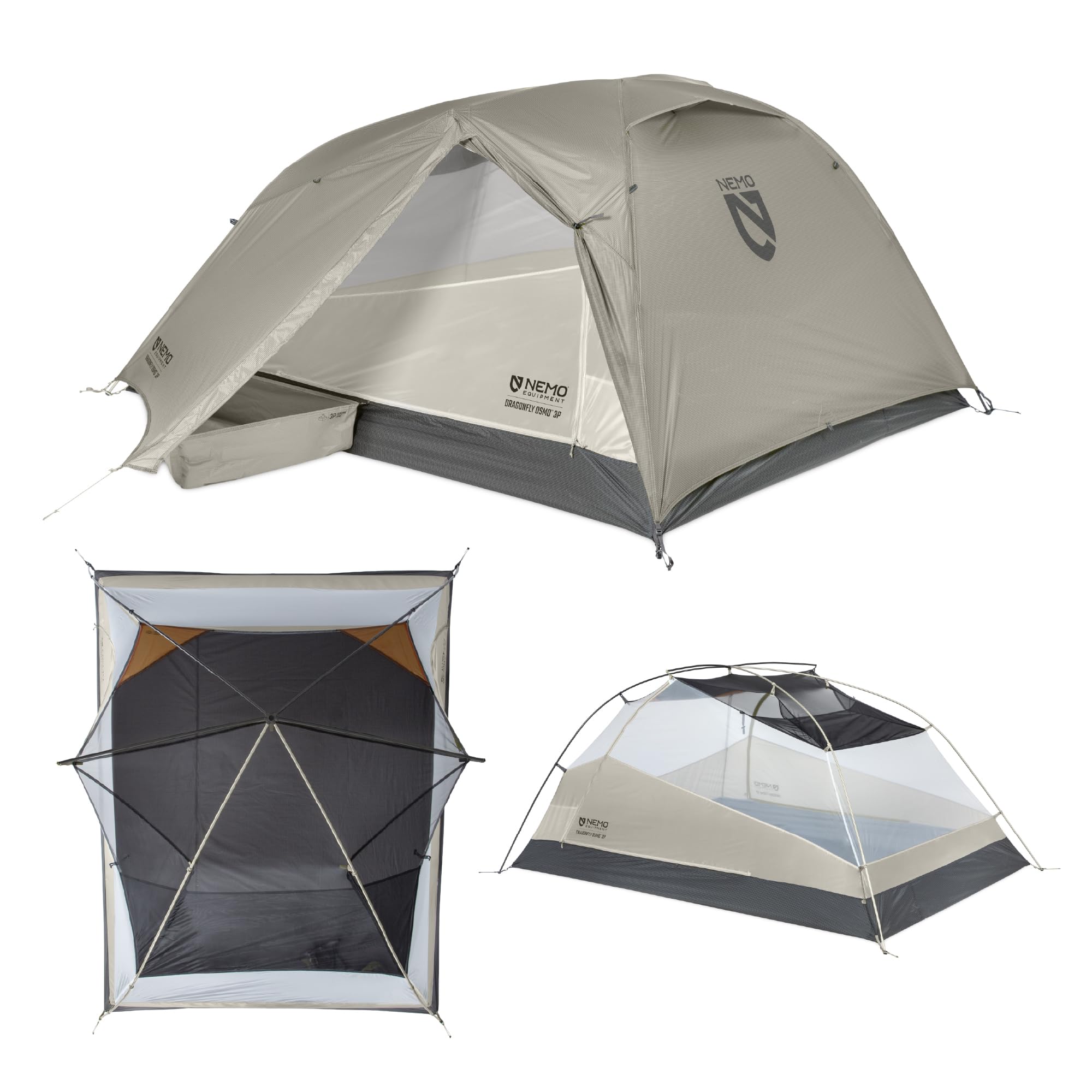
A recycled OSMO fabric that repels water five times longer and stretches three times less when wet.
NEMO’s Dragonfly leads on materials science: the OSMO poly-nylon ripstop is made from 100% recycled yarns that are PFAS-free, and the brand claims the water repellency lasts 5x longer while the fabric stretches 3x less when soaked. That matters on a multi-day trip, because a fly that sags when wet loses its taut pitch and can flap all night. The solution-dyed, bluesign-approved fly and floor also meet strict ecological standards without added flame-retardant chemicals.
The geometry is just as clever. A pre-bent DIAPOLE recycled aluminum cross pole increases volume at the head by 34% while improving space at the peak and foot ends, so a 5’10” user reports stretching out with room for gear. Tall doorways with Gatekeeper tiebacks sit on both sides, paired with vestibules for easy entry from either direction. Color-coded poles and matched webbing make setup intuitive enough that it gets described as “super easy.”
At 3.8 pounds, it lands heavier than the Big Agnes above but still firmly in ultralight territory, so you can take it on a serious trek without a heavy pack. The high-strength fabric shrugs off snow, rain, and wind — one owner took it to Chile and it handled all three perfectly. A few quality nits surface in the reviews: one buyer received the wrong colored poles, and another found two stake-out cords frayed and needing resealing. The interior is genuinely spacious for one or two, but treat it as a premium 2-person shelter with a “3” on the tag — not a true three-person tent.
Why it matters: this is the tent for buyers who care about both environmental footprint and a fly that holds its pitch in a downpour.
Pick it if: you want cutting-edge recycled fabric, easy dual-side entry, and headroom that defies its 3.8-pound weight.
Reconsider if: you need true three-adult capacity — the Dragonfly shines brightest as a luxury two-person shelter.
Understanding the Specs
Waterproof Rating (PU3000mm vs PU5000mm)
This number tells you how much water pressure the fabric can hold back before it seeps through. A PU3000mm rating on a fly and floor handles steady heavy rain for most campers, while a PU5000mm rating like the Snugpak’s offers a bigger safety margin for prolonged downpours or driving wind. Sealed seams matter just as much — they stop water from sneaking through the stitch holes where panels join.
Trail Weight vs Packed Weight
Trail weight leaves out the stuff sack and sometimes the stakes to give you the bare minimum you carry. Packed weight is the honest total of everything in the bag, which is why this guide lists the real packed figure. When a tent says “under 4.3 lbs” or “4.12 lbs,” that is the number to plan your pack around, not the marketing highlight.
Floor Area and Dimensions
A floor measured in square feet tells you the total footprint, but length and width in inches tell the real comfort story. A 30 sq ft tent with an 85-inch length suits a taller sleeper fine, while a wider 55-inch floor lets two campers lie on oversized pads without touching mesh walls. Compare the length and width directly between tents rather than trusting the “3-person” label.
Peak Height and Freestanding
Peak height is the tallest point inside, measured at the center, which decides whether you can sit up to change clothes. Freestanding means the poles hold the shape without stakes, so you can pick the tent up and move it before committing to a spot. Non-freestanding designs save weight but need good ground for stakes to hold tension properly.
FAQ
Is a 3P tent actually big enough for three adults?
What is the ideal weight for a backpacking tent?
What does a waterproof rating like PU3000mm mean?
Should I buy a footprint for my tent?
How do I stop condensation inside my tent?
What is the difference between a 3-season and 4-season tent?
What does freestanding mean and why does it matter?
Is a heavier tent with better fabric worth it?
Why do interior pockets and vestibules matter?
Can one person set up a 3P backpacking tent alone?
Final Thoughts: The Verdict
For most buyers, the 3p backpacking tent winner is the Naturehike Ultralight because it balances a genuinely roomy 116.1 x 82.7-inch floor with a compact 16.9 x 6.7-inch packed size and an included footprint — so you get the complete package at a fair weight. If you want the biggest living space and dual doors for a true trio, grab the Naturehike Mongar Upgraded. And if a serious storm is your main concern, the Snugpak Scorpion 3 brings a PU5000mm outer that shrugs off weather most rivals can’t touch.
How We Picked
We do not accept paid placement. Every pick is matched to a real buyer and a real use-case; we do not hands-on test units.
Sources & Methodology
Specifications: manufacturer listings and product documentation. Review insights: verified customer reviews, as of September 2026. Pricing: not shown on this page (it changes often); check the current price via the retailer link.
As an Amazon Associate, Gadgets Feed earns from qualifying purchases. This does not affect which products we feature.