
Our readers keep the lights on and my morning glass full of iced black tea. As an Amazon Associate, I earn from qualifying purchases.
Specs are compiled from manufacturer listings and verified buyer reviews and can change over time — please confirm the key details on the product page before buying.
Cutting a 4-1/8 inch hole—whether for a recessed light, a dryer vent, or a door deadbolt—is a job that hinges on one tool doing exactly what it promises. A saw that wanders, chews the wrong material, or jams on core ejection turns a ten-minute cut into an afternoon of frustration. This guide cuts through the spec-sheet noise to rank the 4-1/8-inch hole saws that actually earn their place in your toolbox.
I’m Min — the founder and writer behind Gadgets Feed. This guide is built by comparing the manufacturers’ published specifications and the patterns across verified customer reviews, so you get each pick’s real strengths and trade-offs instead of marketing spin.
So whether you’re tackling tile for grab bars or plunging into steel for a new fixture, here is the honest breakdown of the best 4 1/8 hole saw options to make that circle come out clean and true.
Our Picks at a Glance

How To Choose The Best 4 1/8 Hole Saw
Before you add a 4-1/8-inch hole saw to your cart, match the tool to the task. The biggest mistake is buying a saw meant for wood and expecting it to survive a tile or steel job. Here is what separates a smooth cut from a fight.
Match the Teeth to Your Material
This is the most important decision. For wood, plastic, and sheet metal, look for bi-metal saws with high-speed steel (HSS) teeth fused to a steel body—they cut fast and last through many holes. For glass, porcelain, and granite, you absolutely need a diamond-tipped or diamond-grit saw, because standard teeth won’t scratch those surfaces. For abrasive siding, stucco, and cement board, carbide grit is the answer, designed to outlast bi-metal on those rough materials.
Check Cutting Depth and Shank Type
A 4-1/8-inch saw is often used to pass through thick stock or walls. The cutting depth tells you how thick a material the saw can bite through in one pass—if it’s too shallow, you’ll have to flip the work piece or use a different approach. Equally important is the shank: most saws use a 3/8-inch arbor, but some kits include a mandrel for a 1/2-inch chuck. Make sure the package matches your drill or your existing arbor system.
Quick Comparison
| Model | Best For | Teeth/Material | Cutting Depth | Shank/Pilot | Amazon |
|---|---|---|---|---|---|
| DKIBBITH Diamond★ Best Overall | Tile & Glass | Diamond-Tipped | 1-3/8″ | Guiding Pilot Bit | Amazon |
| Spyder 600102Rapid Core Eject | Wood & Drywall | Bi-Metal | 1-7/8″ | Rapid Core Eject | Amazon |
| Drill AmericaPrecise & True | Wood & Metal | Cobalt HSS Bi-Metal | — | Side Cutouts | Amazon |
| DKIBBITH TCT | Hard Steel | Tungsten Carbide Tipped | Up to 1″ (25mm) | Split Point Pilot | Amazon |
| TrustAid Diamond | Porcelain & Marble | Carbon Steel + Diamond Grit | — | Pilot Guide Bit | Amazon |
| DECKRKAT TCT | Stainless Steel | Tungsten Carbide Tipped | — | Spring-Loaded Pilot | Amazon |
| Disston Blu-MOL | Metal & Siding | Bi-Metal | 1-1/2″ | Fits 3/8″ Drill | Amazon |
| Starrett Deep Cut | Thick Metal & Tubing | Hardened HSS Bi-Metal | 2″ | Arbor Type | Amazon |
| wowsupm Carbide Grit | Stucco & Cement Board | Carbide Grit | Up to 1-1/2″ | Mandrel + 2 Pilots | Amazon |
In‑Depth Reviews
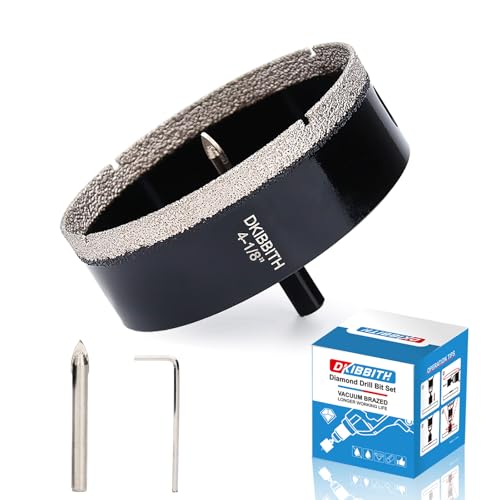
1. DKIBBITH 4-1/8″ Diamond Hole-Saw Bits
Our pick — over 4.5★ from 700+ verified ratings; the strongest balance of quality and price.
The tile and glass specialist that brings a clean 1-3/4-inch hole to a 3/4-inch glass tabletop with the right water dam.
If your project involves porcelain, granite, stone, or glass, this is the saw to beat. It cuts through ceramic and porcelain tile smoothly, and the diamond-tipped design handles tougher surfaces with a cutting depth of 1-3/8″ that’s ideal for thicker countertops. A guiding pilot drill bit keeps the saw anchored so the cut starts exactly where you want it, avoiding the wandering that ruins a tile job.
The quality is the thing that wins people over—owners consistently praise how sharp it feels and how easily the included hex wrench and removable pilot bit let you set up. One common tip from the field is to use a water cooling method: lubricating with water during drilling keeps the cut smooth and preserves the bit’s life. Buyers report a clean 1-3/4-inch hole in a 3/4-inch glass tabletop when they pre-drill a guide hole and use a blue tape water dam.
The trade-off is that diamond-core cutting is not a speed game. You’ll be spraying water and going steady, and the durability sees mixed feedback when pushed hard on very heavy granite. But for the vast majority of tile, glass, and stone work, this is a remarkably capable and value-packed performer.
Why It Earns the Top Spot
- Diamond-tipped teeth slice through tile, granite, and glass
- 1-3/8″ cutting depth for thicker countertop material
- Guiding pilot bit and hex wrench keep setup simple
The Honest Limits
- Slow, steady cutting with water cooling is a must
- Durability reports vary on the hardest stone
Your grab for: tiling, glass work, and stone—the hardest materials in this roundup without needing a separate saw.
Look elsewhere if: your work is purely wood and drywall, where a faster bi-metal saw will save you time.
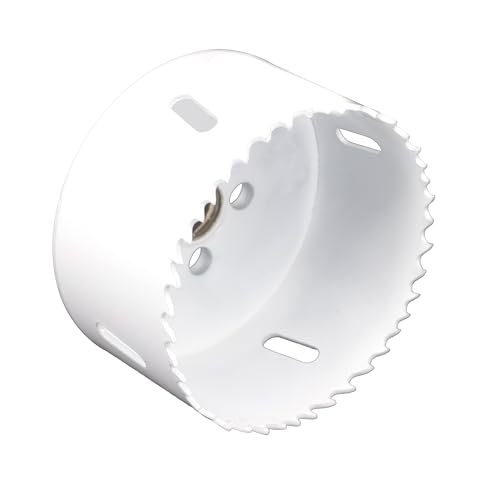
2. Spyder 600102 Rapid Core Eject Bi-Metal Hole Saw
The one that drops out the plug with a button press—no more prying out stuck wood cores.
For anyone installing low-profile LED recessed lights, this is a revelation. The tagline says it all: the Rapid Core Eject function lets you drop out the cut core at the touch of a button, saving you from the classic chore of knocking a stuck plug out with a screwdriver. Owners mention it makes the perfect snug-fitting hole for the 4-inch variety of recessed lights and suggest tossing your jigsaw for this exact job.
Underneath that clever ejection system is tough bi-metal steel with a variable tooth pitch that guarantees a fast, clean cut through all thicknesses. The cutting depth reaches up to 1-7/8″, giving you room to work through thicker stock. As owners put it: “worked like a champ—cut six holes in drywall and 3 in plaster and it still seems to be sharp to keep going.”
It weighs 16 ounces, feels solid in a corded drill, and the sharpness holds up across multiple holes in wood and plaster. Unlike the diamond DKIBBITH above, this is a wood and drywall specialist—not a tile tool. For drywall, wood, and recessed lighting, it’s a standout that keeps the workflow moving.
Core Ejection Magic: the signature feature genuinely saves time, and the bi-metal build earns praise for high quality and fast cutting in wood and plaster.
Match It to the Job: this shines on wood, drywall, and plaster—steer clear of tile and glass, where the teeth won’t get traction.
Reach for this if: you’re doing recessed lighting, drywall, or plaster and want the fastest way to eject the core.
Think twice if: your project is masonry or tile, where you’ll need a diamond or carbide saw instead.
3. Drill America 4-1/8″ Bi-Metal Hole Saw
The American-made all-rounder that holds a precise line without wandering, from plywood to aluminum.
This saw is built for versatility. The bi-metal construction uses cobalt HSS teeth laser-welded to a steel alloy backing, which gives you strength and a long life across wood, plywood, aluminum, sheet metal, and plastic. It’s the kind of tool you grab when you’re moving between materials on the same job and want one dependable cutter.
The design uses 4/6 variable pitch teeth with a positive rake angle, which means smoother drilling and less chatter. Side cutouts make debris and plug removal quick, so you’re not fighting the saw when you’re done. Owners are quick to call out the precise round hole it cuts without wandering, and the 16-ounce build feels substantial in hand.
It’s a size that fits a Lenox hole saw arbor, making it a smart upgrade if you already own a Lenox pilot system. Unlike the Spyder’s button ejection, you’re ejecting the core manually through the side windows, which is a fair trade for the material range. For a true multi-material workhorse, this is the one to keep in the main kit.
Cuts Clean, Stays On Line: owners emphasize the precise round hole without wandering, backed by durable cobalt HSS teeth and an easy-to-clean design.
Bring Your Own Arbor: this is a bare saw, so compatibility with your existing arbor system is the key consideration.
Best for: the generalist who bounces between wood, plastic, and sheet metal and wants a long-lasting blade.
skip it if: you need a self-contained kit with an arbor and pilot bit already included.
4. DKIBBITH TCT Hole Saw Set 4-1/8″ (105mm)
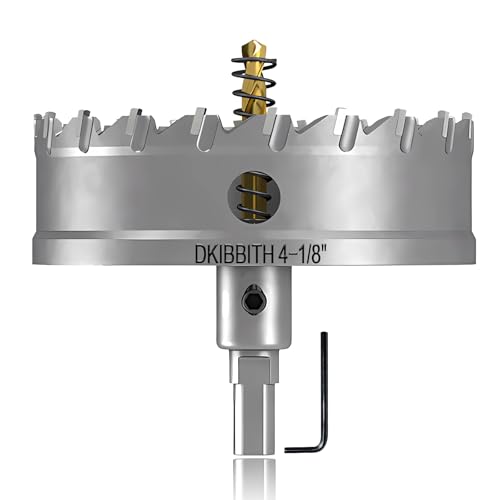
The tungsten-carbide brute that chews through steel like butter, yet it demands patience and proper technique.
This is the heavy-duty option for metalworkers. The tungsten carbide tipped (TCT) teeth are built to create clean, burr-free holes faster than conventional twist drills, making it a go-to for electrical installations, plumbing, and HVAC work. It handles stainless steel, mild steel, iron, copper, and brass sheet up to 1-Inch (25 mm) thick, giving it a wide range of metal applications.
The split point pilot drill bit prevents the saw from walking at the start, and an ejection spring facilitates easy slug removal. Customers note it cut through a steel door in seconds for a deadbolt upgrade and handled a 4.5-inch hole in the side of a shipping container with a solid result. That said, this is a tool that demands care—the high-hardness teeth are brittle and an occasional unit has had teeth break on first use. It thrives on slow, steady drilling with lower RPM and added oil for lubrication.
Compared to the Spyder for wood above, this is entirely a metal-focused instrument. It’s a specialist, not a generalist, and it rewards users who respect its need for technique. The included rust-proof plastic carrying case keeps the bit safe between jobs.
Steel-Cutting Credentials: fast, clean holes in steel doors and shipping containers earn it a loyal following among metalworkers.
Demanding Tool: the brittle teeth mean this is not for heavy-handed beginners—go slow, use oil, and let the saw do the work.
Reach for this if: you’re drilling into stainless, mild steel, or iron and need a serious metal-cutting hole saw.
Look elsewhere if: you’re a casual DIYer who wants a forgiving tool—this one punishes rough handling.
5. TrustAid Diamond Hole Saw 4-1/8 Inch
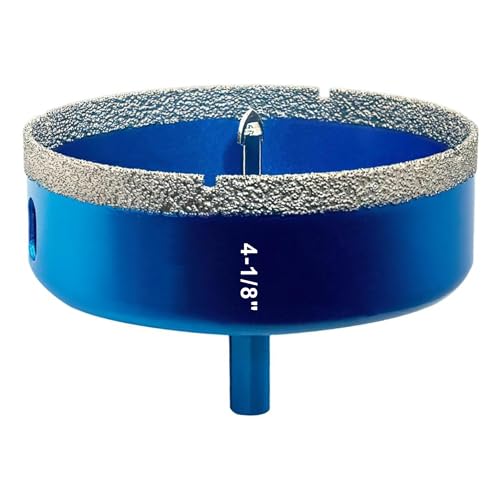
A surprisingly nimble diamond cutter for ceramic plant pots, wine bottles, and precise tile work.
This saw is made of industrial grade carbon steel with quality diamond grit coated using brazing technology, designed for quick drilling on hard materials. It’s ideal for glass, ceramics, porcelain tiles, limestone, marble, quartz, and granite. The pilot center drill bit design avoids the hassle of slipping, making drilling on tiles easy and precise.
Homeowners have found it works wonders on ceramic plant pots—even with a basic electric drill and a spray of water, one owner reported a clean break-through in about 3 minutes. Wine bottle projects (converting bottles into bird feeders) also went quickly when the bottle was submerged in water. The thick, uniform diamond coating provides longer service life, and a large clearance hole on the lateral side allows water to keep cooling and remove chips faster.
Unlike the DKIBBITH diamond saw’s broader stone focus, this one excels at smaller, precise home DIY work. The trade-off is that the starter bit can dull quickly, even with water, though a spare bit is included. It’s a purpose-built tool that shines when you’re drilling into pots, bottles, and tile.
DIY-Friendly Diamond: a basic electric drill with water is all it takes to cut clean holes in pots and bottles, per the strong owner feedback.
Starter Bit Wear: the pilot bit dulls quicker than the main saw, so the included spare is your friend on longer projects.
Perfect for: first-time tile drillers, pottery enthusiasts, and anyone adding drainage holes to planters.
pass on it if: you’re looking for a pro-grade tool for heavy daily masonry work—this is built for the enthusiastic weekend DIYer.
6. DECKRKAT 4-1/8″ TCT Hole Saw for Hard Metal
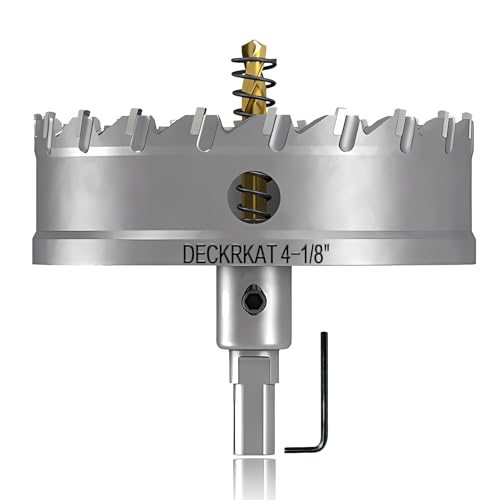
A TCT cutter that punches through 5/16-inch steel at twice the speed of big-box brands for a fraction of the cost.
Built specifically for the toughest jobs, this tungsten carbide tipped hole saw is designed to cut through stainless steel, aluminum, high alloy steel, copper, plastic, FRP, and PVC with a clean, precise cut. The 4.13-inch cutting diameter is paired with a 3/8-inch, 3-flatted shank that offers a strong, steady chuck grip, minimizing slipping during heavy-duty cutting.
Performance reviews are emphatic: it cuts through 1/2-inch plate steel cleanly and works efficiently at slow RPMs. One owner measured it as “twice as fast at one third the price” compared to a competing single saw. The key is technique—starting with lower torque and speed on the pilot bit, then increasing speed as the hole saw makes contact, with adequate cutting oil to prevent overheating. It’s pre-oiled and packaged in a durable plastic case for rust-resistant storage.
The catch is consistency. While many praise its durability, others report the carbide teeth breaking off quickly, and the pilot bit’s set screw needs retightening during use. It’s a high-value, high-performance metal cutter that demands respect, much like the DKIBBITH TCT above, but with a slightly wider safety margin when treated right.
Speed Demon on Steel: the standout feedback is how fast it drives through plate steel and aluminum framing with proper lube.
Pilot Bit Quirk: the set screw loosens during heavy use—a little Teflon tape and periodic re-tightening solves it.
Choose this for: serious metal projects where speed and value matter, and you have a drill that can handle a 3-flat shank.
Pass on it if: you’re a novice with metal cutting—high-hardness teeth can chip when abused.
7. Disston E0211335 Blu-MOL Xtreme Bi-Metal Hole Saw

A proven bi-metal performer that slices through stainless steel and hardiplank siding without breaking a sweat.
This is a hole saw that delivers where it counts: cutting performance. Owners have used it to cut through stainless steel smoothly and accurately, with no wobble or binding, and it also powers through OSB and hardiplank siding with ease. The 1-1/2-inch depth of cut and fleem ground teeth are designed for a longer life, and it fits Lenox, Ridgid, Milwaukee, and Diablo mandrels for easy integration.
The design features wide slot designs on the sidewalls and backing plate for increased visibility while cutting, and large openings in the backing plate allow for quick removal of cut material. Reviewers point out it holds its edge remarkably well—one user made it through several tough uses and it was “still good.” For cutting a hole in the side of a generator shed for a 50A cord, it performed exactly as designed.
There are two honest caveats. Sharpness gets mixed feedback, with some users noting it doesn’t stay razor-sharp forever, and a few report it doesn’t fit standard mandrels perfectly. Compared to the Starrett below, this trades a little maximum depth for a more user-friendly, mandrel-compatible profile across common arbor systems. It’s an excellent value for metal and siding work.
Proven Workhorse: the cutting performance against stainless steel and cement siding earns consistent praise, with durability described as lasting longer than cheaper imports.
Fit First: double-check your mandrel type, as fit and long-term sharpness see mixed reports.
Best for: anyone who needs a reliable saw across metal and abrasive siding, especially with an existing arbor system.
Think twice if: you demand razor-sharp edges for dozens of holes on a single blade—its longevity is good, not extraordinary.
8. Starrett Deep Cut Hole Saw, 4-1/8″ Diameter
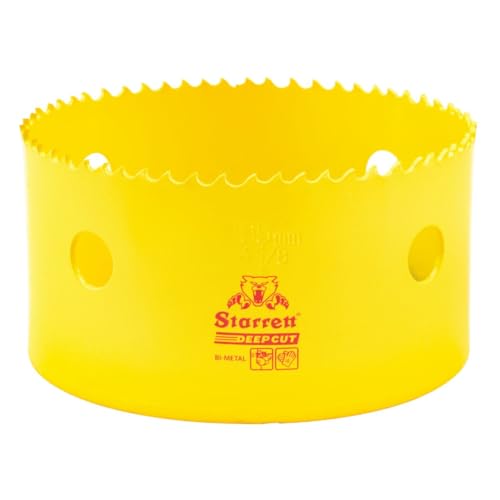
The professional’s deep-cutter that notches 1.75-inch tubing cleanly, like a hot knife through butter.
When you need to cut through thick materials in one pass, this is the saw. The Starrett Deep Cut offers a 2-inch depth of cut, which is the deepest in this roundup, and uses NVP progressive pitch technology that provides the fastest cutting rates on the market. The teeth are made from hardened and heat-resistant high-speed steel, ensuring long life and consistent performance even under pressure.
The real-world feedback is a masterclass in metal-cutting. One owner made at least 30 notches in 1.75-inch steel tubing and the saw was “still cutting like new.” Another confirmed it handled 4130 chrome-moly tube with better fit-up than other brands, withstanding inadequate clamping and arbor rigidity without dulling or chattering. It’s also effective on 2-inch schedule 40 steel pipe.
The trade-off is the depth. While it cuts fast and smooth, some owners note it isn’t deep enough to notch a 2-7/8-inch drill pipe in one shot—you need to notch one side at a time for complex angles. If your work frequently involves thick steel pipe and tubing, this is the premium tool that justifies its price, outperforming the shallower Disston in raw reach.
Metal-Notching Authority: dozens of clean, vibration-free cuts in hardened tubing with no dulling is the consensus experience.
One Shot Limit: for very thick pipe, the 2-inch depth means you’ll work in multiple passes—not a one-pass miracle.
Pick this if: you’re a metal fabricator or pro who needs deep, accurate, and durable cuts in tubing and pipe.
it’s not for you if: you only occasional need a 4-1/8-inch hole in wood or drywall—the premium is wasted on light material.
9. wowsupm Carbide Grit Hole Saw 4-1/8″
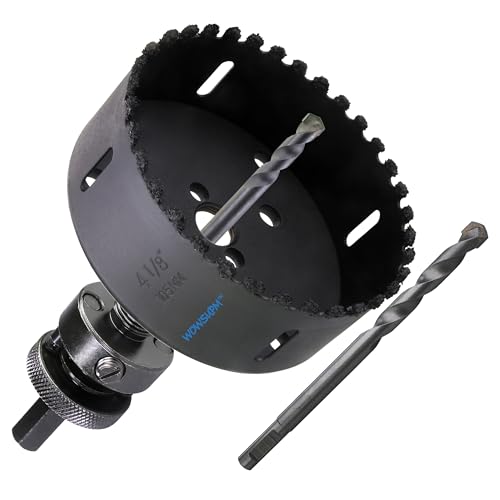
The abrasive-material specialist that chews through stucco, hardy plank, and cement board up to 3X longer than bi-metal.
If you’re cutting into exterior siding or masonry board, a standard bi-metal saw will dull fast. This carbide grit hole saw is purpose-built to cut through abrasive materials like air brick, fiber cement siding, backer board, stucco, plasterboard, MDF, hardy plank, and cement board. The manufacturer specifies it’s not for wood, and it lasts up to 3X longer than bi-metal on these tough surfaces.
The cutting depth goes up to 1-1/2″ (38 mm), making it ideal for recessed lighting, dryer vents, and other roof vents. The teeth hardness is rated over 80 HRC, ensuring it stays sharp and hard. The package is generous: a 4-1/8″ carbide hole saw, a mandrel for a 1/2-inch chuck, and 2 multiple-purpose carbide-tipped pilot drill bits. Owners confirm it cuts stucco easily with a clean hole, though it’s a slow process—expect to work in with patience.
This is a niche tool with a very specific job, and it excels at that job. The main negative is the pilot bits can loosen and fall out if not tightened firmly, and one buyer had a frustrating experience with a missing arbor. For vent installations in siding and masonry, though, it’s the right tool that outlasts bi-metal options. It’s the clear choice for exterior renovation work.
Vent Installation Hero: cuts clean holes in stucco and cement board reliably, with the added security of a longer service life than bi-metal.
Patience Required: it’s slow and methodical, so rushing will wear out the carbide and test your technique.
Choose this for: abrasive siding, stucco, cement board, and roof vent projects where bi-metal teeth die quickly.
Pass on it if: your cuts are in wood—the manufacturer is clear this saw is not suited for that material.
Understanding the Specs
Bi-Metal vs. Diamond vs. Carbide Grit Teeth
The teeth are the whole game. Bi-metal saws (like the Spyder, Drill America, and Disston) use high-speed steel teeth welded to a steel body—they’re the all-rounders for wood, plastic, and sheet metal. Diamond-tipped saws (DKIBBITH, TrustAid) are the only choice for glass, tile, and stone, since standard teeth can’t scratch them. Carbide grit saws (wowsupm) excel on abrasive materials like stucco and cement board, where they last up to 3X longer than bi-metal. Match the tooth material to your main project material.
Cutting Depth and Arbor Compatibility
Cutting depth tells you how thick a material the saw can pass through in a single plunge. On this list, it ranges from 1-3/8″ on the DKIBBITH diamond saw to 2″ on the Starrett deep cut—deeper is critical for thick stock like pipe or heavy pipework. Arbor compatibility is just as important: some saws fit existing Lenox or Milwaukee mandrels, while others like the wowsupm include their own mandrel. Always verify the saw fits your drill’s arbor before purchase, since a mismatch will leave you unable to use the tool.
FAQ
Will a 4-1/8 inch hole saw fit a standard 3/8-inch drill chuck?
What is the difference between a diamond hole saw and a bi-metal hole saw?
How do I prevent a 4-1/8 inch hole saw from wandering on a smooth surface?
Can I use a 4-1/8 inch diamond hole saw for cutting granite countertops?
How deep can the Spyder Rapid Core Eject saw cut?
What materials can a tungsten carbide tipped hole saw cut?
Is a 4-1/8 inch hole saw the right size for recessed lighting?
How long does a 4-1/8 inch bi-metal hole saw last?
Do these hole saws come with a pilot drill bit included?
What RPM should I use when drilling with a carbide grit hole saw?
Final Thoughts: The Verdict
For the majority of shoppers, the 4 1/8 hole saw winner is the DKIBBITH Diamond Hole Saw because it covers the hardest materials—tile, glass, and stone—with a sharp, precise, and value-packed design that the crowd has validated. If you want the fastest wood and drywall cutting with easy core ejection, grab the Spyder Rapid Core Eject. And for thick metal and pipework, the Starrett Deep Cut is the one to reach for, holding its edge through dozens of cuts.
How We Picked
We do not accept paid placement. Every pick is matched to a real buyer and a real use-case; we do not hands-on test units.
Sources & Methodology
Specifications: manufacturer listings and product documentation. Review insights: verified customer reviews, as of September 2026. Pricing: not shown on this page (it changes often); check the current price via the retailer link.
As an Amazon Associate, Gadgets Feed earns from qualifying purchases. This does not affect which products we feature.