
Our readers keep the lights on and my morning glass full of iced black tea. As an Amazon Associate, I earn from qualifying purchases.
If your home theater or hi-fi system relies on a single AVR to power every speaker, you already know the compromises: limited headroom, heat buildup, and channels that fight each other for power. A dedicated 4 channel home amplifier solves this by delivering clean, independent power to each speaker pair, letting your front and rear channels breathe without choking your receiver’s already-strained output stage.
I’m Min — the co-founder and writer behind Gadgets Feed. I research hundreds of hours of spec sheets across power ratings, amplifier classes, THD figures, and real-world load handling to identify which 4-channel amps actually justify the rack space and which fall apart under continuous demand.
Whether you’re upgrading a multi-room setup or adding external amplification to a premium processor, the right best 4 channel home amplifier determines whether your system sounds effortless or strained at the volume you actually listen to.
How To Choose The Best 4 Channel Home Amplifier
A 4-channel amp is the bridge between your source component and your speakers. Choosing the wrong one means either starving your speakers of power or overpaying for features you’ll never use. Focus on what actually matters for your room size, speaker sensitivity, and overall system topology.
Amplifier Class: A/B vs. D
Class A/B amps like the Rockford Fosgate T600-4 deliver smooth, non-switching sound with excellent transient response, but they run hot and are less efficient — expect to budget for ventilation. Class-D designs like the Sound Town NIX-D4800 use pulse-width modulation to achieve high efficiency and lightweight chassis, making them ideal for rack-mount setups where heat dissipation is tight. The trade-off is the potential for higher noise floor if the switching power supply is poorly filtered.
Power Ratings: RMS Is The Only Number That Counts
Ignore peak power figures — they represent a fraction-of-a-second burst that tells you nothing about sustained performance. Look at the RMS power per channel into 4 ohms, all channels driven. The OSD Audio Nero HTA4200 specifies 200W RMS per channel into 4 ohms, which is the true indicator of how the amp will behave during a full movie soundtrack. Ensure the amp’s RMS output comfortably exceeds your speakers’ sensitivity by at least 10–15% to avoid clipping.
Input Sensitivity and Signal Routing
Most modern preamps and processors output between 1V and 2V. A 4-channel amp with adjustable input sensitivity (e.g., 0.775V, 1.0V, 1.44V on the Sound Town ST-UPDM4C) lets you match the amp’s input stage to your source voltage, reducing noise and maximizing gain structure. Additionally, look for stereo/parallel/bridge mode switches — these allow you to route signals independently to front and rear zones or bridge channels for subwoofer duty without messy external Y-cables.
Quick Comparison
On smaller screens, swipe sideways to see the full table.
| Model | Category | Best For | Key Spec | Amazon |
|---|---|---|---|---|
| WiiM Amp Ultra | Streaming Amp | Hi-Fi streaming with room correction | 100W RMS x 4 @ 4 ohms | $529.00Amazon |
| OSD Audio Nero HTA4200 | Class A/B | High-power home theater | 200W RMS x 4 @ 4 ohms | $699.99Amazon |
| Sound Town ST-UPDM4C | Pro Class-D | High headroom in 1U rack | 1520W RMS x 4 @ 4 ohms | $577.99Amazon |
| Sound Town NIX-D4800 | Class-D PA | PA and passive speaker systems | 720W RMS x 4 @ 4 ohms | $314.99Amazon |
| Rockford Fosgate T600-4 | Class A/B | Mobile/desktop high-power systems | 100W RMS x 4 @ 4 ohms | $659.99Amazon |
| Pyle PD3000BA | Multimedia Amp | Budget karaoke and DVD playback | 3000W peak power (claimed) | $189.99Amazon |
| Pyle PDA77BU | Value Amp | Entry-level multi-room audio | 800W peak power (claimed) | $126.99Amazon |
In‑Depth Reviews
1. WiiM Amp Ultra with Voice Remote 2
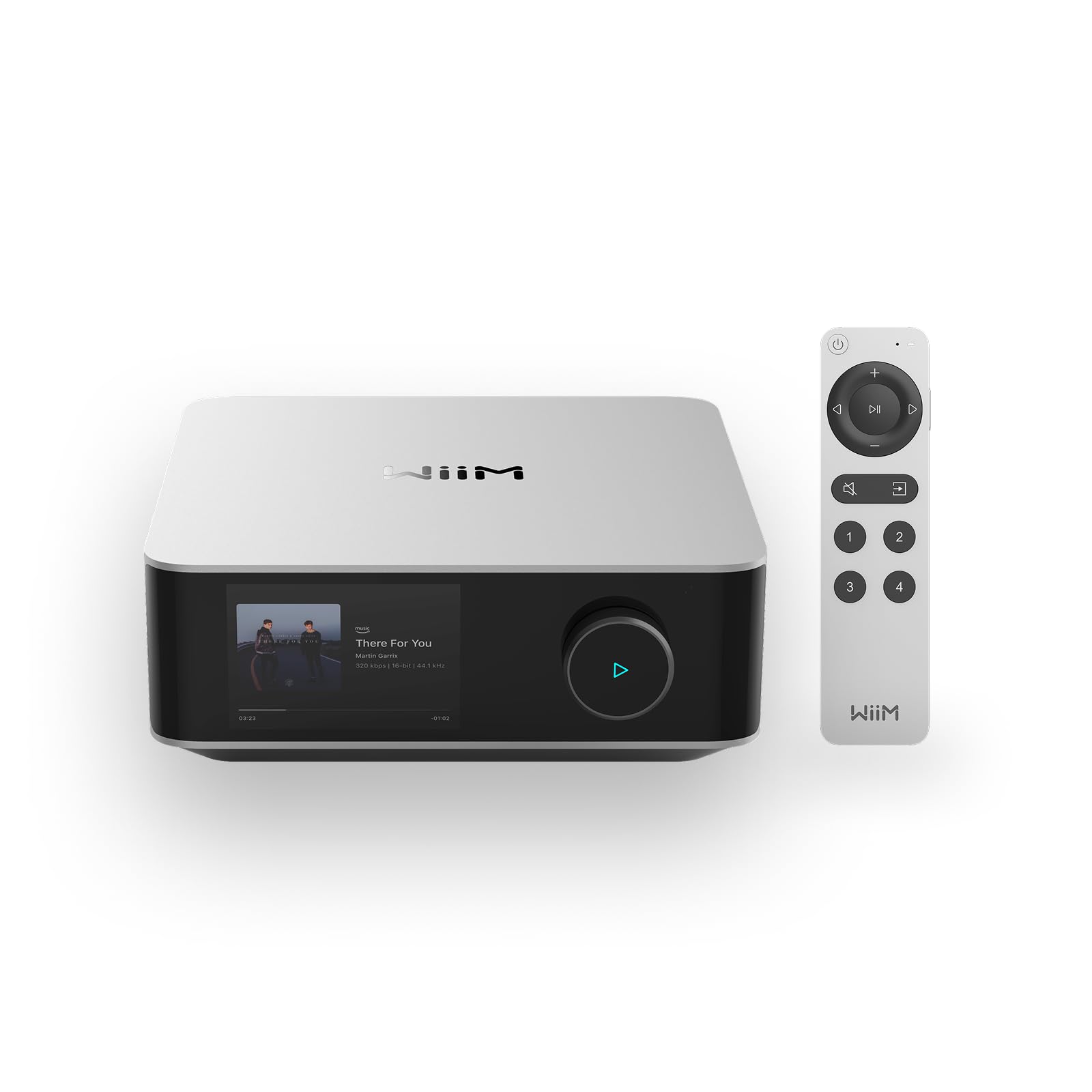
The WiiM Amp Ultra combines a high-resolution streaming platform with a dual TI TPA3255 Class-D amplifier section that delivers 100W per channel across four outputs. The ESS SABRE ES9039Q2M DAC handles digital conversion with -106 dB THD+N, meaning the noise floor is virtually inaudible even with high-sensitivity speakers. Real-world listening reveals studio-clear vocals and extended high-frequency air that outperforms many integrated amplifiers at twice the price.
The built-in RoomFit auto-correction uses the unit’s microphone to measure in-room response, then applies parametric EQ to flatten peaks and troughs — a feature normally reserved for processors in the multi-thousand-dollar range. HDMI ARC allows seamless integration with a TV, while Wi-Fi 6 and Bluetooth 5.3 with LE Audio provide stable streaming from TIDAL, Qobuz, and Spotify up to 24-bit/192kHz. The 3.5-inch touchscreen shows album art and system settings, eliminating the need to reach for a phone for basic adjustments.
For users building a high-resolution audio system without the complexity of separate components, this is the most cohesive 4-channel amplifier available today. The app-based control with per-source EQ, volume limits, and multi-room sync makes it equally adept in a dedicated listening room or a distributed whole-home setup.
Why it’s great
- Flagship ESS DAC + dual TPA3255 for low-distortion, high-dynamic-range output
- Built-in RoomFit room correction calibrates the sound to your actual listening space
- Touchscreen interface with full streaming service support eliminates the need for a separate streamer
Good to know
- Does not support AirPlay as an audio receiver
- No coaxial digital input — optical and HDMI ARC are the only digital connections
- Bluetooth source switching introduces a several-second delay before playback resumes
2. OSD Audio Nero HTA4200

The Nero HTA4200 is a 4-channel Class A/B amplifier delivering 200W RMS per channel into 4 ohms, all channels driven, with 110 dB signal-to-noise ratio at full power. The Class A/B topology inherently provides smooth, non-switching output — transient response is excellent, there’s no high-frequency switching noise, and the amp produces distortion figures that rival far more expensive audiophile designs. It weighs 52 pounds because the internal transformer and power supply are fully linear, which means no fan noise and no buzz.
Balanced XLR inputs ensure low-noise signal transfer even over long cable runs, while RCA inputs offer broad compatibility with consumer preamps and processors. The bridge mode per channel pair enables 300W output into 8 ohms, turning the amp into a high-power 2-channel solution for demanding tower speakers or a subwoofer amplifier. The 12V trigger input allows remote power on/off integration with a preamp or control system.
Users consistently report that the HTA4200 runs cool even at high output levels, with no thermal shutdown after hours of continuous listening. The 5-year warranty provides long-term confidence that the robust build quality will outlast less expensive alternatives. It is the benchmark for pure power amplifier performance at this channel count.
Why it’s great
- 110 dB SNR at full power provides an exceptionally black background with no audible noise floor
- Balanced XLR inputs reject hum and noise over long cable runs
- Bridged mode per channel pair delivers 300W into 8 ohms for demanding speakers
Good to know
- Weighs 52 pounds due to the large toroidal transformer — ensure your rack shelf is rated for the load
- No built-in streaming, DAC, or room correction — it is a pure power amplifier requiring an external processor or preamp
- The 12V trigger implementation requires a toggle switch to turn off the trigger function
3. Sound Town ST-UPDM4C

The ST-UPDM4C uses Unipolar Pulse Density Modulation (UPDM) technology to deliver 1520W RMS per channel into 4 ohms while occupying just 1U of rack space. This is a professional-grade amplifier rated for continuous high-output use — think DJ systems, live sound, or large home theaters with multiple subwoofers. The selectable input sensitivity (0.77V, 1.0V, 1.44V) ensures proper gain staging with virtually any processor or mixer, while the fan-cooled design manages heat effectively even under sustained load.
The amp supports stereo, parallel, and bridge modes, with bridge mode delivering 2100W RMS into 8 ohms per channel pair. The robust metal chassis and removable rack ears make installation straightforward, and the rear-panel DIP switches allow per-channel configuration without accessing internal jumpers. Users with 20 years of professional audio experience have noted that the ST-UPDM4C rivals amps from QSC and Powersoft in terms of output while costing a fraction of the price.
For serious home theater enthusiasts or musicians who need uncompromising power in a compact form factor, this amp is a beast. The high current delivery keeps speakers under tight control even at very high volumes, and the built-in overload/protection circuitry ensures the amplifier won’t fail during demanding transient peaks.
Why it’s great
- 1520W RMS per channel at 4 ohms provides ample headroom for even the most demanding passive speakers
- UPDM technology combines Class-D efficiency with very high current output capability
- Selectable input sensitivity ensures optimal gain structure with any processor
Good to know
- Fan noise may be audible in a quiet critical listening room — better suited to equipment closets or professional setups
- The bright blue LED ring around each knob can make knob position difficult to read in a dim room
- No home-friendly features like streaming, room correction, or HDMI inputs
4. Sound Town NIX-D4800
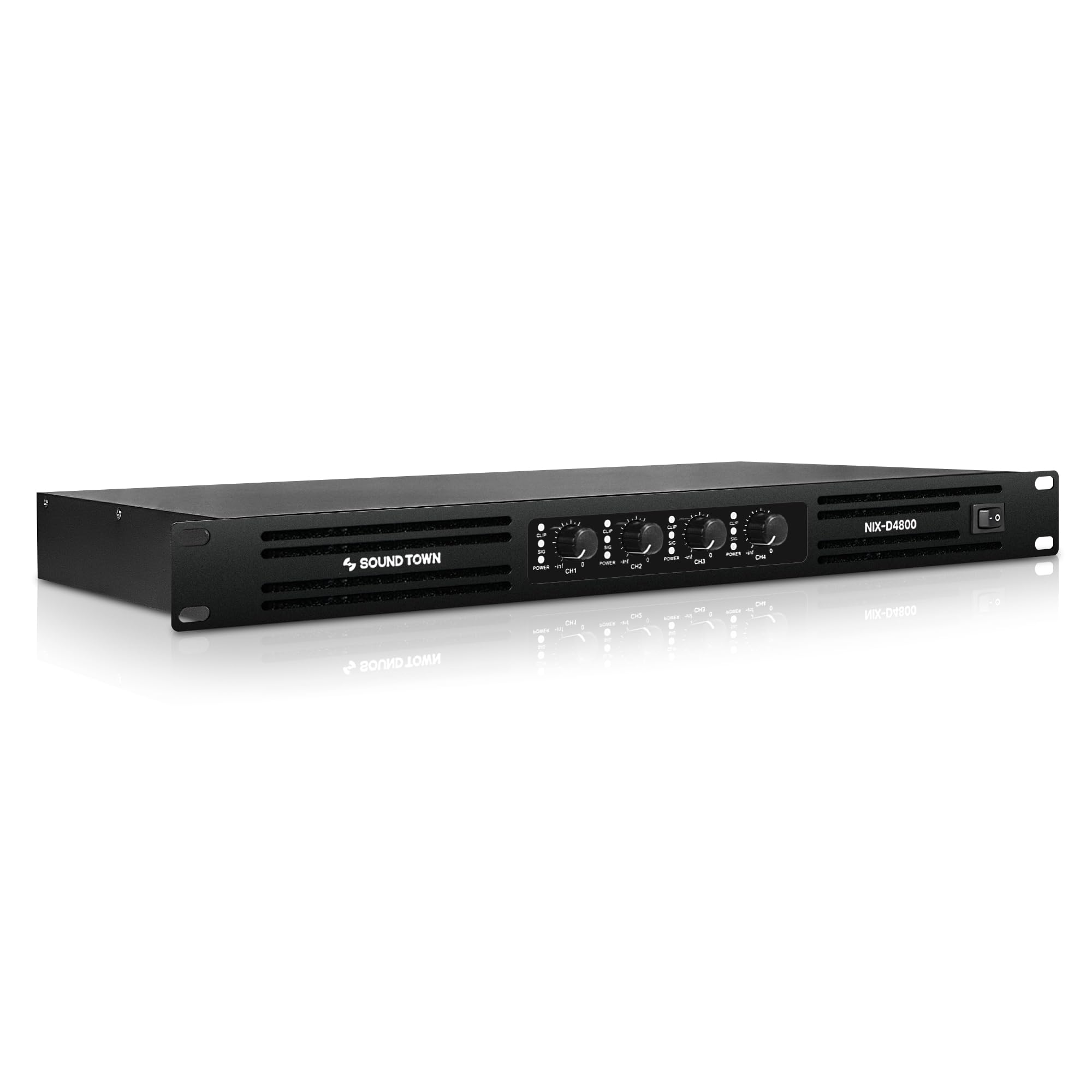
The NIX-D4800 delivers 720W RMS per channel into 4 ohms in a 1U chassis, making it an extremely cost-effective entry into high-power multi-channel amplification. The Class-D topology ensures high efficiency with low heat dissipation, so multiple units can be stacked in a rack without overheating. The stereo/parallel switch allows flexible signal routing, while the input sensitivity selector (0.775V/1V/1.4V) helps match the amp to your source component’s output level.
Overload, overheat, and short-circuit protection circuits prevent damage under fault conditions, and the built-in limiter keeps distortion under control during transient peaks. Users have successfully deployed this amp in recording studio setups where fan noise is a factor — the quiet operation and clean output have surprised even seasoned pro audio veterans who typically prefer more expensive brands. The metal chassis feels robust and the rear-panel Neutrik speakon connectors provide secure speaker connections.
For anyone needing high power into four passive speakers without breaking the budget, the NIX-D4800 delivers where it matters. The combination of genuine 720W RMS per channel, protective circuitry, and rack-friendly form factor makes it a strong choice for both home theater LCR+surround channels and live sound monitor applications.
Why it’s great
- 720W RMS per channel at 4 ohms offers serious headroom for demanding speaker loads
- Class-D design runs cool and light enough for tight rack installations
- Built-in overload, short-circuit, and thermal protection with limiter to prevent distortion
Good to know
- Bright blue knob lights may be distracting in a dark home theater room
- No balanced XLR inputs — RCA only for input connectivity
- Fan noise, while low, may be audible in very quiet listening environments
5. Rockford Fosgate Power T600-4

The Rockford Fosgate T600-4 is a Class A/B amplifier rated for 100W RMS per channel into 4 ohms, with benchtop measurements confirming actual output of 811W total — significantly exceeding its 600W rating. This is a compact amplifier (2.14 inches tall) suitable for mobile or desktop applications where space is limited, but its power delivery makes it viable for home theater systems as well. The differential RCA inputs reject ground loop noise, and the pass-through RCA outputs allow easy daisy-chaining to additional amplifiers.
The variable Punch EQ provides up to +18dB boost at 45Hz and +14dB at 12.5kHz, enabling precise system tuning to compensate for speaker limitations or room acoustics. The 24dB/octave Butterworth crossover allows flexible high-pass and low-pass filtering per channel pair. Users report that this amp drives multiple subwoofers and component speakers with authority, running hot at high volume but never failing — a testament to Rockford Fosgate’s robust thermal design.
For those building a high-power system in a compact vehicle or desktop rig, the T600-4 offers genuine overbuilt performance. The 2-year parts and labor warranty, combined with the company’s legendary build quality, ensures that this amplifier will handle the punishment of daily use without degradation over time.
Why it’s great
- Benchtop-verified output of 811W total exceeds the 600W rated output by a significant margin
- Variable Punch EQ with +18dB at 45Hz and +14dB at 12.5kHz allows detailed system tuning
- Compact 2.14-inch height fits in tight installations where most amplifiers won’t
Good to know
- Class A/B design runs hot — proper ventilation is critical to avoid thermal shutdown
- Primarily designed for mobile audio — limited home-friendly features like streaming or HDMI
- Bridging configuration reduces channel count, which may not be ideal for true 4-channel home theater setups
6. Pyle PD3000BA
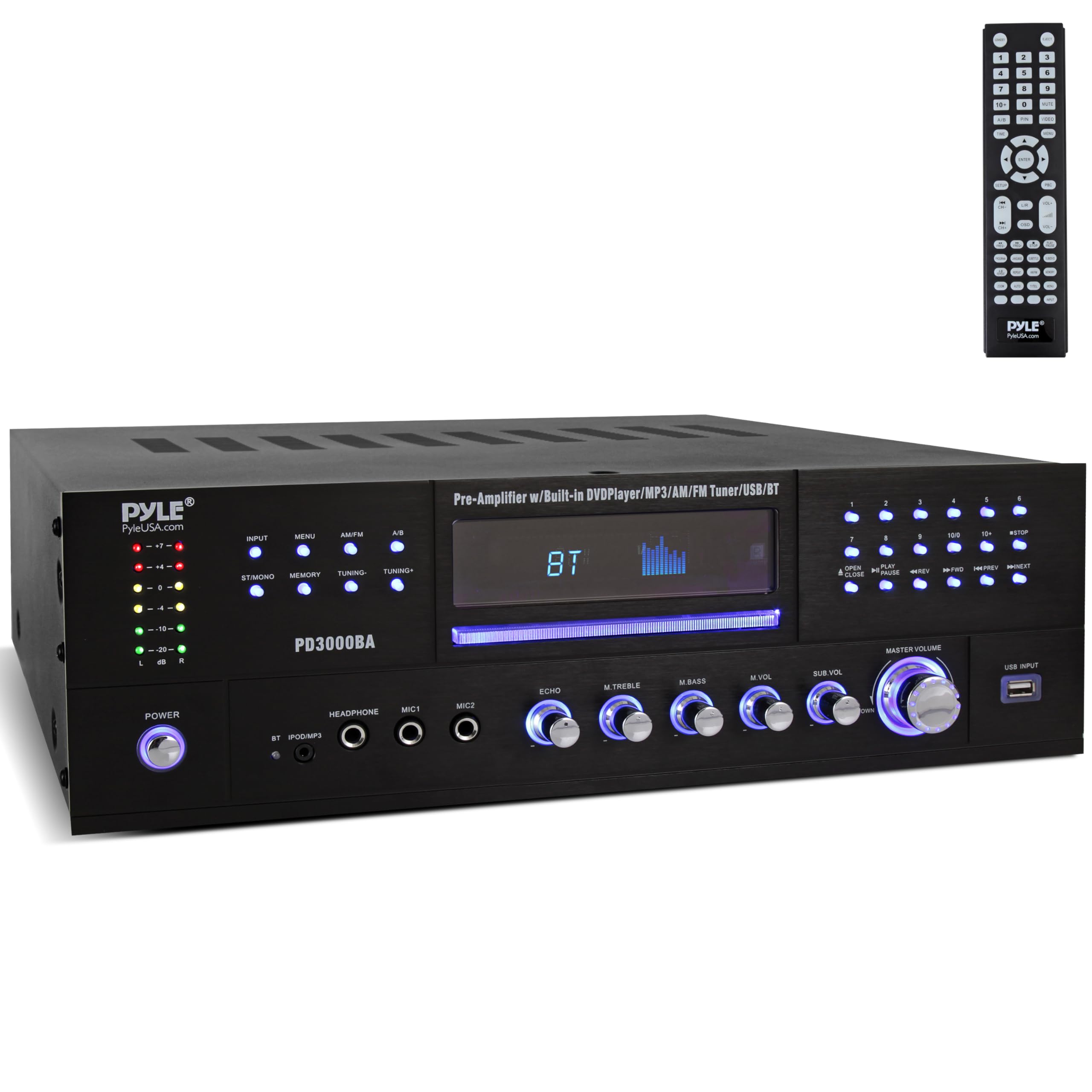
The Pyle PD3000BA is a full-featured multimedia receiver with a built-in front-loading DVD/CD player, FM/AM tuner, and Bluetooth streaming — all integrated into a 4-channel amplifier chassis. It claims 3000W peak power, though the RMS output is significantly lower, making this amp best suited for casual listening, karaoke evenings, or background music in a family room. The dual 1/4-inch mic inputs with independent echo and reverb controls make it a functional karaoke hub right out of the box.
The front-panel control center includes a digital LED display, rotary knobs for volume, tone, and mic EQ, and a remote control for all major functions. Input options include optical, RCA, component video, and S-video, along with USB and SD card slots for direct playback of digital media. Users note that the built-in DVD player defaults to a foreign language menu setting that requires a workaround, and some units have exhibited reliability issues such as thermal shutdown at moderate volumes.
For budget-conscious buyers who need a single box that handles amplification, disc playback, and microphone mixing, the PD3000BA offers a unique combination. However, buyers should be aware that this is not an audiophile-grade component — the power supply is modest, the channel separation is limited, and the build quality reflects the low price point.
Why it’s great
- Built-in DVD/CD player eliminates the need for a separate disc transport in the system
- Dual mic inputs with echo and reverb make it a complete karaoke solution
- Multiple input options (optical, RCA, USB, SD) provide broad connectivity flexibility
Good to know
- RMS power output is far lower than the 3000W peak claim — expect about 80-100W per channel
- Some units have reported thermal failure and sound distortion at higher volume levels
- Remote control has dark blue text on a black background that is very difficult to read
7. Pyle PDA77BU

The Pyle PDA77BU is an entry-level 4-channel amplifier that brings Bluetooth 5.0 streaming, FM radio, and dual microphone inputs into a single chassis at a very accessible price point. It claims 800W peak power, which translates to roughly 40-50W RMS per channel in practice — sufficient for small bookshelf speakers in a den, office, or bedroom setup. The front-panel control center with LED display and push-button controls makes operation simple and immediate.
Input options include USB-A (with MP3 decoder), SD card slot, RCA line inputs, and AUX for connecting a TV or game console. The included remote control allows full adjustment of volume, tone, and source selection from across the room. Users report easy setup with clear documentation, and the Bluetooth connection reaches about 30 feet reliably. A caveat: some users have noted Bluetooth reconnection issues with certain smart TVs, requiring manual re-pairing.
For those on a tight budget who need four amplified channels with modern connectivity, the PDA77BU is a functional option. It is not built to audiophile standards — the noise floor is higher than premium alternatives, and the power supply struggles with demanding speaker loads at high volume. But for casual listening, background music, or a karaoke party, it works as advertised.
Why it’s great
- Bluetooth 5.0 provides reliable wireless streaming from phones, tablets, and laptops
- Dual mic inputs with independent volume and echo controls enable karaoke use without external mixers
- Included remote control provides full source and tone control from across the room
Good to know
- RMS power is limited to roughly 40-50W per channel — not suitable for large rooms or low-sensitivity speakers
- Bluetooth reconnection with some smart TVs requires manual re-pairing
- Build quality and component tolerances are entry-level; no thermal protection or advanced limiter circuitry
FAQ
Can I use a 4-channel amplifier with a surround sound receiver?
What is the difference between Class A/B and Class-D for a 4-channel home amplifier?
How many watts per channel do I really need for a 4-channel home amplifier?
What does bridge mode do on a 4-channel amplifier?
Why does my 4-channel amplifier sound distorted at high volume?
Final Thoughts: The Verdict
For most users, the best 4 channel home amplifier winner is the WiiM Amp Ultra because it combines streaming, room correction, and high-fidelity amplification in a single compact chassis — eliminating the need for separate components while delivering audiophile-grade output. If you want uncompromising raw power with balanced XLR inputs and bridging capability, grab the OSD Audio Nero HTA4200. And for budget-conscious setups that need four amplified channels with Bluetooth convenience, nothing beats the value of the Pyle PDA77BU.
Product prices and availability are accurate as of the date/time indicated and are subject to change. Any price and availability information displayed on Amazon at the time of purchase will apply to the purchase of this product. As an Amazon Associate I earn from qualifying purchases.
CERTAIN CONTENT THAT APPEARS ON THIS SITE COMES FROM AMAZON. THIS CONTENT IS PROVIDED "AS IS" AND IS SUBJECT TO CHANGE OR REMOVAL AT ANY TIME.
Amazon and the Amazon logo are trademarks of Amazon.com, Inc. or its affiliates.