
Our readers keep the lights on and my morning glass full of iced black tea. As an Amazon Associate, I earn from qualifying purchases.
Specs are compiled from manufacturer listings and verified buyer reviews and can change over time — please confirm the key details on the product page before buying.
You need a 4-inch flex duct that keeps air at the right temperature, bends into tight corners, and doesn’t tear when you install it. The Dundas Jafine Insulated Flexible Duct is the best all-around pick for long runs, while the MOPHA 5-foot hose suits tight laundry spots, and the Hon&Guan 4-foot duct quiets noisy dryers on a budget. Here is what actually matters in each.
I’m Min — the founder and writer behind Gadgets Feed. This guide is built by comparing the manufacturers’ published specifications and the patterns across verified customer reviews, so you get each pick’s real strengths and trade-offs instead of marketing spin.
The right 4-inch flex duct keeps airflow strong, cuts energy waste, and reduces noise. 4 flex duct options range from basic aluminum to heavily insulated R-6 models, and this guide helps you match the build to your job — whether it is a short dryer run or a long, cold attic path.
Our Picks at a Glance

How To Choose The Best 4 Flex Duct
Flexible duct is a bendable tube that moves air from one place to another — from a dryer to an outside vent, or from a bathroom fan to the roof. Unlike rigid metal pipe, it snakes around obstacles, which is why almost every tight-space installation uses it. The catch is that not all flex duct is built the same, so matching the right build to your project matters more than picking the cheapest roll.
Match the insulation to where the duct runs
Insulation is the fuzzy layer between the inner tube and the outer jacket. It keeps hot air from losing heat and cold air from warming up before it reaches your room. A duct running through a hot attic needs heavy insulation, while a short, indoor dryer run might not need any at all. Insulated options here range from a basic R-4.2 rating up to R-6.0, and the higher the R-value, the less heat escapes and the less condensation forms on the outside of the duct.
Consider the length before you cut
Flex duct comes in fixed lengths from 5 feet up to 25 feet. Measure the actual path your duct will travel, not just the straight-line distance between two points — bends and turns add several feet. A roll that is too short means splicing two pieces together with tape, which can leak air and reduce airflow. A roll that is far too long leaves you with a tangled, sagging mess that traps lint and restricts flow.
Check the layer construction for durability
The walls of a flex duct are built in layers — typically aluminum foil, PET plastic film, steel wire, and sometimes a PVC or fabric coating. More layers generally mean more puncture resistance and better tear resistance when you are pulling the duct through a tight crawl space or over sharp edges. Cheaper ducts often have just a thin foil liner that tears easily if you pull too hard, while heavier-duty builds use multiple foil layers and thicker wire to hold their shape.
Quick Comparison
| Model | Best For | Length | Insulation | Material | Amazon |
|---|---|---|---|---|---|
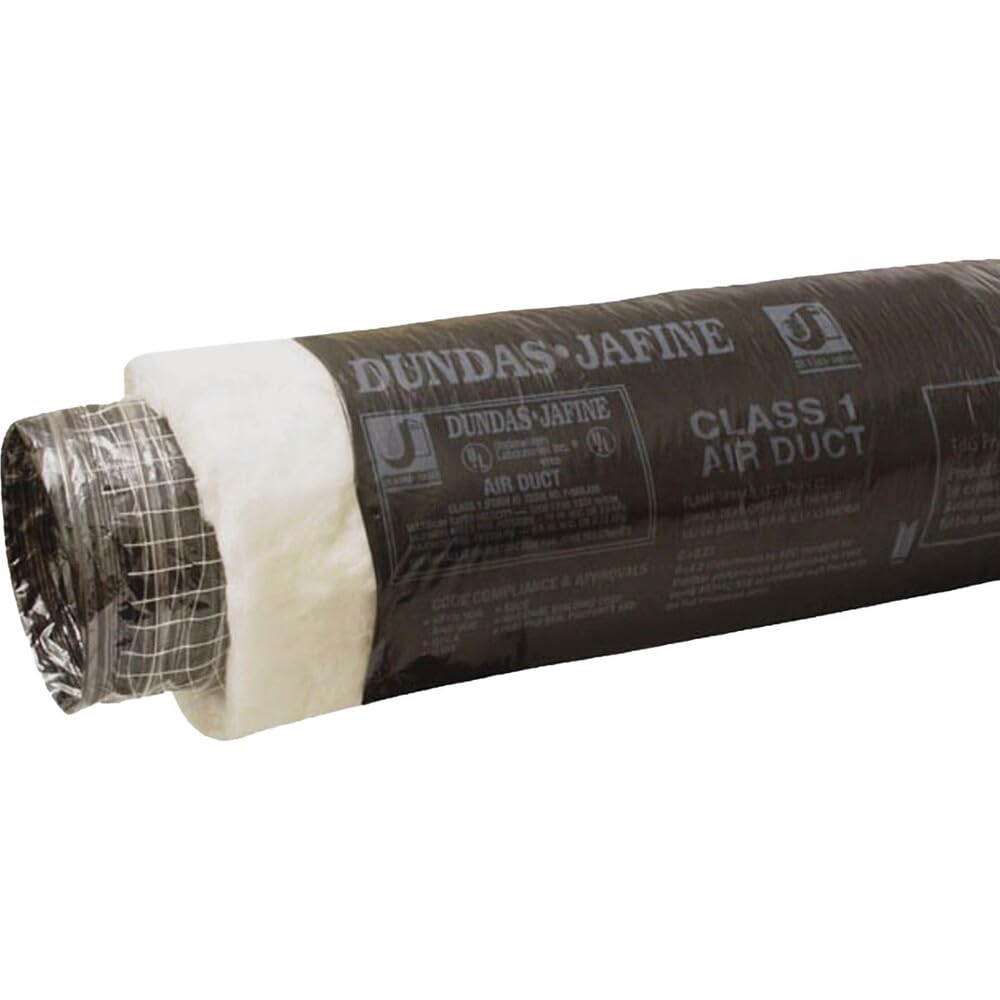
| Dundas Jafine Insulated Flexible Duct★ Best Overall | Long insulated runs | 25 ft | R-6 fiberglass | Polyester, galvanized wire | Amazon |
| CertBuy 4-Layer Aluminum DuctBest Value | Budget hot/cold venting | 12 ft | 4-layer foil insulation | Aluminum, PET, PVC | Amazon |
| MOPHA 5FT Dryer Vent HoseTight Space Pick | Tight dryer spaces | 5 ft | PVC-coated insulated | Aluminum, PET, steel wire | Amazon |
| Hon&Guan Insulated Flexible Duct | Noise reduction | 4 ft | Glass wool (up to 50% noise cut) | PVC, aluminum, PET | Amazon |
| GAF Master Flow R-6 Duct | Standard HVAC runs | 25 ft | R-6 fiberglass | Fiberglass | Amazon |
| Rubber-Cal HVAC Insulated-Flex Duct | Portable AC hookups | 25 ft | Acoustical + thermal | Aluminum | Amazon |
| Cuchiilo R-4.2 Insulated Duct | High-temperature venting | 25 ft | R-4.2 glass wool (up to 85% noise cut) | Aluminum foil, glass fiber | Amazon |
| VEVOR R-6.0 Insulated Duct | Energy-efficient runs | 25 ft | R-6.0 fiberglass | Aluminum, fiberglass, PET | Amazon |
In‑Depth Reviews
1. Dundas Jafine Insulated Flexible Duct with Black Jacket
Our pick — over 4.5★ from 250+ verified ratings; the strongest balance of quality and price.
The long-haul insulated duct that keeps attic runs warm and condensation away
This 25-foot duct handles long attic or hallway runs where a bare aluminum hose would lose heat and drip condensation. A thick layer of formaldehyde-free fiberglass insulation sits between the inner tube and a heavy-duty black polyethylene vapor barrier, so the air arrives closer to the temperature it left with. The UL 181 listing (a recognized safety standard for class 1 air ducts) means it is rated for heating and cooling applications.
Buyers report strong airflow even over 50 feet, which makes it a dependable pick for bath fan venting where mold and condensation are the real enemies. It is also one of the few 25-foot options that handles cold New England winter conditions without the outside of the duct sweating. The construction uses a flexible helix core of 2-ply polyester laminate wrapped around corrosion-resistant galvanized wire, so it holds its shape while staying easy to bend around joists.
Owners praise its solid build and clean installation with scissors or snips. The trade-off is the inner liner, which some describe as flimsy and easily torn, so handle it gently when pulling it through rough openings. It also needs metal tape and a connector at the joints, plus 36-inch zip ties to keep everything snug.
Why it leads the list
- R-6 fiberglass insulation stops heat and cool loss on long 25 ft runs
- UL 181 listed as a class 1 air duct for heating and AC use
- Good airflow over 50 ft — no noticeable drop at distance
- Galvanized wire helix holds shape without collapsing
Where to be careful
- Inner liner is thin and can tear if pulled too hard
- Needs separate tape, connectors, and zip ties at joints
Grab this for: any long, insulated run — bathroom exhaust, attic HVAC, or intake and exhaust venting that needs to stay sweat-free.
Pause if: you are only covering a short 4-5 foot indoor gap where the insulation and higher cost are unnecessary.
2. CertBuy 4in Flexible 4-Layers Aluminum Vent Duct Hose
A sturdy 12-foot aluminum duct that out-builds the store brand without out-pricing it
If your project is a dryer-to-window hookup or a grow tent exhaust, this 12-foot aluminum duct gives you a lot of hose for the money. Its four-layer construction stacks aluminum foil, PET film, another foil layer, and a grey PVC outer cover, which together handle temperatures from -22°F to 266°F. That makes it a solid fit for hot exhaust fans and cold intake lines alike, and the grey PVC layer blocks light leaks — a real plus for grow tents where darkness matters.
The 12 ft length earned specific praise for an 8 ft dryer-to-window gap, replacing two 8 ft sections and needing no cutting at all — a neat, single-piece solution. Owners say it installs easily in crawl spaces by simply twisting it into place, even where the fit starts tight. The helically shaped, internally crimped galvanized steel strip keeps the hose airtight and leak-proof.
Owners consistently call it sturdier and thicker than the Lowes brand, with firm wire attachments. The recurring fit note is that it runs small on some 4-inch vents, but rotating the hose while pushing it on solves the problem. One owner suggested a collar at each end would make connections even easier, though it works fine as-is.
Smart, affordable pick: A genuinely tough multi-layer aluminum duct at a budget-friendly price — just expect to finesse the fit on some 4-inch vents.
Reach for this if: you need a reliable mid-length run for a dryer, grow tent, or kitchen vent without paying for heavy insulation.
Look elsewhere if: your duct crosses a cold attic — this has no insulation layer, so condensation can form on long cold runs.
3. MOPHA 5FT 4″ Dryer Vent Hose with Rubber Seal
The short, flexible dryer hose that seals tight without wrestling metal clamps
This 5-foot dryer vent hose is built for the cramped spots behind a washer and dryer, and its defining feature is the rubber seal at both ends. Instead of fighting with a clamp and tape, you push the hose directly onto the dryer vent pipe and it forms an airtight seal on its own. It fits vents from 3.95 to 4.15 inches, which covers most standard dryer setups, and the short length keeps the exhaust path tight and efficient — one owner noted a shorter hose actually helped the dryer work better.
Its six layers — two aluminum foil, two PET (a strong plastic film), a 1mm steel wire, and a PVC coating — resist punctures and tears when you push it into a wall cavity full of sharp edges. It handles temperatures up to 212°F, which is plenty for dryer exhaust, and the PVC coating adds insulation plus noise reduction.
Owners say the stretchable rubber ends twist right onto difficult wall vents, and the included kit brings clamps plus connectors. The trade-off: the snug fit that seals so well makes initial installation a bit of a wiggle — owners mention plenty of shifting to get it seated, but once in place there is zero worry about air or lint leakage.
easy seal, real durability: For a short dryer hookup, the rubber ends remove the most frustrating part of installation — getting a leak-proof connection.
Choose this for: a quick, tight-space dryer installation where you want a perfect fit for a Maytag or similar heavy-duty dryer.
skip it if: your run is longer than 5 feet, or you prefer traditional clamp-and-tape connections for every joint.
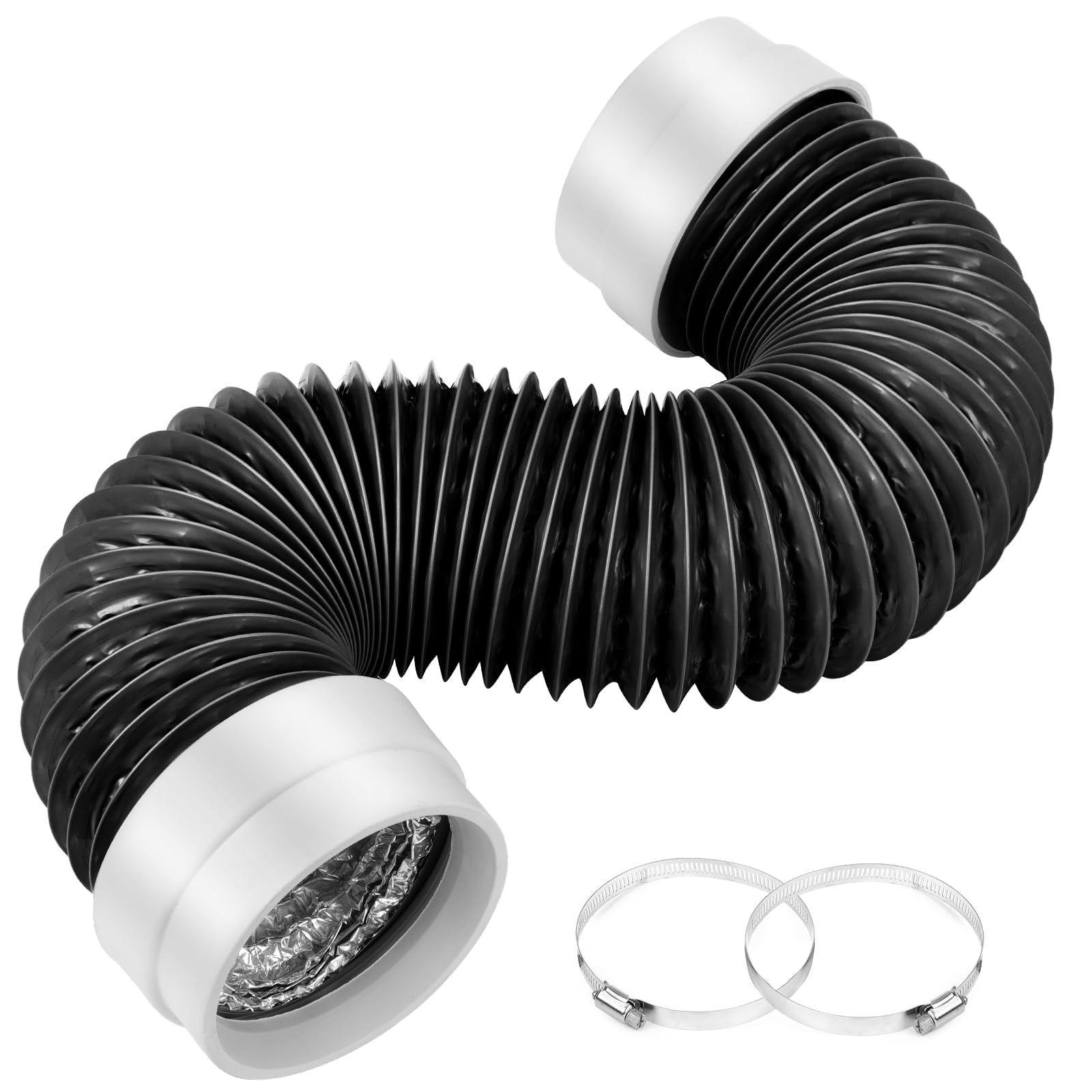
4. Hon&Guan 4 Inch Insulated Flexible Duct

A short insulated duct that cuts fan rumble and heat transfer in one move
This 4-foot insulated duct targets noise and heat. Its internal glass wool structure lets sound waves escape through its holes rather than bounce back, which the maker claims can cut noise by up to 50% — owners confirm the rumble from a dryer hose becomes barely audible inside the house. The same glass wool insulates against temperatures from -22°F to 302°F, so it works for portable AC hookups, bathroom exhausts, and even boat blower hoses.
Its four-layer protection stacks PVC, two layers of aluminum foil, and a central glass wool core, with two clamps included in the box. That outer PVC layer adds a practical perk: it can keep pets from biting through the duct. The build handles a portable AC exhaust beautifully — owners describe it staying barely warm where the old hose got hot, and dramatically quieter in the process.
The reinforced foil ends fit clamps well, and the duct holds its shape once installed. The recurring note is that the inner foil is thin, so connecting it to hose clamps takes care to avoid tearing. It is a short run by design, so treat it as a problem-solver for one specific connection rather than a whole-house solution.
Noise and heat killer: If a loud dryer or a hot portable AC hose is driving you crazy, this short duct is the fastest fix — handle the inner foil gently when clamping.
Best for: anyone replacing a noisy or hot hose on a dryer, portable AC, or PC exhaust fan in a tight spot.
Not for: long runs — at 4 feet it is strictly a connector-length solution, not a full-roof vent.
5. GAF Master Flow 4″ X 25′ Insulated Flexible Duct

A 25-foot duct with R-6 insulation (standard is R-4.2)
This 25-foot duct is a strong, straightforward choice for standard heating and air conditioning runs. It carries an R-6 insulation rating, which the maker says offers 33% more insulation than standard R-4.2 products — a meaningful edge for energy savings on longer runs. It is ETL listed to the UL181 standard, so it meets recognized safety and quality benchmarks for HVAC use, and the fiberglass material keeps the whole thing flexible and easy to work with.
Owners find it works well with portable AC units and bathroom fans alike, and they describe the material as strong and resilient — the HDPE-based plastic stretches like a trash bag rather than tearing on sharp edges. The heavy-duty silver jacket protects the insulation underneath and keeps the duct performing consistently. It is a good option when you want 25 feet of coverage without stepping all the way up to the premium price tier.
It is hard to find a 4-inch duct locally, and this one arrives well-made and ready to cut with a utility knife. The recurring durability note is mixed: the material is surprisingly tough, but the outer wrap can tear if you catch it on a sharp metal vent seam, which owners fix easily with foil tape. Pre-cutting and prefabricating before climbing into the attic makes the install smoother.
Solid, efficient workhorse: A 25-foot R-6 duct that installs easily and adds real insulation value for the price — just watch the outer wrap on sharp edges.
Reach for this if: you need a full 25-foot insulated run for an HVAC system or portable AC at a value price.
Think twice if: you are routing through a space full of exposed screws or wire — the outer jacket will need protection or careful handling.
6. Rubber-Cal HVAC Insulated-Flex Ducting Ventilation Duct Hose

A compressible 25-foot duct that keeps portable AC air at the right temperature
This 25-foot insulated duct is built specifically with portable and mobile air conditioners in mind. Its insulation does two jobs at once — it provides acoustical insulation to quiet the airflow and thermal insulation to maintain the temperature of the air inside the hose. That means the cold air from your AC arrives cold at the window, not warmed up by a hot attic or crawl space along the way.
The aluminum construction keeps it compressible and easy to transport, which is a genuine advantage when you are storing the duct between seasons or hauling it to a different room. Owners find it works well for AC hookups, and the insulated build keeps the outside of the hose from radiating heat back into the room. It is a solid mid-range pick when you want the full 25-foot length with insulation but do not need the absolute highest R-value on the market.
What you get is a dependable insulated hose that does exactly what it should — the review pages sum it up as a good insulated hose that works as it should. The honest drawbacks are the handling: the yellow fiberglass insulation is brittle and itchy when cut, and the outer foil is hard to cut cleanly. Rolling the foil sheath back before cutting contains the dusty fiberglass and makes the job far more pleasant.
Reliable AC companion: Compressible, transportable, and insulated — bring a good pair of gloves and scissors for the itchy fiberglass when you cut it.
Best for: permanent or mobile air conditioning setups where you need to move cool air a long distance without heat gain.
Consider another if: you want a higher R-value or a tear-proof outer jacket for rough attic installations.
7. Cuchiilo 4 Inch Insulated Flexible Duct, 25 Feet, R-4.2

A high-temp 25-footer with serious sound absorption for demanding ventilation
This 25-foot insulated duct stands out for its extreme temperature tolerance — the glass wool insulation handles a range from -4°C to 454°C, so it shrugs off conditions that would degrade a standard foil hose. The Owens Corning glass wool layer is fluffy and dense, which the maker says can reduce noise by up to 85% by absorbing sound in real time. It is built for high, medium, and low-pressure ventilation systems without corrosive gas, from central AC to fresh-air systems and equipment recovery.
The construction pairs thickened aluminum foil with high-strength elastic spiral steel wire, so it bends arbitrarily without rigid elbows and holds its shape after installation — the aluminum foil is self-sustaining and will not retract. That means it keeps a flat interior and reduces wind resistance, helping airflow stay strong through long runs. It arrives vacuum-packed and expands like memory foam once opened, and it includes two hose clamps in the box.
Owners consistently note it is cheaper than hardware store options while delivering solid insulation and easy installation. The honest durability concern is real: the outer layer can tear slightly if you drag a rope across it, and a few owners found the inner duct tears too easily, so it demands a careful hand. The supplied metric clamps can also be fiddly to tighten without the right socket.
Big range, big value: At this price the heat tolerance and 85% noise-absorption claim are impressive — just install delicately and swap in your own clamps if the metric ones fight you.
Grab it for: high-temperature ventilation or a project where noise reduction matters and your budget is mid-range.
Pause if: your installation involves rough pulling through attics — the thin outer layer needs gentler handling than tougher jackets.
8. VEVOR Insulated Flexible Duct 4″ x 25 Ft R-6.0

An R-6.0 three-layer duct that balances energy efficiency with easy handling
This 25-foot duct wraps thick aluminum foil and high-strength spiral steel wire in fiberglass insulation to hit an R-6.0 thermal resistance value (a measure of how well it blocks heat flow) — one of the higher ratings in this lineup, aimed at reducing heat loss and improving energy efficiency. The three-layer build uses durable aluminum foil and PET film reinforced with a fiberglass grid, which the maker says extends the product’s lifespan while keeping it safe during operation. It arrives with two stainless steel clamps in the box, so you have what you need to start.
Owners put it to work in real HVAC fixes — one used it to add a new line to a flipped house where a split 6-inch line was starving two bedrooms of pressure, and the extra duct restored strong airflow and cooled the rooms. The duct bends, compresses, and cuts as needed without affecting the interior, keeping air resistance low. It also absorbs noise during operation, which owners say makes the system noticeably quieter.
It survived being dragged over rebar in a ceiling install, and the aluminum wrap is thin but durable. The recurring gripe is the included clamps: the screws are hard to turn, and several owners simply switched to zip ties. Insulation thickness draws mixed feedback, with some calling it decent and others describing it as thin, so set expectations accordingly for a mid-range R-6.
What stands out
- R-6.0 insulation cuts heat loss and quiets airflow
- Survives rough installs — dragged over rebar without damage
- Strong airflow for HVAC pressure fixes
What to manage
- Included clamps are hard to turn — keep zip ties handy
- Insulation thickness runs thin for some owners
Reach for this if: you want a high R-value, 25-foot insulated duct that installs cleanly and stands up to a rough pull.
Look elsewhere if: you expect the clamps to be the final answer — most owners swap them for zip ties anyway.
Understanding the Specs
R-value (R-4.2 vs R-6.0)
The R-value measures how well the insulation resists heat flow — a higher number means better insulation. R-4.2 is a standard baseline found on many ducts, while R-6.0 is a higher insulation rating, which translates to less heat loss in winter and less heat gain in summer. For a duct running through a hot attic, the higher R-value keeps your conditioned air closer to its target temperature and reduces condensation on the outer jacket. For a short, indoor run where the duct never sees extreme temperatures, the lower R-value is often plenty.
Layer count and material build
The number of layers in a duct’s wall directly affects its durability and puncture resistance. A basic duct might use a single aluminum foil layer, while heavier-duty builds stack multiple layers — two layers of aluminum foil, two of PET plastic film, plus a steel wire helix and sometimes a PVC or fabric outer coating. More layers generally mean better resistance to tearing when you pull the duct through tight crawl spaces filled with sharp edges. The steel wire helix is what lets the duct hold its shape when bent, so it does not collapse and restrict airflow at corners.
FAQ
Will a 4-inch flex duct fit my standard dryer vent outlet?
How long does a flexible duct last before it needs replacing?
Is an insulated flex duct worth it for a short dryer run?
Can I use a 4 flex duct to vent a grow tent or greenhouse?
How do I keep a flex duct from tearing when I pull it through an attic?
Will a longer flex duct reduce my dryer or fan airflow?
What is the difference between R-4.2 and R-6.0 insulation on a flex duct?
Can I use a flexible duct for both intake and exhaust?
Do all 25-foot flex ducts arrive ready to install?
Which flex duct handles high temperatures best?
Final Thoughts: The Verdict
For the widest range of jobs, the 4 flex duct winner is the Dundas Jafine Insulated Flexible Duct because it pairs a full 25-foot reach with R-6 insulation, strong airflow, and the safety confidence of a UL 181 listing — the combination owners trust for long attic runs. If you want a sealed, tool-free hookup in a tight laundry spot, grab the MOPHA 5-foot hose. And for quieting a noisy dryer or portable AC at a budget price, the Hon&Guan 4-foot duct is the one to reach for.
How We Picked
We do not accept paid placement. Every pick is matched to a real buyer and a real use-case; we do not hands-on test units.
Sources & Methodology
Specifications: manufacturer listings and product documentation. Review insights: verified customer reviews, as of August 2026. Pricing: not shown on this page (it changes often); check the current price via the retailer link.
As an Amazon Associate, Gadgets Feed earns from qualifying purchases. This does not affect which products we feature.