
Our readers keep the lights on and my morning glass full of iced black tea. As an Amazon Associate, I earn from qualifying purchases.
Specs are compiled from manufacturer listings and verified buyer reviews and can change over time — please confirm the key details on the product page before buying.
You want louder, punchier bass from your home stereo, and a 4-ohm speaker can deliver that—but only if your amplifier can handle the extra load. A 4-ohm speaker (a measure of electrical resistance) makes your amp push more current, so you get more volume and tighter bass than an 8-ohm speaker, but it also strains your receiver. Here are seven setups that balance that trade-off, explained in plain terms so you know exactly what you are buying.
I’m Min — the founder and writer behind Gadgets Feed. This guide is built by comparing the manufacturers’ published specifications and the patterns across verified customer reviews, so you get each pick’s real strengths and trade-offs instead of marketing spin.
For most listeners, the Polk Audio Signature Elite ES20 pair is the standout all-rounder, but you need to know if your amplifier is stable enough to drive it. Here’s our honest take on the 4 ohm speaker market right now.
Our Picks at a Glance

How To Choose The Best 4 Ohm Speaker
Choosing a 4-ohm speaker isn’t harder than choosing an 8-ohm model — you just have to be more careful about what you plug it into. The good news is that most modern AV receivers are built to handle both, so the real decisions come down to sound style and the physical setup you’re working with.
First, Check Your Amplifier’s Impedance Rating
This is the one mistake that actually damages gear. A 4-ohm speaker draws more current than an 8-ohm one, so your receiver has to be rated for 4-ohm loads, otherwise it can overheat or clip the sound. Some amplifiers handle lower impedance easily, and some are only designed for 8-ohm speakers — read the back of the receiver before you buy anything.
Understand the Difference Between Active and Passive Speakers
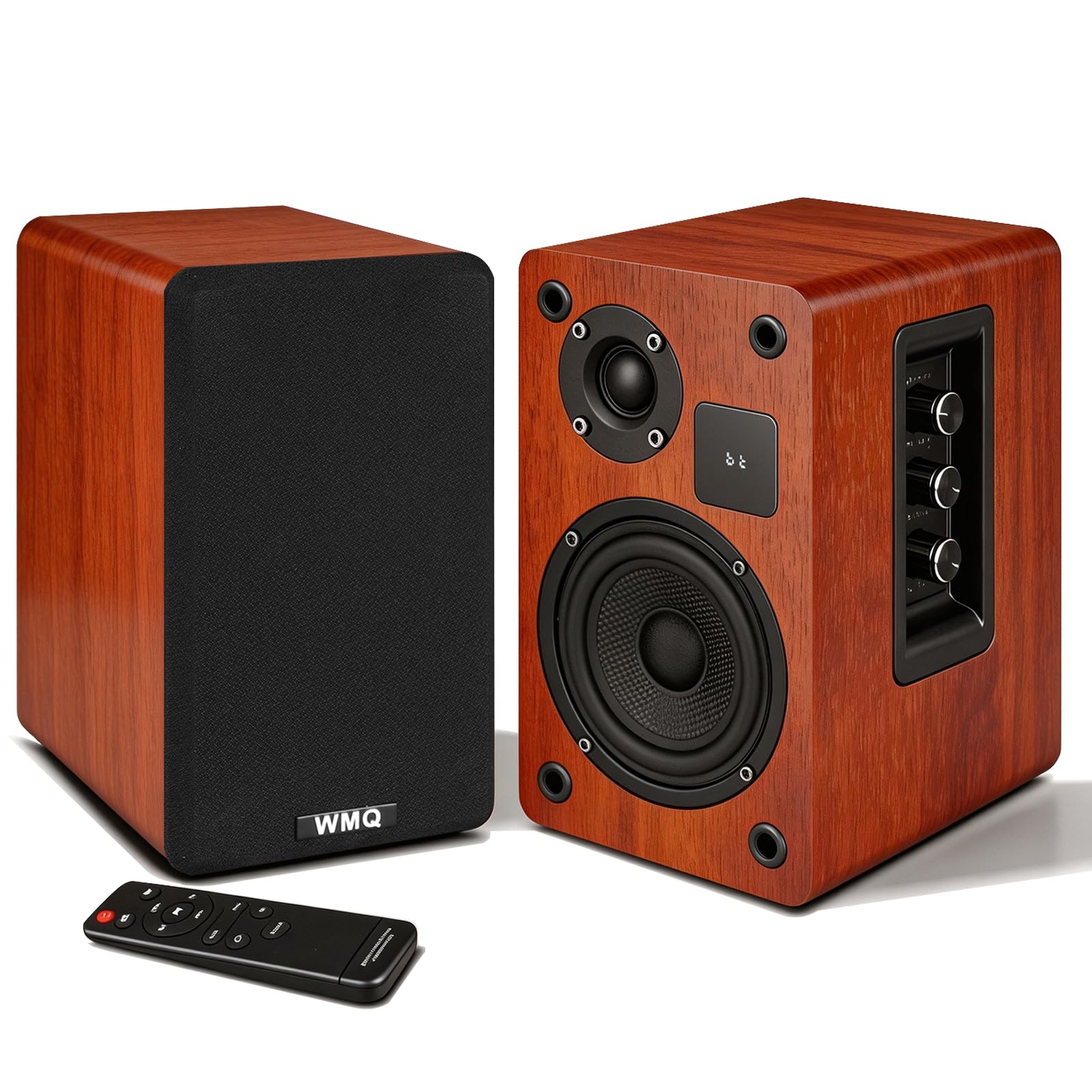
Passive speakers, like the Polk and Micca models below, have no built-in amplifier, so you need a separate receiver. Active or powered speakers, like the WMQ set, have the amp built inside, which makes them plug-and-play with turntables, TVs, and computers. If you already own the receiver, passive is usually the better value; if you’re starting from zero, a powered pair saves you a whole box of gear.
Quick Comparison
| Model | Best For | Driver Size | Wattage | Type | Amazon |
|---|---|---|---|---|---|
| Polk ES20 Pair★ Best Overall | Home theater & music | 6.5-inch woofer | — | Passive | Amazon |
| WMQ 60W PoweredBest Value Active | Desktops & turntables | 4-inch woofer | 60W RMS | Active | Amazon |
| ORION Cobalt CM654 | Car audio midrange | 6.54-inch | 250W RMS | Passive | Amazon |
| Saiyin 5″ Woofer | Critical listening | 5-inch woofer | 40W per speaker | Passive | Amazon |
| Rockville RockShelf 64C | Budget home theater | 6.5-inch Kevlar | 50W RMS | Passive | Amazon |
| Rockville RockTower 64C | Room-filling home audio | Dual 6.5-inch woofers | 125W RMS | Passive | Amazon |
| Micca MB42X G2 | Near-field desk setups | 4-inch carbon fiber | 80W per speaker | Passive | Amazon |
In‑Depth Reviews
1. Polk Audio Signature Elite ES20 Bookshelf Speaker Pair
Our pick — over 4.5★ from 750+ verified ratings; the strongest balance of quality and price.
The bookshelf pair that behaves like a mini tower with thumping cinematic bass.
If you want home theater sound without dedicating floor space to tower speakers, this is the pick that wins the most praise in the category. The heart of it is Polk’s patented Power Port Technology delivers 3dB louder bass than conventional ported speakers by reducing turbulence., so action scenes hit hard without smearing the dialogue. The crowd favorite here is strong — It holds a 4.8-star rating from over 700 owners. — and what wins people over is the sound quality above all else.
You can run these as side, rear, or elevation surrounds, or stand them alone for stereo. A 1-inch Terylene tweeter and 6.5-inch woofer pair up to deliver clear vocals that owners say let them hear dialogue better in an apartment space. The 4- and 8-Ohm compatibility means most modern amplifiers and AV receivers can drive them, including units handling Dolby Atmos and DTS:X, and they’re easy to drive even on modest gear.
The honest catch is the footprint — owners describe them as “mini tower speakers masquerading as bookshelf speakers,” so they clash with thin modern TVs on a shallow media console. There’s also a break-in period where the treble sounds harsh before it smooths out, and a few note the faux wood finish looks less premium up close. Buyers report they’re an exceptional value versus speakers that cost eight times more, with deep bass and a bright-neutral, non-fatiguing character.
What Wins People Over
- Power Port Technology adds 3dB louder bass without distortion
- Clear, non-fatiguing dialogue and vocals for movies and music
- 4- and 8-Ohm compatible with most receivers
What To Weigh Before Buying
- Deep footprint struggles next to thin modern TVs
- Treble needs a break-in period to smooth out
- Grille magnets are weaker than you might expect
The smart buy: Choose these when you want cinematic home theater bass and crisp vocals from a pair that hides on a shelf.
One real limitation: If your TV stand is shallow or your receiver only handles 8 ohms, measure the depth and check your amp specs first.
2. WMQ 60W Powered Bookshelf Speakers
The plug-and-play desktop set that skips the receiver entirely.
Not everyone wants to buy a separate amplifier, and that’s exactly who this powered pair is for. A 60W RMS output drives a 4-inch carbon fiber woofer and a 1-inch soft-dome tweeter, giving you punchy mid-bass and smooth, fatigue-free highs right from the start — no receiver needed. It’s the rare 4-ohm speaker that works with a turntable, TV, PC, and smartphone all through one set of connections.
Connectivity is the star here: RCA for traditional sources, USB-C for modern digital playback, and AUX-in for universal compatibility. The included remote controls volume, input switching, and power from anywhere in the room, while the small display keeps the current mode and volume visible. A detachable grille lets you show off the drivers or keep a classic look, so the design adapts to your desk or shelf.
The one thing owners flagged is cable length: to get more than 6 feet of separation between speakers, or more than 6 feet from your computer, you’ll need extension cords for the RCA or 1/8-inch stereo input. Most owners found this easy to work around and praised the setup for being compact and delivering excellent cheap sound for the money.
A desktop favorite: For a desk, a small room, or a first turntable setup, the built-in amp and multiple inputs make this the easiest path to 4-ohm sound.
The trade-off: Bass is punchy rather than chest-thumping — pair it with a small sub if you listen to bass-heavy electronic music.
3. ORION Cobalt CM654 Mid-Range Bullet Loudspeakers

The car-audio midrange that gets loud without breaking a sweat.
If you’re upgrading a vehicle’s sound system rather than a living room, this is the pro-audio workhorse to look at. It’s built around a 1000W Max Power and 250W RMS rating with a 1.5-inch high-temperature voice coil, which means it can handle serious aftermarket amplifiers without distorting. The bullet design lets the speaker reach those high-range frequencies without sacrificing the low-to-mid range, so a dynamic spectrum of music stays clear.
Owners replacing their old 6.5-inch Alpine speakers called the difference immediate, and the summary consensus is that the crowd loves the volume gain, especially at lower power levels. Its 96.67 dB efficiency means it plays loud without needing a massive amplifier., so these get loud without requiring a monster amp. The mounting depth is just 2.75 inches, though the overall diameter is 6.54 inches — slightly wider than the Polk’s 6.5-inch driver, so a tight door fit is the one thing to measure before buying.
Keep in mind the mounting depth. A few owners noted the dimensions were a little big for their door enclosures, and the design won’t drop into factory speaker enclosures in some Jeeps without trimming the plastic for the magnets. Plan for that if your vehicle has shallow-dish mounts.
Built to be pushed: This is the pick when you want loud, clear midrange that keeps its composure at high power — ideal for roll bars and custom builds.
Fit first: Measure your mounting depth and diameter carefully, because this one is not a universal drop-in for every door.
4. Saiyin 5″ Woofer Passive Speaker Pair
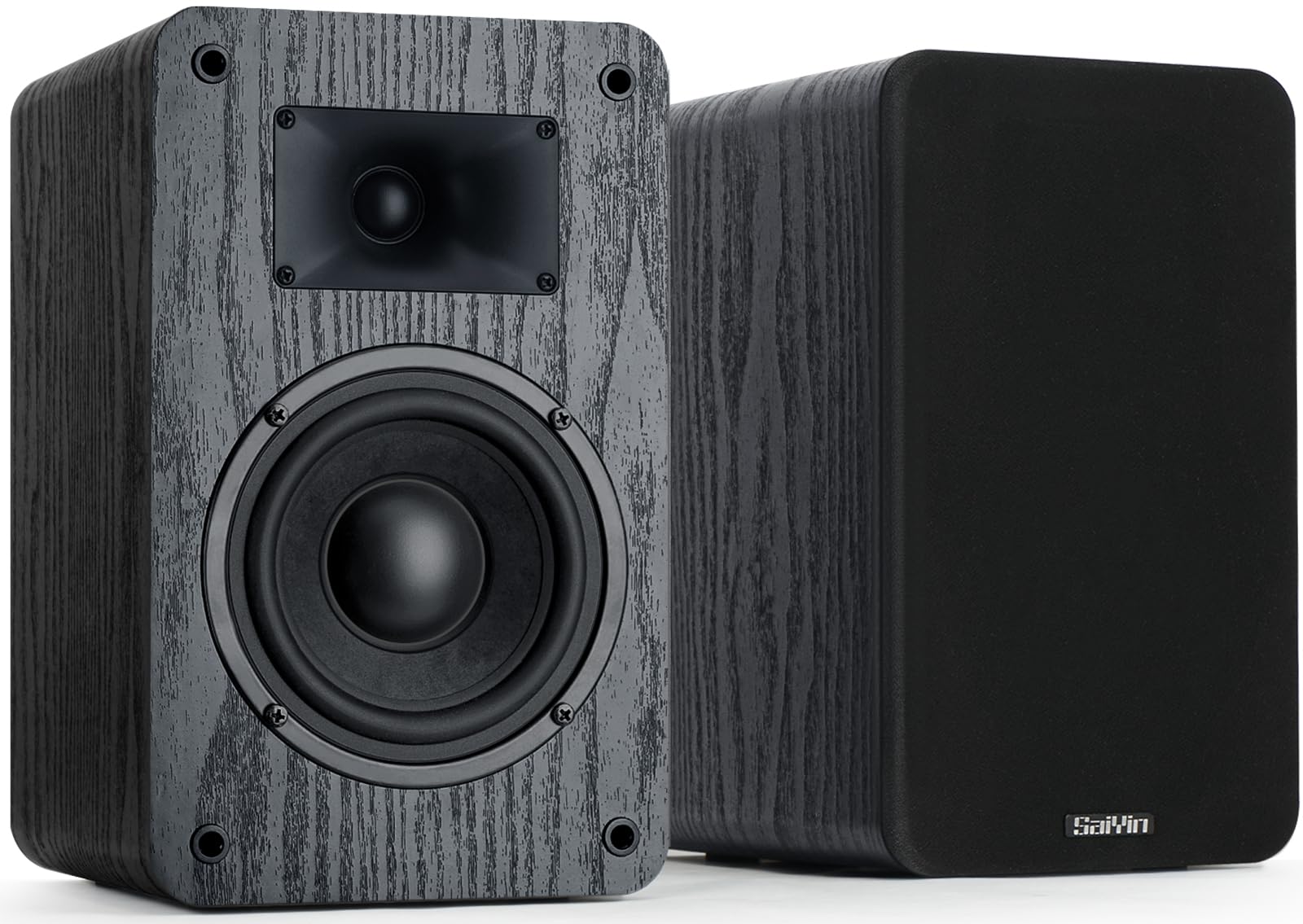
This compact passive pair (no built-in amplifier) is tuned for crisp vocals and studio-style listening, so you hear every lyric and instrument distinctly.
A 20mm silk dome tweeter sits at the heart of this pair, and it’s there for people who care about hearing vocals and high-end detail with precision. Paired with a 5-inch woofer and a 4-ohm impedance, these passive speakers handle 40W per speaker and They reach up to 83dB SPL for punchy, responsive output., which gives you punchy, responsive bass with reduced distortion. The 55Hz-20kHz frequency response captures deep bass nuances and extends to the upper limits of human hearing, making this a genuinely audiophile-grade spec for the price.
These are passive, so they need a receiver or amplifier that’s rated for 4 ohms — the brand is upfront that most older amps are built for 8 ohms, so check yours first. Owners were impressed that such a compact pair could fill the room well and handle up to 80 watts without bottoming out, and the value-for-money praise is consistent. The cabinets are light and noticeably hollow, but that doesn’t stop the sound from punching above its size class.
Some owners recommend a bass or treble boost to get the best curve, and one noted a slight upper-mid shrillness on certain tracks. Wall-mount kits with screws and anchors are included, so you can hang them high for rear-surround use in a home theater without extra hardware.
Choose this for: A compact, budget-friendly passive pair that solves with vocal clarity and detailed highs, especially on a desktop soundstage.
Look elsewhere if: You want deep, room-shaking bass — this pair shines brightest when a subwoofer covers the lowest octave.
5. Rockville RockShelf 64C Bookshelf Speakers

The Kevlar-coned budget pair that nails tight bass for ambience and movies.
You get punchy, detailed bass from the 6.5-inch Kevlar woofer (a strong, lightweight fabric), which It handles 50W RMS (100W per pair) and 200W peak (400W per pair).. The 1-inch silk dome tweeter delivers crisp highs, and The 65Hz-20kHz frequency response and 87dB sensitivity deliver balanced, rich audio. means balanced, rich audio. Owners mention fantastic mid-bass performance with crisp highs, so you get studio-like clarity without the studio price.
Built from high-quality MDF with a classic wood grain finish and detachable magnetic grills, these look and feel more expensive than their price suggests. Gold-plated 5-way binding posts accept banana plugs, spade terminals, or bare wire, so integration with receivers and amplifiers is flexible. A built-in 12dB/octave crossover with a 10kHz cutoff controls the sound precisely, and wall-mount brackets make installation easy in any room.
Owners describe these as ideal for ambience and background listening rather than critical audiophile sessions, and they pair particularly well with vintage Pioneer receivers. The recurring trade-off is that they’re bass-heavy with weaker mids and treble, so an amp with EQ controls helps bring out the balance. It’s a great value at the budget end, and one owner noted how well they handle the 40-60Hz bass range.
The Good Stuff
- Fantastic mid-bass and crisp highs for the price
- Solid MDF build with classic wood grain finish
- Wall-mount brackets included for flexible placement
The Fair Warning
- Bass-heavy tuning can hide mids and treble
- Needs an amp with EQ to dial in the balance
- Not for critical audiophile listening
Reach for these if: You want budget-friendly 4-ohm speakers for movies and background music in a living room.
Think twice if: You’re chasing reference-level Hi-Fi — an owner’s words, not ours: you’re not gonna shake the rafters.
6. Rockville RockTower 64C Home Audio Tower Speaker

The 3-way tower that fills a room with sound at a bookshelf price.
When you want the presence of a floor-standing tower without paying premium tower prices, this Rockville delivers. It’s a 3-way system with dedicated dual 6.5-inch woofers, a midrange driver, and a 1-inch silk dome tweeter, It handles 125W RMS and 500W peak power for room-filling, balanced sound. for room-filling, balanced sound. Owners have run them hard for 35 hours plus a 5-hour break-in and reported they survived without complaint.
The detachable grille lets you choose between a sleek minimalist look or exposing the drivers for a more sophisticated aesthetic, and the classic dark wood vinyl finish drew praise for looking more expensive than it is. Gold-plated 5-way binding posts support banana plugs, spade terminals, or bare wire, and the 4-ohm impedance offers increased power output when paired with stereo amplifiers. At roughly 3.5 feet tall, they make a statement without dominating the room.
The one honest limitation is sub-50Hz bass — owners found the low end weak below that point, so a subwoofer is recommended for music that relies on deep extension. There’s also a note about the tweeter running hot after extended loud playback, so that’s worth monitoring if you listen at high volume for hours at a time. For the money, owners say they’re underpriced for how well they work.
A lot of tower for the money: This is the pick when you want floor-standing presence and room-filling volume from a 4-ohm pair without a flagship budget.
The honest gap: Bass drops off below 50-60Hz and the tweeter gets warm under heavy use — add a sub and keep volume at reasonable levels.
7. Micca MB42X G2 Bookshelf Speakers

The upgraded classic that sounds far bigger than its 4-inch drivers suggest.
This is the sequel to among the most popular budget bookshelf speakers ever made, and the G2 refresh brought all-new components. The upgraded 4-inch carbon fiber woofers with rubber surrounds and a 0.75-inch silk dome tweeter create a soundstage that feels balanced and dynamic. The precision-tuned 12dB/octave crossover (a circuit that splits audio frequencies between drivers) ensures neutral tonal balance and improved time alignment, so instruments and vocals come through the way the artist intended—sharper and more defined than the original model.
Owners consistently say these sound bigger than their size suggests, with detailed mids, crisp highs, and impressive tight bass that goes lower than you’d expect. The 4-8 ohm impedance and 86dB sensitivity at 1W/1M make them easy to drive, and their 80W per speaker power handling gives headroom for clean playback. For a desk or small living room, they’re described as premium-looking with solid construction, and they serve admirably as rear surrounds in a 5.1 home theater setup.
Like many compact bookshelf speakers, deep bass needs a subwoofer to shine, and owners note they benefit from a 100-plus-hour break-in period before the sound fully settles. One owner mentioned the mounting hardware as a minor frustration, and there’s a slight lower-midrange fatness on some tracks. The design is minimalist and compact at 9.5″ high and 5.8″ wide, so they fit into tight spaces without dominating.
For the desk listener: This is the near-field star — compact, neutral, and revealing enough for critical listening in a study or small room.
The one thing to know: They need a subwoofer for deep bass and patience for break-in, but owners say the sound after that is genuinely impressive.
Understanding the Specs
Impedance (4 Ohm)
Impedance, measured in ohms, is how much the speaker resists the electrical current from your amplifier. A 4-ohm speaker is an easier path for that current, which means your amp pushes more power and the speaker can play louder. The trade-off is that your amplifier has to work harder and must be rated for a 4-ohm load, otherwise it can overheat or distort at high volume.
Power Handling (RMS vs Peak)
RMS watts is the power a speaker can handle continuously, while peak watts is the brief maximum. For example, the ORION Cobalt handles 250W RMS and 1000W Max Power, so it can sustain clean sound at 250 watts and survive short bursts up to 1000. Match your amplifier’s output to the RMS rating you see on the product page so the speaker can perform without strain.
FAQ
Will a 4-ohm speaker work with my amplifier?
What is the difference between active and passive speakers?
Do I need a subwoofer with 4-ohm bookshelf speakers?
Can I use car speakers like the ORION Cobalt at home?
What does frequency response like 55Hz-20kHz mean for me?
Is a 4-ohm speaker louder than an 8-ohm speaker?
What does a mid-range bullet speaker do in a car?
How important is speaker break-in time?
Can I wall-mount bookshelf speakers?
What does sensitivity like 86dB or 87dB mean?
Final Thoughts: The Verdict
Across the board, the 4 ohm speaker winner is the Polk ES20 Pair because it pairs premium build quality with deep Power Port bass and a crowd-favorite 4.8-star reputation. If you want a powered set that skips the receiver entirely, grab the WMQ 60W Powered. And for car-audio builds or near-field desk listening, the ORION Cobalt CM654 and Micca MB42X G2 each own their niche with real conviction.
How We Picked
We do not accept paid placement. Every pick is matched to a real buyer and a real use-case; we do not hands-on test units.
Sources & Methodology
Specifications: manufacturer listings and product documentation. Review insights: verified customer reviews, as of August 2026. Pricing: not shown on this page (it changes often); check the current price via the retailer link.
As an Amazon Associate, Gadgets Feed earns from qualifying purchases. This does not affect which products we feature.