
Our readers keep the lights on and my morning glass full of iced black tea. As an Amazon Associate, I earn from qualifying purchases.
Specs are compiled from manufacturer listings and verified buyer reviews and can change over time — please confirm the key details on the product page before buying.
Choosing a first big-kid ride means finding the one that won’t tip on a driveway crack, that a 4-year-old can actually steer, and that won’t be outgrown by summer. This roundup sorts through the 3-wheel options built for ages 3 to 5, weighing stability against growth room, light-up fun against real durability, and lean-to-steer ease against classic handlebar control. The picks below are matched by the age range and rider type they serve, so a few here stretch past the exact 4-year-old mark to cover the same lightweight, 3-wheel category.
I’m Min — the founder and writer behind Gadgets Feed. This guide is built by comparing the manufacturers’ published specifications and the patterns across verified customer reviews, so you get each pick’s real strengths and trade-offs instead of marketing spin.
Every option here suits a young rider just finding their balance, but the details decide which one fits your child best. This is the practical breakdown of the best 4 year old scooter choices for steady, confident first rides.
Our Picks at a Glance

How To Choose The Best 4 Year Old Scooter
At age four, most kids have the coordination to ride, but they still need a scooter that forgives wobbles and hard stops. The three-wheel layout gives a much wider base than a two-wheeler, so a leaning child doesn’t tip over as easily.
Lean-to-Steer vs. Classic Turning
Lean-to-steer means your child shifts their body weight to turn the front wheels instead of twisting the handlebar. This feels unnatural for a few days, but it trains balance and coordination far better for young riders. Classic handlebar steering is easier to grasp instantly, which is why some kids pick it up on day one — decide which learning curve fits your child’s patience.
Height Adjustment and Weight Limits
A handlebar that adjusts across several inches lets the scooter grow with your child, lasting years instead of one summer. Look for a range that starts low enough for a 4-year-old’s grip (around 25 inches) and extends upward as they grow. Weight capacity matters just as much — a 44-lb limit suits a smaller preschooler, while a 150-lb rating means even a parent can occasionally test it.
Quick Comparison
| Model | Best For | Weight Limit | Handlebar Range | Wheels | Amazon |
|---|---|---|---|---|---|
| Lifemaster Lights★ Best Overall | Growing riders & high weight limits | 150 lbs | 26.77″ – 33.86″ | 3 PU | Amazon |
| HighMasterBest Value | Fast learners & classic steering | — | Up to 34″ | 3 PU | Amazon |
| Hurtle MiniTop Performer | True beginners ages 2-5 | 44 lbs | 25″ – 28.55″ | 3 LED | Amazon |
| Gotrax KS3 Pro | Sit-to-stand versatility | 110 lbs | 25.5″ – 31.5″ | 3 LED | Amazon |
| Lifemaster Fold Seat | 2-in-1 sit or stand mode | 110 lbs | 27.87″ – 34.1″ | 3 PU | Amazon |
| ChromeWheels Deluxe | Sibling sharing (ages 3-12) | 132 lbs | 25″ – 34.5″ | 3 LED | Amazon |
| JOVA ZIFFY | Light-show lovers ages 3-8 | 110 lbs | 25.5″ – 32.6″ | 3 LED | Amazon |
| TONBUX | No-assembly, fold-and-go | — | 24.5″ – 34″ | 3 LED | Amazon |
| Rahmory K1 | Low seat height & tiny riders | — | 23.6″ – 31.5″ | 3 LED | Amazon |
In‑Depth Reviews
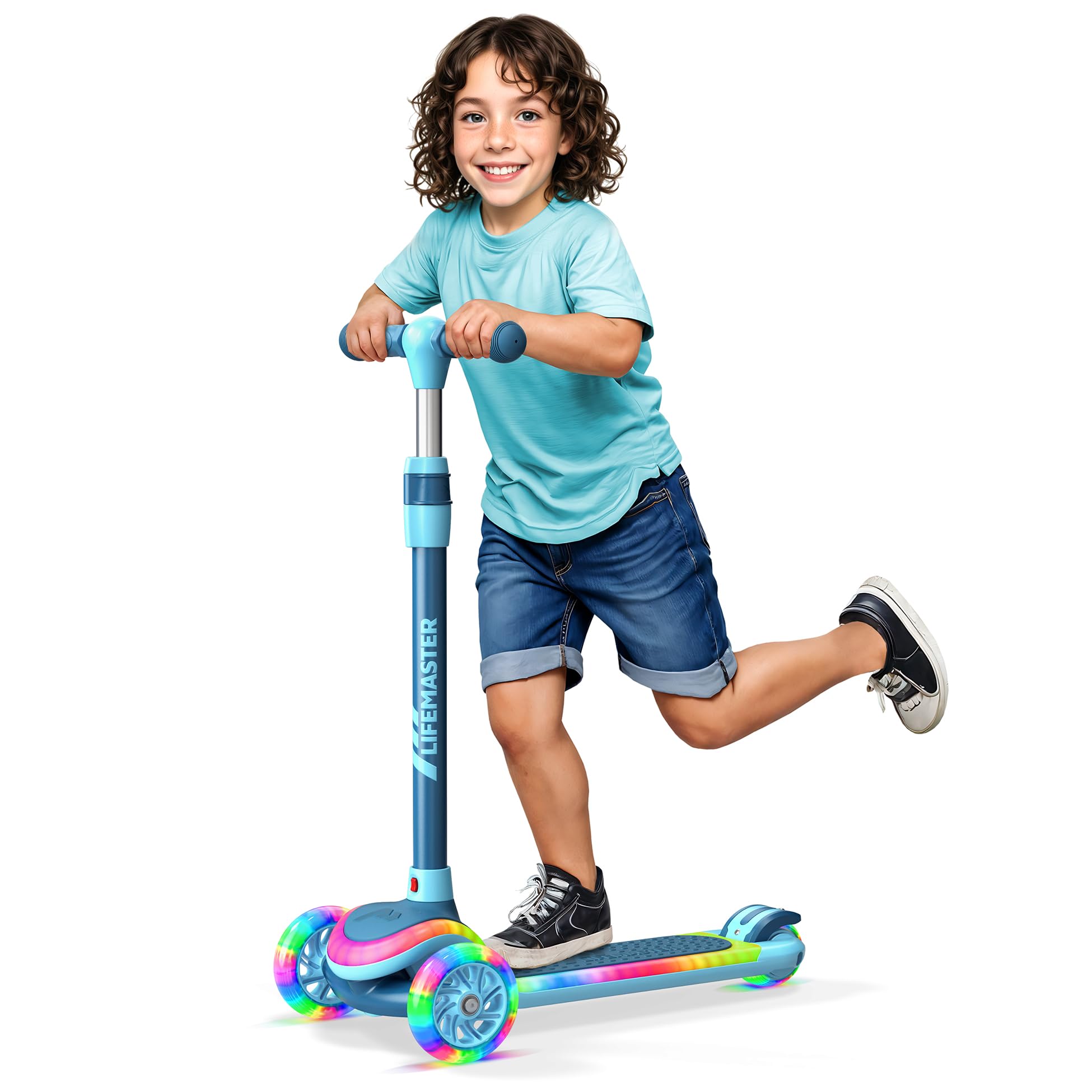
1. Lifemaster 3-Wheel Kids Scooter with Multi-Color Lights
Our pick — over 4.5★ from 300+ verified ratings; the strongest balance of quality and price.
The rare pick that still fits a 4-year-old yet holds up to 150 lbs.
Most toddler scooters top out around 44 lbs, which means they’re outgrown the moment a kid gets heavy. This Lifemaster takes a different path — its 150-lb weight limit is more than triple the Hurtle Mini’s 44 lbs, so it’s the last scooter you’ll buy for a while, not the first of several. At just 8 lbs itself, the frame is light enough for a child to carry, yet the 30% steel and 70% plastic build is rated to support a full-grown adult.
The five handlebar heights span 26.77” to 33.86”, which gives roughly 7% more top-end reach than the Hurtle’s range — meaning it stretches further as your child shoots up. Owners consistently call out the build quality as the headline feature, with the multi-color deck and wheel lights running a close second for evening visibility. Assembly takes minutes with the included tools, and the foam-ish rubber grips keep small hands comfortable.
You get real confidence from the safety certification and the wide anti-slip deck (a textured surface that keeps your child’s feet from sliding off), and the rear foot brake lets beginners slow down smoothly. Buyers report it handles three, four, and nine-year-olds equally well, surviving “hours and many crashes” without complaint. The only catch: the flashing lights need three AA batteries, which aren’t included.
glow ride fun
- 150-lb limit outlasts every other pick here
- Five height settings grow from 26.77″ to 33.86″
- ABEC-7 bearings and PU wheels glide on rough ground
small print catches
- Lights need 3 AA batteries you supply
- Plastic-heavy frame won’t satisfy parents who insist on all-metal
buy it for: the family that wants one scooter to survive multiple kids and several growth spurts.
pass it by if: you want the lightest possible frame for a tiny 3-year-old — this one is built for the long haul.
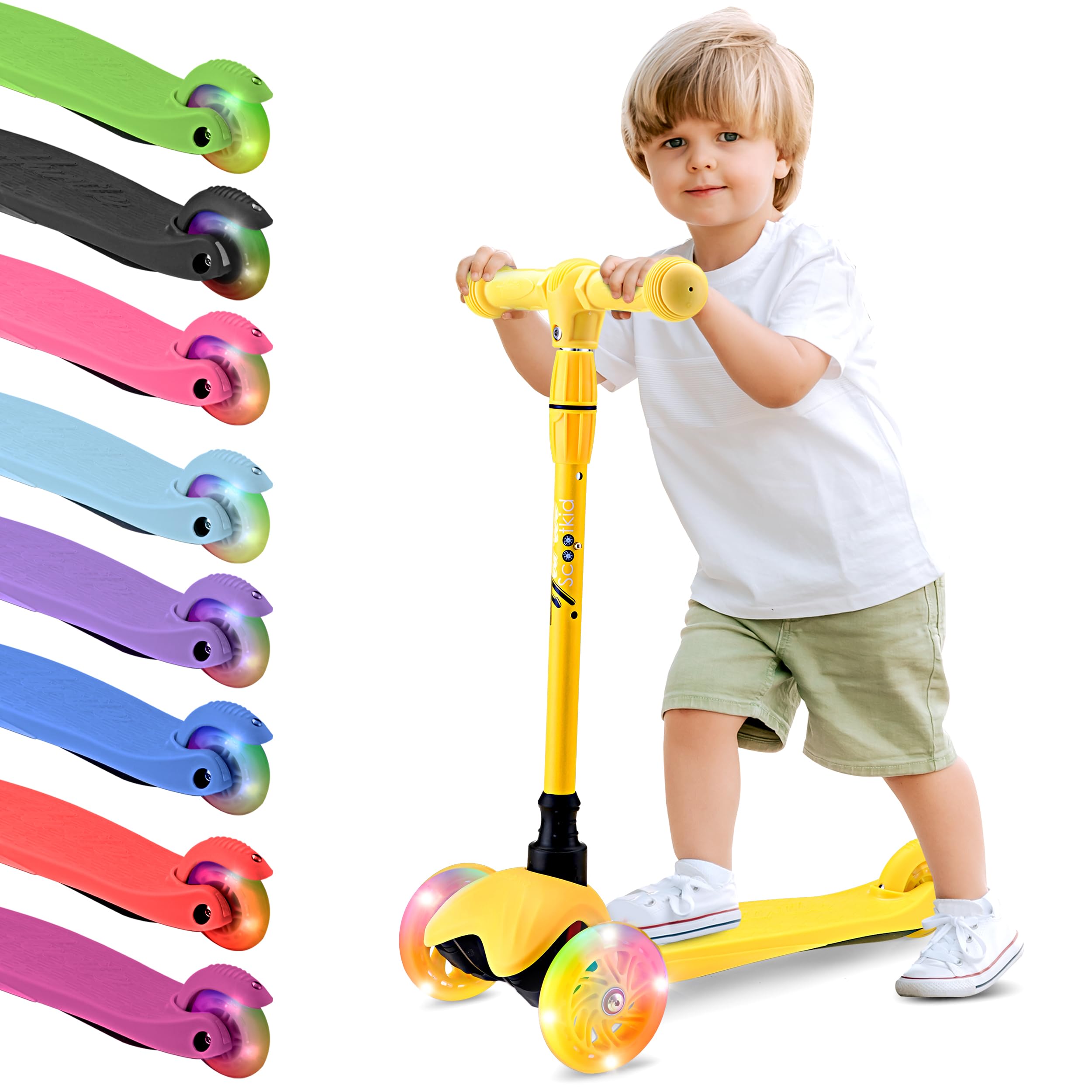
2. HighMaster 3 Wheel Kick Scooter
A sturdy aluminum ride that teaches turning through body lean.
HighMaster positions this as a lean-to-steer trainer, and the learning curve is real — kids tilt their body to turn the front wheels. It takes a handful of sessions to click, but once it does, the balance and coordination payoff is worth the early wobbles. The frame is aluminum rather than plastic-heavy, which is why owners describe it as solid and well-built for the money.
Designed for ages 24 to 96 months, the adjustable T-bar reaches up to 34 inches, and the extra-wide anti-slip deck gives little feet a confident platform. The light-up wheels are the crowd-pleaser, adding a glow that kids actively beg to ride. Assembly is genuinely simple, and the rear brake is easy for small feet to find.
The honest caveat: stability gets mixed feedback because leaning to turn requires some practice, and a few owners mention handlebar durability issues under hard use. For a 4-year-old learning at a normal pace, though, customers note it takes them everywhere and holds up well — one family’s toddler made it his daily companion after giving up his pacifier.
sturdy street glide: you get aluminum build quality and lean-to-steer training at a budget-friendly price, but the turning requires patience from both parent and child during the first week.
reach for it if: you want a metal frame that teaches balance without a premium price tag.
look elsewhere if: your child expects to steer by twisting the handlebar on day one.
3. Hurtle Mini Kickboard 3 Wheel Scooter
The beginner’s best friend — intuitive steering for ages 2 to 5.
If your 4-year-old has never balanced on two wheels, this is the gentlest possible introduction. The lean-to-steer system responds to body weight, so a child who leans slightly glides into a turn without yanking the handlebar. Owners repeatedly note it works for kids who “lack balance for two-wheelers,” and several compare its steering and durability directly to the far pricier Micro brand — at roughly a third of the cost.
The three height settings run 25” to 28.55”, and the strong aluminum alloy frame supports up to 44 lbs. That weight cap is the honest limit here: it suits a smaller preschooler perfectly, but a tall or heavier 5-year-old will approach the ceiling. The LED wheels light up mid-ride for visibility, and the wide anti-slip deck keeps footing secure on driveway gravel.
Quality is the most-praised aspect by a wide margin, with the bright yellow color making the rider easy to spot at the park. The most-discussed functional note is that turning takes a little practice — the wheels respond to lean, not to wrist action — but once that clicks, kids cruise without thinking about it.
grab this for: the true beginner who needs maximum stability and a forgiving learning curve.
think twice if: your child is already near 44 lbs or you need a scooter that lasts into age 7.
4. Gotrax KS3 Pro Foldable Kick Scooter with Seat
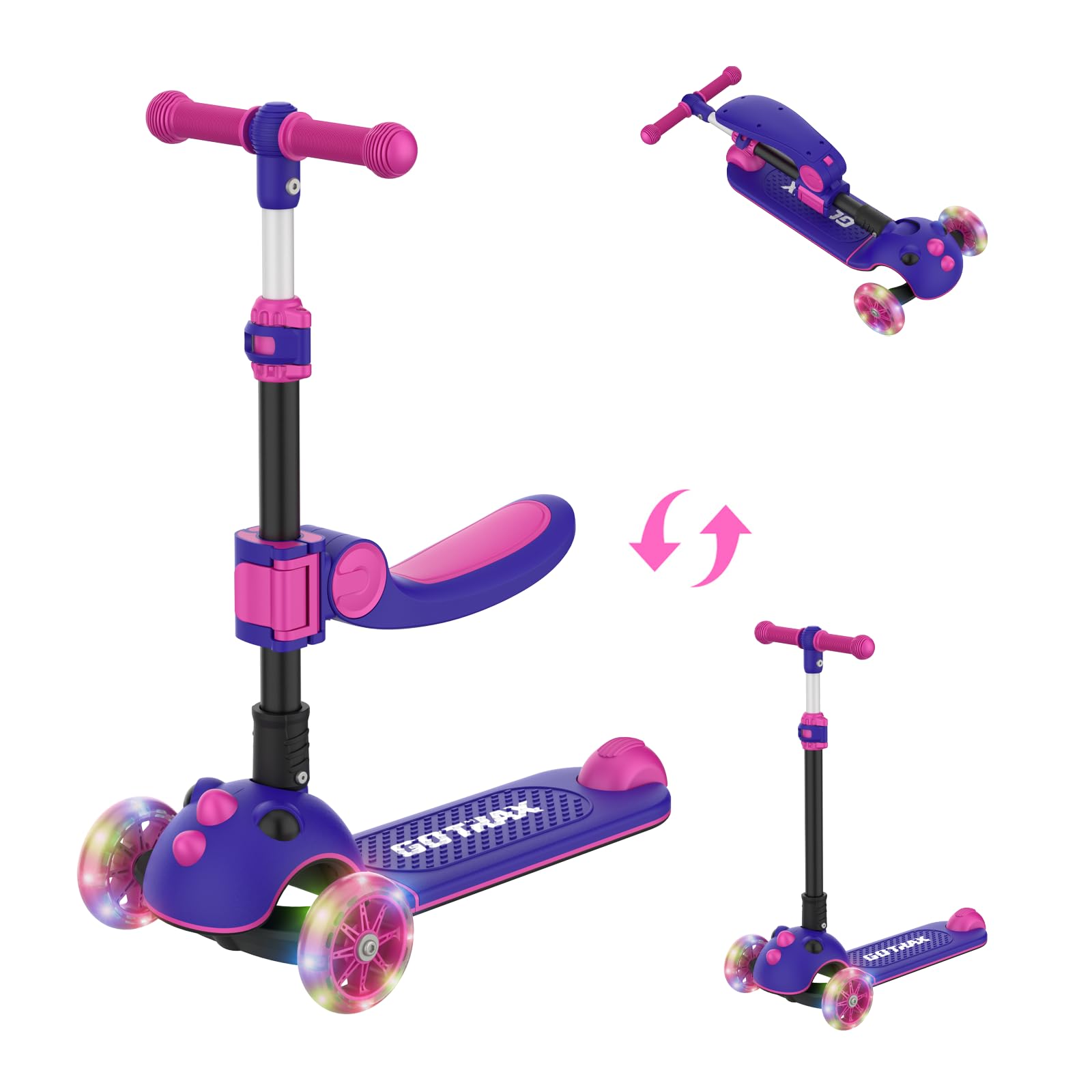
A 2-in-1 ride that starts seated and graduates to standing.
Not every 4-year-old is ready to stand and push on day one, and that’s exactly who the KS3 Pro serves. The one-key removable seat lets a hesitant child start by scooting seated, then pop the seat off and ride standing once confidence builds. It’s a smoother transition than forcing a standing-only scooter on a nervous rider.
Four handlebar heights (25.5/27.5/29.5/31.5 inches) cover ages 2 and up, and the frame holds riders up to 110 lbs. Front 5-inch and rear 3-inch extra-wide PU wheels with ABEC-7 bearings make the glide feel smooth, and the 6-inch non-slip deck gives plenty of footing. At just 8 pounds, it folds in one step for easy trunk storage.
The seat is the recurring point of discussion — owners like the anti-slip surface but note it can slide under active riding, so keep the latch checked. One family reports it “had over a year and still going strong” for a daughter who got it at three and now rides at four. The wide-foot brake gives steady stops, though a few note the brake can be loud.
perfect if: your child wants to ease in with a seat before standing, or you want one scooter for a 2-year-old and a growing 5-year-old.
skip it if: you’re set on a pure standing scooter and don’t need the seat at all.
5. Lifemaster 3 Wheel Scooter with Foldable Seat

A crowd favorite that flips between seated cruising and standing speed.
This is the most-reviewed scooter on the list (nearly a thousand owners have weighed in), and the consensus is loud: quality tops the praise list. The fold-out seat with footrest flips down for tired legs, then tucks away for classic standing rides — the dual-mode design is what wins parents over. The seat supports up to 44 lbs, while standing mode handles 110 lbs.
Three handlebar heights (27.87″, 31″, and 34.1″) stretch the usable age range from about 2 up to 10, and the polyurethane wheels roll smoothly with lean-to-steer control. The multi-color LED wheels light up even at low speeds, which owners specifically call out as a standout. Assembly takes around two minutes, and folds down to a compact 23.6″ x 11.6″ x 9.3″ for the car trunk.
For a 4-year-old, the adjustable bar and wide deck make it an easy, intuitive first ride — one owner notes their 3-year-old figured it out immediately. The single recurring complaint is that the handle can be stiff to fold back down, a minor friction point on an otherwise loved scooter.
best suited for: kids who tire mid-walk and need a seat option, or families who want a scooter that serves ages 2 through 10.
not ideal if: you want a dedicated standing-only scooter and won’t use the fold-out seat.
6. ChromeWheels Deluxe Foldable Kick Scooter

One scooter, two kids, zero arguments — the sibling sharer.
When you’ve got a 4-year-old and an older sibling, buying two scooters gets expensive fast. The ChromeWheels Deluxe sidesteps that with a 25 to 34.5-inch adjustable handlebar range that spans ages 3 to 12, and a 132-lb weight limit that keeps it viable long after preschool. Owners confirm both a 5-year-old and an 8-year-old can share it, with height changes taking about a minute.
The lean-to-steer turning uses the same body-tilt logic as the other picks here, and the luminous wheels brighten as rolling speed increases — a magnetic-steel design rather than battery-powered. The aluminum alloy frame with durable nylon composites and ABEC-7 bearings delivers a smooth, fast glide. It arrives mostly assembled, which parents love.
The durability conversation is honest: some reviewers point out the handle can wear under aggressive use, while others say the quality is “great for the price” and very stable. For a typical 4-year-old riding at normal speeds, the foldable design and wide range make it a sensible one-and-done purchase.
choose this when: two kids of different ages will share one scooter, or you want maximum growth range from a single purchase.
pass if: your child is a heavy, aggressive rider who tends to crash hard — the handle is the part to watch.
7. JOVA ZIFFY Light-Up 3 Wheel Scooter
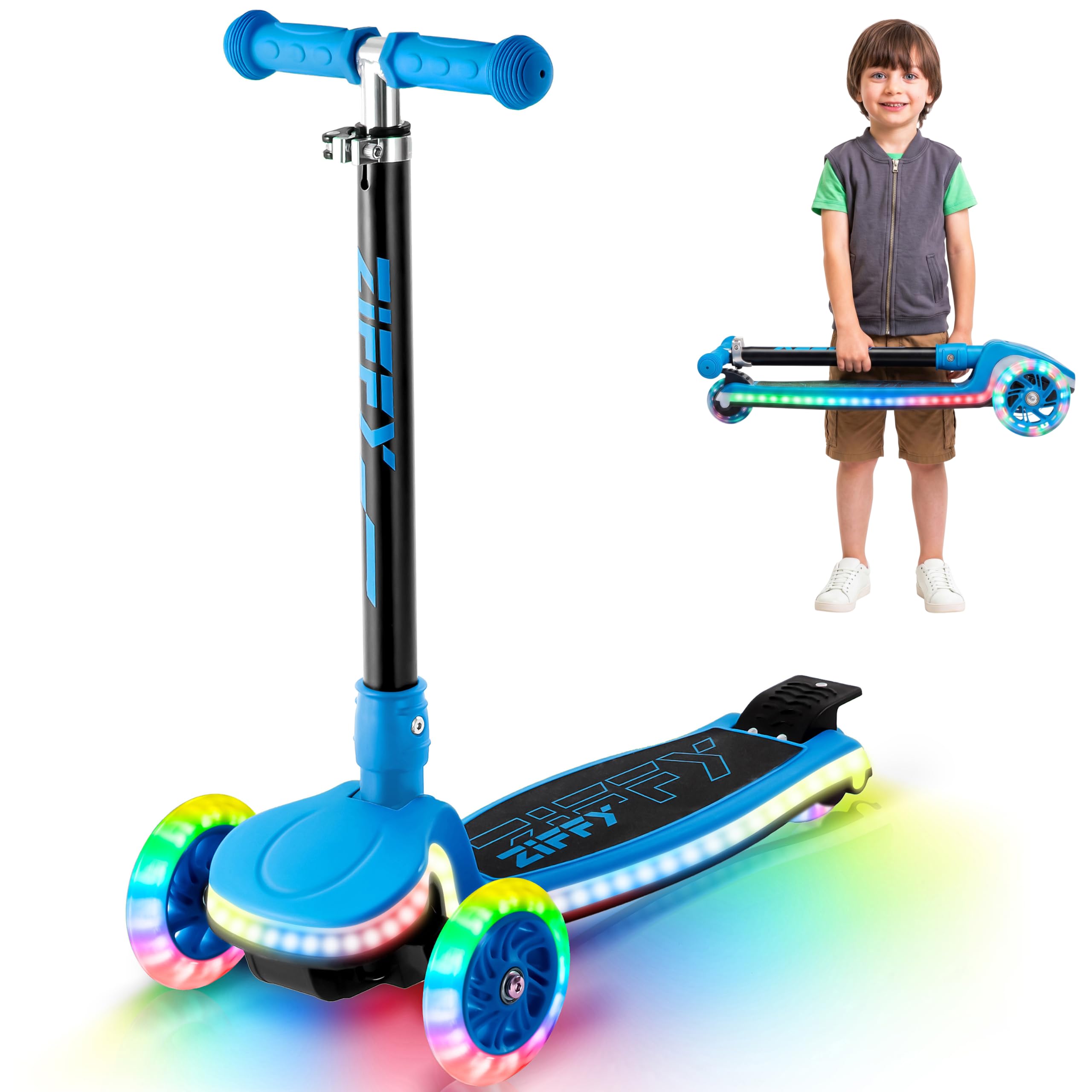
Twenty light modes make this the birthday gift kids fight over.
Most scooters have simple wheel lights; the ZIFFY goes further with 20 dynamic LED modes (20 different light patterns you can cycle through) and extended side LED strips, creating a rolling light display that owners say makes the gift “number 1.” The racing rainbow mode is the specific feature kids request by name. Beyond the flash, those lights genuinely improve visibility for evening rides, so drivers can see your child sooner.
Setup is literally zero — it arrives assembled, which one owner called the easiest put-together of any scooter they’ve bought. The four handlebar heights (25.5 / 29.1 / 31.1 / 32.6 inches) fit ages 3 to 8, and the 110-lb capacity covers years of growth. Rubberized aluminum handlebars and an extra-wide deck keep grips and footing secure.
The trade-off is steering: it uses lean-to-steer, and a vocal slice of owners find it doesn’t turn as easily as they’d like, especially at low speeds. For a 4-year-old cruising straight and wide, it’s fine — but expect a learning curve on tight turns. The enjoyment factor is the most-praised aspect by far, with kids wanting to ride it daily.
buy it for: the kid who’s obsessed with lights and will ride anywhere, day or night.
pass on it if: your child needs sharp, easy turning in tight spaces — the lean-to-steer here demands practice.
8. TONBUX Kids 3 Wheel Kick Scooter

Unfolds from the box and folds away in one second flat.
Impatience is the enemy of a new scooter — kids want to ride the second the box opens. The TONBUX comes fully assembled with a one-second folding mechanism, so there’s no waiting and no tool search. The gear height adjustment spans 24.5″ to 34″, a wider low end than most, which is why it fits children as young as 3 and as old as 12.
The stem uses a double-lock design instead of a simple collar clamp, adding safety and durability where many budget scooters cut corners. Three motion-activated LED wheels light up without batteries (a perk versus the Lifemaster’s AA requirement), and the wide 5-inch anti-slip double-layer deck provides room for sitting or standing. The 45mm widened rear wheel and brake improve grip on stops.
Owners praise the quality and ease of use most, with one family noting it “stays in the car and goes everywhere with us.” The durability feedback is mixed — some find it very sturdy (one parent’s 2-year-old rides it stably), while others report it doesn’t hold up to hard crashes. The folding latch also gets occasional complaints about stiffness, so you may need to press firmly to fold it.
kid-proof frame: an excellent no-assembly, fold-and-go option for gentle neighborhood riding, but the lightest-use kids get the most life out of it.
ideal for: parents who want zero setup and a scooter that tucks into the trunk or a closet corner.
not for: families who expect it to survive repeated hard crashes and rough terrain.
9. Rahmory 3 Wheel Light Up Kids Scooter
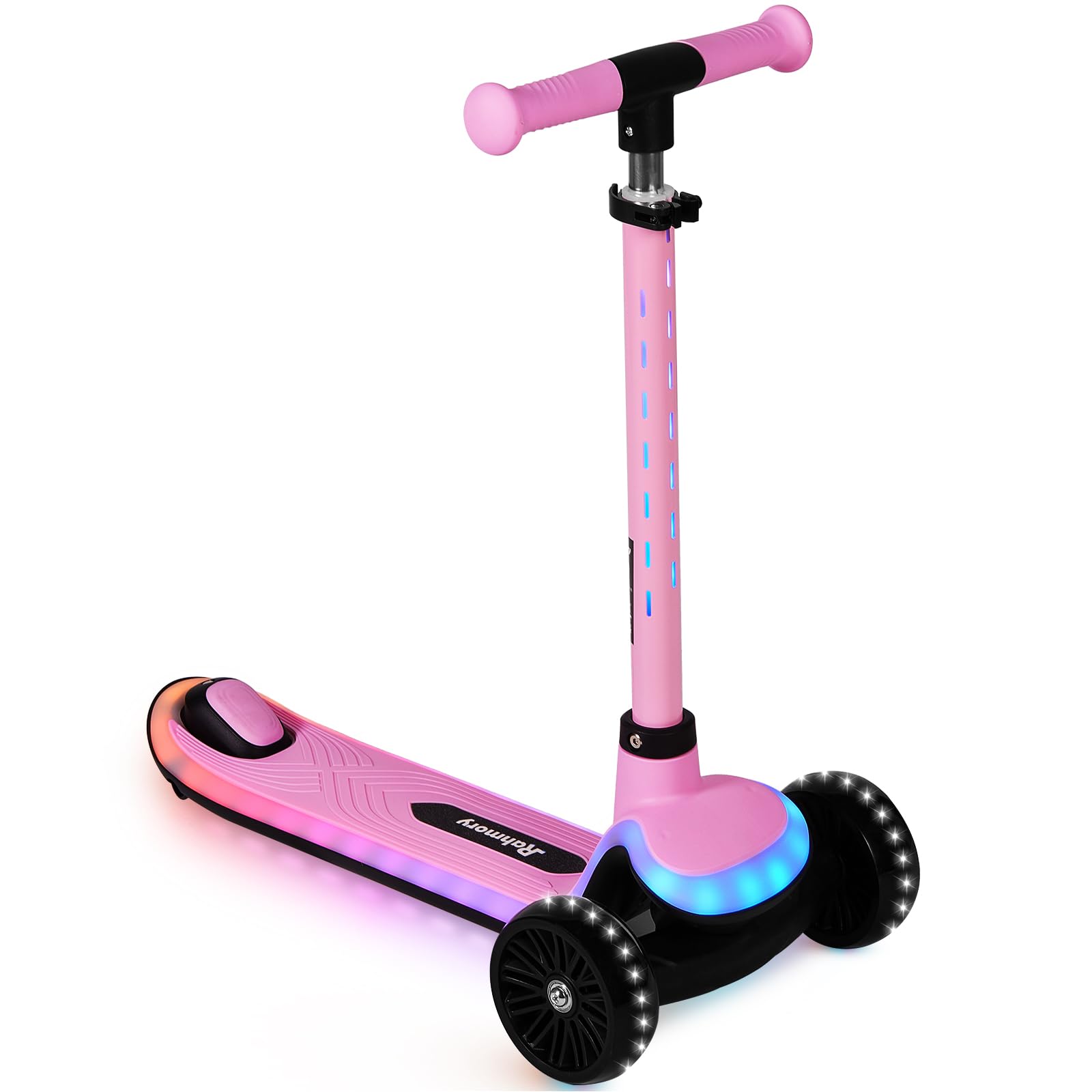
The lowest starting handlebar here, built for genuinely small riders.
If your 4-year-old is on the petite side, most scooter handlebars sit too high for a comfortable grip. The Rahmory starts at 23.6 inches — the shortest low setting on this list — and extends to 31.5 inches across three positions, so it fits a small preschooler today and stretches through age 8. The safety button lift lock makes height changes quick and secure.
The tilt steering and extra-wide pedals with dual front wheels give beginners the stability they need to learn balance “without worrying about tipping over,” as owners describe it. At 7.5 lbs, it’s light enough for a child to carry themselves, and the detachable, foldable design presses a button to break down for the car trunk or a suitcase.
Quality is the standout praise, with one family declaring it the best of the three scooters they’ve been through, noting “the lights are bright and amazing” with many choices. The honest caveat: lighting gets mixed feedback — most love it, but a minority report the light feature stops working over time. Stability and the cute appearance round out the positives.
best for: the small 4-year-old who needs the lowest handlebar reach and the lightest carry weight.
consider otherwise if: nonstop light function is a must — that’s the one feature with occasional reports of failure.
Understanding the Specs
Weight Capacity
This number tells you how long the scooter will last your child. A 44-lb limit suits a small preschooler and means you’ll likely buy again in a year or two. A 110 to 150-lb rating covers years of growth, and in the Lifemaster’s case (150 lbs), even an adult can test-ride it. Match the limit to your child’s size and how many kids will share it.
Handlebar Height Range
The low and high settings together define the usable age span. A range starting around 25 inches fits a typical 4-year-old’s grip, while the top end (28.5 to 34.5 inches depending on model) determines when the scooter gets outgrown. Wider is better if you want one purchase to last — compare the lowest setting for your child’s current size, not just the maximum.
FAQ
Is a 3-wheel scooter better than a 2-wheel for a 4-year-old?
What does lean-to-steer mean and will my child learn it quickly?
How do I know which handlebar height is right for my 4-year-old?
How much weight can a 4-year-old scooter hold?
Do the light-up wheels need batteries?
What age range should I shop for if my child is 4?
Are foldable scooters worth it for a 4-year-old?
Is a scooter with a seat better for a nervous 4-year-old?
How do I teach my 4-year-old to brake safely?
What’s the difference between PU wheels and plastic wheels?
Final Thoughts: The Verdict
For most families, the 4 year old scooter winner is the Lifemaster Lights because its 150-lb limit and five handlebar heights mean you buy it once and never again. If you want a true beginner trainer with intuitive steering, grab the Hurtle Mini — its 25” to 28.55” range fits the youngest riders best. And for the kid obsessed with light shows, the JOVA ZIFFY with its 20 LED modes is the one to reach for.
How We Picked
We do not accept paid placement. Every pick is matched to a real buyer and a real use-case; we do not hands-on test units.
Sources & Methodology
Specifications: manufacturer listings and product documentation. Review insights: verified customer reviews, as of August 2026. Pricing: not shown on this page (it changes often); check the current price via the retailer link.
As an Amazon Associate, Gadgets Feed earns from qualifying purchases. This does not affect which products we feature.