
Our readers keep the lights on and my morning glass full of iced black tea. As an Amazon Associate, I earn from qualifying purchases.
Specs are compiled from manufacturer listings and verified buyer reviews and can change over time — please confirm the key details on the product page before buying.
You can grab a 40-pound bag labeled “wild bird food” and get pure black oil sunflower seeds that bring cardinals and chickadees to your yard. Or you can get a cheap blend heavy on cracked corn and milo that birds simply kick to the ground. The single most important fact about a 40-pound bag of bird seed is what’s actually inside.
I’m Min — the founder and writer behind Gadgets Feed. This guide is built by comparing the manufacturers’ published specifications and the patterns across verified customer reviews, so you get each pick’s real strengths and trade-offs instead of marketing spin.
The right choice depends on what eats in your yard. The 40 lb bird seed bag you pick will either keep the feeder full or the ground covered in waste.
Our Picks at a Glance


How To Choose The Best 40 Lb Bird Seed
Bird seed is a consumable, which means the main variable is what your local birds actually eat. The two most important factors are the seed type and the cleanliness of the bag — fillers like red milo and cracked corn are often rejected by pickier species, while a bag full of stems and dust just means you paid for garbage you will throw away.
Seed Type: Pure vs. Blended
A bag of straight black oil sunflower seeds is the safest bet for the widest variety of birds, including cardinals, chickadees, and nuthatches. If you are targeting finches, nyjer thistle or a specialized finch blend is more effective because those small-beaked birds can handle tiny seeds. Blends that feature a high percentage of sunflowers with millet as a secondary ingredient work well for ground feeders like doves and sparrows, but blends leaning on cracked corn tend to go untouched.
Cleanliness and Fillers
The best value in a 40-pound bag is not the lowest price — it is the highest percentage of seed that birds actually eat. A bag full of sticks, chaff, or “inert filler” means you are paying for weight the birds will ignore. The most consistent feedback across owners is that clean, fresh seed with low debris content keeps the feeder busy and the ground clean.
Quick Comparison
| Model | Best For | Seed Type | Cleanliness Rating | Key Feature | Amazon |
|---|---|---|---|---|---|
| Valley Splendor Black Oil Sunflower★ Best Overall | General Backyard Birds | Black Oil Sunflower | Excellent | High Protein | Amazon |
| Ernst Grain Black Oil SunflowerSmart Choice | Picky Birds / Non-GMO | Black Oil Sunflower | Good (some sticks) | Non-GMO | Amazon |
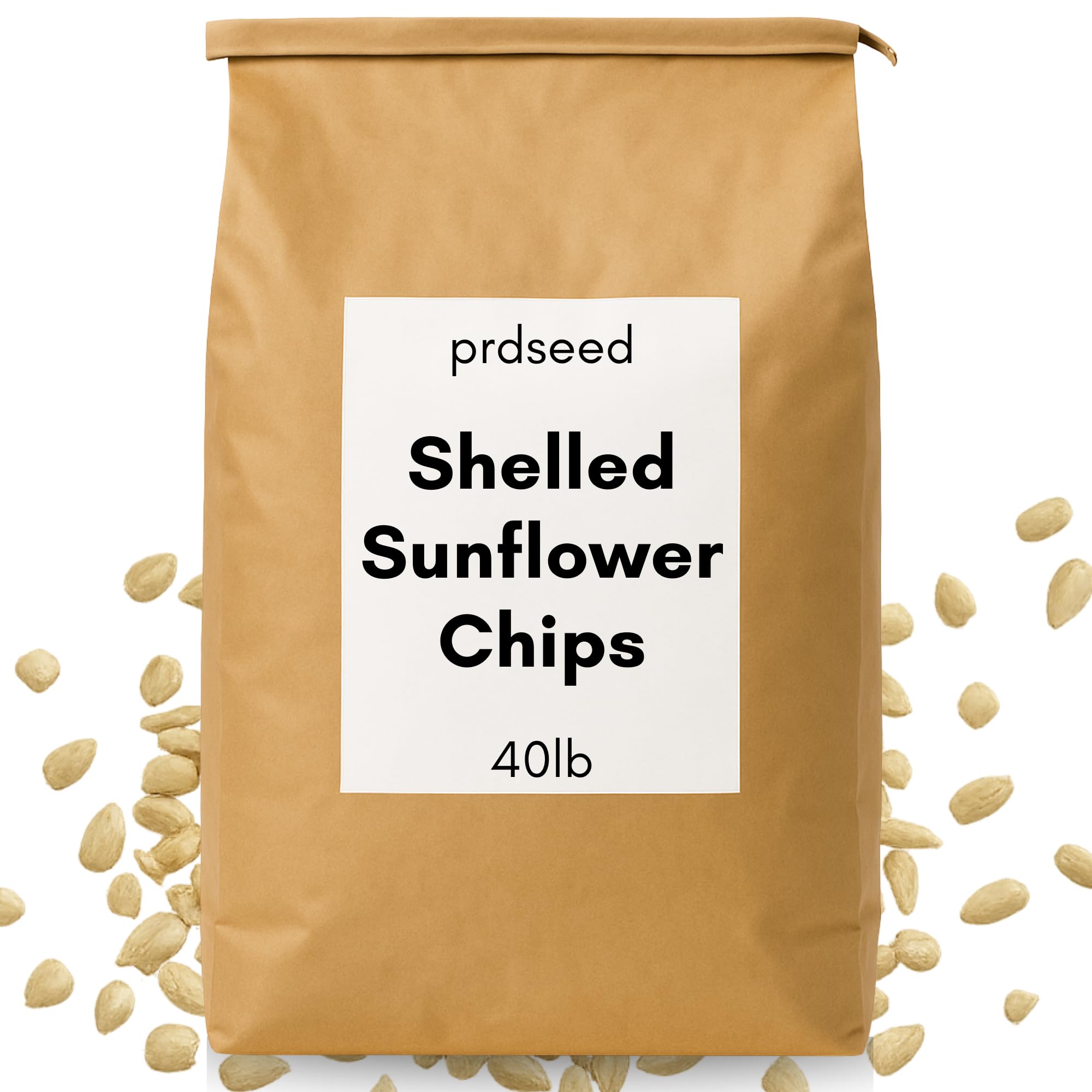
| PRDSeed Shelled Sunflower ChipsPremium Pick | No-Mess Feeding | Sunflower Chips (No Shell) | Excellent | No shells, No mess | Amazon |
| PRDSeed Black Oil Sunflower | Chickens & Wild Birds | Black Oil Sunflower | Very Good | Minimal Trash | Amazon |
| White Proso Millet (PRDSeed) | Finches, Sparrows, Doves | White Proso Millet | Excellent | All-Natural, No Additives | Amazon |
| Valley Farms Black Oil Sunflower | Higher Oil Content | Black Oil Sunflower | Very Good | 28% Fat | Amazon |
| Armstrong All Season Blend | Budget / Large Quantity | Blend with Corn | Mixed | CO2 Flushed Freshness | Amazon |
| Backyard Seeds Finch Frenzy | Finches & Small Songbirds | Nyjer / Sunflower Chip Blend | Good (low waste) | Cherry Oil | Amazon |
In‑Depth Reviews
1. Valley Splendor Black Oil Sunflower Seeds, 40 lbs
Our pick — over 4.5★ from 650+ verified ratings; the strongest balance of quality and price.
This bag of black oil sunflower seeds brings nearly every backyard species to your feeder — and owners give it a 4.6-star rating across nearly 700 reviews.
Black oil sunflower seeds (the thin-shelled, high-oil kind that birds can crack open easily) are the single most effective food for attracting a wide variety of birds. This 40-pound bag from Valley Splendor delivers them with minimal debris. Owners consistently report that cardinals, chickadees, mourning doves, and even ducks flock to it. One reviewer noted the seeds arrived “with minimal amount of debris,” and the birds “seem to like them as well.” The high protein and fat content give birds the energy they need, especially during colder months.
What sets this bag apart is the consistency: 71 owners specifically praise how many birds it brings, and 40 more call out its quality. The seed is clean, the bag is well-sealed. Unlike the Armstrong blend below, there is no cracked corn or milo filler here — just whole sunflower seeds that almost every bird species will eat.
The crowd favorite: 4.6 stars across nearly 700 owners speaks to a product that rarely disappoints. If you want one bag that works for your whole yard, this is it.
Reach for this if: You have a general backyard feeder and want the lowest-risk, highest-appeal seed for cardinals, finches, jays, and more.
Look elsewhere if: You specifically want a no-mess shell-free option or a specialized finch-only blend — this is whole seed with shells.
2. Ernst Grain & Livestock Black Oil Sunflower Seeds, 40lb
Buyers report this non-GMO sunflower seed has less “junk” than other brands — but an occasional bag may have sticks mixed in.
If cleanliness is your top priority, this bag from Ernst Grain & Livestock earns the highest marks. Buyers are quick to point out that there is “less ‘junk’ in this brand than other brands” and that the seeds are pure sunflower with no corn or millet filler. The quality is praised by 41 owners, and the bird attraction score of 29 is strong for a single-seed product.
There is one honest trade-off. While many bags arrive clean, a smaller number of owners mention sticks and debris mixed in — the data shows 15 mentions of debris, with a mixed rating. So if you get a clean bag, it is excellent; an occasional bag may require a quick sifting. The cardinals and blue jays that visit feeders stocked with this seed are reportedly enthusiastic, and the non-GMO claim gives confidence for those who prefer a natural product.
The differentiator: This is the only pure sunflower option on the list with a non-GMO labeling, which matters to a segment of eco-conscious buyers.
Grab this for: A high-quality black oil sunflower feed where filler content is your biggest worry — many bags are notably clean.
But note: The occasional stick or stem may appear; if absolute zero-debris is mandatory, the PRDSeed option below may be a safer bet.
3. PRDSeed Shelled Sunflower Chips – 40 lb Bag
Shelled sunflower chips eliminate the mess of hulls under your feeder — but the chips are small and can create dust that clogs ports.
This is a completely different product from whole sunflower seed. Shelled sunflower chips (also called hearts or chips) are the meat of the seed with the husk removed, meaning zero shells fall to the ground. That makes them the cleanest option for decks, patios, and manicured lawns. The birds love them — cardinals, goldfinches, chickadees, and titmice all visit regularly, and 57 owners specifically note the bird attraction.
The trade-off for that convenience is price and chip size. The 40-pound bag costs more per pound than whole seed, and some owners find the chips are very small, creating dust that can clog feeder ports if not sifted. The consensus among 33 owners is that the value is still good given the absence of mess. One buyer mentioned the package lasted a year in a Florida garage without spoiling, and every owner seems to agree that the birds “go crazy” for them.
The verdict: If your feeder sits over a clean surface or you simply hate wasted hulls, this is the best no-mess choice. The small chip size is the only recurring caveat.
Best for: Patio, deck, or balcony feeders where hull cleanup is a real chore.
Think twice if: You want the longest-lasting seed per pound — whole sunflower seed will go farther for the same money, and these chips can turn dusty.
4. Backyard Seeds Finch & Small Songbird Frenzy 40lbs
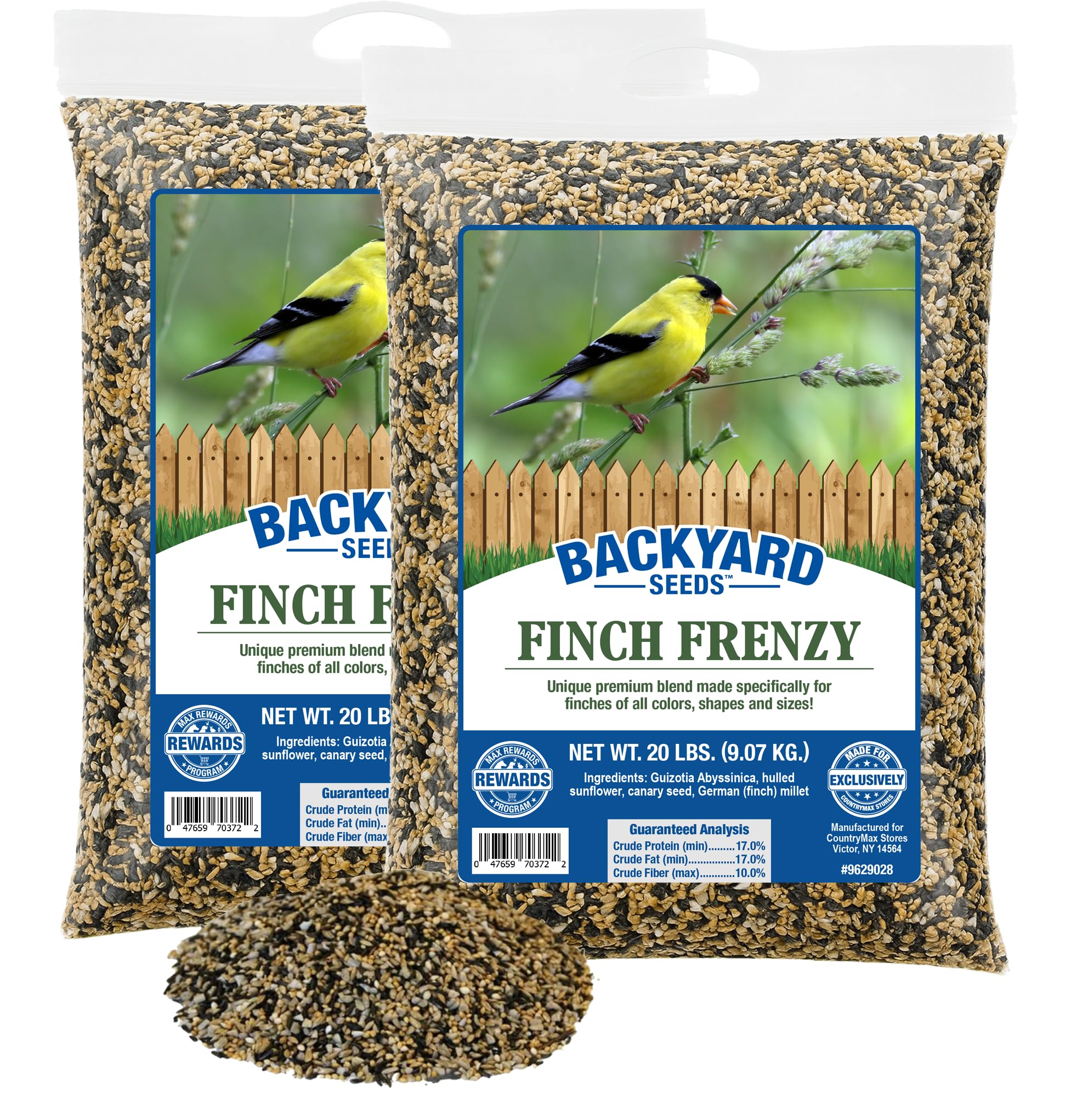
This premium blend combines nyjer (thistle), hulled sunflower chips, canary seed, and German millet with cherry oil.
This is a targeted product for finch enthusiasts, not a general backyard mix. It combines nyjer (thistle) seed, hulled sunflower chips, canary seed, and German millet with cherry oil, creating a nutrient-rich blend small songbirds crave. The feedback is remarkable — owners note that American Goldfinches, House Finches, and Pine Siskins flock to it. One owner reported the smell “brought me back to my childhood” and compared it to a cherry lollipop.
The low-waste formula means minimal shells and filler grains, so the ground stays cleaner than with a standard mix. The bag is split into two resealable 20-pound portions, which helps keep the second half fresh. The only real question mark is whether every seed gets eaten — one owner wasn’t sure if the birds were finishing everything, but the enthusiastic appetite across other reviews suggests it is not a widespread issue.
Why finch owners love it
- Exceptionally high-quality ingredients with cherry oil that finches find irresistible
- Low-waste formula means less mess under the feeder compared to standard blends
- Two resealable 20lb bags protect freshness for the long haul
The honest caveat
- Best for small songbirds only — larger birds may not be as interested
- The sweet smell can attract wildlife like bears if left out overnight
Reach for this if: You want to turn your yard into a finch hotspot and are willing to pay a premium for a specialized, low-waste blend that delivers the highest owner satisfaction.
skip it if: You need a general-purpose seed that works for cardinals, jays, and woodpeckers — this is formulated specifically for small-beaked songbirds.
5. White Proso Millet Bird Seed – 40 lb Bag (PRDSeed)

Ground-foraging birds like juncos and sparrows get the seed they actually want with this 100% white proso millet — no fillers, no additives.
If you specifically want to attract juncos, sparrows, doves, and buntings, white proso millet is the seed they naturally prefer. This bag from PRDSeed is 100% white proso millet with no additives or fillers — just clean, all-natural seed grown and packaged in the USA. The feedback is consistent: 44 owners mention how well it attracts birds, and 42 call out its quality. It is also notably clean, with 15 people praising the lack of dust compared to other brands.
The drawbacks are specific to this seed type. Millet is a tiny, round seed, which means it is best used in a feeder designed for small seed (mesh tubes or tray feeders). It also leaves papery hulls, so it is not a “no-mess” seed. One owner noted that the bag is not resealable, so you will need a storage container. The price per pound runs higher than a generic blend, but the purity means almost nothing gets wasted.
The bottom line: This is a niche product that excels at its job. If you see white-crowned sparrows or painted buntings in your area, this is the seed they will actually eat.
Great for: Anyone feeding ground-foraging small birds who wants a clean, pure millet with no filler or dust.
Not ideal for: A general-purpose feeder — millet alone will not attract cardinals, jays, or woodpeckers. You need black oil sunflower for that.
6. Valley Farms Black Oil Sunflower Seed Wild Bird Food (40 LB)

This sunflower seed delivers 28% fat, 25% fiber, and 15% protein — the most nutritional density among the whole sunflower options here.
Valley Farms distinguishes itself by emphasizing a higher oil content than standard striped sunflower seeds, delivering 28% fat, 25% fiber, and 15% protein in each seed. That extra energy is a real help during migration and freezing weather, when birds burn calories fast. The company also vacuum-cleans the seeds, and owner feedback backs that up — 17 people mention strong bird attraction, and 11 praise the value for money.
This is a straight black oil sunflower seed with no filler, so it works for the same broad range of species as the Valley Splendor option above. The poly-woven bag is sturdy, and the brand is fully USA-made. The most common praise focuses on freshness and how quickly the birds empty the feeder. One bag arrived split open, but the seller made it right immediately, which buyers appreciated.
The edge: The highest fat content among the whole sunflower options here, backed by a strong reputation for freshness and clean seed.
Pick this if: You want the most nutritionally dense black oil sunflower seed for winter feeding and value USA production.
Look elsewhere if: You are on a tighter budget — the price point is higher than some comparable pure sunflower bags.
7. PRDSeed Black Oil Sunflower Seeds for Birds (40lbs)

An “impressively clean” sunflower seed that works for backyard birds and chickens alike — but the bag is not resealable.
This bag from PRDSeed earns strong marks for being “impressively clean” — one owner noted “very little if any waste in this seed.” The 40-pound bag is designed for both wild bird feeders and chickens, making it a versatile bulk purchase for rural properties. The quality score of 11 positive mentions and the bird attraction score of 15 reflect a product that works as advertised, attracting cardinals, finches, and blue jays.
The bag is well-packaged and arrives quickly, though a few owners noted the presence of some stems and chaff. One owner observed seeds with holes bored by insects, though this was not a widespread complaint. For the price, it sits in the middle of the premium tier, offering a good balance of quality and value.
Standout note: At 640 ounces per bag, the volume is generous, and the “durable storage bag” helps keep pests out between uses.
Best for: Owners of both backyard birds and chickens who want a single clean sunflower seed for both.
But be aware: The bag is not resealable, and an occasional batch may include stems or bored seeds.
8. Armstrong Wild Bird Food All Season Bird Seed Blend, 40 Pounds
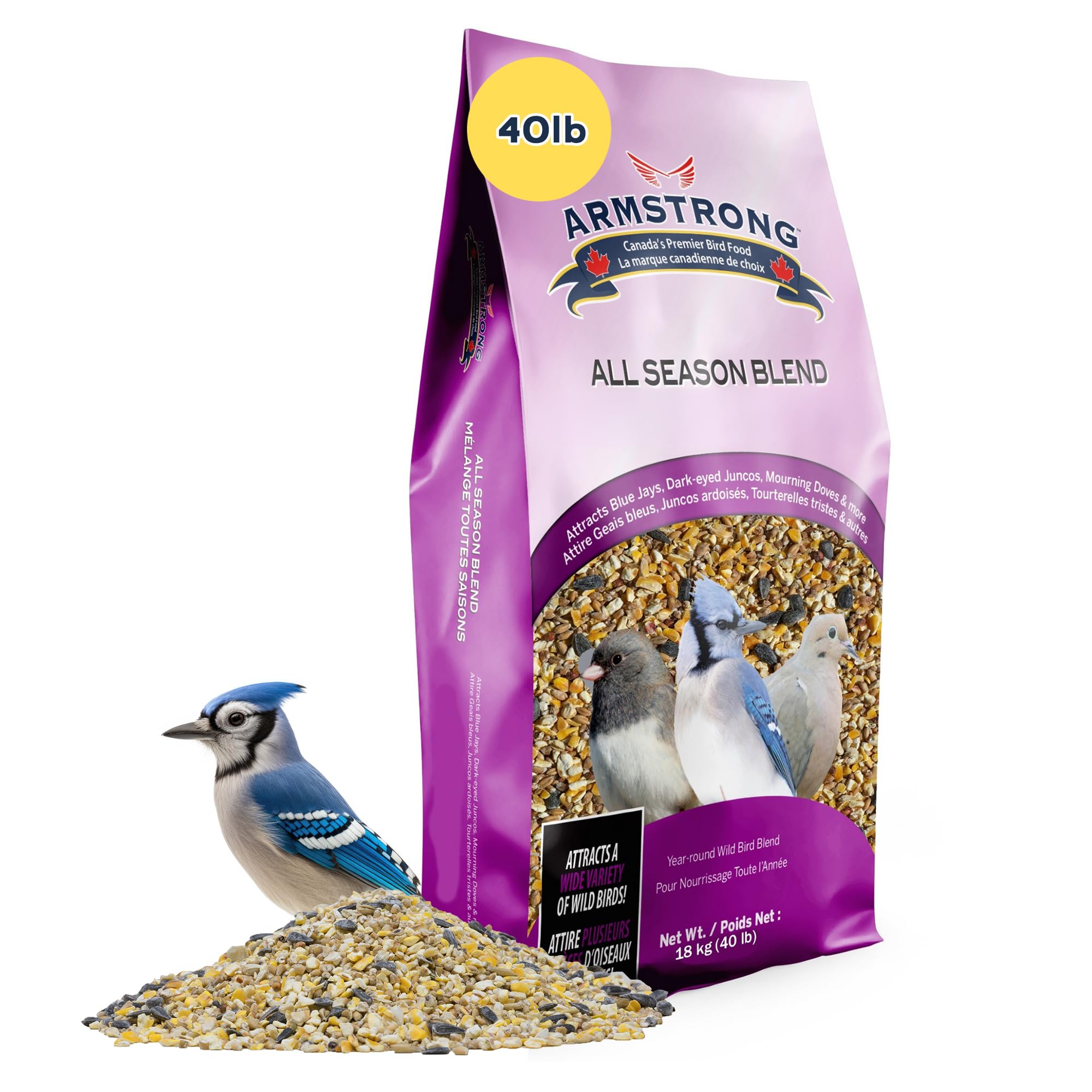
This budget blend is the cheapest per pound, but many birds will ignore the corn filler — and some bags arrive as “90% dust.”
This Armstrong blend is the cheapest per-pound option on the list, combining cut corn, wheat, red milo, white millet, and black oil sunflower seeds. The barrier bag is sealed airtight and CO2-flushed to keep it fresh. On paper, it is designed to attract Blue Jays, Mourning Doves, Dark-eyed Juncos, and more, and some owners see those species lining up. The positive reviews come mostly from people whose local birds eat just about anything.
The mixed feedback is the clear headline here. The 68 mentions of bird attraction carry a “mixed” rating from Amazon’s analysis, and the primary complaint is that the blend is “mostly ground corn” with only about 1% sunflower seeds according to critical owners. Some buyers reported the bag arrived as “90% dust.” For many, the birds “line up every morning waiting for me to fill the feeder.” For others, the seed was ignored completely. The recipe varies by batch, which is the core inconsistency.
What works
- Very low cost per pound compared to pure sunflower or finch blends
- CO2-flushed bag keeps the seed fresh even during long storage
- Many owners mention their birds and squirrels eat it eagerly
The trade-off
- High proportion of cracked corn means ground-feeding species are the audience — finches and cardinals may pass
- Inconsistent quality: some bags are clean, others are largely filler and dust
Good for: A low-cost trial bag if you have ground-foraging birds like doves and juncos and are okay with a higher waste percentage.
Pass on this if: You want to attract cardinals, finches, or chickadees consistently — a pure sunflower seed will give you much better results with less waste.
Understanding the Specs
Whole Seed vs. No-Shell Chips
A whole sunflower seed includes the black husk, which birds crack open and drop to the ground — creating mess but also keeping the seed fresher longer in the bag because the shell protects the kernel. Shelled chips (or hearts) remove the husk entirely, so nothing falls on the ground under the feeder, but the exposed kernel is more prone to turning dusty or spoiling in humid weather.
Filler Grain Content
Many budget bird seed blends include cracked corn, red milo, and wheat to bulk up the weight at a lower cost. These ingredients are not necessarily bad — ground-feeding birds like doves and quail will eat them — but many popular feeder birds like cardinals, chickadees, and finches will pick around them. A “low waste” blend typically minimizes or eliminates these fillers in favor of seeds birds eat completely.
FAQ
What is the difference between black oil sunflower seeds and striped sunflower seeds?
Will a 40-pound bag of bird seed spoil before I finish it?
Why are some birds in my yard ignoring the bird seed I bought?
What does “low waste” mean on a bag of bird seed?
Can I feed my chickens the same 40-pound bird seed I buy for wild birds?
How much bird seed should I expect to go through each month?
Is finch seed (nyjer thistle) the same thing as black oil sunflower seeds?
Why does a single bag of bird seed seem to vary in quality between purchases?
Does the bag material matter for storing bird seed long-term?
Can I mix different 40-pound bird seed bags together?
Final Thoughts: The Verdict
For most buyers, the 40 lb bird seed winner is the Valley Splendor Black Oil Sunflower because it is the safest, most universally appealing seed at a fair price with excellent owner feedback on cleanliness and bird attraction. If you want a no-mess feeder experience, grab the PRDSeed Shelled Sunflower Chips. And for dedicated finch enthusiasts, the Backyard Seeds Finch Frenzy delivers the highest owner satisfaction rate — 4.9 stars — among any bag here.
How We Picked
We do not accept paid placement. Every pick is matched to a real buyer and a real use-case; we do not hands-on test units.
Sources & Methodology
Specifications: manufacturer listings and product documentation. Review insights: verified customer reviews, as of July 2026. Pricing: not shown on this page (it changes often); check the current price via the retailer link.
As an Amazon Associate, Gadgets Feed earns from qualifying purchases. This does not affect which products we feature.