
Our readers keep the lights on and my morning glass full of iced black tea. As an Amazon Associate, I earn from qualifying purchases.
Specs are compiled from manufacturer listings and verified buyer reviews and can change over time — please confirm the key details on the product page before buying.
When you shop for a 400-watt panel, the real question is how close it gets to that number on an average day, and whether you can mount it alone. Here are the strongest 400W-class options, from the ones that over-deliver to the budget packs that quietly compromise.
I’m Min — the founder and writer behind Gadgets Feed. This guide is built by comparing the manufacturers’ published specifications and the patterns across verified customer reviews, so you get each pick’s real strengths and trade-offs instead of marketing spin.
We compared efficiency, weight, and real-world output so you can buy with confidence.
Our Picks at a Glance


How To Choose The Best 400 Watt Solar Panel
Before you compare prices, decide whether the panel is going to live on a vehicle roof, on a ground mount, or in your trunk for camping trips. That single choice filters the list faster than any spec sheet.
Rigid vs. portable vs. bifacial
A rigid framed panel is the standard for permanent installs, while a foldable portable panel trades some peak output for the ability to move it around and angle it toward the sun. Bifacial panels add a transparent backsheet so they also harvest reflected light off surfaces like sand or a white roof — worth a look if your mounting spot is bright underneath.
Efficiency and cell type
Cell efficiency tells you how much of the sunlight hitting the panel becomes electricity. The panels here range from 23% to 25%, and the higher-efficiency N-type cells (which use an N-type silicon base) tend to hold their output better in hot weather and under partial shade. You can also look for the number of busbars — the thin metal strips on each cell — because more busbars (16, for example) means less risk of microcracks.
Quick Comparison
| Model | Best For | Output | Weight | Panel Count | Amazon |
|---|---|---|---|---|---|
| JJN 400W Bifacial★ Best Overall | Off-grid cabins | 400W | 46.2 lbs | 2 | Amazon |
| HQST 400W KitSmart Value | Compact roofs | 400W | 16.3 lbs | 4 | Amazon |
| Traver Force 400WTop Efficiency | Small loads | 400W | — | 4 | Amazon |
| JJN Bifacial 425W | High output | 425W | 51.6 lbs | 1 | Amazon |
| Epoch 400W Bifacial | Vans | 400W | 46 lbs | 2 | Amazon |
| STAR 400W Frameless | No-maintenance roofs | 400W | 24.9 lbs | 2 | Amazon |
| Greenmagic 400W Portable | Camping | 400W | 21.5 lbs | 1 | Amazon |
| Renogy 400W N-Type | Class B vans | 400W | — | 2 | Amazon |
| ZOUPW 450W Portable | Large power stations | 450W | 29.5 lbs | 1 | Amazon |
| Renogy 400W Premium Kit | Beginners | 400W | 56.4 lbs | 1 | Amazon |
In-Depth Reviews
1. JJN 200W 2PCS Bifacial Solar Panel (400W)
Our pick — over 4.5★ from 750+ verified ratings; the strongest balance of quality and price.
The off-grid workhorse that captures light from both sides and feeds a serious battery bank.
This pair of 200W panels uses a bifacial design (a transparent backsheet that captures reflected light from the surface below), so on white or reflective ground the rear side can add up to 30% more output. The payoff is real: the crowd favorite here produces upward of 760 watts in good conditions, and buyers report running a shop or camper from a modest set of these panels.
The build backs up the output. You get a black corrosion-resistant aluminum frame, an IP65 junction box (protected against water splashes), and IP67 connectors, with wind and snow ratings of 2400Pa and 5400Pa respectively — so a storm won’t end your setup. The wattage math is straightforward: this 2-panel package totals 400W at 23% efficiency, using a 10BB (10-busbar) cell design from Grade A cells.
What wins people over is the consistent performance — owners mention it far more than any other feature, and the output is the second-most-discussed point. As owners mention: “8 panels power shop exclusively via solar; 15A@24V during outage, 4 panels run shop 6+ hrs, storage full by 8am.” That is a full workshop running through the evening on a single morning of sun. One unit arrived shattered and the support team replaced it quickly, so the rare damage case is handled well.
What owners praise
- Bifacial design returns notable extra watts on reflective surfaces
- 23% efficiency with a strong 10BB cell layout
- Survives heavy wind and snow loads
Know before you buy
- Heavy at 46.2 lbs for the pair
- Packaging drew some grumbles about sharp corners
Reach for these if: you want a permanent cabin, RV, or shop array and can mount for ground reflection to boost the bifacial gain.
Look elsewhere if: you need a single lightweight panel you can carry alone — at 46.2 lbs it is a two-person install.
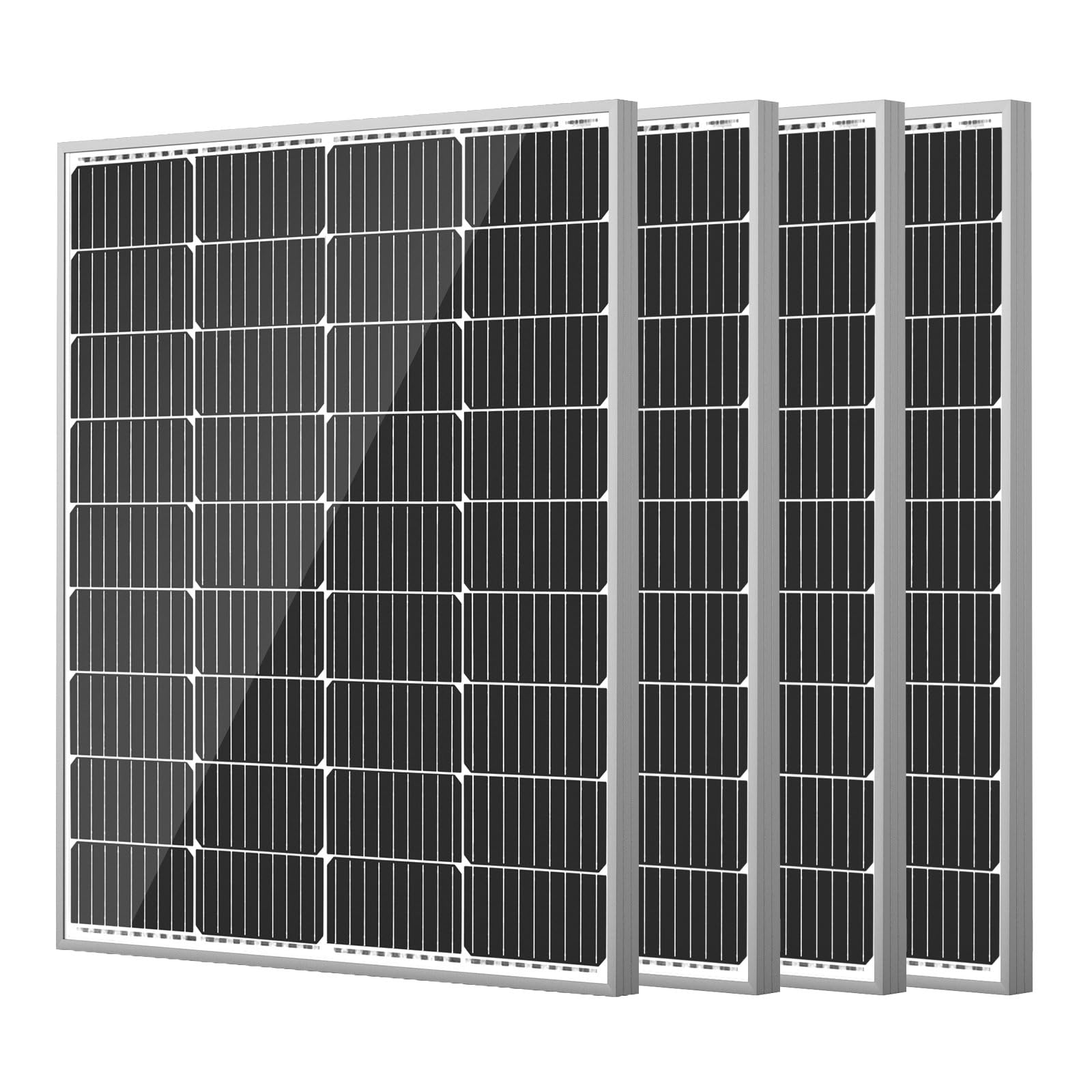
2. HQST 400W 12V Solar Panel Kit (4x100W)
A featherweight four-panel kit that squeezes 400W into a surprisingly small footprint.
If your roof is short on space, this is the kit that fits. The four 100W panels use a square design (31.8″ x 27.5″ x 1.18″ each) that the maker says is 11% smaller than traditional panels, and the whole set weighs just 16.3 pounds. Compare that to the 46.2 pounds of the JJN pair above, and you can see how much easier this is to lift onto a camper van or shed roof by yourself.
The efficiency story is strong too. These use 166mm Grade A+ cells with 100% EL testing (a light-based scan that checks for hidden cracks), pushing up to 23% conversion. Unlike the bifacial JJN, these are standard panels, but owners still report outstanding numbers — “Most efficient I have ever owned. I couldn’t install these in a way to get full use out of the bi-facial aspect and they are still producing at over 22%.” In Central Florida, four of them put out over 900W on a good day.
Durability is baked in: the frame handles 2400Pa wind loads and 5400Pa snow loads, and the IP65-rated connectors and junction box shrug off rain splashes. One set survived two nasty hail storms and kept working. The honest caveat is shipping — boxes arrive roughed up more often than ideal, though the panels inside are typically fine.
Why it wins: 23% efficiency, a 16.3 lb total weight, and a compact square layout make this the easiest 400W kit to install solo on a tight roof. The trade-off is simple: standard (not bifacial) cells mean you won’t harvest the reflected-light bonus the JJN gets.
Best for: RV, van, and cabin roofs with limited area, and anyone who wants to mount without a lifting partner.
Think twice if: your panels will sit flat on grass — without a bright reflective surface below, you leave the bifacial gains untapped.
3. Traver Force 400W Monocrystalline Solar Panel (4x100W)
The most efficient cells on this list, tuned for consistent watts in real-world conditions.
This four-pack leads the efficiency race at up to 25% conversion, using 182mm monocrystalline cells with a 10-busbar design. The extra busbars are not a gimmick — they improve current collection and lower the chance of microcracks, which is why these panels hold their output over time. Each one is EL-tested to confirm it is crack-free before it ships.
The durability package matches the premium cells: an IP65-rated junction box, IP68-rated connectors, and a corrosion-resistant aluminum frame, ready for rain and long outdoor exposure. With four pre-drilled mounting holes, installation is a straightforward bolt-down job for RV, van, cabin, or boat roofs. The maker backs it with a 5-year product assurance and an 80% power retention promise after 25 years.
Real-world reports are honest about rated vs. actual output. One owner testing at a camp saw only 50W in direct sunlight and admitted the rated power was unproven, but another logged a continuous 80W against the typical 50W peak others get from 100W-rated panels — meaning this one over-delivers where most under-deliver. Customers note it quietly outperforms its rating while staying reliable over 10 months of use.
The honest read: you pay a slight premium for the 25% cells, and the payoff is more usable watts per square foot plus better behavior in heat. The trade-off is that a single owner’s early test saw low output — so temper expectations until the panel is properly angled and wired.
Choose this if: efficiency per square inch is your top priority and you want a panel that keeps producing when conditions are less than perfect.
skip it if: you are on a strict budget — the premium cells command a higher price than the HQST kit above.
4. JJN Bifacial 425W N-Type Solar Panel
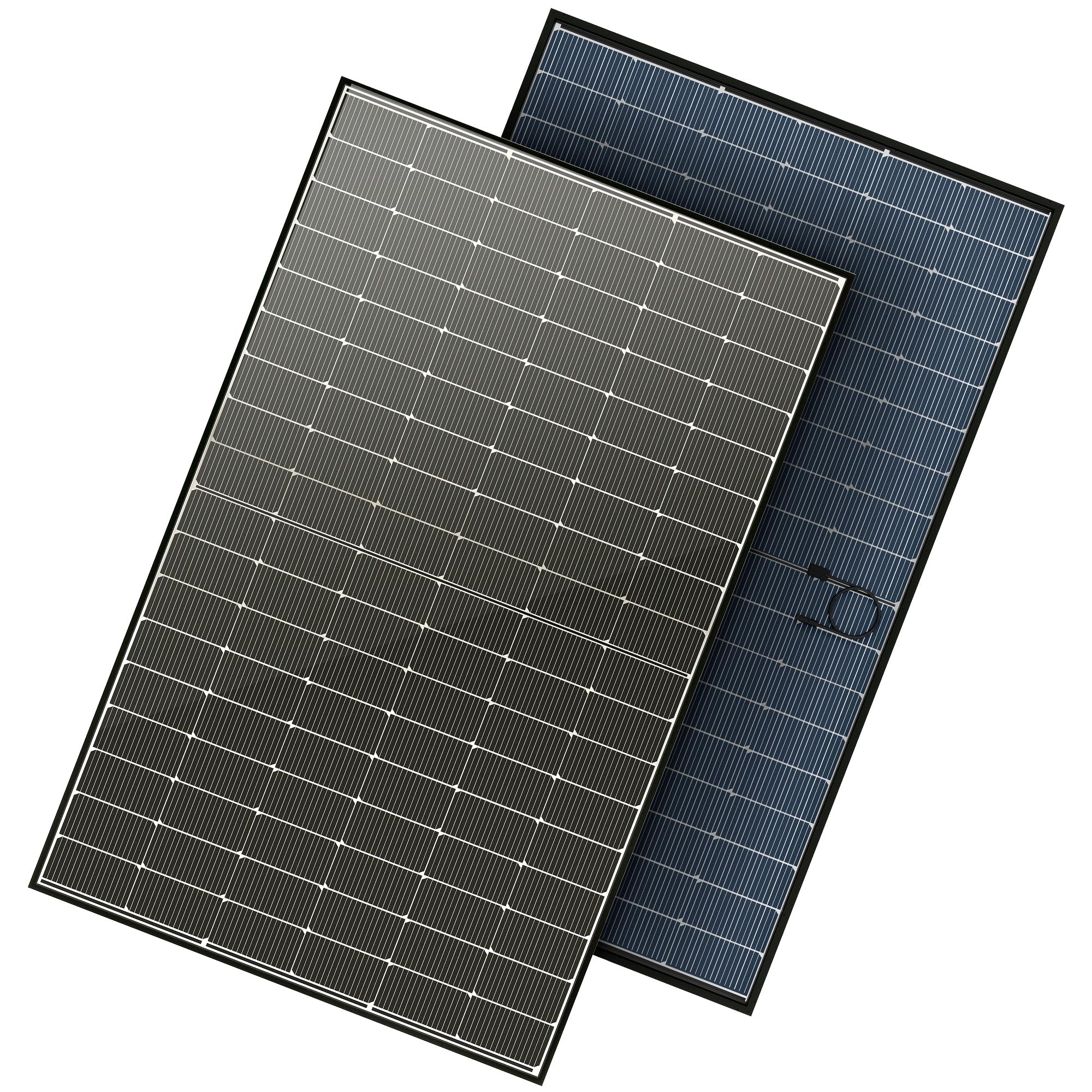
A 425W single panel with N-type 16-busbar cells that shrug off shade and high heat.
If you want more than 400W from a single panel, this is your move. The JJN 425W uses bifacial technology with a transparent backsheet, adding up to 25% efficiency over conventional panels by harvesting light from both sides. The N-type 16BB cells are the standout here — they significantly reduce the impact of shading compared to older 9BB and 10BB cells, so a tree branch or a vent casting a shadow won’t kill your whole array.
Output numbers from owners are genuinely impressive. A setup with multiple panels produced up to 900W on cloudy days and delivered its rated amperage in full sun, with one camper owner noting outputs of 980–1060W from ten panels. Quality is the most-praised aspect by far, and power output is right behind it — owners consistently call these among the best panels they have owned, easy to install and sturdy.
The construction is built for trouble: a black corrosion-resistant aluminum frame, IP65 junction box, and IP68 connectors handle heavy weather and 2400Pa wind with 5400Pa snow loads. Wiring is simple with pre-drilled holes and MC4 connectors, and the company backs it with a 30-year transferable power output warranty — the longest on this list. The main physical trade-off is weight: at 51.6 pounds, this is the heaviest single panel here.
The strongest points
- 425W rated with owners seeing 880W+ from paired panels
- N-type 16BB cells hold output well in shade and heat
- 30-year transferable warranty
The honest catches
- 51.6 lbs makes solo mounting a genuine struggle
- A few units arrive with cosmetic shipping scratches
Grab this for: a bigger off-grid build where one powerful 425W panel beats multiple smaller ones, and shade tolerance matters.
Pass if: you need something you can lift onto a roof alone — bring a helper for this one.
5. Epoch 400W Bifacial Solar Panel (2x200W)
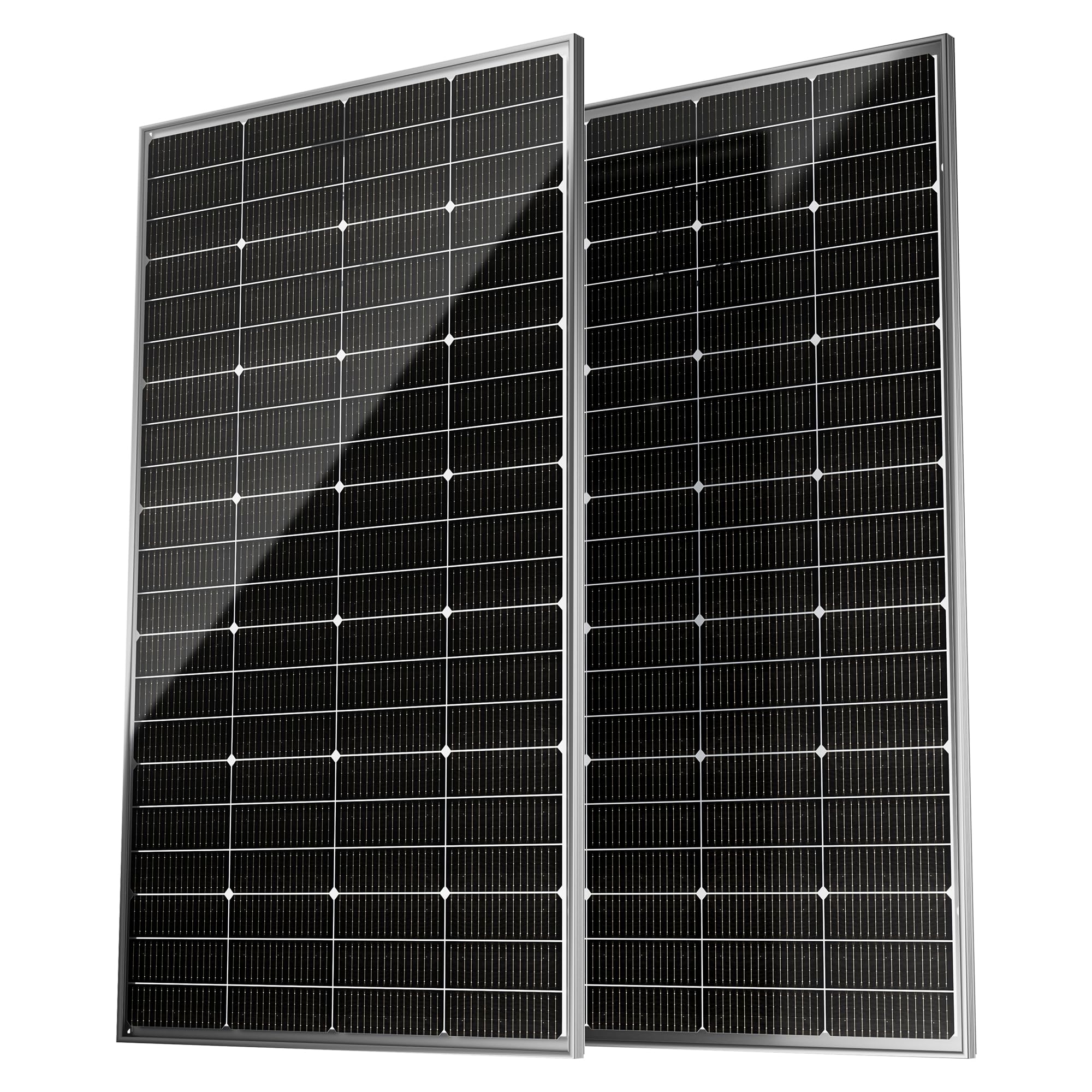
A two-panel bifacial kit that fills a 24V battery past full by lunchtime on a van roof.
This setup pairs two 200W bifacial panels into a 400W, 24-volt system, and the owner reports are as strong as any on this list. The defining story: a flat van mount was still producing over 1500W on sunny days, and a 7.5kWh 24V battery was fully charged by noon — good enough to run baseline home loads. That is the bifacial design working hard, capturing reflected light off the roof surface.
The cells are Grade A+ with PERC (a layer that reflects light back into the cell), half-cut cell, bypass diodes, and 10-busbar technology. That combination boost output even when partially shaded and protects the cells from overheating, which matters for hot-climate installs. The IP68 junction box (fully protected against dust and immersion) and IP67-rated connectors handle dirt, debris, and low-pressure water jets without complaint.
Wiring and mounting are straight-ahead: pre-drilled holes on the back work with most ground mounts, Z brackets, corner brackets, pole mounts, and tilt mounts. Owners note the quality most, with solar output right behind it — one buyer saw 380+W from a single pair (90% of rating) and over 100W on cloudy days. The warranty is a transferable 25-year power output promise plus 12 years of quality assurance. The one gripe is physical: these panels run a little wide, which can cramp a tight deck layout.
Pick these if: you want bifacial gains on a van or RV roof and need a 24V system that recharges a big battery fast.
Think twice if: your mounting space is narrow — the width drew the only real complaint.
6. STAR 400W Solar Panel, Frameless Design (2x200W)
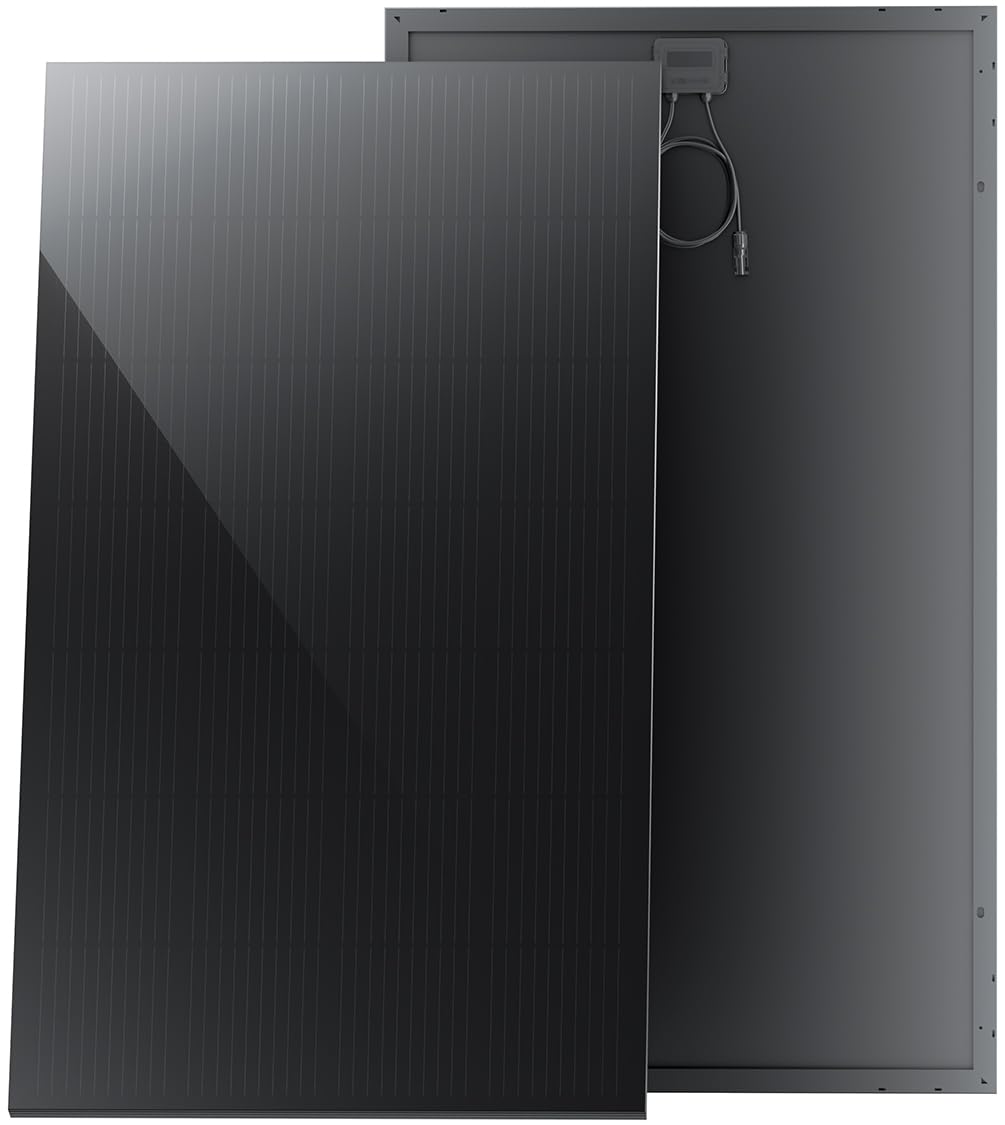
A frameless two-pack that self-cleans in the rain and skips the dust buildup that steals watts.
The headline feature here is the frameless “Cleanedge” design. With no raised frame to catch dust and debris, rain washes the surface clean on its own — the maker claims a 15% boost in power generation versus normal framed panels because nothing blocks the cells. For anyone who dreads climbing onto a roof with a hose, that is the entire appeal: zero scheduled maintenance.
Output is solid and verified by owners. The two 200W panels run 25% high-efficiency cells, are certified by ETL, ISO9001, and CE, and hold up in harsh weather. In the Midwest, a four-panel setup (two of these kits) peaked around 988W — about 85–90% of rated output, generating 3.3–3.5kWh per day. Another owner in Florida reported output right at the rating, and one measured efficiency tip: because the glass sits flush with the frame edge, you want rubber clamps when mounting.
The frameless design brings real weight savings — this 400W pair weighs just 24.9 pounds, less than half of the 51.6-pound single JJN 425W above. That makes rooftop solo installs far more feasible. Power output is the most mixed aspect in reviews, though: some saw close to rated power while a couple reported only 50–60W in imperfect conditions, so your mounting angle and wiring will decide your experience. One panel arrived cracked on delivery, but the return process was simple.
Why it stands out
- Frameless rain self-cleaning means zero maintenance
- Only 24.9 lbs for the full 400W
- ETL and CE certified build
Reality check
- Output is less consistent in angled or shady spots
- Glass flush with the frame needs rubber clamps
Choose this for: a rooftop you never want to clean again, or a setup where low weight makes solo mounting possible.
pass on it if: your site has heavy shade or awkward angles — this panel rewards a clear, well-tilted view of the sun.
7. Greenmagic Portable 400W Foldable Solar Panel
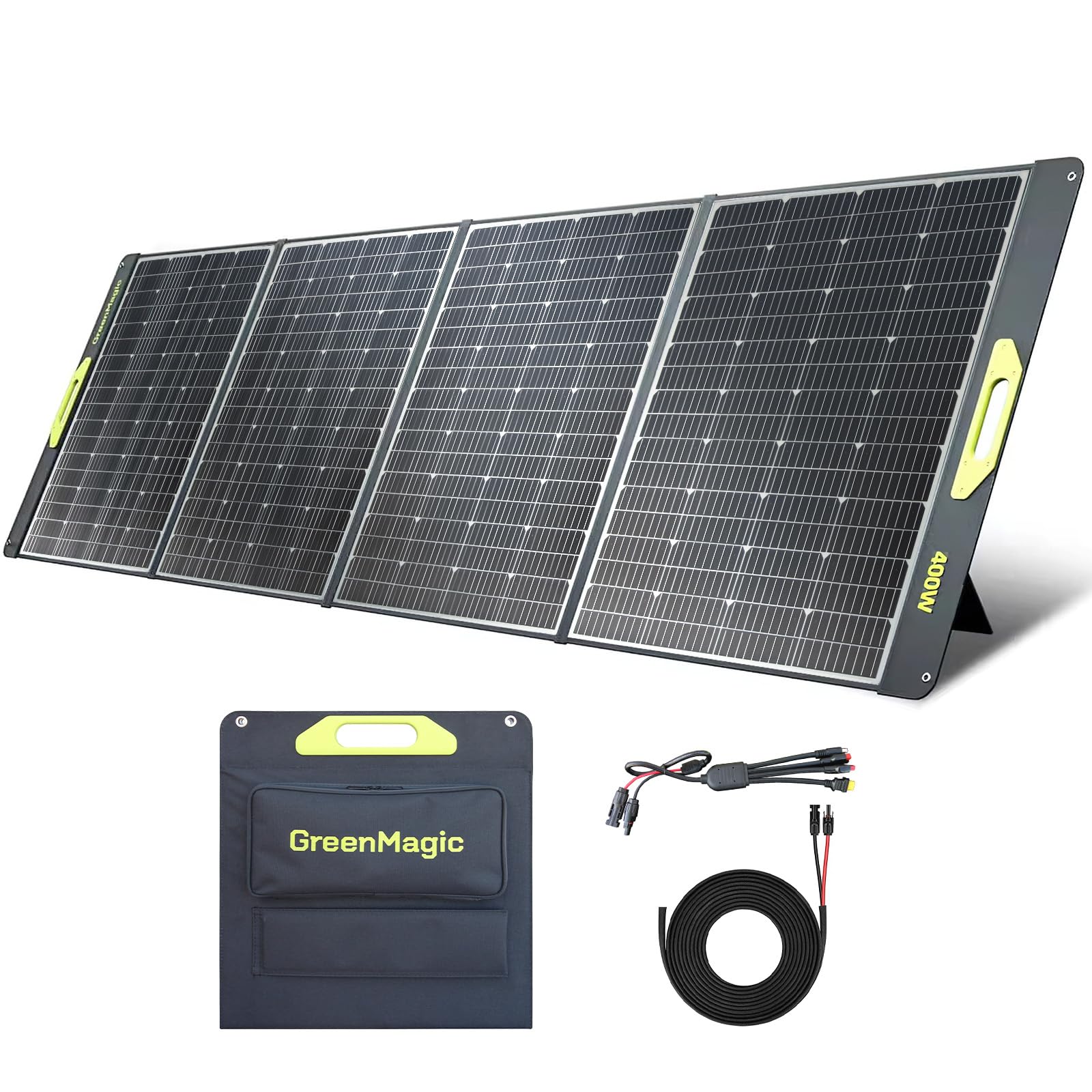
A foldable 400W panel that sets up in seconds and pairs with nearly any power station you own.
Grab this one when your solar life is not nailed to a roof. The Greenmagic folds down to a quarter of its full size — 32.09″ x 31.30″ x 1.97″ folded — with a sturdy rubber handle for briefcase-style carrying. At 21.5 pounds, it is light enough to haul from a truck to a campsite without breaking a sweat, and four adjustable kickstands get it propped up and angled in seconds.
Compatibility is the quiet superpower here. A built-in MC4 cable works with 95% of power stations on the market — Jackery, Goal Zero, Ecoflow, Bluetti, Anker, and others — so you do not need a proprietary adapter. The multicrystalline cells hit a 21.5–23.5% conversion rate, and the 840D Oxford cloth exterior with a waterproof laminated surface earns an IP65 rating (splash-proof, though the junction box is not waterproof — keep it out of heavy rain).
Owners consistently call it lighter than rivals and easy to move, with one running six panels for a camper and another reporting 350+ watts on a sunny day working with Ecoflow gear. One buyer summed it up as “better than the ecoflow unit and half the price, half the weight, and a whole lot easier to move.” The mixed note is output: some saw 228W max while others hit 350W+, so real-world results depend heavily on sun angle. A stability pole for windy conditions would be nice, but the four kickstands handle most days.
Grab this if: you want one solar panel that follows you — camping, overlanding, or emergency backup — and plugs into whatever power station you own.
Pass if: you need a permanent, fixed installation; this is built for travel, not for surviving a decade on a roof.
8. Renogy 400W N-Type 16BB Solar Panel

A Class B van specialist that packs 400W into a body 7.5% smaller and 11.7% lighter than before.
Renogy sized this one specifically for tight Class B van roofs. The redesigned panel is 7.5% smaller and 11.7% lighter than its predecessor while keeping the same 400W output — a key advantage on tight van roofs. The 24V design minimizes current loss, so you get more usable power even when the sky is overcast.
The cells are the star: 25% efficiency with advanced 16BB (16-busbar) N-type technology for better conversion, reduced microcrack risk, and stronger performance in high temperatures. A low temperature coefficient means hot desert climates and summer asphalt roofs will not crater your output the way they do older panels. It plays nice with both 12V and 24V battery systems, including lithium, AGM, and deep-cycle.
In the field, the build quality earns the most praise, with power output close behind. An owner running 12 of these on a roof called them far more durable than older panels, and another watching 1000W-rated panels saw 1189W coming out of them — comfortably beating rating. Renogy promises low degradation (≤1% first year, ≤0.4% annually) and a 25-year 80% output guarantee.
The short version: the best pick here for van dwellers who want premium N-type efficiency without paying for a full roof redesign. The trade-off is price — it sits at the premium end, and one unit arrived shattered in transit (though the refund process was smooth).
Best for: Class B van and RV owners who want a lighter, smaller panel that over-performs in heat.
Consider alternatives if: you are budget-focused — the value-tier kits deliver similar watts for less money.
9. ZOUPW 450W Portable N-Type 16BB Solar Panel
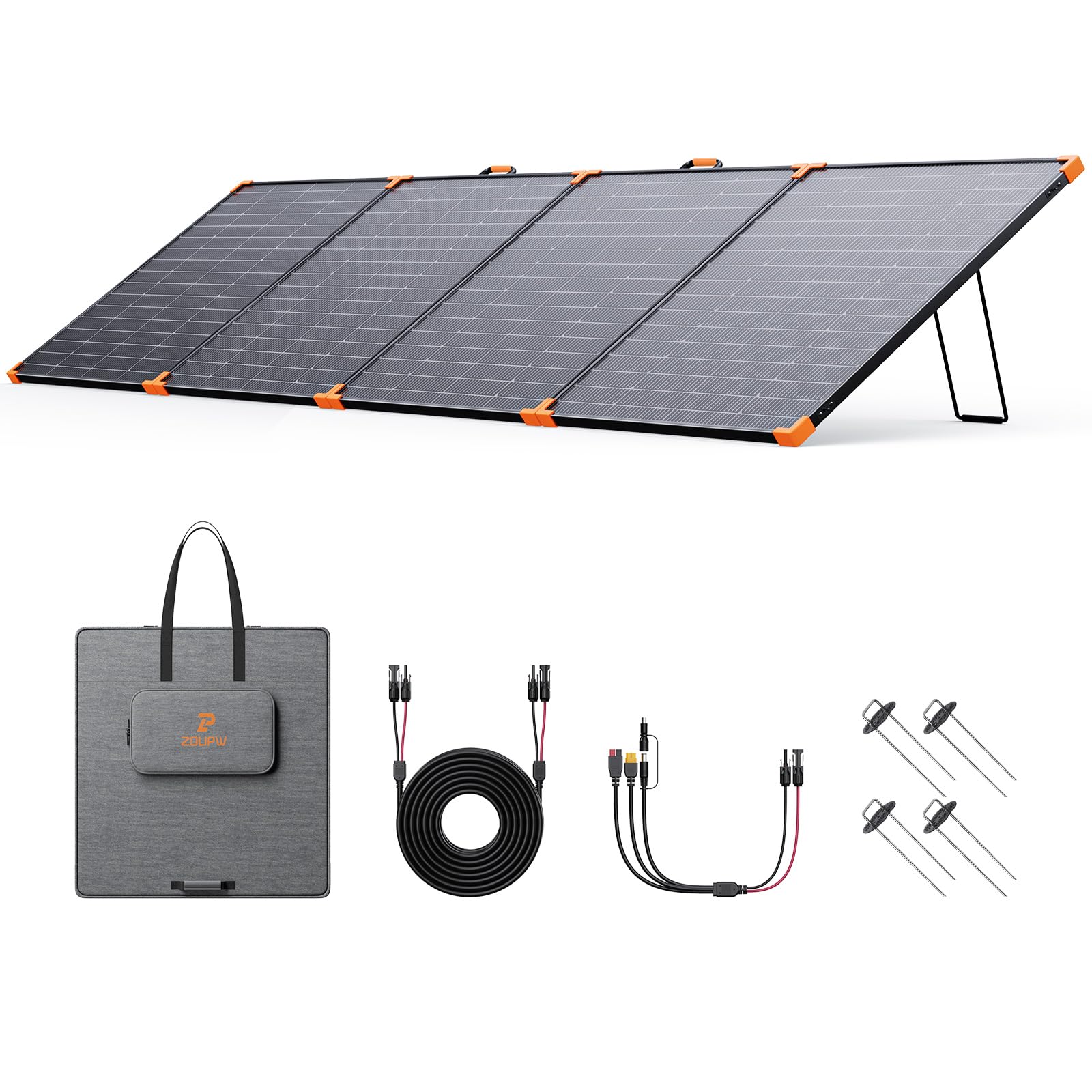
A 450W folding giant that fast-charges 2kWh power stations and still beats rigid panels on weight.
If your power station is a big one — EcoFlow Delta series, Anker Solix C1000, Bluetti Elite 100 — this is the portable panel built for it. The 450W N-type 16BB design delivers a 45.9V open-circuit voltage, purpose-built for 40–60V input units. The numbers show owners exceeding the rating: one logged a 539W max on a single panel and 1044W from a series pair, and winter testing hit 51.2V/12.48A against the 45.9V/12.4A spec. That is a panel that out-produces its sticker.
The weight story is the reason it beats rigid competitors. At 29.5 lbs, it is significantly lighter than comparable 400W rigid panels thanks to a fiberglass-reinforced structure, and it folds to 30.43″ x 34.56″ x 3.54″ with a padded storage bag. Four reinforced kickstands adjust up to 45° for catching the sun, and four ground stakes keep it planted in wind — a setup that takes minutes solo.
Protection is thorough: the ETFE coating and fully sealed lamination carry an IP68 rating (safe against dust and immersion, though you should not soak the connectors), so sudden rain and marine spray will not kill it. Smart bypass diodes keep delivering power when a tree partially shades a section. The bundled 4-in-1 adapter cable (XT60, Anderson, DC7909, DC8020) means plug-and-play with most modern stations. Quality is the most-praised aspect, with power output close behind.
What impresses
- Consistently exceeds its 450W rating in owner tests
- 29.5 lbs with folding frame and kickstands
- IP68 ETFE coating handles sudden rain
Know the limits
- NOT compatible with low-voltage units under 30V input
- A few owners saw kickstand legs break, though support replaced units
Reach for this if: you run a large power station and want serious portable watts with quick setup — the crowd favorite for overlanders and hurricane preppers.
Look elsewhere if: you own a Jackery 1000/500 or Bluetti EB70S, which cannot accept the high input voltage.
10. Renogy 400W Premium Solar Kit with 40A MPPT Controller

Everything a beginner needs in one box, from panels to the charge controller, for a true plug-and-play first setup.
This is the rare kit where “everything included” actually means it. The box ships with the Renogy 400W 12V monocrystalline panel, a 40A MPPT Rover charge controller (MPPT meaning it constantly adjusts to pull maximum power from the panel), Z-brackets, an adaptor kit, tray cable, and a Bluetooth module. For a first-time solar buyer, that is the entire system except the battery — no separate shopping for a controller and mounts.
The real-world results show why beginners love it. One owner powers a gaming PC flawlessly, with a 200Ah battery draining about 5A in sun and recharging from 77A to 200A in 8 hours on a cloudy day. Others run shed lights and tools, with a drill lasting 10 minutes on a 20–30% drain and full recharge in 4–6 hours. The 40A MPPT controller efficiently squeezes power even in weak light, and the Bluetooth module lets you track generation and battery state from your phone.
The honest caveats are real but manageable. The included 10A fuse is undersized for parallel wiring (the kit includes Y-branches, so plan ahead), the panel-to-controller wiring runs short, and there are no step-by-step setup instructions — just separate manuals for the controller and Bluetooth. One owner called it “the best value, especially on sale,” while noting the batteries and inverters in the kit are overpriced if you buy them together. Start with the solar kit and source those separately.
Why it wins for newcomers
- Complete system in one box: panel, MPPT controller, brackets, wiring
- Charges batteries quickly even on cloudy days
- Bluetooth monitoring included
Fair warnings
- No assembly instructions included — only component manuals
- Included 10A fuse is too small for parallel wiring
Get this if: you are building your first off-grid system and want one box that gets you generating power the same afternoon.
it’s not for you if: you already have a controller or mounts — buying the bare panels separately will save you money.
Understanding the Specs
Bifacial vs. Monofacial
A bifacial panel has a transparent backsheet that lets it capture reflected light from the surface below, which can add meaningful watts on bright ground. A monofacial panel only harvests light from the front, so it is simpler and usually lighter, but you leave that bonus on the table. If your panel sits above sand, a white roof, or gravel, bifacial pays off; if it is flush on a dark roof, the gain is minimal.
Cell Efficiency and Busbars
Cell efficiency (23–25% on these picks) measures how much sunlight becomes electricity — higher is better per square foot. Busbars are the thin metal strips on each cell; more busbars (10, 16) mean better current collection and fewer microcrack risks. N-type cells, found on several of these panels, hold their output better in heat and shade than older P-type cells, making them a smart pick for hot-climate installs.
IP Ratings and Weather Resistance
IP65 means the junction box and connectors resist water splashes; IP68 is the higher standard, fully protected against dust and immersion. For permanent roof installs, also check the wind load (commonly 2400Pa) and snow load (5400Pa) ratings to confirm the panel can survive your local weather. Always keep junction boxes out of standing water regardless of the rating.
Voltage and Charge Controller Matching
Match your panel’s output voltage to your system. A 12V panel is the common choice for RVs and small cabins, while a 24V design minimizes current loss over longer wire runs. Pair your panel with a charge controller rated for its wattage — a 400W panel typically pairs with a 30–40A MPPT controller. Check the open-circuit voltage before connecting to a portable power station to avoid overloading its input.
FAQ
Will a 400W solar panel work with my 12V battery?
How much power will a 400W panel actually produce in a day?
What is the difference between rigid and portable 400W panels?
Does a bifacial solar panel really produce more power?
Can I connect a 400W panel to a portable power station like Jackery or EcoFlow?
How long will a 400W solar panel last?
Are 4x100W panels better than 2x200W panels?
Do I need a charge controller with my 400W panel?
What does the warranty cover on these panels?
How do I mount a 400W panel on my RV roof?
Final Thoughts: The Verdict
For most buyers, the best 400 watt solar panel is the JJN 400W Bifacial pair because it pairs a 23% efficiency bifacial design (capturing light from both sides, with up to 30% rear-side gain on reflective surfaces) with a hefty 400W total output — and its build quality handles 2400Pa wind and 5400Pa snow loads. If you want the lightest option for a compact roof, the HQST 400W kit weighs just 16.3 pounds with Grade A+ cells, making solo installation genuinely easy. And for portable camping power that pairs with almost any power station, the Greenmagic foldable panel — at 21.5 pounds with adjustable kickstands — is the one to reach for.
How We Picked
We do not accept paid placement. Every pick is matched to a real buyer and a real use-case; we do not hands-on test units.
Sources & Methodology
Specifications: manufacturer listings and product documentation. Review insights: verified customer reviews, as of August 2026. Pricing: not shown on this page (it changes often); check the current price via the retailer link.
As an Amazon Associate, Gadgets Feed earns from qualifying purchases. This does not affect which products we feature.