
Our readers keep the lights on and my morning glass full of iced black tea. As an Amazon Associate, I earn from qualifying purchases.
Slapping a rigid glass panel on a curved RV roof or a boat deck is a structural nightmare. You need the wattage, but the surface refuses to cooperate. The gap between advertised wattage and real-world output is the single biggest frustration in this space, and flexible panels that actually deliver are rarer than they should be.
I’m Min — the co-founder and writer behind Gadgets Feed. I spend hundreds of hours cross-referencing manufacturer STC ratings against real customer voltmeter readings, cell technology specs, and durability claims to separate genuine 400W flexible performers from overrated sheets of silicon.
Building a reliable off-grid power system starts with choosing the right gear, and this guide compiles only the top contenders for the 400w flexible solar panels market after thorough spec analysis and real-user validation.
How To Choose The Best 400W Flexible Solar Panels
Flexible 400W panels are split between portable folding blankets and semi-flexible laminates meant for permanent curved mounts. The choice between them determines real-world efficiency, installation options, and long-term durability. Understanding the cell technology, waterproofing standards, and weight trade-offs is essential before buying.
Cell Technology & Efficiency (N-Type vs P-Type)
N-Type monocrystalline cells with 16 busbars (16BB) dominate the high-efficiency tier, offering 25% conversion rates and better low-light performance. P-Type cells, while cheaper, degrade faster and produce less power under partial shade. If you plan to mount the panel on a shaded RV roof, N-Type cells are worth the premium.
Flexibility and Mounting Surface
Semi-flexible panels rated for 240–260° bending can conform to boat decks, curved camper roofs, and van tops without cracking the cells. Foldable blankets sacrifice conformability for packability and ease of repositioning. Match the bend radius to your mounting surface: van dwellers need the flexibility; ground-campers need the portability.
Weather Resistance and Build Quality
ETFE (ethylene tetrafluoroethylene) coating is the gold standard for flexible panels — it resists yellowing, hail impact, and UV degradation far better than cheaper PET alternatives. Look for an IP68 junction box rating and MC4 connectors that won’t corrode in marine environments. A panel that fails after one season of rain is worse than no panel at all.
Quick Comparison
On smaller screens, swipe sideways to see the full table.
| Model | Category | Best For | Key Spec | Amazon |
|---|---|---|---|---|
| Renogy 400W Solar Blanket | Foldable Blanket | Ultra-light overlanding | 16.09 lbs / 16-fold design | Amazon |
| Anker SOLIX PS400 | Foldable Panel | Portable high-wattage charging | IP67 / Adjustable kickstand | Amazon |
| Callsun 400W (2x200W) | Semi-Flexible Laminate | Marine & curved RV roofs | 240° flex / ETFE coating | Amazon |
| Greenmagic 400W (2x200W) | Semi-Flexible Laminate | Extreme curved surfaces | 260° flex / 8.5 lbs per panel | Amazon |
| LVYUAN 400W Foldable | Foldable Blanket | Portable camping power | 22 lbs / centripetal fold | Amazon |
| JJN 425W Bifacial | Rigid Panel | Fixed ground or roof mount | 425W / Bifacial N-Type | Amazon |
| EPOCH 400W Bifacial | Rigid Panel | Off-grid cabin & marine | 25% / 16BB N-Type | Amazon |
| DOKIO 400W Mono | Rigid Panel | Budget fixed installation | 9.84 ft MC4 leads | Amazon |
| Renogy 400W Premium Kit | Complete System Kit | DIY off-grid system starter | 4x100W + 40A MPPT + BT | Amazon |
In‑Depth Reviews
1. Renogy 400 Watt Solar Panel Blanket
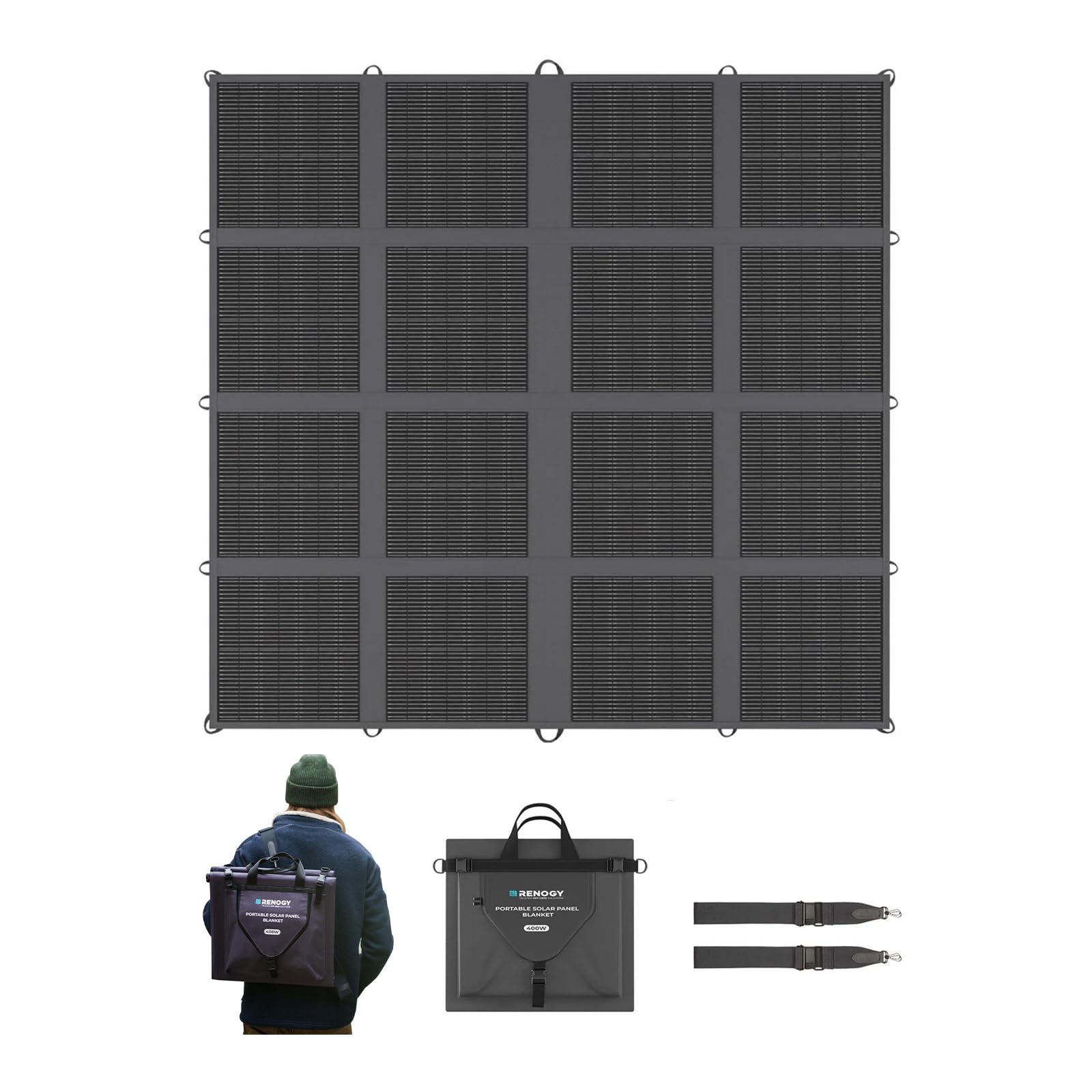
Renogy packed N-Type 16BB cell technology into a 16.09-pound folding blanket that packs down to 16.54 x 15.83 x 4.13 inches. That 25% efficiency rating isn’t just marketing — users report 280W under heavy overcast and peaks above 400W in direct sun. The 16-fold design is a real space-saver for SUV campers and truck bed setups.
Military-grade ETFE lamination and IP65 waterproofing make this blanket resilient against the elements, and the included 10-foot MC4 cable means you can reach a distant power station without fumbling for extensions. Multiple users confirmed the 400W peak is achievable, with one customer hitting 412W for sustained stretches in optimal conditions.
The padded carry handle and adjustable shoulder straps make transport genuinely painless, and the blanket lays flat on your windshield or hangs vertically between trees. Some users noted that partial shade still drops output significantly, which is expected from any portable panel array. For overlanders who need maximum portability without sacrificing real wattage, this blanket is the benchmark.
Why it’s great
- Ultra-light at 16 lbs with 25% N-Type efficiency
- Folds to backpack size for tight vehicle storage
- Multiple mounting options: ground, windshield, vertical hang
Good to know
- Partial shade causes noticeable output drop
- Some units report peak wattage closer to 380W-400W range
2. Anker SOLIX PS400 Solar Panel

Anker brings its signature build quality to the solar space with the SOLIX PS400, a 400W foldable panel that sets up in seconds thanks to a four-position kickstand (30°, 40°, 50°, 80°). The monocrystalline cells deliver up to 23% efficiency, and the integrated kickstand eliminates the need for propping the panel against rocks or tree stumps.
The IP67 waterproof rating means this panel survives rain without worrying about junction box ingress — a real advantage for campers who leave panels deployed through weather changes. Anker includes two 9.8-foot MC4 extension cables plus an MC4-to-XT-60 adapter, ensuring compatibility with most power stations straight out of the box. Real-world output from multiple users hovers around 550W for a pair of panels, showing consistent performance.
It is heavy at 35 pounds for a portable panel, and the handle attachment point has drawn some criticism for being flimsy under load. Still, for users who prioritize fast setup, robust waterproofing, and brand reliability, the SOLIX PS400 delivers a premium experience that justifies its position in the premium tier.
Why it’s great
- IP67 waterproof rating for all-weather deployment
- Adjustable kickstand for optimal sunlight angle
- Premium MC4 connectors with included adapter bundle
Good to know
- Heavy at 35 lbs for a portable panel
- Handle connection can feel flimsy under weight
3. Callsun 400W Flexible Solar Panel Set (2x200W)
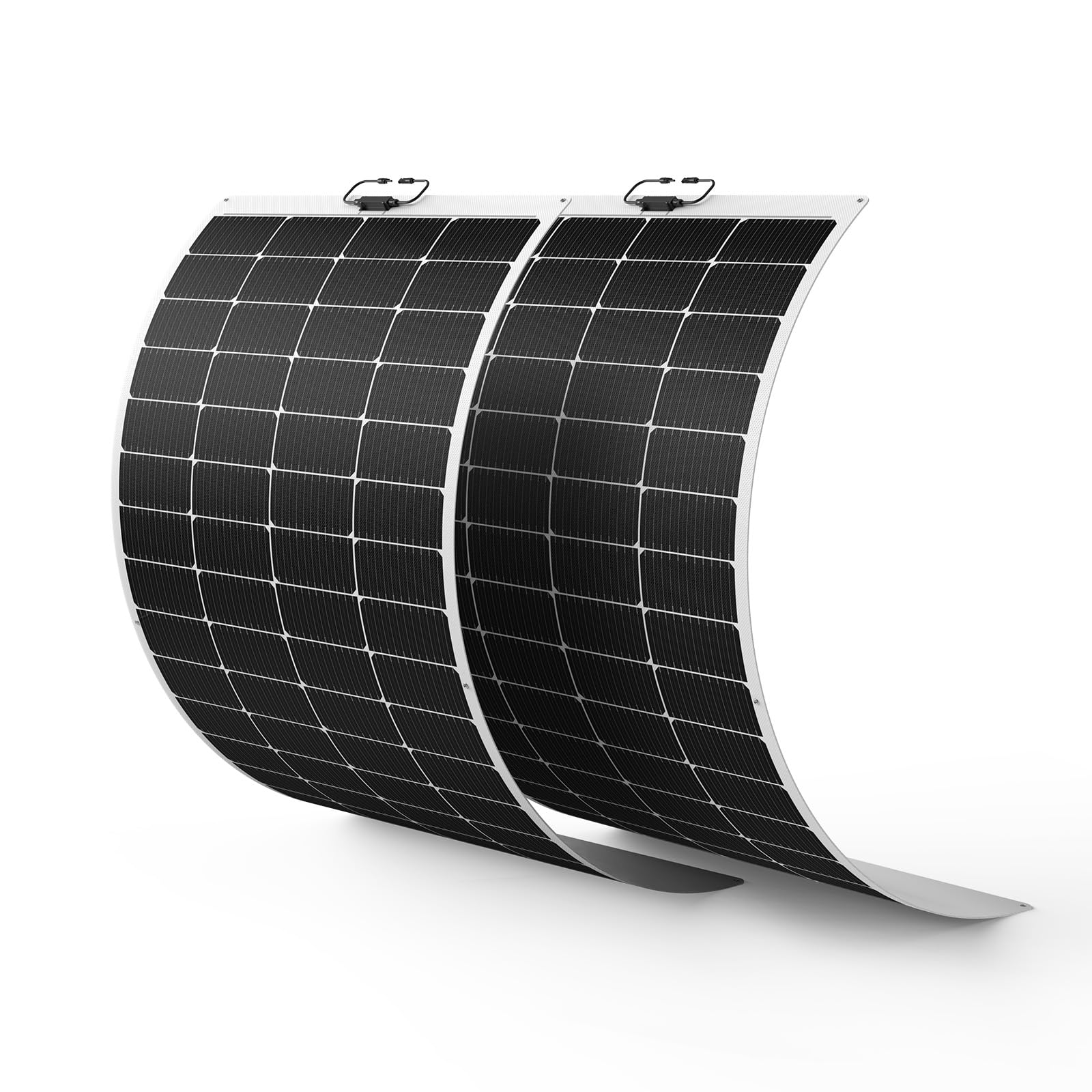
Callsun engineered this 400W set as two 200W semi-flexible laminates with a distinctive white backsheet that reflects heat away from the cells. The ETFE coating and multi-layer bonding resist yellowing and cracking better than standard PET panels, and the 240° flexibility rating means they conform tightly to yacht decks and curved RV roofs.
Each panel weighs just 11 pounds, making the total 400W array easy to handle during installation. Users report output exceeding 421W when the two panels are wired in series, and multiple customers noted significantly better performance than competing Renogy flexible panels when monitored through Victron charge controllers. The IP68 junction box adds confidence for marine environments where salt spray and humidity kill lesser panels.
A small number of users reported open-circuit voltage readings above spec (44V per 200W panel), suggesting possible variation in manufacturing tolerance. The 5-year warranty provides some recourse, but buyers should verify voltage compatibility with their charge controller before wiring. For boat owners and van dwellers who need a low-profile, heat-resistant flexible array, this is the strongest contender.
Why it’s great
- Heat-reflective white backsheet improves hot-weather efficiency
- 240° flex fits tight curves on boats and RVs
- Higher real-world output than many competing flexible panels
Good to know
- Some units show voltage readings above spec
- Partial shade causes significant output drop
4. Greenmagic 400 Watt Flexible Solar Panel (2x200W)
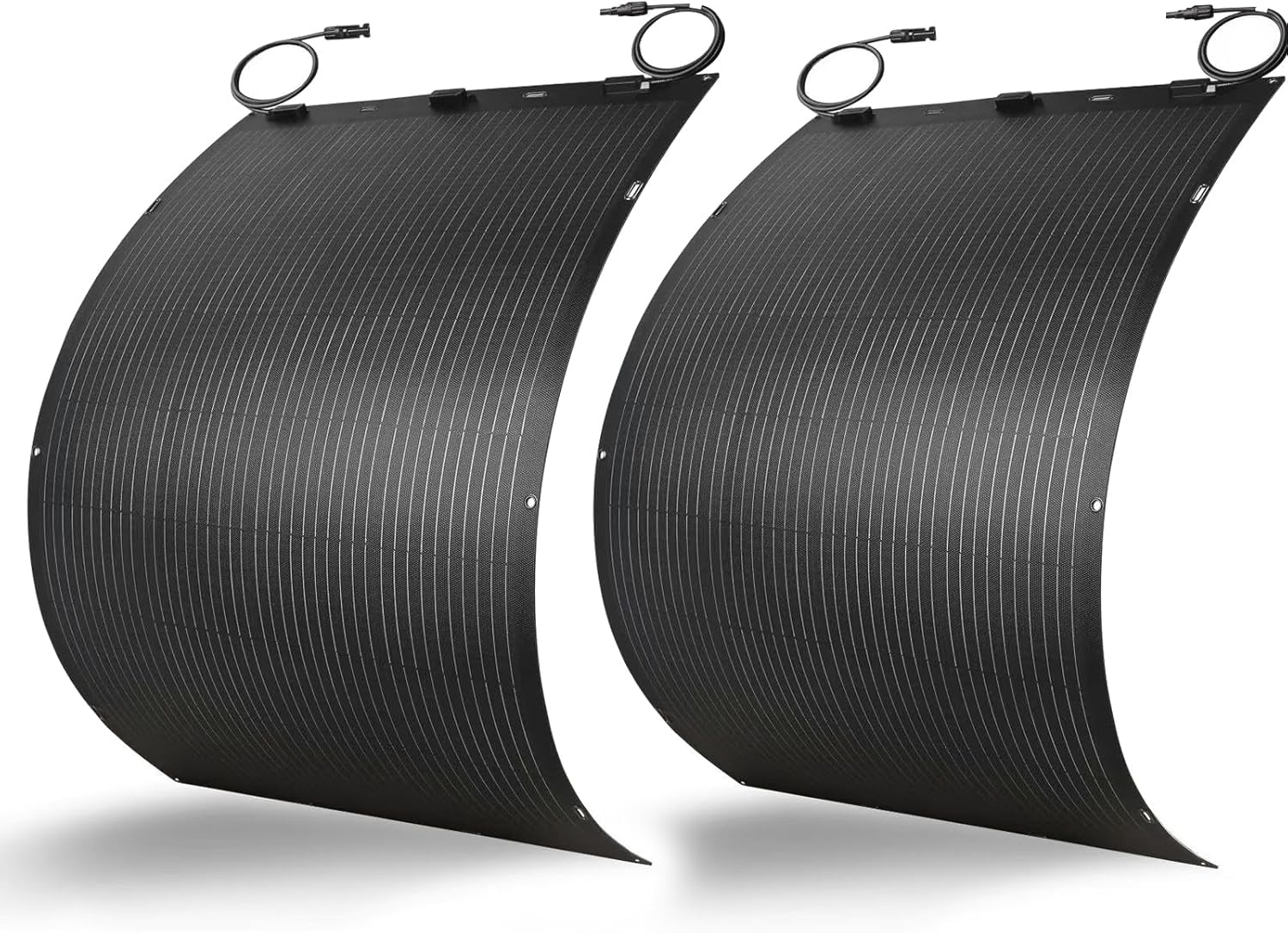
Greenmagic pushes the flexibility envelope with a 260° bend rating, meaning these panels can wrap around tighter curves than most competitors. Each 200W panel weighs only 8.5 pounds and measures just 0.11 inches thick, powered by advanced polymer substrate rather than traditional glass-reinforced backing.
The honeycomb ETFE surface creates micro-refractions that capture sunlight from wider angles, and the bypass diodes minimize power loss when part of the panel is shaded. Users report consistent 900W total output from a 1200W string (75% of rating) on roof-mounted installations with an air gap. The MC4 connectors and included mounting straps simplify installation on RV roofs, boat decks, and even car hoods.
A concerning minority of users reported complete panel failure within months of installation, with cells dropping below 10V. This failure rate appears linked to panels glued directly to surfaces without an air gap for cooling. Mounting with a ventilated gap is strongly recommended to avoid heat-related degradation. When installed correctly, these panels deliver impressive flexibility and respectable power density.
Why it’s great
- 260° bend for extreme curved surfaces
- Ultra-thin 0.11 inches and lightweight at 8.5 lbs per panel
- Honeycomb ETFE improves off-angle light capture
Good to know
- Must be mounted with air gap to avoid heat damage
- Some units have early failure if surface-glued
5. LVYUAN 400W Portable Solar Panel
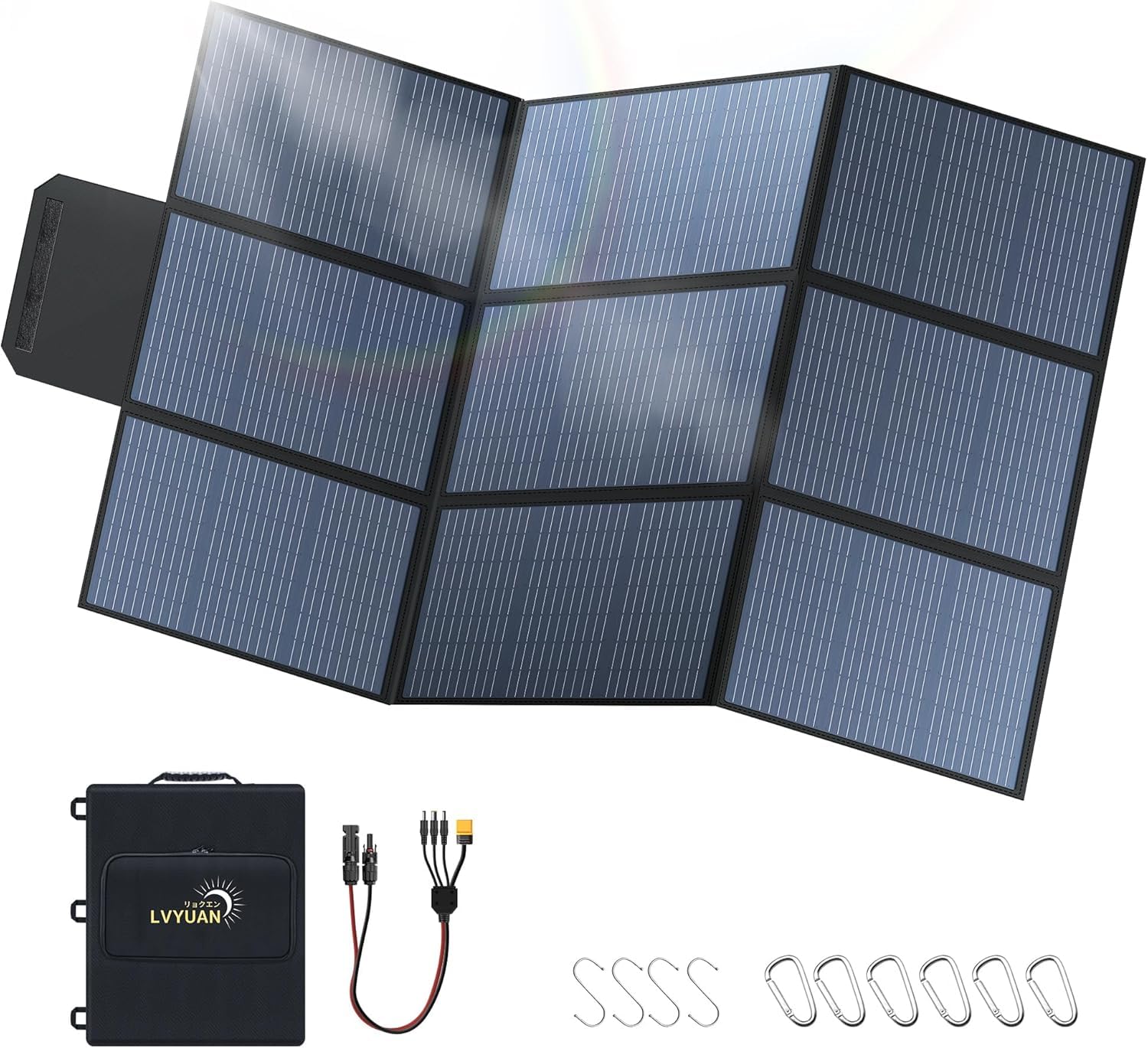
LVYUAN designed this 400W foldable blanket with a centripetal inward-folding system that collapses to 19.5 x 23.6 x 2.36 inches — smaller than many 200W competitors. The 22-pound weight is reasonable for a 400W portable, and the included 6 carabiners and 4 S-hooks allow quick deployment on backpacks, tent poles, or fence lines.
Monocrystalline silicon cells deliver up to 23% efficiency, and users consistently report 398W peak output in full sun. The smart built-in chip provides overcharge and overload protection, and the MC4 output cables come with an adapter bundle (XT60, DC5521, DC5525, DC7909) for broad power station compatibility. Customers report charging a 1024Wh battery in under 2 hours, with over 200W still flowing under dusty or cloudy conditions.
The fabric cover is rugged canvas, but the webbing straps used for securing the fold are not as durable as the rest of the construction. Some users experienced strap failure after repeated use. Despite this, the solar blanket still represents solid value for campers who need a compact portable panel that can keep up with demanding power stations.
Why it’s great
- Compact fold size smaller than most 200W blankets
- Near-rated 398W peak output in real-world testing
- Includes versatile connector adapter bundle
Good to know
- Webbing securing straps can fail over time
- Heavier than Renogy blanket at 22 lbs
6. JJN 425W Bifacial Solar Panel
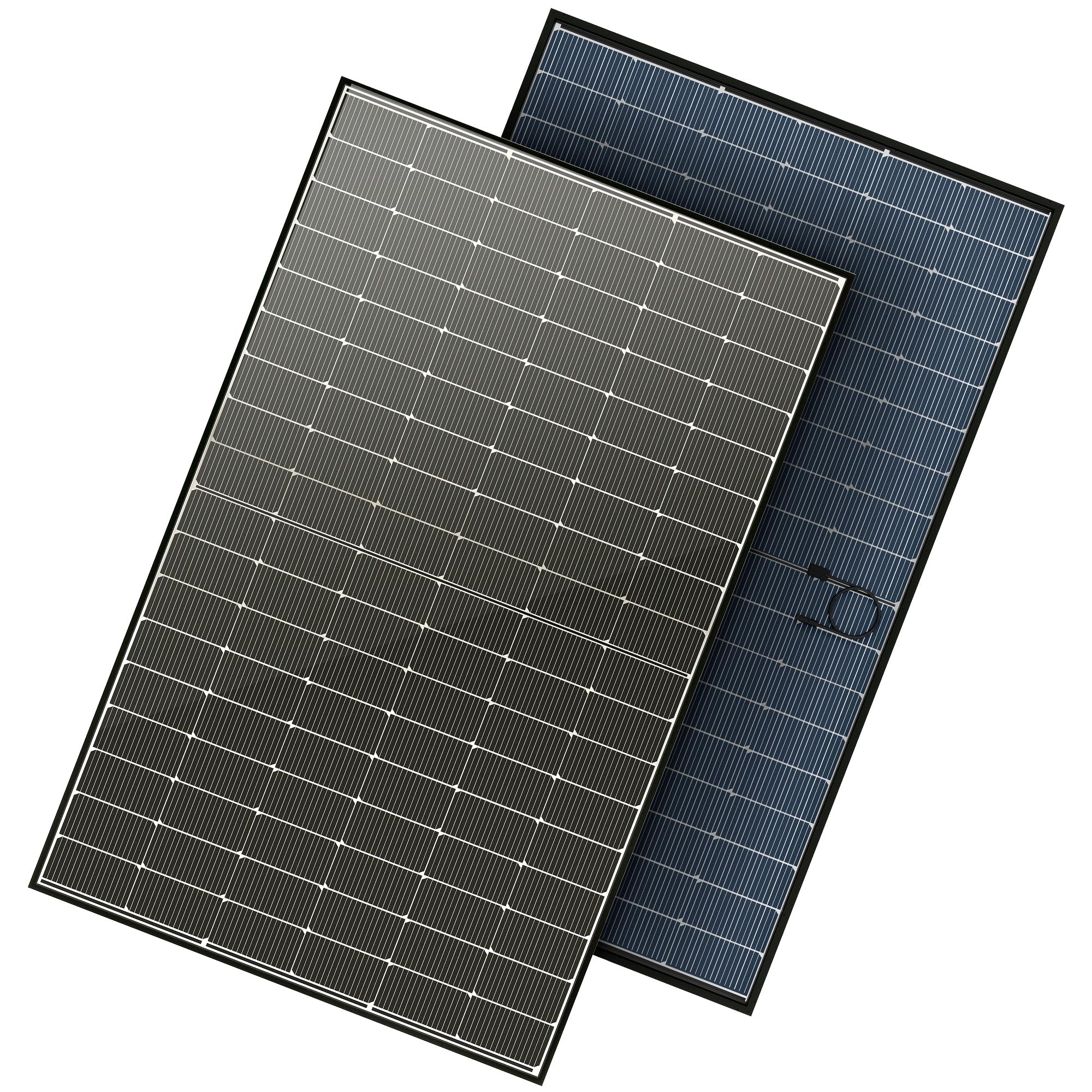
JJN’s 425W panel uses N-Type 16BB cells with a transparent backsheet, enabling bifacial power generation that captures sunlight from both the front and rear surfaces. This design can boost total efficiency by up to 25% compared to conventional mono-facial panels. The 425W rating exceeds the standard 400W target, providing headroom for real-world losses.
The black anodized aluminum frame resists corrosion, and the panel can withstand 2400Pa wind loads and 5400Pa snow loads, making it suitable for harsh winter conditions. Users report achieving 106% of rated power (1060W from 1000W array) in cool, full-sun conditions. The 30-year transferable power output warranty reflects JJN’s confidence in long-term performance, though this is a rigid glass panel, not a flexible laminate.
At 51.6 pounds, it is significantly heavier than flexible alternatives. Some units arrive with minor shipping scratches or cosmetic cell imperfections that do not affect power output. For fixed roof applications where bifacial gain and maximum wattage are the priorities, this panel delivers exceptional performance per dollar.
Why it’s great
- Bifacial design captures sunlight from both sides
- 425W rated power exceeds standard 400W target
- 30-year transferable power output warranty
Good to know
- Rigid glass panel, not flexible
- Heavy at 51.6 lbs
7. EPOCH 400W Bifacial Solar Panel

EPOCH’s 400W bifacial panel brings high-efficiency N-Type 16BB cell technology and a 25% conversion rate to a price point that undercuts many less efficient mono-facial competitors. The transparent backsheet enables rear-side light capture, boosting total yield in ground-mount or white-roof installations where reflected light is available.
The panel tolerates 5400Pa snow loads and 2400Pa wind loads, and the IP68 junction box paired with IP67 MC4 connectors ensures reliable performance in wet conditions. Users report excellent cloudy-day output — one customer measured 60-150W on rainy days from a flat-mounted panel, while another achieved 350W from a worst-case flat mount in full sun.
The packaging leaves room for improvement, with multiple reports of damaged frames or boxes upon delivery. The panel itself performs well after arrival, but the shipping experience can be stressful. For off-grid cabins and marine installations where bifacial gain matters and budget is a consideration, the EPOCH panel delivers premium specs at a competitive price.
Why it’s great
- 25% efficient N-Type bifacial cells at a competitive price
- Strong cloudy-day performance from flat mount
- IP68 junction box for marine-grade waterproofing
Good to know
- Packaging often leads to shipping damage
- Rigid panel, not flexible
8. DOKIO 400W Mono Solar Panel

DOKIO offers a straightforward 400W monocrystalline rigid panel with pre-installed 9.84-foot MC4 leads — a thoughtful detail that eliminates the need for extension cables in many installations. The tempered glass surface and sealed aluminum frame provide standard weather resistance for garden sheds, greenhouses, and courtyard installations.
Users report excellent real-world output, with one customer measuring 560W from an 800W array under partial shade. The panel is compatible with 12V and 24V systems, and DOKIO recommends MPPT charge controllers for optimal performance. The packaging quality is notably good, with corner protectors that prevent the damage common with other budget panels.
At 49.38 pounds, this is a heavy panel suited for fixed mounts rather than portable use. The output drops noticeably with shading, which is typical for standard monocrystalline panels without bypass diode optimization. For budget-conscious buyers who need a reliable 400W panel for a stationary off-grid setup, the DOKIO delivers solid performance without frills.
Why it’s great
- Long 9.84 ft MC4 leads reduce need for extensions
- Good packaging with corner protectors prevents shipping damage
- Strong real-world output exceeding rated specs in some cases
Good to know
- Heavy rigid panel at 49.38 lbs
- Output drops significantly under shade
9. Renogy 400 Watt 12 Volt Premium Kit

Renogy’s 400W Premium Kit bundles four 100W monocrystalline panels with a 40A MPPT Rover charge controller, Bluetooth module, Z-brackets, and all necessary cables — everything needed to build a complete 12V off-grid system from scratch. The 3.2mm low-iron glass and 35mm aluminum frames handle 2400Pa wind and 5400Pa snow loads.
The MPPT controller achieves 99% tracking efficiency and 98% peak conversion, significantly outperforming PWM controllers. The included Bluetooth module allows real-time monitoring and parameter adjustment through the Renogy DC Home App. Users report the system powers gaming PCs (180W-480W), vacuums, blenders, and Keurig machines, with one customer noting flawless performance over three years of continuous use.
Some users found the panel-to-controller wiring lengths insufficient for their layout, and the included instructions are sparse. The Bluetooth module can be finicky about maintaining connection. For DIY first-timers who want a turnkey 400W system with quality components, this kit removes the guesswork and provides proven long-term reliability.
Why it’s great
- Complete system with 40A MPPT, Bluetooth, and mounting hardware
- 99% MPPT tracking efficiency with real-time app monitoring
- Proven long-term reliability over multiple years of use
Good to know
- Panel-to-controller cables may be too short for some layouts
- Instructions are minimal for complete beginners
FAQ
What is the real-world output difference between a 400W flexible panel and a 400W rigid panel?
Can I walk on flexible solar panels installed on my RV roof?
How do I mount flexible panels to a curved fiberglass roof without damaging the cells?
Why does my 400W flexible panel only produce 250W in full sun?
Final Thoughts: The Verdict
For most users, the 400w flexible solar panels winner is the Renogy 400W Solar Blanket because it combines ultra-light portability with genuine 25% N-Type efficiency in a packable form factor that overlanders and campers can actually carry. If you need permanent flexible mounting on a curved boat or RV roof, grab the Callsun 400W (2x200W) Set for its heat-reflective white backsheet and 240° bend capability. And for the ultimate turnkey system without compromise, nothing beats the Renogy 400W Premium Kit with its 40A MPPT controller and complete mounting hardware.