
Our readers keep the lights on and my morning glass full of iced black tea. As an Amazon Associate, I earn from qualifying purchases.
Specs are compiled from manufacturer listings and verified buyer reviews and can change over time — please confirm the key details on the product page before buying.
If you searched for 40mm driver headphones, here is the honest answer up front: the Sony MDR7506 is the pick most people should buy, because it has been the studio standard for decades and still holds a 4.7-star rating across tens of thousands of owners. A 40mm driver is simply the circular speaker inside each earcup that turns electrical signal into sound, and that size hits a useful middle ground — enough air movement for real bass, small enough to stay light on your head. One quick note before you scroll: this list uses flexible, human-like matching for 40mm driver size, so we also accept a same-class driver roughly 38mm to 42mm and reject clearly different sizes like 30mm. That means not every pick is the exact number you typed in, but the nearest same-type size serves the very same purpose.
I’m Min — the founder and writer behind Gadgets Feed. This guide is built by comparing the manufacturers’ published specifications and the patterns across verified customer reviews, so you get each pick’s real strengths and trade-offs instead of marketing spin.
Wired or wireless, studio-flat or bass-forward, that choice shapes everything you hear, which is exactly what this breakdown of the best 40mm driver headphones sorts out for you.
Our Picks at a Glance


How To Choose The Best 40Mm Driver Headphones
Before you scroll to the reviews, lock in four things: how you will listen, how long you need to listen, if you need to talk on calls, and whether flat or boosted sound suits your ears. Get those right and the spec sheet stops being intimidating.
Wired or wireless — pick by where you actually listen
Wired headphones like the Sony MDR7506 and Audio-Technica ATH-M20x never need charging and give you a fixed, predictable sound. Wireless models like the Soundcore Q20i and Edifier W820NB Plus carry their own battery, so you trade the cable for a charging habit. If you mix music or game at a desk, wired wins on reliability. If you commute or move between rooms, wireless freedom usually matters more than the last ounce of detail.
Impedance and sensitivity — the numbers that decide how loud they get
Impedance is electrical resistance, measured in Ohms, and lower numbers are easier for a phone or laptop to drive. Sensitivity, measured in decibels, tells you how loud the headphones get from a given signal. A 32-Ohm set runs loud straight from a phone; a 63-Ohm set pairs best with a small amp or audio interface. Neither is “better” — they suit different setups.
Battery, ANC, and codec — what wireless specs really buy you
Active noise cancellation (ANC) uses microphones to cancel outside noise before it reaches your ears, which is why it drains battery faster. Look at the “with ANC on” number, not the headline figure. If you stream from an Android phone, codec support like LDAC preserves more audio detail than plain streaming.
Quick Comparison
| Model | Best For | Driver Size | Wired / Wireless | Battery Life | Amazon |
|---|---|---|---|---|---|
| Sony MDR7506★ Best Overall | Studio & broadcast work | 40 millimeters | Wired | — | Amazon |
| Soundcore Q20iBudget Champion | Budget commute & calls | 40 millimeters | Wireless (Bluetooth 5.0) | 40 hours (ANC on) / 60 (normal) | Amazon |
| AKG K72Studio Starter | Hobbyist monitoring | 40 millimeters | Wired | — | Amazon |
| Numark HF175 | Entry DJ practice | 40 millimeters | Wired | — | Amazon |
| Audio-Technica ATH-M20x | Budget studio & gaming | 40 millimeters | Wired | — | Amazon |
| Edifier W820NB Plus Gen 2 | Long-battery ANC travel | 40 millimeters | Wireless (Bluetooth 6.1) + USB-C | 88 hours / 49 with ANC | Amazon |
| Cleer Enduro 100 | Multi-day wireless listening | 40 millimeters | Wireless (Bluetooth 5.0) | 100 hours | Amazon |
| ADAM Audio H200 | Critical studio mixing | 40 millimeters | Wired | — | Amazon |
| Technics EAH-DJ1200 | Pro DJ monitoring | 40 millimeters | Wired | — | Amazon |
In‑Depth Reviews
1. Sony MDR7506 Professional Large Diaphragm Headphone
Our pick — over 4.5★ from 28,000+ verified ratings; the strongest balance of quality and price.
The studio workhorse that sound engineers have trusted for decades, still holding its spot.
If you record, mix, edit audio, or just want to hear a track the way it was built, this is the pair to start with. The 40mm drivers use neodymium magnets — a lightweight magnet type that keeps the driver responsive — paired with a frequency response of 10 Hertz to 20 kilohertz, which is the full span of human hearing. The closed-ear design seals around your ear to block outside noise mechanically, without any electronics doing the work. That means a fan or a nearby conversation gets pushed down before it ever reaches your music.
What wins people over is the sheer amount of detail the drivers dig out. Its 63-Ohm impedance pairs best with an audio interface or small amp, while 106 dB sensitivity means it gets loud from a modest source. The 63-Ohm impedance means it pairs better with an audio interface or a small amp than with a bare phone jack, while the 106 dB sensitivity tells you it gets loud easily once it has a decent source. The foldable headband and included soft case make it compact enough to toss in a gig bag, and the 9.8 foot cord gives you room to move at a desk without yanking the plug. It is wired only, and the cable is not detachable, so plan for that.
Moving between tracks, the MDR7506 holds up against far pricier closed-backs because it stays neutral instead of flattering your ears. Against the ATH-M50, buyers report the Sony has brighter treble, clearer mids, and a lighter fit, while the ATH-M50x trades that neutrality for a fuller, more boosted low end. If you want bass you can feel more than bass you can trust, that model is the honest alternative. The compact folding design is a real travel asset, though some find the collapsible hinge takes a moment to seat on your head every time.
The studio-standard strengths
- 40mm neodymium drivers with a 10 Hz to 20 kHz response span
- 106 dB sensitivity means it gets loud from a modest source
- Closed-ear sealing cuts outside noise with no battery needed
- 9.8 foot cord and folding design suit desk and travel use
What to weigh first
- Cable is not detachable, so a damaged cord is a repair job
- 63-Ohm impedance pairs best with an amp or interface, not a bare phone
- Snug clamping can press on longer listening sessions
Made for you if: you need accurate, revealing sound for recording, editing, or careful listening at a desk.
Look at the Q20i instead if: you want wireless freedom and active noise cancelling for the commute.
2. Soundcore by Anker Q20i Hybrid Active Noise Cancelling Headphones, Black
The wireless all-rounder that proves you do not need to spend much to silence a train carriage.
For commuters and office workers who want peace without a cable, this is the value pick of the whole list. Hybrid ANC means two microphones inside and two outside work together, and Soundcore states it reduces up to 90% of external noise — so the drone of a bus engine and the hum of an open-plan office get cut before they reach your ears. The 40mm dynamic drivers, oversized for the chassis, are tuned with Soundcore’s BassUp technology, which thickens the low end for commuting and gaming.
The battery math is the standout. You get 40 hours with ANC turned on and 60 hours in normal mode, and a five-minute fast charge hands you an extra four hours — enough for a forgotten morning top-up on the walk to the station. Battery life is one of the aspects owners bring up most, and the word on the street is simple: these last for weeks, not days, between charges. Bluetooth 5.0 with multipoint lets you stay connected to two devices at once, so a laptop call takes over automatically while your phone waits. The Soundcore app adds 22 EQ presets and three listening modes — ANC, Normal, and Transparency — and Transparency pipes the outside world back in so you can hear platform announcements or cross a road safely.
The honest catch is the fit. Some wearers find these run large and slide forward on the smallest setting, and the ear pads can warm up during sweaty tasks like woodworking or power washing. They are still comfortable with glasses and a good fit for smaller heads, but if you have a narrow head, expect to nudge them back into place now and then. Sound is slightly tinny from the start too, though the app’s bass booster sorts that quickly. At this price, the sheer feature list — ANC, 40-hour battery, app EQ, multipoint — is hard to argue with, and it is why these hold a strong 4.5 stars across more than 74,000 ratings.
Where the money goes: nearly all of it lands in features you actually use — effective ANC, 40 hours of playback with noise cancelling on, and app-based EQ, all in a wireless package.
What you trade in return: a loose fit on smaller heads and some ear warmth during sweaty physical work — the two gripes that come up most often.
Reach for these if: you want wireless noise cancelling, long battery, and call clarity without stretching your budget.
Step up instead if: you need studio-flat accuracy for mixing rather than commuting convenience.
3. AKG Pro Audio K72 Over-Ear, Closed-Back, High-Sensitivity, High Output 40mm drivers, Studio Professional Headphone
A featherweight entry into studio monitoring that sits on your ears rather than pressing down on them.
Buyers who want to try tracking or mixing without spending much should start here. The K72 uses 40mm closed-back drivers, which means the cups seal around your ears instead of letting sound spill inward, and it weighs so little you can forget it is there. The circumaural shape — cups that sit around the ear rather than on it — helps distribute pressure, which matters if you wear glasses or piercings. A 1/4-inch screw-on adapter is included for plugging into an audio interface, and the 3.5mm plug handles phones and laptops directly.
What reviewers consistently praise is comfort. It fits larger ears without squeezing, holds up for four-hour sessions, and glasses wearers report no pinching. Sound quality, though, is the honest caveat here: the K72 leans toward a warm low-mid emphasis with damped highs and muted bass, so it is fine for general listening and casual tracking but not a tool for critical EQ decisions. Isolation is modest too — you will still hear the room around you. That is the trade for the weight and the price.
This is a pick for hobbyists and beginners, not for pro production. Owners who mix on it call it a solid starting point; those who need to hear every flaw in a track reach for the Sony MDR7506 or the ADAM H200 instead. Where the K72 earns its keep is comfort-per-ounce and an honest, unfussy build that keeps a light footprint on both your head and your wallet.
What buyers agree on
- Comfort is the most-praised trait — hours of wear without pressure
- Sits around the ear, so glasses and piercings stay comfortable
- Ships with a 1/4-inch screw-on adapter for interfaces
- Light enough to forget you have them on
Worth knowing before you buy
- Sound is warm and slightly muted rather than analytical
- Noise isolation is limited, so a noisy room leaks through
- Not a tool for critical production work
Right fit for: hobbyists, first-time trackers, and casual listeners who prize comfort above surgical accuracy.
Wrong tool for: anyone making mix decisions that need a flat, revealing response.
4. Numark HF175 Closed-Back DJ Headphones

Single-ear cueing and swivel cups for new DJs who want to learn the craft before spending big.
If you are just getting behind a controller, the HF175 is built for the job. The 40mm neodymium drivers deliver the loud, forward sound DJs need for cueing a track under a room full of monitors, and the closed-back design with swiveling ear cups lets you flip one side to listen to the booth while you keep one ear on the crowd. The headband mixes stainless steel with stitched leather, so it adjusts and holds without flexing under use.
The 3m cable gives you real reach to the mixer, and it terminates with both a 3.5mm plug and a 6.35mm adapter — meaning it pairs with laptop headphone jacks, DJ controllers, and pro mixers without needing extra bits. Owners mention these get very loud, which is exactly what cueing a track under a room full of monitors demands. The value story here is honest but with a caveat: the low end is heavily colored, and while that is fine for cueing a kick drum, it makes clean mixing genuinely difficult if you use these as your only editing tool.
The real trade-off is durability. Reliability and long-term wear push some owners to report failures over extended use, and the plastic pleather pads get uncomfortable after twenty to thirty minutes of continuous wear. For learning to beat-match and cueing tracks at home, the HF175 is a fair first pair. For professional sets night after night or for serious music production, you want a sturdier build.
The honest read: loud, single-ear-friendly, and cheap enough to be a first DJ pair — sound is colored and comfort is short-session.
Best for: bedroom DJs learning to cue and mix, or anyone needing a loud, replaceable practice pair.
Not the pick for: critical mixing or pro use where durability over years is non-negotiable.
5. Audio-Technica ATH-M20x Professional Studio Monitor Headphones, Black

The budget studio monitor that gets the sound right and leaves room for a real upgrade later.
For producers and editors on a tight budget, this is the closest thing to a genuine studio reference you can buy at the entry level. The 40mm drivers use rare earth magnets — a stronger magnet type that keeps the driver controlled — and copper-clad aluminum wire voice coils. Audio-Technica tuned the low end for a bit more body than a flat reference would give you, and the output sits at 96 dB per milliwatt, meaning it goes loud from a modest source. The circumaural design seals around the ear, which is why it blocks a lot of room noise during long sessions.
What reviewers keep coming back to is the sound: clear, balanced, and free of the boosted bass that consumer headphones pile on. For music, videos, and editing, that balance matters more than rumble. The single-side cable exit keeps the cord out of your way, and the tangle-free cable runs long — long enough that some owners find it takes up more desk space than they expected.
Against its sibling, this is a starter, not the finish line. Compared with the ATH-M50, customers note the M20x is less detailed and its build softer and more flexible — the trade-offs of paying roughly a third as much. If your goal is accurate mixing on a budget, start here. If you need a fuller low end for a dance or hip-hop workflow, the Sony MDR7506 above holds a more neutral, revealing character.
Why producers pick it
- 40mm drivers tuned for enhanced low-frequency performance
- Single-side cable exit keeps the cord out of the way
- Circumaural seal blocks room noise without electronics
- Balanced, non-boosted sound suits editing and casual listening
Where it holds back
- Cable is non-detachable and runs long
- Build is softer and less rugged than the ATH-M50
- Light bass — not the pick for thumping low end
Buy it if: you want the best entry-level wired studio sound and can live without a detachable cable.
Skip to the H200 if: you are producing commercial tracks and need flat, fatigue-free accuracy for money.
6. Edifier W820NB Plus Gen 2 Over-Ear Noise Cancelling Headphone, Ivory
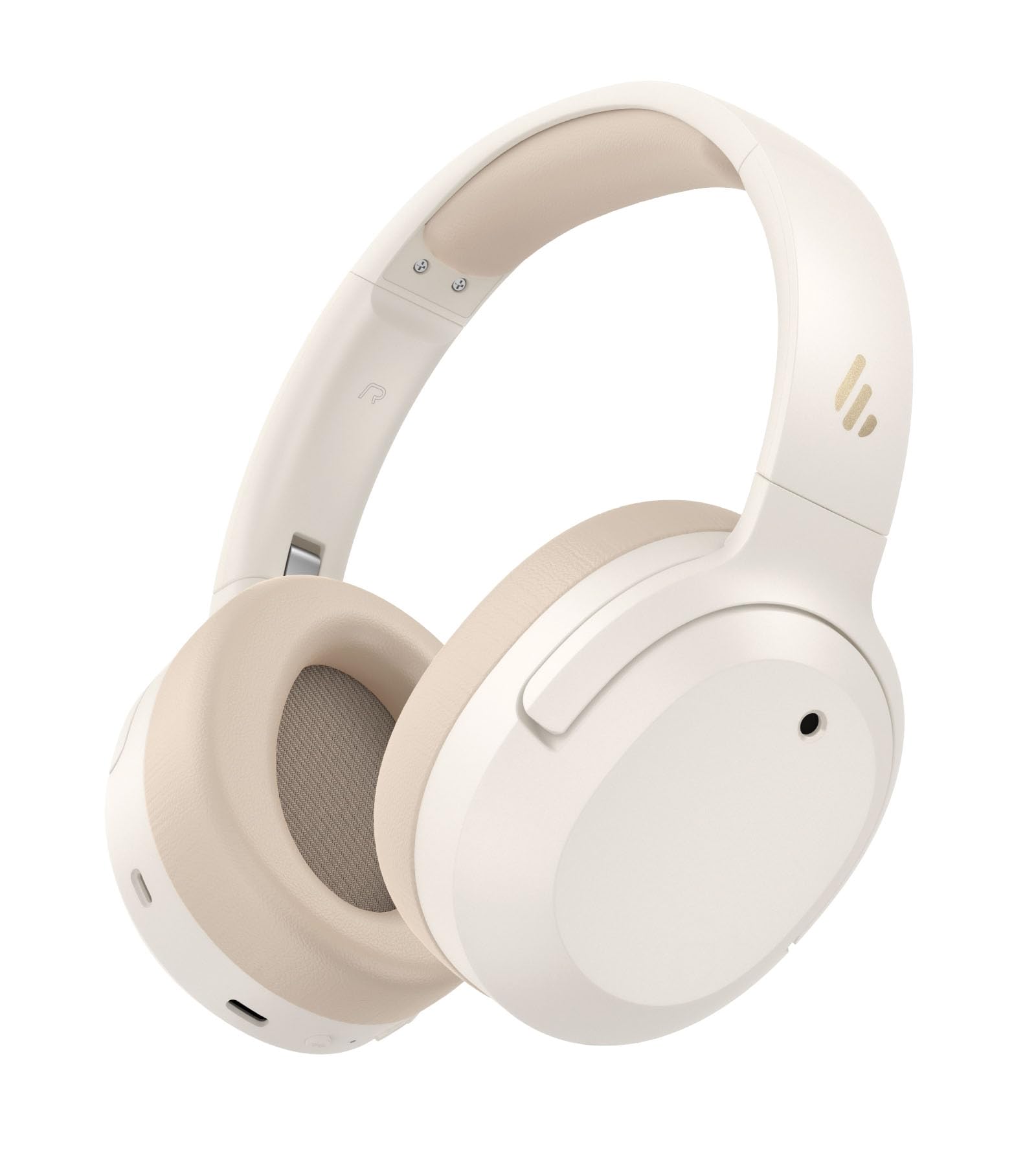
Weeks between charges and a wired mode that works when the battery finally does run out.
Frequent flyers and long-haul travelers get the most out of this one. The 40mm titanium-coated drivers — that coating stiffens the driver so it moves cleanly — reproduce audio in 96kHz/24-bit Hi-Res, with LDAC and SBC codecs supported so streamed music keeps more detail than a standard wireless signal carries. The hybrid ANC is rated to cut up to -49dB of outside noise, and physical buttons on the earcup let you switch between ANC levels without hunting through an app.
Battery life is where this pair pulls ahead of everything else in the wireless tier. Edifier states up to 88 hours of continuous use, dropping to 49 hours with ANC turned on — a stretch that easily covers a full work week and a weekend. A 15-minute charge delivers 15 hours of playback, so a quick top-up before you leave the house does the job. Multipoint Bluetooth 6.1 keeps two devices connected at once, and a USB-C wired mode means you can keep listening while charging on a long flight. The EDIFIER ConneX app adds EQ presets and a volume guard to cap how loud things get.
The recurring gripe is connectivity. A number of owners find these tricky to pair the first time, or slow to reconnect when switching between phone and laptop — the Bluetooth side is the one weak link in an otherwise strong package. Comfort holds up over long stretches without neck strain, and the ivory finish stands out from the sea of black cans. This is the wireless pick for people who hate thinking about chargers.
The winning number: 88 hours of playback, or 49 with ANC on, backed by a 15-minute quick charge that yields 15 hours — enough for a transatlantic round trip on a single fill.
The honest snag: Bluetooth pairing and reconnection can be fiddly, and switching between devices sometimes takes longer than it should.
Pick this when: battery anxiety rules your day and you want Hi-Res audio plus ANC in a wireless pair.
Choose the Cleer instead if: you want the longest wireless playback and care less about app tuning.
7. Cleer Enduro 100 Bluetooth Headphones, 40mm Ironless Driver, Navy
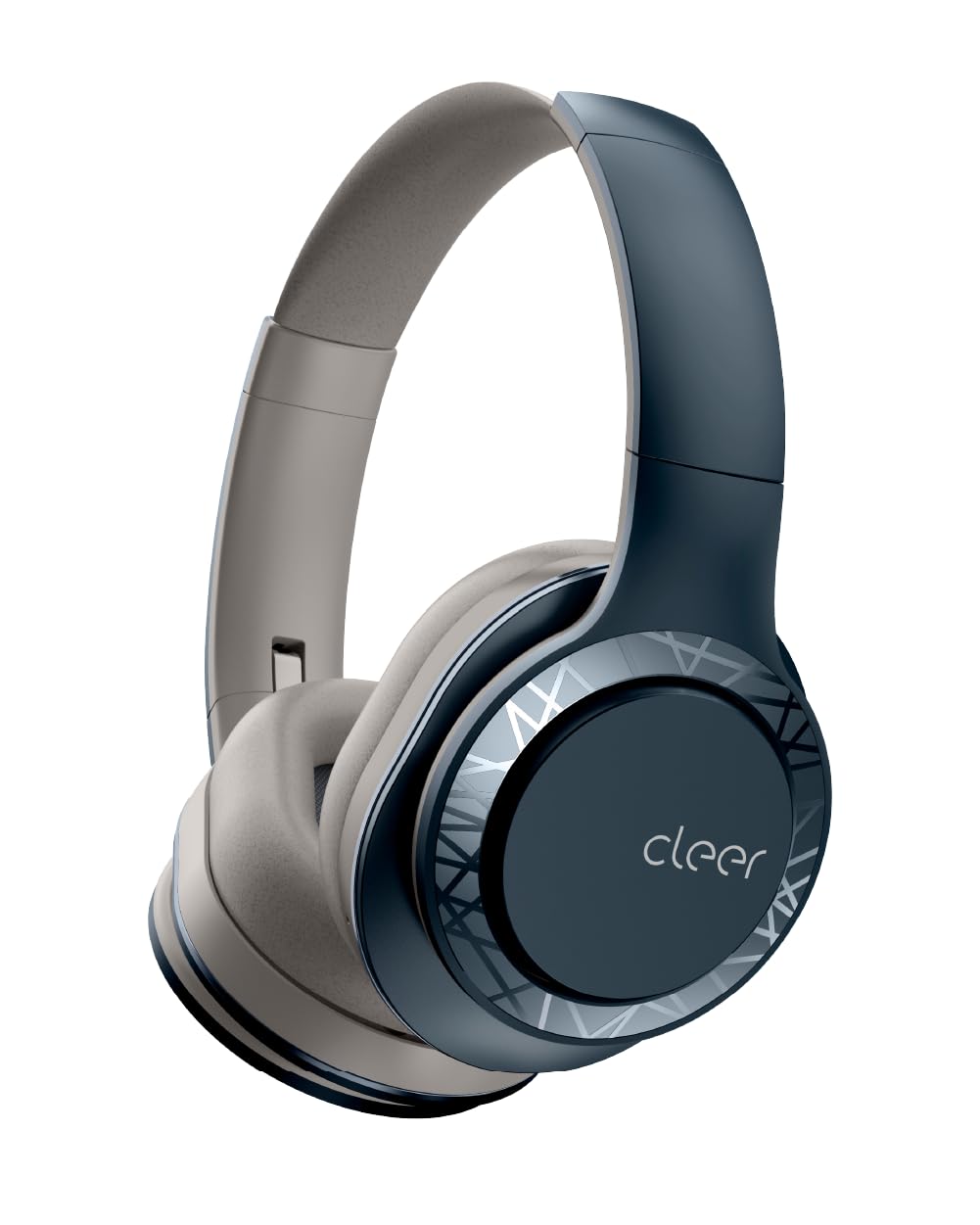
A wireless pair built to run for weeks, with an ironless driver that keeps distortion low.
Listeners who resent charging cables every night will appreciate what this one promises. Cleer’s patented 40mm ironless driver design removes the iron core from the magnet assembly, which the maker says reduces distortion and gives articulate sound with deep bass and Hi-Res capability. It sits at just under 10 ounces (280 g) with plush earpads and a flexible headband, which together keep long sessions comfortable.
The battery claim is the headline: up to 100 hours of playback, with a 10-minute quick charge yielding 12 hours, and a full charge taking three hours. Bluetooh 5.0 handles the wireless link and the maker lists a range of up to 100 meters — though the real-world reach is shorter, and that is fine for home use. Three tactile buttons and a power button on the left earcup control volume, tracks, and your voice assistant, keeping your phone in your pocket.
The catches are worth knowing. Fit runs large for some owners, so a smaller head may feel the cups loose. Bluetooth stability is mixed — most pairs run clean, but a few units drop connections repeatedly. And the shallow earcups create ear contact for owners with larger ears. For listening to audiobooks, plane rides, and long walks, the picture is strong; for work calls the microphone gets tunnel-like muffled feedback from some callers, so do not rely on these as a meeting headset. Sound quality is what wins people over here, with reviewers praising the crisp highs and well-rounded bass.
Where it shines
- Up to 100 hours of playback on one charge
- 10-minute quick charge adds 12 hours of listening
- 40mm ironless driver keeps distortion low
- Weighs under 10 ounces with plush earpads
Real trade-offs
- Runs large — a smaller head may find the fit loose
- Microphone is weak for work calls
- Callers report muffled, tunnel-like audio on the mic
Worth grabbing if: you listen for hours at a stretch and want the battery to outlast your enthusiasm.
Keep looking if: you make a lot of calls — the microphone is not built for meetings.
8. ADAM Audio H200 Closed-Back Studio Headphones
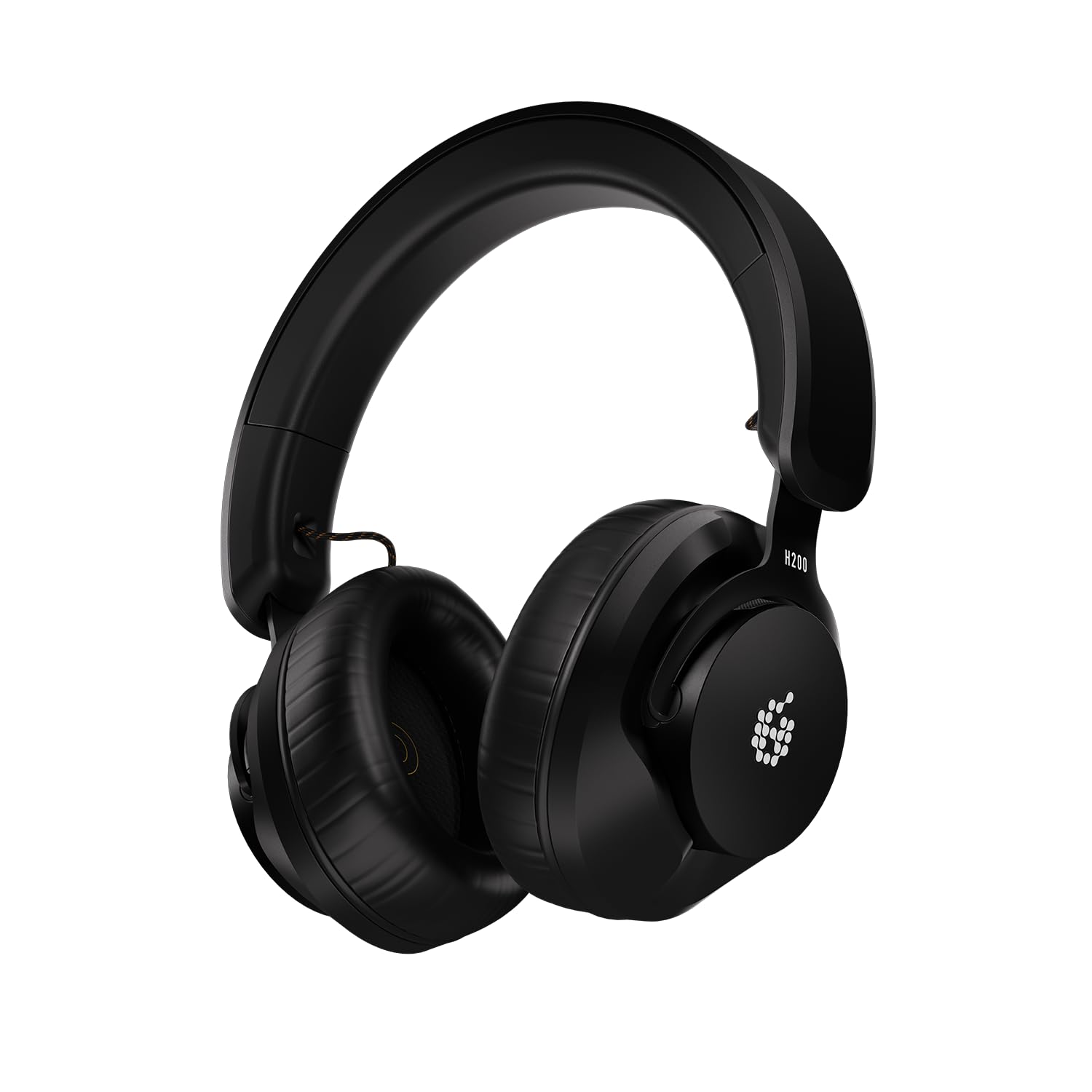
A critical-listening tool built for people who need to hear exactly what is wrong with a mix.
For serious producers and mix engineers, accuracy beats comfort and battery life every time. The H200 uses 40mm PEEK performance drivers — PEEK is a stiff polymer chosen to keep the driver movement precise — combined with a light neodymium magnet system. The result is a frequency response of 2 Hz to 23.5 kHz with 112.5 dB SPL and low distortion, which is a wider and cleaner span than most cans in this price bracket. A detachable 3m cable attaches to either side of the headphones, so you can route it out of your way, and the faux-leather memory foam earpads seal out room noise during recording.
The included ADAM Audio Headphone Utility plug-in is the standout extra. It offers optimization tools including a spatialization feature that uses crossfeed — which blends the left and right channels slightly to reduce the disorienting hard-panned feel headphones create — to help your headphone mixes translate to speakers. Sound is natural and flat, with the bass extension owners specifically call out, and mixing on it feels easier than on consumer headphones tuned for thump.
Two honest caveats. The build is not bulletproof — a rare owner reports the headband coming apart after months of use, so treat it with care rather than tossing it in a bag. The fit is also firm, and though a 4-to-5 hour session is fine, glasses wearers should plan breaks. For the money, the H200 delivers studio-grade neutrality, a free mixing plug-in, and a detachable cable — a serious tool for serious work.
Why engineers choose it: a 2 Hz to 23.5 kHz response with 112.5 dB SPL gives you the wide bandwidth and headroom needed to hear problems before your audience does.
Where it asks you to be careful: the headband can loosen over long use, and earpads run firm — treat it as a studio tool, not a commuter pair.
Reach for this if: you mix and master and want a critical, unforgiving reference that makes bad decisions obvious.
Not the one if: you want a cushioned everyday listener — the tight seal and firm fit are working-tool traits.
9. Technics Professional DJ Headphones EAH-DJ1200, Black

Built for stage use, where the cable must not unplug and the sound must survive full volume.
Working DJs need gear that stays put under pressure, and this pair is designed exactly for that. The 40mm CCAW voice coil drivers — copper-clad aluminum wire coils, chosen to stay light and responsive — deliver balanced sound across the full frequency range with no distortion even at maximum volume, and the headphones are rated for a high-durability 2,500 mW input so they can be driven hard in a loud booth. The on-ear, lightweight design pairs with a lockable 270-degree swiveling housing that flips for single-side monitoring, which is how most DJs cue tracks while keeping one ear on the room.
The locking detachable cord is a thoughtful detail: twist it into place and it stays locked through a full set, with coiled and straight options included so you can swap to suit the booth. A 6.3mm plug adapter and a carrying pouch ship in the box, and the pads are synthetic leather chosen to resist sweat and everyday wear. Reviewers point out the build holds up over years of stage use in ways cheaper DJ cans do not.
For a professional or serious DJ, the feature set is aimed squarely at the job. It is a wired, on-ear, monitoring-first design — not a casual listening pair — so comfort on a three-hour walk or a flight is not the goal here. If you perform sets and need reliability on stage, the locking mechanism, swivel housing, and high input handling make this a genuine tool of the trade.
The stage-ready details
- 40mm CCAW voice coil drivers rated for 2,500 mW input
- 270° swiveling housing for single-side monitoring
- Locking detachable cord resists accidental unplugging mid-set
- Coiled and straight cords plus a carrying pouch included
The trade-offs to expect
- On-ear design prioritizes booth use over all-day comfort
- Wired only — no Bluetooth or ANC for commutes
- Monitoring-first sound is not tuned for casual listening
The right tool for: performing DJs who need a locking cord, swivel cups, and drivers that hold up at full volume.
Overkill if: you only listen casually — the stage-hardened build costs you comfort for daily walks.
Understanding the Specs
Driver Size (why 40mm)
The driver is the circular speaker inside each cup. A 40mm driver is the middle ground most studios settle on: big enough to move air for real bass, small enough to keep the headphone light. Too small and bass thins out; too large and the cup grows heavy. Every model here uses a 40mm-class driver, or a same-class size between roughly 38mm and 42mm, so you are comparing tuning and features rather than speaker size.
Frequency Response
Frequency response shows the range of sound the headphone reproduces, measured in Hertz. Human hearing spans about 20 Hz to 20 kHz, so a set that reaches from 10 Hz to 20 kHz, like the Sony MDR7506, covers the full range with margin at the low end. A wider range does not automatically mean better sound — tuning matters more — but a narrow range usually means you will lose deep bass or airy highs.
Impedance and Sensitivity
Impedance is electrical resistance, measured in Ohms. Lower Ohms are easier for a phone to drive; higher Ohms need an amp or interface. Sensitivity is how loud the headphones get from a given signal, measured in decibels. A 96 dB or 106 dB figure means they go loud from modest power — good news if you listen straight from a laptop.
ANC, Battery, and Codecs
Active noise cancellation uses microphones to cancel outside noise, which costs battery. Always check the “with ANC on” rating — the Edifier W820NB Plus, for example, drops from 88 hours to 49 with ANC running. Codecs like LDAC preserve more detail in wireless audio than a standard Bluetooth link, so they matter if you stream Hi-Res music from a compatible phone.
FAQ
Is a 40mm driver good for headphones?
Can I run 40mm driver headphones from my phone without an amp?
How long do the wireless 40mm driver headphones last on a charge?
Do 40mm driver headphones work for DJing?
Are 40mm driver headphones good for mixing music?
Will 40mm driver headphones block out noise on a plane or train?
Are 40mm driver headphones good for gaming?
Do 40mm driver headphones last long?
Do 40mm driver headphones work with Hi-Res audio?
Are 40mm driver headphones better than 50mm ones?
What is the difference between wired and wireless 40mm driver headphones?
Final Thoughts: The Verdict
For most people, the 40mm driver headphones winner is the Sony MDR7506 because it delivers neutral, revealing sound with a 40mm neodymium driver setup, a 10 Hz to 20 kHz response, and a build that has proven itself over decades of studio work. If you want wireless noise cancelling and long battery for the commute, grab the Soundcore Q20i. And for critical mixing where every flaw needs to be audible, the ADAM Audio H200 is the one to reach for. If you are just learning to DJ, the Numark HF175 gets you cueing at the lowest cost of entry.
How We Picked
We do not accept paid placement. Every pick is matched to a real buyer and a real use-case; we do not hands-on test units.
Sources & Methodology
Specifications: manufacturer listings and product documentation. Review insights: verified customer reviews, as of September 2026. Pricing: not shown on this page (it changes often); check the current price via the retailer link.
As an Amazon Associate, Gadgets Feed earns from qualifying purchases. This does not affect which products we feature.