
Choosing a 45W solar panel kit means balancing actual power delivery against the promise of portability. You are not just buying a slab of silicon; you are buying a specific voltage profile, connector type, and efficiency rating that must match your power station or device. A mismatch in voltage or a poor-quality USB-C port can turn a sunny day into a charging headache.
I’m Min — the co-founder and writer behind Gadgets Feed. I have spent countless hours analyzing the technical specifications of portable solar kits, from cell efficiency to connector compatibility, to separate real-world performance from marketing claims.
This guide breaks down the top nine kits on the market, focusing on measurable specs to help you find the best 45w solar panel kit for your next camping trip or emergency backup plan.
How To Choose The Best 45W Solar Panel Kit
Selecting a portable solar kit is about more than just wattage. You need to consider cell efficiency, connector compatibility, and the physical build quality. A high-efficiency panel with the wrong connector is useless, while a perfectly compatible panel that is too heavy will never leave your trunk.
Cell Efficiency & Technology
Monocrystalline cells are the standard for portable panels. Look for an efficiency rating above 22%, which indicates the panel can convert more sunlight into electricity. Premium N-type cells offer better performance in low-light conditions and have a lower degradation rate than standard P-type cells. Avoid panels with polycrystalline cells, as they are larger and less efficient for the same wattage.
Connector Compatibility & Voltage
The most critical spec is matching the panel’s output voltage and connector to your device. Many power stations require a DC input between 12V and 24V. Common connectors include XT60 (EcoFlow), Anderson (Jackery), and DC7909/8mm. A kit that includes a variety of adapters (like a 4-in-1 cable) is far more versatile. For direct device charging, a USB-C port with Power Delivery (PD) at 45W is essential for fast laptop and tablet charging.
Portability & Build Quality
Foldable panels should compress to a size that fits in a backpack or car trunk. Look for a weight under 4 lbs per 50W of capacity for true portability. The lamination material matters: ETFE is more durable, has better light transmittance, and is more waterproof than PET. Integrated kickstands for angled placement toward the sun are a must-have for efficient charging.
Quick Comparison
On smaller screens, swipe sideways to see the full table.
| Model | Category | Best For | Key Spec | Amazon |
|---|---|---|---|---|
| EF ECOFLOW RIVER 2 + 45W Panel | Premium Bundle | All-in-One Starter System | 7-Hour Full Charge via 45W | Amazon |
| Ecosonique Technology 100W Panel | Mid-Range Panel | High-Wattage Solo Panel | 23.5% Efficiency, 6 lbs | Amazon |
| BigBlue X60 60W Panel | Mid-Range Panel | Compact Backpacking Power | 24.7% N-Type Efficiency | Amazon |
| SOKIOVOLA 100W Panel | Mid-Range Panel | Lightweight Camping Solution | 4.6 lbs, ETFE Material | Amazon |
| SinKeu E300 + 40W Panel | Premium Bundle | LiFePO4 Safety & Longevity | 256Wh Capacity, 3500 Cycles | Amazon |
| ZeroKor 300W + 60W Panel | Premium Bundle | Higher Capacity Backup | 280Wh, 110V Pure Sine Wave | Amazon |
| MARBERO M82 + 21W Panel | Budget Bundle | Ultra-Compact Overnight Kit | 88Wh, 2.3 lbs Station | Amazon |
| ZeroKor 100W + 40W Panel | Budget Bundle | Entry-Level AC Outlet Kit | 146Wh, 100W AC Outlet | Amazon |
| ZOUPW 450W Panel | Pro-Grade Panel | High-Capacity Rapid Charging | 25% Efficient, 45.9V Voc | Amazon |
In‑Depth Reviews
1. EF ECOFLOW RIVER 2 + 45W Solar Panel

The EcoFlow RIVER 2 paired with the 45W solar panel is the most cohesive and user-friendly bundle in this guide. The power station itself is compact at 9.6 x 8.4 x 5.5 inches and uses advanced LiFePO4 battery chemistry, rated for over 3,000 charge cycles to 80% capacity. The 45W panel is designed to hang on a backpack or vehicle, with a total system weight that makes it an adventure-ready companion.
Charging the RIVER 2 from the 45W panel takes approximately 7 hours in full sun, but the station’s standout feature is its AC wall charging speed — 0 to 100% in just 1 hour. This hybrid approach means you can pre-charge at home and rely on the solar panel for top-ups in the field. The 600W AC output is enough to run a mini-cooler, a CPAP machine, or power tools, making it versatile for both camping and emergency home backup.
The panels 45W rating is realistic; owners report consistent 40-45W input in direct sun. The included solar charging cable uses an XT60 connector, which is standard for EcoFlow, and the system’s MPPT controller is built into the station. This eliminates guesswork, but also means the panel is less useful as a standalone charger for other brands without an adapter.
Why it’s great
- LiFePO4 battery lasts over 3,000 cycles.
- 1-hour AC wall charging is incredibly fast.
- Seamless integration between panel and station.
Good to know
- Solar panel lacks standard USB ports for direct device charging.
- System requires an XT60 adapter for non-EcoFlow stations.
2. ZOUPW 450W Portable Solar Panel
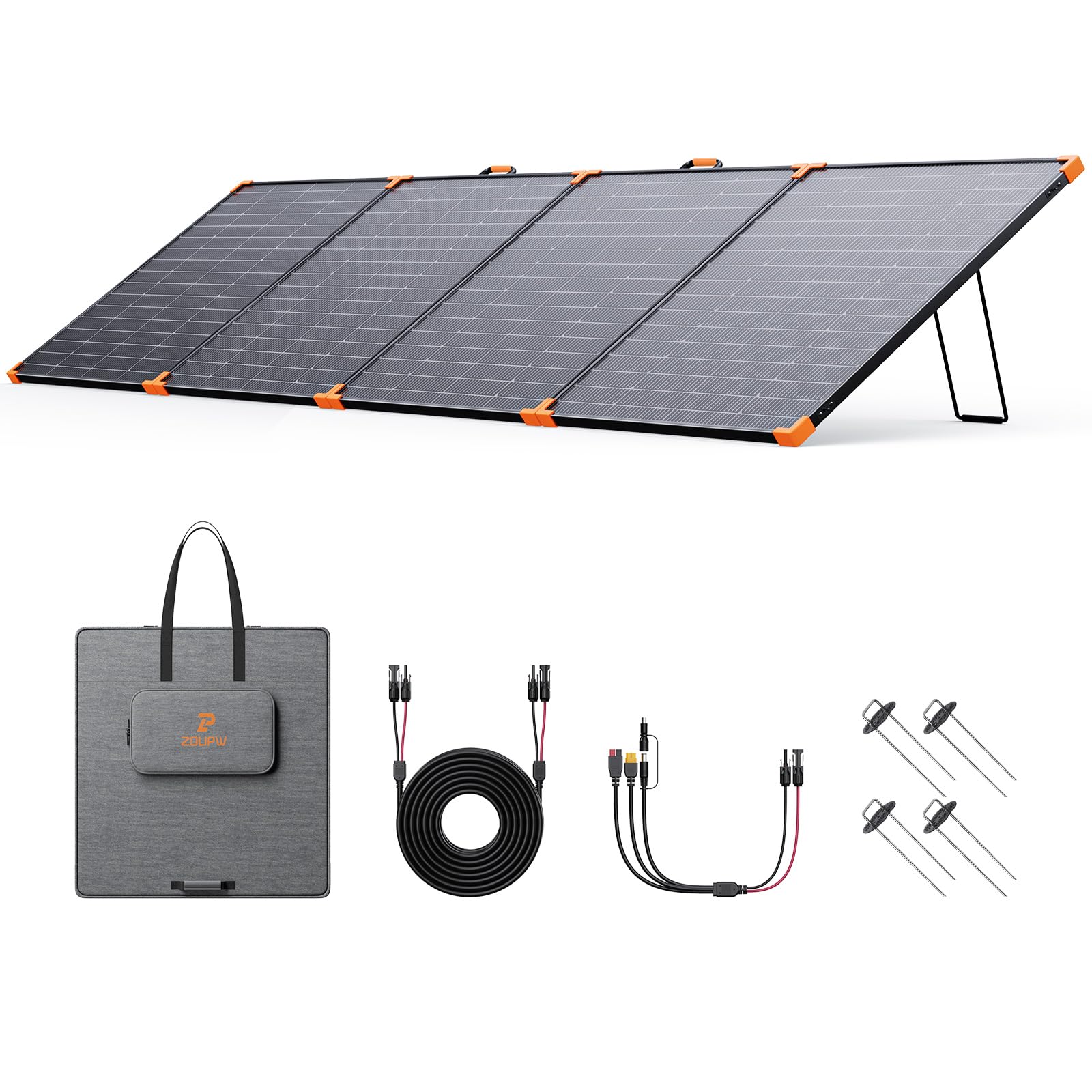
The ZOUPW 450W panel is a pro-grade solution for users with high-capacity power stations like the EcoFlow Delta or Anker C1000. Its key differentiator is the 16-busbar N-type cell design, which achieves a 25% conversion efficiency and performs better in low-light and partial shade than P-type panels. The open-circuit voltage of 45.9V means it is only compatible with stations that accept at least a 40V input.
At 29.5 lbs, it is notably lighter than a rigid 400W panel of similar capacity, thanks to its aerospace-grade fiberglass frame. The four adjustable kickstands allow for a 45° tilt toward the sun, and the IP68 waterproof rating ensures it can handle rain. Owners report seeing peak outputs over 500W in ideal conditions, which can charge a large power station from empty in a few hours of good sun.
The main trade-off is its size and the specific voltage requirement. This panel is not for backpacking or for use with smaller stations like the Jackery 1000. The 4-in-1 adapter cable covers XT60, Anderson, DC7909, and DC8020, but you must verify your station’s input range before purchase. Also, the panel’s performance drops dramatically if even a small corner is shaded.
Why it’s great
- N-type cells deliver 25% efficiency and low-light gains.
- 450W+ real-world output for rapid high-capacity charging.
- IP68-rated waterproof lamination and durable build.
Good to know
- High Voc (45.9V) is incompatible with many 12-24V power stations.
- Performance suffers significantly with partial shade on the panel.
3. Ecosonique Technology 100W Portable Solar Panel
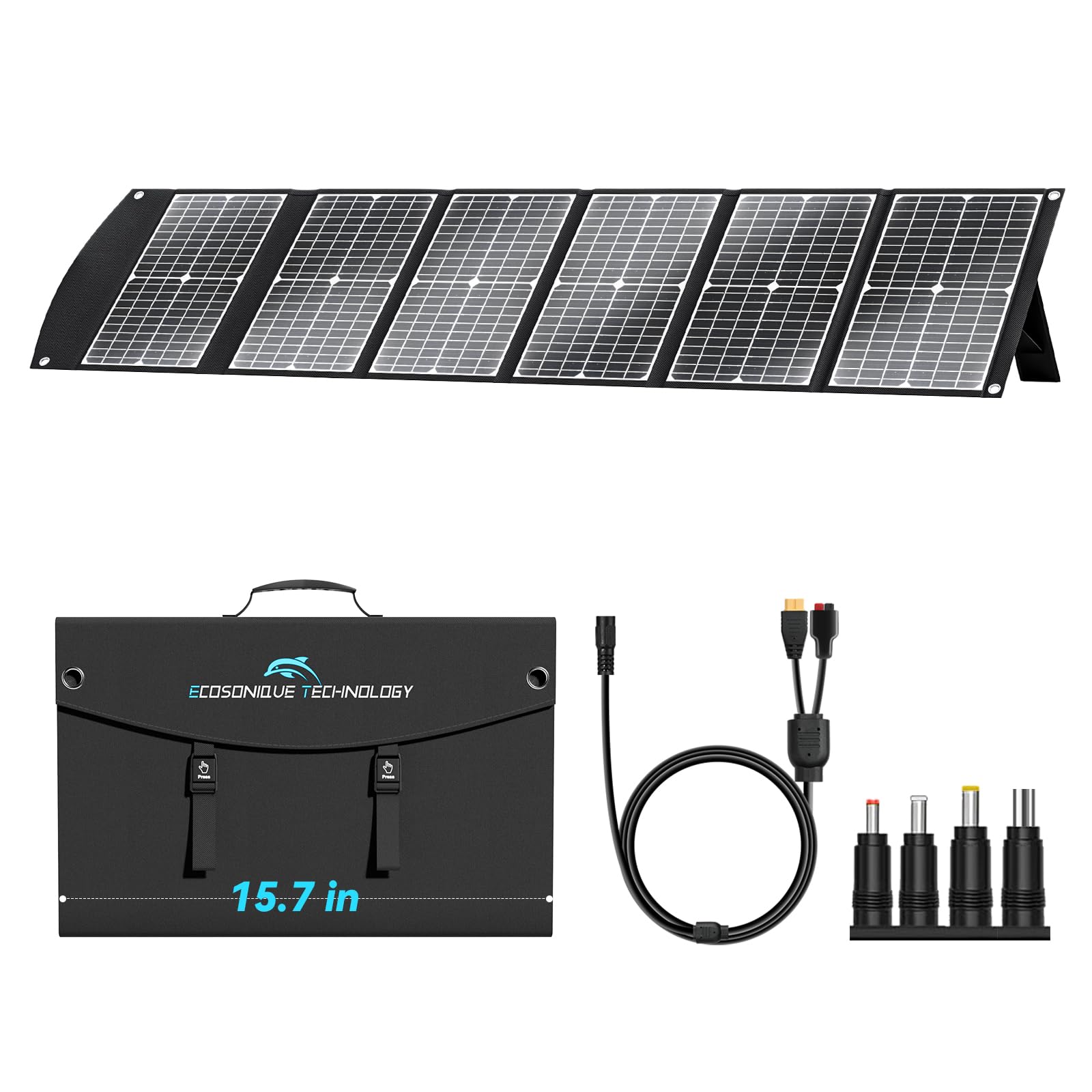
The Ecosonique 100W panel offers an excellent balance of power, portability, and price. Its 6-fold design collapses to a compact 15.7 x 10.5 inches, and at just 6 lbs, it is easily one of the most portable 100W panels on the market. The included kickstands make setup simple, and the CPC lamination provides better corrosion and scratch resistance than standard PET panels.
Connectivity is a standout feature. It includes a QC3.0 USB-A port (up to 24W), a PD3.0 USB-C port (up to 45W), and a 20V DC output. The bundled adapter kit covers XT60, Anderson, and DC7909/8mm connectors, making it compatible with 99% of power stations, including EcoFlow, Jackery, and Bluetti. Owners confirm it delivers a full 100W in peak sun and is forgiving in lower light.
One minor note is that the 3m DC5521 extension cable is useful but feels slightly short for some setups. The panel is also not designed for permanent outdoor installation; it is intended for portable use. The 12-month warranty is standard, but the overall build quality and real-world performance make this a top-tier mid-range pick for most users.
Why it’s great
- Versatile adapter kit for near-universal power station compatibility.
- Highly portable 6-fold design and light 6 lb weight.
- High 23.5% cell efficiency and CPC durable lamination.
Good to know
- Not suited for permanent outdoor installation or harsh weather.
- Included DC5521 extension cable could be longer for shaded setups.
4. BigBlue 60W Portable Solar Panel
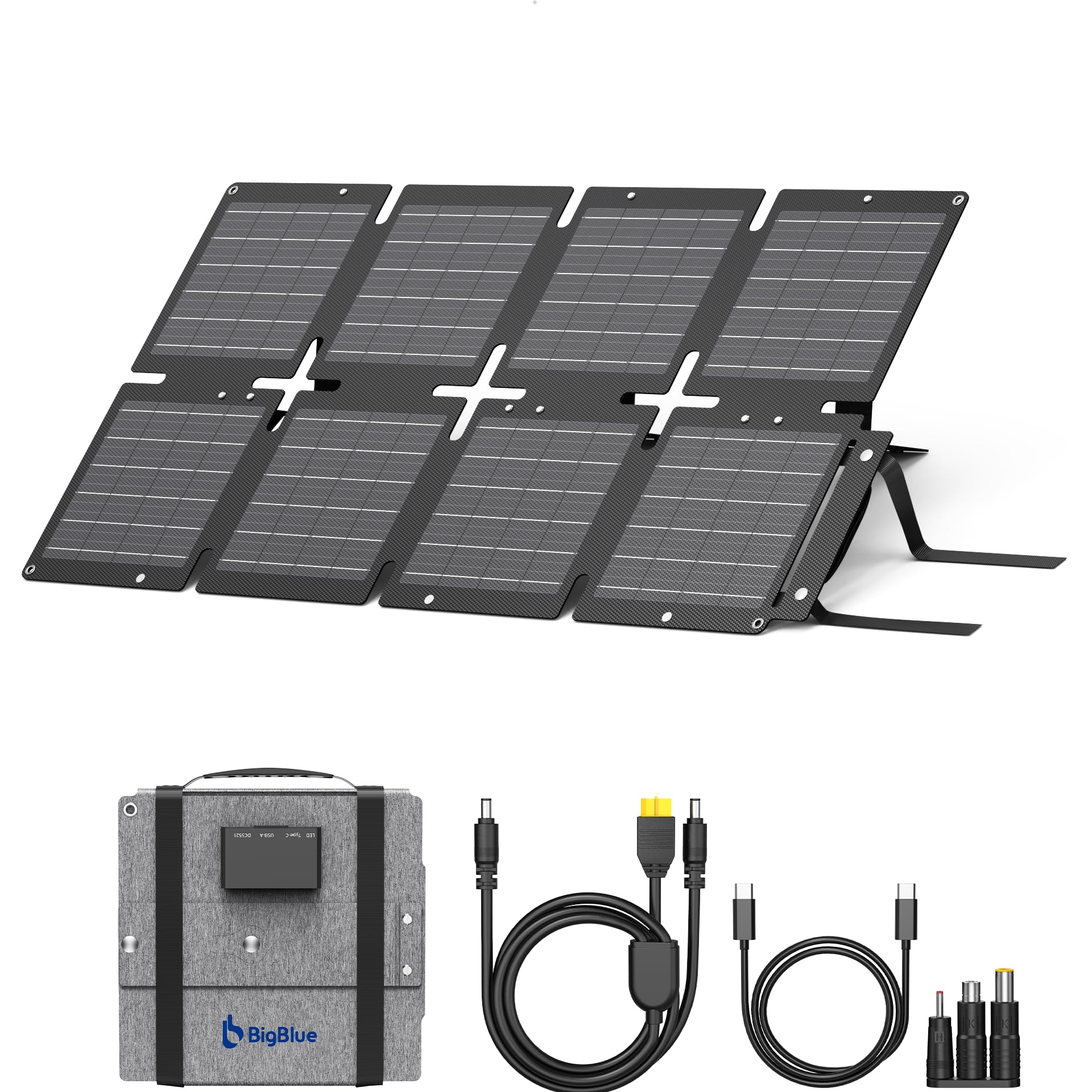
The BigBlue X60 is a compact specialist, using advanced N-type solar cells to achieve a 24.7% conversion efficiency — one of the highest in this class. Folding to just 10.16 x 8.43 x 2.36 inches and weighing around 4 lbs, it is ideal for backpackers or hikers who need reliable power without significant weight. The IP68 waterproof rating (junction box excluded) provides confidence against rain and dust.
Its dual-port setup includes a 45W PD USB-C and a 20W USB-A, perfect for direct device charging. The DC 5521 port and included adapter set (DC7909, DC8020, DC35135) allow it to charge most small power stations. Owners report real-world outputs of 38-40W via USB-C and 45-46W via the DC port in good sun, easily topping up a phone, tablet, or small battery pack.
The main drawback reported is the USB-C port behavior — some users found it drained devices instead of charging them. This appears to be a quality control issue on certain units. The exposed power box also lacks weather protection, and the closing straps can deform the port covers over time. Despite these points, the raw efficiency and portability make it a premium choice for ultralight setups.
Why it’s great
- High 24.7% N-type cell efficiency for size.
- Extremely compact and lightweight for backpacking.
- Robust IP68 dust and water resistance rating.
Good to know
- USB-C port can be unreliable and drain devices.
- Junction box is not waterproof; limited weather protection.
5. SOKIOVOLA 100W Portable Solar Panel
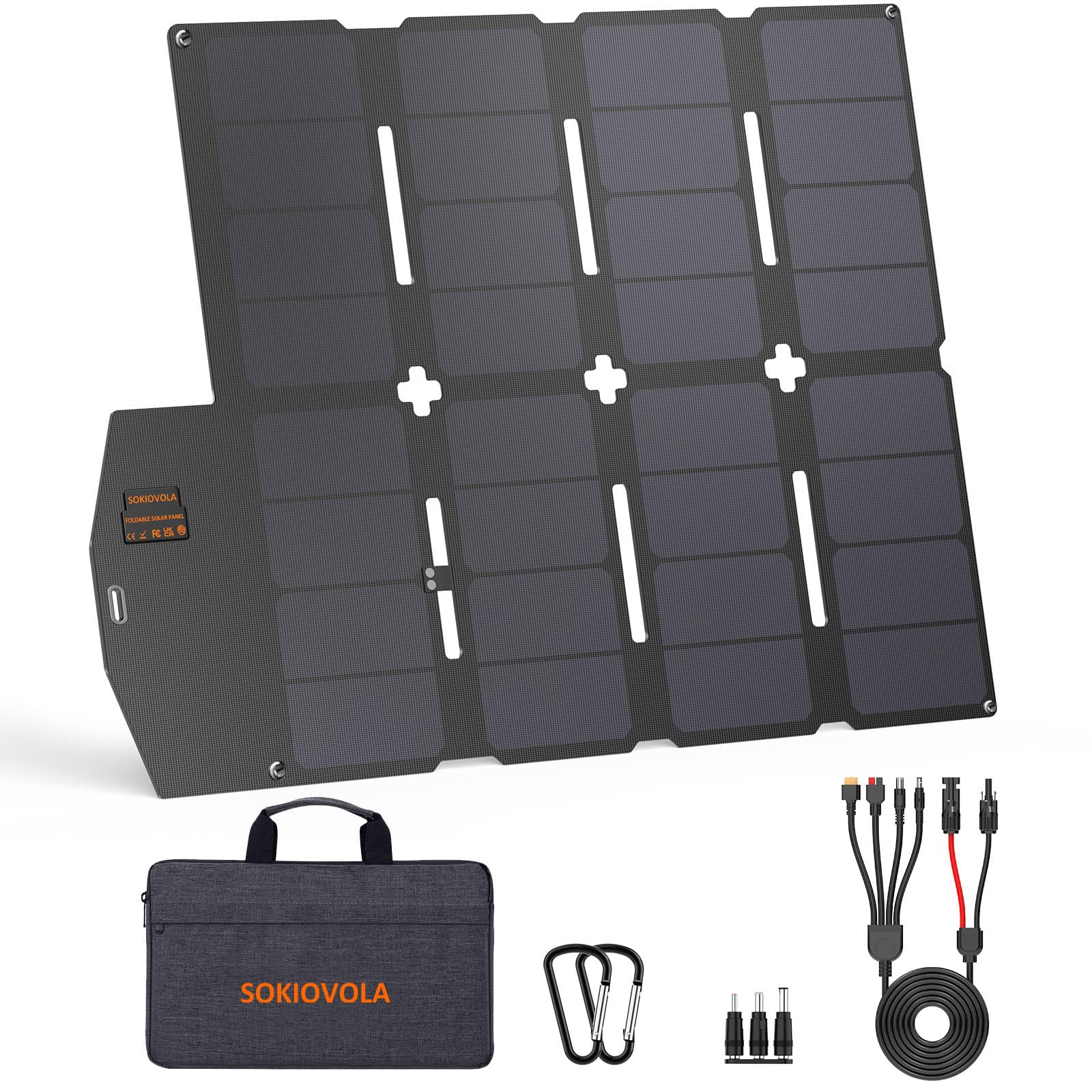
The SOKIOVOLA 100W panel is a featherweight contender at just 4.6 lbs, folding to the size of a small laptop bag. It uses ETFE lamination for high light transmittance (95%) and durability, paired with efficient monocrystalline cells. The 4-in-1 MC4 connector cable includes XT60, DC5521, DC7909, and Anderson tips, ensuring broad compatibility with power stations like Jackery, EcoFlow, and Bluetti.
Buyers report excellent real-world performance, often exceeding the 100W mark. The panel’s compactness makes it easy to set up on a car windshield or a campsite table, though it does not include built-in kickstands — you will need to prop it up. The absence of direct USB ports means you must use it with a power station or a separate USB adapter, but this keeps the panel lightweight and focused on high-wattage output.
The main design flaw is the lack of an integrated stand, which reduces efficiency unless you angle it correctly. The included storage bag is useful, but the panel’s MC4 connectors are not as user-friendly for quick-camping as DC barrel plugs. Overall, it is an excellent value for the weight and power, especially if you already own a compatible power station.
Why it’s great
- Very lightweight at 4.6 lbs for a 100W panel.
- High-quality ETFE lamination for durability and light transmission.
- Includes a 4-in-1 adapter cable for wide compatibility.
Good to know
- No built-in kickstand; requires propping up for optimal angle.
- Lacks direct USB ports for charging devices on the go.
6. SinKeu Solar Generator with 40W Panel
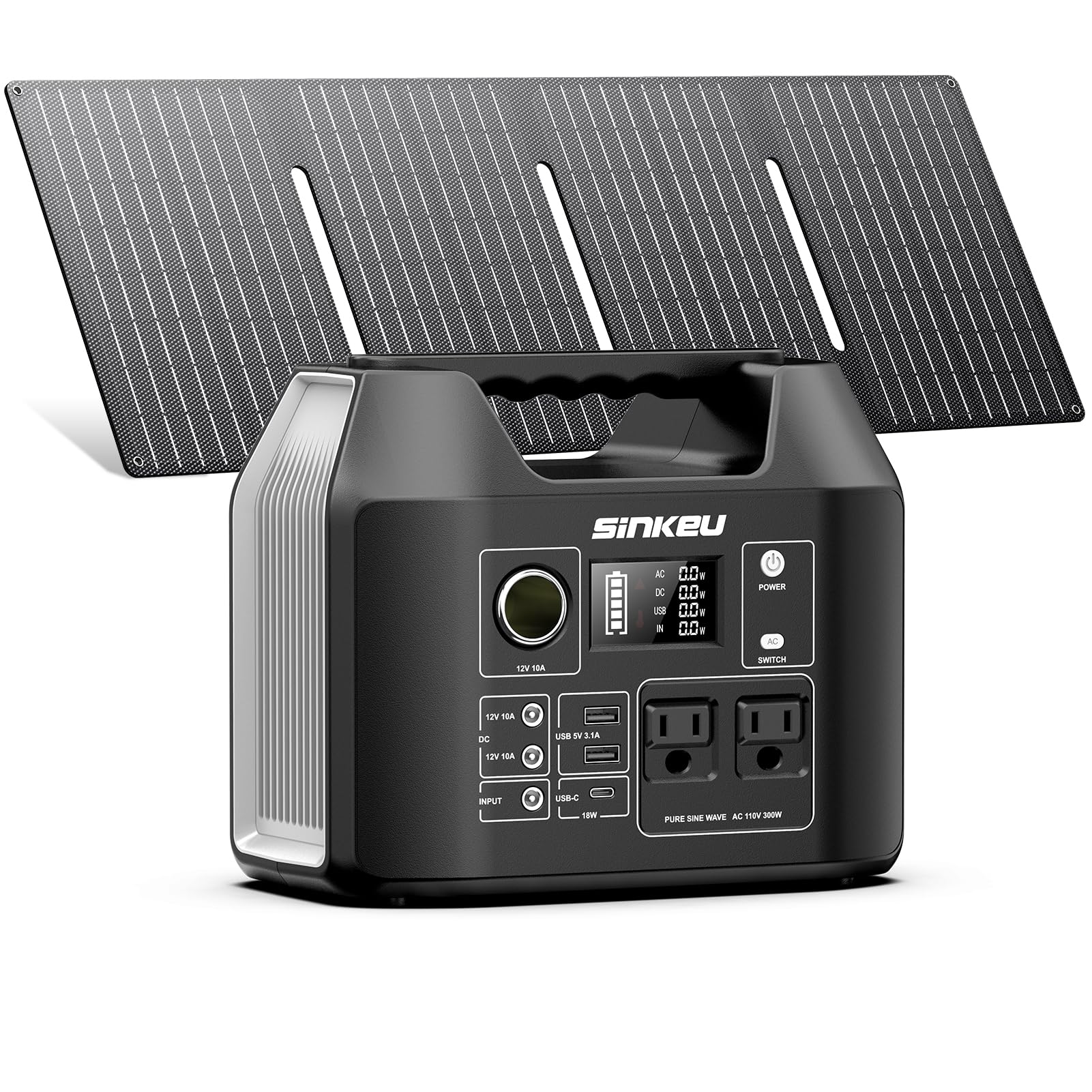
The SinKeu E300 is a complete solar generator bundle that prioritizes battery safety and longevity. The 256Wh power station uses a LiFePO4 battery, rated for over 3,500 charge cycles — about 10 years of regular use. The included 40W solar panel is lightweight at just 1.9 lbs and folds small, making the entire system highly portable. The 300W pure sine wave AC inverter can run small appliances, laptops, and CPAP machines.
The power station features two AC outlets, two USB-A ports, a USB-C PD port, and two DC outputs. The built-in BMS (Battery Management System) offers over-voltage, short-circuit, and temperature protection. This is an excellent entry-level kit for someone who wants a safe, long-lasting battery and a small solar panel to keep it topped off during a camping trip or power outage.
The 40W solar panel will recharge the 256Wh battery in about 6-7 hours of direct sunlight. This is slow by modern standards, and the panel itself is not the most efficient. The power station’s 300W AC output is also limited; it cannot run high-draw appliances like hair dryers or space heaters. However, for phones, lights, and a laptop, this kit delivers reliable, clean power with a battery chemistry that will outlast the competition.
Why it’s great
- LiFePO4 battery with 3,500+ cycles for exceptional lifespan.
- Full-featured kit with AC, USB, and DC outputs.
- Lightweight and portable; easy for beginners to use.
Good to know
- 40W solar panel is slow to recharge the 256Wh battery.
- Maximum AC output is limited to 300W, restricting appliance use.
7. ZeroKor 300W Power Station with 60W Panel

The ZeroKor 300W kit pairs a 280Wh power station with a 60W foldable solar panel, offering a higher solar input than many comparable bundles. The panel uses monocrystalline cells at a 20.5% efficiency. The power station itself includes two AC outlets (300W max), a DC port, three USB-A ports, and one QC USB port. The flashlight with SOS mode adds a useful emergency feature.
The 60W panel is capable of charging small devices directly via USB-A or USB-C, offering some flexibility. The power station can be recharged via AC wall, solar, or carport. The built-in MPPT controller aims to optimize solar charging. Owners confirm the system is good value for money, reliably charging phones, tablets, fans, and air mattresses over a few days of camping.
Critically, some users report the solar panel is ineffective indoors or when placed behind glass, significantly reducing charge rates. The 280Wh battery is also on the lower side for running AC-powered devices for extended periods. The solar panel’s junction box is also stated as not waterproof, so care is needed in the rain. It is a capable kit for low-power essentials, but not for high-consumption electronics.
Why it’s great
- 60W solar panel provides faster solar recharge than smaller panels.
- Versatile port selection includes AC, USB-A, QC, and DC.
- Includes a built-in flashlight with SOS mode for emergencies.
Good to know
- Solar panel performance is poor in low light or behind glass.
- Junction box is not waterproof, requiring caution in wet weather.
8. MARBERO M82 Power Station with 21W Panel
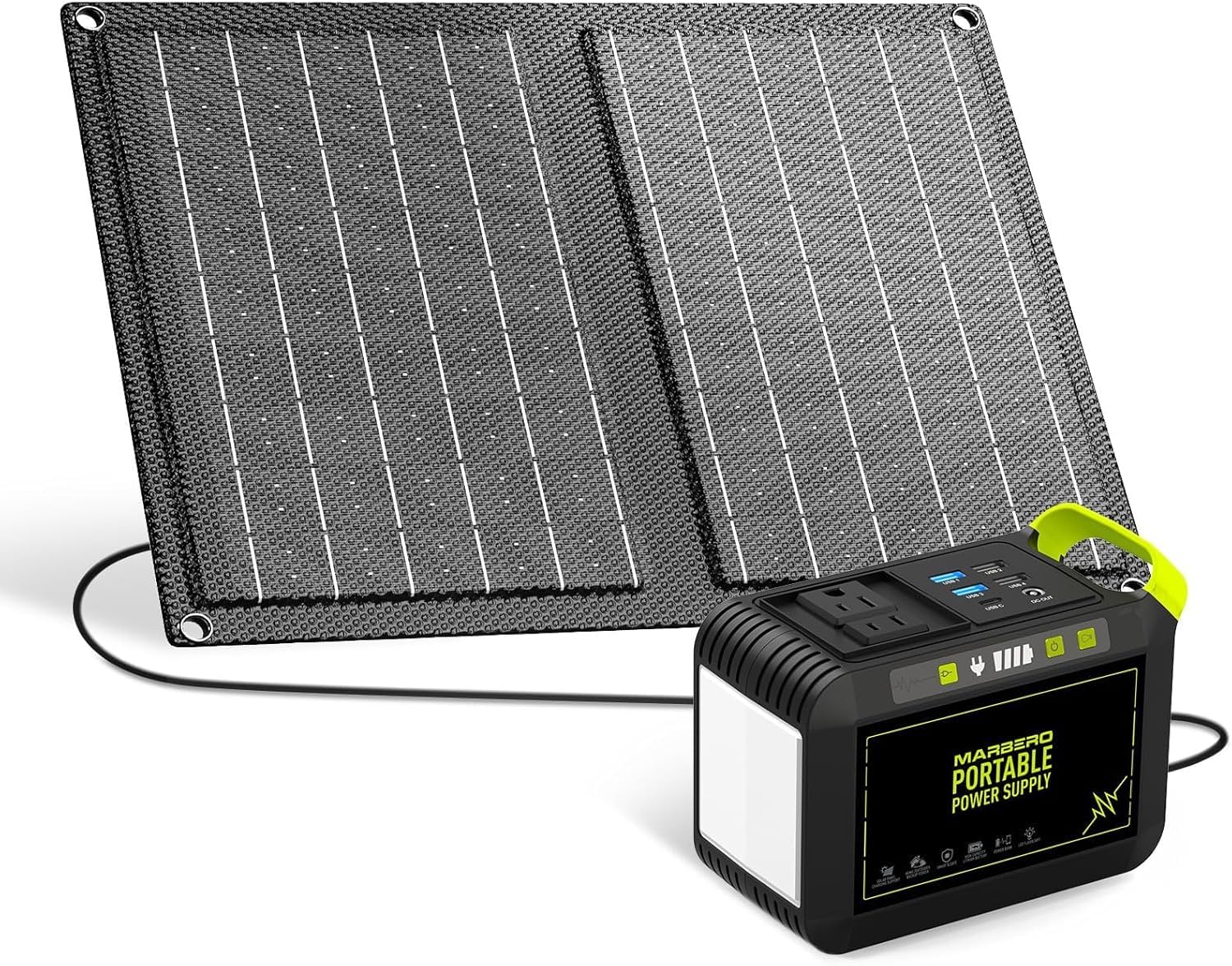
The MARBERO M82 kit is the definition of an entry-level, ultra-portable solution. The power station has an 88Wh capacity and weighs just 2.3 lbs, making it smaller than a typical lunchbox. The included 21W solar panel is also lightweight and foldable. This kit is designed for overnight trips where the goal is to recharge a couple of phones, a tablet, or a small camera.
The station features a cigarette lighter adapter for car charging and a 120W max power output. It is very easy to use: just plug in the device, and it works. The solar panel can recharge the station in a day of good sun, and the station itself can be used as a power bank. The build quality feels durable, and the integrated handle makes it easy to grab and go.
The limitations are significant for anyone needing more power. The 88Wh battery is small — it can fully charge a phone about 6-7 times, but a laptop will drain it quickly. The 21W solar panel is slow, and some users report a decrease in battery capacity over several months of use. This kit is a reliable companion for minimalist campers or as an emergency phone charger, but it cannot power larger devices.
Why it’s great
- Extremely light and compact, ideal for ultralight camping.
- Simple all-in-one solution with panel and station.
- Durable build quality with a convenient carrying handle.
Good to know
- Small 88Wh capacity limits use to charging small devices.
- 21W solar panel is slow to recharge the station fully.
9. ZeroKor 100W Power Station with 40W Panel
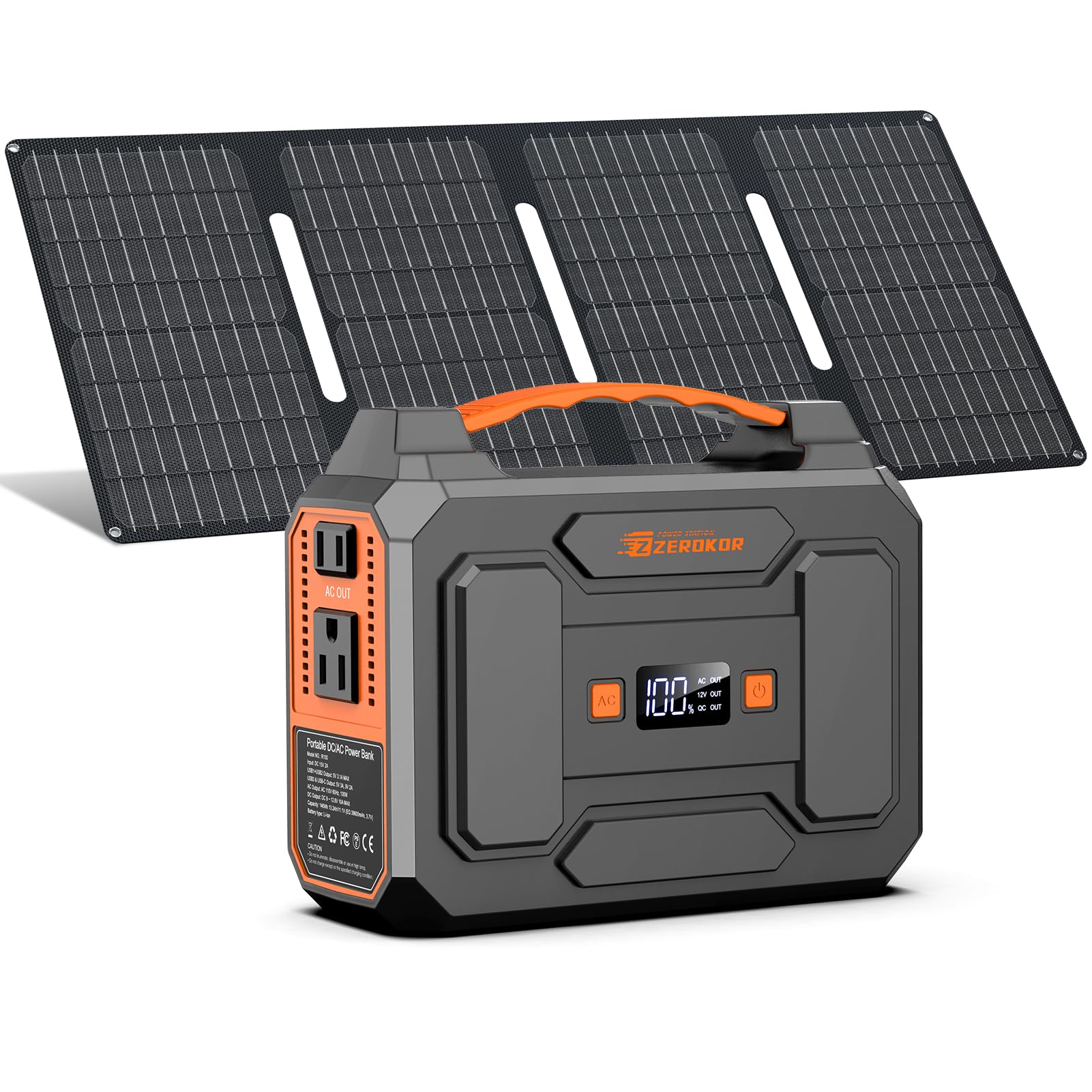
The ZeroKor 100W kit provides a balanced entry point with a 146Wh power station and a 40W foldable solar panel. It offers more capacity than the MARBERO kit while remaining very portable. The 100W AC outlet (pure sine wave) is the main draw, allowing you to power a small laptop or a desk lamp. The 22.8% efficient monocrystalline panel is a solid performer for its size.
The station includes multiple USB-A ports, a QC port, and a USB-C port, covering most small device needs. The pass-through AC charging is a useful feature, allowing you to charge the station while powering a device. The built-in BMS provides essential protection. Owners appreciate its portability and the peace of mind it offers for short power outages or overnight camping.
The 40W solar panel is an upgrade over the 21W MARBERO panel, but still requires a good day of sun to fully recharge the 146Wh station. Some users report inconsistent charging, with the station failing to charge past a certain point. The kit is not designed for high-wattage appliances — using a device over 100W can damage it. It is a competent kit for basic power needs without breaking the bank.
Why it’s great
- Includes a 100W AC outlet for small laptop charging.
- Good portability with a 146Wh battery and 40W panel.
- Multiple USB charging options and a built-in BMS.
Good to know
- Some units exhibit inconsistent solar charging behavior.
- Limited to powering devices under 100W for safe operation.
FAQ
Can a 45W solar panel directly charge a laptop?
How long does a 45W panel take to charge a 256Wh power station?
What is the difference between an MPPT and PWM solar charge controller?
Final Thoughts: The Verdict
For most users, the best 45w solar panel kit winner is the EF ECOFLOW RIVER 2 with 45W Solar Panel because it offers a seamless, high-quality integration of a reliable power station with a dedicated 45W charging panel. If you want pure panel performance and portability, grab the BigBlue X60 60W Panel. And for a budget-friendly starter system with an AC outlet, nothing beats the ZeroKor 100W Power Station with 40W Panel.