
Our readers keep the lights on and my morning glass full of iced black tea. As an Amazon Associate, I earn from qualifying purchases.
Specs are compiled from manufacturer listings and verified buyer reviews and can change over time — please confirm the key details on the product page before buying.
The short answer: buy the hotspot with the biggest battery and the carriers it actually supports, then check whether it needs a SIM card at all. A travel hotspot lives or dies on three things — how long it runs unplugged, which networks it will accept, and whether you have to fight a carrier website to switch it on. Get those right and a weak campsite signal or dead hotel Wi-Fi stops being your problem. Get them wrong and you are carrying a paperweight that shows four bars and connects to nothing.
I’m Min — the founder and writer behind Gadgets Feed. This guide is built by comparing the manufacturers’ published specifications and the patterns across verified customer reviews, so you get each pick’s real strengths and trade-offs instead of marketing spin.
This guide sorts nine mobile hotspots by what matters on the road — battery size, band coverage, SIM freedom, and owner experience. best 4g portable wifi hotspot picks come down to matching one spec to your trip.
Our Picks at a Glance


How To Choose The Best 4G Portable WiFi Hotspot
Most people buy a hotspot on speed and then discover battery life and band coverage were the real problem. The problem is battery, band coverage, and how easy the thing is to switch on with the carrier you already pay. Here is what to weigh before you buy.
Battery capacity sets your real-world hours
Look at the battery figure in mAh (milliamp-hours — a measure of how much charge the cell holds) before anything else. A jump from a 2,930 mAh cell to a 5,000 mAh cell means the device runs noticeably longer between charges, which is the difference between a full day of remote work and hunting for a USB socket by lunchtime. If you plan to run several devices at once, the drain is heavier, so bigger is safer.
Band coverage decides where it actually works
A hotspot is only as good as the networks it recognizes. Some models lock to one carrier family like GSM, which is fine if you already hold that SIM. Others roam across many carriers and pick the strongest local signal for you. If you travel overseas or between remote spots, the roaming device saves you from dead zones — but the locked carrier version often delivers steadier speeds on its home network.
SIM-free versus bring-your-own-SIM
The newest pick here uses vSIM (a built-in virtual SIM that needs no plastic card), which boots online without a trip to a store. Traditional hotspots take a nano-SIM you supply yourself, which is cheaper if you already have a data plan but slower to set up because you handle the activation. Neither is better outright — one is convenience, the other is control.
Quick Comparison
| Model | Best For | Battery | Max Speed | Wi-Fi Band | Amazon |
|---|---|---|---|---|---|
| GL.iNet GL-XE300 (Puli)★ Best Overall | Customizable long-trip router | 5000 mAh | 300 Mbps | Single-Band 2.45 GHz | Amazon |
| NETGEAR AC797-100NASBudget Champion | Cheap AT&T backup internet | 2930 mAh | 400 Mbps | Dual-Band | Amazon |
| GlocalMe UPPBest for Travel | SIM-free global travel | 3000 mAh | — | Single-Band 5 GHz | Amazon |
| BNBDE TD20 (Car Hotspot) | Permanent car and RV installs | Battery-free | 50 Mbps up | Single-Band 2.4 GHz | Amazon |
| Verizon Jetpack 8800L | Verizon customers wanting a touchscreen | 4400 mAh | 1200 Mbps | Dual-Band 5 GHz | Amazon |
| GL.iNet GL-E750V2 MUDI | Tech users wanting VPN control | 7000 mAh | 433 Mbps | Dual-Band 5 GHz | Amazon |
| TravlFi JourneyGo | RV and motorhome internet | — | — | Single-Band 2.4 GHz | Amazon |
| Netgear Nighthawk MR1100 | High-speed cabin and outage backup | — | 1 Gbps | Dual-Band 5 GHz | Amazon |
| D-Link DWR-933 | Roaming between countries on one SIM | 3000 mAh | 300 Mbps | Dual-Band | Amazon |
In‑Depth Reviews
1. GL.iNet GL-XE300 (Puli) 4G LTE Mobile Smart VPN Router
Our pick — over 4★ from 90+ verified ratings; the strongest balance of quality and price.
The customizable workhorse that turns a 4G SIM into a private, hackable network.
If you want a hotspot you can actually reprogram, this is where the list starts. The Puli converts a standard nano-SIM’s 4G LTE signal into a Wi-Fi network at up to 300 Mbps (megabits per second — the bandwidth figure your downloads and video calls rely on), on the single 2.45 GHz band. That band trades the extra 5 GHz lane for longer reach, so the signal carries further through a campsite or a thin-walled rental. It runs OpenWrt — an open, community-maintained router system — so you can add tools a locked consumer hotspot will never allow.
What earns this the top slot is the flexibility nobody else matches. Pre-installed OpenVPN and WireGuard, plus compatibility with 30+ VPN service providers, means you can route your traffic through a private server and keep your connection shielded on public networks. Dual Ethernet ports, a USB 2.0 port, and reserved antenna mount holes mean you are not stuck with the stock setup — attach the antennas and you can pull signal from a weaker tower. It shipped pre-built with a Quectel EC25-AF 4G module and a 5000 mAh battery, which is the largest in this lineup.
Here is the honest catch: the clouded part of ownership is the battery itself. In owner experience, runtime lands around six hours on a charge, which is solid but not the longest here — and a minority find it drains quicker than expected, so heavy multi-device use will send you hunting for the USB cable. The bigger reality is that it tops out on 4G LTE; there is no 5G path. If you are only after maximum speeds and nothing else, the Nighthawk MR1100 below reaches a higher rated ceiling. But for the maker’s constant-data feature that holds the connection through an Ethernet dropout, and for the customization, the Puli is the pick that suits the buyer who wants control over convenience.
Where It Pulls Ahead
- 5000 mAh cell — the biggest battery of the group, for long unplugged stretches.
- OpenWrt, OpenVPN, and WireGuard built in, with support for 30+ VPN providers.
- Dual Ethernet, USB 2.0, and reserved antenna holes for serious upgrading.
Where It Asks For Patience
- Runtime runs about six hours — multi-device days need a top-up.
- 4G LTE only, with a 300 Mbps ceiling and the single 2.45 GHz band.
- Setup assumes comfort with a router dashboard, not a plug-and-play app.
Reach for this if: you want a SIM-powered hotspot you can customize, run a VPN on, and expand with antennas and Ethernet.
Look elsewhere if: you want a two-minute app setup or the fastest possible download ceiling.
2. NETGEAR Mobile WiFi Hotspot AC797-100NAS
The thrifty AT&T backup box that tops out higher on paper than it costs.
Reliability is the trait that carries this one, and it is not luck. It is rated for up to 400 Mbps download speed, a higher ceiling than the GL-XE300 Puli above at 300 Mbps — and that is before the price enters the picture. Connect up to 15 devices at a time, which covers a small family or a two-laptop work trip without anyone getting the boot. The removable 2930 mAh battery is rated for up to 11 hours of use, so a full travel day is realistic. It is dual-band, too, meaning it broadcasts on both 2.4 GHz and the faster 5 GHz lanes so newer laptops can use the quicker one.
What wins people over is straightforward reliability in the field, paired with an easy activation path. Slip in a SIM, charge the battery, punch in the unit’s own network name and password, and you are online — owners regularly describe it as working flawlessly from the start with an AT&T SIM. The maker positions it for replacing home DSL on the road, or casting your own WLAN when the hotel’s is dodgy. For a device that costs well under the typical hotspot, that is a lot of connectivity per dollar.
The two things to know before you buy: it is an AT&T device that works with GSM carriers like AT&T, so hard-wire your plan expectations to that network family. And a handful of owners have received a refurbished unit that arrived visibly worn rather than factory-fresh — one gripe, not a pattern, but worth a look at the box when it lands. If price and simple reliability matter more than tinkering, this is the value move.
The value angle: a 400 Mbps rating and 15-device sharing capacity at this tier is the strongest performance-per-dollar on the list, aimed squarely at AT&T and GSM users replacing shaky hotel Wi-Fi.
Who it suits: AT&T or GSM customers who want dependable backup internet and quick setup without paying for extras they will not use.
The trade-off to plan for: activation and roaming are tied to GSM carriers like AT&T, so a non-GSM SIM will not do here.
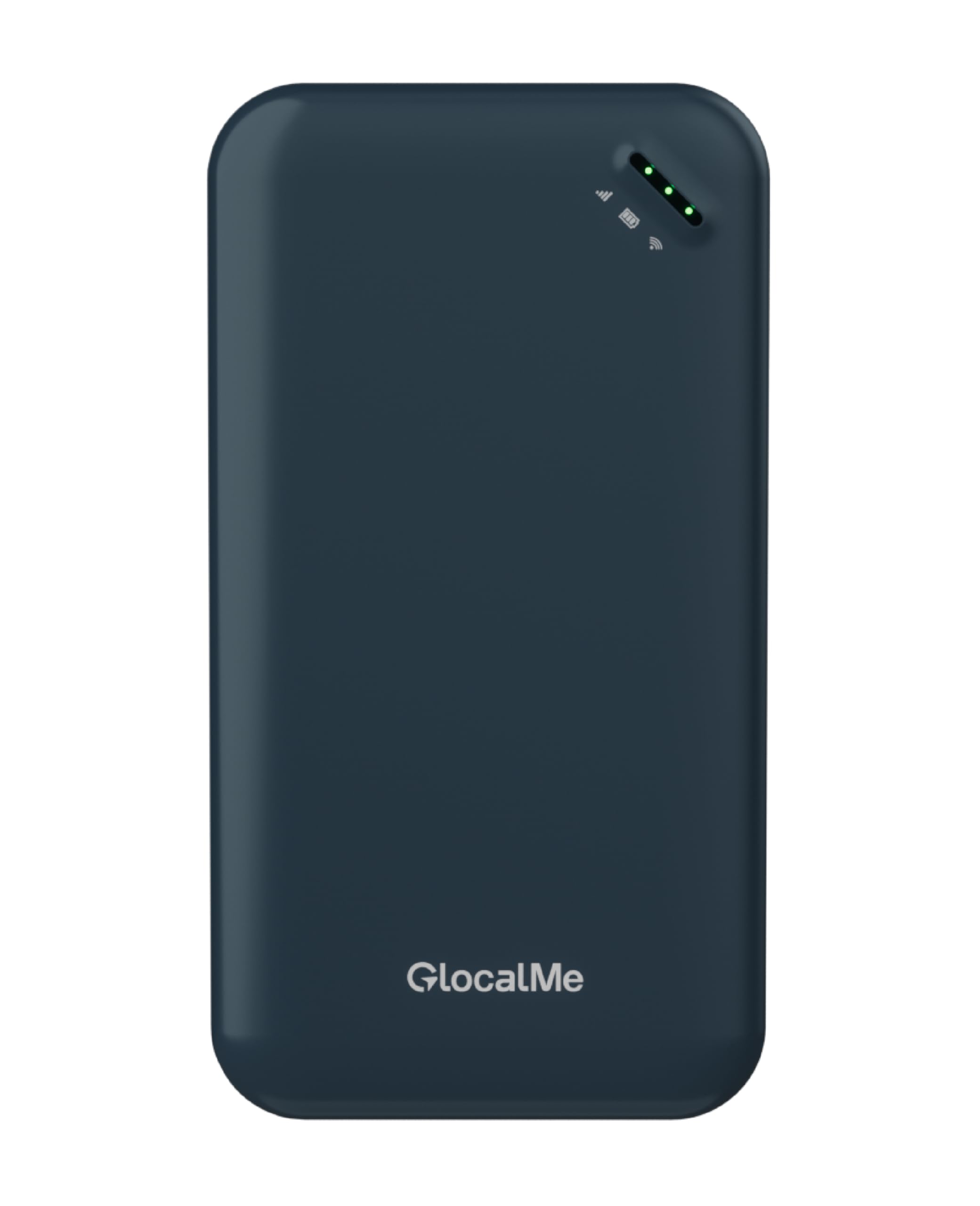
3. GlocalMe UPP 4G Portable WiFi Hotspot
The no-SIM globe-trotter that lands online in minutes, in 200+ countries.
For the traveler who does not want the SIM-card dance, this is the one. It arrives with 1.1GB of global data valid for 90 days, and you simply download the app and register — no physical SIM required. It works across 200+ countries and regions on access to 390+ global carriers, automatically grabbing the strongest local signal as you move. Pair that with a 3,000 mAh cell rated for over 13 hours of continuous use, and a hotel day of video calls and navigation fits inside one charge. It shares with up to 8 devices at once.
The ease of this thing is its whole brand. Setup takes minutes, there is no contract to sign, and the free data works as advertised — exactly what everyone raves about is how quickly it goes from box to browsing. A preloaded plan plus the app-based top-ups mean you buy service by the day, month, region, or gigabyte as your trip requires. It also takes a SIM if you would rather use your own data, so you are not locked into one payment route.
The catch is consistency. Because it roams to whichever carrier is strongest where you stand, some owners hit weak 3G/4G coverage or sluggish speeds in areas where the local tower is thin, and connectivity feedback overall lands mixed — the same roaming freedom that makes it flexible also means performance moves with your location. The rechargeable battery has drawn a few complaints on longevity too. Take it as a great global convenience, not a guarantee of speeds everywhere; if you need reliable coverage off-grid, verify your trip’s area first.
What Travelers Gain
- No SIM needed — 1.1GB global data for 90 days is set up from the start.
- Coverage across 200+ countries with access to 390+ carriers.
- 3,000 mAh battery rated over 13 hours of continuous use, sharing with 8 devices.
What to Keep in Mind
- Speed and connectivity depend on which local tower it picks up, so it varies.
- Roaming is convenient but not always the fastest option in a weak-coverage area.
- The battery, while long-rated, has drawn complaints about aging.
The ideal fit: frequent international travelers who want internet running minutes after unboxing, with data purchased on demand instead of a carrier contract.
Think twice if: you need guaranteed high speeds in a specific remote location.
4. BNBDE Portable WiFi Hotspot for Car and Truck (TD20)
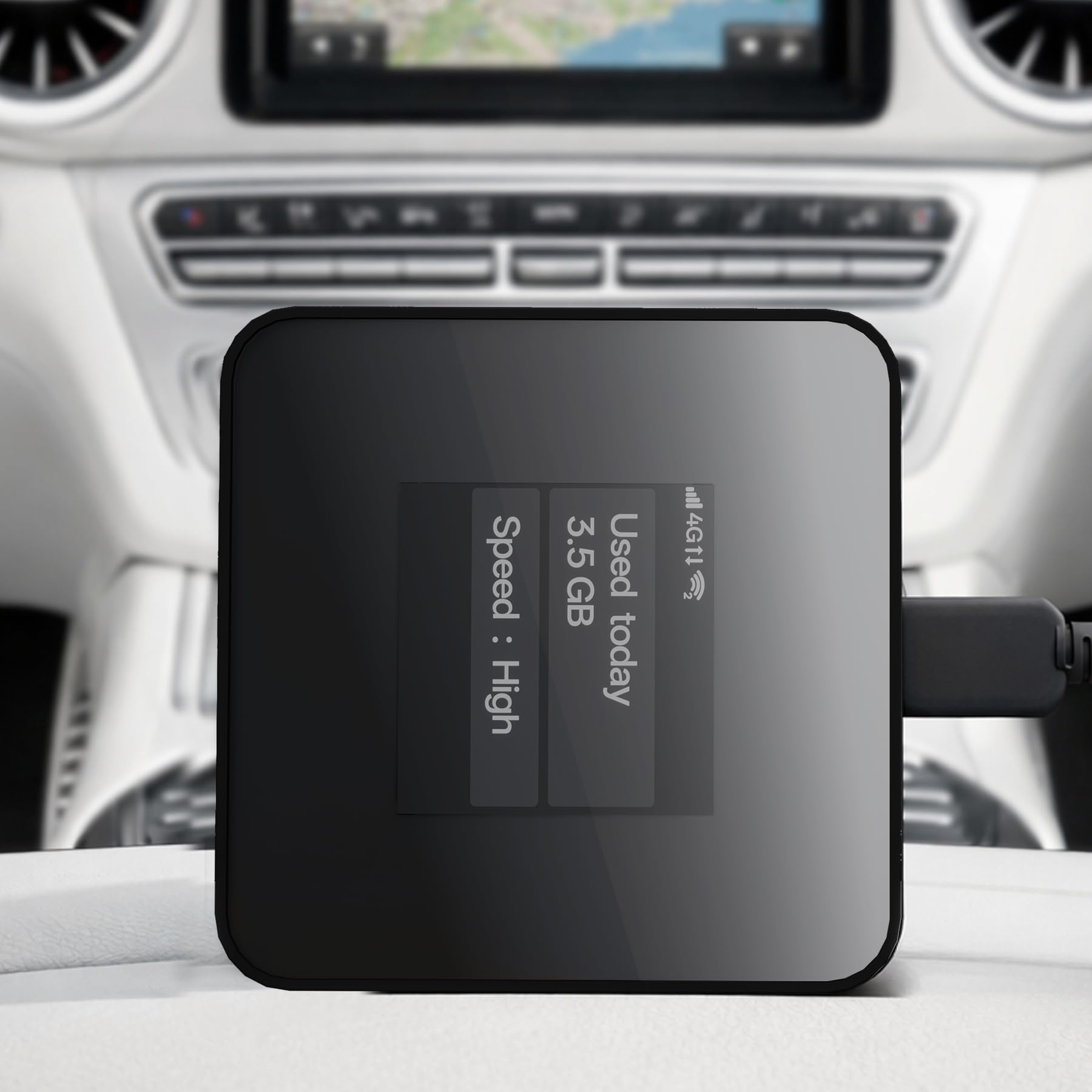
The battery-free car hotspot built to sit in a hot cab all summer.
Anyone who has left a lithium battery baking on a dashboard knows the worry — this device removes it entirely. It runs with no battery inside, drawing power from the vehicle, which sidesteps the lithium heat risk you would otherwise carry in a permanently installed car or RV hotspot. Connectivity comes via vSIM tech that needs no plastic card, and it works across 150+ countries, auto-selecting the strongest local network.
The reliability case holds up strongly in the field: buyers report it kicks in fast, connects a hotel’s internet to several gadgets in minutes, and stays stable, which is the top thing they praise. Portability is a genuine strength too, since without a battery cell the housing stays small enough to slip into luggage or a purse, yet it is rated safe to leave in the car long term. Flexible pay-as-you-go data — 3-day, 7-day, 30-day, or 1-year blocks — plus 10GB of U.S. data included give you a running start with no contract.
The honest limitation is signal-dependent performance in the wild. In deep mountain terrain one owner could not get Wi-Fi at all, while home and city coverage was excellent — so treat it as dependent on how close you are to a strong tower. A few note the data-usage display is hard to read and top-ups can lag, reappearing only after the previous package is used. Because there is no battery, it also needs a power source to run — no taking it onto a park bench away from a vehicle. For a car or RV install, those are fair trade-offs for the safety win.
Why it earns its spot: eliminating the battery solves the specific fear of permanently mounted hotspots in hot vehicles, and the 16-device Wi-Fi 6 sharing makes it a proper family-in-a-truck solution rather than a phone-tether stopgap.
Built for: full-time car, truck, and RV owners who want a permanently installed hotspot with no battery to fear in the heat and room for 16 devices.
Not for: hikers or campers who need to carry internet away from a power outlet.
5. Verizon Wireless Jetpack 8800L 4G LTE Mobile Hotspot

The touchscreen flagship with the longest rated runtime on this list.
A 2.4-inch color touchscreen is what makes this a genuine standout — the settings live on-screen, with prompts that walk you through getting connected instead of forcing you into an app. Sweep left and you see which devices joined; the display shows the network name and password on demand, so handing out Wi-Fi is a tap rather than a dashboard visit. When you are finished, the same screen tells you how much data you have burned and how many days are left in your cycle. It is a small convenience until you are the one troubleshooting in a parking lot at dusk.
The performance numbers are its other argument. Rated for 1200 Mbps data transfer, the fastest figure in this guide, and spanning a wide set of LTE bands (B2 through B66 across the range listed), it is built to latch onto multiple carriers. The 4400 mAh battery is rated up to 24 hours unplugged and refuels faster via built-in QuickCharge tech. Verizon customers can add it to an existing account without drama, and it accepts a SIM so you can use no-contract MVNO plans and major U.S. networks too — the GSM-open up flexibility keeps you off a single provider.
Now the fair warning, because this pick is not for everyone. The recurring frustrations are real but manageable: the back panel that holds the battery has a habit of working loose over time, so a strip of tape is not unusual — and a smaller number of units arrive damaged with cracked cases or a distorted battery, which is a delivery issue rather than a design flaw, best solved by buying sold and shipped by Amazon. Battery endurance is rated generously, but some owners find it falls short of the full day under heavy load. Treat the plastic shell with a little care and the screen and band coverage carry the day.
The Standout Strengths
- 2.4-inch touchscreen shows device names, password, data used, and days left at a glance.
- Rated for 1200 Mbps transfer, the highest ceiling here.
- 4400 mAh battery rated up to 24 hours, with built-in QuickCharge tech.
The Fair Warnings
- The battery-door panel can loosen; some use tape to hold it in place.
- Heavy load can cut the rated runtime shorter than the full-day promise.
- A few units arrive with shipping damage, so buy from a source you trust.
Score it if: you want the clearest on-device controls, the widest band coverage, and the fastest rated speed, and you are comfortable treating a plastic body with a bit of care.
Leave it if: you want a rugged shell that survives hard handling without a second thought.
6. GL.iNet GL-E750V2 MUDI 4G LTE Portable Travel Router

The smartphone-sized powerhouse packing a 7000 mAh cell and VPN control.
Battery enthusiasts, meet your match. A 7000 mAh cell, the largest rating in this lineup, is advertised for up to 8 hours of use. It combines 300 Mbps on 2.4 GHz with 433 Mbps on 5 GHz in a dual-band setup, and it fits in a pocket at a listed 5.7 by 3.1 by 0.9 inches and 285 grams — light enough to forget until you need it. Built-in OpenVPN and WireGuard support, plus a customized DNS server, let you establish a secure connection to 30+ VPN servers and reach remote files without leaving your own network behind.
What owners lean on most is the portability — that pocket-size footprint keeps it easy to carry on any trip. For tinkerers, the feature list is deep: it can repeat an existing Wi-Fi signal, act as a wired or cellular router, expand storage up to 1TB via microSD, and add a physical eSIM card (sold separately). WireGuard speeds are rated up to 50Mbps and OpenVPN up to 10Mbps, so real VPN use is workable if you accept the speed dip that comes with encryption. Setup is clean once you know your way around a router page.
Be honest about the audience here. This is not a beginner’s device — it draws complaints for its setup complexity and for an older processing chip that caps speeds for some users. Heat buildup is a repeated note, and boot time is slow enough that people mention it. The battery is also not user-replaceable, which shortens the device’s late-life value. And the biggest issue for a home user: it does 4G data only, with no 5G and no gigabit ceiling. If your goal is plug-and-play simplicity, the GlocalMe or the NETGEAR will feel far easier; the MUDI is for the user who wants maximum control and can live with its quirks.
For the tinkerer: 7000 mAh, dual-band 300/433 Mbps speeds, 1TB microSD capacity, and full OpenVPN/WireGuard control make this the deepest toolkit here — provided you bring router experience to the table.
The fine print: heat, slow boots, and a sealed battery are the recurring owner notes, and 4G-only networking is the ceiling you accept.
Grab it if: you want the largest battery, VPN routing, and expandable storage in a pocketable travel router, and you enjoy tuning your own network.
Pass if: you want a plug-and-play setup or need 5G.
7. TravlFi JourneyGo LTE RV WiFi Hotspot
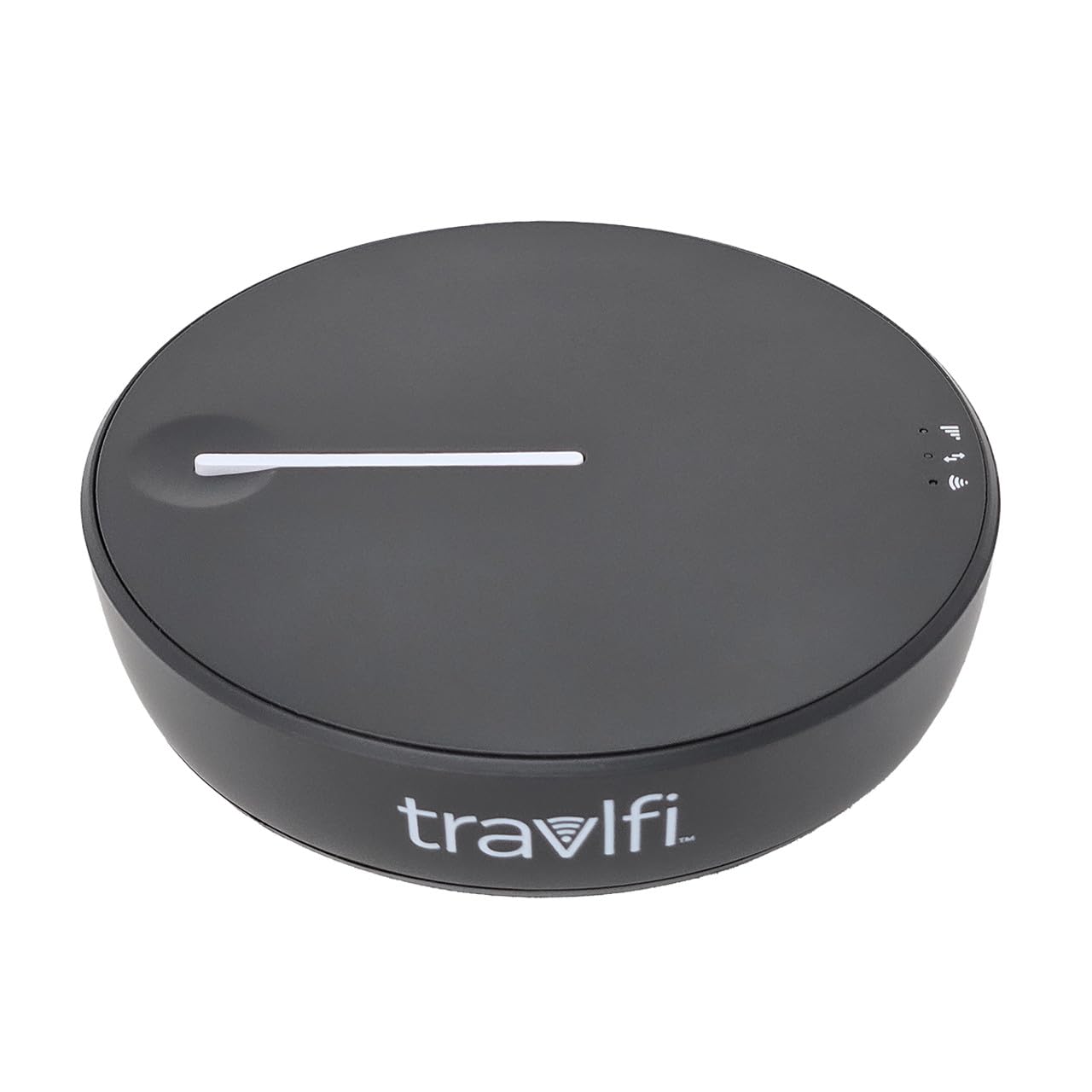
The RV-first hotspot that hops onto whichever tower is strongest near camp.
If your home sits on wheels, this one was designed around exactly that life. It relies on e-SIM tech, so no plastic SIM is required, and it roams across nationwide cellular networks to grab the nearest signal. Coverage is pitched as practically anywhere in the U.S., and data plans range from as little as 2GB right up to unlimited — no contract, prepaid monthly so you can pause it whenever you are parked. The setup is famously quick, getting you online in just minutes with no wiring to fuss over.
Owners speak in concrete wins. On a long drive down the East Coast, the JourneyGo kept a carful of grandkids streaming in their own tablets, and at a rental with no internet at all, it delivered email, Wi-Fi calls, and four connected screens at once. A weekend camper reports small size, fast charging, and a 16-hour battery that handles TV without stutter. Monthly plans are pausable, which matters when you are seasonal — pay for the months on the road, skip the ones parked in the driveway. That flexibility is the point of the whole device.
Where it stumbles is raw reach. When you are parked in a genuinely remote spot, reception can be weak — enough to browse on a phone but not to stream a big-screen TV or run a voice assistant, and one RV owner switched away for that reason. Speeds shift tower to tower, which means the same device feels fast one week and sluggish the next. Approach it as a convenient roaming solution for mainstream RV routes, and verify signal for the specific campgrounds you favor before committing.
Why RVers Like It
- Roams between nationwide networks to connect to the strongest local tower.
- No-SIM e-SIM setup, pausable month-to-month plans, and no contract.
- Reported 16-hour battery and streaming that handles several devices at once.
The Real Limits
- Remote campsites with a weak tower can choke big-screen streaming.
- Speeds vary location to location, so consistency is not guaranteed.
- Data value draws mixed reactions — some find it well worth it, some do not.
Made for: seasonal and weekend RVers on mainstream routes who want no-contract, no-SIM internet that rides the strongest signal nearby.
Reconsider if: you boondock in deep-remote country where towers are scarce.
8. Netgear Nighthawk MR1100 4G LTE Mobile Hotspot
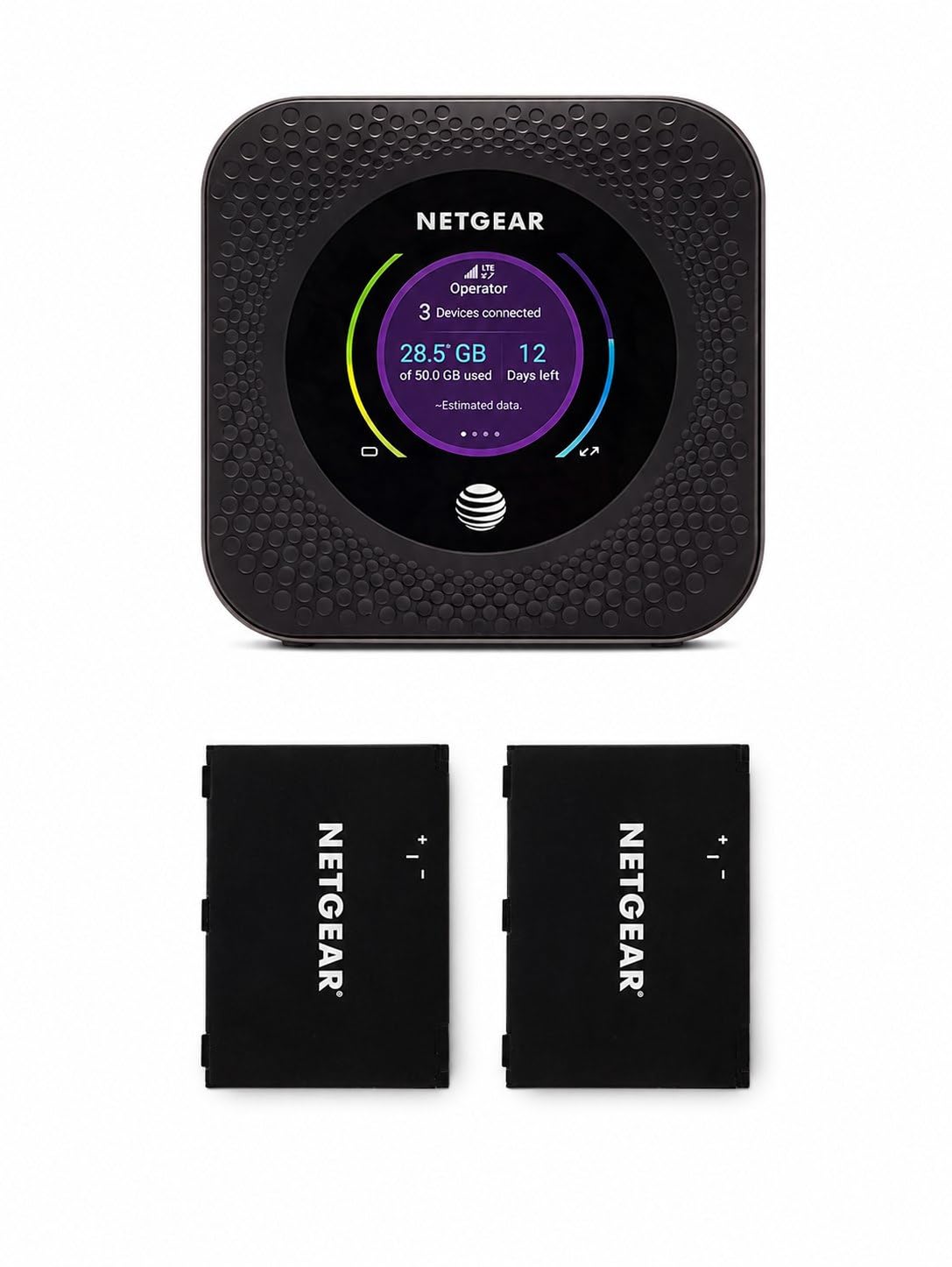
The speed king for cabins and outages — when you can get it activated.
On the numbers, nothing here reaches further on paper. The MR1100 is listed with a data transfer rate of 1 Gbps (a gigabit per second — the fastest tier in this guide) and gigabit Ethernet for a direct wired link, plus dual-band Wi-Fi so newer devices use the quicker lane. For a fixed location like a rural cabin or a home needing a backup line, that speed ceiling is exactly what you want. A prepaid AT&T SIM gets it going, and once running it has clocked home speeds around 150 Mbps with a solid connection.
The real-world payoff is streaming and remote work without the stutter you would get from a slow satellite link. Owners describe watching a large TV on it from a rural tower where the alternative was far slower, and using it comfortably as outage insurance — a backup WLAN you switch on when the main line drops. It handles travel as well as a fixed spot, delivered quickly and set up in a few minutes once the SIM is in. For raw bandwidth in a settled location, it is tough to top here.
The friction is almost always activation, not hardware. AT&T setup has sent buyers through repeated transfers, and the surest fix has been a trip to a physical AT&T store. Reliability draws mixed reactions for the same reason — the device is fine, but a weak tower can leave you stranded, as one rural owner found before switching providers. There are also notes of heating under load and range concerns. Buy it for the speed and the Ethernet, and plan on a little patience during the carrier dance.
Where it wins: a 1 Gbps rated transfer rate plus gigabit Ethernet make it the outright bandwidth leader, and the speed translates into large-screen streaming from a settled tower.
What to expect: activation through AT&T can be tedious, warm-up under load is mentioned, and performance still depends on your tower’s strength.
Buy it when: you need maximum rated speed — 1 Gbps and gigabit Ethernet — for a cabin or a backup home line and can handle the setup process.
Skip if: you want a two-minute, no-hassle activation.
9. D-Link DWR-933 4G+ LTE-Advanced Cat 6 Wi-Fi Hotspot

A world-roaming dual-band hotspot with a removable battery you can swap.
Two features set this D-Link apart from its pocket rivals: it roams across many LTE bands, which suits a traveler crossing borders on a single SIM, and its 3000 mAh battery is removable — unlike the sealed cells on some competitors — so you can carry a spare and stay online. The 4G/LTE Cat 6 modem is rated up to 300 Mbps download and 50 Mbps upload, and the dual-band AC1200 Wi-Fi combines 2.4 GHz and 5 GHz for a combined rating up to 1,200 Mbps. A clear LCD and a microSD reader round out the working features.
Owners who use it well get strong range and steady 4G speeds around 80 Mbps, plus a full day of battery life thanks to that swappable cell. The web interface is customizable, and there is welcome support from the maker if you register the unit first — responsive help and firmware updates included. It is compact, pocketable, and the removable battery is a genuine maintenance perk when cells age. If you want a hotspot that goes the distance on a multi-country trip, this is built for the roaming job.
The honest downside is build feel. The plastic housing strikes some users as flimsy and light for the price, and the configuration interface feels dated and can be slow. It uses micro-USB rather than USB-C, and the LCD is small enough to be fiddly, plus it will not run on USB power without the battery installed. One buyer found the phone’s own hotspot simpler. None of that breaks the device — treat it as a capable roamer where flexibility beats polish, and check whether the interface’s age bothers you.
The roaming argument: multi-band LTE, dual-band AC1200 Wi-Fi, and a removable 3000 mAh battery make this a competent cross-border traveler that edges out sealed-battery rivals on serviceability.
Where it feels dated: micro-USB charging, a small LCD, and a slow interface dock it a point — the internals do the job, but the finish is not premium.
Ideal for: frequent cross-border travelers who prize multi-band roaming and a battery they can swap, and who do not mind a dated interface.
Not your pick if: you want USB-C charging, a slick interface, or a rugged build.
Understanding the Specs
Battery capacity in mAh
This figure — milliamp-hours — is the size of the charge tank. Bigger numbers buy more hours before you dig out a cable, though real runtime also depends on how many devices and how much traffic you push. A 2930 mAh cell here is rated for up to 11 hours, while a 7000 mAh one is rated for up to 8 hours on different hardware — proof that you should read each device’s own hours, not just the number.
Dual-band versus single-band Wi-Fi
Dual-band means the hotspot broadcasts on both 2.4 GHz and 5 GHz. The 2.4 GHz band travels farther and pushes through walls; the 5 GHz band is quicker but shorter-range. Single-band units stick to one band — often 2.4 GHz for reach or 5 GHz for speed. If your devices are spread around a home or RV, dual-band gives each one a better lane.
SIM versus vSIM versus eSIM
A traditional hotspot takes a physical nano-SIM you supply. A vSIM is a virtual SIM built into the device so it connects without a card, and an eSIM is a downloadable carrier profile — often managed in an app. SIM-free designs boot faster and skip store visits, while bring-your-own-SIM models tend to be cheaper if you already pay for a data plan.
LTE bands and carrier support
Bands are the specific radio frequencies a hotspot can use. A device that lists many bands (a wide spread) can hop onto more carriers, which matters overseas and on no-contract plans. A device locked to GSM carriers like AT&T or Verizon brings rock-solid performance on its home network but limits your SIM choice. Match the band list to the carriers you actually use before buying.
FAQ
Do I need a SIM card for a portable WiFi hotspot?
Will an AT&T hotspot work with a T-Mobile SIM card?
How long does a 4G hotspot battery actually last?
Can I connect my laptop and tablet to one hotspot at the same time?
Is a battery-free hotspot safer for a car or RV?
Which is better, a 2.4 GHz or 5 GHz hotspot?
Do 4G hotspots work in rural or remote areas?
Can a portable hotspot replace my home internet?
What does the number of LTE bands mean for travel abroad?
How many devices can share one 4G hotspot?
Final Thoughts: The Verdict
For most people, the 4g portable wifi hotspot winner is the GL.iNet GL-XE300 (Puli) because its 5000 mAh battery is the largest here and its OpenWrt, OpenVPN, and WireGuard control is class-leading for a SIM-powered router. If you want the easiest global travel setup with zero SIM hassle, grab the GlocalMe UPP. And for permanent vehicle connectivity with no battery to worry about, the BNBDE TD20 car hotspot is the one to reach for. One honest nudge: the crowd favorite is the GlocalMe UPP, holding a strong rating across 800+ ratings — proof that travelers keep coming back to the SIM-free approach.
How We Picked
We do not accept paid placement. Every pick is matched to a real buyer and a real use-case; we do not hands-on test units.
Sources & Methodology
Specifications: manufacturer listings and product documentation. Review insights: verified customer reviews, as of September 2026. Pricing: not shown on this page (it changes often); check the current price via the retailer link.
As an Amazon Associate, Gadgets Feed earns from qualifying purchases. This does not affect which products we feature.