
Our readers keep the lights on and my morning glass full of iced black tea. As an Amazon Associate, I earn from qualifying purchases.
Specs are compiled from manufacturer listings and verified buyer reviews and can change over time — please confirm the key details on the product page before buying.
If you are replacing a rusted-out section on your truck or building a custom exhaust from scratch, the main thing you care about is whether the pipe will last under heat, road salt, and the occasional scrape. The wrong 4-inch tube can look like a bargain until it warps, cracks, or fails to slide over the next joint. This guide compares five of the most popular 4-inch exhaust tubing options on the market — from 40-inch to 48-inch straight sections — so you can pick the one that actually fits your setup and your skill level.
I’m Min — the founder and writer behind Gadgets Feed. This guide is built by comparing the manufacturers’ published specifications and the patterns across verified customer reviews, so you get each pick’s real strengths and trade-offs instead of marketing spin.
Everything here is about 4-inch outer-diameter tubing, so you can match the right gauge, length, and material to your job without guessing. That is the core mission of any 4in exhaust tubing purchase — getting the correct spec so your welds hold and your clamps grab tight the first time.
Quick Picks
- JY PERFORMANCE 4 Inch Straight Exhaust Pipe — Best Overall
- LCGP 4″ Custom Mandrel Straight Exhaust Pipe, 40″ Long — Smart Value
- BIGREAT OD 4” Inch 48 Inch Length Straight DIY Custom Mandrel Exhaust Pipe — Top Performer
- A-KARCK Straight Exhaust Pipe 4″ Inlet, 304 Stainless Steel 48″ Long Mandrel Exhaust Tube — Versatile Pick
- PRUNkuar 4 Inch Straight Pipe Stainless Steel T304 Tubing Piping 48 Inch Long – 2-Pack — Budget Champion
How To Choose The Best 4in Exhaust Tubing
Four-inch exhaust pipe is a straightforward purchase, but a few details separate a headache-free install from a project where nothing fits. Focus on three things: the material, the thickness, and the end flare.
Material: T304 vs Standard Steel
T304 stainless steel (the standard for all five picks here) resists rust far better than aluminized or mild steel. If you drive in a wet climate or salt-heavy roads, T304 is the only choice that will still look good five years later. Every product on this list uses T304, so you are comparing thickness and finish more than material grade.
Gauge or Wall Thickness
Thicker walls (17 gauge or 1.4mm) are tougher to cut with a reciprocating saw but resist denting from U-bolt clamps. Thinner walls (1.2mm) are easier to work with but can collapse under heavy clamping force. Buyers report that 17-gauge pipes like the JY PERFORMANCE are “heavier than expected,” which is a good sign for durability.
Flared vs Straight Ends
A flared (expanded) end lets one pipe slide over another for a cleaner joint without butt welding. Some pipes come with a flared section that is too shallow and may require a mallet to fit. Others have no flare at all, so you are committing to a weld-on installation.
Quick Comparison
On smaller screens, swipe sideways to see the full table.
| Model | Best For | Length | Thickness | Finish | Amazon |
|---|---|---|---|---|---|
| JY PERFORMANCE 47.3″ | Weld-on custom builds | 47.3 in | 17 Gauge (1.4mm) | Unpolished | $41.99Amazon |
| LCGP 40″ | Quick clamp-install jobs | 40 in | Not specified | Not specified | $42.99Amazon |
| BIGREAT 48″ | Heavy-duty U-bolt clamping | 48 in | Thick wall (not specified) | Polished | $43.99Amazon |
| A-KARCK 48″ | Versatile multi-purpose tubing | 48 in | Heavy wall (weldable) | Polished | $49.99$55.99Amazon |
| PRUNkuar 48″ (2-Pack) | Best value for longer runs | 48 in each | 1.2mm | Polished | $69.99Amazon |
In‑Depth Reviews
1. JY PERFORMANCE 4 Inch Straight Exhaust Pipe

The 1.4mm (17-gauge) wall on this pipe stops U-bolt clamps from crushing it — a real advantage over the thinner 1.2mm PRUNkuar when you need a weld-on section that stays round under torque.
A thicker wall means one less worry when you cinch down a band clamp: the pipe resists collapsing better than thinner aftermarket tubes. The 47.3-inch length sits close to the standard 48-inch size, giving you just under four feet to work with for a mid-length section repair or a custom exhaust extension.
Owners mention the pipe is “heavier than I was expecting and looks really nice,” which tracks with the 17-gauge (1.4mm) spec. Note the unpolished finish: it is a raw industrial look that hides fingerprints well, but it does not have the mirror shine of the LCGP. The surface is ready for welding right from the start, and multiple owners confirm it is easy to weld. The manufacturer backs it with a 1-year warranty.
Compared to the 40-inch LCGP, the JY PERFORMANCE gives you 47.3 inches versus 40 inches of usable tube — handy if you are spanning a longer gap without a splice. Just know that thicker steel is harder to cut if you do not have a plasma cutter or a high-torque reciprocating saw.
Welder-ready straight pipe
- 17-gauge wall is the thickest of the group, resisting clamp crush
- Universal fit works on trucks, SUVs, or industrial projects
- Verified buyers praise the weldability and real stainless steel feel
Short length limits routing
- Unpolished finish lacks the mirror shine of polished stainless pipes
DIY welders: if you plan to cut and weld your own exhaust section and want a pipe that will not dent under heavy clamping.
Not for bolt-on: you want a show-ready polished look without extra work — choose a polished option for that.
2. LCGP 4″ Custom Mandrel Straight Exhaust Pipe, 40″ Long
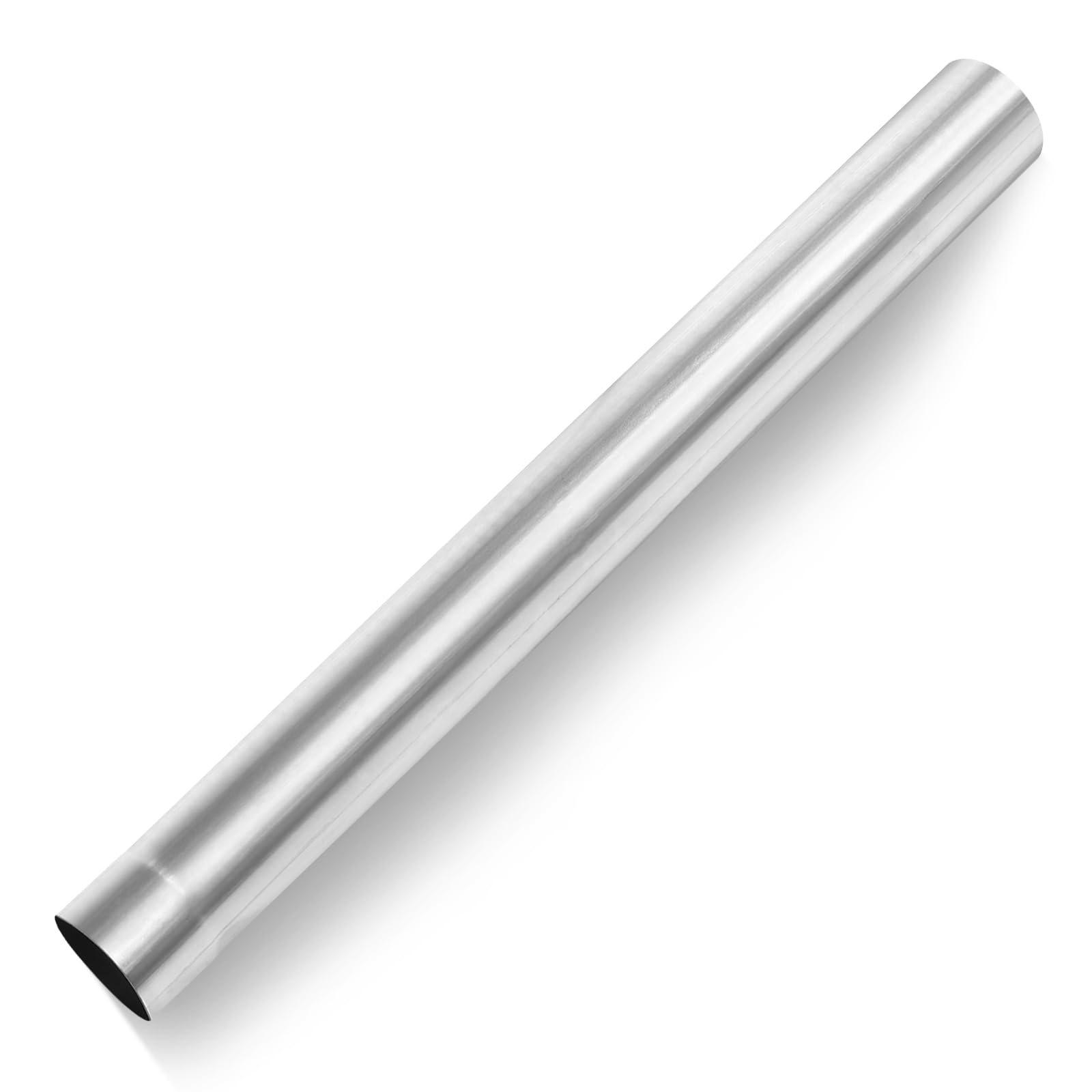
A 40-inch stainless pipe with one flared end means you can slide it over a mating pipe and clamp it without welding — less prep work than the JY PERFORMANCE if your repair is short.
At 40 inches, this is the shortest of the bunch, which makes it a natural pick for a short repair section between a muffler and a catalytic converter. One end comes flared for sliding fit joints — a design that helps you align the pipe before clamping. Customers note that the pipe is “quality piece of stainless tube” and that edges arrived perfectly round, making exhaust clamp attachment easy.
The catch is the flared section: a few buyers mention it is “insufficiently flared” and required a mallet to get it over the mating pipe. That is a minor frustration if you are expecting a slip-on fit, but it does not affect the final seal. Thickness is not specified in the manufacturer details provided here. One owner even repurposed this as a stove pipe for a homemade stainless hot tub stove, reporting it cut easily and welded perfectly.
If you compare it to the 48-inch products, the LCGP saves you some length and money when you only need a short straight section. Its 40-inch size limits how far you can span in one piece, but for targeted repairs it is a clean, ready-to-clamp option.
Long mandrel-bent tube
- Polished finish looks clean on visible exhaust sections
- Flared end helps with initial positioning before welding or clamping
- Buyers confirm easy welding and cutting for custom projects
Heavy gauge adds weight
- Flared section may need persuasion with a mallet to fit over some pipes
Long runs: you need a short, polished section for a bolt-on clamp install and are comfortable adjusting the fitment with light force.
Tight bends: you need a longer continuous run without a splice — the 40-inch length will force a joint.
3. BIGREAT OD 4” Inch 48 Inch Length Straight DIY Custom Mandrel Exhaust Pipe
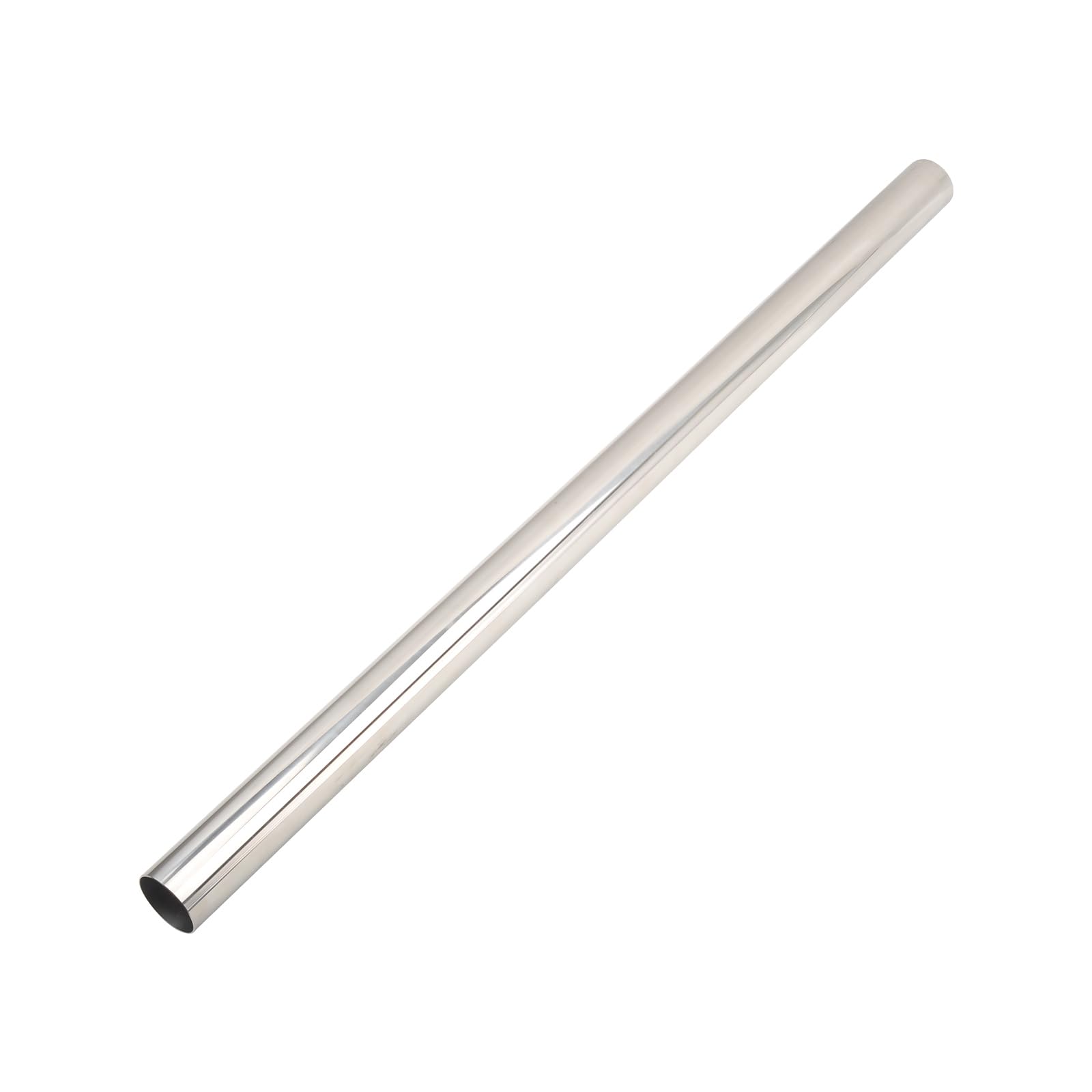
Buyers call this pipe “thick and strong enough, won’t collapse with a U bolt” — a key advantage over the 1.2mm PRUNkuar if you clamp hard and cannot risk denting.
That is a direct signal for anyone who has crushed a thin exhaust pipe by overtightening a clamp. The steel is T304 stainless with a polished finish, and the 48-inch length matches the standard four-foot section most exhaust projects are built around. The mandrel construction (computerized bending) keeps the internal diameter consistent, which matters for exhaust flow and backpressure.
There is a notable trade-off: reviewers point out the pipe is “beautiful material, hard to work.” The same thick walls that resist denting also make it extremely tough — mechanical expanders fail to stretch it without the pipe spinning. That means you are likely looking at a welded joint rather than a slip-fit connection. Another buyer confirmed it is “hard to cut with reciprocating saw.” If you have a plasma cutter or an angle grinder with a cut-off wheel, this is not an issue. If your toolkit stops at a basic hacksaw, expect some effort.
Compared to the JY PERFORMANCE, this pipe offers 48 inches versus 47.3 inches of length and a more polished surface. It is a premium feel for a DIY price, as long as you have the tools to shape it.
Extra-long heavy-duty
- Thick wall holds shape under aggressive U-bolt clamping
- Polished finish with no sharp edges or scratches from the start
- 48-inch length is the standard for most full-vehicle exhaust sections
Bulkier to handle
- Very hard to cut and expand — requires proper shop tools
Heavy-duty choice: if you need a pipe that will not buckle under extreme clamp torque and you have a plasma or angle grinder on hand.
Skip if compact: you want an easy slip-fit install with hand tools — the toughness makes expansion extremely difficult.
4. A-KARCK Straight Exhaust Pipe 4″ Inlet, 304 Stainless Steel 48″ Long Mandrel Exhaust Tube

Flared ends on both sides speed up dry-fitting before welding — unlike the BIGREAT pipe that has no flare at all, this one lets you test the joint position without full commitment.
This A-KARCK pipe comes with flared ends on both sides for easy sliding installation — a design choice that speeds up dry-fitting before you commit to welding. The 304 stainless steel is polished to a mirror finish, and the wall is thick enough for butt welding. At 48 inches, it matches the standard length of most aftermarket exhaust sections, which simplifies planning your cuts.
One buyer creatively repurposed this pipe as a mount for a Gen 2 Starlink antenna, reporting it required 2-inch conduit: “This works perfectly and looks nice and has not rusted in 3 years of use.” That is a strong real-world test for corrosion resistance. However, the same pipe’s thin packaging drew complaints — one reviewer noted it “came with some dome dents in the one end” due to inadequate padding. The pipe itself is solid, but the shipping box does not always protect the edges.
Compared to the BIGREAT pipe, the A-KARCK has the same 48-inch length but adds factory-flared ends that the BIGREAT lacks. That flare makes it easier to align and clamp without a full weld, assuming the flare mates well with your existing pipe. The 48-inch length also gives you 48 inches versus 40 inches for the LCGP.
Adapter-friendly fit
- Flared ends on both sides simplify sliding fit installations
- Polished 304 stainless resists rust and looks clean
- Versatile enough for non-exhaust projects like antenna mounts
Check box contents
- Shipped with minimal padding — check for dents on arrival
Adapter builds: if you need a flared pipe for a slip-fit joint or have a creative non-automotive use in mind.
Double-check box: inspect the ends for shipping damage before starting your install.
5. PRUNkuar 4 Inch Straight Pipe Stainless Steel T304 Tubing Piping 48 Inch Long – 2-Pack

Two 48-inch T304 pipes for a price similar to one single pipe — you get 96 total inches without paying for extra shipping on a second order.
This is the only product in the roundup that gives you two 48-inch straight pipes in one purchase. If you are planning a full exhaust replacement from headers to tailpipe, buying a 2-pack saves you from ordering separate sections. The T304 stainless construction is the same corrosion-fighting material as the single pipes above, and the polished finish looks bright from the start. Shoppers say the steel is “heavy duty and well manufactured with any flaws,” and one owner used interior couplings to join three pipes into a smooth long run for a gutter project.
The thickness is listed at 1.2mm, which is thinner than the 1.4mm (17 gauge) of the JY PERFORMANCE. That means it is easier to cut with a reciprocating saw but more susceptible to denting under a heavy U-bolt clamp. For most passenger vehicle exhausts where you use band clamps or weld-over butt joints, 1.2mm is perfectly adequate. The manufacturer offers a 180-day warranty, which is shorter than the 1-year coverage from JY PERFORMANCE and A-KARCK. Multiple buyers confirm it is a “great value for the money.”
If you stack this against the single-pipe options, the PRUNkuar 2-pack delivers better per-foot value. You get 96 total inches of T304 pipe, compared to 47.3 inches from the JY PERFORMANCE, for a similar price point. For a full truck exhaust project, that kind of coverage matters.
Full-system stainless
- Two pipes in one package — enough for a full system or long DIY run
- 1.2mm wall is easier to cut than thicker 17-gauge alternatives
- Buyers confirm high quality and excellent surface finish
Clamping not recommended
- Thinner wall means a U-bolt clamp can dent the pipe if over-tightened
Full-system builds: if you need multiple pipes for a complete exhaust replacement and want to keep the total cost down.
Not for clamping: avoid this if you plan to use U-bolt clamps at maximum torque — the thinner wall may deform.
Understanding the Specs
Gauge / Thickness (17 Gauge vs 1.2mm)
The gauge number tells you how thick the steel wall is — a lower gauge number means a thicker wall. 17 gauge (1.4mm) is the beefiest you will find in consumer exhaust tubing and resists denting from clamps and road debris. 1.2mm (roughly 18 gauge) is slightly lighter and easier to cut but can collapse under a heavy-handed U-bolt clamp. For daily-driven vehicles that see potholes and speed bumps, aim for 17 gauge if your tools can handle it.
Mandrel Construction
Mandrel-bent means the pipe is formed with an internal support that keeps the inside diameter constant through the bend. For straight pipes, “mandrel” mostly guarantees the tube is round and consistent from end to end, which helps joints seal properly. A straight pipe that is not uniformly round will leave gaps at the clamp, causing exhaust leaks. All five products here are mandrel-formed, so you get consistent 4-inch OD throughout.
FAQ
Can I weld T304 stainless exhaust pipe with a standard MIG welder?
Will 4-inch exhaust tubing fit my truck’s existing exhaust system?
What is the difference between a flared end and a straight end?
How do I cut 17-gauge stainless exhaust pipe without a plasma cutter?
Will 4-inch exhaust tubing fit over a 3-inch exhaust system with a reducer?
How long does T304 stainless exhaust tubing last?
Can I use exhaust tubing for a non-automotive project like a stovepipe or gutter?
What is the shipping packaging like for these pipes?
Is 40 inches long enough for a full muffler-to-tail section on a standard pickup truck?
Can I use exhaust clamps instead of welding on these pipes?
Final Thoughts: The Verdict
For the majority of shoppers, the 4in exhaust tubing winner is the JY PERFORMANCE 47.3″ because its 17-gauge (1.4mm) wall gives you the best balance of dent resistance and weldability while staying affordable. If you want a short polished section with a flared end for quick clamping, grab the LCGP 40″. And for a full-system build where you need enough pipe for the whole project, the standout is the value of the PRUNkuar 2-pack.
How We Picked
We do not accept paid placement, and we did not hands-on test every unit. Instead, we match each pick to a real buyer and use-case by comparing the manufacturers’ published specifications against the patterns in verified customer reviews — so you get each pick’s real strengths and trade-offs instead of marketing copy.
Sources & Methodology
Specifications: manufacturer listings and product documentation. Review insights: verified customer reviews, as of July 2026. Pricing: not shown on this page (it changes often); check the current price via the retailer link.
As an Amazon Associate, Gadgets Feed earns from qualifying purchases. This does not affect which products we feature.
Product prices and availability are accurate as of the date/time indicated and are subject to change. Any price and availability information displayed on Amazon at the time of purchase will apply to the purchase of this product. As an Amazon Associate I earn from qualifying purchases.
CERTAIN CONTENT THAT APPEARS ON THIS SITE COMES FROM AMAZON. THIS CONTENT IS PROVIDED "AS IS" AND IS SUBJECT TO CHANGE OR REMOVAL AT ANY TIME.
Amazon and the Amazon logo are trademarks of Amazon.com, Inc. or its affiliates.