
Our readers keep the lights on and my morning glass full of iced black tea. As an Amazon Associate, I earn from qualifying purchases.
Specs are compiled from manufacturer listings and verified buyer reviews and can change over time — please confirm the key details on the product page before buying.
Before you buy a 4K 120Hz projector, ask yourself one honest question: are you buying it for cinematic movie nights, or for competitive gaming where every millisecond counts? The best units here aren’t just about resolution — they pair true 4K clarity with refresh rates of 120Hz or higher, so fast-moving action stays crisp without the motion blur that plagues standard projectors. This guide cuts through the spec-sheet noise to focus on what actually matters for your room, your lighting, and your games.
I’m Min — the founder and writer behind Gadgets Feed. This guide is built by comparing the manufacturers’ published specifications and the patterns across verified customer reviews, so you get each pick’s real strengths and trade-offs instead of marketing spin.
If you’re hunting for a display that handles both blockbuster films and fast-paced esports, the true 4k 120hz projector balance of brightness, contrast, and lag is exactly where the decision gets made.
Our Picks at a Glance

How To Choose The Best 4K 120Hz Projector
Before you spend on a big-screen projector, understand that “4K” and “120Hz” are only half the story. The real-world experience hinges on three pillars: brightness, refresh rate, and input lag. Getting these right means you won’t squint in daylight or feel a delay when you pull the trigger in a shooter.
Brightness (Lumens) and Contrast
Lumens measure raw light output; the higher the number, the more visible the picture is with ambient light. Contrast ratio measures the difference between the darkest black and brightest white — a higher ratio means deeper blacks and more detail in shadows. For a living room with windows, you want both high lumens and a strong contrast ratio to avoid a washed-out image during the day.
Refresh Rate and Input Lag
The refresh rate (measured in Hertz) tells you how many times per second the image redraws. A 120Hz or 240Hz panel makes fast motion look fluid, which is key for sports and action games. Input lag, measured in milliseconds, is the delay between pressing a button and seeing the action on screen. For competitive gaming, sub-5ms lag is ideal; anything under 16ms is generally considered responsive enough for most players.
When you see a spec like “1080p@240Hz,” it means the projector can run at a high refresh rate at a lower resolution — a feature that competitive gamers often prefer over full 4K at lower frame rates. Check which resolution your games run at to gauge which mode you’ll actually use.
Quick Comparison
| Model | Best For | Brightness | Refresh Rate | Contrast Ratio | Amazon |
|---|---|---|---|---|---|
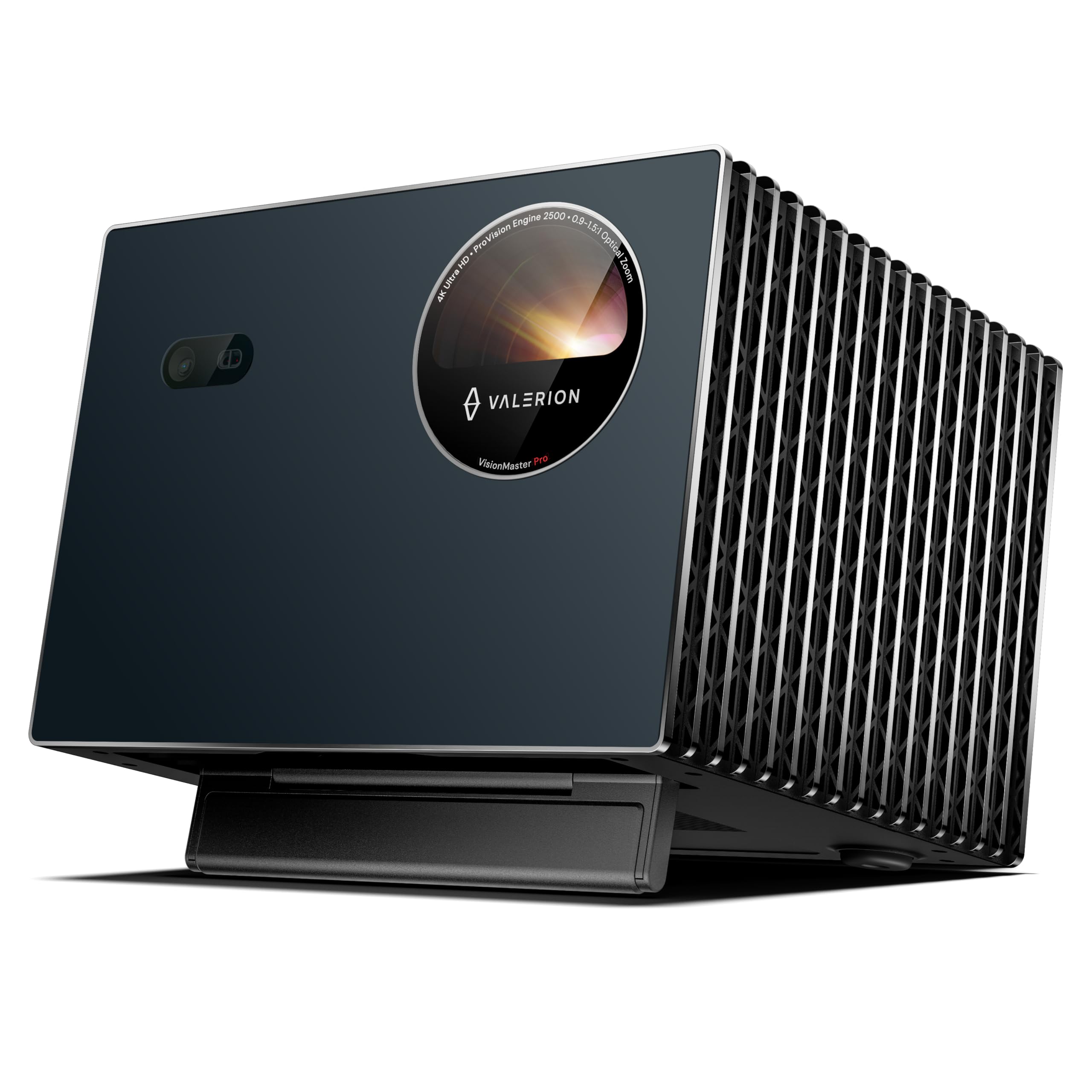
| Valerion VisionMaster Pro★ Best Overall | Gaming & Movie Enthusiasts | 2500 lm | 240Hz | 15000:1 | Amazon |
| XGIMI HORIZON 20Brightest Image | Living Room Replacement TV | 3200 lm | 240Hz | 100000:1 | Amazon |
| BenQ TK710Theater Purist | Dedicated Home Theater | 3200 lm | 240Hz | 600,000:1 | Amazon |
| BenQ X3100i | Serious Console Gamers | 3300 lm | 240Hz | 500,000:1 | Amazon |
| Hisense C2 Ultra | Versatile Portable Viewing | 3000 lm | 240Hz | 2000:1 | Amazon |
| JMGO N3 Ultimate | Flexible Placement | 5800 lm | 240Hz | 20000:1 | Amazon |
| Hisense PX3-PRO | Small Apartments & TV Replacement | 3000 lm | 240Hz | 3000:1 | Amazon |
| NexiGo Aurora Pro MKII | Cinema-Grade UST Viewing | 2400 lm | 120Hz | 30000:1 | Amazon |
| Epson LS11000 | Professional Home Theater | 2500 lm | 120Hz | 1,200,000:1 | Amazon |
| AWOL VISION Aetherion Max | Daytime Living Room Loser TV | 3300 lm | 240Hz | 6000:1 | Amazon |
In-Depth Reviews
1. Valerion VisionMaster Pro 4K Laser Projector
Our pick — over 4.5★ from 600+ verified ratings; the strongest balance of quality and price.
The competitive gamer’s dream, pairing a 240Hz refresh rate with a 4ms response time for blur-free precision.
If frame rates are your obsession, this is the unit that ends the search. It pushes a 240Hz refresh rate at 4ms input lag, which means your movements translate to the screen almost instantly — no perceptible delay between your controller input and the action. Beyond the speed, it delivers a 15,000:1 contrast ratio with Enhanced Black Level (EBL) technology, so dark scenes in games and movies don’t turn into gray mush.
Buyers report that the picture quality is outstanding, with one noting it was a huge upgrade from an Epson 5040UBe, offering “stunning 4K HDR, deep blacks, rich colors.” The 2500 ISO Lumens brightness means it handles moderate ambient light well, and the OpticFlex Lens System with a 0.9-1.5 throw ratio gives you flexibility in placement without losing clarity. It’s proof of its performance that owners say it’s “very hard to justify spending more.”
The smart OS is powered by an MT9618 chipset with 4GB RAM and 128GB ROM, so app switching and 4K streaming stay fluid. While the fan is quieter than older projectors, some note it’s not silent. The throw ratio at 19.5 feet can be too short for some rooms, meaning you might need to rely on digital zoom, which can slightly reduce sharpness at the edges.
Elite Gaming Performance
- 240Hz refresh rate for buttery-smooth motion.
- 4ms input lag for responsive competitive play.
- ISF-certified calibration for color accuracy.
Setup Considerations
- Short throw ratio may limit placement in larger rooms.
- Fan noise fluctuates, though generally quiet.
Perfect for: gamers who want tournament-level response times without sacrificing 4K HDR movie quality.
Think twice if: your room is very large and you can’t mount it close to the screen, as the digital zoom is a compromise.
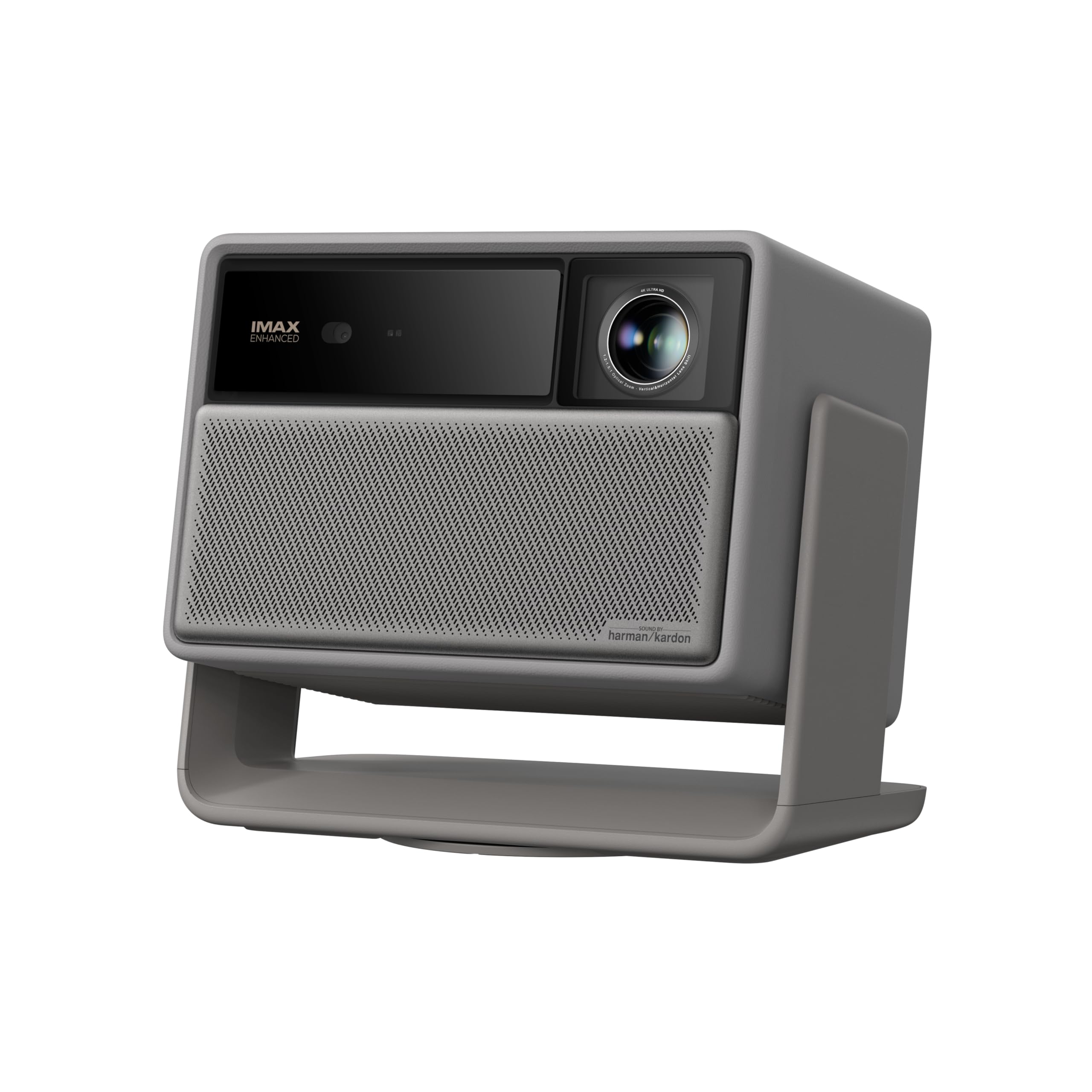
2. XGIMI HORIZON 20 4K RGB Triple Laser
A living-room TV replacement that stays bright with the lights on, delivering a massive, crisp image.
For those who want to ditch the TV entirely, the XGIMI HORIZON 20 shines brightest — literally. With 3200 ISO Lumens and a 100,000:1 contrast ratio, buyers describe it as an “extremely bright, TV-replacing picture” that works even with overhead lights on. This is a 6.7x contrast advantage over the Valerion, making it a powerhouse for daytime viewing.
It’s not just about raw brightness. The RGB triple laser engine delivers vivid, accurate colors, and the built-in Harman Kardon speakers are the best you’ll find on this list. Google TV with licensed Netflix is built right in, so there’s no need for a streaming stick. The flexible lens shift and optical zoom give you freedom in setup without sacrificing clarity, and the 240Hz refresh rate with 1ms input lag is on par with the best for gaming.
While the image is impressive, some owners note the picture can look slightly washed out when lights are on at full blast. The unit weighs about 4.9 kg, making it larger and heavier than expected for a “portable” projector, so it’s more of a stationary home theater piece than a travel companion.
Brightness & Sound
- 3200 ISO Lumens is bright enough for daylight viewing.
- Harman Kardon speakers deliver room-filling sound.
- Built-in Google TV with Netflix support.
The Trade-Off
- Slightly washed-out blacks in bright ambient light.
- Heavier frame at 4.9 kg limits portability.
Reach for this if: you watch a lot of TV and sports in a bright room and want a projector that replaces a traditional screen.
Look elsewhere if: you’re a dark-room purist who needs absolute black levels for a dedicated theater.
3. BenQ TK710 4K HDR Laser Projector
A dedicated theater machine where a sky-high 600,000:1 contrast ratio brings out shadow detail you’ve never seen.
The BenQ TK710 is built for the movie lover who prioritizes contrast above all else. Its 600,000:1 contrast ratio is a massive leap over many rivals, delivering inky blacks and brilliant highlights that make films feel three-dimensional. With 3200 ANSI Lumens, it also holds up well in a living room, but its true home is a light-controlled theater space.
This projector was an instant hit with an owner who’d been using the same BenQ for 12 years — they noted the TK710 had “immediate brightness, vivid colors and high resolution” compared to their previous model. It supports a 4ms input lag at 1080p@240Hz, making it dual-purpose for gamers who prefer speed over max resolution when playing competitively.
However, it’s not a smart projector — there’s no built-in Android TV or streaming apps, so you’ll need an external device like a Fire Stick. The built-in speaker is also weak, and there’s no Bluetooth, so you’ll want a soundbar or receiver. The throw distance is shorter than some, meaning you might need a bit more room to reach a 96-inch screen from far away.
Contrast King: If your priority is cinematic black levels and you have a separate audio setup, the TK710 is the enthusiast’s choice.
Keep in Mind: Plan for external audio and a streaming device, as this relies entirely on your other gear.
4. BenQ X3100i True 4K 4LED Gaming Projector

A console gamer’s powerhouse with dedicated FPS, RPG, and SPG modes tuned for 4K action at up to 240Hz.
This BenQ is a specialist, designed to put you inside the game. With a 4.2ms response time at 1080p@240Hz, it’s lightning fast, but it also has specific gaming modes (FPS, RPG, SPG) that adjust the color and contrast to suit different genres. The 3300 ANSI Lumens brightness means it can perform in a lit room, and the 4LED light source is rated for long life without lamp replacements.
The picture quality gets consistent praise for being sharp and vivid, especially in gaming. One owner found it “quiet, small, easy setup” with “excellent brightness with deep blacks” and no ghosting on fast content from a PS5 or Switch. Android TV is built-in, so you can access Netflix and Prime Video directly, and the TreVolo speakers with Dolby Atmos support provide solid spatial audio.
The catch is the smart TV experience. Several owners mention the Android TV stick can be glitchy or slow, and the BenQ app integration with Google Home can be unreliable. The 40%-60% vertical lens shift is great for placement, but the keystone correction triggers a latency warning if you use it, so a perpendicular screen is the better route.
Gamer-First Features
- Dedicated FPS/RPG/SPG modes for genre-specific tuning.
- 240Hz refresh rate with 4.2ms response time.
- 100% DCI-P3 color gamut for rich, accurate gaming visuals.
Smart System Snags
- Built-in Android TV can be glitchy and slow.
- Keystone correction triggers a latency warning.
Grab this for: dedicated console gamers who want genre-specific tuning and high refresh rates on a big screen.
skip it if: you rely heavily on smart TV apps and want a frictionless streaming experience.
5. Hisense C2 Ultra Triple Laser Portable Projector

A portable projector with a built-in 360° gimbal, letting you project onto the ceiling or wall without moving the base.
Few projectors offer the placement freedom of the Hisense C2 Ultra. Its all-metal body has a 360° horizontal rotation, 90° upward tilt, and 45° downward tilt, giving you 135° of vertical adjustability. This means you can easily switch from a wall to a ceiling projection without repositioning the base — perfect for lying in bed or hosting an outdoor movie night.
Beyond the gimbal, it’s a serious performer. The 3000 ANSI Lumens and triple laser light source deliver rich colors and a sharp 4K image, with buyers noting it displays “strong in lit rooms.” The 1.67x optical zoom lets you scale the image 65″ to 300″ without losing resolution or brightness, and it’s designed for Xbox with automatic low-latency mode detection.
The trade-off is contrast. At a 2000:1 native ratio, it’s the lowest on this list, so blacks won’t be as deep as the BenQ or Epson in a dark room. Also, the 240Hz gaming mode runs at 1080p, while 4K tops out at 120Hz — a standard compromise, but worth knowing if you demand 4K at the highest frame rate.
Placement Freedom: The motorized gimbal is a genuine differentiator that makes this the most versatile unit here.
The Catch: Its native 2000:1 contrast ratio means it’s better suited for lifestyle viewing than a dedicated dark theater room.
6. JMGO N3 Ultimate 4K Triple Laser Projector
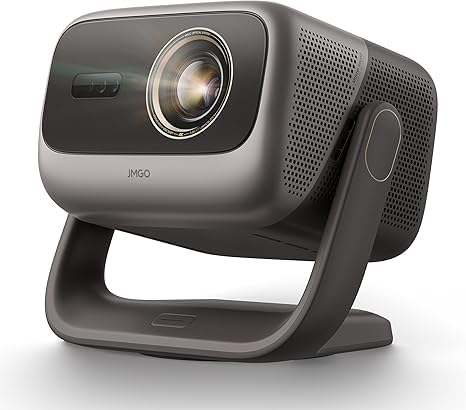
The brightest projector on this list — 5800 ISO Lumens that make daytime viewing feel like a non-issue.
If your room gets a lot of sunlight, the JMGO N3 Ultimate is the brute-force answer. Its 5800 ISO Lumens output is nearly double most competitors, making it “flawless for daytime viewing” according to the spec sheet. The MALC 5.0 Triple Laser engine, combined with a 20,000:1 AI Dynamic Black Level, gives you both the brightness and the contrast needed for a punchy image even in harsh conditions.
The N3 Ultimate also has the most advanced placement system on this list. It features a 3-in-1 setup with a Four-way Lens Shift (H ±53%, V ±130%), an optical zoom of 0.88-1.7:1, and a motorized AI Gimbal with 360° pan and 150° tilt. This means you can place it anywhere and adjust the image physically, without losing any resolution to digital cropping.
While the hardware is stellar, some find the Google TV OS can be slow, and certain apps like VUDU or Peacock may only run in SD without Dolby Vision. The eARC connectivity also has quirks — one buyer found no sound with a Blu-ray player via eARC and had to use ARC instead. It’s also not travel-friendly due to its size, so think of it as a powerful stationary unit.
class-leading Brightness
- 5800 ISO Lumens for bright-room performance.
- Physical lens shift and motorized gimbal for perfect placement.
- 20000:1 dynamic contrast ratio for deep blacks.
Software Quirks
- Some Google TV apps have SD-only limitations.
- eARC compatibility issues with certain Blu-ray setups.
Choose this for: sun-drenched living rooms where only maximum brightness will do, and buyers who value physical lens controls.
Be aware: if you rely on specific audio passthrough or obscure apps, you may need a separate streaming box to work around the OS.
7. Hisense PX3-PRO Ultra Short Throw Laser

A TV-killer for small rooms, projecting up to 150 inches from just inches away on a media console.
An ultra-short throw (UST) projector is the solution for apartments where a ceiling mount isn’t an option. The Hisense PX3-PRO sits just inches from the wall on a TV stand and can fill a screen from 80 to 150 inches without long cables or overhead rigging. It’s a straight TV replacement for compact spaces.
The image quality is a highlight, with a 3000:1 native contrast ratio and 110% BT.2020 color gamut. Owners rave about the colors, with one saying “the colors looks like are coming out of the screen.” It supports Dolby Vision and IMAX Enhanced, and the Harman Kardon speakers are built-in, so no soundbar is strictly required. It’s also designed for Xbox, adding automatic low-latency modes for gaming.
The main complaint circles back to the auto keystone. While the auto-focus is good, the auto keystone correction is not — one buyer found it required a clunky phone photo upload to fix. A minority have also noted a slight rainbow effect, though many others say it’s completely absent. The menu system is also a bit fragmented between the Google TV interface and the projector’s settings.
Perfect for: small living rooms, apartments, and anyone wanting a massive screen without the hassle of ceiling mounts.
Setup Note: Plan to use manual keystone adjustment or a flat, perpendicular wall for the best image geometry.
8. NexiGo Aurora Pro MKII Tri-Color Laser UST

A cinematic ultra-short throw with a Scene Adapt Engine that deepens blacks in real-time based on what’s on screen.
The NexiGo Aurora Pro MKII is about dynamic performance. Its Scene Adapt Engine (SAE) adjusts the laser output in real-time based on the content, producing a contrast ratio exceeding 30,000:1. This means a dark scene gets dimmer laser output for deeper blacks, while a bright explosion gets a boost — resulting in a more vivid and engaging picture than a static contrast ratio.
The ALPD 5.0 laser engine delivers 2400 lumens of brightness and a 107% BT.2020 color gamut, and it’s built to last, with a light source lifespan rated at 30,000 hours — that’s about 18 years for the average viewer. For gamers, the 0.21:1 throw ratio lets you fill a 150-inch screen from a short distance, and the 4.2ms to 8ms low latency in Gaming Mode makes it responsive enough for fast-paced 4K gaming at 120Hz.
While the audio is solid with 60W speakers and Dolby Atmos support, the autofocus can sometimes be imprecise, requiring manual fine-tuning for the perfect corner sharpness. The laser dimming of the SAE is clever, but it also lowers energy consumption by about 70% per the manufacturer, which is nice for power bills.
Dynamic Contrast
- 30,000:1 dynamic contrast for lifelike HDR.
- 30,000-hour laser lifespan for long-term value.
- 120Hz gaming with 4.2ms to 8ms latency.
Minor Adjustments
- Autofocus may need manual correction for edge sharpness.
- Brightness is lower (2400 lm) than some rivals.
Who it suits: home theater fans who watch a variety of content and want a UST that adapts to every scene’s brightness needs.
Who it doesn’t: anyone expecting a super-bright daytime performer, as its 2400 lumens are best in controlled light.
9. Epson Home Cinema LS11000 4K PRO-UHD Laser

A professional-grade 3LCD projector with a jaw-dropping 1,200,000:1 dynamic contrast ratio for pixel-perfect blacks.
For the home theater purist, the Epson LS11000 is a statement piece. Its 3-chip 3LCD engine means it doesn’t suffer from the “rainbow effect” (color fringing) that can bother some DLP projector viewers. This is the unit you buy when you want a look that rivals a commercial movie theater, with a Dynamic Contrast Ratio exceeding 1,200,000:1 — the highest on this list.
It natively displays 100% of the RGB color signal for every frame, which translates to outstanding color gamut and “insane blacks” per one enthusiast who compared it against the Epson 5050UB. The motorized lens, focus, and zoom make setup a breeze, and the 2,500 lumens of color and white brightness hold up well in a light-controlled theater room. It supports a 120Hz refresh rate over HDMI 2.1 for smoother motion in supported games.
The primary con is the price, which is at the premium end of this spectrum. It’s also a large, stationary unit, not meant for portability. Setup is generally easy, though a few customers note it can be a bit involved to get perfect. One critical review even called out the black levels as disappointing compared to an Epson 8700UB they owned before, but that’s a minority opinion against a strong consensus of praise.
The Verdict: If you have a dedicated, light-controlled theater room and want the most accurate, artifact-free image possible, this is the benchmark.
The Cost: This level of precision comes with a massive price tag and a physical footprint that demands a permanent setup.
10. AWOL VISION Aetherion Max 4K UST Projector
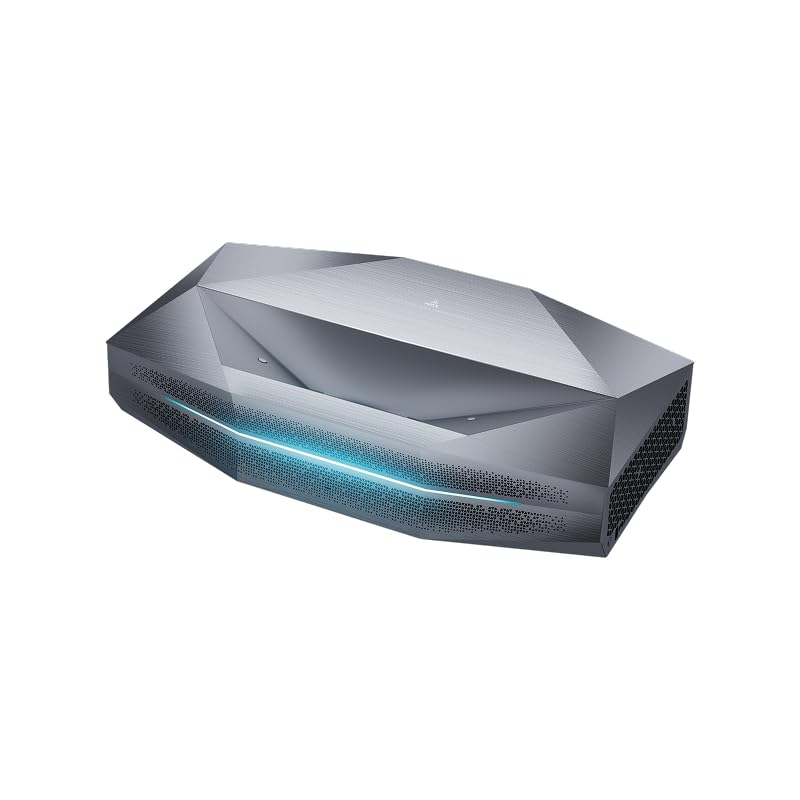
A laser TV that scoffs at daytime viewing, with 3300 ISO Lumens that need no blackout curtains.
For outdoor use, the answer is the AWOL VISION Aetherion Max. With 3300 ISO Lumens of RGB triple-laser brightness, it’s “bright room ready” and performs “perfect during the day with depth and detail” according to buyer reports. This is the projector for an open-plan living space where you can’t control the light, and it throws a massive 200-inch image from just inches away thanks to its 0.2:1 ultra-short throw ratio.
The Aetherion Max is packed with tech to reduce eye fatigue and improve the experience. Its Anti-RBE technology claims to reduce 99.99% of rainbow-effect distractions, a boon for sensitive viewers. The 6000:1 native contrast is boosted by a 7-level IRIS system to achieve a 60,000:1 viewing contrast, and it handles Dolby Vision gaming with a 1ms-class input latency at 240Hz for competitive play.
While the picture is stellar, the built-in speakers are the weak link — one reviewer noted they “sound dreadful” until the EQ is adjusted. The fan can also get loud during extended 4K sessions. The menu system feels primitive, and some owners found that “60Hz max refresh causes blur in fast motion,” a conflicting review point that suggests the 240Hz spec might not apply to all input types.
Bright & Anti-Fatigue
- 3300 ISO Lumens for daylight performance.
- TÜV-certified Harmful Light Reduction for comfort.
- 240Hz with 1ms-class latency for gaming.
Speaker & UI Woes
- Internal speakers require heavy EQ adjustment to sound good.
- Menu system is primitive and lacks explanations.
Best for: living rooms with big windows and families who watch TV during the day and want the projector to act like a conventional TV.
Not for: audio purists or those who want a polished smart TV experience from the start.
Understanding the Specs
Refresh Rate (Hz)
The refresh rate is the number of times the projected image redraws itself each second. A standard TV runs at 60Hz, but our picks run at 120Hz or 240Hz. This higher rate is what makes fast scenes in sports or racing games appear smooth without judder or motion blur. A 240Hz panel is only fully utilized when your source (like a gaming PC) can output that many frames per second.
Input Lag (ms)
Input lag is the delay between you pressing a button and the action appearing on screen. It’s measured in milliseconds. For casual movie watching, any lag is fine. But for competitive gaming, a high lag number feels like your character is moving in slow motion. A 4ms response time feels instant; a 16ms number is still good but noticeably slower for twitchy shooters.
Contrast Ratio
The contrast ratio is the difference in luminance between the brightest white and the darkest black a projector can display. A higher ratio (like 100,000:1 or 1,200,000:1) means the projector can produce much deeper blacks, which makes colors pop and shadow details visible. A lower ratio (around 2,000:1) might still look fine in a bright room, but in a dark room, blacks will look more like gray.
Throw Ratio & Lens Shift
The throw ratio describes the distance needed to project a certain image width. A short throw ratio (like 0.9-1.5) means it can produce a large image from close up. Lens shift lets you physically move the projected image up, down, left, or right without moving the projector itself. Optical zoom maintains image quality while scaling, whereas digital zoom simply crops the image, potentially lowering sharpness.
FAQ
Is a 4K projector with 120Hz good for gaming?
What does 240Hz mean on a projector?
Is native 4K better than pixel shifting?
How many lumens do I need for a bright room?
Can a 4K projector replace a TV?
What is a good input lag number?
Is HDR10+ or Dolby Vision better?
What is an ultra-short throw (UST) projector?
How long do laser projectors last?
Why is my projector showing a rainbow effect?
Final Thoughts: The Verdict
For most users hunting for the 4k 120hz projector that nails both movies and gaming, the Valerion VisionMaster Pro is the smartest pick because it pairs a 240Hz refresh with a 4ms response time and ISF-certified color — a rare blend of speed and accuracy. If you need a bright room performer that replaces your TV during the day, the XGIMI HORIZON 20‘s 3200 ISO Lumens and 100,000:1 contrast are class-leading. For a dedicated, light-controlled home theater with cinema-grade blacks, the Epson LS11000‘s 3-chip 3LCD engine and sky-high contrast ratio is the reference standard.
How We Picked
We do not accept paid placement. Every pick is matched to a real buyer and a real use-case; we do not hands-on test units.
Sources & Methodology
Specifications: manufacturer listings and product documentation. Review insights: verified customer reviews, as of August 2026. Pricing: not shown on this page (it changes often); check the current price via the retailer link.
As an Amazon Associate, Gadgets Feed earns from qualifying purchases. This does not affect which products we feature.