
Our readers keep the lights on and my morning glass full of iced black tea. As an Amazon Associate, I earn from qualifying purchases.
Specs are compiled from manufacturer listings and verified buyer reviews and can change over time — please confirm the key details on the product page before buying.
A 144Hz TV is about one thing: making fast-moving images look smooth instead of smeary. Whether you are chasing headshots in a competitive shooter, watching a speeding Formula 1 car, or following a hockey puck, that higher refresh rate (how many times the screen updates per second) means each frame stays sharp and clear — no ghosting, no judder. But not every TV that advertises 144Hz delivers the same picture quality, color accuracy, or smart platform experience, so picking the right one means looking past just the refresh rate number.
I’m Min — the founder and writer behind Gadgets Feed. This guide is built by comparing the manufacturers’ published specifications and the patterns across verified customer reviews, so you get each pick’s real strengths and trade-offs instead of marketing spin.
Below you will find six very different televisions, each of which qualifies as a true 4k 144hz tv, yet each takes a distinct approach to brightness, contrast, gaming features, and overall value. Some use Mini-LED backlighting for deep blacks, others rely on a QLED panel for vibrant color, and one even uses OLED technology for per-pixel perfection — so you can match the right set to your room and your budget.
Quick Picks
- Panasonic Z8 Series (2025) 77-inch OLED — Cinema King
- Samsung 55-Inch Class Neo QLED QN70F (2025 Model) — AI Power
- Amazon Ember 55″ Mini-LED Series with Fire TV — Contrast Master
- Hisense 55″ U6 Pro Series Mini‑LED ULED — Glare Killer
- Toshiba 55″ Z670R Series Mini-LED — Processed Perfect
- TCL Amazon Exclusive 65″ T7 Series — Big Screen Value
How To Choose The Best 4K 144Hz TV
Buying a 4K 144Hz TV means balancing three things: the panel technology (how the picture is lit and colored), the refresh rate delivery (is it native or interpolated?), and the gaming extras (VRR, FreeSync, ALLM) that actually make a difference in your favorite games. Here is what to look for.
Native 144Hz vs. Motion Interpolation
Always check for the words “native 144Hz” rather than “effective” or “motion rate” numbers. Native means the physical panel can accept a 144Hz signal from a PC or console (via HDMI 2.1) and display every frame at that speed. Interpolation — often called “Motion Rate 480” — artificially creates extra frames between real ones, which can introduce lag or a soap-opera effect that serious gamers and movie fans tend to hate. For true 144Hz smoothness, you need a native 144Hz panel.
Panel Type: QLED, Mini-LED, or OLED
A QLED television uses a standard backlight with a quantum-dot layer for vibrant colors; these sets are usually brighter but have weaker black levels in dark scenes. A Mini-LED television shrinks the backlight into hundreds of tiny zones so they can dim parts of the screen independently, giving you much deeper blacks and better contrast than standard QLED. An OLED television has no backlight at all — each pixel lights itself — so blacks are absolute and contrast is infinite, but they are less bright in sunlit rooms and cost more per inch. Choose Mini-LED for the best balance of brightness and black level in most living rooms.
Gaming Features Beyond 144Hz
A 144Hz panel is only half the gaming story. Look for Variable Refresh Rate (VRR) or AMD FreeSync Premium, which syncs the TV’s refresh rate to the console’s frame rate so you never see screen tearing. Auto Low Latency Mode (ALLM) automatically switches the TV into its lowest-lag mode the moment you launch a game. HDMI 2.1 ports are also essential — without them you cannot push a 4K 144Hz signal from a modern console or high-end PC graphics card.
Quick Comparison
On smaller screens, swipe sideways to see the full table.
| Model | Best For | Panel Type | Refresh Rate | Gaming Features | Amazon |
|---|---|---|---|---|---|
| Panasonic Z8 Series (2025) 77-inch OLED | Cinema-quality contrast in a dim room | Master OLED PRO | 144Hz Native | HDMI 2.1, VRR, FreeSync Premium, G-SYNC | $1,399.99Amazon |
| Samsung 55″ Neo QLED QN70F (2025) | AI upscaling and bright-room clarity | Neo QLED (Mini-LED) | 4K 144Hz Motion Xcelerator | VRR, Game Mode, NQ4 AI Gen2 | $647.99$897.99Amazon |
| Amazon Ember 55″ Mini-LED Series | Deep contrast with dense dimming zones | Mini-LED QLED | 144Hz Native | FreeSync Premium Pro, 512 zones | $529.99$819.99Amazon |
| Hisense 55″ U6 Pro Series Mini-LED | A glare-free screen in a bright room | Hi-QLED Mini-LED | Native 144Hz | ALLM, FreeSync, Anti-Reflection | $529.99$849.99Amazon |
| Toshiba 55″ Z670R Series Mini-LED | Japanese-tuned picture processing | Mini-LED QLED | Native 144Hz | FreeSync Premium, VRR 144Hz, ALLM | $548.99$898.99Amazon |
| TCL Amazon Exclusive 65″ T7 Series | Big-screen value with QLED color | QLED | 144Hz Panel | MEMC Frame Insertion, Game Mode | $529.99Amazon |
In‑Depth Reviews
1. Panasonic Z8 Series (2025) 77-inch OLED
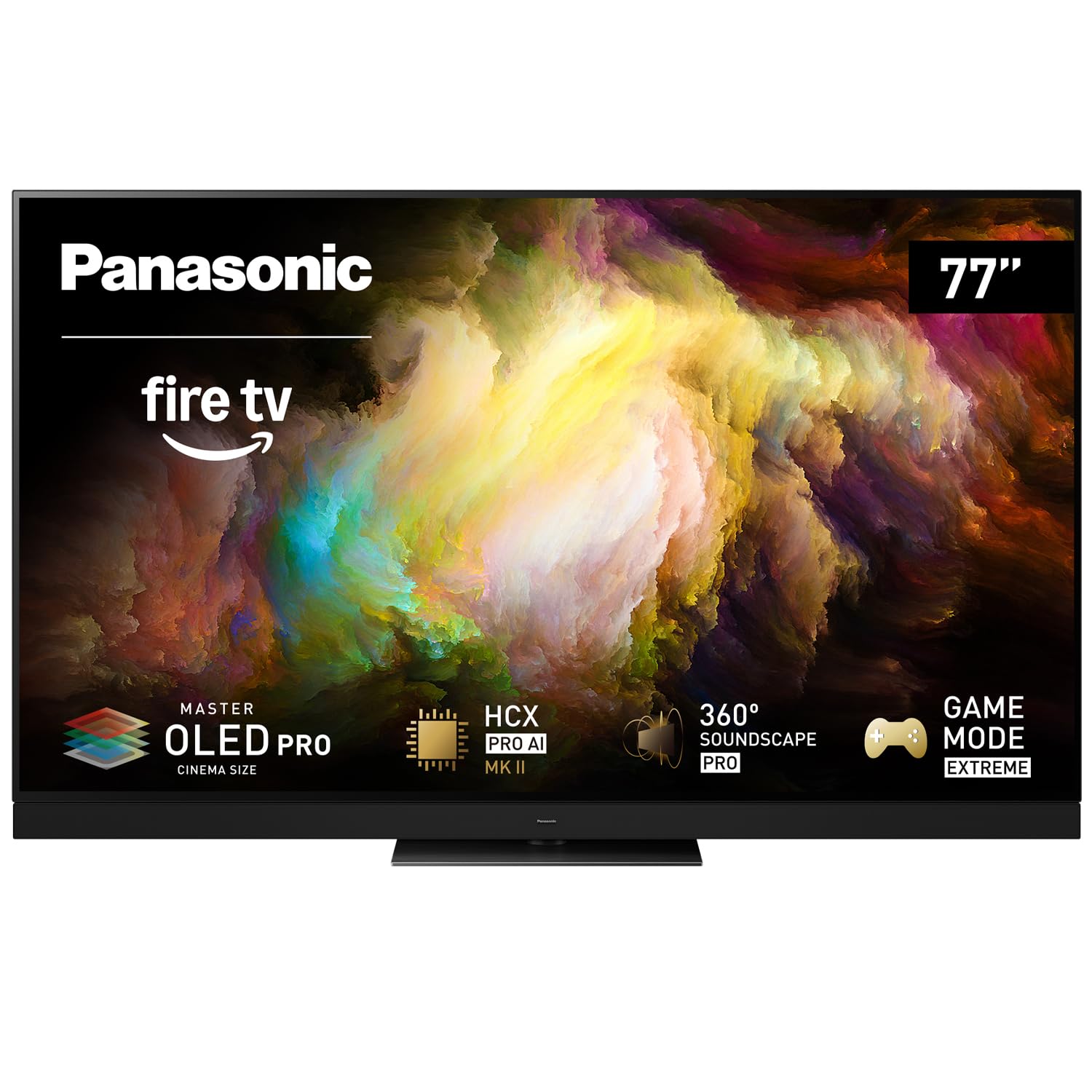
The OLED giant that makes every frame look painterly — if you can handle the weight.
This is the only OLED in the list. It delivers true per-pixel black levels because each pixel turns itself off, so in a dark room a starfield in space looks infinite. The Master OLED PRO panel uses a micro-lens-array technology (tiny lenses on the surface that direct more light forward) to boost brightness beyond older OLEDs, though buyers report it still needs curtains in bright rooms. It supports Dolby Vision IQ, HDR10+ Adaptive, HDR10, and HLG — every major HDR format you could want — so no matter what you stream or watch on disc, the TV adjusts the picture automatically to your room’s light.
For gamers, the Game Mode Extreme includes four HDMI 2.1 ports, a native 144Hz refresh rate, Variable Refresh Rate (VRR), AMD FreeSync Premium, and NVIDIA G-SYNC — so it works equally well with a PlayStation 5, Xbox Series X, or a high-end PC. The 360 Soundscape Pro audio system tuned by Technics uses front-array, upward and side-firing speakers to create a convincing Dolby Atmos bubble, making explosions and rain feel omnidirectional. One reviewer noted that the 77-inch set is roughly 80 to 100 pounds, so the central stand requires a sturdy table. Compared to the Samsung Neo QLED below, the Panasonic offers better contrast and color accuracy in a dim room but significantly less peak brightness for a sunny living room.
Who it’s for: you want the deepest possible blacks and movie-theater contrast, and you watch mostly in a controlled-light room. Who should skip it: your living room gets direct sun all afternoon — the brightness will not match a Mini-LED or QLED set.
What Stands Out
- Infinite black levels and per-pixel contrast from the Master OLED PRO panel
- Game Mode Extreme supports HDMI 2.1, 144Hz, VRR, FreeSync Premium, and G-SYNC
- 360 Soundscape Pro tuned by Technics creates a convincing Dolby Atmos bubble
Consider This
- Not very bright in sunlit rooms; owners mention curtains are needed
- Weighs roughly 80-100 lbs, so wall-mounting or a very sturdy stand is required
Reach for this if: you want the deepest possible blacks and movie-theater contrast and you watch mostly in a controlled-light room.
Look elsewhere if: your living room gets direct sun all afternoon — the brightness will not match a Mini-LED or QLED set.
2. Samsung 55-Inch Class Neo QLED QN70F (2025 Model)

Samsung’s brightest Mini-LED uses AI to sharpen everything you watch.
The Samsung Neo QLED QN70F uses precision-controlled Mini LEDs to deliver very high peak brightness while keeping deep blacks via local dimming. The NQ4 AI Gen2 processor runs 20 neural networks to analyze each scene and upscale lower-resolution content to near-4K quality — so your old 1080p YouTube videos or streaming shows look sharper than you remember. Customers note that HD content upscales very well and the motion handling is excellent for sports and action movies.
The Motion Xcelerator 144Hz feature supports VRR gaming at up to a 4K 144Hz signal. Samsung Vision AI automatically adjusts picture settings based on what you are watching. The smart platform includes Samsung TV Plus, which gives you more than 2,700 free channels without any subscription, though some reviewers point out the remote feels a little small at first. If you value AI-driven picture enhancement over pure per-pixel contrast, this Samsung is the better daytime TV.
This is for: a bright living room where you want punchy brightness and AI upscaling to make old content look new. Steer clear if: you are an OLED purist who needs absolute black levels — the Mini-LED dimming is excellent but not pixel-perfect.
Why It Shines
- The NQ4 AI Gen2 processor uses 20 neural networks to upscale any content to near-4K
- High peak brightness from precision-controlled Mini LEDs makes it great for bright rooms
- Motion Xcelerator 144Hz delivers smooth, tear-free VRR gaming
One Drawback
- The remote is small; some buyers needed time to get used to it
Best suited for: a bright living room where you want punchy brightness and AI upscaling to make old content look new.
skip it if: you are an OLED purist who needs absolute black levels — the Mini-LED dimming is excellent but not pixel-perfect.
3. Amazon Ember 55″ Mini-LED Series with Fire TV
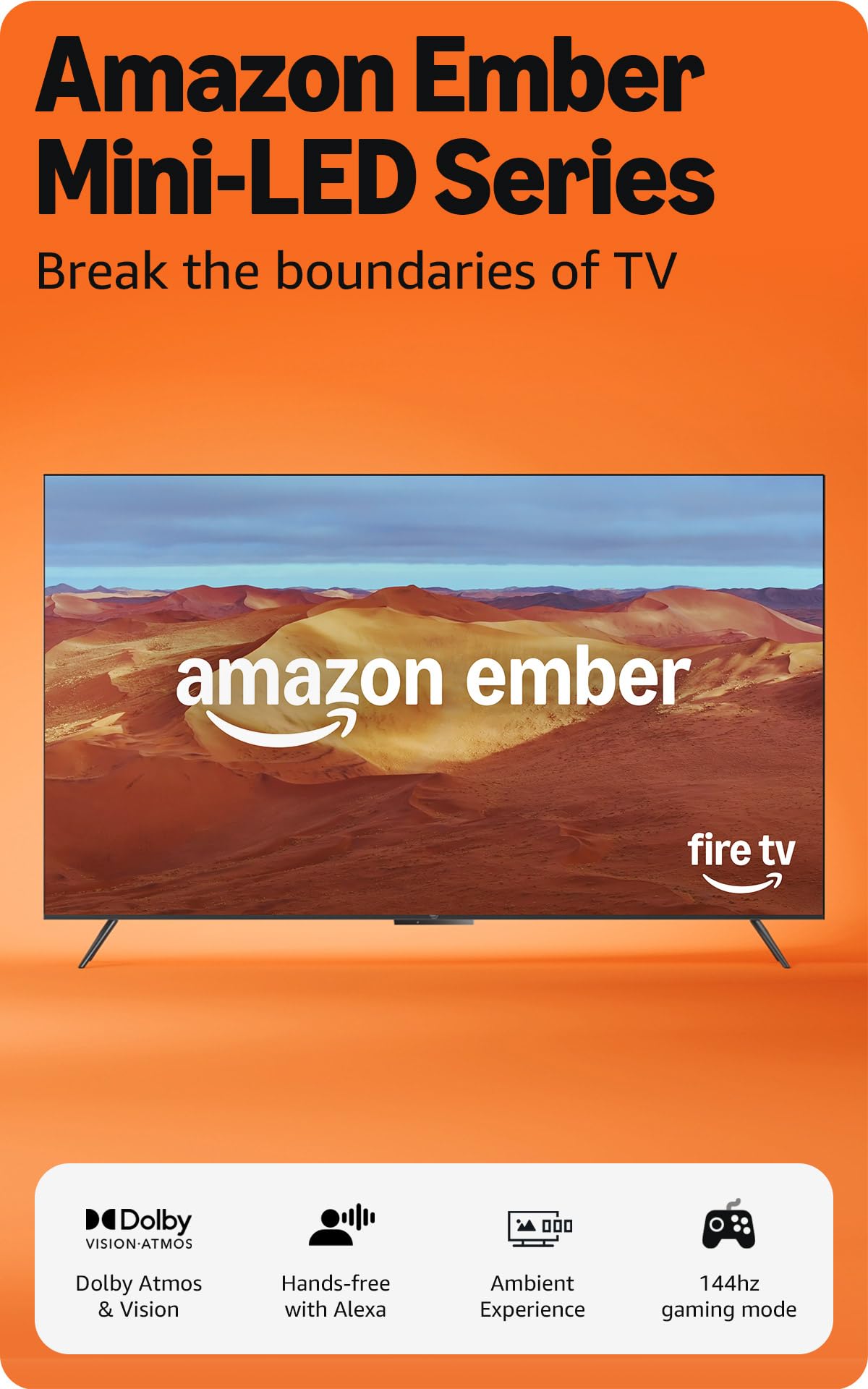
The 512-zone Mini-LED gets OLED-close on contrast without the OLED price.
The Amazon Ember series delivers contrast that buyers describe as “close to OLED.” With 512 individual dimming zones (the small areas of the backlight that can brighten or dim independently), dark scenes in movies and games retain shadow detail without the gray haze you see on standard LED televisions. Peak brightness reaches up to 1,400 nits (a unit of brightness), which means it handles glare from a sunny window better than the Panasonic OLED. It supports both Dolby Vision IQ and HDR10+ Adaptive so the TV adjusts to your room’s lighting automatically.
For gamers, the native 144Hz mode is AMD FreeSync Premium Pro-certified, which combines tear-free Variable Refresh Rate with low-latency HDR — so a racing game like Forza Horizon stays both smooth and vividly colored. The 2.1 Dolby Atmos audio includes a built-in subwoofer, and one buyer mentioned that the sound is the best they have ever heard from a flat-screen TV. The trade-off is the Fire TV software: some shoppers say occasional lag or random reboots, though others say a software update or using an external FireStick 4K Max fixed those issues. Compared to the TCL below, the Ember offers far more dimming zones for deeper contrast, but its smart platform may not please every household.
Buy this if: you want the deepest contrast available outside of OLED, combined with a bright panel that works in a sunlit room. Consider another if: you cannot stand any software hiccups — the Fire TV interface has frustrated a number of owners.
Highlights
- 512 dimming zones deliver contrast that buyers call close to OLED
- Peak brightness of up to 1,400 nits handles bright rooms well
- AMD FreeSync Premium Pro gives tear-free HDR gaming at 144Hz
Heads Up
- Some owners experience laggy menus or random reboots with the built-in Fire TV
Grab this if: you want the deepest contrast available outside of OLED, combined with a bright panel that works in a sunlit room.
Think twice if: you cannot stand any software hiccups — the Fire TV interface has frustrated a number of owners.
4. Hisense 55″ U6 Pro Series Mini‑LED ULED
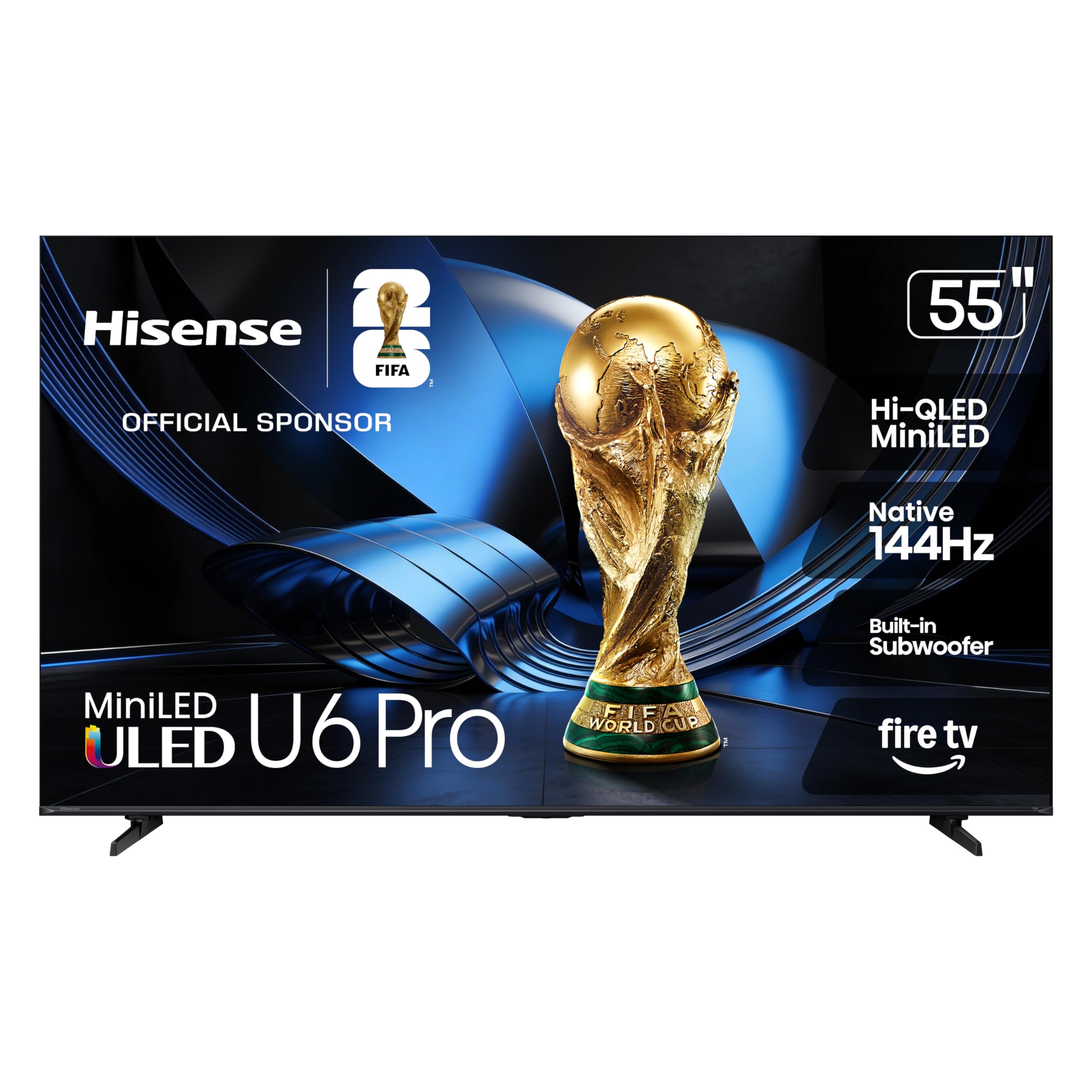
The bright-room champion: its anti-glare coating actually works as promised.
The Hisense U6 Pro packs a Mini-LED backlight with Hi-QLED color into a set that one buyer called the “best feature: anti-glare coating gives zero glare even with direct light.” That makes the U6 Pro the ideal pick if your TV sits opposite a window or under a bright recessed light. The panel has a native 144Hz refresh rate for gaming, ALLM (Auto Low Latency Mode that switches to lag-free settings when you load a game), and FreeSync support, so fast shooters and racing games stay smooth without tearing.
Colors are Pantone-validated, meaning each shade is checked against the Pantone color standard used in graphic design and printing. That means the greens of a football field or skin tones in a movie look natural from the start. The built-in subwoofer adds bass that one reviewer found sufficient for a dorm room or small apartment, though they noted that adding a separate soundbar would improve the experience further. The Fire TV interface loads quickly and offers all major streaming apps. Compared to the Toshiba Z670R below, the Hisense lacks that TV’s Japanese-tuned REGZA processor but beats it on real-world anti-glare performance.
Go with this if: your TV sits in a bright, sunny room — the anti-glare coating transforms the viewing experience. Not for you if: you prefer a clutter-free smart OS; Fire TV can feel busy if you are not in the Amazon ecosystem.
Why It Works
- Anti-reflection coating that buyers confirm eliminates glare even under direct light
- Native 144Hz with ALLM and FreeSync for smooth gaming
- Pantone-validated Hi-QLED color for accurate, natural-looking shades
Keep In Mind
- Built-in sound is decent for its price but a separate soundbar is recommended for fuller audio
Go with this if: your TV sits in a bright, sunny room — the anti-glare coating transforms the viewing experience.
Not for you if: you prefer a clutter-free smart OS; Fire TV can feel busy if you are not in the Amazon ecosystem.
5. Toshiba 55″ Z670R Series Mini-LED
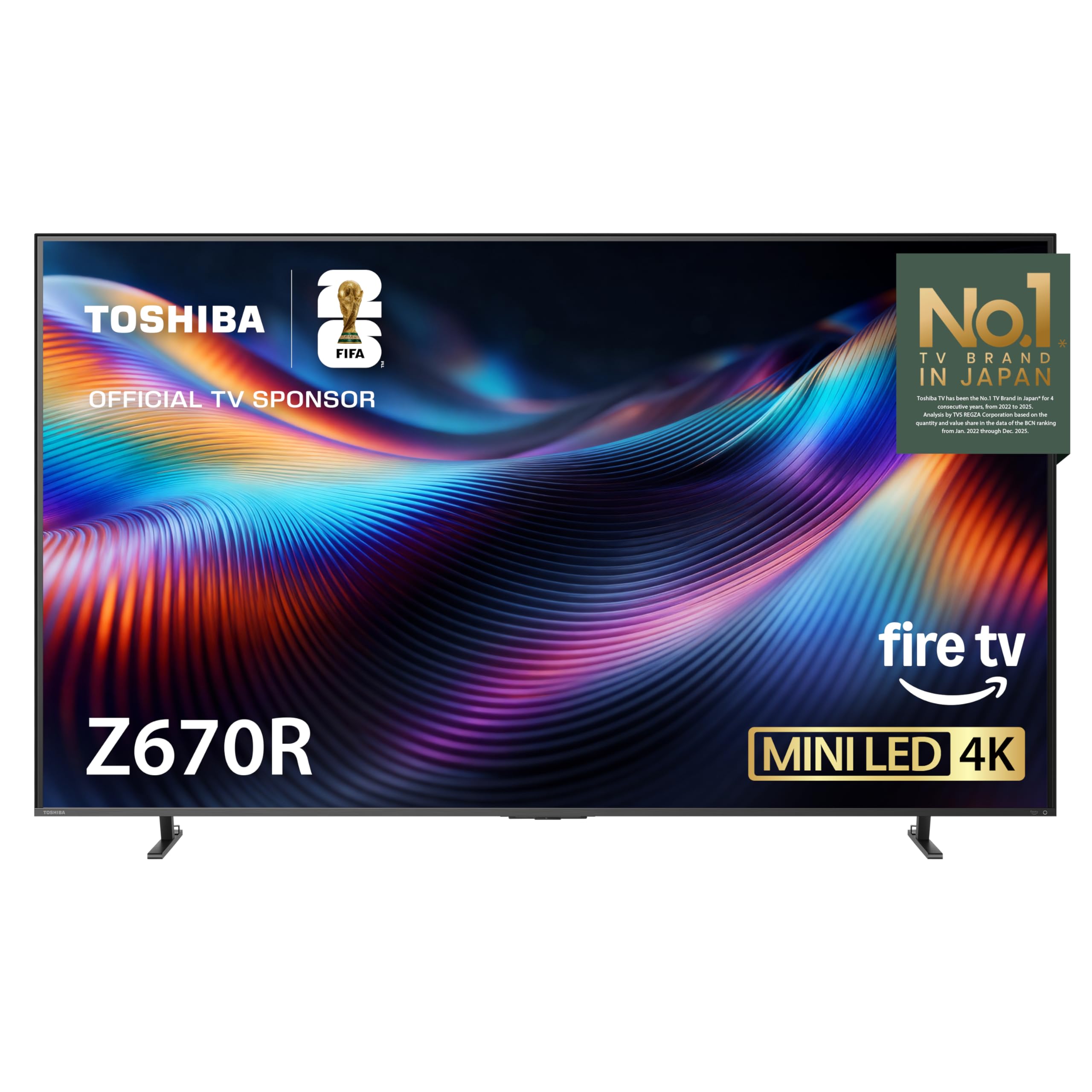
The Mini-LED whose REGZA processor is fine-tuned by Toshiba engineers in Japan.
The Toshiba Z670R series is built around the REGZA Engine ZRi Gen3, an AI picture and sound processor calibrated by Toshiba’s Japanese engineering team to adjust contrast, clarity, and audio scene by scene. The result, according to buyers, is a picture that looks cleaner and more balanced than many competing Mini-LED sets, especially in darker scenes where shadow detail often gets crushed. The Mini-LED backlight uses Full Array Local Dimming (the entire backlight is split into zones that can dim independently), giving you deep blacks alongside the bright highlights the panel type is known for.
Gamers get a native 144Hz panel with AMD FreeSync Premium, VRR at 144Hz, and ALLM for automatic low-lag switching — a combination that buyers report handles a PS5 without any noticeable input delay. The REGZA Power Audio Pro system includes a dedicated bass woofer that delivers enough rumble to shake the room, though buyers still recommend a soundbar for critical movie listening. One owner reported the Fire TV interface is fast, with a power-on time of about 2 seconds. Compared to the Amazon Ember above, the Toshiba has fewer dimming zones but offers the edge in picture processing — the REGZA engine makes standard streaming look noticeably cleaner.
Best for: buyers who want a Mini-LED television with sophisticated picture processing that makes streaming and Blu-ray look its best. Consider another pick if: you need the absolute maximum number of dimming zones for HDR highlights — the Ember has 512 to this set’s lower count.
Strengths
- REGZA Engine ZRi Gen3, tuned by Toshiba engineers in Japan, delivers refined picture processing
- Native 144Hz with FreeSync Premium, VRR, and ALLM for console and PC gaming
- Bass woofer built in adds real low-end punch without a separate subwoofer
Considerations
- Mini-LED zone count is not as high as the Amazon Ember, so contrast is slightly less dramatic
- Fire TV interface can feel cluttered with ads and recommendations
Perfect for: buyers who want a Mini-LED television with sophisticated picture processing that makes streaming and Blu-ray look its best.
Consider another pick if: you need the absolute maximum number of dimming zones for HDR highlights — the Ember has 512 to this set’s lower count.
6. TCL Amazon Exclusive 65″ T7 Series
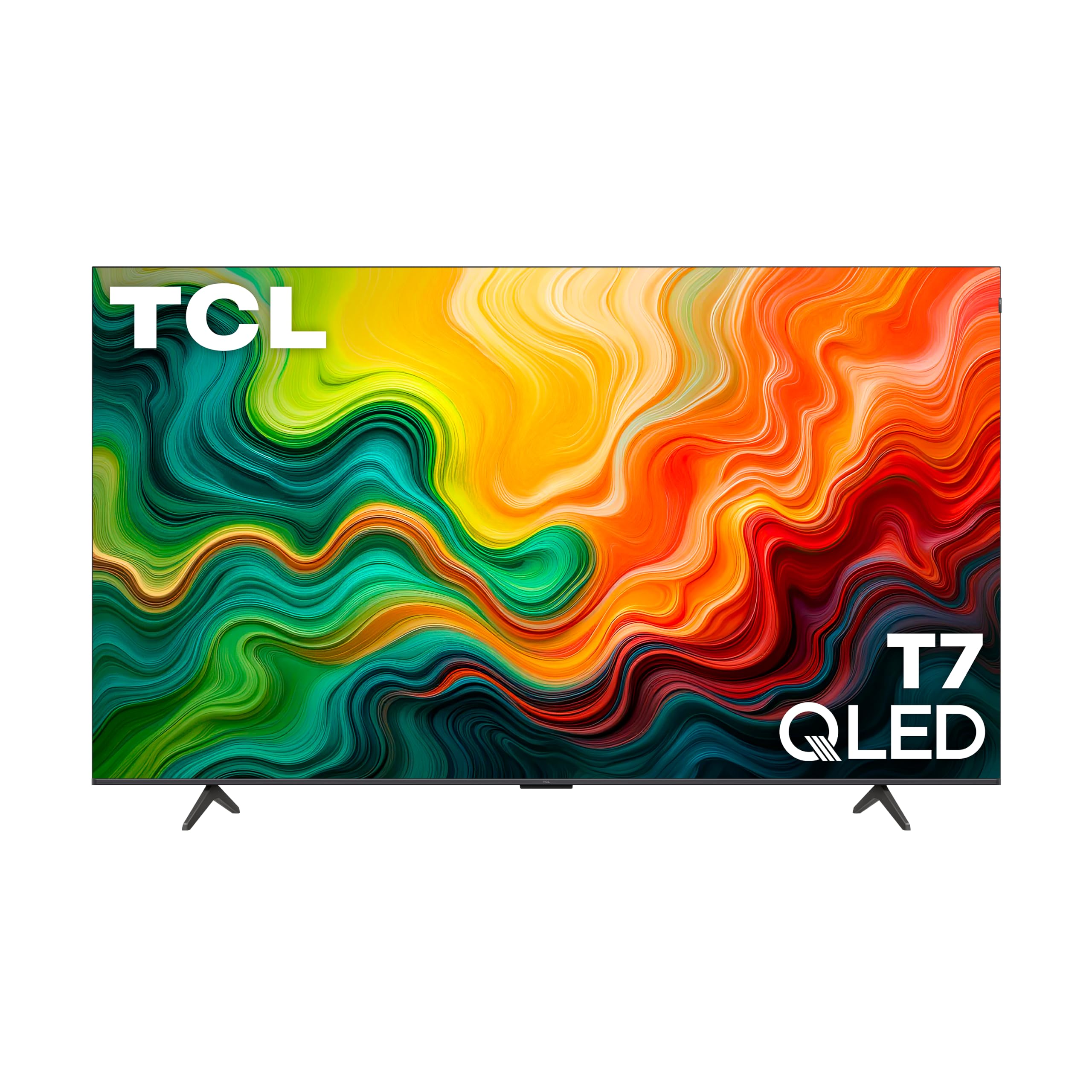
The 65-inch QLED brings 144Hz smoothness at a price that is tough to top.
The TCL T7 Series is the entry point into 144Hz gaming at a screen size that most budget-tier options do not offer — a full 65 inches. The QLED panel covers nearly the entire DCI-P3 color space (a color standard used in digital cinema, meaning colors are more vibrant and accurate than a standard LED set). The AIPQ Pro processor intelligently optimizes color, contrast, and clarity without introducing noticeable lag. Buyers who play PC games report that Crimson Desert runs with no lag or blur, and that 4K discs like Blade Runner and John Wick look stunningly clear and smooth.
The T7 uses Motion Rate 480 with MEMC Frame Insertion (a technology that estimates what the next frame should look like and inserts it between real frames to reduce blur) to keep fast sports and action movies fluid. It includes four HDMI inputs (one with eARC for soundbars), Google TV as its smart platform, and built-in Chromecast plus Apple AirPlay 2 for easy phone casting. One customer observed that if you use the TV with a PC, you must enable the Game feature in the settings to avoid a sluggish interface — a simple fix once you know where to look.
Ideal for: a shopper who wants a large 4K 144Hz-capable television for mixed console and PC gaming without spending into the premium tier. Look past it if: you need the absolute deepest black levels — this is a standard QLED, not Mini-LED, so blacks will not match the higher-end picks above.
Why It Appeals
- 65-inch QLED panel with DCI-P3 color coverage for vibrant, cinema-like colors
- Four HDMI inputs including eARC, plus Google TV with Chromecast and AirPlay 2
- Owners mention 4K gaming on PC and PS5 runs with no lag or blur
Caveat
- PC users must manually enable Game Mode to avoid a sluggish feel on the desktop
Ideal for: a shopper who wants a large 4K 144Hz-capable television for mixed console and PC gaming without spending into the premium tier.
Look past it if: you need the absolute deepest black levels — this is a standard QLED, not Mini-LED, so blacks will not match the higher-end picks above.
Understanding the Specs
Native 144Hz vs. Motion Rate
A native 144Hz panel physically redraws the image 144 times every second. That makes fast movement — a racing car, a hockey puck, a character sprinting across a map — appear fluid and clear. “Motion Rate 480” or “effective refresh rate” numbers you sometimes see are interpolation (the TV guesses what a frame looks like and inserts it between real ones). That can create a smooth look, but it often adds a soap-opera feel to movies and increases input lag, which serious gamers can feel. When shopping for a 4K 144Hz TV, look for the phrase “native 144Hz” in the specifications and ignore any motion rate number that is much higher than the refresh rate itself.
Dimming Zones and Contrast
A dimming zone is a small region of the backlight that can be brightened or darkened independently of the zones around it. More dimming zones means the TV can light up a bright object — like the starship in a dark space scene — while keeping the surrounding area truly black, instead of creating a gray halo around the object. A standard QLED might have fewer than 100 zones, while a Mini-LED television like the Amazon Ember packs 512. OLED televisions have no zones at all because each pixel is its own light source, so they produce infinite contrast but at a higher cost. For most buyers in a mixed-use room, a Mini-LED set with at least a few hundred dimming zones offers the best balance between deep blacks and bright-room performance.
FAQ
Do I need an HDMI 2.1 cable for 4K 144Hz gaming?
Can the PlayStation 5 or Xbox Series X output 4K at 144Hz?
What is the difference between QLED and Mini-LED?
Will a 144Hz TV make my regular movies look weird?
Are FreeSync and G-SYNC both supported on 144Hz televisions?
How much brightness do I need for a bright living room?
Do all 144Hz televisions include a built-in subwoofer?
Does the Fire TV smart platform work well on these televisions?
Final Thoughts: The Verdict
Across the board, the 4k 144hz tv winner is the Panasonic Z8 Series because it delivers OLED-level per-pixel contrast, supports every major gaming standard including HDMI 2.1 and FreeSync Premium, and wraps it in a 77-inch cinema experience. If you want the highest brightness for a sunlit room with AI upscaling that makes old content look new, grab the Samsung Neo QLED QN70F. And for deep contrast at a mid-range price with the best glare rejection in the list, the standout is the Hisense U6 Pro Series.
How We Picked
We do not accept paid placement, and we did not hands-on test every unit. Instead, we match each pick to a real buyer and use-case by comparing the manufacturers’ published specifications against the patterns in verified customer reviews — so you get each pick’s real strengths and trade-offs instead of marketing copy.
Sources & Methodology
Specifications: manufacturer listings and product documentation. Review insights: verified customer reviews, as of July 2026. Pricing: not shown on this page (it changes often); check the current price via the retailer link.
As an Amazon Associate, Gadgets Feed earns from qualifying purchases. This does not affect which products we feature.
Product prices and availability are accurate as of the date/time indicated and are subject to change. Any price and availability information displayed on Amazon at the time of purchase will apply to the purchase of this product. As an Amazon Associate I earn from qualifying purchases.
CERTAIN CONTENT THAT APPEARS ON THIS SITE COMES FROM AMAZON. THIS CONTENT IS PROVIDED "AS IS" AND IS SUBJECT TO CHANGE OR REMOVAL AT ANY TIME.
Amazon and the Amazon logo are trademarks of Amazon.com, Inc. or its affiliates.