
The difference between a screen that delivers and one that frustrates comes down to a tight pairing of resolution and fluid motion. A 4K 180Hz monitor promises pixel-dense detail at a refresh rate that keeps fast-moving action from dissolving into a blurry mess, but the panel technology, response time behavior, and connectivity options separate the real performers from the spec-sheet pretenders.
I’m Min — the co-founder and writer behind Gadgets Feed. I’ve spent countless hours analyzing the technical specifications, panel types, and real-world performance data across every major 4K high-refresh monitor on the market to build this guide on solid performance metrics rather than marketing claims.
Whether you prioritize competitive frame rates or stunning visual fidelity, finding the right best 4k 180hz monitor requires balancing your GPU’s capabilities against the display’s true bandwidth and panel response characteristics.
How To Choose The Best 4K 180Hz Monitor
Selecting a high-refresh 4K panel is not just about the headline numbers. You need to assess panel technology, real bandwidth over your ports, adaptive sync compatibility, and color accuracy. Here are the critical decision points.
Panel Type: IPS vs VA vs OLED
Fast IPS panels dominate the mid-range for their consistent color reproduction and wide viewing angles, but contrast ratios typically hover around 1000:1. VA panels offer superior static contrast (3000:1) and deeper blacks but can suffer from slower pixel transitions in dark scenes. OLED panels deliver instant response times and infinite contrast, but they come at a premium and require careful burn-in management for static desktop use. For a 4K 180Hz monitor, IPS hits the best balance for mixed-use gamers and professionals.
Bandwidth and Port Selection
Driving 3840 x 2160 at 180Hz requires Display Stream Compression (DSC) over DisplayPort 1.4 with HBR3 bandwidth, or uncompressed 48 Gbps over HDMI 2.1. Without DSC or HDMI 2.1, a monitor may cap at 144Hz or 120Hz. Always check that your GPU and supplied cable support the required bandwidth — many budget monitors include older cables that throttle performance to 144Hz out of the box.
Response Time and Overdrive Settings
Manufacturers advertise 1ms GtG or even 0.3ms, but real-world response depends on the overdrive implementation. Aggressive overdrive can introduce inverse ghosting (overshoot). Look for monitors with adjustable overdrive levels and reviews that measure average response times across the gray-to-gray transition range. A stable 4–5ms real-world response is still excellent for 180Hz, as each frame lasts 5.56ms.
Adaptive Sync and VRR
FreeSync Premium and G-Sync Compatible certifications ensure tear-free gameplay within the VRR window. For 4K 180Hz monitors, the VRR floor matters — a 48 Hz minimum is standard, but panels that support LFC (Low Framerate Compensation) down to 20 Hz provide a smoother experience when GPU output dips below 48 fps in demanding titles.
Quick Comparison
On smaller screens, swipe sideways to see the full table.
| Model | Category | Best For | Key Spec | Amazon |
|---|---|---|---|---|
| LG 27G810A-B | IPS Gaming | Dual-mode flexibility (4K 180Hz / FHD 360Hz) | 1ms GtG, 95% DCI-P3 | Amazon |
| ASUS ROG Strix XG32UCG | Fast IPS | Competitive FPS at high frame rates | 0.3ms min response, 130% sRGB | Amazon |
| LG 32GX850A-B OLED | Glossy OLED | HDR gaming with perfect blacks | 0.03ms, TrueBlack 400 | Amazon |
| Samsung Odyssey G8 G81SF | QD-OLED | High PPI clarity and 240Hz smoothness | 166 PPI, 240Hz, 0.03ms | Amazon |
| MSI MPG 321URX QD-OLED | QD-OLED | Desktop productivity and HDR creation | 240Hz, 99% DCI-P3, ΔE ≤2 | Amazon |
| ASUS ROG Swift PG32UCDM | QD-OLED | Burn-in protection with premium gaming | 240Hz, 0.03ms, custom heatsink | Amazon |
| Samsung Odyssey G7 G75F | Curved VA | Immersive cinematic and console gaming | 1000R curve, 3000:1 contrast | Amazon |
| Alienware AW3225QF | QD-OLED | Color-accurate creative work and gaming | 240Hz, 0.03ms, 10-bit color | Amazon |
| KTC 32 Inch H32P22P | Budget IPS | Entry-level 4K at high refresh | 165Hz, 3000:1 contrast ratio | Amazon |
| CRUA 32″ Curved | Budget Curved | Budget-friendly 4K gaming with curve | 240Hz, 120% sRGB, 1500R | Amazon |
| Dell UltraSharp U4025QW | Productivity | Professional ultrawide productivity | 5120 x 2160, IPS Black, 120Hz | Amazon |
In‑Depth Reviews
1. LG 27G810A-B 27-inch Ultragear
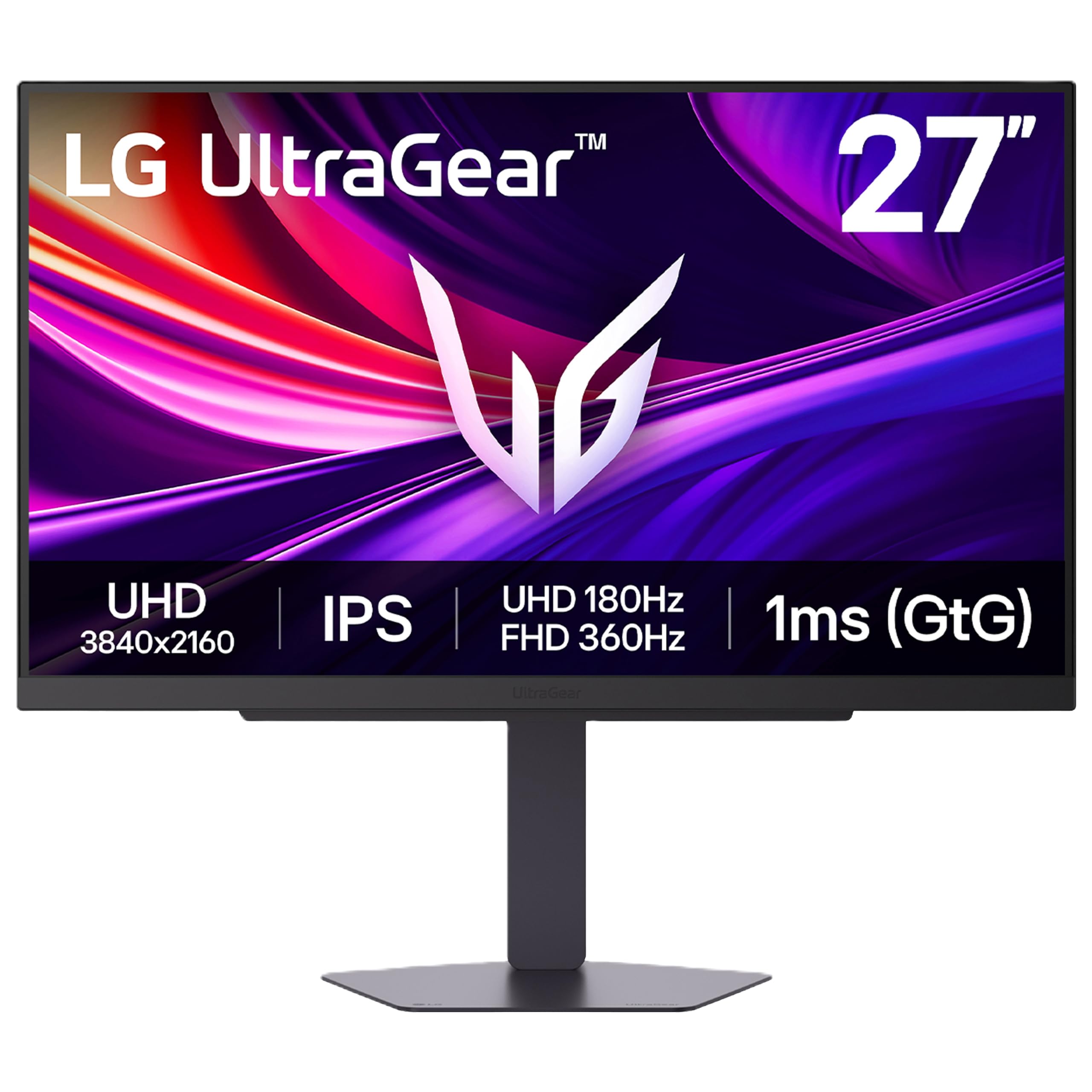
The LG 27G810A-B is the most versatile 4K 180Hz monitor on the market, thanks to its Dual Mode that lets you toggle between 4K at 180Hz for visually rich titles and FHD at 360Hz for ultra-competitive esports. This IPS panel delivers 95% DCI-P3 coverage and VESA DisplayHDR 400, producing vibrant colors and decent highlight detail without the blooming issues of VA panels.
With both FreeSync Premium and G-Sync Compatible certification, the LG eliminates screen tearing across a wide VRR range. The 1ms GtG response time keeps motion crisp, and the Black Stabilizer ensures you spot enemies in dark corners. The included 4-pole headphone jack with DTS HP:X spatial audio reduces cable clutter while delivering immersive sound positioning during gameplay.
The ergonomic stand offers height, tilt, swivel, and pivot adjustments, making this monitor ideal for users who switch between portrait coding and landscape gaming. A minor consideration is the integrated fan that becomes audible in silent rooms, but the trade-off for sustained high-refresh performance is acceptable. This is the monitor to beat for anyone who demands both resolution and speed.
Why it’s great
- Dual Mode unlocks both 4K 180Hz and FHD 360Hz
- IPS panel with 95% DCI-P3 and DisplayHDR 400
- Full ergonomic adjustments and narrow bezels
Good to know
- Built-in fan produces audible noise in quiet environments
- OLED rivals deliver superior black levels at a higher price
2. ASUS ROG Strix 32” XG32UCG
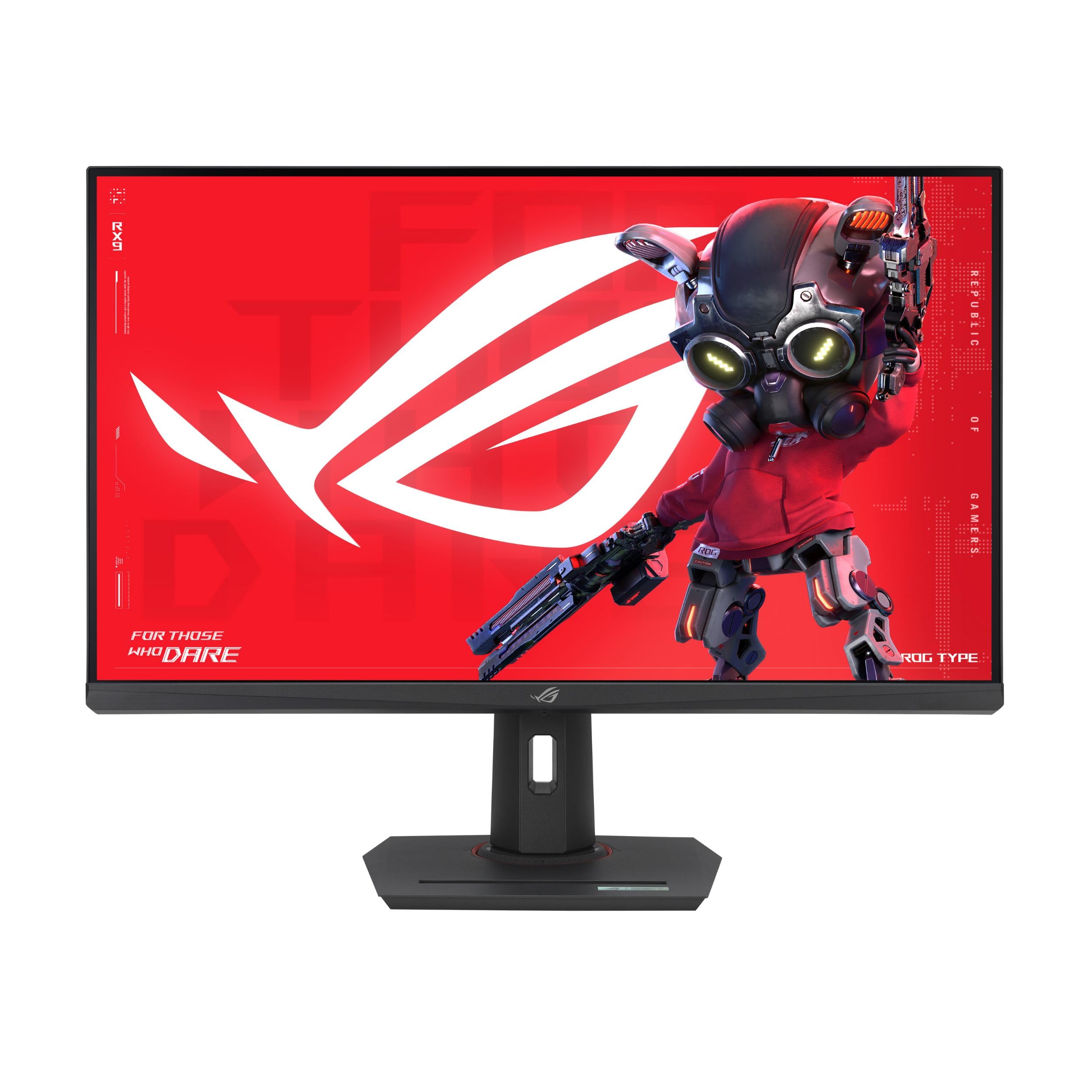
ASUS pushes the envelope with the ROG Strix XG32UCG, a 32-inch Fast IPS monitor that offers Dual Mode switching between 4K at 160Hz and FHD at 320Hz. The 0.3ms minimum response time (MPRT) is one of the fastest on any non-OLED panel, ensuring pixel transitions keep pace with the high frame rate without noticeable ghosting or overshoot.
The 130% sRGB and 95% DCI-P3 color gamut, combined with ELMB Sync technology, allows simultaneous use of motion blur reduction and variable refresh rate — a rarity on LCD monitors. The built-in USB-C with DP Alt mode simplifies single-cable connections to laptops, and the ROG Gaming AI technology provides features like crosshair overlay and dynamic shadow boosting for competitive advantage.
The tripod socket is a unique addition for streamers who mount a webcam or microphone directly onto the display, saving desk space. The semi-gloss screen delivers vibrant colors without excessive reflections. It sits as a premium alternative for those who want high-refresh 4K gaming with low input lag and a 32-inch diagonal for better immersion than smaller 27-inch panels.
Why it’s great
- 0.3ms MPRT response for near-instant pixel transitions
- ELMB Sync combines blur reduction with VRR
- USB-C with DP Alt mode and tripod socket
Good to know
- 4K capped at 160Hz not 180Hz native
- Rear joystick navigation takes time to learn
3. LG 32GX850A-B UltraGear OLED
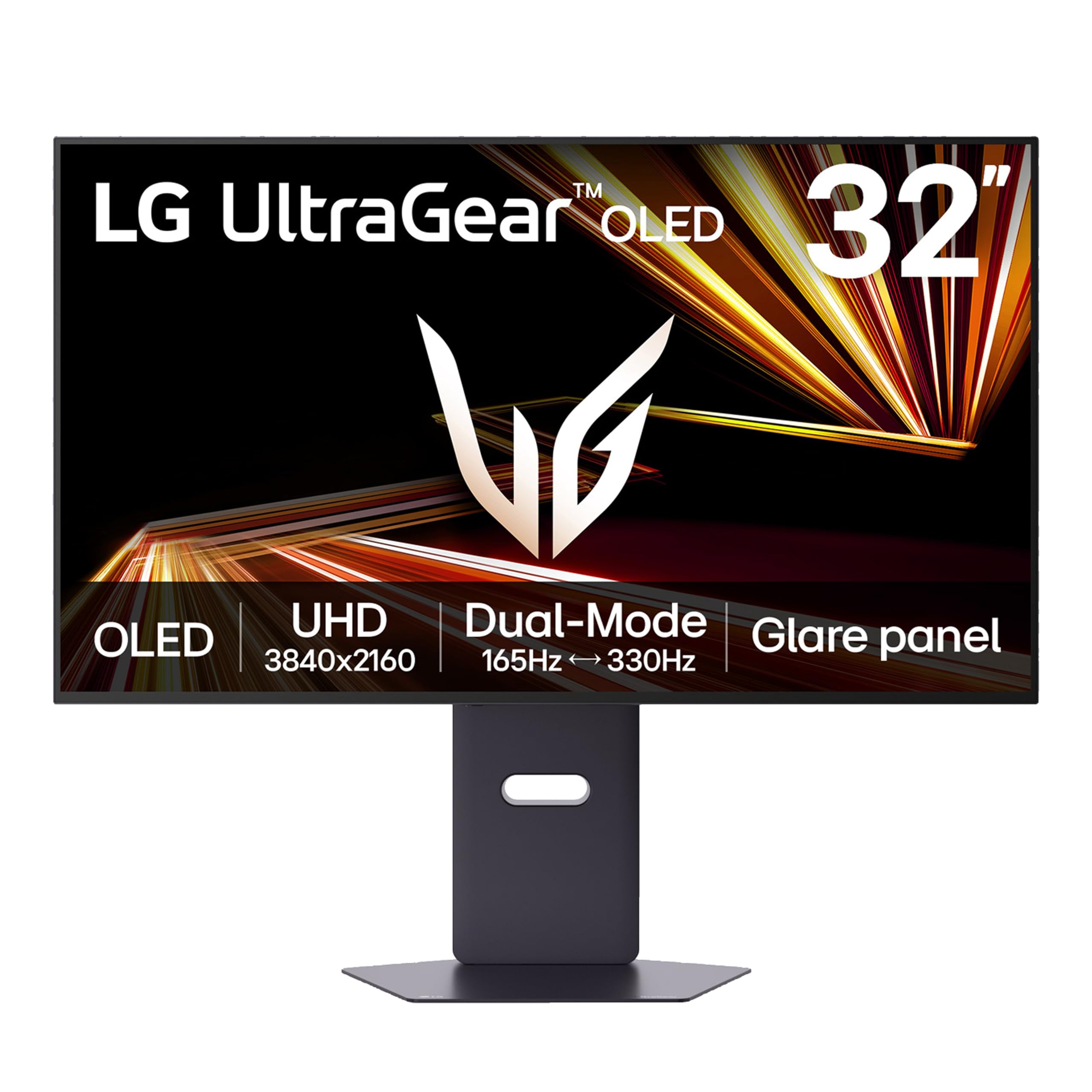
The LG 32GX850A-B steps into OLED territory with a glossy WOLED panel that delivers infinite contrast, perfect blacks, and vibrant colors right out of the box. The 4K UHD resolution at 165Hz — with Dual Mode boosting to FHD 330Hz — provides the fluidity needed for fast-paced shooters while the 0.03ms GtG response time eliminates any perceivable motion blur or ghosting.
VESA DisplayHDR TrueBlack 400 certification and a 1.5M:1 contrast ratio make HDR content truly pop, with bright highlights sitting alongside deep blacks without blooming. The Micro Lens Array+ technology pushes brightness to 275 nits typical, which is higher than previous WOLED generations. The glossy finish enhances perceived vibrancy, though it does reflect ambient light more than matte alternatives.
Three UL certifications for Anti-Glare, Flicker-Free, and Low Blue Light help reduce eye strain during long sessions. The built-in hardware calibration and advanced gaming features (Dynamic Action Sync, Black Stabilizer, Crosshair) keep it competitive without needing external tools. This monitor is ideal for users who prioritize HDR immersion and are willing to manage OLED burn-in risk with pixel refresh routines.
Why it’s great
- Infinite contrast ratio with TrueBlack 400 HDR
- Glossy OLED panel produces exceptionally vibrant colors
- Dual Mode (4K 165Hz / FHD 330Hz) for versatility
Good to know
- Glossy finish reflects bright ambient light
- Burn-in risk requires periodic pixel refresh
4. Samsung 27″ Odyssey QD-OLED G8 G81SF
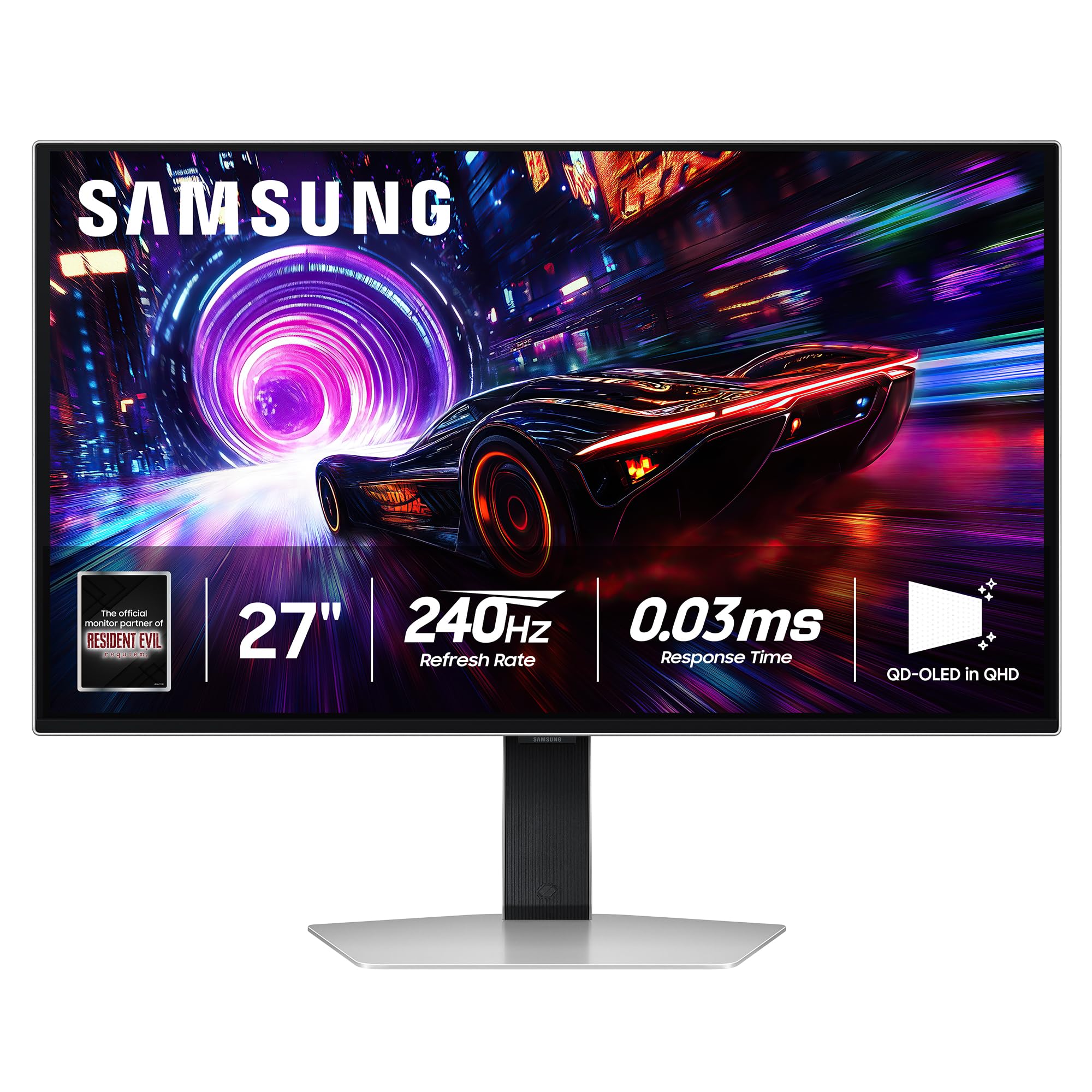
Samsung’s 27-inch Odyssey G8 G81SF uses a QD-OLED panel that pushes pixel density to 166 PPI at 4K resolution, resulting in exceptionally sharp text and crisp image details. The 240Hz refresh rate and 0.03ms response time make it one of the fastest 4K displays available, easily clearing the 180Hz threshold while providing headroom for future GPU upgrades.
The Glare Free technology reduces reflectivity by 54% compared to conventional anti-reflection coatings, making this QD-OLED much more usable in rooms with ambient windows or overhead lighting. VESA DisplayHDR TrueBlack 400 ensures deep blacks without light bleed, and the 1,000,000:1 contrast ratio produces HDR content with dramatic depth.
Samsung’s Dynamic Cooling System uses a pulsating heat pipe to dissipate heat five times faster than graphite sheets, actively reducing burn-in risk. The Logo and Taskbar Detection automatically dims static elements to prevent retention. The included ergonomic stand with height, tilt, and pivot adjustments makes it suitable for both gaming and productivity workflows. A few reports of dead pixels after extended use raise a concern, so verifying the warranty coverage is recommended.
Why it’s great
- 166 PPI pixel density for razor-sharp text and images
- 240Hz refresh rate with 0.03ms GtG response
- Advanced thermal management reduces burn-in risk
Good to know
- Some units reported dead pixels within weeks
- Matte-ish coating may not appeal to glossy fans
5. MSI MPG 321URX QD-OLED

The MSI MPG 321URX combines a 32-inch QD-OLED panel with a 240Hz refresh rate and factory-calibrated Delta E ≤2 color accuracy, making it a rare hybrid that excels in both creative work and competitive gaming. The 99% DCI-P3 coverage and 10-bit color depth produce smooth gradients and rich saturation without banding.
OLED Care 2.0 includes pixel refresh, panel shift, and static element detection to protect against burn-in during prolonged desktop usage. The KVM functionality with PiP/PbP allows you to control two systems from a single keyboard and mouse over the integrated USB hub, a feature rarely found on gaming monitors but essential for hybrid work setups.
The 90W USB-C charging delivers enough power to charge a high-end laptop, eliminating the need for a separate power brick on your desk. The stand offers 4-way adjustments, though the base is quite wide and may require a deep desk. At this price point, it competes directly with premium OLED monitors and wins on color accuracy and connectivity.
Why it’s great
- Factory Delta E ≤2 color accuracy ideal for creative work
- 240Hz refresh with 0.03ms response for competitive gaming
- KVM switch and 90W USB-C charging built-in
Good to know
- Wide stand base requires substantial desk space
- Premium price point compared to IPS alternatives
6. ASUS ROG Swift PG32UCDM OLED

The ASUS ROG Swift PG32UCDM sets a new benchmark for QD-OLED gaming monitors with a custom heatsink design and graphene film that together dissipate heat more effectively than standard passive cooling, significantly reducing the long-term risk of burn-in. The 32-inch 4K panel runs at 240Hz with a 0.03ms response time, delivering fluid motion with no ghosting or smearing.
The 99% DCI-P3 gamut and VESA DisplayHDR 400 True Black compliance produce stunning HDR visuals, while the true 10-bit panel ensures smooth color gradations. The Uniform Brightness setting maintains consistent luminance across the screen, which is critical for color-critical work and preventing uneven wear. ASUS backs the panel with a 3-year warranty that includes burn-in coverage, offering peace of mind for heavy desktop users.
Connectivity includes HDMI 2.1, DP 1.4a, and a 90W USB-C port with DP Alt mode, plus three USB 3.2 Gen 1 Type-A ports for peripherals. The spill-resistant coating on the OSD joystick area adds durability. The glossy QD-OLED finish produces incredibly vibrant colors with minimal reflection handling, making it best suited for controlled lighting environments.
Why it’s great
- Custom heatsink and graphene film for burn-in protection
- 3-year warranty with burn-in coverage included
- True 10-bit panel and Uniform Brightness setting
Good to know
- Glossy screen reflects bright room lighting
- Premium pricing places it near the top of the budget
7. Samsung 37” Odyssey G7 G75F Curved
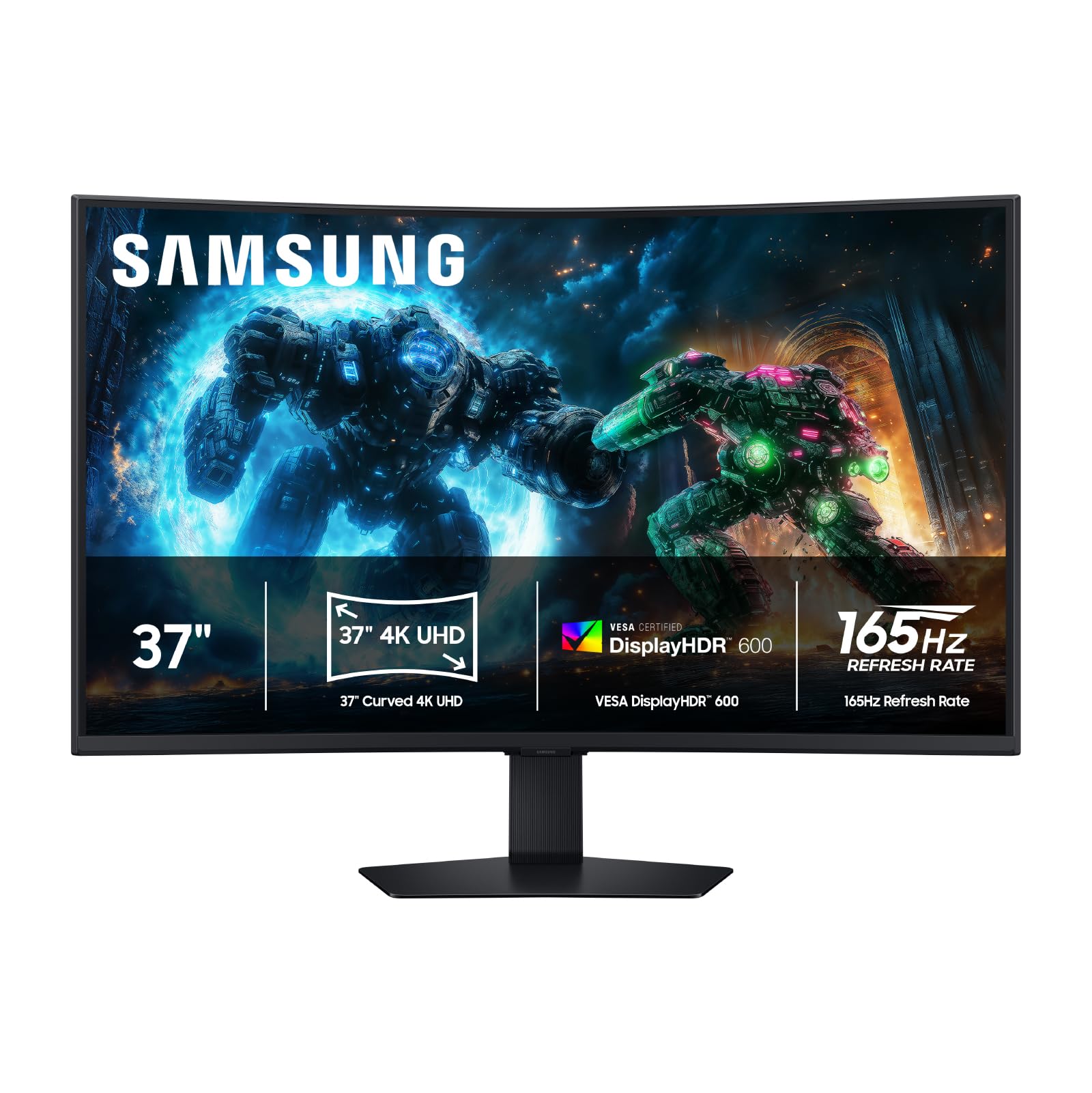
The Samsung Odyssey G7 G75F uses a 37-inch 1000R curved VA panel with 4K UHD resolution and 165Hz refresh rate, wrapping the display around your peripheral vision for an exceptionally immersive experience. The 3000:1 static contrast ratio delivers deep blacks and high brightness without the blooming issues that plague IPS panels in dark scenes.
VESA DisplayHDR 600 certification ensures brighter highlights and a wider luminance range than typical HDR400 monitors, making movies and HDR-enabled games look punchy and dramatic. The 1ms GtG response time is respectable for a VA panel, though transitioning from dark to light pixels can reveal the inherent slow-down characteristic of VA technology.
The 37-inch size is a unique middle ground between standard 32-inch gaming monitors and ultra-large 43-inch screens, offering excellent screen real estate for multitasking without being overwhelming. The aggressive curve enhances concentration but may divide opinions — some users find it perfect for gaming, while others with productivity needs prefer flat panels. The stand includes height and swivel adjustment.
Why it’s great
- 1000R curve provides deep immersion for gaming
- 3000:1 static contrast for rich black levels
- DisplayHDR 600 brightness and FreeSync Premium Pro
Good to know
- VA panel slower in dark-to-light transitions
- Extreme curve not ideal for productivity or coding
8. Alienware AW3225QF QD-OLED
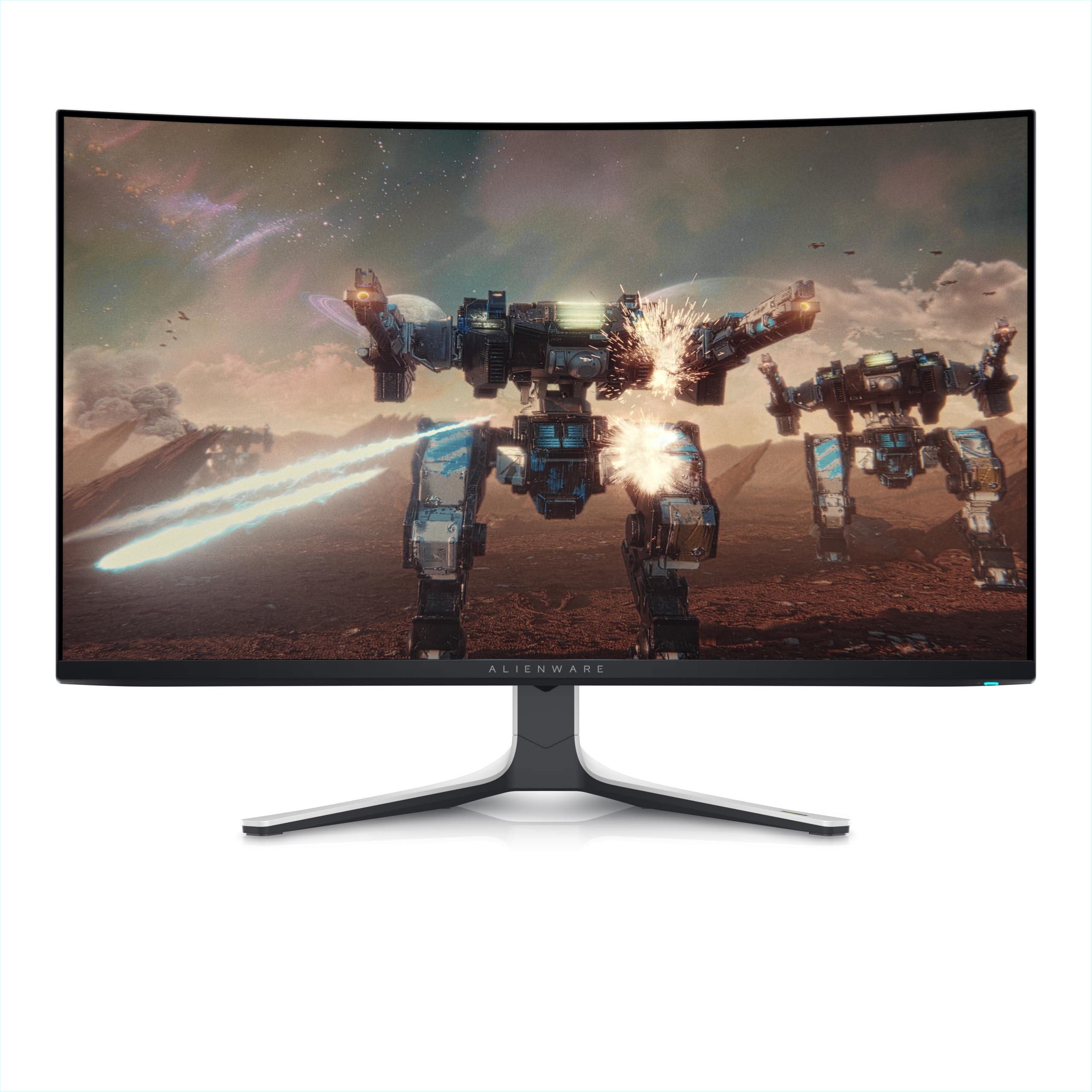
The Alienware AW3225QF brings QD-OLED technology to a 32-inch 4K format with a 240Hz refresh rate and 12-bit color processing, delivering an exceptionally wide color gamut and smooth gradations. The Dell sub-brand equips this monitor with a 3-year warranty that explicitly covers burn-in, addressing the primary concern for OLED adopters.
The panel supports Dolby Vision HDR in addition to standard HDR10, making it a strong candidate for movie watchers and console gamers who want the best possible HDR experience. The 0.03ms response time ensures zero perceivable ghosting, and the infinite contrast ratio makes dark scenes look truly cinematic without halos.
The ergonomic stand allows height, tilt, and swivel adjustments, and the build quality matches the premium price. Mac users should note that HDMI on M1 Macs caps at 60Hz — a USB-C to DisplayPort cable is required to achieve 120Hz or higher. The automatic pixel refresh and logo dimming features help maintain panel health. At its price point, it sits as a direct premium alternative to the ASUS and MSI QD-OLED offerings.
Why it’s great
- 3-year warranty with burn-in coverage
- Dolby Vision HDR support for superior video quality
- 12-bit color processing with 240Hz refresh
Good to know
- M1 Macs need USB-C to DP cable for high refresh
- Premium pricing above most alternatives
9. KTC 32 Inch H32P22P Gaming Monitor
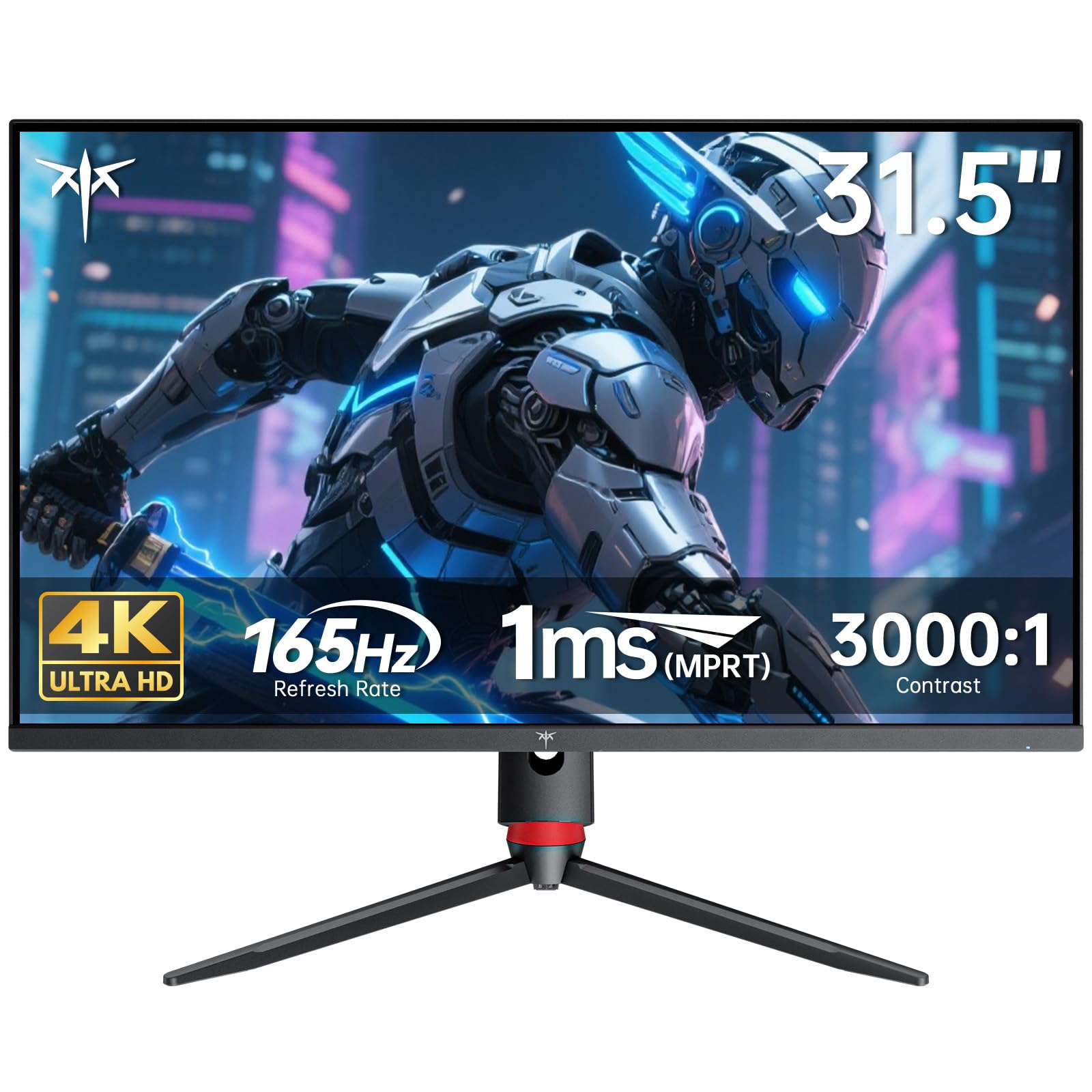
The KTC H32P22P delivers a 32-inch Fast IPS panel with 4K UHD resolution at 165Hz, landing very close to the 180Hz target while keeping costs dramatically lower than competing IPS monitors. The 3000:1 contrast ratio reported for this unit is unusually high for IPS — likely achieved through advanced backlight control — offering deeper blacks than typical 1000:1 IPS panels.
The inclusion of HDMI 2.1 and DP 1.4 ensures adequate bandwidth for 4K at 165Hz with DSC, and Adaptive Sync support covers both FreeSync and G-Sync. The 121% sRGB color gamut provides oversaturated colors that look vibrant in games, though professional color work may require ICC profile calibration.
The built-in stand offers tilt and height adjustment, and the 100x100mm VESA mount compatibility allows easy swapping with monitor arms. The included screwdriver and DP cable simplify out-of-box setup. Some user reports indicate the refresh rate caps at 100Hz over certain cables, so using the supplied DP cable or a certified HDMI 2.1 cable is critical to reach the full 165Hz. This is the best value option for budget-constrained 4K high-refresh seekers.
Why it’s great
- Fast IPS panel at 165Hz for under entry-level premium pricing
- HDMI 2.1 and DP 1.4 ports for modern GPUs
- Height-adjustable stand and VESA compatible
Good to know
- May require specific cable to reach 165Hz
- Backlight bleed reported on some units
10. CRUA 32″ Curved Gaming Monitor
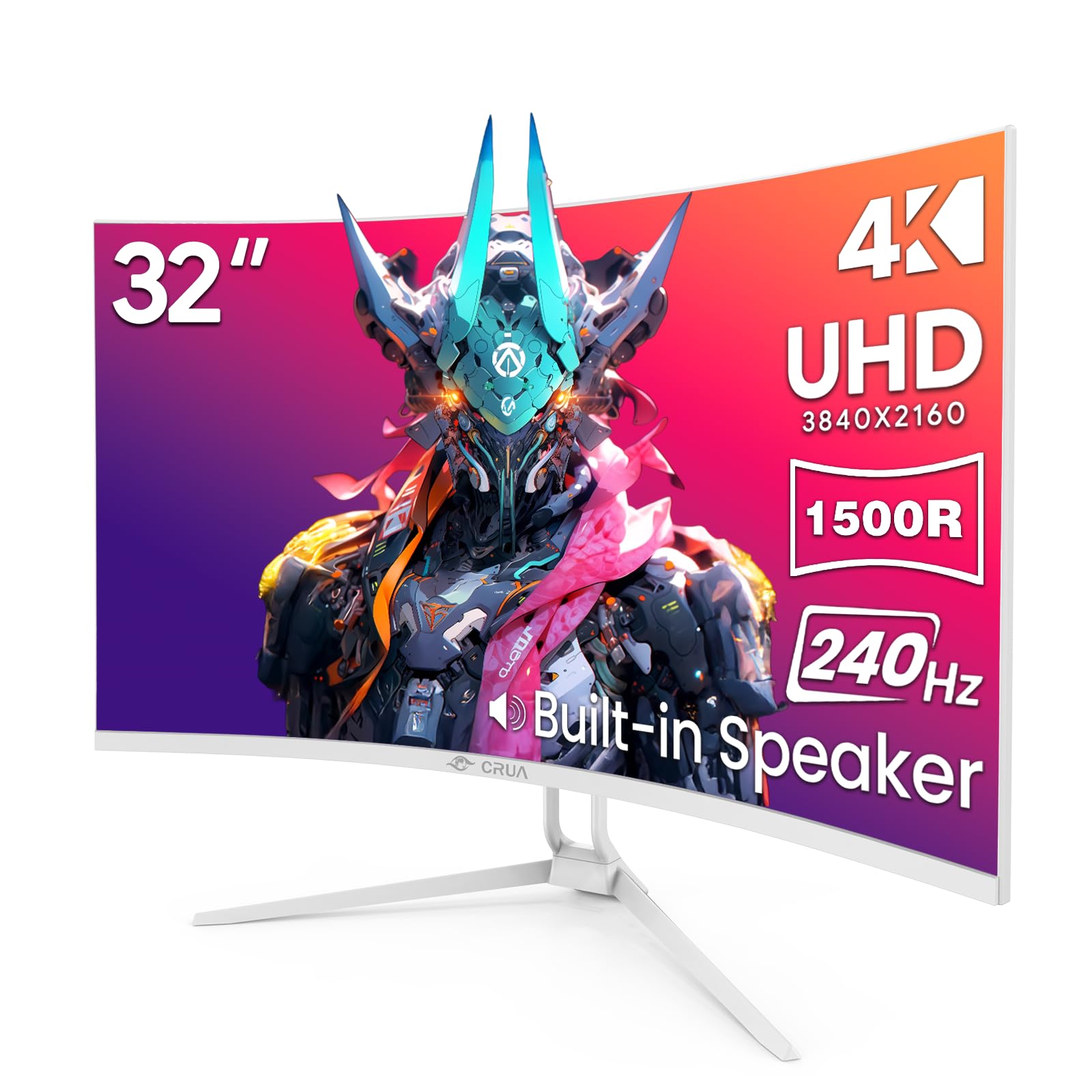
The CRUA 32-inch curved gaming monitor uses a VA panel with a 240Hz refresh rate, 4K UHD resolution, and a 1500R curvature. The 3000:1 contrast ratio and 120% sRGB color gamut produce punchy visuals with good black levels, making it suitable for story-driven single-player games and media consumption.
At its affordable price point, this monitor includes HDMI 2.1 and DP 1.4 inputs, plus PIP/PBP functionality for multitasking, which is rare in budget-tier curved monitors. The white chassis with RGB backlighting appeals to gamers building an all-white setup, while the 75x75mm VESA mount allows arm installation if the tilt-only stand is insufficient.
The built-in speakers are cosmetic — audio through the headphone jack or external speakers is required. The OSD navigation is controlled via a joystick, which some users find confusing without a physical remote. The price-to-specs ratio is aggressive, but VA dark-to-dark pixel transitions can introduce motion blur that IPS panels handle better. This is a solid choice for budget-minded gamers who prioritize curve immersion over pixel response.
Why it’s great
- 240Hz VA panel with 1500R curve at a budget-friendly price
- HDMI 2.1 inputs and PIP/PBP functionality
- Unique white design with RGB accents
Good to know
- Built-in speakers are non-functional cosmetic elements
- VA panel shows motion blur in dark transitions
11. Dell UltraSharp U4025QW 40″ 5K2K Curved

The Dell UltraSharp U4025QW pushes beyond standard 4K with a 40-inch 5120 x 2160 WUHD resolution at a 21:9 ultrawide aspect ratio, giving you the equivalent of two 27-inch 1440p monitors side-by-side without a bezel gap. The 120Hz refresh rate ensures smooth scrolling and light gaming, though it falls short of the 180Hz gaming standard — this monitor is built for productivity first.
The IPS Black technology delivers a 2000:1 contrast ratio that approaches VA-level blacks while maintaining the wide viewing angles of IPS. VESA DisplayHDR 600 and 99% DCI-P3 color gamut make it excellent for video editing and color-critical work. The built-in KVM switch with Ethernet pass-through allows control of two systems with a single keyboard and mouse, a game-changer for hybrid workflows.
Connectivity is extensive: Thunderbolt 4 with 140W upstream charging, HDMI 2.1, DP 1.4, and multiple USB-A ports. The curvature is gentle at 2500R, reducing distortion for productivity tasks. The intense 5K2K resolution requires 150% scaling for comfortable text legibility. This is the ultimate monitor for professionals who need massive screen real estate for coding, spreadsheets, or timeline editing, and are willing to sacrifice gaming-centric refresh rates.
Why it’s great
- 5120 x 2160 resolution matches two 27″ screens in one panel
- IPS Black technology with 2000:1 contrast ratio
- Thunderbolt 4 with 140W charging and built-in KVM
Good to know
- 120Hz cap is below gaming-focused 165-240Hz monitors
- Requires significant GPU power to drive at native resolution
FAQ
Can my GPU actually run 4K at 180Hz in modern games?
Should I get a 27-inch or 32-inch 4K 180Hz monitor?
What is the difference between native 180Hz and overclocked 180Hz?
Does HDMI 2.1 make a difference over DisplayPort 1.4 for 4K 180Hz?
Final Thoughts: The Verdict
For most users, the best 4k 180hz monitor winner is the LG 27G810A-B Ultragear because its Dual Mode system delivers both 4K at 180Hz and FHD at 360Hz, paired with wide color gamut and full ergonomic adjustments at a competitive price. If you want OLED-level contrast and HDR immersion without burn-in anxiety, grab the LG 32GX850A-B Glossy OLED. And for the ultimate professional who needs a 5K2K ultrawide workspace that doubles as a productivity hub, nothing beats the Dell UltraSharp U4025QW.