
Shaky footage, poor audio, and a frame that misses your face are the triad of failure for any vlog. A true vlogging camera must solve all three without needing a film school degree or a production crew. The modern 4K vlogging camera is a specialized tool designed to put you, the creator, in the center of a clear, stable, and cinematic frame, from a coffee shop table to a mountain trail.
I’m Min — the co-founder and writer behind Gadgets Feed. I’ve spent hundreds of hours analyzing technical specifications, buyer behavior, and consumer feedback on the latest imaging hardware to isolate the features that actually matter for solo content creators.
This guide dissects every serious contender in the category to help you pinpoint the best 4k camera for vlogging that aligns with your workflow, budget, and creative ambition.
How To Choose The Best 4K Camera For Vlogging
Selecting the right vlogging camera boils down to understanding three interdependent pillars: stabilization, autofocus, and audio integration. A camera that excels in one but fails in another will create a frustrating editing experience. Prioritize your primary shooting scenario — talking head at a desk, walking city vlog, or adventure POV — before matching specs to that use case.
Stabilization: Gimbal vs. In-Body vs. Electronic
Mechanical stabilization (3-axis gimbal or in-body IBIS) is non-negotiable for walking shots. Electronic stabilization (EIS) relies on cropping the sensor and can introduce wobble. For handheld vlogging, a pocket gimbal camera like the DJI Osmo Pocket 3 offers the most foolproof smooth footage. Interchangeable lens cameras with good IBIS (like the Sony A6700 or Panasonic S9) are excellent but require careful lens pairing to maximize stability.
Autofocus and Tracking Reliability
As a solo vlogger, you cannot manually pull focus. Look for cameras with phase-detection autofocus and dedicated subject tracking — face/eye detection for humans is the baseline. Advanced systems, such as Canon’s Dual Pixel CMOS AF II or Sony’s AI-based Real-time Recognition, can lock onto you even when you turn your head or move through a scene, ensuring you remain sharp without a tap on the screen.
Audio and Connectivity
Bad audio kills a vlog faster than mediocre video. A 3.5mm mic input is essential for an external lavalier or shotgun mic. Some integrated gimbal cameras (DJI Osmo Pocket 3, Xtra Muse) now support direct wireless connection to external microphones, eliminating the cable tangle. Also consider whether the camera supports USB-C livestreaming and fast file transfer to your phone or computer for rapid editing and posting.
Quick Comparison
On smaller screens, swipe sideways to see the full table.
| Model | Category | Best For | Key Spec | Amazon |
|---|---|---|---|---|
| Xtra Muse | Pocket Gimbal | Beginner Vloggers | 1″ CMOS, 4K/120fps, 3-Axis Gimbal | Amazon |
| DJI Osmo Nano | Action/POV | Sport & Pet Vlogs | 1/1.3″ Sensor, 143° FOV, 200-min Battery | Amazon |
| DJI Osmo Pocket 3 | Pocket Gimbal | All-Around Vlogging | 1″ CMOS, 4K/120fps, ActiveTrack 6.0 | Amazon |
| Canon EOS R50 V | Mirrorless ILC | Hybrid Photo/Video | APS-C 24.2 MP, Dual Pixel AF II, 4K/60p | Amazon |
| Insta360 Luna Ultra | Pocket Gimbal | Cinematic 8K Vlogging | Dual Leica Lenses, 12x Zoom, 14 Stops DR | Amazon |
| Canon PowerShot V1 | Compact Point & Shoot | Studio & Street Vlogging | 1.4-Type Sensor, 16-50mm f/2.8-4.5, CLog3 | Amazon |
| Sony ZV-1 II | Compact Point & Shoot | On-the-Go Selfies | 1″ Sensor, 18-50mm f/1.8-4.0, Real-time Eye AF | Amazon |
| Blackmagic Pocket Cinema 4K | Cinema Camera | Professional Post-Production | MFT Sensor, 13 Stops DR, Blackmagic RAW | Amazon |
| Nikon Z50 II | Mirrorless ILC | Travel Vlogging Combo | APS-C 20.9 MP, 4K/60p, 31 Color Presets | Amazon |
| Sony Alpha 6700 | Mirrorless ILC | Prosumer Hybrid | APS-C 26.0 MP, 4K/120p, AI Processor | Amazon |
| Panasonic LUMIX S9 | Full-Frame Mirrorless | Compact Full-Frame Travel | Full-Frame Sensor, Open Gate, LUT Support | Amazon |
In‑Depth Reviews
1. DJI Osmo Pocket 3 Creator Combo

The DJI Osmo Pocket 3 remains the gold standard for integrated vlogging because it combines a 1-inch CMOS sensor with true 3-axis mechanical stabilization inside a body that fits in a jacket pocket. Recording at 4K/120fps, it delivers slow-motion flexibility and retains strong detail in low light, helped by D-Log M and 10-bit color for grading. ActiveTrack 6.0 keeps you center-frame even when you spin or jump, making solo shooting effortless.
The Creator Combo adds a DJI Mic 2 transmitter, battery handle, mini tripod, and wide-angle lens — turning the pocket unit into a complete field kit. The rotating 2-inch touchscreen simplifies switching between horizontal and vertical orientations, a critical workflow boost for creators publishing across YouTube and TikTok simultaneously. The built-in OsmoAudio feature wirelessly connects to DJI mics for clean, latency-free audio.
Where it truly excels is reliability: the stabilization is so effective that walking or light jogging produces gimbal-smooth footage without any post-processing. Battery life sits at roughly 166 minutes on a full charge, and the included handle extends that significantly. For the vast majority of vloggers who want the best out-of-box experience, this is the benchmark.
Why it’s great
- Outstanding 3-axis mechanical stabilization removes the need for post-stabilizing software.
- Creative Combo includes a professional wireless mic and extended battery grip.
- ActiveTrack 6.0 locks onto subjects reliably, making solo tracking effortless.
Good to know
- Sensor is 1-inch, not APS-C, limiting shallow depth of field compared to larger mirrorless cameras.
- Digital zoom is limited to 2x, requiring you to physically move closer for tighter shots.
2. Insta360 Luna Ultra
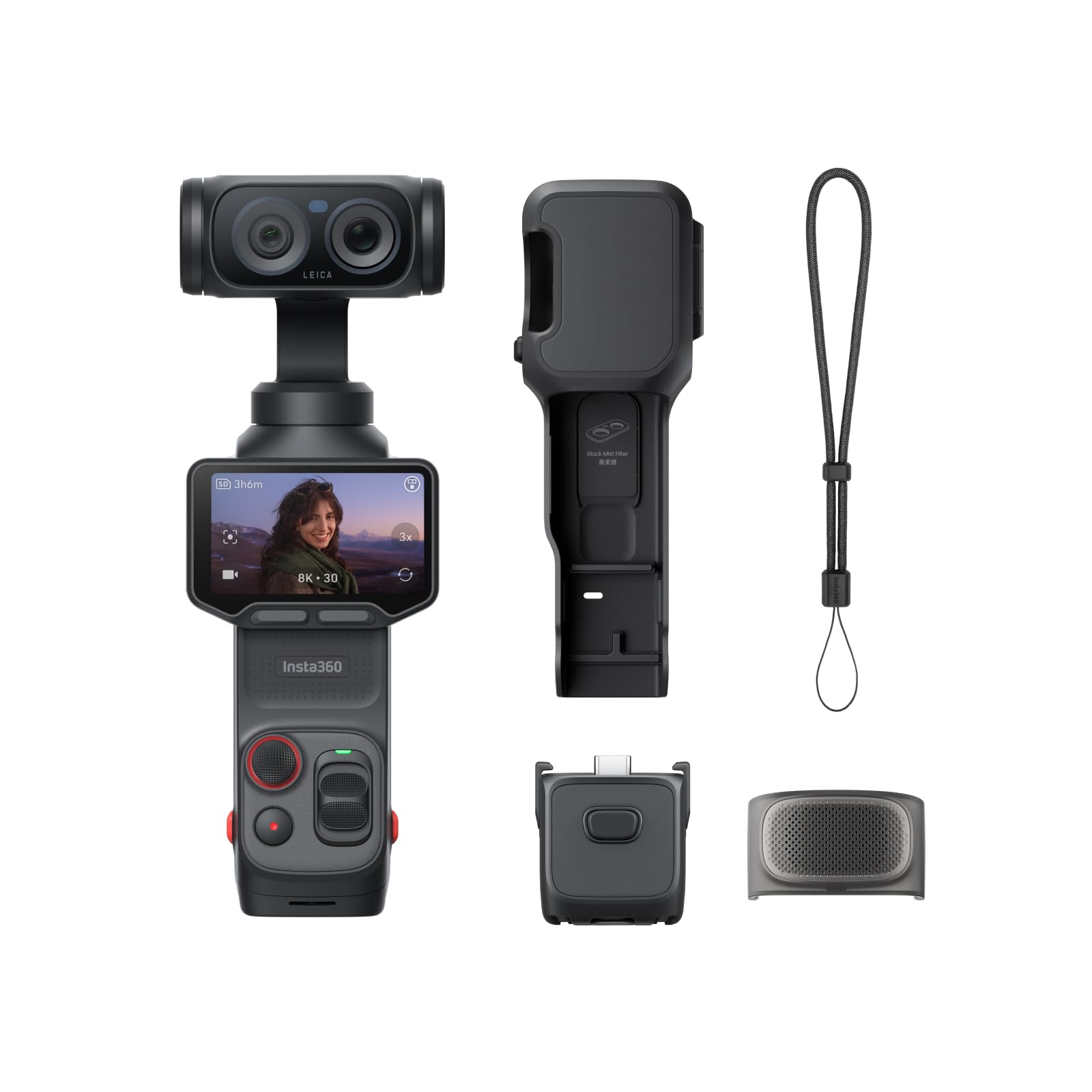
The Insta360 Luna Ultra pushes the pocket gimbal category forward with dual Leica lenses — a 1-inch main sensor paired with a 1/1.3-inch telephoto — enabling up to 12x zoom range and true optical bokeh. It records in 8K/30p with Dolby Vision and offers 10-bit I-Log with 14 stops of dynamic range, rivaling the latitude of much larger cinema rigs for color grading.
The detachable 2-inch OLED touchscreen is a game-changer for solo creators: it controls the camera wirelessly from up to 20 meters away, allowing self-framing without a separate monitor or phone app. Leica color science and built-in cinematic filters deliver share-ready footage straight out of the camera, reducing editing time. The 4-hour battery life with 23-minute fast charging to 80% is class-leading.
PureVideo mode captures clean 4K/60fps footage in low light using advanced AI noise reduction, a serious advantage over competitors in dim indoor or nighttime settings. The 3-axis mechanical stabilization and AI tracking keep erratic movement locked. It is the most versatile pocket camera on the market, especially for vloggers who prioritize color science and long shooting days.
Why it’s great
- Dual Leica lenses with 12x zoom provide unmatched focal range in a pocket body.
- Detachable screen allows flexible framing and remote control without buying extra accessories.
- 4-hour battery life with ultra-fast charging eliminates power anxiety during all-day shoots.
Good to know
- Some advanced features are expected in future firmware updates; the platform is still maturing.
- At 8K resolution, file sizes are large and require a fast microSD card and powerful editing hardware.
3. Xtra Muse

The Xtra Muse is a budget-friendly pocket gimbal camera that delivers 4K/120fps video from a 1-inch CMOS sensor, directly competing with the DJI Pocket 3 at a significantly lower entry point. The built-in 3-axis gimbal stabilizer produces smooth walking footage, and the Master Follow feature keeps you framed and in focus as you move. Face and object tracking is responsive and reliable for solo shooting.
The 2-inch touchscreen is simple and intuitive, with easy switching between horizontal and vertical orientations. X-Log color grading support in 10-bit allows for color correction in post-production, a feature rarely seen at this tier. The standard bundle includes a carrying bag, wrist strap, and a handle with a 1/4-inch thread for tripod mounting, giving you everything you need out of the box.
Battery life clocks in at about 161 minutes, which covers most daily vlogging sessions. Several verified buyers report that DJI Pocket 3 accessories are compatible, and that the camera can connect to DJI microphones via a recent firmware update. For vloggers on a tight budget who refuse to compromise on stabilization and 4K/120fps recording, the Xtra Muse is the clear choice.
Why it’s great
- Delivers 4K/120fps and a 3-axis gimbal for a fraction of the price of comparable pocket cameras.
- X-Log 10-bit color profile enables professional-grade color grading in post.
- Compatible with many existing DJI Pocket 3 accessories and microphones after updates.
Good to know
- The ecosystem of dedicated accessories is smaller than the DJI platform.
- Some advanced tracking modes may not be as refined as more expensive rivals.
4. DJI Osmo Nano Standard Combo
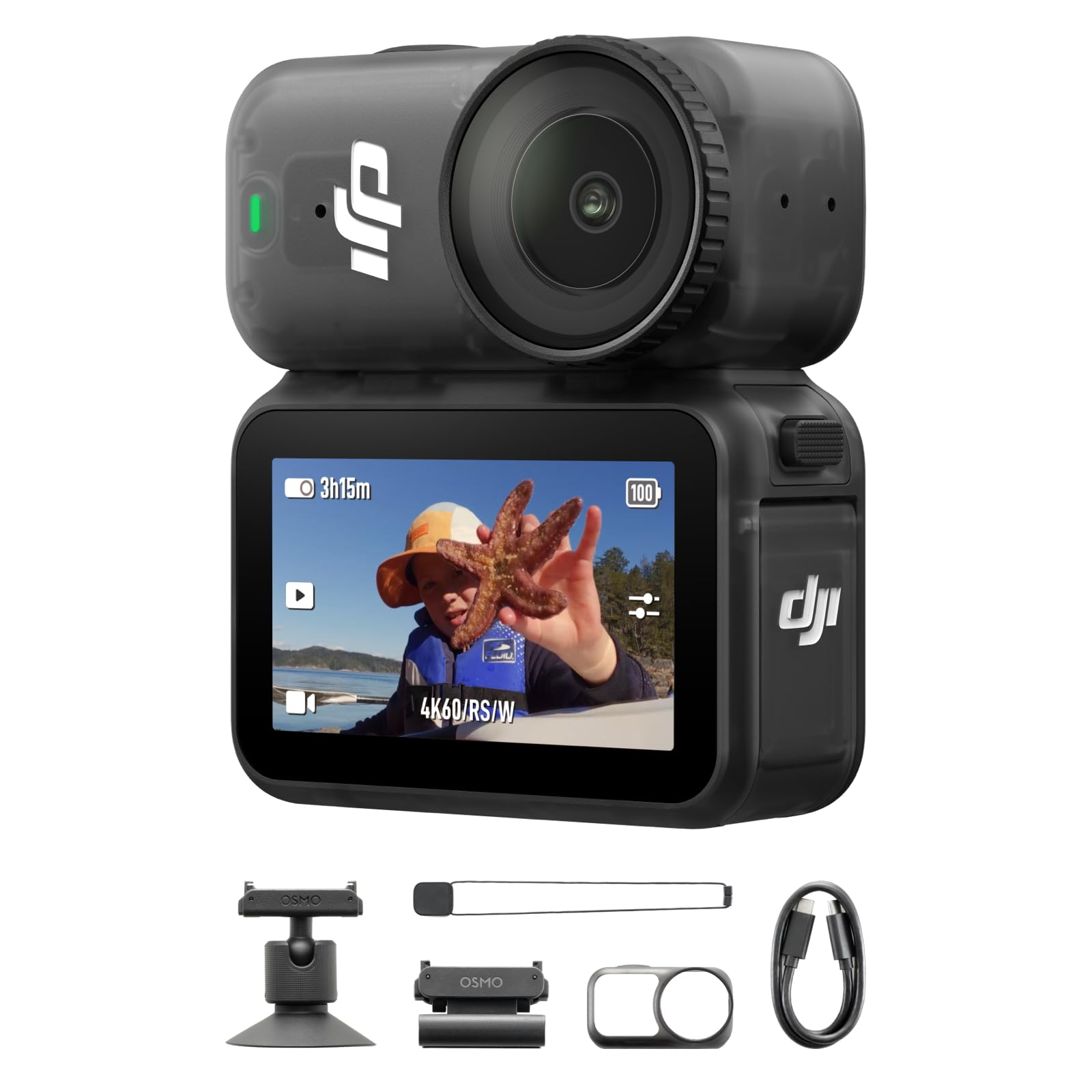
The DJI Osmo Nano is a magnetic, screenless action camera that focuses on portability and POV vlogging. It uses a 1/1.3-inch sensor to capture 4K/60fps video with a massive 143-degree ultra-wide field of view. The magnetic mounting system (hat clip, lanyard, ball-joint adapter) offers hands-free perspectives for sports, pet walks, and immersive travel vlogs that no gimbal camera can achieve.
Built-in 128GB storage means you can record immediately out of the box, and the battery lasts up to 200 minutes on a full charge when using the Vision Dock. The 10-bit D-Log M color profile enables flexible color grading, and OsmoAudio support lets the camera wirelessly connect to DJI microphones for clear audio without cables. Waterproofing to 10 meters allows underwater vlogging.
It is not a traditional vlogging camera by itself — you will likely pair it with a phone or a separate screen for framing. But for creators who shoot POV content daily and need an unobtrusive, ultra-lightweight 4K camera that clips onto a backpack strap, the Nano is uniquely capable. The Standard Combo offers the best value for this niche use case.
Why it’s great
- Magnetic mounting system provides hands-free POV angles that no other camera replicate easily.
- 128GB of internal storage eliminates the need for an immediate SD card purchase.
- 200-minute battery life and 10-meter waterproofing make it ideal for long outdoor adventures.
Good to know
- The lack of a built-in screen requires a paired smartphone or the Vision Dock for framing shots.
- The dock can drain battery when idle, requiring more attention to power management.
5. Sony Alpha 6700 with 16-50mm Lens

The Sony Alpha 6700 is a high-performance APS-C mirrorless camera that applies Sony’s full-frame AF technology to a more compact body. The dedicated AI processor drives Real-time Recognition with 759 phase-detection points, tracking human faces and eyes with industry-best reliability — even when subjects turn away or wear sunglasses. It oversamples 6K to produce crisp 4K/60p footage, and can record 4K/120p with a slight crop for slow motion.
Active Mode electronic stabilization functions well for walking shots when paired with a stabilized lens, though it crops the frame slightly. The vari-angle touchscreen flips out for self-recording, and the 16-50mm kit lens provides a flexible focal range. In-camera LUT handling and S-Log3 support give videographers serious color-grading tools without external recorders.
Battery life comfortably exceeds 500 shots per charge, and the grip is comfortable enough for extended handheld shooting. The primary trade-off is the kit lens: Sony’s 16-50mm f/3.5-5.6 is optically mediocre, especially in low light. Most serious buyers will pair the body with a prime lens like the Sigma 16mm f/1.4 for sharper results and better low-light performance.
Why it’s great
- AI-based autofocus with 759 points is the most reliable tracking available in an APS-C body.
- 6K oversampled 4K/60p video delivers exceptionally sharp and detailed footage.
- Compact and lightweight for a mirrorless ILC, with professional log and LUT support.
Good to know
- The 16-50mm kit lens is a weak point; budget for a higher-quality lens to unlock the sensor’s potential.
- No built-in flash, and Active Mode stabilization crops the frame noticeably.
6. Canon PowerShot V1

Canon’s PowerShot V1 is a purpose-built hybrid for video-first creators, featuring a larger-than-typical 1.4-type sensor (between 1-inch and APS-C) and a built-in 16-50mm f/2.8-4.5 lens with a wide-angle starting point perfect for selfie-style vlogging. The internal cooling fan is a critical addition: it allows unlimited 4K recording without overheating, a known pain point for many compact cameras during long livestreams or interviews.
It records Canon Log 3 in 10-bit color, offering a wide dynamic range and excellent post-production flexibility normally reserved for larger C-series cameras. The 22.3-megapixel sensor captures detailed stills, and the 18.7-megapixel video mode ensures high-quality 4K readout. Dual Pixel CMOS AF II with eye detection locks onto faces reliably and smoothly, even in challenging backlight.
The camera’s body is slightly bulkier than the Sony ZV-1 series, but that trade-off buys active cooling and a more robust lens. The lack of a built-in flash and the SD slot placement under the battery door are ergonomic quibbles, but the V1 is a focused tool that prioritizes video reliability over pocketability. For home studio vloggers and live streamers, it is a strong contender.
Why it’s great
- Built-in cooling fan prevents overheating during unlimited 4K recording sessions.
- Ultra-wide 16mm equivalent lens starts wide enough for comfortable selfie framing.
- Canon Log 3 and 10-bit color provide excellent dynamic range for color grading.
Good to know
- No optical image stabilization relies on electronic IS, which can cause jittery walking shots.
- The battery is charged via USB-C in-camera; no external charger is included in the box.
7. Canon EOS R50 V
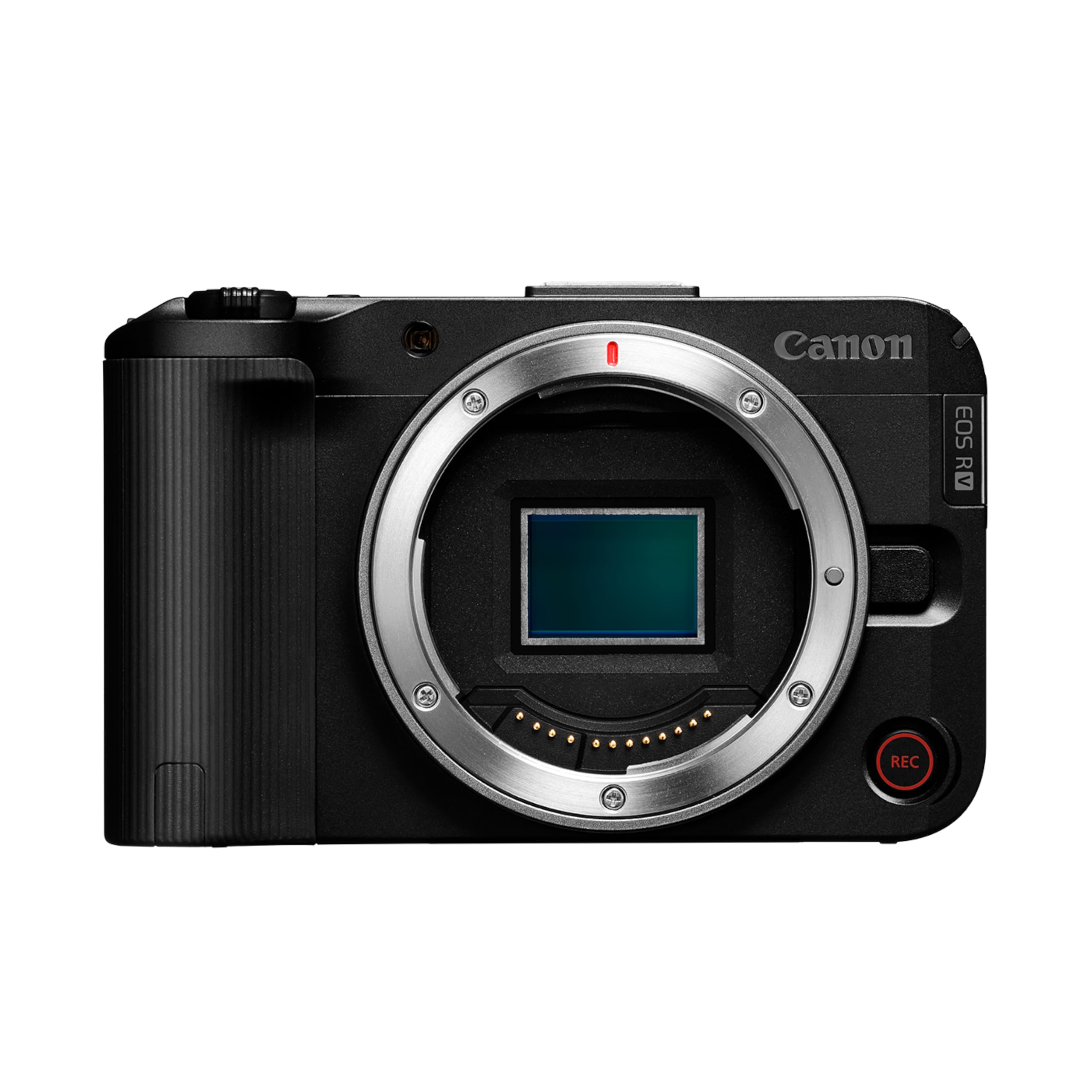
The Canon EOS R50 V is the first body in Canon’s dedicated “V” series, designed around video-first operation. It features a 24.2-megapixel APS-C sensor paired with the DIGIC X processor and Dual Pixel CMOS AF II, delivering the same sophisticated autofocus as Canon’s high-end R-series bodies. The front record button and vertical video tripod mount make it ready for TikTok and YouTube shooting right out of the box.
It records 4K up to 59.94p with a crop and full-width 4K at 29.97p, plus Full HD at 119.8p for slow motion. The interface is redesigned for content creators, with slow/fast mode controls for creative frame rate changes. Subject detection supports people, animals, and vehicles, and Register People Priority remembers specific individuals for consistent focus lock.
Being a mirrorless ILC, the R50 V requires lenses, but the compact RF mount keeps the system light. With the RF 28mm f/2.8 pancake lens, this becomes a very portable vlogging rig. It lacks in-body image stabilization and a viewfinder, but the video quality and autofocus at this price point justify those omissions for video-first beginners.
Why it’s great
- Canon’s Dual Pixel CMOS AF II is among the most reliable and user-friendly autofocus systems.
- Dedicated video-first controls, including front record button and vertical tripod mount.
- Compatible with Canon’s affordable RF lenses for a lightweight and capable travel kit.
Good to know
- No in-body image stabilization, so you must rely on lens IS or a gimbal for smooth walking shots.
- 4K/60p recording uses a crop factor, which reduces the effective field of view.
8. Sony ZV-1 II

The Sony ZV-1 II is the successor to the wildly popular ZV-1, upgrading the lens to an ultra-wide 18-50mm equivalent while retaining the 1-inch sensor and f/1.8-4.0 aperture. The wider starting point is essential for vloggers who film themselves at arm’s length, eliminating the need for a selfie stick in many scenarios. The f/1.8 wide end still creates smooth background defocus for a professional look.
Sony’s Real-time Eye AF and face detection are as reliable as ever, locking onto subjects quickly and staying locked during movement. The directional 3-capsule microphone is the best integrated audio solution in this class, and the included wind screen helps outdoors. Product Showcase mode makes a smooth, rapid focus transition from face to held object, ideal for unboxing and review vlogs.
The main drawback is the lack of Optical SteadyShot compared to the original ZV-1, relying on more aggressive electronic stabilization that crops the frame and introduces some jitter during walking shots. Battery life is average, and USB-C charging is supported but a charger is not included. For static/selfie vlogging and short-form content, the ZV-1 II is a compact powerhouse.
Why it’s great
- Ultra-wide 18mm makes selfie-style vlogging easy without a wide-angle adapter.
- Real-time Eye AF and product showcase mode simplify focus transitions for creators.
- Best-in-class internal microphone with directional pickup and included wind screen.
Good to know
- Electronic stabilization is not as effective as optical steadyshot; walking footage can be bouncy.
- Battery life is limited, and no charger is provided — only a USB-C cable.
9. Blackmagic Pocket Cinema Camera 4K

The Blackmagic Pocket Cinema Camera 4K is a cinema-grade camera at a prosumer price, built around a Micro Four Thirds sensor that captures native 4096×2160 resolution with 13 stops of dynamic range. It is not a typical vlogging camera — it lacks autofocus, in-body stabilization, and a flip screen — but for vloggers who prioritize post-production flexibility and image quality above all else, it is a uniquely powerful tool.
It records directly to Blackmagic RAW or Apple ProRes, both of which are industry-standard codecs. The included DaVinci Resolve Studio license covers professional color grading software. The 5-inch touchscreen is bright enough for outdoor use, and the mini XLR input allows high-quality professional microphones to be connected without adapters. USB-C external SSD recording removes the risk of SD card failure.
Battery life with the included LP-E6 is only about 30 minutes, so you will need external power for any serious session. This camera requires rigging, gimbals, and manual focus — it is for the creator who treats vlogging as filmmaking. For anyone willing to build a proper kit, the image quality per dollar is unmatched in the 4K market.
Why it’s great
- 13 stops of dynamic range and Blackmagic RAW deliver cinema-level quality in a compact body.
- Includes DaVinci Resolve Studio, a professional editing and color grading suite.
- Mini XLR input and USB-C SSD recording provide robust professional connectivity.
Good to know
- No continuous autofocus, no image stabilization, and no flip-out screen for self-recording.
- Battery lasts roughly 30 minutes; external power or a large battery grip is essential for extended shoots.
10. Nikon Z50 II Two-Lens Kit

The Nikon Z50 II is a lightweight APS-C mirrorless camera that balances stills and video performance with a strong emphasis on ease of use. It features a 20.9-megapixel DX-format sensor and records 4K UHD at 60fps, plus Full HD 120p for slow motion. The two-lens kit (16-50mm VR and 50-250mm VR) covers an extremely wide focal range, from wide-angle vlogging to telephoto compressed portraits.
Nikon’s 31 in-camera Picture Control presets allow quick aesthetic changes without editing, a major convenience for creators who want distinctive looks straight out of camera. Subject detection covers people, dogs, cats, birds, and vehicles, with dedicated bird and airplane modes for improved AF accuracy. The built-in flash and Night Portrait mode add flexibility for indoor and evening shooting.
The Z50 II is slightly larger than pocket gimbal cameras, but it offers the flexibility of interchangeable lenses and a larger sensor. The two-lens kit provides excellent value, giving you both a standard zoom and a telephoto zoom. It lacks in-body stabilization, relying on VR lenses, and the menu system has a learning curve, but for a travel vlogger who wants one camera for photos and video, it is a compelling entry point.
Why it’s great
- Two-lens kit covers 16-250mm, a massive focal range for total creative flexibility.
- 31 built-in color presets deliver ready-to-share looks without post-processing.
- Excellent subject detection for humans, animals, and birds ensures reliable autofocus.
Good to know
- No in-body image stabilization; smooth walking shots require a lens with VR.
- The menu system can be complex for beginners, requiring some time to master.
11. Panasonic LUMIX S9 with S 18-40mm Lens
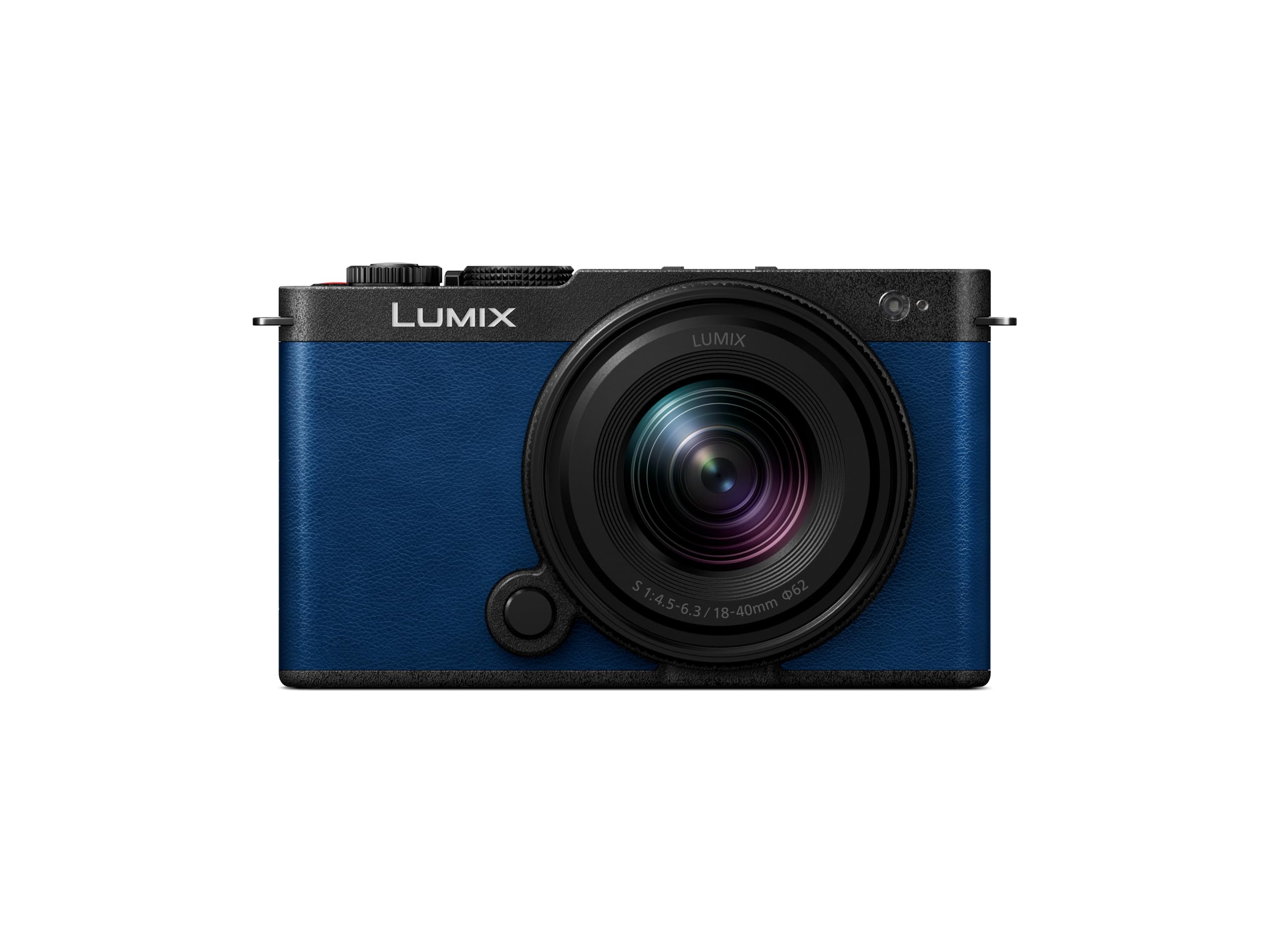
The Panasonic LUMIX S9 packs a full-frame sensor into a body that rivals typical APS-C cameras in size, making it the most compact full-frame vlogging camera available today. The S 18-40mm f/4.5-6.3 lens is ultra-slim and pairs perfectly with the small body for an unobtrusive travel kit. Full-frame advantages include superior low-light performance, shallower depth of field, and higher dynamic range than any 1-inch or APS-C sensor.
Open Gate recording captures the full sensor area, allowing you to crop to vertical 9:16, square 1:1, or horizontal 16:9 in post without sacrificing resolution. The LUMIX Lab app and ultra-fast Wi-Fi transfer make editing and sharing on a phone instantaneous. Real-time LUT support means you can apply color grading in-camera or through the app, creating a consistent look across all footage.
The S9 lacks a hotshoe and a headphone jack, and the 18-40mm kit lens has a variable aperture that limits low-light shooting. However, the IBIS system is excellent, rivaling full-frame cameras costing twice as much. For the travel vlogger who wants full-frame quality in the smallest possible package and values fast social media integration, the S9 is a unique and capable choice.
Why it’s great
- Full-frame sensor in an APS-C-sized body offers unmatched low-light and dynamic range in this form factor.
- Open Gate recording lets you extract vertical and horizontal video from a single shot.
- Excellent IBIS and in-camera LUT support for a polished, professional look with minimal effort.
Good to know
- No hotshoe and no headphone jack limit audio monitoring and accessory mounting.
- The 18-40mm kit lens has a variable aperture that is slow in low light, especially at the telephoto end.
FAQ
Is 4K/60fps important for a vlogging camera?
What is the advantage of a gimbal camera over a mirrorless camera for vlogging?
Do I need an external microphone for my 4K vlogging camera?
Final Thoughts: The Verdict
For most users, the best 4k camera for vlogging winner is the DJI Osmo Pocket 3 because it integrates 3-axis stabilization, 4K/120fps recording, and reliable tracking into the most refined pocketable package available. If you want the highest image quality and are willing to rig a proper kit, grab the Sony Alpha 6700. And for a budget-friendly gimbal camera that punches far above its price, nothing beats the Xtra Muse.