
The majority of budget-level camcorders and compact cameras claiming 4K resolution produce video that, upon close inspection, falls short of the crisp, detailed look you expect from the format. The challenge is that “4K” on the box doesn’t guarantee the bitrate, sensor quality, or processing power needed to deliver genuinely usable footage, especially in the sub-$300 zone where marketing often outpaces engineering. This guide cuts through the inflated claims to find the models that actually deliver a true 4K experience without breaking the bank.
I’m Min — the co-founder and writer behind Gadgets Feed. I spend hundreds of hours each quarter analyzing digital camera specifications across price brackets, comparing sensor sizes, bitrates, stabilization systems, and real-world sample footage to separate legitimate performance from misleading specs. This guide focuses specifically on the models that offer genuine 4K recording at realistic frame rates within a strict sub-$300 budget.
Whether you’re starting a YouTube channel, documenting family trips, or upgrading from smartphone photography, finding a reliable 4k camera under $300 requires knowing exactly which specs matter — and which models actually deliver on their promises.
How To Choose The Best 4K Camera Under $300
With a hard $300 ceiling, compromises are unavoidable, but the right trade-offs make the difference between a camera you’ll use daily and one that collects dust. Focus on three priorities: genuine 4K recording at a usable frame rate, a sensor that captures enough light, and reliable stabilization for handheld use. Avoid models that inflate resolution numbers while delivering pixelated or choppy footage.
Real 4K Resolution vs Marketing Claims
Some cameras advertise “4K” or even “8K” but deliver that resolution at unusably low frame rates like 15 frames per second, resulting in jerky, stuttering video. True 4K video should record at a minimum of 24fps, with 30fps being the standard for smooth, natural motion. Check the fine print: if the camera records 4K at 15fps, that footage is effectively unusable for anything other than still-frame extraction. For a camera under $300, 4K at 30fps is the gold standard, and 4K at 24fps is acceptable for cinematic-style content.
Sensor Quality and Low-Light Performance
The sensor is the heart of your video quality. A 1/2.3-inch CMOS sensor is the most common in this price bracket, and while it handles well-lit scenes decently, it struggles significantly in low light. A larger sensor like a 1-inch type, which you occasionally find in higher-end compact cameras, captures more light per pixel, resulting in cleaner footage after sunset or indoors. Aperture also plays a role — an f/1.8 or f/2.0 lens lets in far more light than an f/3.9 lens, making the difference between usable indoor footage and grainy noise.
Image Stabilization for Handheld Shooting
If you plan to shoot handheld — whether vlogging, walking through a market, or filming family events — image stabilization is critical. Optical stabilization (OIS) physically moves lens elements to compensate for shake and is the most effective. Electronic stabilization (EIS) crops into the frame and uses software to smooth motion, which can introduce a wobbling “jello” effect in fast movement. In the sub-$300 category, most cameras rely on EIS, but a well-implemented 6-axis EIS system, like the one on the SJCAM C400, can produce surprisingly smooth walking footage without destroying sharpness.
Quick Comparison
On smaller screens, swipe sideways to see the full table.
| Model | Category | Best For | Key Spec | Amazon |
|---|---|---|---|---|
| Panasonic LUMIX FZ80D | Premium Bridge Cam | Wildlife & Distant Detail | 60x Optical Zoom (20-1200mm) | Amazon |
| Canon EOS R100 Kit | Mirrorless ILC | Sharp Interchangeable Glass | 24.1MP APS-C Sensor | Amazon |
| SJCAM C400 | Action/Vlog Cam | Stabilized Walking Vlogs | 6-Axis EIS + 7H Battery | Amazon |
| FlyFrost 8K Camcorder | Value Camcorder | Kit Accessories & Beginners | 32GB Card + Mic + Remote | Amazon |
| Kodak PIXPRO FZ55 | Entry-Level Compacts | Simple Family Snapshots | 5x Optical Zoom, 16MP | Amazon |
| Panasonic LUMIX ZS99 | Premium Compact Zoom | Travel & Concert Zoom | 30x Leica Zoom (24-720mm) | Amazon |
| Sony RX100 VII | Premium Compact All-Rounder | Pocket-Sized Pro Quality | 1-Type Stacked CMOS, 20.1MP | Amazon |
In‑Depth Reviews
1. Panasonic LUMIX FZ80D

The FZ80D delivers an astonishing 60x optical zoom range from 20mm wide-angle to 1200mm super-telephoto, a spec that would cost several times more in interchangeable-lens systems. Its Power O.I.S. (Optical Image Stabilizer) does a remarkable job counteracting hand-shake at extreme telephoto lengths, making handheld wildlife or concert shooting far more viable than any digital zoom solution. The 4K video mode records at 30fps and includes the 4K Photo feature, which lets you extract precise 8-megapixel stills from your footage — a clever workaround for capturing fast action without perfect timing.
Image quality in bright conditions is impressively detailed for a bridge camera in this tier, with good color reproduction and contrast straight out of camera. The 2,360K-dot electronic viewfinder provides a clear, glare-free preview even in direct sunlight, a significant advantage over budget cameras that rely solely on an LCD screen. The 4K Photo burst mode at 30fps captures sequences that make it easy to nail the perfect frame of a moving subject.
Low-light performance is the primary compromise — the small 1/2.3-inch sensor produces noticeable grain above ISO 800, and the lens aperture narrows significantly at the telephoto end. Battery life is adequate for a day of casual shooting, but heavy zoom use drains it faster than expected, and carrying a spare battery is wise for all-day excursions. The interface requires some menu diving to access the full suite of features, which may feel cumbersome to absolute beginners.
Why it’s great
- 60x optical zoom captures distant subjects that no phone can touch
- Optical Image Stabilizer makes handheld telephoto shots usable
- 4K Photo extraction adds real creative flexibility
Good to know
- 1/2.3-inch sensor struggles in low light, especially at high zoom
- Menu system is dense and not instantly intuitive
- No Wi-Fi connectivity for quick phone transfers
2. Canon EOS R100 Kit

The EOS R100 brings a 24.1-megapixel APS-C sensor into the entry-level mirrorless space, and that larger sensor makes a tangible difference in image quality compared to the 1/2.3-inch sensors found in similarly priced compact cameras. The kit lens, an RF-S 18-45mm f/4.5-6.3 IS STM, provides optical stabilization and a versatile zoom range that covers standard wide to moderate telephoto. Dual Pixel CMOS AF with face and eye detection locks onto human subjects reliably, making it a strong choice for vloggers and family shooters who need consistent focus without constant manual adjustments.
4K video is limited to 24fps, which produces a cinematic look but can feel slightly stuttery for fast-moving action — Full HD at 60fps is smoother for general use. The DIGIC 8 processor handles the data load well, and the camera includes useful features like animal and vehicle detection autofocus that extend its versatility beyond portraits. The body is the smallest and lightest in Canon’s RF lineup, slipping easily into a daypack without weighing you down.
The biggest trade-off is the lack of an included battery charger — the camera charges via USB-C, which means you can’t swap batteries and keep shooting unless you buy a separate charger. The 4K crop is another consideration, as the camera applies a 1.5x crop factor in 4K mode, making the kit lens feel tighter than its 18-45mm range suggests. Video autofocus is generally reliable but can hunt slightly in very low contrast scenes, and the single SD slot supports only UHS-I cards.
Why it’s great
- APS-C sensor delivers noticeably better image quality and low-light performance
- Dual Pixel AF with face/eye detection simplifies vlogging and portraits
- Compact, lightweight body with RF lens system upgrade path
Good to know
- No battery charger included — USB-C charging only out of box
- 4K video is limited to 24fps with a 1.5x crop factor
- Menu navigation takes time to learn for first-time mirrorless users
3. SJCAM C400
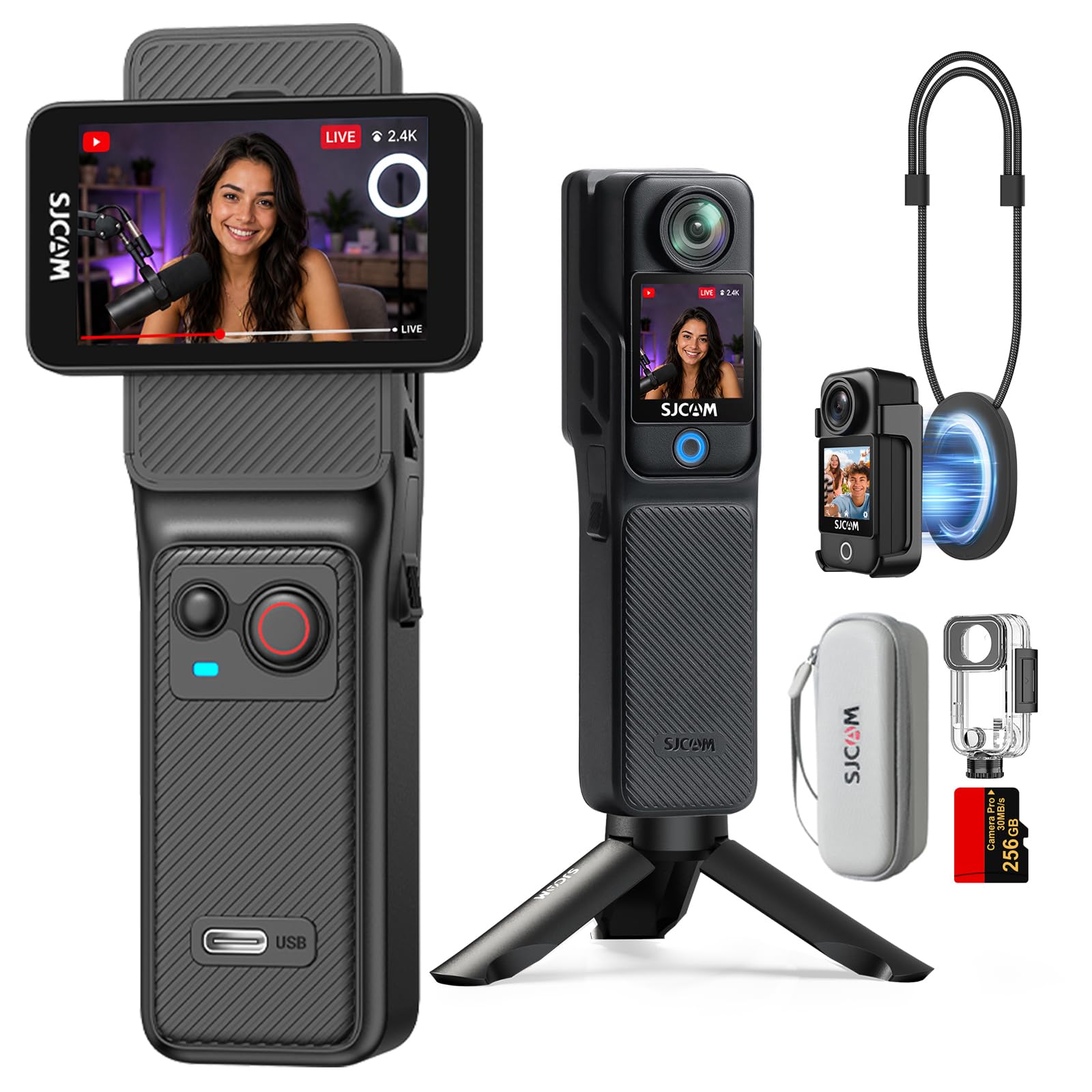
The SJCAM C400 is built from the ground up for content creators who need long recording times and smooth handheld footage. Its 6-axis electronic image stabilization, combined with horizon correction, produces remarkably steady walking shots that rival cameras costing significantly more. The 154-degree distortion-free wide-angle lens captures expansive POV footage, making it ideal for travel vlogging, outdoor adventures, or first-person documentation. The 7-hour battery life on a single charge is genuinely impressive, allowing full-day shooting sessions without carrying multiple spares.
The 4K resolution delivers good detail in well-lit environments, and the f/2.0 aperture helps maintain usable footage in lower-light conditions than many competitors in its price range. Included accessories like the 256GB memory card, tripod, and carrying case add substantial value, meaning you don’t need to spend extra on essentials. The 5G Wi-Fi module enables fast file transfers to your phone via the dedicated app, and the app itself offers remote control and real-time preview.
Video quality, while solid for the price, doesn’t match the sharpness or dynamic range of larger-sensor cameras — some users report that the 4K footage looks softer than expected when compared to a modern smartphone’s video. The waterproofing is rated to 30 meters, but only with the included housing, so it’s not a true out-of-the-box underwater camera. The interface is functional but feels less polished than established action camera brands, and some settings are buried in menus that require memorization.
Why it’s great
- 6-axis stabilization with horizon correction delivers smooth walking footage
- 7-hour battery covers full-day shoots without recharging
- Generous kit includes 256GB card, tripod, and carrying case
Good to know
- 4K video sharpness doesn’t match top-tier smartphones or large-sensor cameras
- Waterproof housing required for underwater use, not included in basic operation
- User interface can feel clunky compared to GoPro or DJI ecosystems
4. FlyFrost 8K Camcorder
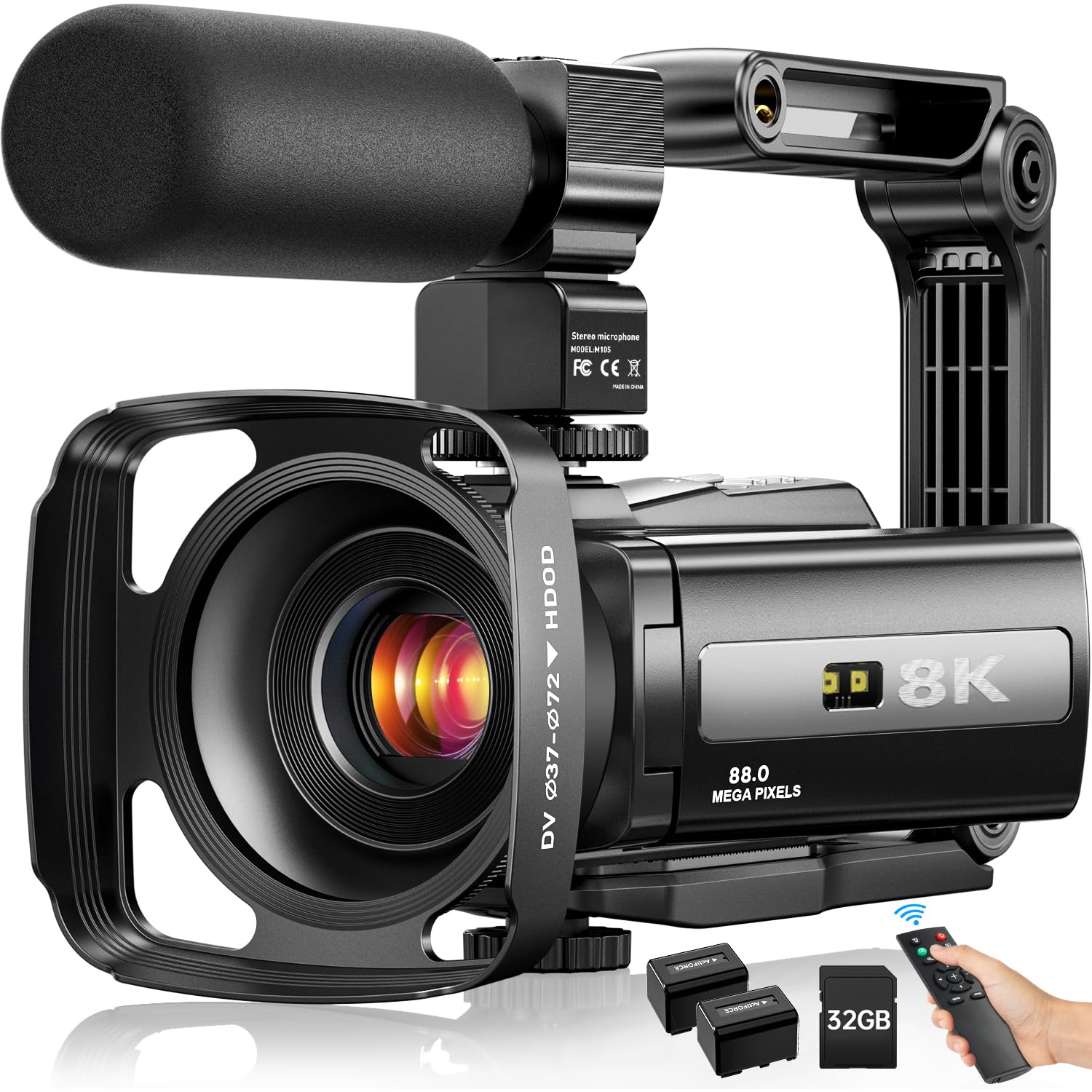
The FlyFrost 8K camcorder enters the conversation with an aggressive spec sheet — 8K resolution, 88MP stills, IR night vision, and a complete accessory bundle that includes a microphone, lens hood, handheld stabilizer, remote control, two batteries, and a 32GB memory card. For a beginner who wants everything in one box, this package is hard to beat in terms of sheer volume of included gear. The 3-inch touch screen flips 270 degrees for self-recording, and the Wi-Fi connectivity allows direct phone preview and file transfer through the iSmart DV2 app.
The practical reality is that the 8K resolution records at only 15 frames per second, which produces visibly choppy motion and is unsuitable for standard video use — you’ll want to record in 4K mode for smooth footage. In good light, the 4K footage is acceptable for social media and casual vlogging, with decent color and detail. The external microphone attachment does improve audio quality noticeably over the built-in mic, reducing wind noise for outdoor shoots. The included IR night vision works at close range, capturing usable black-and-white footage in complete darkness.
Low-light performance is the camera’s biggest weakness — footage becomes grainy quickly as light drops, and the zoom turns into a pixelated mess when pushed past about 5x digital. The autofocus is contrast-based and hunts noticeably in video mode, especially when subjects move unpredictably. The build quality feels plasticky, and the menu system, while functional, lacks the polish of established camera brands. This is a camera for absolute beginners who prioritize accessories over image quality, not for anyone who needs reliable 4K performance.
Why it’s great
- Excellent accessory bundle — everything a beginner needs in one box
- External microphone noticeably improves audio for vlogging
- Wi-Fi and remote control add convenience for solo shooting
Good to know
- 8K is at 15fps — effectively unusable for regular video
- Very poor low-light performance with grainy, noisy footage
- Autofocus hunts noticeably in video mode and struggles with motion
5. Kodak PIXPRO FZ55-BK

The Kodak PIXPRO FZ55 is the most cost-effective entry point into dedicated digital cameras, offering a 16-megapixel CMOS sensor and a 5x optical zoom lens with a 28mm wide-angle equivalent. Its primary limitation is immediately clear: video recording is capped at 1080p Full HD, not 4K. For users who need 4K video, this camera simply isn’t the right tool, but for budget-conscious buyers who prioritize simplicity and still photography over video resolution, it remains a solid choice for casual family documentation, travel snapshots, and beginner photography practice.
The camera is refreshingly straightforward to operate — there’s no steep learning curve, and the compact body fits easily into a jacket pocket or small bag. Reviewers consistently praise its sharp picture quality in good light, vibrant color reproduction, and decent battery life for a device in this price tier. The optical zoom provides genuine reach beyond what digital zoom on a phone can offer, and macro mode lets you get as close as 5cm from a subject for detailed close-ups.
The 2.7-inch LCD screen is on the smaller side and has limited resolution, making it difficult to verify sharpness in the field. Low-light performance is poor — the small sensor and slow aperture (f/3.9 at wide, f/6.3 at tele) produce noisy, soft images indoors without flash. There is no image stabilization beyond basic digital correction, so handheld shots at full zoom require a steady hand or a tripod. The camera lacks Wi-Fi or Bluetooth, meaning photo transfers require a card reader or USB cable, which feels dated in 2025.
Why it’s great
- Extremely simple operation for complete beginners or kids
- Optical zoom outperforms phone digital zoom for distant subjects
- Very affordable entry into dedicated camera ownership
Good to know
- Records only 1080p — does not shoot 4K video at all
- Small, low-resolution LCD makes composition and review challenging
- Poor low-light performance and no image stabilization
6. Panasonic LUMIX ZS99

The LUMIX ZS99 packages a 30x optical zoom Leica DC Vario-Elmar lens (24-720mm equivalent) into a body that genuinely fits in a pants pocket, making it the ultimate travel companion for capturing everything from wide landscapes to distant concert stages. The 4K video records at 30fps and includes Panasonic’s 4K Photo mode, which captures bursts at 30fps for frame extraction. The 1,840k-dot tiltable touchscreen LCD provides flexible framing for overhead shots or low-angle compositions, and USB-C charging means you can top up from a power bank in the field.
Image quality is good for a compact 1/2.3-inch sensor camera up to ISO 1600, with Panasonic’s processing delivering pleasant colors and decent detail in good light. The stepped zoom feature lets you jump to specific focal lengths (24, 28, 35, 50, etc.) instantly, which is a fantastic tool for photographers who think in terms of classic focal lengths. Lens Position Resume remembers where your zoom was set when you power off, so you don’t lose your framing between shots — a small detail that makes a big difference during events.
Low-light performance is the expected weak point — noise becomes visible from ISO 800, and handheld shots in dim interiors or night scenes are often blurry without forcing a slow shutter speed. The autofocus is contrast-detect and can be sluggish in low contrast scenes, occasionally missing focus on moving subjects in dim concert lighting. Some units have been reported with color fringing (chromatic aberration) in high-contrast edges at the extreme ends of the zoom range, and the menu system, while powerful, is deep enough to frustrate quick setting changes.
Why it’s great
- 30x Leica zoom in a pocket-sized body is unmatched for travel
- Stepped zoom and Lens Position Resume speed up real-world shooting
- USB-C charging simplifies travel power management
Good to know
- Small sensor struggles in low light and at high ISOs
- Autofocus can be slow in dim conditions with moving subjects
- Chromatic aberration visible at zoom extremes in high-contrast scenes
7. Sony RX100 VII
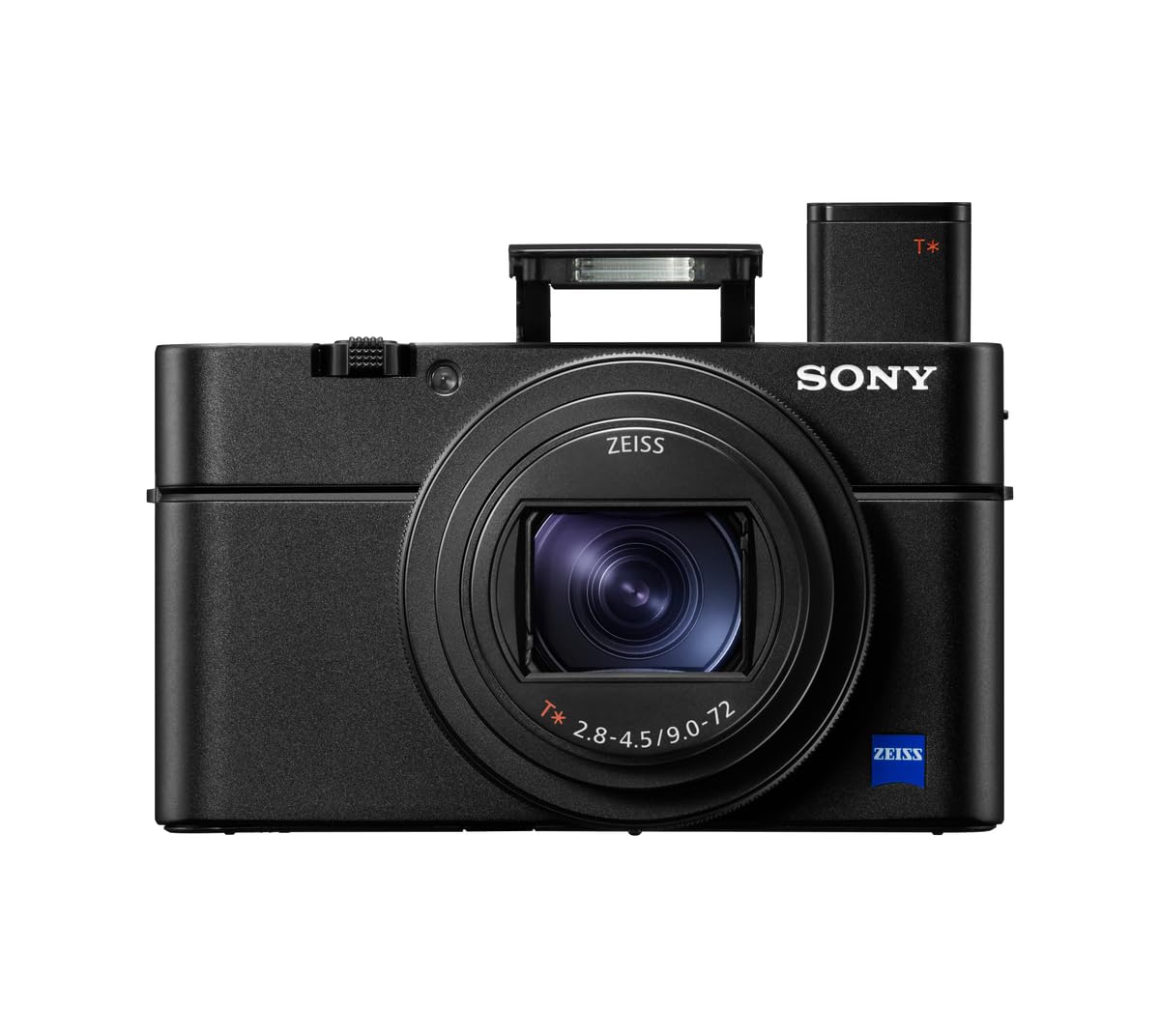
The RX100 VII is the definitive premium compact camera, packing a 1.0-type stacked CMOS sensor into a body that slips into any pocket. The 20.1-megapixel sensor, combined with the Zeiss Vario-Sonnar T* 24-200mm f/2.8-4.5 lens, produces image quality that rivals entry-level interchangeable lens cameras in a fraction of the volume. The stacked sensor enables blistering performance: 0.02-second autofocus acquisition, 357 phase-detection and 425 contrast-detection AF points, and continuous blackout-free shooting at 20 frames per second with real-time tracking for both human and animal subjects.
4K video quality is outstanding, with full pixel readout without pixel binning, producing exceptionally sharp and detailed footage. The inclusion of S-Log3 and a microphone jack makes it genuinely viable for semi-professional video work, and Active Mode image stabilization smooths out handheld walking footage better than any other compact camera in its class. The 24-200mm zoom range covers everything from wide architecture to tight portraits without sacrificing image quality, and the pop-up electronic viewfinder provides an accurate preview in bright conditions.
The premium comes at a premium price — the RX100 VII costs multiples of every other camera on this list, placing it far outside the sub-$300 budget. The menu system is notoriously complex, with deep sub-menus that require study to master. The 1-inch sensor, while excellent, still doesn’t match the low-light performance of APS-C or full-frame cameras, and the lack of weather sealing means it can’t handle rain or dust without careful protection. Battery life is adequate for a day of casual shooting but will require a spare for heavy 4K video days.
Why it’s great
- 1-inch stacked sensor delivers exceptional image quality in a pocketable body
- Lightning-fast 0.02s autofocus with real-time tracking for humans and animals
- 4K video with S-Log3 and microphone jack enables semi-pro content creation
Good to know
- Significantly exceeds a sub-$300 budget — a premium investment
- Complex menu system requires time to learn and configure
- No weather sealing and average battery life for heavy video use
FAQ
Can I get true 4K 30fps video consistently on a camera under $300?
Why do most cheap 4K cameras fail to deliver good low-light video?
Should I buy a dedicated 4K camera or just use my smartphone for YouTube vlogging?
Final Thoughts: The Verdict
For most users, the 4k camera under $300 winner is the Panasonic LUMIX FZ80D because it delivers genuine 4K 30fps video with an incredible 60x optical zoom that no phone or budget camcorder can approach, paired with effective optical stabilization that makes handheld telephoto shots usable. If you want a compact, pocketable travel companion with great zoom reach and USB-C charging, grab the Panasonic LUMIX ZS99. And for long-duration vlogging with smooth stabilization and all-day battery life, nothing beats the SJCAM C400.