
Our readers keep the lights on and my morning glass full of iced black tea. As an Amazon Associate, I earn from qualifying purchases.
Specs are compiled from manufacturer listings and verified buyer reviews and can change over time — please confirm the key details on the product page before buying.
You want a huge 4K picture on a wall, not a TV you can carry home. Here is the key fact: only a few projectors here show true 4K — a resolution of 3840 x 2160 pixels — with actual 4K imaging chips. The rest create it through picture tricks. For most people, the best overall pick is the Valerion VisionMaster Max, a triple-laser model that gives you true blacks and bright color without flagship money. Note: this list uses flexible matching for native/true 4K, so not every pick is the exact number you searched — the nearest same-type model serves the same purpose.
I’m Min — the founder and writer behind Gadgets Feed. This guide is built by comparing the manufacturers’ published specifications and the patterns across verified customer reviews, so you get each pick’s real strengths and trade-offs instead of marketing spin.
Most buyers get burned by one thing: a projector that only accepts a 4K signal but shows a lower-resolution image. Start with our best 4K digital projector options and you sidestep that trap entirely.
Our Picks at a Glance

How To Choose The Best 4K Digital Projector
The mistake most first-time buyers make is chasing the biggest lumen number on the box. Brightness matters, but a projector that is blazing bright with washed-out blacks looks worse than a dimmer one with true contrast. Work through these four questions and you will land on the right model for your room.
Is it true 4K or just 4K-compatible?
A true 4K projector shows 3840 x 2160 pixels worth of real detail. Some models here use pixel-shift technology, which flashes the chip fast enough to double the apparent resolution — it looks sharp, but fine text and tiny texture lose a little bite. If razor-sharp 4K detail is your priority, look for a native 4K panel like the Sony SXRD models or the DLP chips running full 3840 x 2160. If you mostly watch movies and sports from a normal seating distance, pixel-shift models are genuinely hard to tell apart from native.
How many lumens do you actually need?
Lumens measure light output — the raw brightness that fights room light. A projector rated for 2,000 lumens works beautifully in a dark theater room but turns gray in a living room with the curtains open. Units rated at 3,000 lumens and above can hold a watchable image in soft daytime light. Ultra short throw models with triple-laser engines push brightness further because they sit inches from the wall and lose less light to distance.
Throw ratio decides where it can live
Throw ratio is the relationship between how far the projector sits from the wall and how big the image gets. A standard or long-throw projector needs several feet of distance and often a ceiling mount. An ultra short throw unit with a ratio like 0.2:1 sits almost against the wall and throws a huge image upward, which suits living rooms where you cannot hang anything. Measure your room before you fall in love with a model.
Light source and lifespan
Old lamp projectors need a replacement bulb every few thousand hours. Laser light sources last tens of thousands of hours and hold their brightness and color far better over time. Nearly every premium pick here uses a laser, which is why they cost more up front but skip the bulb-replacement treadmill entirely.
Quick Comparison
| Model | Best For | Brightness | Resolution | Light Source | Amazon |
|---|---|---|---|---|---|
| Valerion VisionMaster Max★ Best Overall | All-round home cinema | 3500 ISO lm | 3840 x 2160 | Triple Laser | Amazon |
| ViewSonic PX701-4KBudget Champion | Budget gaming dens | 3200 lm | 3840 x 2160 | Lamp | Amazon |
| Optoma UHZ36Outdoor Ready | Outdoor and event use | 3500 lm | 3840 x 2160 | Laser | Amazon |
| AWOL VISION LTV-2500 | All-in-one laser TV | 1700 ISO | 3840 x 2160 | Triple Laser | Amazon |
| XGIMI HORIZON 20 Max | Bright-room streaming | 5700 lm | 3840 x 2160 | Triple Laser | Amazon |
| NEBULA X1 | Sound-first setups | 3500 lm | 3840 x 2160 | Laser | Amazon |
| NexiGo Aurora Pro MKII | Compact UST cinema | 2400 lm | 3840 x 2160 | Laser | Amazon |
| AWOL VISION Aetherion Max | Daytime living rooms | 3300 ISO lm | 3840 x 2160 | Triple Laser | Amazon |
| Hisense PX4-Pro | Gaming-first UST | 3500 ANSI lm | 3840 x 2160 | RGB Triple Laser | Amazon |
| Sony VPL-XW5000ES | Dedicated theaters | 2000 lm | 3840 x 2160 | Laser | Amazon |
In‑Depth Reviews
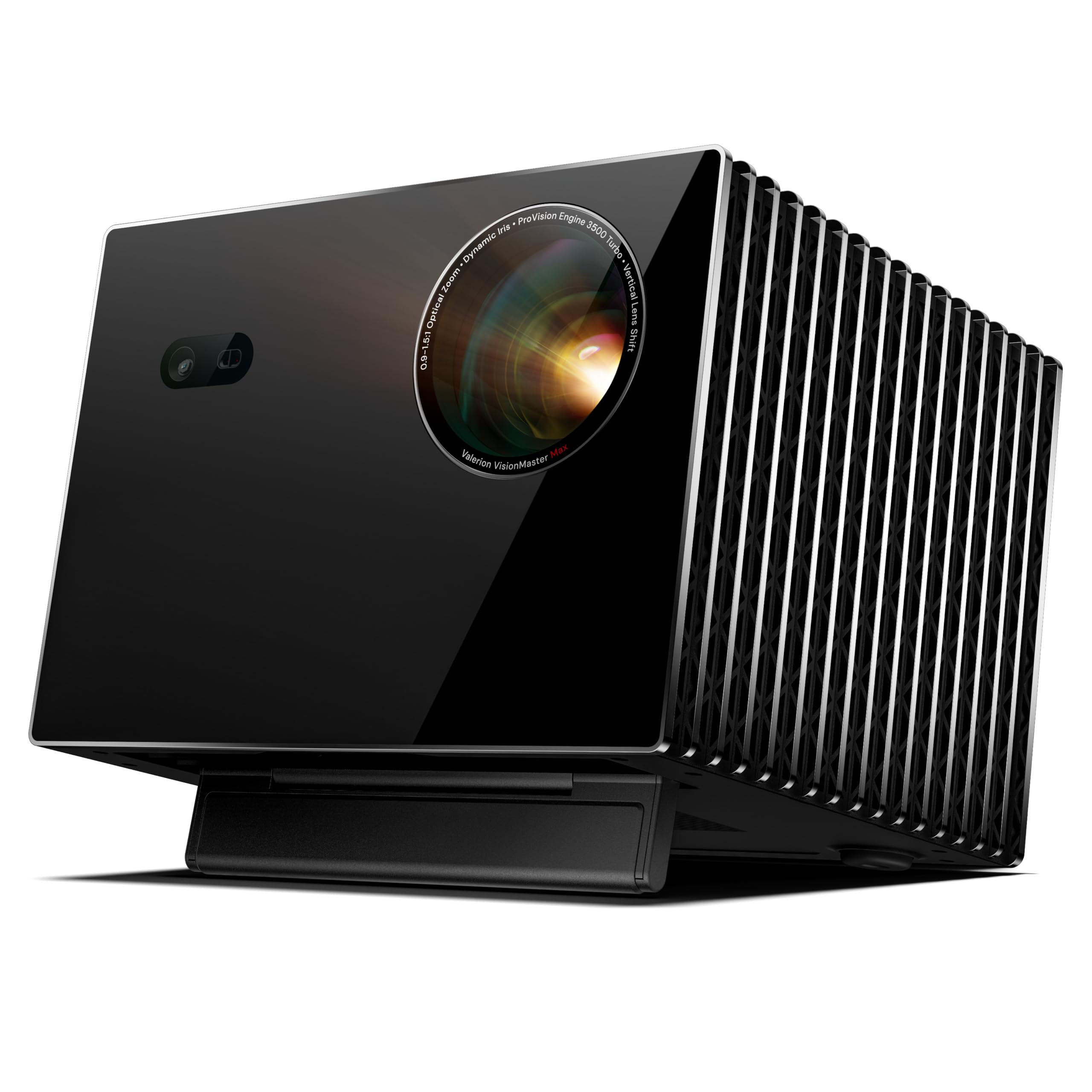
1. Valerion VisionMaster Max 4K Laser Projector
Our pick — over 4.5★ from 500+ verified ratings; the strongest balance of quality and price.
A triple-laser 4K projector with a 50000:1 viewing contrast that keeps dark scenes deep.
If you want one projector that does everything — movies, sports, and serious gaming — without giving up black level or color, the VisionMaster Max is the pick. It runs a triple-laser RGB light source (three separate lasers for red, green, and blue instead of a spinning color wheel) that hits 3,500 ISO lumens. Those ISO lumens measure real visible brightness, so you get a picture that holds up even when a little room light sneaks in.
The black-level story is where this thing pulls ahead. Valerion’s NoirScene Dark Field Engine uses an EBL (Enhanced Black Level) algorithm paired with a precision IRIS aperture — a mechanical ring that physically limits light — to reach a viewing contrast of 50000:1. In plain terms, the deep shadows in a night scene stay deep instead of turning milky gray. The Anti-RBE technology cuts rainbow effects by 99.99%, which matters a lot if you are one of the viewers who sees colored fringes flicker across bright edges. Gaming is handled with a Gigabit 4ms @240Hz mode, and that 4ms figure beats the 4.2ms of the ViewSonic PX701-4K below.
You can place this projector almost anywhere in the room. The 0.9–1.5:1 throw ratio (how far the projector sits from the wall for a given image size) with ±105% vertical lens shift (a lens that physically slides the image up and down without moving the projector) and lossless optical zoom lets you tune picture size and position without wrecking sharpness. It supports Dolby Vision, IMAX Enhanced, HDR10+, and 3D, runs Google TV built in, and adds AirPlay 2, Chromecast, and Miracast for casting. Owners call the performance and picture quality the best parts. The recurring note: the short throw ratio can force digital zoom in a long room with a distant mounting shelf, which trims brightness and sharpness — plan your distance carefully.
Where it dominates
- 3500 ISO lumens with true 50000:1 viewing contrast
- 4ms @ 240Hz gaming mode, faster than the ViewSonic’s 4.2ms
- Dolby Vision, IMAX Enhanced, HDR10+, and 3D in one box
- ±105% vertical lens shift and 0.9–1.5:1 optical zoom
- 99.99% anti-rainbow reduction for flicker-sensitive viewers
Worth knowing
- Short throw ratio can need digital zoom in a deep room
- Auto lens adjustability is the one feature owners flag as mixed
- Heavier than it looks, so check your shelf or mount
Built for: movie-and-gaming households that want one flagship-grade laser projector and refuse to compromise on black level.
Think twice if: your room is long and deep — the short throw ratio may force digital zoom — or you only ever watch in pitch black and the extra brightness is wasted.
2. ViewSonic PX701-4K UHD Projector
A 3,200-lumen 4K projector with 4.2ms input lag at 240Hz for under a flagship budget.
Here is the projector for the buyer who wants a massive screen for console or PC gaming without a flagship budget. It reads 3,200 ANSI lumens and runs at 240Hz with a 4.2ms input lag — that lag figure is the time between your controller press and the screen reacting, and 4.2ms keeps competitive shooters responsive. It covers a 12,000:1 contrast ratio and supports HDR/HLG for better depth in movies.
What wins people over is the picture versus the price. Owners consistently call out crisp 4K detail and clean auto-keystone that snaps the image into a perfect rectangle without fiddling. One trick that keeps coming up: it works superbly as a PC monitor, with very bright output and smooth 1080p at 240Hz for desktop work and gaming. At 100 inches you can sit about 10.9 feet back, and it tops out at 150-inch screens, so it scales from a den to a small media room.
The honest trade-off is the lamp. This is not a laser unit, so the light source dims over time and eventually needs replacing, and brightness and reliability are the aspects buyers discuss most cautiously. In a bright room it looks great; in a sunlit one, expect it to fight for contrast. Multiple HDMI inputs plus a powered USB-A port mean your streaming stick or console gets power straight from the projector.
Sharp deal for gamers: 4K resolution, 240Hz, and 4.2ms lag at a budget-friendly tier is a rare combination, and the easy auto setup keeps it friendly for first-timers.
The catch: lamp-based light source means bulb care and eventual replacement, and the 4K 60Hz mode looks slightly softer than native because it uses pixel shifting.
Reach for this if: you want a big 4K gaming screen now at entry-level money and are fine with a lamp you may replace down the road.
Look elsewhere if: you want a sealed laser that never needs a new bulb, or you need peak brightness in a sun-filled room.
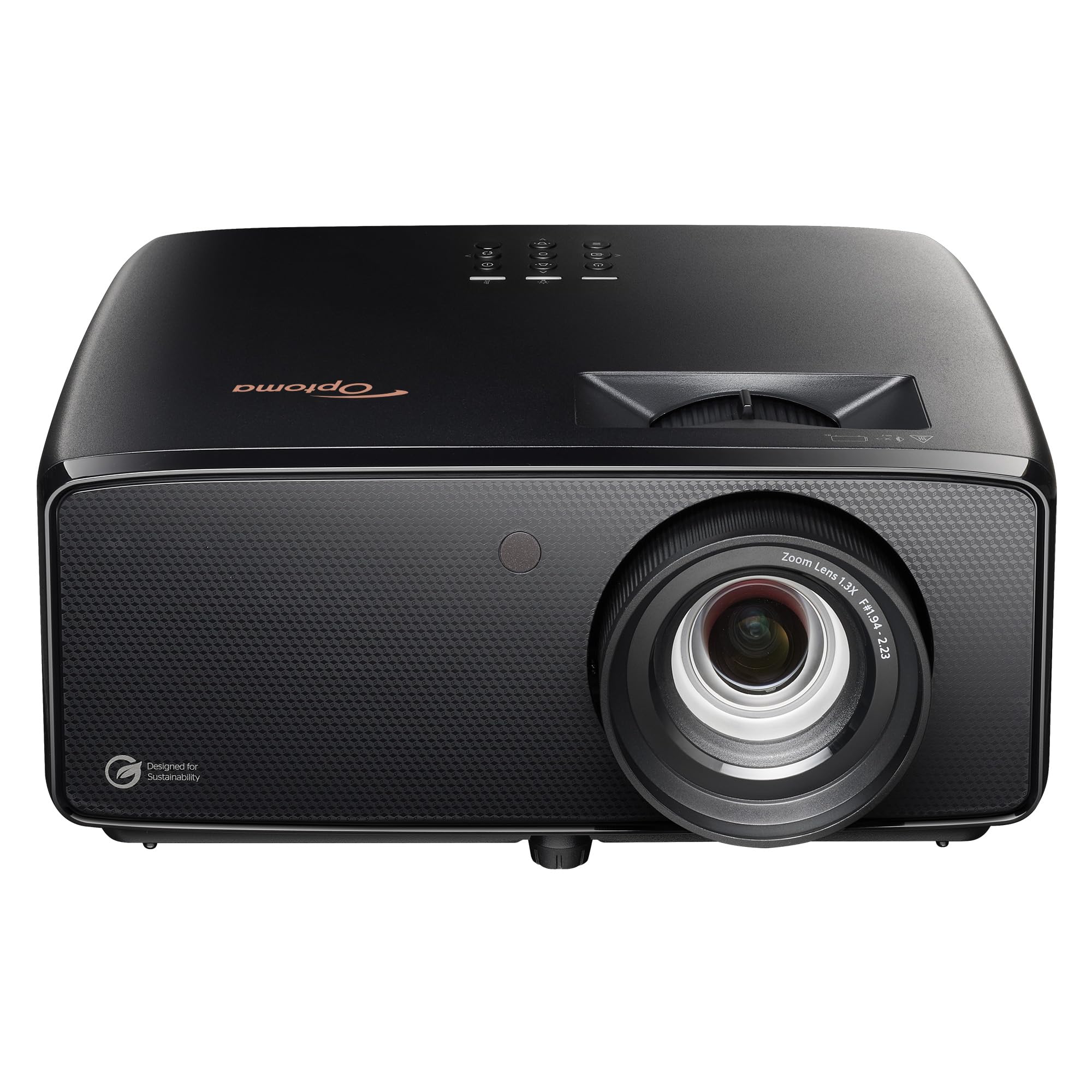
3. Optoma UHZ36 4K UHD Laser Home Theater Projector
A 3,500-lumen laser projector rated for 30,000 hours, bright enough to watch with the curtains open.
The UHZ36 is for the buyer who wants laser reliability and daytime brightness without paying flagship money. It runs 3,500 lumens with a laser light source rated for 30,000 hours — roughly the lifespan of a projector you would only replace when it fails, not when a bulb dies. It supports HDR and includes FILMMAKER MODE, which preserves the director’s original color and brightness instead of pumping up the image.
The contrast is the headline on paper — a 1,500,000:1 ratio — and it works in real rooms too. Buyers report it becomes watchable within 5 minutes of powering on and that they can finally watch movies with the curtains open. Blacks and shadow detail get strong marks, and the pixel shifting is invisible at 120 inches, so the 4K detail reads as sharp rather than soft. It handles motion well and runs quiet.
The catch is that this is a bare projector. It has no built-in streaming OS, so you will need a Fire TV Stick or similar, and the built-in speaker is weak for serious watching. Owner advice also flags that calibration helps open up its best image, that some adjustments are locked per picture mode, and that the remote has a few odd duplicate buttons. It ships with dual HDMI and an audio-out.
Strong laser value: a 30,000-hour laser engine and 3,500 lumens make this a set-and-enjoy projector with no bulb diet.
The caveat: no smart platform built in and a thin speaker, so budget for a streaming stick and a soundbar.
Land here if: you already own streaming devices and speakers and just want a bright, sealed laser projector that lasts.
Move on if: you want a projector that streams on its own the moment you unbox it.
4. AWOL VISION LTV-2500 4K UHD Ultra Short Throw Triple Laser Projector

An ultra short throw triple-laser projector that sits at the wall with no ceiling mount and no shadows.
For anyone who cannot or will not ceiling-mount a projector, the LTV-2500 is the answer. It is an ultra short throw unit, meaning it sits close to the wall and throws the image upward — no shadows cast across the screen, no ceiling hardware. It runs a triple-laser RGB light source without a color wheel, which eliminates the motorized wheel noise and reduces rainbow effects. Brightness sits at 1700 ISO lumens, and it is built for controlled-light rooms with an ALR screen.
The picture quality is the whole point. It hits a 2500:1 contrast and covers 107% of the BT.2020 color gamut, which is the big color space used for movie mastering — put simply, you see more shades and vivid hues. Owners rave about the sharp, vibrant image, especially with a Fresnel ALR screen, and they love that it includes a Fire TV 4K Max stick and runs Dolby Vision and Dolby Atmos. Unusually, it also does active-shutter 3D with glasses.
Setup rewards precision. You need to get the distance and height right, and it is heavy enough that ceiling mounting takes real effort. The built-in interface is a bit dated and less intuitive than a modern smart TV, and setup instructions are thin — support help is a phone call or message away and gets high praise. One owner did hit a media playback fault and simply exchanged the unit, which is the honest reality of any single unit failing.
what separates it
- Ultra short throw — no ceiling mount and no shadows
- Triple laser RGB, no color wheel or rainbow flicker
- Dolby Vision, Dolby Atmos, and 3D-ready
- Fire TV 4K Max stick and center-speaker audio built in
Set realistic expectations
- Heavy unit makes ceiling mounting a chore
- Needs precise wall distance and height to look best
- Interface feels dated next to a current smart TV
Best fit for: living rooms that want a massive 4K image without drilling a ceiling mount, paired with an ALR screen.
Consider a different pick if: you want a featherweight you can carry room to room — the LTV-2500 wants a permanent home.
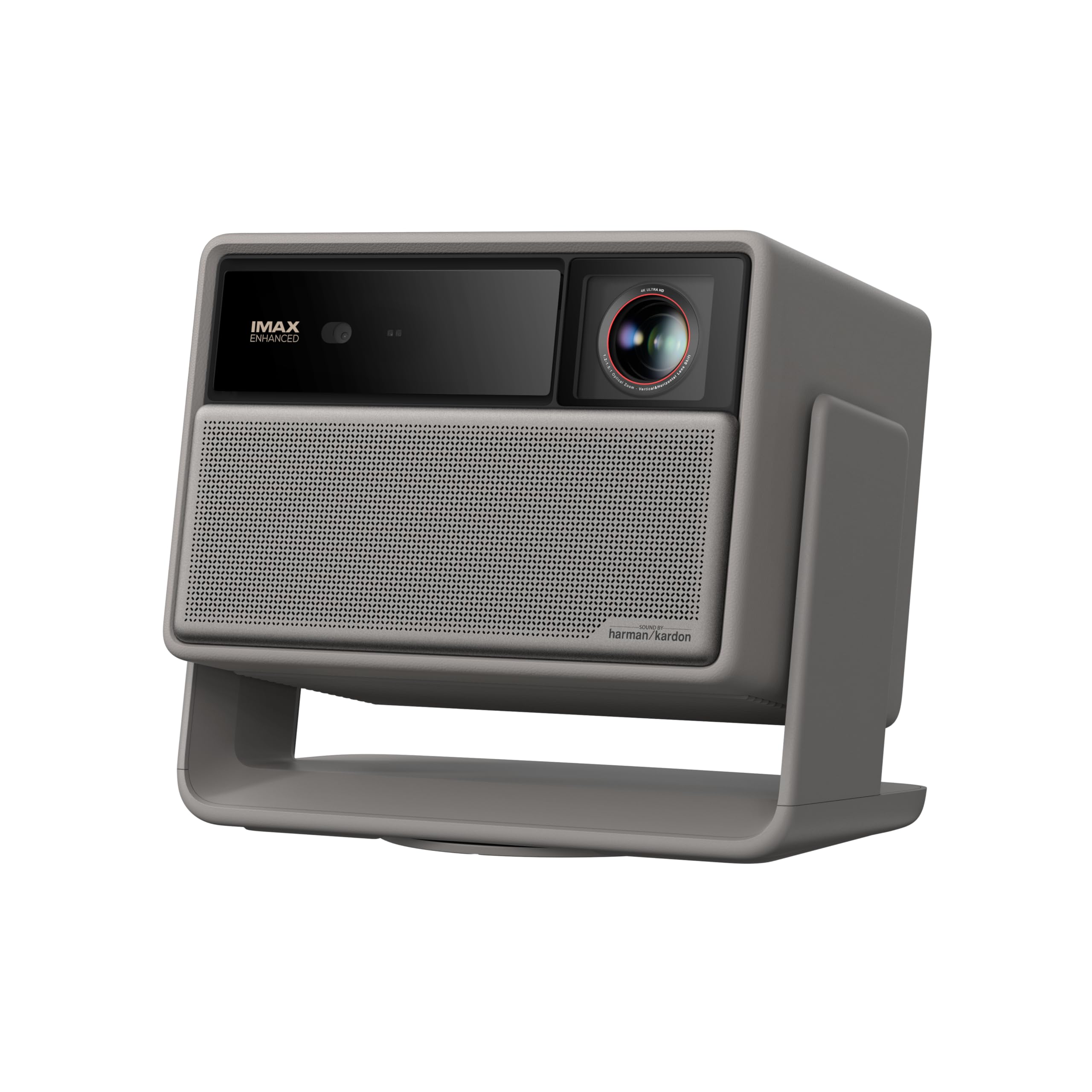
5. XGIMI HORIZON 20 Max 4K Projector Triple Laser
A 5700 ISO lumen triple-laser projector that stays visible with the room lights on.
If room light is your enemy, this is your weapon. The HORIZON 20 Max runs an X-Master RGB triple laser engine rated at 5700 ISO lumens, with a 20,000:1 contrast ratio and 110% BT.2020 color coverage. That brightness is the whole reason it makes the list — it is the light output that keeps the image visible when you do not want to sit in a cave.
Two other numbers matter. Input lag is a scorching 1ms, which beats the Valerion’s 4ms and keeps competitive gaming razor-responsive, and the refresh runs up to 240Hz. It supports IMAX Enhanced, Dolby Vision, and HDR10+. The lossless optics — a lens that shifts and zooms mechanically without softening the picture — means you can position it flexibly and still get crisp, distortion-free images at any size, up to a 300-inch screen.
It is also unusually self-contained. Google TV is built in with licensed Netflix, and Google Home handles hands-free voice control, so you do not need a streaming stick. Harman Kardon speakers handle audio. The real caution is support: a slow email-only service line is the one consistent way to get help, and one reviewer noted a fan and overheating issue that required a replacement. Owners otherwise call it the best projector they have owned, and the lens shift plus zoom is repeatedly the feature that seals the deal.
Daylight hero: 5700 ISO lumens with 1ms lag makes this the brightest gaming-capable pick in the lineup.
Mind the service: support is email-first and slow, so factor that in if you want hand-holding after purchase.
Choose this if: you have a bright room, want Google TV built in, and care about the lowest lag for gaming.
Reconsider if: you want fast live phone support, or you plan to game in 3D — some picture settings need resetting to enable it.
6. NEBULA X1 4K Triple-Laser Projector

A 3,500-lumen triple-laser projector with a 200W 4.1.2 wireless surround system and mic support.
Most projectors make you buy a soundbar. The NEBULA X1 wants to replace it. It bundles two wireless speakers for a 200W 4.1.2 surround setup with lossless audio and 25 ms latency — that means the sound stays locked to the picture without a lagging echo. It even works with a wireless microphone for karaoke nights.
The picture holds its own too. A patented triple-laser engine delivers 3,500 ANSI lumens and 110% Rec. 2020 color, and a 6-blade iris (a mechanical ring that controls light) drives native contrast of 5,000:1, boosted to 56,000:1 by NebulaMaster technology. The all-glass 14-element lens keeps edges sharp, and a motorized 25° micro gimbal lets the projector tilt itself to aim at a wall up to 10 feet high — a clever trick for angled placements.
Anker builds it, and the quiet operation shows: liquid cooling keeps fan noise under 26 dB (about as loud as a whisper), which is genuinely quiet for a bright projector. It runs Google TV with Netflix, plus auto focus, auto keystone (auto-corrects a tilted image), and auto screen fit. Two things to watch: a 60Hz input limit for gaming, and it needs manual tuning to look its best from the start. Also, a few units have arrived with calibration or QC issues that a sealed replacement fixes.
All-in-one appeal: a 200W 4.1.2 speaker system and triple-laser 4K picture in a single box means fewer cables and one remote.
The fine print: 60Hz caps the refresh for serious gamers, and the image rewards a hands-on calibration rather than plug-and-play.
Ideal for: families or hosts who want big-screen movies, sports, and karaoke sound without buying separate speakers.
Not the one if: you need a high refresh rate for twitchy competitive gaming or want a tuning-free setup straight from the box.
7. NexiGo Aurora Pro MKII 4K Tri-Color Laser UST Projector

A 0.21:1 ultra short throw projector with 30,000:1 contrast and 4.2ms lag at 4K 120Hz.
The Aurora Pro MKII is for the buyer who wants an ultra short throw setup but cares about contrast and lag above all else. Its Scene Adapt Engine pairs a Dynamic Iris with Dynamic Laser Dimming to push contrast past 30,000:1 while cutting energy use by about 70%. Those dimming tricks adjust the laser output in real time, scene by scene, so dark scenes deepen and highlights pop.
The 0.21:1 throw ratio is a big deal — that number means it needs very little space to throw a large image, so even a small room can host a 150-inch screen. The ALPD 5.0 laser engine delivers 2,400 lumens with 107% BT.2020 color and ΔE≈1 color accuracy, which is a measure of how close the on-screen color stays to the original. The laser is rated for 30,000 hours. Gaming runs at 4K 120Hz with latency between 4.2ms and 8ms.
Audio comes from 60W speakers with Dolby Atmos, and there is HDMI eARC for a soundbar or full surround system. On the downside, 2,400 lumens is modest next to the brightest picks here, so a dim room suits it best. Owners consistently praise the performance and image, and the small footprint surprises people for a projector this capable.
Room-saver winner: a 0.21:1 throw ratio and 30,000:1-plus contrast make this a compact cinema that fits tight spaces.
Watch the brightness: at 2,400 lumens it wants a dimmer room, and outdoor use is off the table even at dusk.
Pick it for: a dedicated or dim home-cinema corner where the projector can sit close to the wall for a huge image.
skip it if: you need daylight-grade brightness or plan to watch outside — this one is happiest in controlled light.
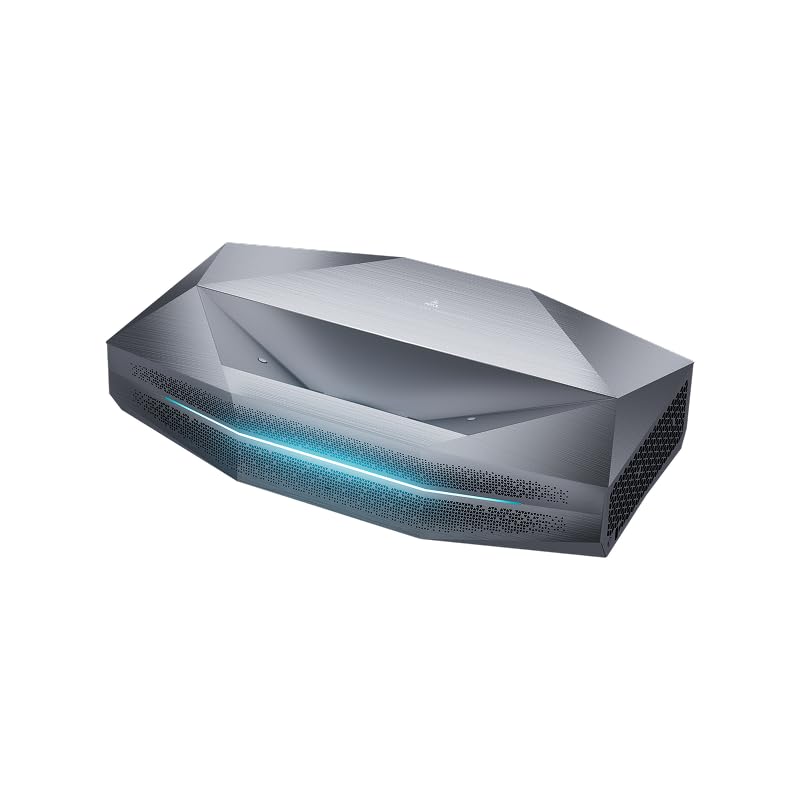
8. AWOL VISION Aetherion Max 4K Triple Laser UST Projector
A 3,300 ISO lumen triple-laser UST with 110% Rec.2020 color for daytime living-room viewing.
The Aetherion Max is the upgrade pick for anyone replacing a big TV in a normal living room. Its 3,300 ISO lumens of RGB triple-laser output — combined with 110% Rec.2020 color — are aimed squarely at daytime and ambient-light viewing, so you can leave the curtains open and still get a color-accurate picture. That is the use-case it was built around, and it delivers.
The contrast story is strong too. The Noirscene System II uses a 7-level IRIS and EBL algorithm to reach up to 6,000:1 native and 60,000:1 viewing contrast, which keeps dark scenes looking deep whether the lights are on or off. Gaming is a genuine strength: 1ms-class latency at 240Hz, plus VRR, ALLM, and Dolby Vision Gaming, with three HDMI 2.1a ports and DisplayPort 1.4a so a PS5, Xbox, and PC can all stay plugged in at once. Anti-RBE technology cuts 99.99% of rainbow effect in both 2D and 3D.
It is an ultra short throw unit with a 0.2:1 ratio, so it sits near the wall with no ceiling mount. Owners consistently rate the performance and picture quality highest and describe the image as near-TV at night and crisp by day. It is expensive — the aspect owners rate most mixed is value for money — but they call it a genuine TV replacement. Expect to spend time dialing in the alignment, as most UST setups demand.
Why it shines
- 3300 ISO lumens for true daytime living-room viewing
- 1ms-class 240Hz gaming with VRR, ALLM, Dolby Vision Gaming
- Three HDMI 2.1a plus DisplayPort 1.4a for all your consoles
- 99.99% anti-rainbow for 2D and 3D comfort
Before you commit
- Premium price, and value is the aspect owners debate most
- UST alignment takes patience to dial in perfectly
- Low ceilings can limit how large a screen you can hang
Made for: a modern living room replacing a big TV, where daylight viewing and console gaming both matter.
Pass on it if: you want a no-fuss, tune-and-forget setup, or your budget is firmly entry-level.
9. Hisense PX4-Pro Ultra Short Throw RGB Laser Cinema
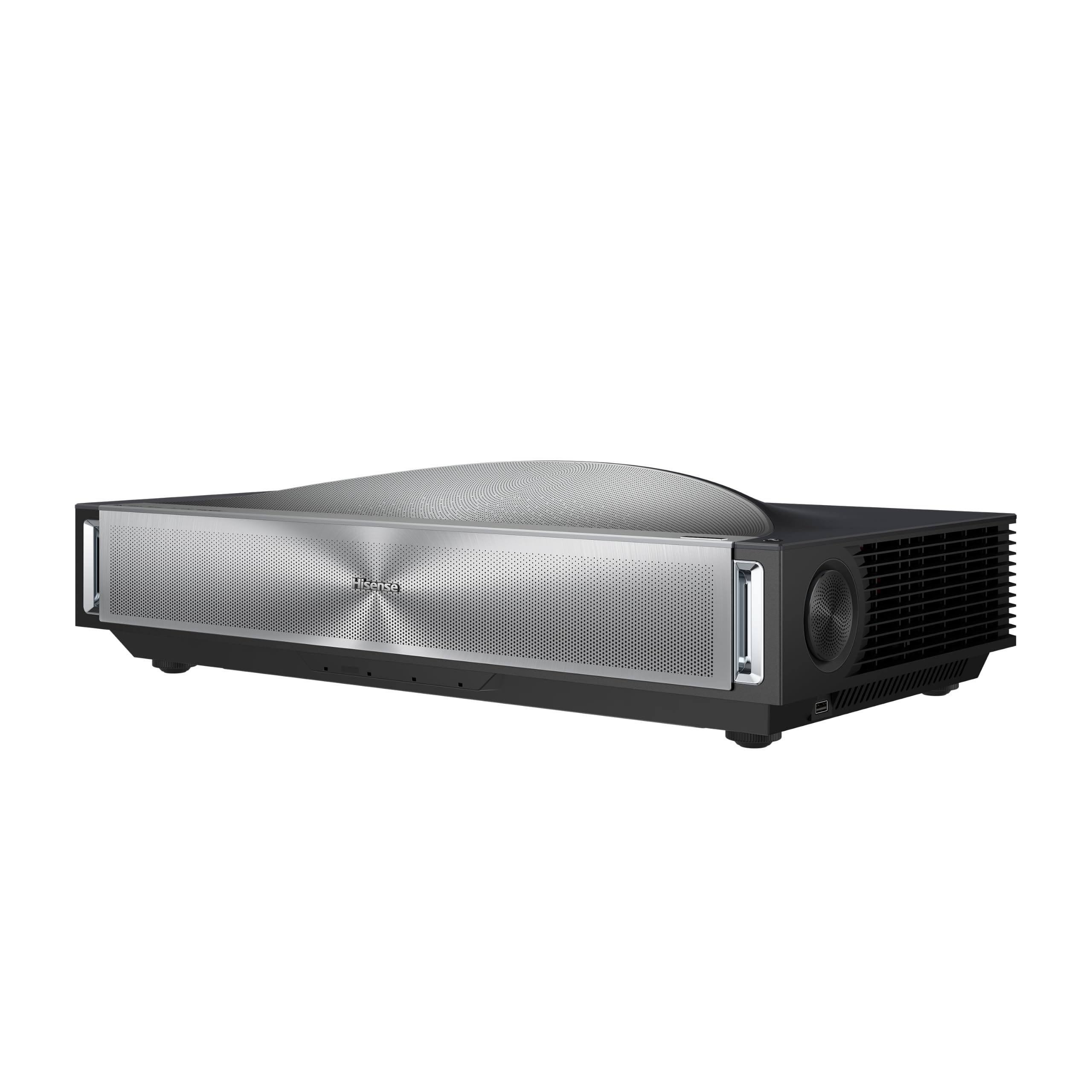
The gaming-first laser cinema that plugs in your console and never tears a frame.
If a big-screen gaming rig and a movie projector are fighting for your budget, this one settles it. The PX4-Pro is the first ultra short throw laser cinema with FreeSync Premium certification, meaning it matches your console or PC’s frame rate to the screen to eliminate tearing and stutter. It runs 1ms low latency at 2K 240Hz, plus VRR, MEMC, and Xbox Cloud Gaming built in.
The picture is serious too. The LPU Digital Laser Engine 3.0 with an RGB triple-color laser delivers 3,500 ANSI lumens (a brightness measure) and 118% BT.2020 color coverage (a wide color range), and a 6500:1 contrast ratio via the CineBlack Pro system with an EBL algorithm reveals shadow detail in real time. It supports IMAX Enhanced and Dolby Vision, projecting from 80 to 200 inches with 26% more image content than standard 16:9 — that extra width brings you closer to a true cinema frame.
Audio is a strength: the system is tuned by Devialet and packs a 66W (peak 198W) Dolby Atmos 4.0.2 array with two up-firing speakers that place effects overhead. It runs Google TV and is easy to use. The honest note: some owners are sensitive to rainbow effects and one returned it for that reason, while others report the automatic keystone can be fiddly. For most buyers the picture, color, and sound win out.
Gaming champion: FreeSync Premium, 1ms latency, VRR, and 240Hz make this the most gaming-tuned pick on the list.
Possible deal-breaker for some: rainbow effect sensitivity is real, so buy from a shop with an easy return window if you have never tried a DLP laser.
Best if: you game on PS5, Xbox, or PC on a massive screen and want Dolby Atmos sound without extra speakers.
Look elsewhere if: you know you are rainbow-sensitive, or you want a simpler auto-keystone that needs no fiddling.
10. Sony VPL-XW5000ES 4K HDR Laser Home Theater Projector

For the viewer who will accept nothing less than true panel-level native 4K.
The VPL-XW5000ES is the purist’s pick. It uses Sony’s native 4K SXRD panel — a true 3,840 x 2,160 imaging chip rather than pixel shifting — so every pixel is real, which pays off most in fine text, film grain, and the smallest textures. Its laser light source is rated for up to 20,000 uninterrupted hours at 2,000 lumens, and the X1 Ultimate processor handles the image magic that Sony is known for.
Color is handled by TRILUMINOS PRO, which reads saturation, hue, and brightness to reproduce natural shades, and the Wide Dynamic Range Optics hit a 95% DCI-P3 wide color gamut — the color space used in cinemas. It supports 4K at 60Hz with input lag under 21ms and 2K at 120Hz with input lag under 13ms, and Motionflow smooths fast motion. This is a stationary, ceiling-mount machine built for a dark, dedicated theater room.
Owners describe the picture as the best they have seen, with dark-scene detail that stands out, and they rate it a worthy long-term investment. The trade-offs are real, though: setup is all manual — no auto lens shift, no keystone — so getting the image square takes about 30 minutes, and there is no HDMI-CEC or built-in streaming platform. It also wants a light-controlled room, and a few owners wish for a motorized lens cover. The high ceiling on brightness is not the priority here; black level is.
Native 4K win: a real 3,840 x 2,160 SXRD panel and 95% DCI-P3 color deliver panel-level detail no pixel-shift projector can match.
The reality check: all-manual setup, no smart apps, and no auto-keystone mean this is a projector for someone who values control over convenience.
Right for you if: you have a light-controlled theater room and want true native 4K with cinema-grade color above all else.
Wrong for you if: you want auto setup, built-in apps, or a bright-room image — this one is a specialist, not an all-rounder.
Understanding the Specs
Brightness (Lumens)
Lumens measure how much light the projector throws — the raw muscle that fights room light. Both ANSI lumens and ISO lumens gauge this, though the two are measured by different standards, so do not compare a 2,000-lumen unit directly against a 3,500-lumen one without checking which standard each uses. As a rule, sealed-room theater viewing can work with fewer lumens, while a living room with daylight wants more. A triple-laser engine sitting near the wall loses less light to distance, which is why ultra short throw models often look brighter than their rating suggests.
Contrast Ratio
Contrast ratio is the gap between the brightest white and the deepest black a projector can show. Higher numbers mean darker blacks and more depth in shadowy scenes. Two different numbers often get quoted: a native contrast (what the chip does alone) and a viewing contrast (what the projector achieves with dynamic dimming and an IRIS — a mechanical ring that limits light). A high viewing contrast can look impressive on paper, but native contrast is what makes dark scenes look genuinely deep without tricks.
Throw Ratio
Throw ratio is the distance-to-screen-size relationship, written as a number like 0.2:1 or 1.5:1. The smaller the first number, the closer the projector can sit to the wall for the same image size. A 0.2:1 ultra short throw unit sits inches from the wall, while a 1.5:1 unit needs several feet and often a ceiling mount. Match the ratio to your room before anything else — the wrong throw ratio means no image, no matter how good the specs read.
Input Lag and Refresh Rate
Input lag is the delay between an action in a game and seeing it on screen, measured in milliseconds. Lower is better for competitive play — a lag around 4ms feels near-instant, while lag over 30ms can feel sluggish. Refresh rate, measured in hertz, is how many times per second the image updates; 120Hz and 240Hz keep fast motion smooth. If gaming is not your priority, both numbers matter far less than contrast and brightness.
FAQ
Is a pixel-shift 4K projector as sharp as a native 4K one?
How bright does a 4K projector need to be for a living room?
What is the difference between ANSI lumens and ISO lumens?
Do I need a special screen for an ultra short throw projector?
Will a 4K projector show rainbow effects?
Can a 4K projector replace my TV for everyday watching?
How long does a 4K laser projector last?
Is 240Hz important if I only watch movies?
Does a 4K projector need a ceiling mount?
Do these projectors come with streaming apps built in?
How far from the wall should a 4K projector be placed?
Final Thoughts: The Verdict
For most people, the 4k digital projector winner is the Valerion VisionMaster Max because it combines 3,500 ISO lumens (brightness), a 50000:1 viewing contrast, and a 4ms @ 240Hz gaming mode (fast response for smooth play) into one laser projector that does movies and games equally well — a genuinely rare mix. If brightness is your priority and you watch in a room you cannot darken, grab the XGIMI HORIZON 20 Max with its 5700 ISO lumens. And for a dedicated theater room where nothing short of true native 4K will do, the Sony VPL-XW5000ES is the one to reach for, thanks to its real 3,840 x 2,160 SXRD panel (a true 4K imaging chip).
If budget matters most, the ViewSonic PX701-4K proves you can get into 4K gaming without chasing flagships, and its lamp-based light source is the one trade-off to accept. Whichever you choose, the rule that decides everything is this: match the throw ratio and brightness to your room, and you will get a picture that feels like a real cinema, not a compromise.
How We Picked
We do not accept paid placement. Every pick is matched to a real buyer and a real use-case; we do not hands-on test units.
Sources & Methodology
Specifications: manufacturer listings and product documentation. Review insights: verified customer reviews, as of September 2026. Pricing: not shown on this page (it changes often); check the current price via the retailer link.
As an Amazon Associate, Gadgets Feed earns from qualifying purchases. This does not affect which products we feature.