
Choosing a true 4K drone camera means seeing past the marketing label that gets slapped on low-resolution sensors. The gap between a drone that upscales an average image and one that captures genuine Ultra HD footage with a stabilized gimbal is the difference between footage that looks soft and grainy versus sharp and cinematic.
I’m Min — the co-founder and writer behind Gadgets Feed. This guide is the result of dozens of hours spent cross-referencing technical specifications like sensor size, gimbal axis counts, bitrates, transmission protocols, and flight controller data from the latest 4K drone models on the market.
Whether you’re upgrading from a toy quadcopter or buying your first serious aerial camera, this roundup of the best 4k drone camera options on Amazon will help you match features to your flying style without wasting money on specs you don’t need.
How To Choose The Best 4K Drone Camera
A true 4K drone camera needs a sensor and gimbal capable of resolving and stabilizing that resolution. Many entry-level models advertise “4K” but rely on software interpolation or shaky mounts that defeat the purpose. Focus on the mechanical stabilization and sensor quality first, then flight features and battery life.
Gimbal Stabilization: 3-Axis vs. 2-Axis vs. Electronic
The single most important hardware feature for smooth 4K footage is a 3-axis mechanical gimbal. It physically compensates for pitch, roll, and yaw, keeping the camera level regardless of how the drone banks or handles wind. A 2-axis gimbal omits yaw stabilization, leading to horizon tilt during turns. Electronic image stabilization (EIS) crops the frame and can introduce a jelly effect. For professional-looking 4K, prioritize a 3-axis brushless gimbal.
Sensor Size: 1/2.3-inch vs. 1/1.3-inch vs. 1/2-inch CMOS
The physical size of the camera sensor determines how much light each pixel can capture. A 1/1.3-inch sensor, found in premium models like the DJI Flip, significantly improves low-light performance and dynamic range compared to the standard 1/2.3-inch sensor. The 1/2-inch CMOS in the Ruko F13PRVR8 balances resolution and light gathering at its price tier. A larger sensor directly translates to less noise and more detail in your 4K footage, especially during golden hour flights.
Video Transmission: Frequency and Protocol
Reliable 4K video transmission depends on the technology, not just the advertised range. Wi-Fi-based transmission is common on budget models and is susceptible to interference, limiting real-world range to a few hundred feet. Proprietary digital transmission systems, like the DJI O4 or Ruko R2, use dedicated frequencies that maintain a clear low-latency feed at distances over 3 miles. For flying beyond visual line of sight, a digital transmission system is non-negotiable for a stable FPV experience.
Battery Life and Charging
Flight time per battery for a 4K drone camera typically ranges from 18 to 35 minutes. Cold weather, wind, and aggressive flying all reduce this number. Kits that include multiple batteries and a charging hub offer significantly more total airtime. A power bank that can recharge batteries in the field, like the one found in the Holy Stone HS790, extends your session even further.
FAA Registration and Weight Class
In the United States, drones under 250 grams (0.55 lbs) are exempt from FAA registration and Remote ID requirements. This makes sub-249g drones like the DJI Neo 2, Ruko F13PRVR8, and Bwine F7MINI the most hassle-free options for recreational flyers. Heavier drones, such as the Bwine F7GB2 Pro at 550 grams, require both registration and a Remote ID module. If portability and regulatory simplicity are priorities, the sub-250g class is the clear path.
Quick Comparison
On smaller screens, swipe sideways to see the full table.
| Model | Category | Best For | Key Spec | Amazon |
|---|---|---|---|---|
| DJI Flip (RC-N3) | Premium | Best Overall Image Quality | 1/1.3-inch CMOS, 4K/60fps HDR | Amazon |
| Bwine F7MINI 4K(RC3) | Premium | Best Built-In Controller Screen | 5.5″ 1080p RC screen, 20,000ft range | Amazon |
| Holy Stone HS790 | Mid-Range | Best Value Long-Range Flyer | 30,000ft transmission, 60-min flight | Amazon |
| Ruko F13PRVR8 | Mid-Range | Best Sub-250g Bundle | 96-min flight (3 batts), under 249g | Amazon |
| Bwine F7GB2 Pro | Mid-Range | High Altitude & Wind Resistance | 2000m altitude, L6 wind resistance | Amazon |
| Gleesfun G11PRO | Mid-Range | Best Complete Kit | 35-min flight per battery, FAA compliant | Amazon |
| DJI Neo 2 Fly More Combo | Premium | Best Obstacle Avoidance | Omnidirectional sensing, 360° protection | Amazon |
| Specta Mini Drone | Budget | Best Budget 4K Starter | 10km transmission, 31-min flight | Amazon |
| DJI Neo 2 (Drone Only) | Entry-Level | Best Ultra-Portable for Travel | 151g weight, palm takeoff & landing | Amazon |
In‑Depth Reviews
1. DJI Flip (RC-N3)

The DJI Flip sets a new benchmark for consumer 4K drone cameras by pairing a large 1/1.3-inch CMOS sensor with a 3-axis mechanical gimbal while staying under the sub-249g FAA-exempt threshold. This sensor captures significantly more light than the standard 1/2.3-inch chips found in most competitors, yielding cleaner 4K/60fps HDR footage with superior dynamic range in challenging lighting conditions like sunrise and sunset. The full-coverage carbon fiber propeller guards provide peace of mind for close-quarters flying without adding noticeable weight.
Its intelligent flight modes, including subject tracking and automated cinematic shots, work seamlessly with the RC-N3 controller, which provides a clear digital video feed over a dedicated transceiver. The 31-minute max flight time is competitive for this weight class, and the palm takeoff and landing feature makes it incredibly easy to deploy in the field. The build quality is distinctly premium, with tight tolerances and responsive gimbal movements that inspire confidence.
If you want the best 4K video quality in a portable, regulation-friendly package, the DJI Flip is the clear choice. It outclasses the DJI Neo 2 on image quality, offers a substantial upgrade in sensor performance over the Holy Stone HS790, and justifies its premium price with tangible results straight out of the box.
Why it’s great
- Largest sensor in class for excellent low-light 4K
- Full-coverage carbon fiber propeller guards
- Under 249g with no FAA registration needed
Good to know
- Requires additional investment in batteries and case
- Only forward-facing obstacle avoidance
2. Bwine F7MINI 4K(RC3)
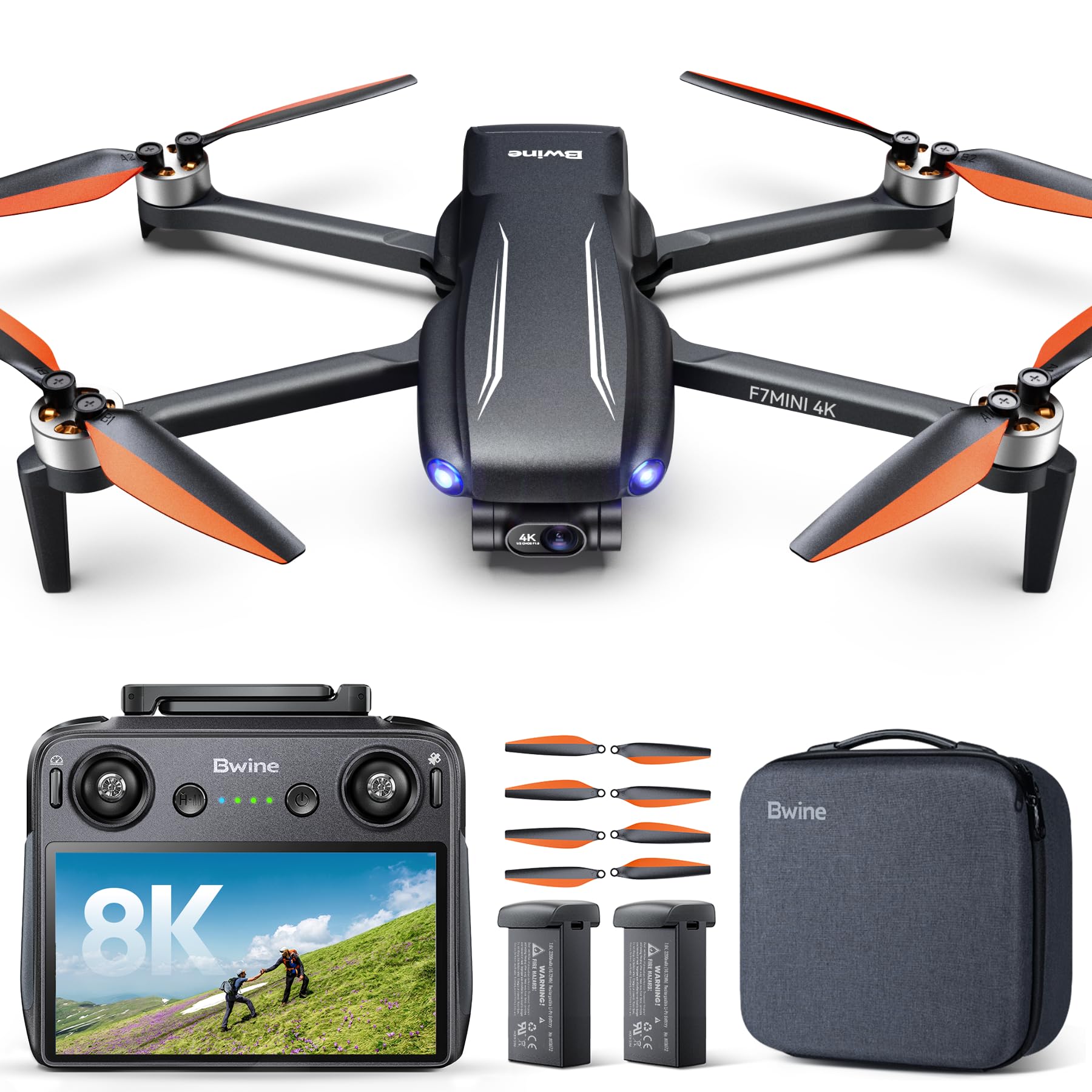
The Bwine F7MINI 4K(RC3) solves one of the biggest frustrations with flying a 4K drone camera—the need to tether your phone to the controller. The built-in 5.5-inch, 1080p, 500-nit screen is bright enough to see clearly outdoors and eliminates the risk of incoming notifications or calls interrupting your flight. This integrated display also has 32GB of internal storage, so you can save footage directly on the controller for quick review or sharing on the spot.
Despite weighing under 249 grams, it packs a 3-axis brushless gimbal that keeps 4K UHD video smooth even in moderate wind. The 20,000-foot transmission range is solid, and tests in urban environments show the signal holds strong up to about 4.5 kilometers without dropouts. The included two batteries provide a combined 64 minutes of flight time, and the smart return-to-home with dynamic home point updates adds a layer of security for beginners flying beyond their initial launch spot.
The Bwine F7MINI competes directly with the Holy Stone HS790 but wins on convenience because you don’t need a phone. It doesn’t have the large sensor of the DJI Flip, but for flyers who want a self-contained system with a screen, it’s the strongest option in this price range.
Why it’s great
- High-brightness 1080p screen eliminates phone dependency
- Under 249g weight avoids FAA registration
- Stable 20,000ft digital transmission
Good to know
- SD card transfer via controller can be slow
- Uses Wi-Fi-based transmission, not dedicated digital link
3. Holy Stone HS790
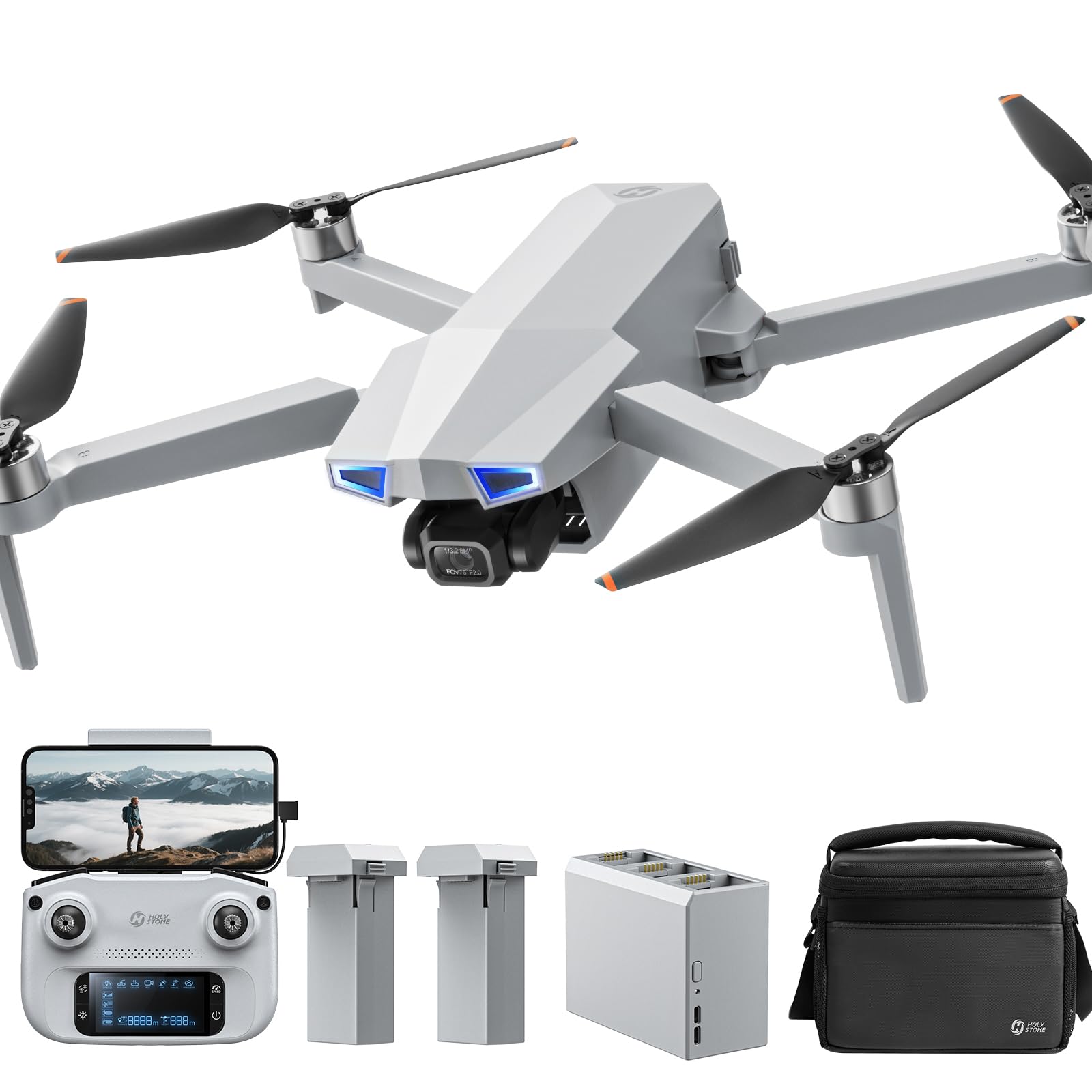
The Holy Stone HS790 delivers an impressive package for its price, headlined by a claimed 30,000-foot transmission range using a WiFi repeater system and a total 60-minute flight time from two intelligent batteries. The 3-axis brushless gimbal provides stable 4K/30fps footage, and the 6K photo mode offers extra cropping flexibility. The included Smart PD Charging Hub doubles as a power bank, letting you recharge batteries in the field using a USB-C connection.
Its GPS features — Follow Me, Waypoint Flight, and Auto Return — all function reliably in testing. The built-in Remote ID compliance keeps it legal for US airspace without needing an external module. The foldable design and included carrying case make it travel-friendly, though it tips the scales at over 375 grams, so FAA registration is required. The AI Night Shot mode improves low-light stills but adds minimal value to video capture.
Compared to the Bwine F7GB2 Pro, the HS790 offers a longer advertised range and a more polished app experience. It is a better choice than the Specta Mini for experienced beginners who want room to grow, but its gimbal can struggle with horizon drift during aggressive turns.
Why it’s great
- Industry-leading 30,000ft transmission range
- Smart PD charging hub works as a power bank
- Built-in Remote ID for FAA compliance
Good to know
- Heavier than 250g, so FAA registration is mandatory
- WiFi-based feed can lag at extreme ranges
4. Ruko F13PRVR8

The Ruko F13PRVR8 is a sub-249g drone that punches above its weight class by bundling three intelligent batteries for a total of 96 minutes of flight time. This makes it the best option for longer shooting sessions without constant landing and swapping. The 1/2-inch 48MP CMOS sensor captures 8K photos and 4K/30fps video, and the 3-axis brushless gimbal paired with EIS produces stable footage in winds up to 16 MPH.
The R2 digital transmission system provides a clean 20,000-foot range without the interference common to Wi-Fi drones. The AI takeoff and landing system, combined with quadruple positioning (GPS, barometric, TOF, and optical flow), makes it exceptionally stable during hover and landing approaches. The built-in beeper is a practical feature for locating the drone if it lands in tall grass or brush. Ruko’s customer service is consistently praised for quickly replacing defective units or parts.
Against the Specta Mini, the Ruko offers triple the total flight time and a more substantial camera sensor. While the DJI Flip produces better video quality, the Ruko F13PRVR8 provides a more complete and worry-free package for beginners, especially given its sub-250g FAA-exempt status.
Why it’s great
- Exceptional 96-minute total flight time with 3 batteries
- Under 249g and FAA registration exempt
- Reliable R2 digital transmission with 20,000ft range
Good to know
- Joysticks are quite sensitive for new pilots
- No audio recording support
5. Bwine F7GB2 Pro

The Bwine F7GB2 Pro is built for flyers who need to operate in challenging environments. It is certified to fly at altitudes up to 2000 meters (6561 feet) and withstands Level 6 winds, which is rare at this price point. The 1806 brushless motors provide the torque necessary to maintain stable hover and smooth video capture in thin air or gusty conditions, making it a strong companion for mountain and farm surveys.
The one-click detachable 4K camera sits on a 3-axis gimbal with 5x digital zoom, and the 120-degree FOV lens paired with a larger CMOS sensor handles night scenes better than most mid-range options. Three 2600mAh intelligent batteries deliver 75 minutes of total flight time, and the shell case protects the drone during transport. The remote includes a screen overlay with telemetry data, though visibility in direct sunlight can be challenging.
Compared to the Gleesfun G11PRO, the Bwine F7GB2 Pro offers higher wind resistance and altitude capability, making it the better choice for outdoor enthusiasts flying in non-urban settings. It is heavier than the DJI Flip at 550 grams, requiring FAA registration, but its durability and customer support reputation make it a safe pick for active pilots.
Why it’s great
- Certified for high-altitude and strong wind operation
- 3-axis gimbal with 5x digital zoom
- Excellent 2-year warranty and customer support
Good to know
- Weighs 550 grams, so FAA registration is required
- Remote screen is hard to read in bright sunlight
6. Gleesfun G11PRO

The Gleesfun G11PRO stands out for the sheer completeness of its package. The kit includes the drone, controller, two 3200mAh batteries, a hard carrying case, spare propellers, multiple charging cables (including USB-C to Lightning), and a screwdriver set — 40 pieces total. This means you can fly immediately without hunting for extra accessories, a common frustration with bare-bones drone purchases.
The 3-axis brushless gimbal produces stable 4K/30fps footage, and the 6K photo mode (via a 1/3.2-inch CMOS sensor) offers crisp stills. The GQ2.0 digital transmission system provides a 10,000-foot range with low latency, and the GL2.0 smart battery management system fast-charges each battery in about 2.5 hours while extending the cycle life beyond 300 charges. The cruise control feature locks the drone on a steady heading, making cinematic pans accessible for beginners.
When compared side-by-side with the Bwine F7GB2 Pro, the G11PRO falls shorter on transmission range (10,000ft vs. ~10,000ft) but delivers a better out-of-box experience and more consistent gimbal performance for the price. Its FAA compliance with Remote ID ensures legal operation nationwide, and customer reviews consistently highlight responsive after-sales support.
Why it’s great
- Very comprehensive accessory kit, ready to fly out of box
- Fast-charging batteries with 35-minute flight time each
- FAA Remote ID compliant and beginner-friendly
Good to know
- Transmission range is limited to 10,000 feet
- Camera sensor struggles with fast-moving subjects
7. DJI Neo 2 Fly More Combo
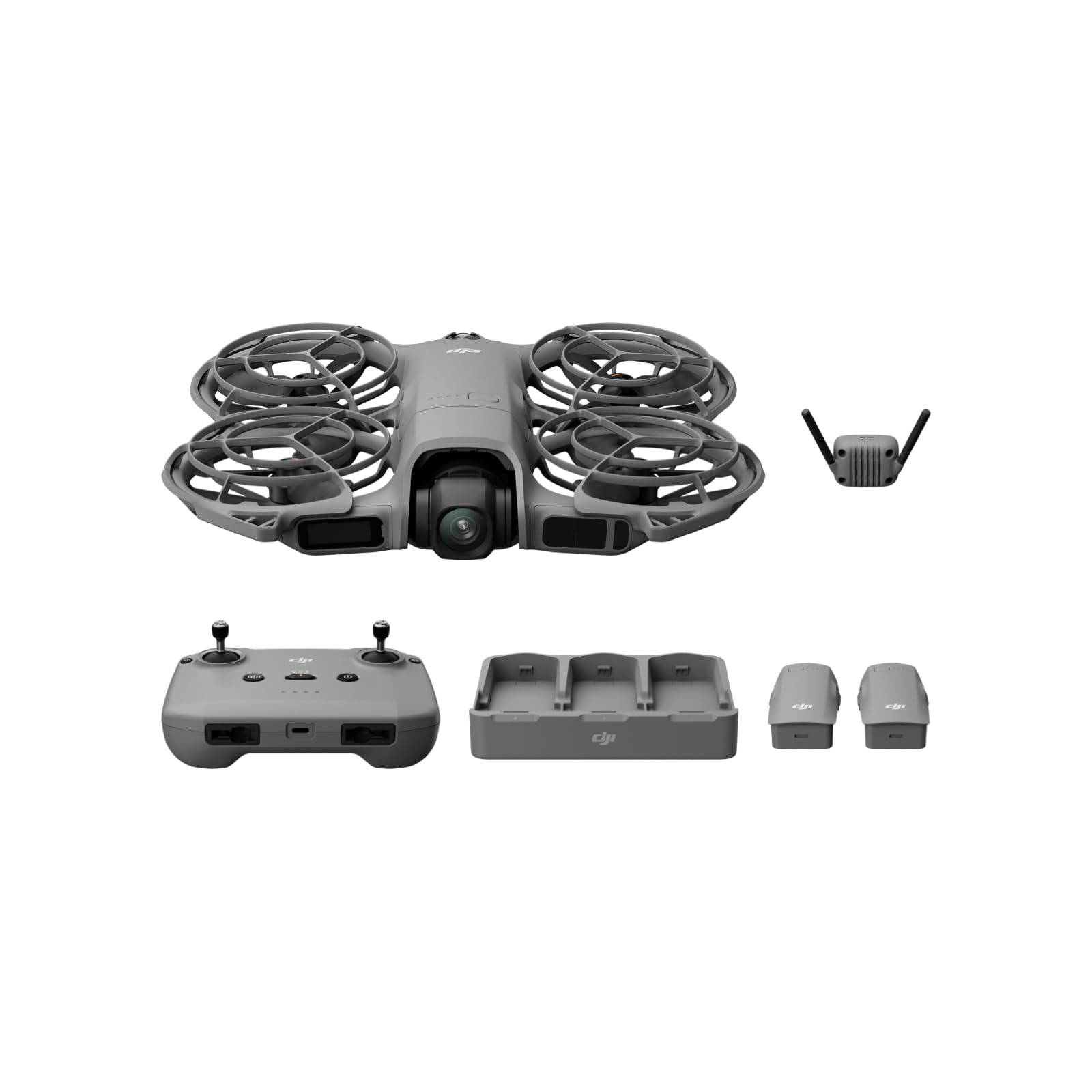
The DJI Neo 2 Fly More Combo is the most safety-conscious package in this list, featuring omnidirectional obstacle sensing that covers 360 degrees. This system uses multiple sensors to detect objects from every direction, not just forward and downward, making it exceptionally difficult to crash even for complete beginners. Combined with full-coverage propeller guards, it’s the safest drone to fly indoors or in tight spaces.
Weighing just 151 grams, it is by far the lightest drone here and is C0 certified in Europe and FAA-exempt in the US. The 4K imaging is surprisingly sharp for its size, and the 2-axis gimbal handles pitch and roll stabilization well. The Fly More Combo includes three batteries with a two-way charging hub and the RC-N3 controller with a digital transceiver for a stable video feed. Gesture control, palm takeoff, and subject tracking work seamlessly without a remote in many scenarios.
The trade-off is flight time — each battery delivers roughly 18 to 19 minutes, and the 2-axis gimbal means yaw stabilization is electronic, which can cause slight horizon roll during fast panning. For beginners who prioritize safety above all else, the Neo 2 Fly More Combo is the superior choice over the single-battery DJI Neo 2 drone-only version.
Why it’s great
- True omnidirectional obstacle sensing
- Extremely lightweight at 151 grams
- Goes wherever you go
Good to know
- Short flight time per battery (18-19 minutes)
- 2-axis gimbal lacks full yaw stabilization
8. Specta Mini Drone
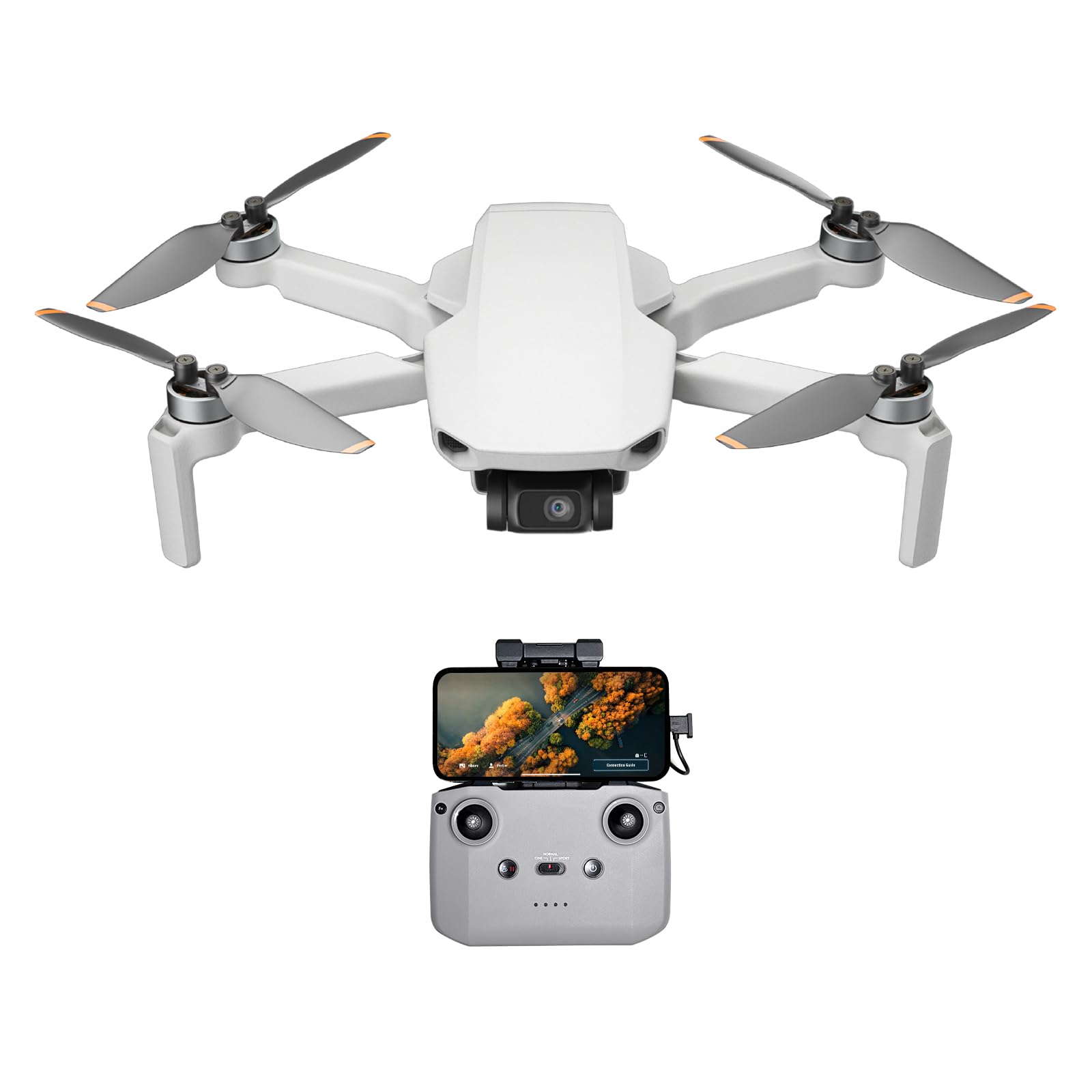
The Specta Mini Drone is a bold entry into the budget 4K space, offering a 31-minute flight time and a 32,800-foot (10km) transmission range at a price that undercuts most competitors. The 3-axis gimbal delivers genuinely stable 4K/30fps footage, and at under 249 grams, it requires no FAA registration. For someone looking to test the waters of aerial videography without a big upfront investment, this is a compelling starting point.
Flight testers report actual flight times between 20 to 26 minutes, which is still solid for its class. The GPS return-to-home and Level 5 wind resistance add practical reliability. However, the ecosystem is a concern — the proprietary batteries cost roughly each, and replacement parts are not widely available from third parties, which could be a problem if Specta discontinues the model. The controller emits an audible beep when the battery drops below 20%, which some users find distracting.
Compared to the Gleesfun G11PRO, the Specta Mini offers a longer transmission range and lighter weight but lacks the complete accessory kit and robust customer support. It is a better pick for the budget-conscious flyer who values flight time over ecosystem availability.
Why it’s great
- Impressive 31-minute flight time for a budget drone
- Long 10km transmission range
- 3-axis gimbal keeps footage stable
Good to know
- Non-interchangeable, expensive proprietary batteries
- Risk of low parts availability after discontinuation
9. DJI Neo 2 (Drone Only)
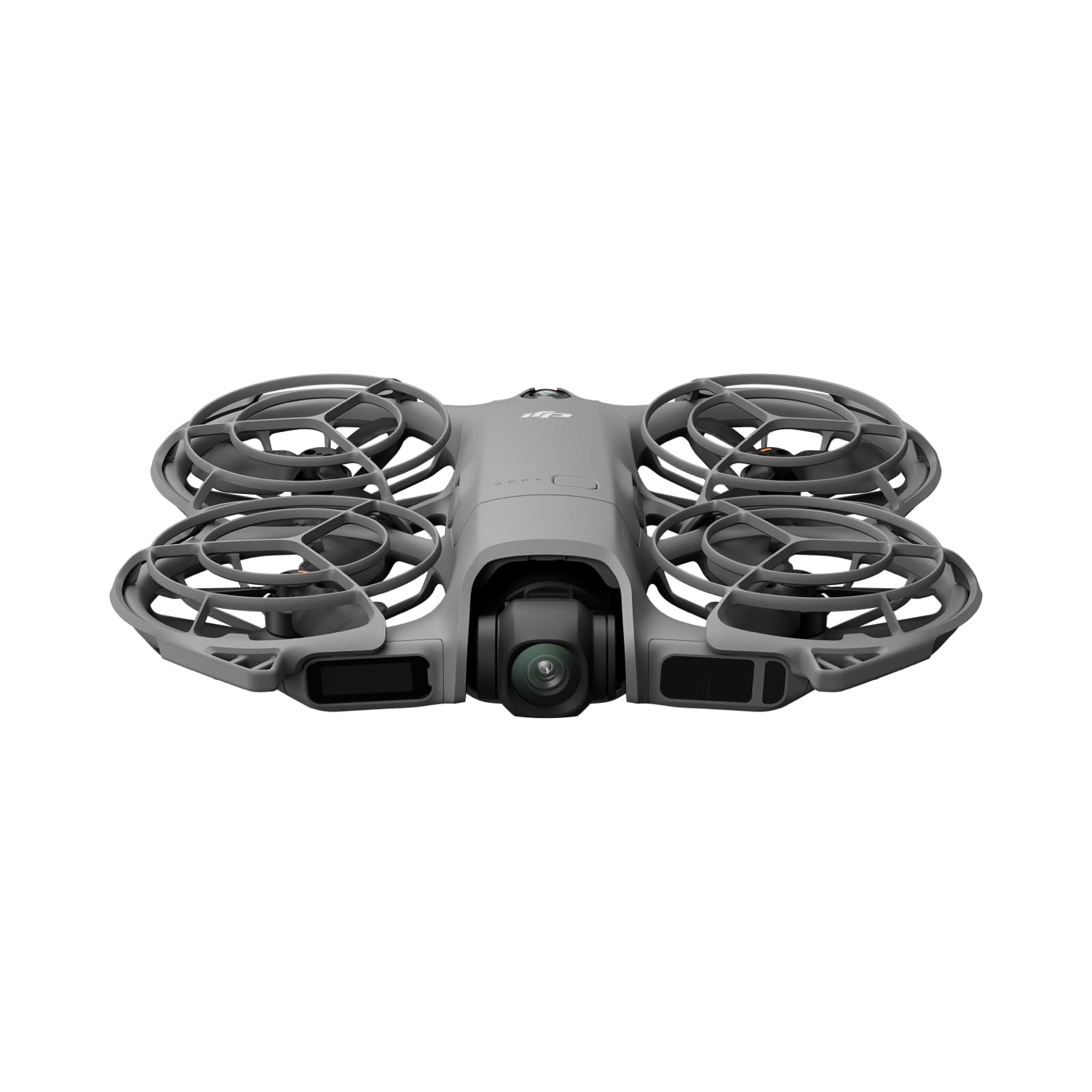
The DJI Neo 2 (Drone Only) is the entry point to DJI’s most accessible platform, designed for absolute beginners who want the simplest possible flying experience. Palm takeoff and landing eliminate the need for a dedicated landing pad, and gesture control lets you command the drone with hand signals for photos and follow-me tracking. Its 151-gram weight makes it the most portable option on this list.
The 4K imaging is solid for the size, producing vibrant videos suitable for social media. Omnidirectional obstacle sensing provides an extra layer of safety during indoor flights. However, this version comes with only one battery, and without the RC-N3 controller, you must rely on your phone’s Wi-Fi connection, which is less stable than the digital transceiver found in the Fly More Combo. The 2-axis gimbal is also a downgrade from the 3-axis systems on higher-end models, introducing some electronic yaw correction artifacts.
This model is ideal for spontaneous, short-range flying — capturing a family moment at a park or a quick selfie while hiking. If you expect longer sessions or more serious 4K work, the Fly More Combo with the remote is a more practical investment.
Why it’s great
- Tiny 151g frame fits in a jacket pocket
- Palm launch and gesture control for zero-instruction use
- Excellent obstacle avoidance for safety
Good to know
- Only one battery included, flight time around 18 minutes
- 2-axis gimbal lacks mechanical yaw stabilization
FAQ
Do I need FAA registration to fly a 4K drone with a camera?
What is the difference between 4K/30fps and 4K/60fps video?
How important is the camera sensor size for night flying?
Can I fly a sub-249g 4K drone in all national parks?
Final Thoughts: The Verdict
For most users, the best 4k drone camera winner is the DJI Flip (RC-N3) because its large 1/1.3-inch sensor and 3-axis gimbal deliver the highest-quality 4K footage in an FAA-exempt sub-249g frame. If you want a built-in controller screen that puts flight data right in front of you without a phone, grab the Bwine F7MINI 4K(RC3). And for absolute maximum flight time backed by a great accessory bundle, nothing beats the Ruko F13PRVR8.